
Case Study: The Role of Blockchain in Pandemic Response and Data Management


Welcome to Blockchain Trends, your guide to understanding the real-world impact of blockchain technology.
Intrigued by how blockchain can revolutionize industries beyond cryptocurrency? Dive into our latest case study on "Blockchain Pandemic Data Management" and discover how this innovative technology is being leveraged to improve pandemic response and data security. Explore the challenges, successes, and future potential of decentralized solutions in critical global scenarios. What if blockchain could prevent the next global health crisis? Let's explore.
- Case Study: Blockchain Pandemic Data Management in Healthcare Response
- Context: Pandemic Challenges in Data Management and Healthcare Systems
- Blockchain Solutions for Pandemic Data Management and Healthcare Coordination
- Implementation Case: Estonia's e-Health Record System and COVID-19 Response
- Analysis of Benefits: Blockchain’s Role in Pandemic Data Transparency and Efficiency
- Challenges and Limitations in Applying Blockchain to Pandemic Data Management
- Future Prospects: Advancing Blockchain Applications for Pandemic Preparedness
- Conclusion: Lessons Learned from Blockchain Pandemic Data Management Case Study
-
Frequently Asked Questions
- How can blockchain technology improve pandemic data management?
- What are some specific examples of blockchain's use in pandemic response?
- What are the potential benefits of using blockchain for tracking infection rates?
- How can blockchain address privacy concerns related to pandemic data?
- What are the main challenges in implementing blockchain for pandemic data management?
- Final Reflection: Blockchain's Enduring Promise for Global Health
- Reimagine Trust: Your Next Step in Blockchain Data Revolution!
Case Study: Blockchain Pandemic Data Management in Healthcare Response
Introduction to Blockchain Technology in Pandemic Data Management
The onset of global health crises, such as the COVID-19 pandemic, highlighted critical vulnerabilities in traditional healthcare data management systems. Issues ranging from data silos and lack of interoperability to concerns over data privacy and integrity became starkly apparent as health authorities scrambled to track infections, manage resources, and coordinate responses. This urgent need for more robust, secure, and transparent data handling mechanisms has brought technologies like blockchain to the forefront of discussions around healthcare infrastructure modernization.
Blockchain technology, fundamentally a decentralized, immutable ledger, offers properties uniquely suited to addressing these challenges. Its core characteristics – transparency (for authorized parties), security through cryptography, immutability of recorded transactions, and the ability to operate without a central point of control – present a compelling potential solution for complex data ecosystems like healthcare. Applying blockchain to pandemic data management could revolutionize how patient records, vaccine distribution, supply chains for medical equipment, and public health surveillance data are managed, ensuring greater reliability and trust in the information used to guide public health decisions.
Importance of Blockchain for Secure and Transparent Health Data Systems
Ensuring the security and transparency of health data is paramount, especially during a pandemic when rapid, accurate information sharing can mean the difference between effective containment and uncontrolled spread. Traditional centralized databases are susceptible to single points of failure, hacking attempts, and unauthorized alterations, which can severely compromise the integrity of critical health information. A breach in patient data or manipulation of infection rates could have catastrophic public health and individual privacy consequences.
Blockchain's distributed nature means that data is not stored in one vulnerable location but across a network of computers, making it significantly harder to compromise. Each transaction (e.g., recording a patient visit, a vaccination, or movement of medical supplies) is cryptographically linked to the previous one, forming a chain that is virtually impossible to alter retroactively without consensus from the network.
This inherent security and auditability provide a foundation of trust for sensitive health data, ensuring that information used for contact tracing, epidemiological analysis, or resource allocation is accurate and has not been tampered with, thereby enhancing the overall effectiveness of Blockchain pandemic data management strategies.
Context: Pandemic Challenges in Data Management and Healthcare Systems
Data Integrity and Privacy Issues During Global Health Crises
Global health crises like pandemics exacerbate existing data management challenges within healthcare systems. The sheer volume and velocity of data generated – including infection rates, patient outcomes, testing results, vaccination status, and supply chain logistics – overwhelm outdated infrastructure. More critically, maintaining data integrity becomes a significant hurdle; disparate systems struggle to share information reliably, leading to inconsistencies, delays, and potential errors in reporting. For instance, early in the COVID-19 pandemic, discrepancies in reported case numbers or vaccination rates across different regions or even within the same country highlighted the lack of a unified, trustworthy data source.
Simultaneously, the urgent need for data sharing for public health purposes often clashes with stringent patient privacy regulations like GDPR or HIPAA. While aggregating data is crucial for understanding the pandemic's spread and impact, ensuring that individual patient identities remain protected is non-negotiable.
Centralized data repositories, while seemingly efficient for aggregation, become attractive targets for cyberattacks, posing a massive risk to sensitive personal health information. Balancing the public health imperative for data access with the fundamental right to privacy presented a complex ethical and technical dilemma throughout the recent pandemic, underscoring the need for innovative approaches to Blockchain pandemic data management that can reconcile these competing demands.
Limitations of Traditional Data Management Approaches in Pandemic Response
Traditional, siloed data management systems proved inadequate for the rapid, coordinated response required by the COVID-19 pandemic. Healthcare providers, public health agencies, research institutions, and supply chain logistics companies often operate on incompatible software platforms and databases. This fragmentation creates significant barriers to effective information exchange, leading to delays in identifying outbreaks, allocating resources, and implementing public health measures. Sharing even basic aggregated data often involved manual processes, insecure file transfers, or cumbersome data harmonization efforts that slowed down the response considerably.
Furthermore, the lack of transparency and auditability in many traditional systems made it difficult to verify the source and accuracy of data, fueling mistrust and misinformation. Tracking the movement of critical medical supplies, like PPE or vaccines, across complex global supply chains was challenging, leading to shortages in some areas while others had surpluses. The absence of a unified, transparent, and secure system for Blockchain pandemic data management hindered real-time visibility and efficient coordination, demonstrating a clear need for a more integrated and resilient digital infrastructure for future health emergencies.
Blockchain Solutions for Pandemic Data Management and Healthcare Coordination
How Blockchain Enhances Data Security and Patient Privacy in Healthcare
Blockchain technology provides a robust framework for enhancing data security and patient privacy in healthcare, particularly vital during a pandemic. By using cryptographic hashing and digital signatures, every data entry or transaction recorded on a blockchain is secured and linked to the previous one, creating an immutable ledger. This means that once health data, such as a patient's test result or vaccination record, is added to the chain, it cannot be altered or deleted without invalidating subsequent blocks, making data manipulation virtually impossible without detection. This inherent immutability ensures the integrity and trustworthiness of the health information.
Regarding privacy, blockchain allows for patient-centric data management models. Instead of storing sensitive patient data directly on the public ledger, only a cryptographic hash or a reference pointer to the data is stored on the blockchain. The actual data can reside off-chain in secure, encrypted storage, potentially controlled by the patient themselves.
Access to this off-chain data is then granted via permissions managed on the blockchain, using private keys. This approach provides a decentralized access control mechanism, giving patients greater control over who can view their health information while still allowing authorized parties (like doctors or public health officials during a pandemic) secure and auditable access when needed, significantly improving Blockchain pandemic data management security.
Use of Decentralized Ledgers for Real-Time Pandemic Tracking and Reporting
Decentralized ledgers are inherently suited for real-time tracking and reporting applications critical during a pandemic. A distributed ledger can record and share data simultaneously across multiple participants in a network, such as hospitals, clinics, testing centers, and public health agencies. As soon as a new piece of information is validated and added to the ledger – for example, a positive COVID-19 test result or a completed vaccination – it becomes visible (with appropriate permissions) to all relevant parties in near real-time. This eliminates delays associated with data aggregation from disparate, siloed systems.
This capability facilitates faster identification of outbreaks, more accurate mapping of infection spread, and timely reporting of key metrics like case numbers, hospitalization rates, and vaccination coverage. For instance, a system built on a decentralized ledger could allow public health officials to see an aggregated, verified view of pandemic data across a region or country, updated continuously as new information is recorded by individual healthcare providers.
This real-time, shared source of truth significantly improves situational awareness and enables more agile and data-driven responses to the evolving health crisis, demonstrating the power of Blockchain pandemic data management for public health surveillance.
Smart Contracts for Automated and Transparent Healthcare Resource Allocation
Smart contracts, self-executing contracts with the terms of the agreement directly written into code, can automate and bring transparency to complex processes like healthcare resource allocation during a pandemic. In a crisis, the efficient distribution of limited resources such as ventilators, hospital beds, medical personnel, or vaccines is critical but often hampered by bureaucratic inefficiencies and lack of visibility into supply and demand. Smart contracts can help streamline these processes based on predefined, verifiable conditions.
For example, a smart contract could be programmed to automatically trigger the release and shipment of a batch of vaccines from a central warehouse to a regional distribution center once specific conditions are met, such as confirmation of storage capacity and successful delivery of a previous batch, all recorded on the blockchain. Similarly, smart contracts could prioritize hospital admissions or allocate personnel based on real-time data regarding bed availability or staffing levels recorded on the distributed ledger.
This automation reduces manual intervention, minimizes the potential for errors or bias, and provides a transparent, auditable record of how resources were allocated, enhancing efficiency and trust in Blockchain pandemic data management related to logistics and supply chains.
Implementation Case: Estonia's e-Health Record System and COVID-19 Response
Case Overview: Blockchain Integration within Estonia's National e-Health System During the COVID-19 Pandemic
Estonia, renowned for its advanced digital society and e-governance initiatives, provides a compelling case study for the application of blockchain-like technology in healthcare data management. While not a public, permissionless blockchain in the typical sense, Estonia's national e-Health system has for years utilized Guardtime's KSI (Keyless Signature Infrastructure) blockchain technology to ensure the integrity and security of patient data stored across various healthcare providers. This technology doesn't store the data itself on the blockchain but uses hashing to create an irrefutable, real-time audit trail of all data access and modifications, ensuring that patient records have not been tampered with.
During the COVID-19 pandemic, Estonia's existing digital infrastructure, underpinned by this data integrity layer, played a crucial role. Although the KSI blockchain wasn't developed specifically for the pandemic response, its presence meant that the core national e-Health record system, accessed by doctors, hospitals, and patients via a secure portal, already had a high level of data security and auditability baked in.
This established trust layer was foundational for managing health information during the crisis, providing a reliable basis for healthcare professionals accessing patient histories, viewing test results, and later, managing vaccination records within a system where data integrity was verifiable at a fundamental level.
Integration of Blockchain with Existing Healthcare Infrastructure
Estonia's approach demonstrates a practical model for integrating blockchain technology with existing healthcare infrastructure. The KSI blockchain layer operates passively in the background of the e-Health system. When a healthcare professional accesses a patient's record or adds new information, the system generates a hash of that action and data, which is then timestamped and linked into the KSI blockchain. This process does not require healthcare providers to interact directly with blockchain technology; they use their familiar e-Health portal interfaces.
This seamless integration was key to its effectiveness during the pandemic. Healthcare workers could continue using the established digital tools for patient care, diagnostics, and recording COVID-19 related information (like test results or administered vaccines) without needing to learn a new system. The blockchain layer silently ensured that every access or modification was immutably recorded, providing an unprecedented level of accountability and trust in the digital records being generated and consulted, which was essential for reliable Blockchain pandemic data management within their existing infrastructure.
Outcomes: Improved Data Sharing, Tracking of Vaccinations, and Supply Chain Management
While specific, publicly available quantitative data directly linking the KSI blockchain layer solely to pandemic outcomes is limited, its impact can be inferred from the overall performance of Estonia's digital health system during the crisis. The underlying data integrity provided by KSI supported more confident data sharing among authorized healthcare providers and public health authorities. For example, doctors could trust the accuracy of a patient's medical history or previous test results accessed through the e-Health portal when making treatment decisions for COVID-19 patients.
Regarding vaccination tracking, Estonia's digital system facilitated the recording and management of vaccination data. While the primary system for recording vaccinations was the e-Health record, the KSI layer ensured that these records, once entered, maintained their integrity.
This supported efforts to track vaccination coverage, although specific details on how KSI directly impacted vaccine supply chain management in Estonia are less publicized; their primary use of KSI focuses on patient data integrity. The case highlights how an existing blockchain-like data integrity layer can provide a trustworthy foundation for managing various types of health data critical during a pandemic, including patient records and vaccination status.
Analysis of Benefits: Blockchain’s Role in Pandemic Data Transparency and Efficiency
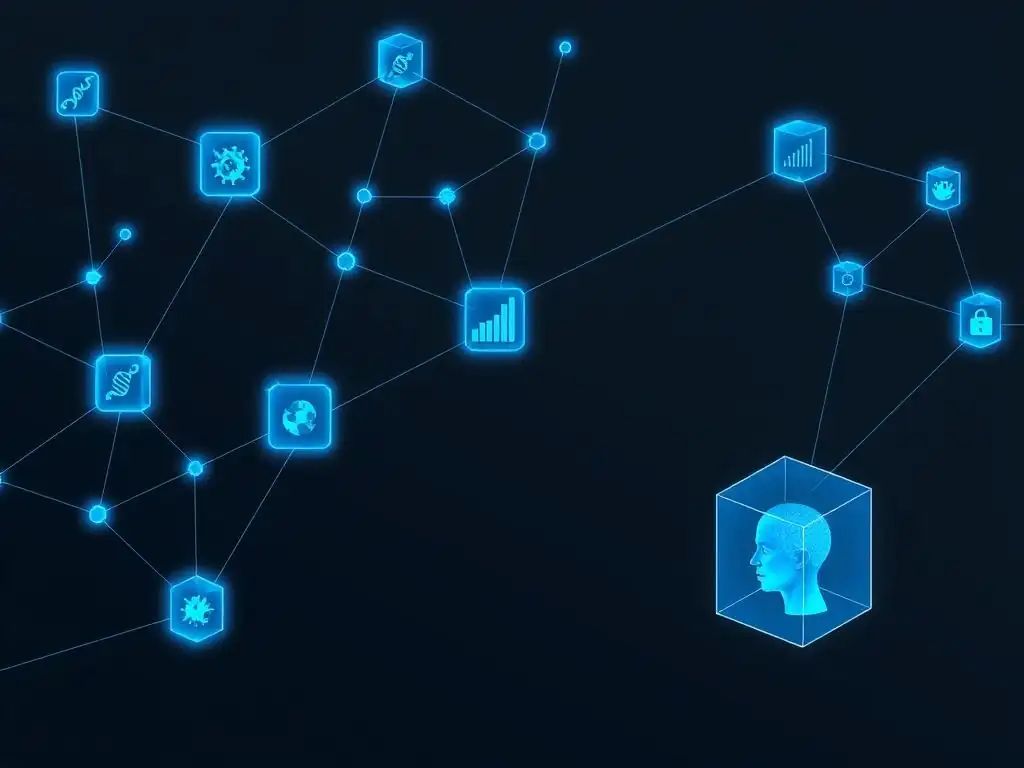
Increased Data Interoperability and Cross-Institution Collaboration
One of the most significant benefits observed in the application of blockchain technology to healthcare data, particularly relevant during a pandemic, is the potential for increased data interoperability and enhanced collaboration across institutions. Traditional healthcare systems often struggle with data silos, where patient information is locked within individual hospitals, clinics, or regional health authorities due to incompatible technologies or data standards. This fragmentation severely impedes the ability to get a holistic view of the pandemic's impact or a patient's health status across different care settings.
Blockchain, by providing a standardized, shared, and immutable ledger for recording data transactions or pointers, can act as an integrating layer. While the sensitive data itself might reside off-chain, the blockchain can manage access permissions and provide a single source of truth regarding the existence and history of data records.
This enables different healthcare providers and public health agencies, even those using diverse internal systems, to securely share and verify data recorded on the chain, improving the flow of information. For instance, during COVID-19, a blockchain-based system could have allowed a hospital in one city to quickly and securely verify the vaccination status of a patient tested in another, facilitating faster and more informed clinical decisions, a key advantage for Blockchain pandemic data management.
Enhanced Traceability and Auditability of Health Data Transactions
The inherent nature of blockchain technology provides an unparalleled level of traceability and auditability for health data transactions. Every interaction with data recorded on a blockchain – whether it's a physician accessing a patient record, a lab adding a test result, or a public health official querying aggregated data – is cryptographically timestamped and added to the chain. This creates a permanent, unalterable log of all data activities.
During a pandemic, this enhanced traceability is invaluable. It allows health authorities to track the provenance of data, verifying where it originated and who has accessed or interacted with it. This is crucial for maintaining trust in public health statistics and clinical data used for treatment and policy decisions.
For example, in vaccine distribution, a blockchain could record every step of the supply chain, from manufacturing to administration, providing an auditable trail that helps prevent counterfeit vaccines and ensures equitable distribution. Furthermore, if a data anomaly or breach is suspected, the immutable audit trail on the blockchain allows for a transparent investigation into exactly what happened, when, and by whom, significantly bolstering the integrity of Blockchain pandemic data management.
Reduction in Fraud and Data Manipulation During Health Emergencies
Health emergencies unfortunately can become breeding grounds for fraud and data manipulation, from falsified medical records and fake test results to counterfeit medical supplies and fraudulent insurance claims. The centralized and often opaque nature of traditional systems makes them vulnerable to such illicit activities. Blockchain technology, with its security features and transparent, immutable ledger, offers a powerful deterrent and mechanism for detecting and preventing these issues.
By recording every transaction on a decentralized, shared ledger that cannot be easily altered, blockchain makes it significantly harder to introduce fraudulent data or modify legitimate records undetected. For instance, a blockchain-based system for issuing and verifying digital health credentials, such as vaccination passports, could make it nearly impossible to forge a vaccination certificate, as the credential would be linked to a verified transaction on the immutable ledger.
Similarly, tracking medical supplies on a blockchain ensures that their authenticity and movement can be verified at every point in the supply chain, reducing the risk of counterfeit products entering the system. This enhanced security and transparency directly contribute to reducing opportunities for fraud and manipulation, strengthening the integrity of Blockchain pandemic data management efforts.
Challenges and Limitations in Applying Blockchain to Pandemic Data Management
Technical Barriers and Scalability Concerns in Healthcare Settings
Despite its potential benefits, applying blockchain technology to healthcare data management during a pandemic faces significant technical barriers. One primary concern is scalability. Public health emergencies generate massive volumes of data in short periods. While enterprise or permissioned blockchains can handle more transactions per second than public ones like Bitcoin, processing and storing the sheer scale of granular health data for millions or billions of individuals globally in real-time remains a significant technical challenge. The computational resources and network bandwidth required could be substantial.
Integrating blockchain solutions with existing, often legacy, healthcare IT systems presents another complex technical hurdle. Hospitals and clinics rely on established Electronic Health Record (EHR) systems that were not designed with blockchain interoperability in mind. Developing middleware or APIs to connect these disparate systems to a blockchain network, ensuring data consistency and flow, requires significant technical expertise, time, and investment. Furthermore, managing the private keys and digital identities required for secure access within a blockchain system across a large and diverse healthcare workforce adds layers of complexity to implementation and user management for Blockchain pandemic data management.
Regulatory and Compliance Issues Surrounding Blockchain Health Data Use
Navigating the complex landscape of healthcare regulations and compliance is a major limitation for widespread blockchain adoption in this sector, particularly concerning sensitive patient data. Regulations like the Health Insurance Portability and Accountability Act (HIPAA) in the United States and the General Data Protection Regulation (GDPR) in Europe impose strict requirements on how personal health information (PHI) is collected, stored, processed, and shared. The immutable nature of blockchain can conflict with regulations like GDPR's "right to be forgotten," which grants individuals the right to have their personal data erased.
While strategies like storing sensitive data off-chain and using the blockchain only for hashes or access permissions can help mitigate some privacy concerns, legal interpretations regarding decentralized data ownership, responsibility for data breaches on a distributed network, and cross-border data flows within a blockchain network are still evolving. Ensuring that a blockchain solution for Blockchain pandemic data management fully complies with all relevant national and international health data privacy laws requires careful legal analysis and often necessitates adjustments to the standard blockchain model, adding complexity and potential delays to deployment.
Addressing User Adoption and Trust in Decentralized Healthcare Systems
Achieving user adoption and building trust among healthcare professionals, patients, and the public is another critical limitation for blockchain in healthcare. Healthcare providers are accustomed to established workflows and systems; introducing a new, potentially complex technology like blockchain requires significant training and change management. Resistance to change, coupled with a lack of understanding of how blockchain works, can hinder its successful implementation.
For patients and the general public, trust in decentralized systems for managing their highly sensitive health information is paramount. Concerns about data security, privacy, and who controls their data on a distributed network need to be clearly addressed. Explaining the benefits of Blockchain pandemic data management – such as enhanced security and patient control over data access – in an understandable way is crucial for building confidence. Overcoming skepticism, ensuring user-friendly interfaces, and demonstrating tangible benefits are necessary steps to foster widespread adoption and trust in blockchain-based healthcare solutions during future health crises.
Future Prospects: Advancing Blockchain Applications for Pandemic Preparedness
Emerging Trends in Blockchain for Public Health and Crisis Management
The lessons learned from recent pandemics are accelerating interest in applying blockchain technology to public health infrastructure beyond basic data integrity. Emerging trends include the development of decentralized identity solutions for health credentials, such as verifiable vaccination or immunity passports, which can be securely stored and shared by individuals. There is also growing exploration into using blockchain for managing public health registries, tracking disease outbreaks with greater transparency, and coordinating multi-stakeholder responses in a verifiable manner.
Furthermore, pilot projects are exploring blockchain's role in enhancing the resilience and transparency of global health supply chains, not just for medical supplies but also for pharmaceuticals and vaccines, ensuring their authenticity and proper handling from manufacturing to delivery. The focus is shifting towards building proactive, blockchain-enabled systems for pandemic preparedness that can be rapidly scaled up during a crisis, rather than attempting to integrate solutions reactively. These emerging applications highlight the potential for Blockchain pandemic data management to become a foundational element of future global health security frameworks.
Potential for Integration with AI and IoT to Enhance Pandemic Data Analytics
The integration of blockchain technology with other cutting-edge technologies like Artificial Intelligence (AI) and the Internet of Things (IoT) holds significant potential for enhancing pandemic data analytics and response. IoT devices, such as wearable health monitors or smart sensors in healthcare facilities, can collect vast amounts of real-time health and environmental data. This data, when securely recorded on a blockchain, provides an immutable and trustworthy source for analysis.
AI algorithms can then process this verified, blockchain-secured data to identify patterns, predict outbreaks, optimize resource allocation, or personalize treatment plans with greater accuracy and confidence. For instance, AI could analyze anonymized, blockchain-verified data from IoT devices to detect early signs of community spread or identify high-risk areas. This synergy allows for more sophisticated and reliable data analytics, moving beyond simple tracking to predictive modeling and proactive intervention, thereby elevating the capabilities of Blockchain pandemic data management through intelligent systems.
Policy Recommendations for Supporting Blockchain Innovations in Healthcare
To fully realize the potential of blockchain in pandemic preparedness and response, supportive policy frameworks are essential. Governments and international health organizations need to develop clear guidelines and standards for the use of blockchain in healthcare, addressing regulatory uncertainties related to data privacy, security, and interoperability. Establishing sandboxes or pilot programs can allow innovators to test blockchain solutions in a controlled environment while ensuring compliance with existing health regulations.
Policies should also encourage collaboration between public health agencies, healthcare providers, technology developers, and legal experts to build a shared understanding of blockchain's capabilities and limitations. Funding for research and development into scalable and interoperable blockchain solutions tailored for healthcare is crucial. Furthermore, investing in digital literacy and training programs for healthcare professionals and the public can help build the necessary trust and capacity for adopting decentralized health data systems. Proactive policy support is key to fostering the innovations in Blockchain pandemic data management needed for future health crises.
Conclusion: Lessons Learned from Blockchain Pandemic Data Management Case Study
Summary of Key Insights and Impact on Healthcare Data Handling
The exploration of blockchain's role in pandemic response and data management, highlighted by cases like Estonia's use of KSI for data integrity, reveals several key insights. Foremost is the critical need for secure, transparent, and interoperable data systems during health crises. Traditional methods proved insufficient in handling the scale, speed, and complexity of pandemic data, leading to issues with integrity, privacy, and timely sharing. Blockchain technology, with its inherent characteristics of immutability, security, and decentralization, offers a compelling alternative or complementary layer to address these fundamental challenges.
The impact on healthcare data handling could be transformative, enabling more trustworthy patient records, verifiable health credentials, transparent supply chains for medical resources, and improved public health surveillance. While challenges related to scalability, regulatory compliance, and user adoption remain significant hurdles, the potential benefits for enhancing data integrity, patient privacy, and cross-institutional collaboration make blockchain a promising technology for modernizing healthcare data infrastructure.
The case study demonstrates that even a focused application, like ensuring data integrity in a national health system, can provide a crucial foundation for managing health information during a crisis, underscoring the value of Blockchain pandemic data management.
Strategic Directions for Blockchain in Future Pandemic Responses
Moving forward, strategic directions for leveraging blockchain in future pandemic responses should focus on building upon the lessons learned. This includes prioritizing the development of scalable and interoperable blockchain platforms specifically designed for healthcare use cases, ensuring they can integrate seamlessly with existing systems. Efforts should also concentrate on establishing clear legal and regulatory frameworks that accommodate blockchain's unique features while upholding stringent data privacy and security standards.
Investing in pilot projects and real-world implementations for specific applications like vaccine management, secure health credentialing, and medical supply chain tracking can provide valuable data and demonstrate tangible benefits. Furthermore, fostering education and collaboration across sectors is essential to build trust and facilitate widespread adoption. By strategically addressing technical, regulatory, and human factors, blockchain can evolve from a nascent technology in healthcare data management to a vital tool in the arsenal for global pandemic preparedness and response, significantly strengthening capabilities in Blockchain pandemic data management.
Frequently Asked Questions
How can blockchain technology improve pandemic data management?
Blockchain offers enhanced data security and transparency, making it harder to tamper with sensitive information. This can improve trust and accuracy in public health data.
What are some specific examples of blockchain's use in pandemic response?
Blockchain can be used for secure vaccine tracking, supply chain management of medical equipment, and verifiable digital health passports. This ensures authenticity and reduces fraud.
What are the potential benefits of using blockchain for tracking infection rates?
Blockchain provides a decentralized and immutable ledger, allowing for real-time, verifiable tracking of infection rates without relying on a central authority. This can accelerate response times.
Blockchain can incorporate privacy-enhancing technologies like zero-knowledge proofs and differential privacy to protect individual data while still enabling aggregate analysis.
What are the main challenges in implementing blockchain for pandemic data management?
The challenges include scalability, interoperability with existing systems, regulatory hurdles, and the need for public awareness and adoption of blockchain technologies.
Final Reflection: Blockchain's Enduring Promise for Global Health
The lessons gleaned from exploring blockchain's role in pandemic response and data management remain acutely relevant today, even as the immediate crisis fades. The need for secure, transparent, and interoperable data systems in healthcare is not a temporary fix, but a fundamental requirement for building resilient global health infrastructure. The vulnerabilities exposed during the pandemic highlighted the critical importance of technologies like blockchain in safeguarding sensitive information and enabling rapid, coordinated responses to future health emergencies.
The potential of blockchain to revolutionize data management extends far beyond pandemic response, influencing the very fabric of how we approach healthcare innovation and collaboration. This exploration has underscored the profound impact decentralized technologies can have on empowering individuals with control over their health data and fostering trust in a system often plagued by opacity. Data is the new oil, but in healthcare, it's the lifeblood. Blockchain offers a way to refine and distribute that lifeblood more equitably and efficiently.
This quote encapsulates the ongoing need for secure and accessible health information.
As we move forward, let us not forget the lessons learned from this case study. Consider how you can advocate for the adoption of blockchain and other innovative technologies in your own communities to improve data security, transparency, and ultimately, the health and well-being of all. The future of global health depends on our collective commitment to building a more resilient and equitable system, powered by the transformative potential of technologies like blockchain.
Reimagine Trust: Your Next Step in Blockchain Data Revolution!
Thank you for exploring how blockchain is transforming pandemic response and data management. You've seen the potential for increased transparency, security, and efficiency in critical situations. Now, it's time to take action!
Here's how you can continue your journey:
- Explore Further: Dive into our collection of case studies and white papers on blockchain applications in healthcare and public services.
- Advocate for Change: Share this article with your network and start a conversation about the potential of blockchain to improve global crisis response.
- Discover New Possibilities: Think about how blockchain could revolutionize your industry — brainstorm three specific use cases and share your ideas in the comments!
How can you contribute to a future where blockchain enables better data management and response during crises?
Leave a Reply