
Education on the Chain: Blockchain for Verifiable Credentials and Educational Records

Welcome to Blockchain Trends, your guide to understanding the revolutionary impact of blockchain technology beyond the hype. Are you ready to discover how blockchain is transforming industries?
Dive into our latest article, "Education on the Chain: Blockchain for Verifiable Credentials and Educational Records," a fascinating case study exploring how this technology is revolutionizing the way educational achievements are secured and shared. What if your diploma was tamper-proof and instantly verifiable, unlocking opportunities worldwide? Explore the future of secure education records and learn how blockchain is making it a reality.
Education on the Chain: Blockchain for Verifiable Credentials and Educational Records
- Introduction: Blockchain's Impact on Educational Data Management
- Understanding Blockchain Verifiable Credentials in Education
- Case Study: University of Nicosia's Blockchain Diploma Initiative
- The Technical Architecture of a Blockchain-Based Education Records System
- Benefits and Challenges of Blockchain in Education: A Balanced Perspective
- Future Trends in Blockchain and Education
- Conclusion: The Future of Education is on the Blockchain
- Frequently Asked Questions
- Final Reflection: Embracing Trust and Transparency in Education
- Unveil Your Educational Future with Blockchain!
Introduction: Blockchain's Impact on Educational Data Management
The Need for Secure and Verifiable Educational Records
The traditional system for managing educational records, including diplomas, transcripts, and certifications, faces significant challenges related to security, verification, and accessibility. Paper-based documents are susceptible to damage, loss, and, most critically, fraud. The process for verifying credentials can be cumbersome, time-consuming, and costly for institutions, employers, and learners alike. This difficulty in verification undermines the value of legitimate qualifications and creates barriers to employment and further education.
Globally, the issue of credential fraud is substantial. While precise figures are difficult to ascertain, estimates suggest that a significant percentage of submitted resumes contain false or exaggerated educational claims. This not only impacts hiring decisions but also erodes trust in educational institutions and the qualifications they issue. The current system relies heavily on manual verification processes that can take days or even weeks, involving communication between different institutions and potentially across international borders, highlighting a clear need for a more robust and efficient solution.
Exploring Blockchain Technology for Education: A Paradigm Shift
Blockchain technology offers a transformative approach to tackling the inherent problems in educational data management. By providing a decentralized, immutable, and transparent ledger, blockchain can fundamentally change how educational records are issued, stored, and verified. This shift moves away from centralized databases, which are single points of failure and vulnerable to cyberattacks or data breaches, towards a distributed model where record ownership and verification are managed differently.
Implementing blockchain verifiable credentials in education creates a system where records are cryptographically secured and linked to the individual learner. Once a credential is added to the blockchain, it cannot be altered or removed without consensus, ensuring its integrity. This paradigm shift empowers learners with control over their own educational data and simplifies the verification process for third parties, requiring only access to the relevant blockchain record and the learner's permission to view it. The potential to enhance trust and efficiency across the entire educational ecosystem is immense.
Understanding Blockchain Verifiable Credentials in Education
What are Blockchain Verifiable Credentials?
Blockchain verifiable credentials are digital representations of achievements, qualifications, or skills that are issued and recorded on a blockchain ledger. Unlike traditional paper or digital certificates, these credentials are cryptographically signed by the issuing institution and linked to a decentralized identity (DID) or a public key associated with the learner. This cryptographic link ensures the authenticity and integrity of the credential.
These credentials are designed to be tamper-proof and easily verifiable by anyone with the necessary permissions and access to the blockchain network. They typically follow established standards, such as those developed by the W3C (World Wide Web Consortium) for verifiable credentials, packaged with cryptographic proofs and metadata that attest to their validity. The key innovation is that the credential itself, or a secure pointer to it, resides on a decentralized ledger, making it resilient to censorship and accessible globally, independent of the issuing institution's continued existence or database availability.
Benefits of Using Verifiable Credentials for Educational Institutions
Educational institutions adopting blockchain verifiable credentials stand to gain significant advantages, improving their operational efficiency, security posture, and service delivery to students and alumni. The move to a decentralized, digital standard for records addresses many of the long-standing pain points associated with traditional credential management.
Enhanced Security and Tamper-Proof Records
One of the most compelling benefits is the significant enhancement in security. By leveraging the inherent properties of blockchain – immutability and cryptographic security – educational records become virtually tamper-proof. Once a credential is issued and anchored to the blockchain, any attempt to alter it would be immediately detectable, as the cryptographic hash would change, breaking the link to the original, verified record.
This level of security drastically reduces the risk of credential fraud, which is a major concern for institutions and employers. Instead of relying on watermarks, embossed seals, or centralized databases vulnerable to breaches, institutions can issue records that are cryptographically secured on a distributed ledger, offering a far higher degree of assurance regarding their authenticity. This protects the reputation of the institution and the value of the qualifications it awards.
Streamlined Verification Processes
Blockchain verifiable credentials fundamentally streamline the verification process for third parties, such as employers, licensing bodies, or other educational institutions. Instead of requiring manual requests, phone calls, emails, or access to potentially outdated institutional databases, verification can often be performed near-instantly by checking the credential against the public blockchain ledger.
This efficiency gain saves considerable time and resources for all parties involved. An employer hiring a graduate can verify their degree within moments, rather than waiting days for a response from the university registrar. This rapid verification capability accelerates hiring processes, reduces administrative overhead, and facilitates smoother transitions for students applying for further studies or professional certifications.
Improved Accessibility for Learners
Blockchain verifiable credentials empower learners by giving them greater control and accessibility over their own educational records. Instead of needing to request physical copies or digital files from their alma mater whenever they need to prove a qualification, students can securely store and share their blockchain-based credentials directly from their digital wallet or a secure application.
This improved accessibility means students can easily share their verified credentials with prospective employers, portfolio platforms, or other institutions without relying on the issuing body as an intermediary. It provides a permanent, accessible record of their educational journey, independent of geographical location or the operational status of the issuing institution years or decades after graduation.
Case Study: University of Nicosia's Blockchain Diploma Initiative
The Challenges Faced in Traditional Education Record Management
Prior to adopting blockchain, the University of Nicosia, like many global institutions, faced the common challenges associated with traditional diploma issuance and verification. Issuing physical diplomas was a costly and time-consuming process, involving printing, security features, and distribution. Verifying these diplomas for alumni seeking employment or further education required manual checks, often involving international mail or email, leading to delays and administrative burdens.
Moreover, the university recognized the increasing prevalence of diploma fraud and the need to provide its graduates with a credential that was not only secure but also easily shareable and verifiable in a digital world. They sought a forward-thinking solution that would enhance the value of their degrees and empower their alumni with a portable, digital record of their achievements that could be trusted globally.
The Blockchain Solution: Building a Decentralized System for Educational Data
In response to these challenges, the University of Nicosia pioneered the use of blockchain technology for issuing academic diplomas. Starting in 2014, they began issuing digital diplomas anchored on the blockchain, becoming one of the first universities globally to do so. This initiative aimed to create a decentralized, secure, and verifiable system for educational records that would bypass the limitations of traditional methods.
The core idea was to issue a digital representation of the diploma, cryptographically signed by the university, and recorded on a public blockchain. This allowed anyone to verify the authenticity and integrity of the diploma by checking the record on the blockchain ledger, without needing to contact the university directly. This move positioned the university at the forefront of innovation in educational technology.
Choosing the Right Blockchain Platform: Bitcoin Blockchain
For their groundbreaking initiative, the University of Nicosia chose to utilize the Bitcoin blockchain. While perhaps counter-intuitive given Bitcoin's primary use as a cryptocurrency, the Bitcoin blockchain offered unparalleled security and immutability due to its massive computational power and distributed nature. By embedding a hash of the diploma's data within a Bitcoin transaction, the university could leverage the network's robustness to create a permanent, verifiable anchor point for each issued credential.
The decision to use Bitcoin was driven by its proven track record for security and censorship resistance. Although newer blockchains with more features like smart contracts existed, the University of Nicosia prioritized the highest level of security and immutability available at the time for anchoring these critical educational records. This approach demonstrated that the core properties of blockchain could be applied effectively beyond financial transactions.
Developing the Verifiable Credential Standard
To issue the digital diplomas, the University of Nicosia developed a specific standard for representing the academic credentials in a digital format suitable for blockchain anchoring. This involved creating a structured digital document containing key information about the graduate and their degree (e.g., name, degree title, date of graduation). This document was then cryptographically hashed.
The hash of the document was embedded within a Bitcoin transaction, creating an immutable record on the blockchain proving that a specific digital diploma existed at a specific point in time and was issued by the university. While the full diploma data wasn't stored on the blockchain itself (addressing privacy concerns and data size limitations), the blockchain record provided irrefutable proof of the document's existence and integrity, allowing anyone with a copy of the digital diploma to verify its authenticity against the blockchain hash.
Integrating with Existing Educational Systems
Integrating the blockchain diploma issuance process with existing university systems required careful planning. The university needed to connect its student information system or graduation records database with the blockchain issuance tool. This ensured that only legitimate graduates received blockchain-anchored diplomas and that the process could be managed efficiently alongside traditional administrative tasks.
While the initial integration may have involved some custom development, the goal was to make the blockchain issuance process as seamless as possible for the university administration. The system was designed to generate the digital diploma, create the cryptographic proofs, and anchor the hash on the Bitcoin blockchain programmatically, minimizing manual intervention after the initial setup. This allowed the university to scale the issuance of blockchain verified credentials to its graduating classes.
The Technical Architecture of a Blockchain-Based Education Records System
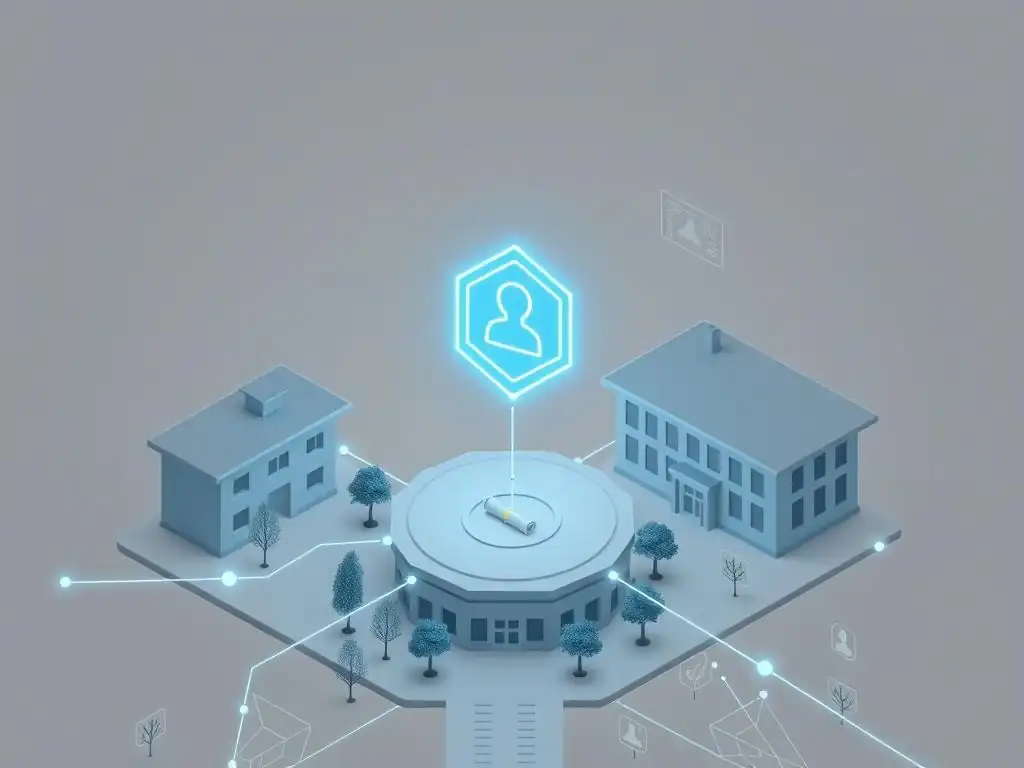
Smart Contracts for Credential Issuance and Verification
In more modern blockchain verifiable credentials education records systems, particularly those built on platforms like Ethereum or other smart contract-enabled blockchains, smart contracts play a central role. A smart contract is a self-executing contract with the terms of the agreement directly written into code. In the context of educational credentials, smart contracts can automate the issuance and verification processes.
An issuing institution can deploy a smart contract that contains the logic for creating, signing, and anchoring credentials on the blockchain. When a student graduates or completes a course, the institution triggers the smart contract, providing the student's identity information and the details of the credential.
The smart contract then mints a unique, non-fungible token (NFT) or a similar digital asset representing the credential, links it to the student's decentralized identity, and records it on the blockchain. Verification involves another party querying the smart contract or the blockchain to confirm the credential's existence and validity, checking the cryptographic signature against the issuing institution's public key.
// Example (conceptual) Smart Contract Function for Issuing a Credential
function issueCredential(address studentDID, string memory credentialHash, string memory metadataURI) public onlyIssuer {
    // Ensure the studentDID is valid and the credentialHash is unique
    // Store the credential hash and metadata linked to the studentDID
    credentials[studentDID].push(Credential(credentialHash, metadataURI, block.timestamp));
    emit CredentialIssued(studentDID, credentialHash);
}

// Example (conceptual) Smart Contract Function for Verifying a Credential
function verifyCredential(address studentDID, string memory credentialHash) public view returns (bool) {
    // Check if the studentDID has a credential with the given hash
    for (uint i = 0; i < credentials[studentDID].length; i++) {
        if (keccak256(abi.encodePacked(credentials[studentDID][i].credentialHash)) == keccak256(abi.encodePacked(credentialHash))) {
            return true; // Credential found and matches hash
        }
    }
    return false; // Credential not found or hash mismatch
}
Decentralized Identity (DID) for Student Ownership of Records
A critical component of a blockchain verifiable credentials education records system is the use of Decentralized Identity (DID). DIDs are a new type of identifier that is globally unique, persistent, and resolvable, without requiring a centralized registry. They are cryptographically secured and controlled by the individual owner, not an organization.
In this context, each student would have a DID associated with their blockchain wallet or identity management application. When an institution issues a credential, it is linked to the student's DID on the blockchain. This means the student, and only the student, controls access to their credentials associated with that DID. They can grant permission to third parties (like employers) to view or verify specific credentials, providing a higher level of privacy and data control than traditional systems where institutions hold and manage all records. This empowers students as the true owners of their educational history.
Interoperability with Other Educational Platforms
For blockchain verifiable credentials to achieve widespread adoption, interoperability with existing and future educational platforms is essential. This includes learning management systems (LMS), student information systems (SIS), job portals, and other credential verification services. Standards like the W3C Verifiable Credentials Data Model are crucial for ensuring that credentials issued on one system can be understood and verified by another, regardless of the underlying blockchain or technology stack used.
Developing APIs and connectors that allow institutions to easily issue credentials from their SIS and for platforms like LinkedIn or job application portals to easily request and verify blockchain-based credentials is key. The goal is to create a seamless ecosystem where a learner's blockchain-based educational records can travel with them throughout their career, easily accessible and verifiable across different platforms and borders, maximizing the utility of the blockchain verifiable credentials education records they earn.
Benefits and Challenges of Blockchain in Education: A Balanced Perspective
Advantages of Using Blockchain for Educational Credentials
The adoption of blockchain technology for educational credentials offers several significant advantages that address long-standing inefficiencies and security risks in traditional systems. These benefits accrue to students, institutions, and third-party verifiers alike, paving the way for a more trustworthy and efficient educational ecosystem.
Reduced Fraud and Counterfeit Diplomas
One of the primary benefits is the dramatic reduction in diploma and credential fraud. Traditional paper certificates are relatively easy to forge, and verifying their authenticity can be difficult, especially across international boundaries. By issuing credentials on a blockchain, institutions create records that are cryptographically secure and immutable.
Any attempt to alter a blockchain verifiable credential would break the cryptographic link to the original record, making the fraud immediately detectable upon verification against the blockchain. This provides a much higher level of assurance for employers and other institutions that the qualifications presented are genuine, preserving the integrity of educational achievements and the reputation of issuing bodies.
Increased Transparency and Trust
Blockchain's inherent transparency (for public blockchains) and the immutability of its ledger foster increased trust in educational records. While sensitive personal data is not typically stored directly on the public chain, the record of issuance and a verifiable hash or pointer are. This allows any authorized party to independently verify the existence and authenticity of a credential directly on the blockchain, without relying solely on the issuing institution's word or database.
This decentralized verification process removes the need for trust intermediaries and builds a system where the validity of a credential can be cryptographically proven. This enhanced trust is beneficial for international students whose credentials may be less familiar to foreign institutions or employers, and for employers needing to quickly and confidently verify a candidate's qualifications.
Empowerment of Students with Control Over Their Data
Perhaps the most empowering benefit for individuals is the shift in control over their educational records. With blockchain verifiable credentials linked to their decentralized identity, students become the owners and custodians of their own data. They no longer need to rely on institutions to provide copies or verify their credentials on their behalf.
Students can securely store their credentials in a digital wallet and choose precisely which credentials to share and with whom. This level of control respects data privacy and gives individuals agency over their educational narrative, making it easier to manage their professional profile and pursue opportunities without administrative hurdles. This contrasts sharply with traditional models where institutions maintain primary control and access to student records.
Challenges to Overcome in Blockchain Education Implementation
Despite the significant potential, the widespread implementation of blockchain verifiable credentials in education faces several notable challenges that need to be addressed for successful adoption. These challenges span technical, regulatory, and human factors, requiring careful planning and collaboration.
Scalability Concerns for Large Institutions
Public blockchains, while offering high security and decentralization, can sometimes face scalability issues, particularly regarding transaction throughput and associated costs (gas fees). For very large universities issuing thousands or tens of thousands of credentials annually, the volume of transactions needed to anchor each credential on a public chain could become a significant technical and financial burden.
While solutions like layer-2 scaling, private/permissioned blockchains (though these trade off some decentralization), or alternative anchoring mechanisms exist, finding a scalable and cost-effective solution that maintains sufficient decentralization and security is crucial for widespread institutional adoption. The infrastructure must be robust enough to handle the volume without becoming prohibitively expensive or slow during peak periods like graduation seasons.
Regulatory Compliance and Data Privacy
Navigating the complex landscape of data privacy regulations, such as GDPR in Europe or similar laws in other regions, is a major challenge. While blockchain offers security, storing personal data directly on immutable public ledgers is generally not compliant with these regulations, which often grant individuals the right to erasure.
Blockchain verifiable credentials education records systems must be designed carefully to comply. This typically involves storing minimal or no personal data directly on the blockchain, instead using hashes and storing the actual credential data off-chain in a secure, privacy-preserving manner (e.g., encrypted and controlled by the student's DID). Institutions must ensure their implementation meets all relevant legal requirements regarding data handling and consent.
User Adoption and Training
A significant hurdle is the need for user adoption and training for all stakeholders – institutions, students, and third-party verifiers (like employers). Institution administrators need to learn how to issue and manage blockchain credentials. Students need to understand how to receive, store, and share their digital credentials using wallets or applications. Employers need to know how to verify these new types of credentials.
This requires substantial educational effort and the development of user-friendly interfaces and tools. Without widespread understanding and adoption across the ecosystem, the benefits of blockchain verifiable credentials education records cannot be fully realized. The technology must be accessible and intuitive for non-technical users to integrate seamlessly into existing processes.
Future Trends in Blockchain and Education
The Rise of Decentralized Learning Platforms
Looking ahead, blockchain technology is poised to influence not just credentialing but the very platforms on which education is delivered. Decentralized learning platforms built on blockchain could offer new models for course creation, delivery, and accreditation. These platforms could potentially allow educators and content creators to be directly compensated via smart contracts based on student engagement or completion, bypassing traditional institutional structures.
Furthermore, these platforms could leverage blockchain for transparent record-keeping of learning progress, participation, and assessment results, creating a more granular and verifiable record of a student's learning journey than just a final diploma. This aligns with the trend towards lifelong learning and the need to document a diverse range of skills and experiences gained outside traditional degree programs.
Blockchain-Based Micro-credentials and Skills Verification
Blockchain verifiable credentials are particularly well-suited for issuing and managing micro-credentials – digital certificates awarded for completing short courses, workshops, or demonstrating specific skills. As the job market increasingly values specific competencies over broad degrees, the ability to easily issue and verify these granular achievements becomes crucial.
Blockchain allows individuals to build a verifiable portfolio of skills and micro-credentials earned from various providers throughout their career. This provides employers with a more detailed and trustworthy picture of a candidate's capabilities than a traditional resume alone. The immutability of blockchain ensures that these micro-credentials, which might be issued by less formal or transient organizations, remain verifiable long-term.
The Metaverse and Immersive Learning Experiences on the Blockchain
The emerging concept of the Metaverse – persistent, shared virtual spaces – offers another frontier for blockchain in education. Immersive learning experiences within the Metaverse could generate new forms of verifiable achievements or participation records. Blockchain could be used to own virtual learning assets, secure identity within the virtual space, and issue credentials for skills acquired in simulated environments.
Imagine earning a verifiable credential for mastering a complex procedure in a VR medical simulation or demonstrating proficiency in a language through immersive role-playing in the Metaverse, with the credential instantly issued and linked to your DID on the blockchain. This integration could blur the lines between virtual and real-world achievements, all documented and verified on the chain, further expanding the scope of blockchain verifiable credentials education records.
Conclusion: The Future of Education is on the Blockchain
Blockchain: A Key Enabler for Educational Innovation
Blockchain technology is not merely an incremental improvement for educational administration; it is a foundational technology capable of enabling significant innovation across the sector. By providing a secure, transparent, and decentralized infrastructure for managing educational records, blockchain addresses fundamental issues of trust, security, and efficiency that have plagued traditional systems for decades.
From reducing fraud and streamlining verification to empowering learners with control over their data, the applications of blockchain verifiable credentials in education are profound. While challenges related to scalability, regulation, and adoption remain, ongoing development and pilot programs demonstrate the technology's readiness for broader deployment. Blockchain is set to be a key enabler for the next generation of educational services and infrastructure.
Empowering Learners and Transforming Education Through Decentralization
Ultimately, the move towards blockchain verifiable credentials education records represents a shift towards a more learner-centric model. By placing control of credentials in the hands of the individual and providing a decentralized, universally verifiable record of achievement, blockchain empowers learners to navigate their educational and professional lives with greater autonomy and trust.
This transformation extends beyond just record-keeping; it has the potential to influence how learning is accredited, how skills are recognized, and how educational institutions interact with their students and the wider world. As the technology matures and adoption grows, blockchain verifiable credentials education records will likely become a standard, fundamentally reshaping the landscape of education and credentialing for the better.
Frequently Asked Questions
What are blockchain verifiable credentials?
Blockchain verifiable credentials are digital certificates stored on a blockchain that validate an individual's qualifications or achievements, ensuring security and transparency.
How does blockchain improve educational records management?
By using blockchain technology, educational institutions can create immutable records of students' achievements, reducing the risk of fraud and enhancing trust in credentials.
What are the benefits of using blockchain for credentials verification?
The use of blockchain for credentials verification allows for instant access, cost savings, and enhanced security, streamlining the process for employers and educational institutions alike.
How can institutions implement blockchain technology for education?
Institutions can integrate blockchain solutions by partnering with technology providers, developing smart contracts, and training staff on the potential impacts of this transformative technology.
What is the future of blockchain in education?
The future of blockchain in education includes greater adoption of verifiable credentials, increased interoperability between systems, and a shift towards more decentralized educational frameworks, enhancing accessibility and integrity.
Final Reflection: Embracing Trust and Transparency in Education
The exploration of blockchain technology for verifiable credentials and educational records underscores a critical need in today's digital age: establishing trust and transparency in the validation of skills and knowledge. As we've seen, the potential of blockchain to revolutionize how we manage and share educational achievements is immense, offering a secure, immutable, and universally accessible system that benefits learners, institutions, and employers alike.
This shift towards decentralized verification not only streamlines processes but also fundamentally alters the power dynamics within education. The ability for individuals to own and control their educational data is a paradigm shift with profound implications for lifelong learning and career mobility. Education is the most powerful weapon which you can use to change the world,
Nelson Mandela famously stated. Blockchain empowers individuals to wield this weapon more effectively, by ensuring their educational achievements are recognized and respected globally.
Now, as you consider the possibilities presented by blockchain verifiable credentials and educational records, I invite you to reflect on your own educational journey. How might this technology have impacted your experiences? How can you advocate for its adoption to create a more equitable and transparent future for education, one where credentials truly reflect the skills and knowledge of individuals, regardless of their background or location? Let us embrace this transformative technology and build a future where learning is truly verifiable, accessible, and empowering for all.
Okay, I understand. Here's a CTA crafted according to your specifications for an article titled "Education on the Chain: Blockchain for Verifiable Credentials and Educational Records" on a website named Blockchain Trends (blockchaintrends.org):
Unveil Your Educational Future with Blockchain!
Thank you for exploring the exciting possibilities of blockchain in education. You've gained valuable insights into how this technology can revolutionize credentials and records. Now, let's put that knowledge into action!
Here are a few ways you can further engage with blockchain in education:
- Explore the Potential of Blockchain Credentials: Research existing blockchain-based credentialing platforms and identify how they could benefit you or your institution.
- Contribute to the Conversation: Share this article with your network on social media to ignite discussions about blockchain's role in shaping the future of education.
- Advocate for Innovation: Reach out to educational institutions or organizations and suggest a pilot project exploring blockchain solutions for their credentialing and record-keeping needs.
What steps will you take to champion the use of blockchain to improve educational transparency and access?
Leave a Reply