
Land Records Reimagined: Global Case Studies in Blockchain Land Registry Solutions


Welcome to Blockchain Trends, your hub for unraveling the real-world impact of blockchain technology. Forget just cryptocurrencies; we're diving deep into the innovative applications transforming industries. Ever wondered how blockchain can revolutionize something as fundamental as property ownership? This week, we're exploring Land Records Reimagined, uncovering global case studies in blockchain land registry solutions. Discover how this technology is streamlining processes, combating fraud, and building a more secure and transparent future for land ownership. Ready to see how blockchain is reshaping the world, one title at a time?
Land Records Reimagined: Global Case Studies in Blockchain Land Registry Solutions
- Introduction: Revolutionizing Land Administration with Blockchain Technology
- Blockchain Land Registry Solutions: A Global Perspective
- Case Study 1: Georgia - A Success Story in Blockchain Land Titling
- Case Study 2: Sweden - Streamlining Land Transactions with Distributed Ledger Technology
- Case Study 3: Honduras - Combating Corruption in Land Management Using Blockchain
- Comparative Analysis: Key Features and Outcomes of Different Blockchain Land Registry Implementations
- Overcoming Challenges in Blockchain Land Registry Adoption
- The Future of Blockchain Land Registry: Trends and Predictions
- Conclusion: Blockchain's Transformative Power in Land Governance
-
Frequently Asked Questions
- What are Blockchain Land Registry Solutions?
- What are the key benefits of using blockchain for land registries?
- How do Blockchain Land Registry Solutions address issues with traditional land registries?
- Are there any real-world examples of Blockchain Land Registry Solutions in action?
- What are the potential challenges in implementing Blockchain Land Registry Solutions?
- Final Reflection: Empowering Ownership Through Transparency
- Dive Deeper: Pioneer the Future of Land Ownership!
Introduction: Revolutionizing Land Administration with Blockchain Technology
The Challenges of Traditional Land Record Systems
Traditional land record systems, often paper-based or relying on outdated digital databases, face significant challenges globally. These systems are frequently centralized, making them vulnerable to data manipulation, fraud, and corruption. The processes involved in land registration and transfer are typically slow, opaque, and expensive, requiring multiple intermediaries and extensive paperwork. This complexity often leads to delays, errors, and disputes over land ownership, particularly in regions with weak governance or historical conflicts. For instance, in many developing nations, a significant portion of land ownership remains unregistered, hindering economic development and creating legal uncertainty.
Furthermore, the lack of transparency in traditional systems makes it difficult for individuals and institutions to verify ownership claims and track the history of land transactions. This opacity can fuel illegal land grabs and dispossess vulnerable populations. The administrative burden on government agencies responsible for maintaining these records is also substantial, requiring vast resources for storage, security, and manual verification processes. The susceptibility to single points of failure, whether due to natural disasters, technical malfunctions, or malicious attacks, poses a constant threat to the integrity and accessibility of vital land ownership information.
Blockchain's Potential for Transparent and Secure Land Ownership
Blockchain technology offers a compelling alternative to traditional land administration by providing a decentralized, immutable, and transparent ledger for recording land ownership and transaction data. Its inherent security features, such as cryptographic hashing and distributed consensus mechanisms, make it extremely difficult to alter records once they are added to the chain, significantly reducing the risk of fraud and unauthorized changes. By distributing copies of the ledger across multiple nodes, blockchain eliminates single points of failure and enhances the resilience of the land registry system.
The transparency of a public or permissioned blockchain allows relevant parties, and in some models, the public, to verify transaction details and ownership history while maintaining necessary privacy through data encryption and access controls. This transparency can help curb corruption and increase public trust in the land administration process.
Moreover, blockchain can streamline transactions by enabling automated processes through smart contracts, potentially reducing the time and cost associated with land transfers and registration. The potential of blockchain land registry solutions lies in creating systems that are not only more secure and transparent but also more efficient and accessible for all stakeholders involved in land ownership and management.
Blockchain Land Registry Solutions: A Global Perspective
Overview of Blockchain-Based Land Administration Initiatives Worldwide
Globally, governments and private entities are exploring and implementing blockchain-based initiatives to address the shortcomings of traditional land registry systems. These projects vary in scope, technological approach, and stage of development, ranging from pilot programs to full-scale deployments. Countries like Georgia, Sweden, and Honduras (though with challenges) have garnered attention for their efforts to leverage distributed ledger technology for land administration. Other nations, including India, Brazil, and Ghana, have also initiated pilot projects or feasibility studies to assess the viability of using blockchain for land records.
These initiatives often involve collaborations between government land agencies, technology companies, and financial institutions. The specific implementation details differ significantly, with some projects utilizing public blockchains like Bitcoin or Ethereum (or variations), while others opt for private or permissioned ledger technologies tailored for enterprise use. The primary goals shared across these diverse efforts include enhancing data security, improving process efficiency, increasing transparency, and combating corruption related to land ownership and transactions. The growing interest reflects a global recognition of blockchain's potential to fundamentally transform how land rights are recorded, verified, and transferred.
Key Benefits of Implementing Blockchain for Land Records
Implementing blockchain land registry solutions offers a multitude of benefits over conventional systems. Perhaps the most significant advantage is enhanced security and immutability; once a land record is written to the blockchain, it is cryptographically linked to previous records and distributed across the network, making it virtually impossible to tamper with without consensus from the majority of network participants. This dramatically reduces the risk of fraudulent claims and unauthorized alterations to ownership details.
Another crucial benefit is increased transparency. Depending on the design, blockchain can allow stakeholders to view transaction histories and verify the integrity of records, fostering trust and reducing opportunities for corrupt practices. Furthermore, blockchain can significantly improve efficiency by automating processes like verification and transfer through smart contracts, potentially cutting down the time required for land transactions from weeks or months to days or even hours.
This efficiency also translates into reduced administrative costs. The distributed nature of blockchain also ensures greater resilience, as the system does not rely on a single database that could be compromised or destroyed. These combined benefits make blockchain land registry a compelling solution for modernizing land administration globally.
Case Study 1: Georgia - A Success Story in Blockchain Land Titling
Background: The Land Tenure Insecurity Problem in Georgia
Before exploring blockchain solutions, Georgia faced persistent issues with its traditional land registry system. Like many post-Soviet nations, it struggled with outdated paper records, bureaucratic inefficiencies, and a lack of public trust in the land administration process. Verifying land ownership was often a time-consuming and complex task, leading to uncertainty and hindering real estate development and investment.
Disputes over property boundaries and ownership were not uncommon, partly due to poor record-keeping and the potential for manipulation within the centralized system. The government recognized the need for a fundamental shift to create a more secure, transparent, and efficient land titling system to support economic growth and reduce corruption.
The National Agency of Public Registry (NAPR) of Georgia sought a technological solution that could provide a higher level of security and immutability for land records. Their goal was to build a system that could not be easily compromised, thereby increasing confidence among citizens and investors regarding the validity of land titles. The existing system, while digitized to some extent, still relied on centralized databases that were perceived as vulnerable and lacked the cryptographic security features offered by distributed ledger technology. Addressing these challenges was paramount for establishing a reliable foundation for property rights in the country.
The Blockchain Solution: Bitcoin Blockchain and Its Implementation via Partnership with Bitfury
In 2016, Georgia partnered with Bitfury Group, a leading blockchain technology company, to pilot a project integrating blockchain into its land registry system. The innovative aspect of this approach was the decision to anchor land title hashes onto the public Bitcoin blockchain. Instead of storing the full land records on the blockchain, which would raise privacy concerns and scalability issues, the system securely hashes the digital land certificates and transaction data. These cryptographic hashes, acting as unique digital fingerprints for the records, are then immutably recorded on the Bitcoin blockchain during its regular transaction processing.
This implementation leverages the robust security and global distribution of the Bitcoin network, making it incredibly difficult for anyone to alter a land record without it being immediately detectable. The actual, detailed land records remain stored in NAPR's existing database, but their integrity is verifiable via the corresponding hash on the blockchain.
Bitfury developed the necessary software layer to interface NAPR's system with the Bitcoin blockchain, automating the process of hashing and timestamping land transactions. This pilot demonstrated a practical way to use a public, established blockchain to enhance the security and auditability of sensitive government data without migrating the entire database onto the chain.
Results and Impact: Increased Transparency and Reduced Land Disputes
The initial pilot project in Georgia, which began processing land transactions onto the Bitcoin blockchain in early 2017, demonstrated promising results. By anchoring the hashes of land certificates and transaction metadata onto the immutable ledger, the system significantly increased the transparency and trustworthiness of the records. Any attempt to alter a record in the central database would result in a mismatch with the corresponding hash on the blockchain, providing an undeniable audit trail and proof of tampering.
While specific nationwide statistics on dispute reduction directly attributable to the blockchain pilot are complex to isolate, the technology's introduction aimed to deter fraudulent activities by making the records verifiable and immutable. The process of registering property became more efficient, with digital certificates secured by blockchain hashes.
The project successfully proved the technical feasibility of integrating a public blockchain with a legacy government system to enhance data integrity. Although the full-scale, nationwide adoption faced various technical and administrative hurdles, the Georgian initiative remains a pioneering example of using blockchain land registry solutions to improve security and transparency in public administration, paving the way for subsequent explorations in other countries.
Case Study 2: Sweden - Streamlining Land Transactions with Distributed Ledger Technology
Addressing Inefficiencies in the Swedish Land Registry
Sweden, often perceived as having a relatively efficient public administration, still faced challenges within its traditional land transfer process. The current system, while digitalized to a significant extent by the national mapping, cadastral, and land registration authority, Lantmäteriet, involved multiple steps and intermediaries. The process typically required physical meetings, manual document handling, and coordination between buyers, sellers, banks, and Lantmäteriet. This multi-party coordination often resulted in transaction times that could stretch from weeks to several months, causing delays and uncertainty for those involved in property deals.
The inefficiencies stemmed partly from the sequential nature of the process and the need for various parties to verify information independently and manually pass documents along. While fraud was less prevalent than in some other regions, the system was still susceptible to human error and lacked the real-time, shared view of the transaction status that distributed ledger technology could provide. Lantmäteriet recognized the potential for DLT to streamline this complex workflow, reduce processing times, and lower administrative costs associated with property transfers, aiming to create a more modern and efficient system for blockchain land registration.
Designing a Blockchain-Based System for Efficient Land Transfers
In 2016, Lantmäteriet, in collaboration with technology provider ChromaWay, Telia (a telecom operator), and several banks (including SBAB and Landshypotek Bank), launched a pilot project to explore using distributed ledger technology for land transfers. The project designed a prototype blockchain-based system that created a shared, immutable record of the property transaction process accessible to all authorized parties in real-time. The system aimed to track the entire workflow digitally, from the initial agreement to the final registration of the new owner.
The proposed DLT solution involved representing key transaction data – such as buyer and seller details, property information, and conditions of sale – on a shared ledger. Smart contracts were envisioned to automate conditional steps in the process, such as the release of funds upon successful registration.
This design allowed all participants (buyer, seller, agents, banks, and Lantmäteriet) to view the same, up-to-date information simultaneously, eliminating the need for repeated verification and manual communication. The pilot focused on the technical and legal feasibility of using a permissioned ledger for this purpose, demonstrating how blockchain land registry technology could create a more integrated and efficient workflow.
Lessons Learned and Future Scalability of the Sweden Project
The Swedish pilot project, conducted over several phases, successfully demonstrated the technical viability of using DLT to streamline land transfers. The project estimated that the blockchain-based system could potentially reduce the time taken for a property transaction significantly, from an average of several weeks to possibly just a few days, once fully implemented. It also highlighted potential cost savings by reducing manual processing and administrative overhead. The multi-stakeholder collaboration was crucial in designing a system that met the needs of all parties involved in the land transfer ecosystem.
However, the project also underscored the significant legal and regulatory challenges associated with implementing blockchain land registry solutions in a well-established legal framework. Integrating the DLT system with existing laws regarding digital signatures, data privacy (like GDPR), and the legal status of smart contracts required careful consideration and potential legislative changes.
While the technical pilot concluded successfully, moving from a prototype to a nationwide, legally compliant system is a complex undertaking. The Swedish project remains a valuable case study, illustrating both the technical promise of DLT for improving land administration efficiency and the considerable non-technical hurdles that must be overcome for broad adoption of blockchain land records.
Case Study 3: Honduras - Combating Corruption in Land Management Using Blockchain
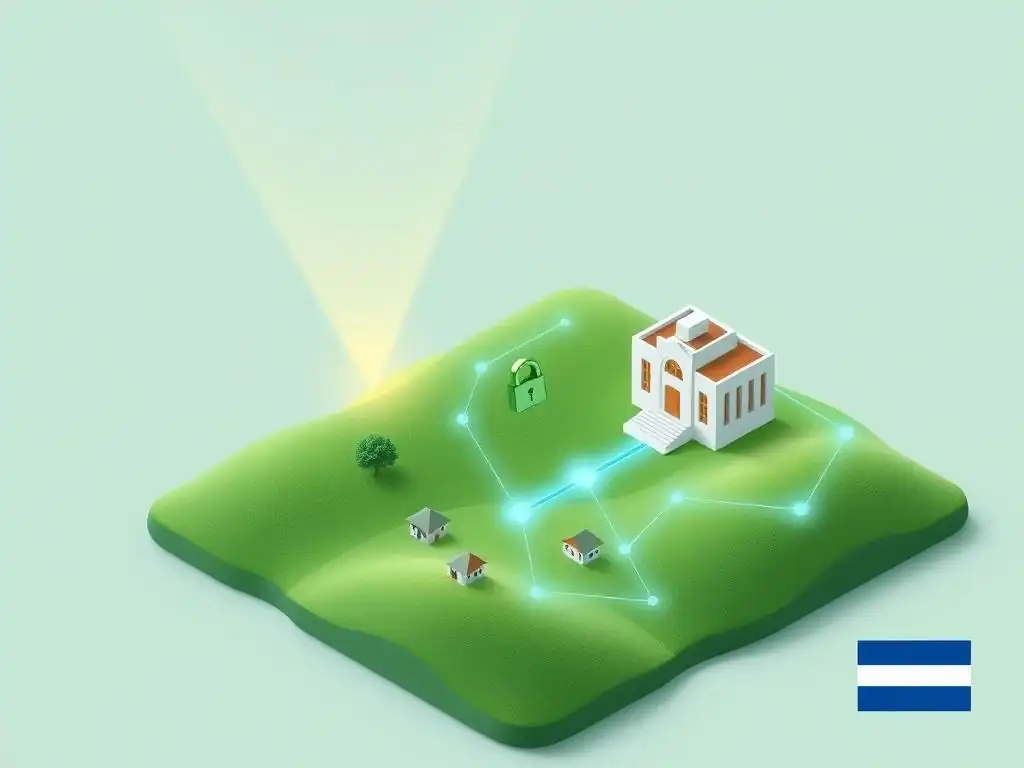
The Problem of Corruption and Fraudulent Land Claims in Honduras
Honduras has historically struggled with high levels of corruption and insecurity regarding land ownership. The traditional land registry system was plagued by issues including forged documents, duplicate titles, illegal land seizures, and a general lack of trust in official records. This environment of uncertainty and fraud created significant challenges for citizens, businesses, and the government alike, hindering economic development and contributing to social instability. The centralized nature of the existing system made it vulnerable to manipulation by corrupt officials and powerful entities, making it difficult for legitimate owners to prove their rights and protect their property.
The scale of the problem was substantial, with many land parcels having contested ownership or lacking clear, verifiable titles. This made land a risky asset and discouraged investment. Addressing this deep-seated issue required a fundamental change in how land records were managed and secured. The government sought a solution that could provide an immutable, transparent, and auditable record of land ownership to restore confidence and combat the pervasive corruption that undermined the integrity of the land administration system. Blockchain land registry was identified as a potential technology to achieve these goals.
Leveraging Blockchain for Enhanced Security and Auditability of Land Records
In 2015, the Honduran government announced plans to implement a blockchain-based land registry system in partnership with Factom, a U.S.-based blockchain technology company. The primary motivation was to leverage blockchain's core features – immutability and auditability – to create a tamper-proof record of land titles and transactions.
The idea was to record hashes of land documents and metadata onto the Factom blockchain (built on top of the Bitcoin blockchain), similar to the approach later adopted in Georgia. This would create a secure, verifiable history of ownership that could not be easily altered or deleted by corrupt individuals within the system.
The proposed system aimed to replace the vulnerable paper-based and centralized digital databases with a distributed ledger that provided cryptographic proof of the existence and integrity of each land record at a specific point in time. This would make it significantly harder to create fraudulent titles or erase evidence of illegal transactions.
By providing a transparent and auditable history, the blockchain could help expose corrupt practices and provide citizens with a reliable way to verify the legitimacy of their land claims. The potential of blockchain land registry in this context was seen as a powerful tool for improving governance and securing property rights.
The Role of Smart Contracts in Automating Land Registration Processes
While the initial Factom project in Honduras faced significant political and administrative hurdles and ultimately did not achieve full-scale implementation as originally envisioned, the potential role of smart contracts in such a system was part of the broader vision for blockchain land registry solutions. In a fully realized blockchain land registry, smart contracts could automate key stages of the land registration and transfer process, reducing the need for manual intervention and minimizing opportunities for bribery and delay.
For instance, a smart contract could be programmed to automatically update the land registry record upon the verified fulfillment of specific conditions, such as the successful payment for the property and the digital signing of the transfer deed by all parties. This automation could streamline the workflow, ensure that processes are executed exactly as defined in the contract, and provide a transparent, auditable record of each step.
While the Honduran project didn't reach this stage, the concept illustrates how smart contracts could enhance efficiency and integrity in land administration by enforcing rules programmatically on the blockchain, further bolstering the security and reliability of blockchain land records.
Comparative Analysis: Key Features and Outcomes of Different Blockchain Land Registry Implementations
Technology Stack Comparison: Examining Different Blockchain Platforms
The case studies in Georgia, Sweden, and the initial attempt in Honduras highlight different approaches to the underlying blockchain technology. Georgia and Honduras (Factom project) opted to anchor data hashes onto established public blockchains – Bitcoin. This strategy leverages the immense security and decentralization of these networks but requires careful consideration of data privacy, as sensitive information is not stored directly on the public chain. Only cryptographic proofs are recorded, with the actual data residing off-chain in permissioned databases.
Sweden's pilot, in contrast, utilized a permissioned distributed ledger technology platform developed by ChromaWay. Permissioned ledgers offer more control over who can participate in the network and access data, which can be beneficial for government applications dealing with sensitive information. They often provide higher transaction throughput and lower latency compared to public blockchains. However, they are typically less decentralized than public chains, potentially introducing a degree of centralization risk if not managed carefully. The choice of technology stack for blockchain land registry solutions depends heavily on the specific goals, regulatory environment, and technical requirements of the implementing country.
Governance and Legal Frameworks: Challenges and Considerations
A critical factor highlighted by all case studies, particularly Sweden and the challenges faced in Honduras, is the complex interplay between blockchain technology and existing governance and legal frameworks. Implementing blockchain land registry requires more than just technical development; it necessitates aligning the technology with established property law, contract law, and data protection regulations.
Questions arise regarding the legal status of records stored on a blockchain, the validity of smart contracts as legal agreements, and compliance with data privacy laws like GDPR, which grants individuals rights over their personal data, including the right to be forgotten – a concept seemingly at odds with blockchain's immutability.
Governments must address who has the authority to write data to the blockchain, how errors or disputes are handled, and how the system integrates with judicial processes. Establishing clear governance models and potentially enacting new legislation are crucial steps for successful adoption. The experience in Honduras underscores the impact of political instability and lack of strong institutional frameworks on the success of even promising technological initiatives like blockchain land registration. The Swedish case shows that even in a stable environment, adapting legal frameworks to accommodate DLT presents significant hurdles.
Impact Assessment: Measuring the Effectiveness of Blockchain Solutions
Measuring the true impact and effectiveness of blockchain land registry solutions requires evaluating key metrics such as reduced transaction times, lower costs, decreased incidence of fraud and disputes, increased transparency, and improved public trust. The Georgian pilot reported improvements in transparency and aimed to reduce fraud by making records verifiable. The Swedish pilot projected significant reductions in transaction time. However, obtaining comprehensive, long-term data on the nationwide impact of these initiatives remains challenging, as many are still in pilot phases or facing implementation hurdles.
Quantifying the reduction in land disputes or the increase in investment directly attributable to blockchain land registry is complex, as numerous other factors influence these outcomes. Nevertheless, the potential benefits identified in these case studies – enhanced security (Georgia, Honduras), improved efficiency (Sweden), and greater transparency (all) – represent significant advancements over traditional systems. Future implementations will need robust frameworks for collecting and analyzing data to provide clearer evidence of the transformative power of blockchain land records in achieving their intended outcomes.
Overcoming Challenges in Blockchain Land Registry Adoption
Addressing Data Privacy and Security Concerns
One of the foremost challenges in implementing blockchain land registry solutions is balancing the need for transparency and security with data privacy requirements. Land records contain sensitive personal information about property owners. While blockchain's immutability is a security feature, it can conflict with regulations like GDPR, which grant individuals the right to request deletion of their data. Solutions often involve storing sensitive data off-chain in secure databases and using the blockchain only to store encrypted hashes or metadata, allowing verification without exposing private details.
Implementing robust access control mechanisms is also crucial. Permissioned blockchains or hybrid models can be used to ensure that only authorized parties (e.g., government officials, lawyers, banks) can access specific levels of data. Strong encryption protocols are necessary to protect data both on and off the chain. Furthermore, educating users and administrators about the security features and privacy implications of blockchain technology is vital to ensure trust and proper usage of the system. Addressing these concerns is paramount for gaining public acceptance and regulatory approval for blockchain land records.
Interoperability with Existing Land Record Systems
Integrating a new blockchain land registry system with existing legacy systems presents a significant technical and operational challenge. Governments cannot simply switch off old systems; a gradual transition is typically required. This involves ensuring seamless data exchange and compatibility between the new blockchain platform and existing databases, mapping systems (GIS), and other relevant government systems (e.g., tax authorities, planning departments). Data migration from old, potentially inconsistent records to the new blockchain format is also a complex task that requires careful planning and execution to maintain data integrity.
Developing middleware or API layers that facilitate communication between the blockchain and legacy systems is often necessary. Ensuring that data standards are consistent across different platforms is also critical for interoperability. The goal is to create a cohesive digital ecosystem where land information flows smoothly and reliably between different governmental and private sector stakeholders, leveraging the security and efficiency of blockchain land registry without disrupting essential existing services.
Ensuring Regulatory Compliance and Legal Validity
Navigating the legal and regulatory landscape is perhaps the most significant hurdle for widespread adoption of blockchain land registry solutions. Existing laws governing property rights, contracts, and data management were not designed with distributed ledger technology in mind. Governments need to clarify the legal status of records stored on a blockchain – are they the official source of truth? What happens if there's a discrepancy between the blockchain record and an off-chain document? The legal validity of smart contracts for automating legally binding processes like property transfer also needs to be established.
Compliance with data protection laws is another major concern, as discussed previously. Furthermore, governments must define clear rules for governance, dispute resolution, and error correction within the blockchain system. This often requires legislative changes or the issuance of new regulations. Successfully implementing blockchain land records necessitates close collaboration between technologists, legal experts, and policymakers to create a robust legal framework that supports the technology while upholding fundamental rights and legal principles.
The Future of Blockchain Land Registry: Trends and Predictions
Integration with Other Government Services
Looking ahead, blockchain land registry solutions are likely to become increasingly integrated with other government services, creating a more connected and efficient digital public infrastructure. Land ownership data is fundamental to many governmental functions, including property taxation, urban planning, infrastructure development, and environmental management. By linking the secure and transparent blockchain land registry with systems managing these services, governments can streamline processes, reduce administrative burdens, and improve data accuracy across different departments.
For example, integrating the blockchain land registry with a digital identity system could simplify property transactions by securely verifying the identities of buyers and sellers. Linking it with tax databases could automate property value updates and tax calculations. Integration with planning and zoning systems could provide real-time information on land use restrictions and development permissions. This convergence of blockchain land records with other public services promises to create a more efficient, transparent, and responsive government administration, unlocking significant public value.
The Rise of Decentralized Land Ownership Models
While current blockchain land registry initiatives primarily focus on digitizing and securing traditional, centralized concepts of land ownership, the technology could potentially facilitate more decentralized models in the future. Concepts like fractional ownership of real estate via tokenization could become more accessible and manageable using blockchain. Smart contracts could enable complex ownership structures and automated governance of shared land assets.
Furthermore, blockchain could support the management of communal land rights or the creation of decentralized autonomous organizations (DAOs) for managing collective property. While these models are still nascent and face significant legal and social challenges, blockchain provides the underlying technological infrastructure to record and manage these complex, potentially decentralized forms of land tenure in a transparent and secure manner. The evolution of blockchain land registry solutions may eventually move beyond merely securing existing models to enabling entirely new paradigms of land ownership and management.
Exploring the Potential of NFTs for Land Titling
Non-Fungible Tokens (NFTs), which represent unique assets on a blockchain, are being explored for their potential application in representing land titles. An NFT could serve as a unique, digital certificate of ownership for a specific parcel of land recorded on a blockchain land registry. Each NFT would contain metadata linking it to the specific property details, cadastral information, and the owner's identity (or a verified reference to it).
Using NFTs for land titling could streamline the transfer of ownership, as the NFT itself could be transferred between parties on the blockchain, subject to legal and regulatory requirements being met (potentially automated via smart contracts). This could make property transactions as simple as transferring a digital asset, while maintaining a secure and verifiable record of ownership history. While this application of NFTs is still in early stages and faces significant legal and technical hurdles, it represents a fascinating future direction for blockchain land records, potentially simplifying property transfers and enabling new forms of digital interaction with real-world assets.
Conclusion: Blockchain's Transformative Power in Land Governance
Summarizing the Benefits of Blockchain Land Registry Solutions
The case studies of Georgia, Sweden, and the initiatives in Honduras clearly demonstrate the transformative potential of blockchain technology for land administration. By providing a secure, immutable, and transparent ledger, blockchain land registry solutions offer significant advantages over traditional systems. These benefits include dramatically enhanced security against fraud and tampering, increased efficiency in land registration and transfer processes, greater transparency that helps combat corruption, and improved resilience through decentralization.
These initiatives, despite facing various technical, legal, and political challenges, highlight that blockchain is not just a concept but a viable technology for revolutionizing how governments manage land records. From anchoring hashes on public chains for security (Georgia) to building permissioned systems for efficiency (Sweden), the diverse approaches show flexibility in applying distributed ledger technology to meet specific national contexts and challenges in land management. The core promise remains the same: to create a reliable, trustworthy, and efficient foundation for property rights.
Call to Action: Promoting the Adoption of Blockchain for Land Administration
The global exploration of blockchain land registry solutions is still in its early stages, but the potential benefits for improving governance, securing property rights, and fostering economic development are substantial. Governments and international organizations should actively explore and support the adoption of blockchain technology in land administration. This requires investing in pilot projects, developing appropriate legal and regulatory frameworks, fostering collaboration between public and private sectors, and building technical capacity.
Promoting the adoption of blockchain land records is not merely about implementing a new technology; it is about building more transparent, secure, and equitable societies. By securing the fundamental right to property through immutable digital records, countries can unlock economic potential, reduce conflict, and empower their citizens. The lessons learned from pioneering initiatives like those in Georgia and Sweden provide valuable insights for future implementations, paving the way for a future where blockchain land registry is the standard for secure and efficient land governance worldwide.
Frequently Asked Questions
What are Blockchain Land Registry Solutions?
Blockchain land registry solutions are digital systems that use blockchain technology to record and manage land ownership and property information. They aim to create a secure, transparent, and immutable record of land transactions.
What are the key benefits of using blockchain for land registries?
The main advantages include increased transparency, reduced fraud, and improved efficiency in land record management. This leads to greater trust and reduced disputes over land ownership.
How do Blockchain Land Registry Solutions address issues with traditional land registries?
Traditional systems often suffer from corruption, inefficiency, and lack of transparency. Blockchain solutions offer a tamper-proof and easily accessible record, mitigating these problems.
Are there any real-world examples of Blockchain Land Registry Solutions in action?
Yes, several countries are piloting or implementing these solutions. Examples include projects in Georgia, Sweden, and Honduras, showcasing the global interest in this technology.
What are the potential challenges in implementing Blockchain Land Registry Solutions?
Challenges include regulatory hurdles, data migration complexities, and ensuring interoperability with existing systems. Also, public acceptance and digital literacy are crucial for success.
Final Reflection: Empowering Ownership Through Transparency
The case studies presented throughout this article underscore the undeniable potential of blockchain land registry solutions to revolutionize property ownership worldwide. From mitigating fraud to streamlining bureaucratic processes, the benefits are clear. This isn't just about technological advancement; it's about fundamentally reshaping how individuals and communities interact with their land rights, fostering greater security and economic empowerment in the process.
The journey towards widespread adoption of blockchain land registries is undoubtedly complex, requiring careful consideration of legal frameworks, technological infrastructure, and societal acceptance. However, the potential for positive impact is so profound that it compels us to persevere. The current system, often plagued by opacity and inefficiency, disproportionately affects vulnerable populations. > “The earth is the Lord’s, and everything in it, the world, and all who live in it.” This ancient wisdom reminds us that responsible stewardship and equitable access to land are fundamental to a just and thriving society.
As we conclude this exploration of blockchain land registry solutions, I invite you to consider the role you can play in shaping this future. Whether you are a policymaker, a technologist, a community leader, or simply an engaged citizen, your voice matters. Embrace the potential of this technology to create a more equitable and transparent world, one plot of land at a time. Let us work together to ensure that the promise of secure and accessible land ownership becomes a reality for all.
Okay, I understand. Here's a CTA I've crafted based on your provided information about an article titled "Land Records Reimagined: Global Case Studies in Blockchain Land Registry Solutions" for the website "Blockchain Trends" (blockchaintrends.org):
Dive Deeper: Pioneer the Future of Land Ownership!
Thank you for exploring how blockchain is revolutionizing land registry across the globe! You've now seen how this technology is creating more transparent, secure, and efficient systems. Ready to be part of the change?
Here's how you can take action:
- Immediately investigate the possibility of proposing a blockchain-based land registry initiative in your local community. Research relevant stakeholders and potential pilot programs.
- Explore the open-source blockchain land registry platforms mentioned in the case studies. Consider contributing to these projects or forking them to create your own solution.
- Share this article with your network and spark a discussion about the potential of blockchain to transform land governance.
What innovative approach will you champion to bring blockchain's power to land registry in your region? Let us know in the comments!
Leave a Reply