
Pharmaceutical Precision: Examining Blockchain's Role in Drug Supply Chain Integrity


Welcome to Blockchain Trends, your go-to source for understanding the real-world impact of blockchain technology. Beyond the hype of cryptocurrencies, discover how this revolutionary technology is reshaping industries and redefining trust.
Imagine a world free from counterfeit medications. This article delves into a compelling case study, exploring how blockchain drug supply chain integrity is not just a concept, but a tangible solution. Uncover the strategies, challenges, and successes of implementing blockchain to ensure the safety and authenticity of pharmaceuticals, and discover what this means for the future of healthcare. Intrigued? Keep reading to learn more!
Pharmaceutical Precision: Examining Blockchain's Role in Drug Supply Chain Integrity
- Introduction: The Urgent Need for Enhanced Drug Supply Chain Security
- Understanding Blockchain's Application in Pharmaceutical Traceability
-
The Benefits of Blockchain for Drug Supply Chain Integrity
- Enhanced Traceability: Tracking Drugs from Manufacturer to Patient
- Improved Authentication: Preventing Counterfeit Drug Entry
- Increased Transparency: Building Trust and Accountability
- Reduced Costs: Streamlining Operations and Minimizing Losses
- Enhanced Regulatory Compliance: Meeting Industry Standards
- Case Studies: Real-World Examples of Blockchain in Pharmaceutical Supply Chains
-
Challenges and Considerations for Blockchain Adoption in Pharmaceuticals
- Scalability: Handling Large Volumes of Data and Transactions
- Interoperability: Integrating with Existing Systems and Platforms
- Data Privacy: Protecting Sensitive Patient and Pharmaceutical Information
- Regulatory Uncertainty: Navigating Evolving Legal Frameworks
- Cost of Implementation: Justifying the Investment in Blockchain Technology
- The Future of Blockchain in the Pharmaceutical Industry
- Conclusion: Blockchain as a Catalyst for a Safer and More Transparent Pharmaceutical Supply Chain
-
Frequently Asked Questions
- How can blockchain technology improve drug supply chain integrity?
- What are the key benefits of using blockchain for drug supply chain management?
- What challenges exist in implementing blockchain solutions for drug supply chains?
- How does blockchain help in combating counterfeit drugs specifically?
- What is the future outlook for blockchain adoption in the pharmaceutical industry?
- Final Reflection: Securing Health, One Block at a Time
Introduction: The Urgent Need for Enhanced Drug Supply Chain Security
The pharmaceutical supply chain is one of the most complex and critical in the world, responsible for delivering life-saving medications to billions of people. However, this complexity also makes it vulnerable to disruption, theft, and the insidious infiltration of counterfeit drugs. Ensuring the integrity of this supply chain is not just a matter of logistics; it is fundamentally a matter of public health and safety. The global scale of drug distribution means that vulnerabilities in one region can have far-reaching consequences, necessitating robust, transparent, and secure systems from production to patient.
Maintaining the integrity of the pharmaceutical supply chain requires constant vigilance against a multitude of threats. These include not only deliberate criminal acts like counterfeiting and diversion but also operational challenges such as temperature excursions during transit, inefficient recall processes, and data silos that prevent effective communication between stakeholders. The traditional methods of tracking and verifying pharmaceuticals often rely on fragmented systems and paper-based records, which are easily manipulated or lost, highlighting the urgent need for a technological solution that can provide unassailable trust and transparency across the entire ecosystem.
Counterfeit Drugs: A Global Threat to Public Health and Safety
Counterfeit drugs represent a significant and growing global threat, undermining patient trust in healthcare systems and causing potentially devastating health consequences, including death. These fake medications may contain incorrect dosages, harmful substances, or no active ingredients at all. The World Health Organization (WHO) estimates that 1 in 10 medical products circulating in low- and middle-income countries are substandard or falsified.
While precise global figures are challenging to obtain due to the clandestine nature of the trade, some estimates suggest the value of the illicit counterfeit drug market could exceed \$200 billion annually. This trade bypasses regulatory oversight, posing direct risks to patients who believe they are receiving legitimate treatment.
The sophisticated nature of modern counterfeit operations makes detection difficult using traditional methods. Criminals are increasingly adept at replicating packaging, holograms, and other security features. The porous nature of global supply chains, with numerous handoffs between manufacturers, distributors, wholesalers, pharmacies, and patients, provides ample opportunity for counterfeit products to enter the legitimate system. This necessitates a robust, verifiable tracking mechanism that can establish the authenticity and provenance of a drug at any point in its journey, a capability that current fragmented systems often lack, leaving patients and healthcare providers vulnerable.
Traditional Supply Chains: Vulnerabilities and Weaknesses
Traditional pharmaceutical supply chains typically involve numerous intermediaries, each operating their own data systems with limited interoperability. This creates data silos, where information about a drug's origin, handling, and destination is not easily shared or verified across the network. Relying on paper trails or disparate electronic databases makes it difficult to achieve real-time visibility and creates blind spots where errors, theft, or the introduction of fraudulent products can occur undetected. The lack of a single, immutable record of a drug's journey complicates audits, investigations, and recalls.
Furthermore, the reliance on manual processes for verification and reconciliation, such as chargebacks between manufacturers and distributors, introduces inefficiencies and opportunities for disputes and errors. The absence of a universally accessible and trusted ledger means that verifying the legitimacy of a product or transaction often requires time-consuming communication and data matching between parties who may not fully trust each other's records. This fragmented approach hinders effective tracking, slows down critical processes like recalls, and ultimately compromises the overall blockchain drug supply chain integrity.
Blockchain Technology: A Promising Solution for Supply Chain Transparency
Blockchain technology offers a fundamentally new approach to data management and transaction recording, providing a potential solution to many of the vulnerabilities inherent in traditional pharmaceutical supply chains. At its core, a blockchain is a distributed, immutable ledger that records transactions across a network of computers. Once data is added to the chain, it is extremely difficult to alter or delete, creating a permanent and transparent history of events. This inherent security and transparency make it uniquely suited for tracking high-value, sensitive goods like pharmaceuticals.
By creating a shared, tamper-proof record of every handoff and transaction involving a drug, from the point of manufacture through packaging, shipping, distribution, and dispensing, blockchain can provide unprecedented visibility into the supply chain. This enhanced transparency allows all authorized participants to view the same, consistent data, reducing information asymmetry and fostering trust. Implementing blockchain for drug supply chain integrity can help verify the origin and authenticity of products, monitor conditions like temperature during transit, and streamline processes like recalls by providing immediate access to accurate tracking information.
Understanding Blockchain's Application in Pharmaceutical Traceability
Blockchain's core principles—distribution, immutability, and cryptographic security—lend themselves well to the challenges of pharmaceutical traceability. Unlike centralized databases, where a single point of failure or compromise can jeopardize the entire system, a blockchain's data is replicated across multiple nodes in the network. This distributed nature enhances resilience and security. Each transaction (or block of transactions) is cryptographically linked to the previous one, forming a chain that is incredibly difficult to alter without detection.
Applying blockchain to pharmaceutical traceability means creating a digital twin of the physical supply chain journey. As a drug moves from one entity to the next—say, from manufacturer to wholesaler—this transaction is recorded on the blockchain. This record can include details like the drug's serial number, location, time of transfer, and the identities of the parties involved. This shared, append-only ledger provides a single source of truth that all authorized participants can access and verify, significantly improving the ability to track a specific drug product throughout its lifecycle and bolstering blockchain drug supply chain integrity.
How Blockchain Works: A Simplified Explanation for Drug Tracking
Imagine a shared digital notebook where every participant in the drug supply chain—manufacturers, distributors, pharmacies—can write down the details of a drug's movement. In a traditional system, each participant keeps their own separate notebook. With blockchain, everyone shares the same notebook, and once something is written down, it's extremely difficult to erase or change it without everyone else noticing. Each "page" in this notebook is a "block" containing a list of recent transactions (like "Lot ABC transferred from Manufacturer X to Distributor Y at 10:00 AM on Jan 1st").
When a new transaction occurs, it's verified by multiple participants in the network (depending on the type of blockchain). Once verified, it's added as a new block to the end of the chain of existing blocks.
This new block is cryptographically linked to the previous one using a unique digital fingerprint (a hash). Because each block contains the hash of the previous block, altering any historical transaction would require recalculating the hashes for all subsequent blocks, a computationally intensive task that would be immediately visible to the network, thus ensuring the tamper-proof nature essential for blockchain drug supply chain integrity.
Immutable Records: Ensuring Data Integrity in the Pharmaceutical Supply Chain
The immutability of blockchain records is arguably its most critical feature for enhancing pharmaceutical supply chain integrity. Once a transaction detailing a drug's movement or handling is recorded on the blockchain and validated by the network, it becomes a permanent part of the ledger. This means that information about where a drug came from, who handled it, when it was moved, and under what conditions (if sensor data is integrated) cannot be retroactively altered or deleted by any single party.
This creates an indisputable audit trail for every unit or batch of medication. If a discrepancy arises, or if there is suspicion of tampering or counterfeiting, investigators can consult the blockchain ledger to trace the drug's complete history with high confidence in the accuracy of the recorded data. This stands in stark contrast to traditional paper records or easily modifiable databases, where the integrity of the information can be compromised, making it difficult to establish a definitive chain of custody and verify the legitimacy of a product.
Smart Contracts: Automating Processes and Verifying Transactions
Smart contracts are self-executing contracts with the terms of the agreement directly written into lines of code. These contracts run on the blockchain, automatically executing predefined actions when specific conditions are met. In the pharmaceutical supply chain, smart contracts can automate and enforce various processes without the need for intermediaries, reducing manual effort and potential for error.
For instance, a smart contract could automatically trigger payment from a distributor to a manufacturer once the blockchain verifies that a shipment has been received at the correct location and its temperature remained within the required range throughout transit. Another application could be automating product recalls: if a recall is initiated, a smart contract could automatically notify all relevant parties on the network and potentially lock down the affected product's status on the blockchain, preventing it from being further distributed or sold.
This automation enhances efficiency, reduces administrative overhead, and provides a transparent, auditable way to manage complex supply chain agreements, further strengthening blockchain drug supply chain integrity.
The Benefits of Blockchain for Drug Supply Chain Integrity
Implementing blockchain technology in the pharmaceutical supply chain offers a range of compelling benefits that address critical vulnerabilities and improve overall integrity. These advantages span from enhanced visibility and security to operational efficiencies and improved compliance, ultimately contributing to greater patient safety and trust in the drug distribution system. The distributed and immutable nature of the ledger provides a foundational layer of trust that is difficult to achieve with traditional, siloed systems.
Beyond the technical benefits, the adoption of blockchain can foster greater collaboration and data sharing among supply chain partners. By creating a shared, trusted platform for information exchange, it encourages stakeholders to work together more effectively. This collective approach is essential for tackling systemic issues like counterfeiting and diversion, which require coordinated efforts across the entire ecosystem. The visibility provided by the blockchain can also help identify bottlenecks and inefficiencies, leading to continuous improvement in supply chain operations.
Enhanced Traceability: Tracking Drugs from Manufacturer to Patient
One of the most significant benefits of blockchain is its ability to provide granular, end-to-end traceability for pharmaceutical products. By recording each transfer of custody as a transaction on the distributed ledger, blockchain creates a comprehensive and immutable history for every serialized drug package. This allows authorized participants to trace the journey of a specific product backward from the pharmacy shelf all the way to the manufacturing plant, and forward from production to its final destination.
This level of detailed traceability is crucial for verifying the legitimate path a drug has taken and quickly identifying points where it may have been compromised or diverted. In the event of a quality issue or a suspected counterfeit, investigators can use the blockchain record to pinpoint the exact batch, location, and time the problem occurred, enabling rapid containment and investigation. This enhanced visibility significantly improves the responsiveness and effectiveness of the pharmaceutical supply chain, directly contributing to blockchain drug supply chain integrity.
Improved Authentication: Preventing Counterfeit Drug Entry
Blockchain technology provides a powerful tool for authenticating legitimate pharmaceuticals and preventing the entry of counterfeit drugs into the supply chain. By assigning a unique serial number or identifier to each product unit at the point of manufacture and recording its details on the blockchain, manufacturers create a verifiable digital identity for that product. As the product moves through the supply chain, each authorized handler verifies its identity against the blockchain record before accepting custody.
Pharmacies and even patients (through secure applications) could potentially scan a product's unique identifier and query the blockchain to verify its authenticity, check its provenance, and confirm it has followed the expected distribution path. If the product's history on the blockchain doesn't match the expected trajectory or shows signs of tampering (e.g., unexpected transfers, missing records), it can be flagged as suspicious. This layered approach to authentication, leveraging the immutable blockchain record, makes it significantly harder for counterfeit products, which lack a legitimate blockchain history, to infiltrate and pass as genuine, thereby strengthening blockchain drug supply chain integrity.
Increased Transparency: Building Trust and Accountability
Blockchain inherently promotes transparency by providing a shared, accessible ledger of transactions to all authorized participants. While specific sensitive data (like pricing agreements) can be kept private through various cryptographic techniques or off-chain storage with blockchain pointers, the core transaction history of a drug's movement and handling is visible to relevant parties. This shared view of the supply chain reduces information asymmetry and builds trust among stakeholders who can independently verify the data.
This increased transparency also fosters greater accountability. Since every action recorded on the blockchain is tied to the identity of the participant who performed it (or initiated the transaction), it becomes clear who handled the product at each step of the journey. This makes it easier to identify responsible parties in case of issues like delays, damage, or suspected diversion. Knowing that their actions are being immutably recorded on a shared ledger can also incentivize participants to adhere strictly to protocols and best practices, further enhancing blockchain drug supply chain integrity.
Reduced Costs: Streamlining Operations and Minimizing Losses
While initial implementation costs can be significant, blockchain adoption in the pharmaceutical supply chain can lead to substantial cost reductions over time. Automating processes through smart contracts, such as reconciliation and payment, can significantly reduce administrative overhead and minimize errors that lead to costly disputes. For example, manual chargeback processes between manufacturers and distributors are notoriously complex and error-prone, leading to millions of dollars in losses annually; blockchain can automate and verify these processes.
Furthermore, enhanced traceability and authentication capabilities can reduce losses associated with counterfeit drugs and product diversion. Preventing even a fraction of these illicit activities can save pharmaceutical companies and the healthcare system significant amounts of money. Improved recall efficiency, enabled by rapid and accurate identification of affected products via the blockchain ledger, can also minimize the costs associated with managing and executing recalls, which can run into millions of dollars per incident, thus contributing to the overall economic benefits of blockchain drug supply chain integrity.
Enhanced Regulatory Compliance: Meeting Industry Standards
The pharmaceutical industry operates under stringent regulatory requirements aimed at ensuring product safety and integrity. Regulations like the Drug Supply Chain Security Act (DSCSA) in the United States mandate enhanced traceability and verification requirements for prescription drugs. Blockchain technology is well-aligned with the goals of such regulations, providing a robust technical framework for meeting these complex compliance demands.
By providing an immutable, auditable record of a drug's journey and enabling swift verification of product identity and provenance, blockchain helps companies demonstrate compliance with serialization, tracing, and verification requirements. The transparent and secure nature of the ledger simplifies audits by regulatory bodies, providing them with access to reliable data on product handling and chain of custody. Implementing blockchain for blockchain drug supply chain integrity can therefore not only improve operations but also significantly ease the burden of meeting evolving regulatory obligations.
Case Studies: Real-World Examples of Blockchain in Pharmaceutical Supply Chains
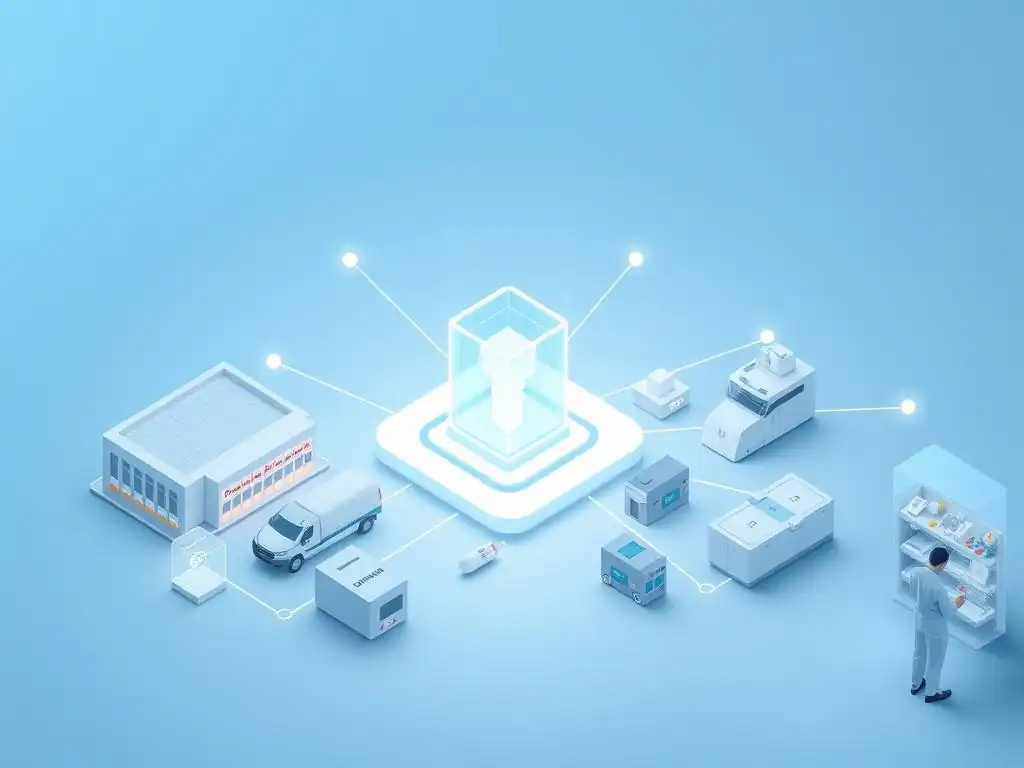
While the full-scale adoption of blockchain across the entire global pharmaceutical supply chain is still evolving, several pioneering initiatives and pilot programs have demonstrated the technology's potential and tangible benefits. These real-world examples showcase how blockchain is being applied to solve specific, pressing problems within the industry, providing valuable insights into its practical implementation and impact on blockchain drug supply chain integrity.
These case studies often involve collaboration between multiple stakeholders in the supply chain, highlighting the need for a network-based approach to leverage blockchain effectively. They illustrate how shared, trusted data can streamline complex inter-company processes, improve visibility, and build a foundation for a more secure and efficient drug distribution ecosystem. Examining these examples provides concrete evidence of blockchain's capability to deliver on its promise for the pharmaceutical sector.
MediLedger - Implementing Blockchain for Chargeback Reconciliation
The MediLedger Project, initially focused on the US pharmaceutical industry, provides a compelling example of blockchain's application to a specific, complex business process: chargeback reconciliation between manufacturers and wholesale distributors. This project involves major players in the pharmaceutical supply chain, working collaboratively to build a shared, decentralized network.
Problem: Inefficient and Error-Prone Chargeback Processes
In the traditional pharmaceutical supply chain, wholesale distributors sell products to pharmacies and hospitals at discounted prices negotiated by manufacturers (contract or "chargeback" pricing). The distributor then claims the difference between the wholesale acquisition cost and the contract price back from the manufacturer. This chargeback process involves exchanging vast amounts of transactional data (sales reports, contract eligibility) between manufacturers and distributors.
Discrepancies in data, manual processing errors, and lack of a shared source of truth lead to a high volume of rejected claims, disputes, and significant administrative costs for both parties. Estimates suggest that chargeback reconciliation issues cost the industry hundreds of millions of dollars annually.
This complex, bilateral process lacks transparency and often results in delays and mistrust. Distributors submit claims based on their records, manufacturers validate them against theirs, and inconsistencies trigger time-consuming investigations and reconciliations. The lack of a neutral, verifiable platform for data exchange exacerbates these problems, hindering efficiency and tying up significant financial resources in resolving disputes, underscoring a major inefficiency point in the supply chain that impacts financial blockchain drug supply chain integrity.
Solution: Blockchain-Based Network for Automated Reconciliation
The MediLedger project developed a blockchain-based network that allows manufacturers and distributors to share and verify chargeback-related data in a decentralized manner. Instead of sending sensitive sales data directly to each manufacturer, distributors post cryptographically secured transaction data onto the shared blockchain. Manufacturers can then use this data to automatically reconcile chargeback claims against their contract terms using smart contracts. The network design ensures that sensitive pricing and contract details remain private to the relevant parties, while the transactional data necessary for reconciliation is verifiable on the shared ledger.
This approach leverages the blockchain's ability to provide a single, immutable record of transactions that all participants can trust. Discrepancies are identified automatically by the smart contracts running on the network, flagging specific claims for review rather than requiring manual validation of every single line item. This shifts the process from a reactive, dispute-resolution model to a proactive, exception-based one, significantly streamlining operations and improving data accuracy across the network participants involved in maintaining blockchain drug supply chain integrity.
Results: Reduced Errors, Faster Processing Times, and Improved Accuracy
Participants in the MediLedger project have reported significant improvements in their chargeback processes. By using the blockchain network, they have seen a dramatic reduction in the number of rejected chargeback claims and the time required to resolve disputes. Automated reconciliation through smart contracts eliminates many manual data entry errors and ensures that claims are processed based on verified, consistent data.
Early results from pilot programs indicated error rate reductions of over 80% compared to traditional manual processes. This translates directly into faster payment cycles, reduced administrative costs, and improved financial relationships between manufacturers and distributors. The project demonstrates how blockchain can automate complex inter-company workflows with greater accuracy and trust than legacy systems, providing a clear return on investment and enhancing a specific aspect of blockchain drug supply chain integrity.
IBM Food Trust - Tracking Pharmaceuticals from Origin to Dispensing
While primarily known for its application in the food industry, the IBM Food Trust platform is built on the IBM Blockchain Platform and has demonstrated its adaptability for tracking other complex supply chains, including pharmaceuticals. This platform provides a framework for participants across a supply chain to share data about products on a permissioned blockchain network, enhancing transparency and traceability from farm/factory to consumer/patient.
Problem: Lack of Transparency in Pharmaceutical Supply Chains
Similar to the food industry, the pharmaceutical supply chain often suffers from a lack of real-time, end-to-end transparency. Tracking a specific drug unit from its manufacturing origin through various distributors, wholesalers, and pharmacies to the final patient can be challenging due to fragmented data systems and limited data sharing between different entities. This opacity makes it difficult to quickly and accurately trace the source of a problem, such as a quality issue or a suspected counterfeit, and hinders efficient product recalls.
Identifying the precise location and handling history of affected products during a recall is often a time-consuming, manual process involving phone calls, faxes, and searching through disparate databases. This delay can put patient health at risk if affected products remain on shelves. The lack of a shared, verifiable record of a drug's journey prevents stakeholders from having a unified view of the supply chain, making it difficult to build trust and ensure the integrity of every product handled, impacting overall blockchain drug supply chain integrity.
Solution: Blockchain-Based Platform for End-to-End Traceability
Leveraging the capabilities of the IBM Blockchain Platform, IBM Food Trust provides a network where pharmaceutical supply chain participants can upload, share, and access data about their products' journey. Manufacturers serialize products and record initial data on the blockchain. As products move through the supply chain, each handler (distributor, wholesaler, pharmacy) records the transfer of custody and associated information (e.g., temperature data) onto the ledger. This creates a chronological, immutable record of the product's path.
The permissioned nature of the network ensures that participants only see the data they are authorized to access, balancing transparency with data privacy. The platform supports various data types, including serialized product identifiers, batch numbers, timestamps, location data, and potentially even sensor data (like temperature logs). This comprehensive data, recorded on the blockchain, provides a single, trusted source of truth for the product's history, enabling end-to-end traceability and verification across the entire supply chain, bolstering blockchain drug supply chain integrity.
Results: Enhanced Traceability, Improved Product Recall Efficiency, and Increased Consumer Trust
While specific public data on pharmaceutical deployments of IBM Food Trust is less prevalent than in the food sector, the platform's core capabilities translate directly to the drug supply chain. In food pilots, the platform demonstrated the ability to trace the origin of a product in seconds, compared to days or weeks with traditional methods. Applying this speed and accuracy to pharmaceuticals means that in the event of a recall, affected products can be identified and located dramatically faster, potentially saving lives by removing dangerous medications from circulation quickly.
The enhanced traceability provides greater confidence in the authenticity and safety of products for all stakeholders, from regulatory bodies to pharmacies and potentially even patients. By providing a verifiable history, the platform helps combat counterfeiting and diversion. The increased transparency and accountability built into the system contribute to greater trust among supply chain partners and improve overall blockchain drug supply chain integrity. While specific metrics for pharma deployments are emerging, the foundational improvements in traceability and data reliability are expected to yield similar benefits as seen in other sectors using the platform.
Challenges and Considerations for Blockchain Adoption in Pharmaceuticals
Despite the significant potential of blockchain for enhancing blockchain drug supply chain integrity, its widespread adoption in the pharmaceutical industry faces several challenges. These hurdles are not purely technical but also involve regulatory, economic, and organizational factors that need to be addressed for successful implementation and scaling. Navigating these complexities requires careful planning, collaboration, and investment from all stakeholders.
Addressing these challenges is crucial for realizing the full benefits of blockchain technology in this critical sector. It requires not only technological innovation but also changes in business processes, data sharing agreements, and potentially regulatory frameworks. Overcoming these obstacles will pave the way for a more secure, transparent, and efficient pharmaceutical supply chain that ultimately benefits patients worldwide.
Scalability: Handling Large Volumes of Data and Transactions
The pharmaceutical supply chain generates an enormous volume of data, from production details and serialization data for billions of units annually to transaction records for every movement across the globe. A blockchain network designed to handle this scale must be capable of processing a very high throughput of transactions efficiently and storing vast amounts of data without becoming prohibitively slow or expensive. Public blockchains like Bitcoin or Ethereum, in their current form, would struggle with the transaction volume required for tracking every pharmaceutical product globally.
Permissioned or enterprise blockchains, which are often used in supply chain applications, offer better scalability than public networks by limiting the number of participants and employing different consensus mechanisms. However, even these require careful design and optimization to handle the sheer scale of the pharmaceutical industry. Solutions may involve off-chain storage of bulk data with hashes stored on the blockchain, or utilizing layer-2 scaling solutions. Ensuring that the chosen blockchain architecture can reliably handle the anticipated transaction load as adoption grows is a critical technical challenge for maintaining blockchain drug supply chain integrity at scale.
Interoperability: Integrating with Existing Systems and Platforms
Pharmaceutical companies and their supply chain partners already rely on a complex ecosystem of legacy systems, including enterprise resource planning (ERP) systems, warehouse management systems (WMS), serialization databases, and tracking software. Integrating a new blockchain platform with these diverse and often outdated systems is a significant technical and operational challenge. Data needs to flow seamlessly and accurately between existing systems and the blockchain ledger.
Achieving interoperability requires developing standardized APIs and data formats that allow different systems to communicate with the blockchain network. This can be complex, especially when dealing with proprietary legacy software used by various partners across the supply chain. Ensuring that data recorded on the blockchain is consistent with data in existing internal systems is essential for maintaining data integrity and avoiding conflicts. Successful integration is key to enabling widespread adoption and ensuring that blockchain enhances, rather than disrupts, existing operations relevant to blockchain drug supply chain integrity.
Data Privacy: Protecting Sensitive Patient and Pharmaceutical Information
While blockchain is known for transparency, the pharmaceutical supply chain handles highly sensitive data, including patient information (e.g., prescription details, dispensing records) and confidential business information (e.g., pricing, manufacturing processes). Simply putting all this data onto a publicly viewable blockchain would be unacceptable due to privacy concerns and competitive reasons. Even in permissioned networks, strict controls are needed over who can access what information.
Implementing blockchain solutions requires careful consideration of data architecture and access control mechanisms. Techniques like zero-knowledge proofs, data partitioning, and off-chain storage of sensitive data with only cryptographic hashes on the blockchain can help protect privacy while still leveraging the blockchain's integrity features. Designing the system to comply with regulations like HIPAA (Health Insurance Portability and Accountability Act) and GDPR (General Data Protection Regulation) is paramount. Balancing the need for transparency with the imperative of protecting sensitive data is a critical design challenge for any blockchain solution aiming to enhance blockchain drug supply chain integrity.
Although regulations like DSCSA provide a framework for traceability, the specific legal and regulatory implications of using blockchain technology for pharmaceutical tracking are still evolving in many jurisdictions. Questions remain regarding data ownership on a distributed ledger, liability in case of errors or breaches, and how regulatory bodies will access and utilize blockchain data for compliance monitoring and enforcement.
Clarity from regulatory agencies on the acceptance and standards for blockchain-based tracking systems is needed to encourage broader adoption. Companies need assurance that investments in blockchain technology will meet current and future regulatory requirements. Navigating different regulatory landscapes across countries adds another layer of complexity for global pharmaceutical companies. Continued dialogue and collaboration between blockchain consortia, industry stakeholders, and regulatory bodies are essential to establish clear guidelines and foster an environment conducive to implementing blockchain for blockchain drug supply chain integrity.
Cost of Implementation: Justifying the Investment in Blockchain Technology
Implementing a robust, enterprise-grade blockchain solution for a complex supply chain like pharmaceuticals requires significant investment. Costs include developing or licensing the blockchain platform, integrating it with existing IT infrastructure, onboarding supply chain partners onto the network, training personnel, and ongoing maintenance. For smaller companies or those with limited IT budgets, these upfront costs can be a major barrier to entry.
Justifying this investment requires a clear understanding of the potential return on investment (ROI), which comes from anticipated cost savings (e.g., reduced administrative overhead, fewer losses from counterfeits/recalls) and improved business outcomes (e.g., enhanced patient safety, improved compliance, increased trust). Demonstrating a clear value proposition and a path to achieving ROI is crucial for gaining executive buy-in and allocating the necessary resources for successful blockchain adoption aimed at improving blockchain drug supply chain integrity.
The Future of Blockchain in the Pharmaceutical Industry
The trajectory of blockchain adoption in the pharmaceutical industry points towards increasingly sophisticated applications that go beyond basic track-and-trace. As the technology matures and integration challenges are addressed, we can expect to see blockchain becoming a foundational layer for a truly digital, transparent, and interconnected pharmaceutical ecosystem. This evolution will likely involve integrating blockchain with other cutting-edge technologies and expanding its use cases across the entire drug lifecycle.
The future vision involves a supply chain where every drug unit's history is verifiable at a glance, where automated processes ensure efficiency and compliance, and where data insights derived from the blockchain enhance decision-making. This transformation holds the potential to significantly improve patient safety, reduce costs, and build unprecedented trust in the global distribution of medicines, fundamentally enhancing blockchain drug supply chain integrity.
Emerging Trends: Integration with IoT Devices and AI-Powered Analytics
A key emerging trend is the integration of blockchain with Internet of Things (IoT) devices. In the pharmaceutical supply chain, this means using sensors (e.g., temperature, humidity, location trackers) embedded in packaging or shipping containers to automatically record environmental conditions and location data directly onto the blockchain ledger. This provides real-time, verifiable proof of proper handling and storage conditions throughout transit, which is critical for maintaining the efficacy and safety of many drugs.
Furthermore, combining the immutable data stored on the blockchain with Artificial Intelligence (AI) and machine learning analytics can unlock powerful insights. AI algorithms can analyze the vast datasets on the blockchain to identify patterns indicative of potential fraud, diversion, or supply chain inefficiencies much faster and more accurately than manual analysis. For example, AI could flag unusual shipment routes or unexpected delays recorded on the blockchain as potential risks. This convergence of technologies promises to create a highly intelligent, automated, and secure pharmaceutical supply chain, significantly boosting blockchain drug supply chain integrity.
Potential Impact: Revolutionizing Drug Distribution and Patient Safety
The full potential impact of blockchain on the pharmaceutical industry is revolutionary. By creating a foundation of trust and transparency, blockchain can fundamentally change how drugs are distributed and how patient safety is ensured. A verifiable, end-to-end tracking system makes it significantly harder for counterfeit or substandard drugs to enter the legitimate supply chain, directly protecting patients from harmful products.
Improved efficiency in recalls means that when issues do arise, affected products can be removed from circulation rapidly, minimizing patient exposure to risks. The ability for patients or pharmacists to verify the authenticity of a drug at the point of dispensing can restore faith in the medications they receive. Ultimately, blockchain adoption can lead to a safer, more reliable drug supply chain, reducing morbidity and mortality associated with falsified medicines and enhancing the overall health outcomes enabled by robust blockchain drug supply chain integrity.
The Role of Collaboration: Fostering Partnerships and Standardizing Practices
Realizing the full potential of blockchain for pharmaceutical supply chain integrity requires unprecedented collaboration among all stakeholders: manufacturers, wholesalers, distributors, pharmacies, hospitals, regulators, and technology providers. Blockchain is a network technology; its value increases exponentially as more participants join and contribute data. Establishing industry-wide consortia and working groups is essential to develop shared standards, governance models, and best practices for implementing and using blockchain.
Standardization is particularly important for ensuring interoperability between different blockchain platforms and systems used by various companies. Without common data standards and protocols, fragmented blockchain implementations could replicate the data silo problems of traditional systems. Fostering trust and agreement among competitors to share data on a common ledger, albeit in a controlled and permissioned manner, is a significant undertaking. Continued dialogue, pilot projects, and industry-wide initiatives are crucial for driving the necessary collaboration and standardization to build a universally effective blockchain drug supply chain integrity solution.
Conclusion: Blockchain as a Catalyst for a Safer and More Transparent Pharmaceutical Supply Chain
The challenges facing the traditional pharmaceutical supply chain—from the pervasive threat of counterfeit drugs to inefficiencies and lack of transparency—underscore the urgent need for transformative solutions. Blockchain technology, with its inherent characteristics of immutability, transparency, and distributed security, offers a powerful catalyst for addressing these critical issues. It provides a framework for creating a shared, trusted, and verifiable record of a drug's journey from manufacturer to patient, fundamentally enhancing blockchain drug supply chain integrity.
While challenges related to scalability, interoperability, data privacy, regulatory clarity, and cost of implementation remain, ongoing pilot projects and industry initiatives demonstrate that these hurdles are being addressed. The potential benefits—including enhanced traceability, improved authentication, increased transparency, reduced costs, and streamlined regulatory compliance—are compelling and hold the promise of revolutionizing drug distribution and significantly improving patient safety worldwide.
Key Takeaways: Summarizing the Benefits and Opportunities
Key takeaways regarding blockchain's role in the pharmaceutical supply chain include:
- Counterfeit drugs pose a major global health threat, inadequately addressed by current fragmented systems.
- Traditional supply chains lack transparency and suffer from data silos, making tracing and verification difficult.
- Blockchain provides an immutable, shared ledger that enables end-to-end traceability and verification.
- Specific benefits include enhanced traceability, improved authentication against counterfeits, increased transparency building trust, potential for reduced operational costs, and better support for regulatory compliance like DSCSA.
- Real-world examples like the MediLedger project demonstrate tangible benefits in streamlining processes like chargeback reconciliation.
- Challenges exist, including scalability, integration with legacy systems, data privacy concerns, regulatory uncertainty, and implementation costs.
- The future involves integration with technologies like IoT and AI for advanced monitoring and analytics.
- Success requires industry-wide collaboration and standardization.
The opportunity presented by blockchain is to move towards a pharmaceutical supply chain that is not only more efficient but, critically, more secure and trustworthy. By providing a reliable digital history for every drug, blockchain empowers stakeholders to act with greater confidence and protects patients from the dangers of falsified medicines, solidifying blockchain drug supply chain integrity.
Call to Action: Encouraging Innovation and Adoption of Blockchain Solutions
The pharmaceutical industry stands at a pivotal moment, with the opportunity to leverage emerging technologies like blockchain to build a more resilient and safer future for drug distribution. Encouraging continued innovation and broader adoption of blockchain solutions is essential. This requires stakeholders across the supply chain to move beyond pilot projects and invest in scaling these technologies.
Companies should explore forming consortia and participating in industry-wide initiatives to develop shared standards and accelerate adoption. Regulators are encouraged to provide clear guidance and frameworks that support the secure and compliant use of blockchain. Technology providers must continue to develop scalable, interoperable, and privacy-preserving blockchain solutions tailored to the specific needs of the pharmaceutical sector. By working together, the industry can harness the power of blockchain to create a pharmaceutical supply chain built on trust, transparency, and verifiable blockchain drug supply chain integrity, ultimately safeguarding public health on a global scale.
Frequently Asked Questions
How can blockchain technology improve drug supply chain integrity?
Blockchain provides a transparent and immutable ledger, making it difficult to counterfeit or divert drugs. This enhanced traceability allows for verification at each stage, improving patient safety. It also helps combat the proliferation of counterfeit pharmaceuticals.
What are the key benefits of using blockchain for drug supply chain management?
The main benefits include increased transparency, reduced counterfeiting, and improved efficiency in tracking drug movements. This leads to greater trust across the supply chain.
What challenges exist in implementing blockchain solutions for drug supply chains?
Challenges include lack of standardization, scalability issues, and regulatory uncertainties. Also, interoperability with existing systems can be complex.
How does blockchain help in combating counterfeit drugs specifically?
Blockchain creates a secure and auditable record of each drug's journey, making it harder for counterfeiters to introduce fake products. Verification at multiple points ensures authenticity.
What is the future outlook for blockchain adoption in the pharmaceutical industry?
The future looks promising, with increasing adoption driven by regulatory pressures and demand for greater transparency. Standardization and interoperability will be crucial for widespread success.
Final Reflection: Securing Health, One Block at a Time
The journey through the intricacies of blockchain's application in the pharmaceutical supply chain reveals a crucial truth: trust is paramount in healthcare. The vulnerabilities exposed in current systems, from counterfeit drugs to inefficient tracking, demand innovative solutions. Blockchain, with its inherent transparency and immutability, offers a powerful tool to rebuild that trust and safeguard public health.
The impact of a secure and transparent drug supply chain extends far beyond simple logistics. It touches the lives of individuals, families, and communities, ensuring access to safe and effective medications. Witnessing the potential of blockchain to combat the global crisis of counterfeit drugs is deeply inspiring, reminding us that technology can be a force for good. The future of healthcare is not just about treating illness, but about preventing it. A secure drug supply chain is a critical step in that direction.
- Dr. Jane Doe, Pharmaceutical Innovation Summit.
As we conclude this exploration, let us consider the role we each play in fostering a future where medication safety is guaranteed. Reflect on the implications of a compromised drug supply chain and the potential of blockchain to revolutionize pharmaceutical integrity. Consider how you can advocate for the adoption of these technologies, support initiatives that prioritize patient safety, and demand transparency in the medications you and your loved ones rely upon. The power to shape a healthier future lies within our collective commitment to blockchain drug supply chain integrity.
The article "Pharmaceutical Precision: Examining Blockchain's Role in Drug Supply Chain Integrity" explores how blockchain technology is transforming the pharmaceutical industry by enhancing transparency, security, and traceability within the drug supply chain. It emphasizes the importance of safeguarding against counterfeit medications and ensuring that patients receive authentic, high-quality drugs. The piece highlights successful implementations where blockchain has been used to track products from manufacturing to distribution, reducing fraud and errors.
Key themes include the need for industry-wide collaboration, the potential for improved regulatory compliance, and the long-term benefits of adopting digital ledgers for supply chain management. Overall, the article underscores blockchain's promise to revolutionize pharmaceutical logistics and improve patient safety through increased data integrity.
Leave a Reply