
Smart Contracts in Insurance: Case Study of Automated Claims and Enhanced Customer Experience


Welcome to Blockchain Trends, your premier source for insights into the revolutionary world of blockchain technology, far beyond just cryptocurrency. Dive into compelling case studies and discover the real-world impact of decentralized systems. Intrigued by how blockchain is disrupting traditional sectors? Our latest exploration focuses on the innovative use of automated insurance claims blockchain, revealing how smart contracts are streamlining processes and enhancing customer experiences. Learn how this technology is redefining the insurance landscape and what the future holds for automated solutions in this vital industry.
Smart Contracts in Insurance: Case Study of Parametric Crop Insurance and Enhanced Farmer Security
- Introduction: Revolutionizing Crop Insurance with Blockchain-Based Smart Contracts
- Understanding Smart Contracts and Their Application in Crop Insurance
- Case Study: Etherisc and Hurricane Protection for Farmers in Puerto Rico
- How Blockchain-Based Parametric Crop Insurance Works in Practice
- Enhanced Farmer Security and Trust Through Smart Contracts
- Results and Impact: Quantifying the Benefits of Parametric Crop Insurance
- Challenges and Considerations for Implementing Blockchain in Crop Insurance
- Future Trends and Opportunities in Blockchain Crop Insurance
- Conclusion: The Transformative Power of Blockchain-Based Parametric Crop Insurance
-
Frequently Asked Questions
- How can blockchain technology and smart contracts specifically automate insurance claims?
- What are the key benefits of using automated insurance claims blockchain for customers?
- What challenges exist in implementing automated insurance claims using blockchain?
- Beyond automated claims, how else can blockchain transform the insurance industry?
- What is the role of regulation in the adoption of automated insurance claims blockchain?
- Final Reflection: Embracing Trust Through Code
- Reimagine Your Insurance Experience Today!
Introduction: Revolutionizing Crop Insurance with Blockchain-Based Smart Contracts
The Growing Need for Efficient and Transparent Crop Insurance
Traditional crop insurance models often face significant challenges, particularly in regions susceptible to frequent and severe weather events. The process of filing and processing claims can be slow, cumbersome, and opaque. Farmers often endure lengthy assessment periods, sometimes waiting months for payouts, which can be devastating for their livelihoods, especially after a major loss event. This delay is often exacerbated by complex bureaucratic procedures, manual damage assessments, and potential disputes over the extent of losses. Furthermore, administrative costs in traditional systems can be high, sometimes consuming a significant portion of premiums.
The lack of transparency in traditional claims processing also erodes trust between insurers and farmers. Farmers may feel that claim assessments are subjective or unfair, leading to disputes and dissatisfaction. This inefficiency and lack of trust can discourage farmers from purchasing insurance, leaving them vulnerable to climate risks. There is a clear and growing need for insurance solutions that are not only effective in covering risks but also operate with greater speed, efficiency, and transparency to better serve the agricultural community and ensure their financial stability in the face of unpredictable weather patterns.
Introducing Blockchain-Based Parametric Crop Insurance: A Paradigm Shift
Blockchain technology, particularly through the use of smart contracts, offers a transformative solution to the challenges faced by traditional crop insurance. Parametric insurance, unlike traditional indemnity insurance which pays based on the actual loss suffered, pays out based on the occurrence of a predefined event (the parameter) reaching a certain threshold. When combined with blockchain, this model becomes incredibly powerful. A blockchain-based parametric insurance policy is essentially a smart contract deployed on a decentralized ledger.
This approach represents a paradigm shift because it eliminates the need for manual claims assessment. The smart contract automatically executes payouts when external, verifiable data confirms that the predefined conditions have been met. For instance, if the parameter is wind speed exceeding a certain threshold at a specific location, the smart contract can be triggered by data from reliable weather stations. This inherent automation and reliance on objective data streamline the claims process, reducing costs, increasing speed, and enhancing transparency. This innovative application of blockchain enables automated insurance claims, offering a new level of reliability and efficiency for farmers.
Understanding Smart Contracts and Their Application in Crop Insurance
What are Smart Contracts? A Concise Explanation
Smart contracts are self-executing contracts with the terms of the agreement directly written into lines of code. This code exists on a blockchain network, making it immutable, transparent, and distributed. Unlike traditional legal contracts that rely on intermediaries for enforcement, smart contracts automatically execute actions when predefined conditions are met. Think of them as "if-then" statements coded onto the blockchain: if event X occurs, then action Y is automatically triggered.
The key characteristic of smart contracts is their deterministic nature. Once deployed, they operate exactly as programmed, without the possibility of human intervention or interpretation altering their execution. This makes them ideal for automating processes that rely on specific, verifiable data inputs. In the context of insurance, a smart contract can hold funds in escrow and release them automatically to the policyholder when an agreed-upon triggering event is confirmed by external data feeds, known as oracles. This forms the basis for automated insurance claims on the blockchain.
Key Benefits of Smart Contracts in Crop Insurance: Efficiency, Transparency, and Security
The application of smart contracts in crop insurance unlocks significant benefits. Firstly, efficiency is drastically improved. Manual claims processing, which can take weeks or months, is replaced by automated execution based on objective data. Payouts can be processed and sent within hours or days of the triggering event occurring. Secondly, transparency is inherently increased because the smart contract's code and the transaction history are recorded on the public or permissioned blockchain, visible to all authorized parties. This shared, immutable ledger builds trust.
Thirdly, security is enhanced. The decentralized nature of the blockchain makes it highly resistant to tampering and fraud. Once the conditions for a payout are met and verified by the smart contract using trusted data oracles, the execution is guaranteed and cannot be reversed or blocked by a single entity. This eliminates the potential for subjective decisions or fraudulent manipulation in the claims process. This combination of efficiency, transparency, and security makes blockchain-based automated claims a compelling alternative for agricultural insurance.
Exploring the Potential of Blockchain for Agricultural Insurance
Beyond the immediate benefits of smart contracts, the underlying blockchain technology itself holds immense potential for revolutionizing agricultural insurance markets. The distributed ledger can provide a single, shared source of truth for policy information, premium payments, and claim histories among various stakeholders, including farmers, insurers, reinsurers, and potentially government agencies. This shared infrastructure can reduce administrative overhead and improve coordination.
Furthermore, blockchain can facilitate the creation of decentralized insurance pools or mutuals, potentially lowering costs and increasing accessibility for farmers, particularly in underserved regions. The transparency of the blockchain can also enable better risk assessment and pricing by providing verifiable data on past events and claims. The integration of IoT devices and satellite data, verifiable on the blockchain via oracles, can provide more precise and reliable data inputs for parametric triggers, further enhancing the accuracy and effectiveness of automated insurance claims blockchain solutions in agriculture.
Case Study: Etherisc and Hurricane Protection for Farmers in Puerto Rico
Background: Challenges Faced by Farmers in Puerto Rico with Traditional Insurance
Farmers in Puerto Rico have historically faced significant challenges in obtaining adequate and timely insurance coverage, particularly against hurricane damage. The island's vulnerability to severe tropical storms means that losses can be widespread and catastrophic. Following major hurricanes like Maria in 2017, many farmers experienced devastating losses to crops and infrastructure. Traditional insurance systems struggled to cope with the scale of claims. Assessment processes were slow, requiring manual visits to damaged farms across the island.
Payouts were often delayed for many months, leaving farmers without the necessary capital to replant crops, repair infrastructure, or even sustain their families. This lack of timely financial support hindered the recovery of the agricultural sector, which is vital to the island's economy and food security. The complexity of traditional policies, coupled with the perceived lack of responsiveness during crises, contributed to low insurance penetration rates among farmers, leaving them highly exposed to future natural disasters.
The Solution: Implementing Blockchain-Based Parametric Insurance for Hurricane Protection
In response to these challenges, initiatives emerged to provide a more effective insurance solution. Etherisc, a decentralized insurance protocol, partnered with local organizations to develop and implement a blockchain-based parametric insurance product specifically designed to protect farmers in Puerto Rico against hurricane-related losses. This initiative focused on creating a simple, transparent, and fast-paying policy that could provide immediate financial relief after a hurricane event.
The core of the solution was a smart contract deployed on the Ethereum blockchain. This smart contract defined the specific parameters that would trigger an automatic payout. By leveraging blockchain technology, they aimed to bypass the slow, manual processes of traditional insurance and provide automated insurance claims capabilities directly to farmers, ensuring funds were released quickly when they were most needed to facilitate recovery and resilience.
Smart Contract Design and Implementation for Hurricane-Triggered Payouts
The design of the smart contract for the Puerto Rico hurricane insurance was centered around objective, verifiable data related to hurricane intensity and location. The primary trigger parameter was typically wind speed. Policies were designed for specific geographic areas. The smart contract was programmed to monitor data feeds from reputable, independent weather data providers (acting as oracles).
When the reported wind speed from these oracles exceeded a predefined threshold (e.g., Category 1 hurricane force winds) within the insured geographic area, the smart contract would automatically initiate a payout to the affected policyholders. The smart contract held the pooled premiums in cryptocurrency (or stablecoins) and was programmed to distribute funds based on the confirmed trigger event. This setup ensured that the process from hurricane occurrence to fund disbursement was entirely automated and transparent on the blockchain, representing a pioneering example of automated insurance claims blockchain in action.
How Blockchain-Based Parametric Crop Insurance Works in Practice
Triggering Events and Data Input: Hurricane Wind Speed and Location
The practical operation of the Etherisc parametric hurricane insurance policy in Puerto Rico relied entirely on external data triggering the smart contract. The specific triggering event was defined as a hurricane reaching a certain intensity (e.g., wind speed) within a designated geographic polygon covering the insured area. This parameter was explicitly coded into the smart contract.
Data about hurricane wind speed and location was sourced from trusted, independent weather data providers. These data feeds were delivered to the blockchain via oracles – services that fetch real-world data and make it available to smart contracts in a secure and verifiable way. For example, data from the National Hurricane Center or similar authoritative sources could be used. The smart contract would continuously monitor these data feeds, waiting for the predefined wind speed threshold to be met within the specified coordinates.
Automated Verification and Validation of Claim Eligibility Based on Predefined Parameters
Once the oracle reported that the wind speed parameter had been met or exceeded within the insured zone, the smart contract would automatically verify this condition against the parameters set in the policy code. Since eligibility is based purely on whether the objective, predefined threshold (wind speed) was reached at the specified location, there was no need for manual claims adjusters to visit farms or assess individual damage.
The smart contract's logic was simple and deterministic: IF (wind speed at location X >= threshold Y) THEN payout Z to policyholder. This automated verification process is a core strength of blockchain-based automated claims. It removes subjectivity and significantly speeds up the confirmation of eligibility, ensuring that valid claims are processed instantly based on the objective data trigger. The transparency of the blockchain allows anyone to see that the triggering condition was met according to the oracle data.
Secure and Transparent Fund Disbursement via Blockchain to Affected Farmers
Upon successful automated verification by the smart contract, the predefined payout amount (Z) was automatically disbursed from the smart contract's escrowed funds directly to the cryptocurrency wallet addresses of the eligible farmers who held active policies in the affected zone. This payout process occurred automatically, typically within hours or days of the triggering weather event being confirmed by the oracle data.
The transaction was recorded on the blockchain, providing a transparent and immutable record of the fund transfer. Farmers received their payouts quickly, enabling them to begin recovery efforts much sooner than would be possible with traditional insurance. This secure and transparent fund disbursement mechanism is a key benefit of implementing automated insurance claims on the blockchain, ensuring that financial aid reaches those who need it most, rapidly and reliably.
Enhanced Farmer Security and Trust Through Smart Contracts
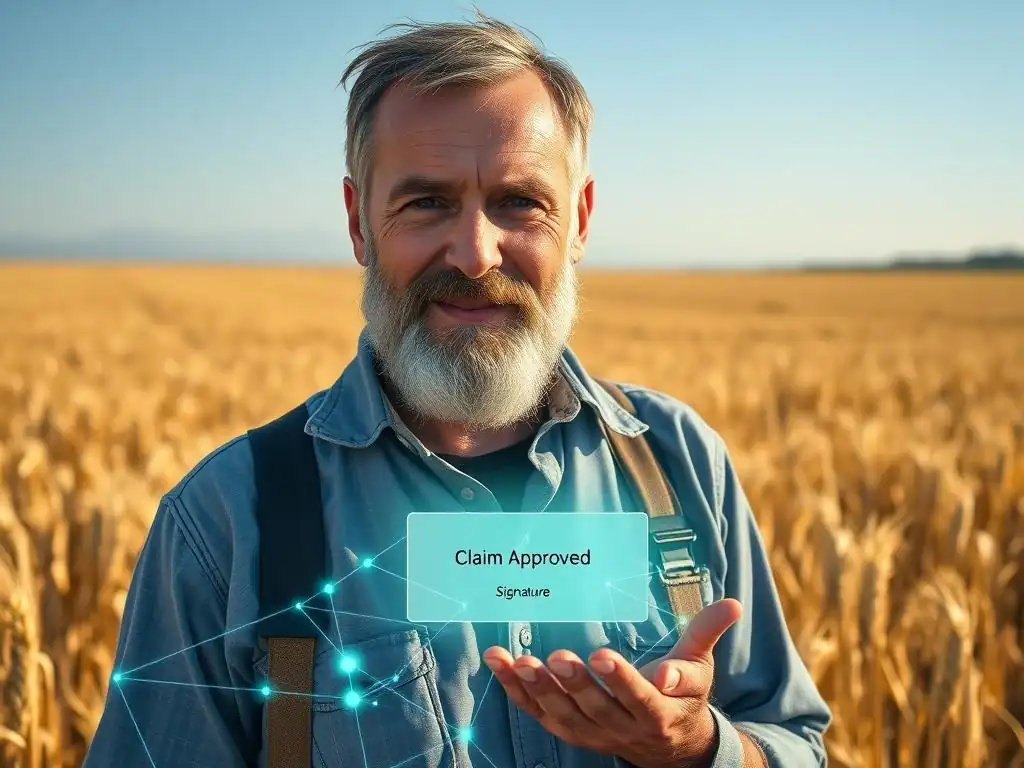
Faster Claim Processing and Reduced Wait Times for Payouts
One of the most significant benefits for farmers using this system is the dramatically faster claim processing. Unlike traditional insurance where claims assessment and payout can take weeks or even months, the smart contract-based system automates this entire process. Once the hurricane's wind speed triggers the predefined threshold, the smart contract automatically verifies the condition using oracle data and initiates the payout.
In the Etherisc case and similar parametric models, payouts can be made within days, sometimes even hours, of the triggering event occurring and being verified by the oracle. This rapid access to funds is crucial for farmers who need immediate capital to clear debris, repair infrastructure, purchase new seeds, or cover living expenses after a disaster. This speed is a direct result of the automated insurance claims blockchain model, removing bureaucratic delays and manual assessments.
Increased Transparency and Trust in the Insurance Process
Blockchain technology inherently provides a high level of transparency. The smart contract code is often open-source and auditable, meaning anyone can examine the rules by which the insurance operates. Furthermore, all transactions, including premium payments and payout disbursements, are recorded on the public blockchain ledger. This creates an immutable and verifiable history of all policy activity.
Farmers can trust that the system will execute exactly as programmed, based on objective data inputs, without any hidden clauses or subjective decisions influencing the payout. This transparency builds trust between the insurer (or decentralized protocol) and the policyholder. Knowing that the automated claims blockchain process is fair, transparent, and tamper-proof encourages greater participation and reliance on insurance as a risk management tool.
Reduced Disputes and Fraudulent Claims
The parametric nature of the insurance, combined with the use of smart contracts and objective data, significantly reduces the potential for disputes. Since payouts are triggered solely by whether a predefined environmental parameter (like wind speed) was met, there is no room for disagreement over the extent of individual damage or the cause of loss, which are common sources of disputes in traditional indemnity insurance.
Furthermore, the reliance on verifiable, external data delivered via trusted oracles makes it extremely difficult to file fraudulent claims. A payout is only triggered if the objective, independently verifiable condition is met. The immutability of the blockchain also prevents manipulation of policy terms or transaction records. This robust system for automated insurance claims on the blockchain helps ensure the integrity of the insurance pool and keeps costs lower for all participants.
Results and Impact: Quantifying the Benefits of Parametric Crop Insurance
Key Performance Indicators (KPIs): Payout Speed, Farmer Participation Rate
Quantifying the benefits of blockchain-based parametric insurance involves tracking key performance indicators (KPIs). One primary KPI is payout speed. While specific, publicly available data for every payout event in the Etherisc Puerto Rico project might not be consolidated, the mechanism itself is designed for rapid disbursement. Compared to traditional insurance claims taking an average of 30-90 days or even longer post-disaster, parametric payouts using smart contracts are typically measured in days, sometimes even hours, after the trigger event is confirmed by oracles.
Another important KPI is the farmer participation rate. While initial adoption of new technology can be slow, the promise of faster, more reliable payouts directly addresses a major pain point for farmers. Success is measured by how many farmers in vulnerable regions choose to purchase these policies, indicating trust and understanding of the system. Projects like this aim to increase insurance penetration from potentially low single digits to higher percentages by demonstrating tangible benefits.
Reduced Financial Losses for Farmers After Hurricane Events
The most significant impact for farmers is the reduction in financial losses following a hurricane event. By providing rapid payouts, the parametric insurance allows farmers to quickly access funds needed for recovery. This immediate capital infusion can mean the difference between rebuilding their farm and abandoning their livelihood. While precise aggregate figures are complex to measure across all events, the principle is clear: faster payouts enable faster recovery.
Estimates from various studies on parametric insurance suggest that timely payouts can potentially reduce the long-term financial impact of a disaster by a significant margin compared to waiting for traditional insurance or relying solely on emergency aid. The automated insurance claims blockchain mechanism ensures that this financial support is delivered precisely when and where the triggering event occurred, directly impacting the affected farmers' ability to recover and continue operations.
Increased Resilience of the Agricultural Sector
Beyond individual farmer benefits, the widespread availability and effectiveness of blockchain-based parametric crop insurance contribute to the overall resilience of the agricultural sector in disaster-prone regions. When farmers can recover more quickly after a hurricane, they can replant sooner, maintain supply chains, and contribute to food security. This reduces the overall economic shock to the region.
A more resilient agricultural sector is better positioned to withstand future climate shocks. The trust built through transparent and reliable automated insurance claims on the blockchain encourages more farmers to manage their risk proactively, reducing their reliance on unpredictable government aid or charitable donations. This shift towards market-based, yet community-focused, risk management strengthens the entire farming ecosystem.
Challenges and Considerations for Implementing Blockchain in Crop Insurance
Access to Reliable Weather Data and Oracles
A critical challenge for any parametric insurance product, especially one on the blockchain, is ensuring access to reliable, accurate, and tamper-proof external data. For hurricane insurance, this means trusted data on wind speed, location, and potentially rainfall or other parameters. The oracle problem – how to securely bring real-world data onto the blockchain without compromising the decentralized trust – is paramount.
Using multiple independent oracle services or aggregating data from several reputable sources can mitigate the risk of a single point of failure or manipulation. However, establishing and maintaining these robust data feeds requires significant effort and infrastructure. Ensuring the data is granular enough for specific farm locations and consistently available, even during and immediately after a major disaster, is an ongoing technical and logistical challenge that must be addressed for automated insurance claims blockchain systems to function reliably.
Farmer Education and Adoption of Blockchain Technology
Introducing a novel technology like blockchain and cryptocurrency-based payouts presents a significant challenge in terms of farmer education and adoption. Many farmers, particularly in rural areas, may have limited access to technology, lack familiarity with cryptocurrencies, or be skeptical of decentralized systems. Effective implementation requires simplifying the user experience and providing extensive education and support.
Efforts must be made to explain how the parametric trigger works, how payouts are received (e.g., setting up a digital wallet), and the benefits of the blockchain's transparency. Partnerships with local organizations, providing in-person support, and developing user-friendly interfaces are essential to overcome the digital divide and build trust. Successful adoption hinges on farmers understanding and feeling comfortable with the automated insurance claims blockchain process.
Regulatory Clarity and Acceptance of Parametric Insurance
The regulatory landscape for blockchain and cryptocurrency is still evolving in many jurisdictions, including Puerto Rico. Ensuring regulatory clarity and acceptance for blockchain-based parametric insurance products is crucial for scaling these solutions. Regulators need to understand how these products differ from traditional insurance and how they fit within existing legal frameworks.
Issues such as consumer protection, solvency requirements for decentralized insurance pools, and the legal status of smart contracts need to be addressed. While parametric insurance itself is a recognized concept, its implementation via a decentralized blockchain and cryptocurrency payouts might raise new questions. Collaboration with regulatory bodies is vital to establish clear guidelines and gain official acceptance, paving the way for wider adoption of automated insurance claims blockchain solutions in the insurance industry.
Future Trends and Opportunities in Blockchain Crop Insurance
Expanding the Use of Smart Contracts to Other Crop Risks (e.g., Drought, Flooding)
The success of parametric hurricane insurance using smart contracts demonstrates the potential to expand this model to cover other climate-related risks affecting crops. Drought, excessive rainfall leading to flooding, extreme temperatures, and even pest outbreaks (if verifiable data is available) could potentially be covered by parametric policies triggered by objective data thresholds.
For instance, a smart contract could trigger a payout based on rainfall data falling below a certain level for a defined period (drought) or exceeding a specific level within a timeframe (flooding). Developing reliable oracles for these diverse data types is key. Expanding the range of covered risks through automated insurance claims blockchain solutions can provide farmers with more comprehensive protection tailored to their specific local climate challenges.
Integrating Satellite Imagery and IoT Sensors for More Accurate Data
Future developments in blockchain crop insurance will likely involve integrating more advanced data sources. Satellite imagery can provide highly granular data on vegetative health, soil moisture levels, or flood inundation over specific farm plots, offering more precise parameters than regional weather station data. IoT sensors deployed on farms could collect real-time microclimate data.
Bringing this data onto the blockchain via sophisticated oracles can enable even more accurate and localized parametric triggers. For example, a payout could be triggered not just by regional rainfall but by satellite-verified soil moisture levels dropping below a critical point on a farmer's specific field. This integration of cutting-edge data sources enhances the accuracy and fairness of automated insurance claims blockchain systems, making them more responsive to localized conditions.
Exploring Microinsurance Solutions for Smallholder Farmers
Blockchain technology is particularly well-suited for developing microinsurance solutions – low-cost insurance products designed for individuals with limited incomes, such as smallholder farmers in developing regions. The reduced administrative costs associated with smart contracts and automated claims make it economically viable to offer policies with low premiums and small payout amounts.
The transparency and accessibility of blockchain platforms can also make these microinsurance products more trustworthy and easier to access for populations without traditional banking infrastructure. Decentralized insurance protocols can potentially pool risk across a wider, global network of small farmers. This opens up significant opportunities to provide essential risk management tools to millions of vulnerable farmers through scalable, affordable automated insurance claims blockchain solutions.
Conclusion: The Transformative Power of Blockchain-Based Parametric Crop Insurance
Key Takeaways: The Future of Crop Insurance is Decentralized and Automated
The case study of parametric hurricane insurance in Puerto Rico, powered by smart contracts and blockchain, highlights several key takeaways about the future of crop insurance. Firstly, decentralization via blockchain can remove reliance on single intermediaries, increasing resilience and trust. Secondly, automation through smart contracts fundamentally changes the claims process, making it faster, more efficient, and less prone to disputes. The era of automated insurance claims blockchain is upon us, promising significant improvements over traditional methods.
The ability to trigger payouts based on objective, verifiable data via oracles ensures fairness and transparency. While challenges remain, particularly regarding data reliability and user adoption, the demonstrated benefits in speed and transparency are compelling. The future of crop insurance is moving towards models that are more responsive to the immediate needs of farmers, leveraging technology to provide rapid, reliable financial support in the face of climate risks.
The Role of Smart Contracts in Shaping the Agricultural Insurance Landscape
Smart contracts are poised to play a pivotal role in reshaping the agricultural insurance landscape. They enable the shift from complex, slow indemnity processes to simple, fast parametric payouts. By embedding policy rules directly into code on an immutable ledger, smart contracts ensure that agreements are executed precisely as intended, removing ambiguity and increasing trust.
As oracle technology improves and integrates more diverse data sources (like satellite imagery and IoT), smart contracts will facilitate increasingly sophisticated and localized parametric insurance products. They also lower the barrier to entry for providing insurance, potentially enabling new models like decentralized mutuals and microinsurance. Ultimately, smart contracts are not just improving existing insurance processes; they are enabling entirely new, more effective, and accessible ways for farmers to manage risk, underpinned by the power of automated insurance claims on the blockchain.
Frequently Asked Questions
How can blockchain technology and smart contracts specifically automate insurance claims?
Blockchain provides a decentralized and immutable ledger to record policy information. Smart contracts then automate the process by automatically executing payouts when predefined conditions are met, like weather data triggering a crop insurance claim.
What are the key benefits of using automated insurance claims blockchain for customers?
Customers experience faster claim processing, increased transparency in the claims process, and reduced potential for fraud. This leads to greater trust and satisfaction with the insurance provider.
What challenges exist in implementing automated insurance claims using blockchain?
Challenges include data privacy concerns, the need for standardized data formats across different entities, and the regulatory uncertainty surrounding blockchain applications in insurance.
Beyond automated claims, how else can blockchain transform the insurance industry?
Blockchain can facilitate secure data sharing between insurers and reinsurers, improve fraud detection, and enable the development of new insurance products tailored to specific needs.
What is the role of regulation in the adoption of automated insurance claims blockchain?
Clear and supportive regulations are crucial to foster innovation while ensuring consumer protection and data security. This will build trust and encourage wider adoption of blockchain in insurance.
Final Reflection: Embracing Trust Through Code
The exploration of smart contracts in insurance, particularly their application in automating claims, reveals a profound shift in how we perceive trust and efficiency in financial services. The promise of automated insurance claims blockchain is no longer a futuristic fantasy, but a tangible reality reshaping the industry. This technology offers a pathway to unprecedented transparency and speed, directly addressing long-standing pain points for both insurers and policyholders.
The impact of this technology extends far beyond mere efficiency gains. It fundamentally alters the relationship between insurer and insured, fostering a sense of fairness and accountability. This shift towards decentralized trust is crucial in an era where skepticism towards traditional institutions is growing. The blockchain is to trust what the internet is to information.
- Don Tapscott. This quote encapsulates the transformative potential of smart contracts to build a more equitable and reliable insurance ecosystem.
As we stand at the cusp of this technological revolution, let us not only marvel at the innovation but also consider its broader implications. What role will you play in shaping this future? How can you advocate for responsible implementation and ensure that the benefits of automated insurance claims blockchain are accessible to all? The future of insurance is being written in code, and your understanding and engagement will be vital in ensuring it serves the best interests of society.
Reimagine Your Insurance Experience Today!
Thank you for exploring how smart contracts can revolutionize insurance. We hope this article has shown how automation can lead to faster claims and a smoother customer experience. Now, it's time to consider how these innovations might benefit you or your organization.
Here are some steps you can take right now:
- Explore options for your insurance needs by contacting your current provider to see if they are adopting smart contract technology, or research companies that are leading in this area.
- Enhance your understanding by reading our detailed guide on the technical aspects of implementing smart contracts in the insurance industry, available in our resources section.
- Share this article with colleagues or friends who could benefit from learning about the future of insurance on LinkedIn or X.
What improvements would you like to see from smart contracts in your insurance experience? Is there a particular feature you're most eager to see implemented? Share your thoughts in the comments below!
Leave a Reply