
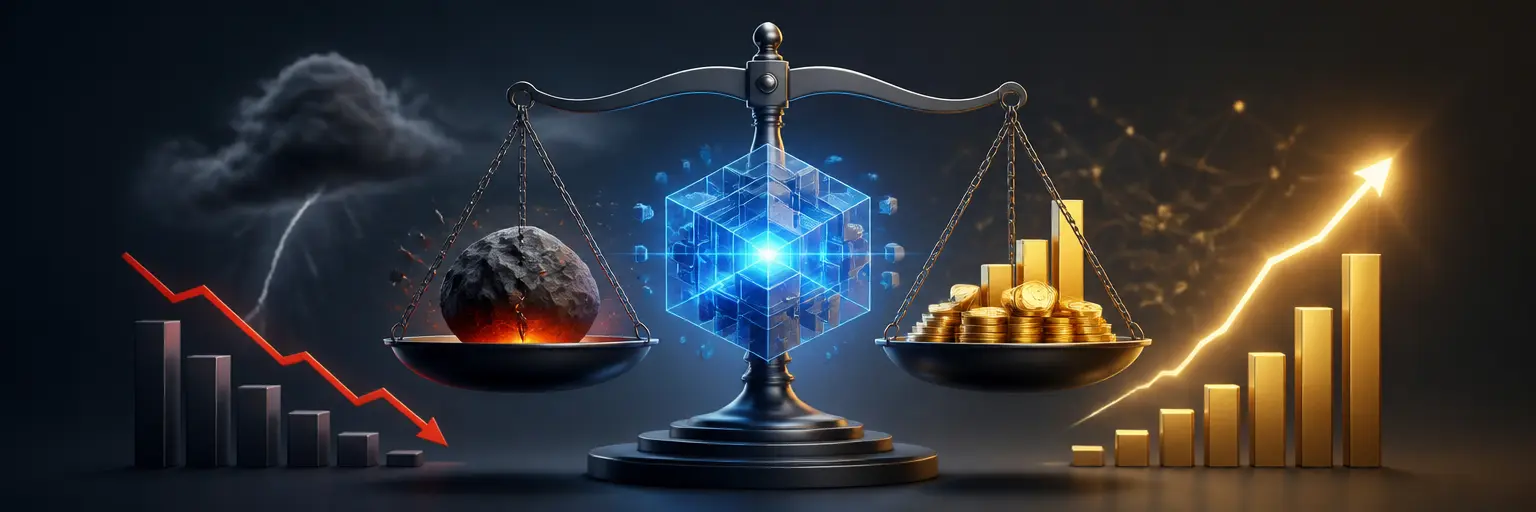
Project Failure in Blockchain: Due Diligence to Minimize Investment Loss
Explore Blockchain Investment Risks & Rewards with a balanced look at the opportunities and challenges shaping decentralized finance and blockchain markets. 📈 Learn how emerging technologies, enterprise adoption, token economics, market volatility, regulation, security threats, and evolving decentralized systems can influence potential returns and investment risk. Whether you’re researching blockchain opportunities or building a diversified strategy, gain practical insights to make more informed, responsible decisions in the fast-moving world of blockchain investing. 🚀
50 articles
Regulation as a Risk and Reward Driver in Blockchain Investment: A Global Overview
Blockchain Investment and Inflation: A Hedge or a HighRisk Gamble?
Unlocking Blockchain's Potential Gains: A Strategic Guide to Maximizing Investment Rewards
Blockchain Investment Risk Assessment Tools: Resources for Informed DecisionMaking
The Evolution of Blockchain Investment Risks: From Early Adoption to Mainstream Acceptance
Demystifying Blockchain Investment Risks: Separating Fact from Fiction and Fear
Tax Implications of Blockchain Investment Risks and Rewards: Navigating the Regulatory Maze
Cybersecurity Risks in Blockchain Investment: Protecting Your Digital Assets
Technology Risks in Blockchain Investment: Vulnerabilities, Hacks, and Protocol Failures
The Speculative Bubble Risk in Blockchain: Identifying and Avoiding Overvalued Assets
Is Blockchain Investment Worth the Gamble? Assessing the Potential Payouts and Pitfalls
Blockchain's Promise vs. Peril: Dissecting the Investment Risk Landscape
Institutional Investment in Blockchain: How Professional Players Manage Risks and Seek Rewards
Market Manipulation in Blockchain: Understanding and Mitigating the Risks
Blockchain Investment for Retirement: Is it a Prudent or Perilous Path?
Custodial Risks vs. SelfCustody in Blockchain Investment: Weighing the Tradeoffs
Navigating the Volatile Waters of Blockchain Investments: A RiskReward Analysis
Blockchain Investment and Geopolitical Risks: Navigating Global Uncertainties
Understanding Blockchain Technology: Your First Line of Defense Against Investment Risks
The Liquidity Question: Assessing the Risks of Illiquidity in Blockchain Investments
The Hidden Dangers of Blockchain Investment: Protecting Your Portfolio in the Decentralized World
The LongTerm Game: Blockchain Investment Risks and Rewards in a Decade
ShortTerm Blockchain Investment Risks: Navigating Daily Volatility and Market Swings
The Future of Blockchain Investment Risks: Emerging Challenges and Opportunities
Smart Money, Smarter Risks: Making Informed Decisions in the Blockchain Investment Space
The Regulatory Tightrope: How Blockchain Investment Risks are Shaped by Global Policies
Decoding Blockchain Investment Risks: From Smart Contract Bugs to Regulatory Uncertainty
The Environmental Impact of Blockchain Investment: Considering Ethical and Sustainability Risks
The Psychology of Blockchain Investment Risk: Avoiding Emotional DecisionMaking
Blockchain Investment Risks & Rewards: Make More Informed Decisions
Explore the opportunities, challenges, and real-world considerations involved in investing in blockchain technology. This subcategory on Blockchain Trends examines blockchain investment risks and rewards across digital assets, decentralized finance, Web3 projects, enterprise blockchain, tokenized assets, and emerging decentralized systems. Discover practical insights into volatility, regulation, cybersecurity, liquidity, valuation, diversification, and long-term growth potential so you can evaluate blockchain investments with greater clarity and discipline.
📈 Understanding Blockchain Investment Rewards
Readers will discover why blockchain continues to attract investors, entrepreneurs, institutions, and technology companies. Content covers potential rewards such as portfolio diversification, digital asset appreciation, access to innovative financial products, decentralized finance opportunities, tokenization, and participation in next-generation infrastructure.
Articles also explain how blockchain adoption may create value beyond cryptocurrency speculation. You can learn how enterprise blockchain networks, smart contracts, decentralized applications, Web3 platforms, and tokenized real-world assets could influence future markets while distinguishing genuine growth potential from unrealistic promises.
⚠️ Identifying the Key Risks of Blockchain Investing
Blockchain investing involves substantial uncertainty, and this section provides clear explanations of the most important risks. Expect coverage of price volatility, market manipulation, project failure, liquidity constraints, smart contract vulnerabilities, hacking, scams, governance issues, and technology obsolescence.
Readers will also learn how to recognize warning signs before committing capital. Detailed guidance may include evaluating token distribution, project documentation, developer activity, security audits, revenue models, community behavior, and the difference between sustainable utility and hype-driven demand.
🔍 Evaluating Blockchain Projects and Digital Assets
Successful blockchain research begins with careful due diligence. This subcategory explores methods for analyzing a project’s technology, leadership, competitive position, use case, token economics, partnerships, adoption metrics, and long-term business model.
Expect practical insights into fundamental analysis for cryptocurrencies and blockchain companies, including how to assess market capitalization, token supply, vesting schedules, network activity, transaction volume, total value locked, developer engagement, and user growth. These factors can help investors form more balanced opinions instead of relying solely on online sentiment.
🏦 DeFi, Tokenization, and Emerging Investment Opportunities
Decentralized finance introduces new ways to lend, borrow, trade, stake, and earn returns without traditional intermediaries. Readers can explore both the potential rewards and the risks associated with DeFi protocols, yield farming, liquidity pools, staking, decentralized exchanges, and algorithmic financial products.
This section also examines tokenized real-world assets, blockchain-based securities, digital ownership, and enterprise applications. Content emphasizes that attractive yields may involve impermanent loss, counterparty exposure, protocol risk, regulatory uncertainty, and limited liquidity, making research essential before participation.
🛡️ Managing Risk Through Research and Diversification
Risk management is central to responsible blockchain investing. Readers will find strategies for building an investment plan that reflects personal objectives, time horizons, risk tolerance, and financial circumstances rather than chasing short-term market momentum.
Topics may include position sizing, portfolio diversification, secure wallet practices, cold storage, custody options, rebalancing, liquidity planning, and avoiding excessive leverage. The goal is to encourage measured decision-making, realistic expectations, and protection against avoidable losses.
⚖️ Regulation, Taxation, and Legal Considerations
Regulation can significantly affect the risks and rewards of blockchain investments. This subcategory covers how changing laws, securities classifications, licensing requirements, anti-money-laundering rules, consumer protections, and exchange restrictions may influence digital asset markets and blockchain businesses.
Readers should also expect general information about recordkeeping, taxable transactions, reporting obligations, and the importance of consulting qualified legal or tax professionals. Regulatory treatment differs by jurisdiction, so investors must verify current rules before making financial decisions.
🌐 Long-Term Blockchain Trends and Market Outlook
Blockchain investment analysis should consider more than daily price movements. Explore how institutional adoption, central bank digital currencies, enterprise blockchain, interoperability, scalability solutions, privacy technology, artificial intelligence integration, and decentralized governance could shape the future of the sector.
Articles help readers compare short-term speculation with long-term investment theses. By examining adoption cycles, technological progress, macroeconomic conditions, and competitive developments, investors can better understand where blockchain may deliver lasting value—and where risks may outweigh potential rewards.
❓ Frequently Asked Questions About Blockchain Investment Risks & Rewards
What are the biggest risks of investing in blockchain?
The major risks include extreme price volatility, cybersecurity attacks, scams, smart contract failures, regulatory changes, low liquidity, project abandonment, and uncertain valuation. Investors should research each opportunity carefully and avoid committing money they cannot afford to lose.
What are the potential rewards of blockchain investing?
Potential rewards may include capital appreciation, portfolio diversification, exposure to innovative technology, access to DeFi services, and participation in emerging markets such as tokenized assets and enterprise blockchain. However, potential returns are not guaranteed and often involve significant risk.
How can I evaluate a blockchain project before investing?
Review the project’s use case, technology, team, roadmap, tokenomics, security audits, network activity, adoption, funding, liquidity, and legal structure. Look for transparent documentation and independently verifiable information rather than relying only on influencers or promotional claims.
Is cryptocurrency investing the same as blockchain investing?
No. Cryptocurrency is one application of blockchain technology, while blockchain investing can also include public companies, infrastructure providers, enterprise solutions, tokenized assets, DeFi protocols, and Web3 platforms. Each investment type has different risks, liquidity characteristics, and regulatory considerations.
How can beginners manage blockchain investment risk?
Beginners can start with thorough research, small position sizes, diversification, secure custody, and a clearly defined investment plan. Avoiding leverage, protecting private keys, verifying platforms, tracking transactions, and seeking professional financial or tax advice can also reduce avoidable risks.