
Beginner's Guide to Crypto Portfolio Diversification: Spreading Your Investments Wisely


Welcome to Blockchain Trends, your gateway to understanding the real-world impact of blockchain technology. Are you ready to move beyond basic crypto investments? This week, we delve into the essential strategies for diversifying crypto portfolio strategies. Unlock the secrets to mitigating risk and maximizing returns in the dynamic world of digital assets and discover how to build a resilient and profitable portfolio. Dive in to learn more!
- Beginner's Guide to Crypto Portfolio Diversification: Spreading Your Investments Wisely
- Step 1: Assess Your Risk Tolerance and Investment Goals
- Step 2: Explore Different Crypto Asset Classes for Diversification
- Step 3: Choosing the Right Mix: Asset Allocation Strategies
-
Step 4: Selecting Crypto Platforms and Tools for Diversification and Management
- Choosing Reputable Crypto Exchanges for Buying Diverse Assets (e.g., Binance, Coinbase, Kraken)
- Using Decentralized Exchanges (DEXs) for Broader Altcoin Access (e.g., Uniswap, PancakeSwap)
- Securing Your Diversified Portfolio with Hardware Wallets (e.g., Ledger, Trezor)
- Utilizing Portfolio Tracking Tools for Monitoring Diversification (e.g., CoinMarketCap Portfolio, CoinGecko Portfolio, Koinly)
- Step 5: Implementing and Monitoring Your Diversification Plan
- Common Pitfalls to Avoid When Diversifying a Crypto Portfolio
- Building a Resilient Crypto Portfolio Through Smart Diversification
-
Frequently Asked Questions
- What is crypto portfolio diversification and why is it important?
- How many different cryptocurrencies should I hold in a diversified portfolio?
- Besides different cryptocurrencies, what other assets can I include in my crypto portfolio to diversify?
- What factors should I consider when choosing which cryptocurrencies to include in my diversified portfolio?
- How often should I rebalance my crypto portfolio, and what does that entail?
- Final Reflection: Navigating the Crypto Frontier with Wisdom
- Start Building Your Diversified Crypto Future Today!
Beginner's Guide to Crypto Portfolio Diversification: Spreading Your Investments Wisely
Navigating the cryptocurrency market can feel like exploring uncharted territory, especially for newcomers. While the potential for high returns is a major draw, the market's notorious volatility presents significant risks. This is where understanding and implementing effective diversifying crypto portfolio strategies becomes crucial. Diversification isn't just a buzzword; it's a fundamental principle of sound investment, and it applies just as strongly, if not more so, to the dynamic world of digital assets. By spreading your investments across different types of cryptocurrencies and related assets, you can potentially mitigate the impact of poor performance in any single holding.
For beginners, the idea of building a diversified crypto portfolio might seem complex, given the sheer number of available digital assets. However, the core concept is simple: don't put all your eggs in one basket. This guide will walk you through the steps involved in creating a resilient and well-rounded crypto portfolio, helping you make informed decisions as you begin your journey in crypto trading. Implementing smart diversifying crypto portfolio strategies from the outset can significantly improve your long-term investment outlook and help you navigate market downturns with greater confidence.
Why Diversifying Crypto Portfolio Strategies Matters for Beginners
The cryptocurrency market is known for its dramatic price swings. While Bitcoin (BTC) and Ethereum (ETH) are the largest and often considered more stable, many smaller altcoins can experience extreme volatility, sometimes dropping 50% or more in a matter of days.
For a beginner who might have invested a significant portion of their capital into just one or two such assets, the impact of these sharp declines can be devastating, leading to substantial and rapid losses. Diversifying crypto portfolio strategies helps buffer against this inherent market risk by ensuring that a downturn in one asset doesn't wipe out your entire investment.
Furthermore, different crypto assets serve different purposes and react differently to market conditions. For instance, while Bitcoin might perform well during periods of economic uncertainty as a potential store of value, certain DeFi tokens might thrive when activity on decentralized applications surges. By diversifying your crypto portfolio, you position yourself to potentially benefit from growth across various sectors of the crypto ecosystem, rather than being solely reliant on the performance of a single narrative or technology. This strategic spreading of risk is a cornerstone of long-term investment success, particularly in a nascent and rapidly evolving market like cryptocurrency.
Understanding the Risks of Concentrated Crypto Investments
Investing heavily in a single cryptocurrency or a small number of highly correlated assets exposes you to significant concentration risk. If the price of that specific asset plummets due to technological issues, regulatory crackdowns, market manipulation, or simply a loss of interest, your entire investment could suffer massive losses. Historically, many altcoins have experienced parabolic rises followed by crashes of 90% or more, leaving investors who were not utilizing diversifying crypto portfolio strategies with near-worthless holdings. For example, during the 2018 bear market, many altcoins lost over 95% of their value from their peak.
Beyond price risk, concentrated investments also expose you to specific project failures. A single project might face technical vulnerabilities, its development team could abandon it, or it might fail to gain adoption. If your capital is tied up in such a project, you bear the full brunt of its failure.
A diversified crypto portfolio, on the other hand, assumes that while some individual investments may underperform or fail, the positive performance of others will help offset those losses, leading to a more stable overall return profile. This approach acknowledges the experimental nature of many crypto projects and hedges against the possibility that any single one might not succeed.
Key Benefits of Crypto Asset Diversification
The primary benefit of diversifying crypto portfolio strategies is risk reduction. By spreading your capital across different assets, you reduce the impact of any single asset's poor performance on your overall portfolio. If one cryptocurrency you own drops significantly, the impact on your total investment is lessened if it only represents a small percentage of your holdings, while other assets may be holding steady or even increasing in value. This smoothed-out performance can lead to less stressful investing and a greater likelihood of preserving capital during volatile periods.
Another significant advantage is the potential for improved risk-adjusted returns. While diversification might limit maximum potential gains compared to a single wildly successful bet, it dramatically reduces the risk of catastrophic loss. Over time, a diversified crypto portfolio is more likely to achieve steady growth by capturing gains from various market segments.
For instance, if you held a mix of Bitcoin, Ethereum, a few promising DeFi tokens, and some exposure to the NFT market (if aligned with your strategy), you could potentially benefit from bullish trends in any of these areas, even if others are lagging. This broad exposure increases the probability of participating in the market's overall growth.
Step 1: Assess Your Risk Tolerance and Investment Goals
Before you start implementing diversifying crypto portfolio strategies, it's essential to look inward and understand your own financial situation and psychological comfort level with risk. How would you react if your portfolio dropped by 20% in a week? How about 50%? Your risk tolerance is your ability and willingness to endure potential losses in exchange for higher potential returns. Beginners often have a lower risk tolerance than experienced investors, which should strongly influence the types of assets and allocation percentages they choose for their diversified crypto portfolio. Being honest about this is the first critical step.
Equally important are your investment goals. Are you investing for short-term gains, medium-term growth, or long-term wealth building? Your timeline will impact your strategy. For example, someone investing for the long term (5+ years) might be more comfortable holding assets with higher short-term volatility but significant long-term potential. Conversely, someone looking for medium-term growth (1-3 years) might prioritize a mix of established assets and promising altcoins, while someone focused on capital preservation might allocate a larger percentage to stablecoins. Clearly defining these goals will guide your diversification decisions and help you build a portfolio that aligns with your objectives.
Defining Your Beginner Investor Profile
As a beginner, defining your investor profile involves assessing not just your financial capacity for loss but also your available time and knowledge. Are you prepared to spend time researching different projects, understanding blockchain technology, and monitoring market news? Or do you prefer a more hands-off approach? Your capacity for active management influences the complexity of the diversifying crypto portfolio strategies you can realistically maintain. Someone with limited time might stick to a simpler portfolio of larger, more established assets, while someone with more time might delve into smaller, more niche altcoins or DeFi protocols.
Consider your overall financial health. Crypto investments should only be made with capital you can afford to lose, as even a diversified crypto portfolio can experience significant drawdowns. Do you have an emergency fund? Are your high-interest debts paid off? Ensuring your foundational finances are secure is paramount before allocating funds to volatile assets like cryptocurrency. Your beginner investor profile is a combination of your risk tolerance, investment goals, available capital, time commitment, and existing financial stability. Being clear on these points provides a solid foundation for building your diversification plan.
Setting Realistic Expectations for Your Diversified Crypto Portfolio
It's vital to set realistic expectations when embarking on diversifying crypto portfolio strategies. While the crypto market has seen astronomical gains in the past, such returns are not guaranteed and often come with extreme volatility. A diversified portfolio is designed to provide more stable, long-term growth potential while reducing the risk of catastrophic loss, not necessarily to achieve 1000% returns overnight. Understand that even with diversification, your portfolio value will fluctuate, and you will likely experience periods of decline.
Focusing on consistent, sustainable growth and risk management should be your primary goals when building a diversified crypto portfolio as a beginner. Avoid comparing your returns to isolated examples of individuals who made fortunes on single, high-risk bets. Remember that for every such success story, there are countless others who lost significant capital doing the same. A realistic expectation involves understanding that diversification is a marathon, not a sprint, aimed at navigating the market's ups and downs more safely over time. Aim for steady progress and capital preservation alongside growth, rather than chasing unrealistic, short-term riches.
Step 2: Explore Different Crypto Asset Classes for Diversification
To effectively implement diversifying crypto portfolio strategies, you need to understand the different types of digital assets available and how they might fit into your overall plan. The crypto market is much more than just Bitcoin; it encompasses a wide range of technologies and use cases. Exploring these different asset classes allows you to spread your risk across various sectors, each with its own potential drivers of value and risk profile. This step involves researching the fundamentals of different categories of crypto assets and deciding which ones align with your risk tolerance and goals.
A well-rounded diversified crypto portfolio typically includes assets from several distinct categories. These can range from large-cap, established cryptocurrencies that act as foundational elements to smaller, more speculative tokens associated with decentralized finance or emerging technologies. Understanding the basic characteristics and market dynamics of each class is essential for making informed decisions about your asset allocation. This exploration is key to building a diversification strategy that is both robust and aligned with your investment thesis.
Diversifying with Bitcoin and Ethereum: The Foundation
Bitcoin (BTC) and Ethereum (ETH) are often considered the cornerstones of a diversified crypto portfolio, especially for beginners. Together, they frequently represent a significant portion of the total cryptocurrency market capitalization, sometimes exceeding 50% or 60%. Bitcoin, as the first and largest cryptocurrency, is often seen as a store of value or "digital gold," with its price influenced by macroeconomic factors and institutional adoption. Including BTC provides exposure to this dominant market force.
Ethereum (ETH) is the second-largest cryptocurrency by market cap and powers the vast majority of decentralized applications (dApps), including those in decentralized finance (DeFi) and non-fungible tokens (NFTs). Its price is influenced by network activity, upgrades (like the transition to Proof-of-Stake), and the growth of the DeFi and NFT ecosystems built upon it.
Including ETH in your diversified crypto portfolio provides exposure to the smart contract platform space, which is a major driver of innovation and activity in the crypto world. Many beginners start with a significant allocation to these two assets due to their relatively higher liquidity and established networks.
Including Altcoins in Your Crypto Diversification Strategy
Beyond Bitcoin and Ethereum, there are thousands of other cryptocurrencies, collectively known as altcoins. Altcoins represent a wide spectrum of projects, from competing blockchain platforms (like Solana, Cardano) to utility tokens for specific applications (like Chainlink for oracles, Polygon for scaling). Including a selection of altcoins is a key part of diversifying crypto portfolio strategies, as they offer the potential for higher growth than BTC or ETH, albeit with significantly higher risk and volatility.
When selecting altcoins for your diversified crypto portfolio, it's crucial to conduct thorough research. Look for projects with clear use cases, active development teams, strong communities, and reasonable tokenomics. Avoid simply buying altcoins based on hype or short-term price pumps.
A common approach for beginners is to allocate a smaller percentage of their portfolio to a handful of promising altcoins (e.g., 10-30% total), perhaps focusing on those within the top 50 or 100 by market capitalization, which tend to be more established than very small-cap coins. Examples might include coins related to layer 1 blockchains, layer 2 scaling solutions, or specific application areas you believe have potential.
The Role of Stablecoins in Reducing Volatility Risk
Stablecoins are cryptocurrencies designed to maintain a stable value, typically pegged to a fiat currency like the US dollar (e.g., USDT, USDC, DAI). While they don't offer growth potential in terms of price appreciation, they play a vital role in diversifying crypto portfolio strategies, particularly for managing risk and preserving capital. Holding a portion of your portfolio in stablecoins can significantly reduce overall portfolio volatility.
Including stablecoins allows you to reduce your exposure to market downturns without completely exiting the crypto ecosystem. During periods of high volatility or uncertainty, you can move a portion of your riskier assets into stablecoins to protect your gains or preserve capital. They also provide liquidity, allowing you to quickly buy other cryptocurrencies when opportunities arise without needing to transfer funds from a traditional bank account. For beginners, a stablecoin allocation (e.g., 10-20%) can provide peace of mind and a strategic reserve.
Considering DeFi Tokens and Their Potential
Decentralized Finance (DeFi) is a rapidly growing sector aiming to replicate traditional financial services like lending, borrowing, and trading using blockchain technology without intermediaries. DeFi tokens are often governance tokens for these protocols or represent a share in their revenue or utility. Including DeFi tokens in your diversified crypto portfolio can provide exposure to this innovative and potentially high-growth area. Examples include tokens from decentralized exchanges (like UNI for Uniswap), lending protocols (like AAVE for Aave), or yield farming platforms.
While DeFi offers exciting opportunities, it also comes with unique risks, including smart contract vulnerabilities, impermanent loss in liquidity pools, and regulatory uncertainty. Therefore, an allocation to DeFi tokens as part of diversifying crypto portfolio strategies should generally be considered higher risk than holding BTC or ETH. Beginners interested in this space might start with tokens of larger, more established DeFi protocols after careful research. An allocation might range from a small percentage (e.g., 5-15%) depending on risk tolerance and understanding of the specific protocols.
Adding NFTs and Other Digital Assets (If Applicable to Your Strategy)
Non-Fungible Tokens (NFTs) are unique digital assets that can represent ownership of art, collectibles, in-game items, and more. While highly speculative and less liquid than cryptocurrencies, some investors choose to include NFTs or tokens related to the NFT ecosystem (e.g., marketplace tokens, metaverse project tokens) as part of their broader diversifying crypto portfolio strategies. This asset class provides exposure to the digital ownership and creator economy trends.
Other digital assets might include tokens related to specific industries like gaming (GameFi), supply chain management, or decentralized social media. Including these in a diversified crypto portfolio is generally only recommended for beginners who have done extensive research and are comfortable with the significant illiquidity and volatility often associated with these niche assets. For most beginners, focusing on the core crypto asset classes (BTC, ETH, Altcoins, Stablecoins) is a more prudent approach to initial diversification. Any allocation to NFTs or niche tokens should be a very small, speculative portion of the overall portfolio.
Step 3: Choosing the Right Mix: Asset Allocation Strategies
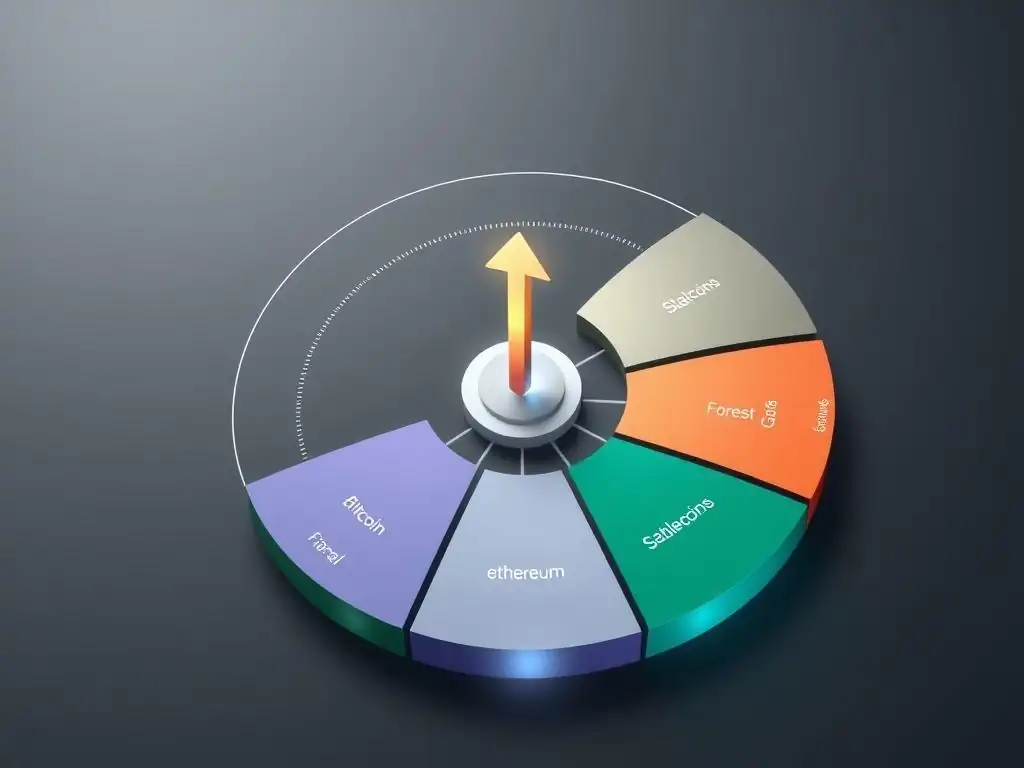
Once you understand the different crypto asset classes, the next step in diversifying crypto portfolio strategies is deciding how much capital to allocate to each. This process, known as asset allocation, is not a one-size-fits-all approach; it depends heavily on your individual risk tolerance, investment goals, and time horizon. A more aggressive investor might allocate a larger percentage to altcoins, while a more conservative investor might favor a higher allocation to Bitcoin, Ethereum, and stablecoins.
Developing a clear asset allocation plan before you start buying assets helps prevent impulsive decisions based on market hype. It provides a framework for building your diversified crypto portfolio systematically. This section will discuss some simple methods for beginners to approach asset allocation and the importance of balancing potential growth with risk mitigation. Remember that this plan is not static and may need adjustments over time as your circumstances change or the market evolves.
Simple Diversification Methods for Beginner Crypto Investors
For beginners implementing diversifying crypto portfolio strategies, simplicity is often key. One straightforward method is the percentage-based approach. You decide on target percentages for each asset class based on your risk tolerance and then allocate your investment capital accordingly. For example, a moderately conservative approach might be: 50% BTC/ETH, 30% Altcoins (split among several projects), 20% Stablecoins. A more aggressive approach might shift more towards altcoins, e.g., 40% BTC/ETH, 40% Altcoins, 20% Stablecoins.
Another simple method is equal-weighting, where you invest the same amount of money into each chosen asset. If you decide to diversify across 10 different cryptocurrencies, you'd put 10% of your capital into each. While easy to implement, this method gives smaller, potentially riskier altcoins the same weight as larger, more established ones, which might not align with your risk tolerance.
A modified approach could be to equal-weight within asset classes (e.g., equal amounts into 5 chosen altcoins, but the altcoin class itself has a smaller overall percentage of the portfolio). The goal is to find a method that feels manageable and aligns with your risk profile.
Balancing Growth Potential and Risk Mitigation
The core challenge in diversifying crypto portfolio strategies is finding the right balance between assets that offer high growth potential (typically smaller altcoins) and those that help mitigate risk (like Bitcoin, Ethereum, and stablecoins). Assets with higher potential returns usually come with higher volatility and a greater risk of significant loss. Assets that reduce volatility often have lower growth ceilings. Your asset allocation reflects where you are on this spectrum.
A diversified crypto portfolio aims to capture a reasonable amount of market upside while limiting the depth of potential drawdowns. This balance is dynamic. During a strong bull market, your higher-growth altcoins might significantly outperform BTC and ETH. During a bear market, your stablecoin and potentially BTC holdings might preserve capital much better than altcoins. By holding a mix, you ensure you participate in different market movements. For instance, if BTC dominance is high, your BTC holdings perform well; if there's an "altcoin season," your altcoin exposure benefits.
Rebalancing Your Diversified Crypto Portfolio Over Time
Market movements will inevitably cause your portfolio's asset allocation to drift away from your initial target percentages. If altcoins have a strong run, their percentage of your total portfolio value will increase. Conversely, if Bitcoin surges while altcoins lag, Bitcoin's percentage will grow. Rebalancing is the process of periodically adjusting your portfolio back to your target allocation. This typically involves selling some of the assets that have grown to exceed their target percentage and using that capital to buy assets that have fallen below their target percentage.
Rebalancing is a crucial part of maintaining diversifying crypto portfolio strategies. It forces you to sell high and buy low, a fundamental principle of investing. It also ensures that your portfolio's risk level remains consistent with your initial plan. You can rebalance on a fixed schedule (e.g., quarterly or annually) or when an asset class deviates significantly from its target (e.g., by 5% or 10%). While rebalancing might involve transaction fees and potential tax implications (depending on your jurisdiction), it is a disciplined approach to managing your diversified crypto portfolio and sticking to your long-term strategy.
Step 4: Selecting Crypto Platforms and Tools for Diversification and Management
Implementing diversifying crypto portfolio strategies requires access to platforms where you can buy, sell, and store various digital assets. The choice of platforms is important, as different platforms offer access to different sets of assets, have varying fee structures, and provide different levels of security and features. As a beginner, it's wise to start with reputable and user-friendly options.
Beyond buying and selling, managing a diversified crypto portfolio involves tracking performance and ensuring the security of your assets. Fortunately, several tools are available to help with these tasks. Selecting the right combination of exchanges, wallets, and tracking tools is essential for effectively executing and monitoring your diversification plan. Prioritize security and ease of use when making your selections.
Choosing Reputable Crypto Exchanges for Buying Diverse Assets (e.g., Binance, Coinbase, Kraken)
Centralized cryptocurrency exchanges (CEXs) are the most common entry point for beginners looking to buy crypto. Major exchanges like Binance, Coinbase, and Kraken list a wide variety of cryptocurrencies, making them suitable for implementing diversifying crypto portfolio strategies. They offer relatively user-friendly interfaces, liquidity for many trading pairs, and features like fiat-to-crypto ramps (allowing you to deposit traditional currency).
When choosing a CEX, consider factors such as: the range of assets available (does it list the specific altcoins you're interested in? ), trading fees (these can vary significantly), security measures (does it have a strong track record? ), regulatory compliance (is it licensed in your region?
), and customer support. While these platforms hold your assets on your behalf (which carries counterparty risk), they are often the easiest way for beginners to access a broad market for building a diversified crypto portfolio. It might be necessary to use more than one exchange to access all the specific assets you want for diversification.
Using Decentralized Exchanges (DEXs) for Broader Altcoin Access (e.g., Uniswap, PancakeSwap)
Decentralized exchanges (DEXs) like Uniswap (on Ethereum) and PancakeSwap (on BNB Chain) allow users to trade directly from their wallets without needing to deposit funds with a central authority. DEXs often list a much wider array of smaller, newer altcoins sooner than centralized exchanges, making them valuable for accessing a broader range of assets as part of diversifying crypto portfolio strategies. They operate via automated market makers (AMMs) and smart contracts.
Using DEXs requires a bit more technical understanding, including managing your own wallet and understanding concepts like gas fees (network transaction costs). While they offer access to more niche assets and remove counterparty risk associated with CEXs, they can also expose you to risks like smart contract bugs, impermanent loss (if providing liquidity), and scams (due to the ease of listing any token). Beginners might start with CEXs and explore DEXs as they gain more experience, potentially using them for small allocations to very specific, harder-to-find tokens for their diversified crypto portfolio.
Securing Your Diversified Portfolio with Hardware Wallets (e.g., Ledger, Trezor)
While exchanges are convenient for trading, keeping significant amounts of cryptocurrency on an exchange carries risk (e.g., exchange hacks, insolvency). For securing your diversified crypto portfolio, especially for long-term holdings, hardware wallets are highly recommended. Devices like Ledger and Trezor store your private keys offline, making it extremely difficult for hackers to access your funds.
Using a hardware wallet involves transferring assets from the exchange where you purchased them to your wallet address. This gives you sole control over your private keys and thus your funds. While it adds a step to the process, the enhanced security is invaluable for protecting your investment, particularly as your diversified crypto portfolio grows in value. For substantial holdings, moving assets off exchanges into cold storage provided by a hardware wallet is a critical security best practice.
Utilizing Portfolio Tracking Tools for Monitoring Diversification (e.g., CoinMarketCap Portfolio, CoinGecko Portfolio, Koinly)
Managing a diversified crypto portfolio spread across multiple exchanges and wallets can become complex. Portfolio tracking tools help you monitor the performance of all your holdings in one place. Websites and apps like CoinMarketCap Portfolio, CoinGecko Portfolio, and Koinly allow you to manually input your transactions or, in some cases, connect via API to exchanges to automatically track your balances and performance.
These tools provide valuable insights, such as your total portfolio value, the performance of individual assets, your overall gains or losses, and the current allocation percentages of your diversifying crypto portfolio. This makes it much easier to see if your portfolio is drifting from your target allocation and when rebalancing might be necessary. Some tools, like Koinly, also assist with tax reporting by aggregating transaction data. Utilizing a reliable tracking tool is essential for staying organized and making informed decisions about your diversified crypto portfolio.
Step 5: Implementing and Monitoring Your Diversification Plan
With your asset allocation strategy defined and your platforms/tools selected, the next step is to put your plan into action. Implementing diversifying crypto portfolio strategies involves executing trades across different platforms to acquire the desired assets according to your chosen percentages. This process requires careful execution to ensure you are buying the correct assets on the right platforms and sending them to secure storage if necessary.
Implementation is not a one-time event; it's an ongoing process that includes monitoring your portfolio's performance and making adjustments as needed. The crypto market is fast-paced, and staying informed is crucial. Regularly reviewing your holdings and market conditions helps you assess whether your diversification strategy is still serving your goals effectively.
Executing Trades Across Different Platforms
Executing your diversifying crypto portfolio strategy involves buying specific amounts of different cryptocurrencies. If your strategy includes assets only available on certain exchanges or DEXs, you will need to use multiple platforms. For instance, you might buy BTC and ETH on a major CEX, then transfer some funds or crypto to a DEX to acquire smaller altcoins or DeFi tokens.
Keep track of the amounts purchased and the prices paid for each asset. This information is essential for calculating your cost basis, tracking performance, and potentially for tax purposes. Be mindful of transaction fees (trading fees on exchanges, gas fees on blockchains for transfers or DEX trades), as these can add up and impact your overall returns, especially for smaller transactions. Starting with larger, more liquid assets on major exchanges is often the easiest way to begin implementing your diversified crypto portfolio plan.
Tracking Performance of Your Diversified Crypto Investments
Regularly tracking the performance of your diversified crypto portfolio is vital. Use the portfolio tracking tools mentioned earlier to get a consolidated view of your holdings. Monitor how each asset class and individual asset is performing relative to your expectations. Pay attention to both the percentage change in value and how the allocation percentages are shifting away from your targets.
Performance tracking helps you understand the impact of your diversifying crypto portfolio strategies. Are the less volatile assets providing the stability you expected? Are the higher-risk altcoins performing as hoped? This data informs your rebalancing decisions and helps you evaluate if your initial asset allocation was appropriate for your risk tolerance and goals. Consistent monitoring allows you to stay proactive rather than reactive to market changes.
Adjusting Your Strategy as the Market Evolves
The cryptocurrency market is dynamic, with new projects emerging, technologies advancing, and regulatory landscapes shifting. Therefore, your initial diversifying crypto portfolio strategy may need adjustments over time. This doesn't mean constantly changing your plan based on short-term price movements, but rather making informed decisions based on significant changes in the market or your personal circumstances.
For example, if a new sector like GameFi or the metaverse gains significant traction and you believe it aligns with your risk appetite, you might decide to allocate a small percentage of your portfolio to assets in that area. Conversely, if a particular asset class becomes excessively risky due to regulatory uncertainty, you might reduce your exposure. Adjusting your diversified crypto portfolio is a strategic process, ideally done after careful consideration and research, not on impulse. Rebalancing is a form of adjustment, but larger strategic shifts in asset allocation should be less frequent.
Common Pitfalls to Avoid When Diversifying a Crypto Portfolio
While diversifying crypto portfolio strategies is crucial for risk management, it's not a foolproof solution and can be done incorrectly. Beginners are susceptible to several common pitfalls that can undermine the benefits of diversification. Being aware of these potential mistakes can help you avoid them and build a more effective and resilient portfolio. Effective diversification is about thoughtful allocation, not just owning many different things.
Avoiding these pitfalls requires discipline, research, and a long-term perspective. Don't let market hype or fear of missing out (FOMO) dictate your diversification decisions. Stick to your plan, conduct due diligence, and prioritize security. Recognizing these common errors is the first step towards building a truly diversified crypto portfolio that protects your capital while pursuing growth opportunities.
Over-Diversification: Spreading Yourself Too Thinly
While diversification is good, it is possible to over-diversify a crypto portfolio, especially for beginners with limited capital. Holding too many different, obscure altcoins can make it incredibly difficult to research and monitor each project effectively. You might end up with dozens of small positions, none of which will significantly impact your overall portfolio's performance even if one performs well, while incurring numerous transaction fees.
Over-diversification can also dilute your potential gains. If you hold 50 different assets, even if one increases by 1000%, its impact on your total portfolio might be negligible if it only represented 0.5% of your initial investment. A more focused approach to diversifying crypto portfolio strategies, perhaps holding a carefully selected mix of 10-20 assets across different classes, is often more manageable and effective for beginners. Focus on quality and understanding your holdings rather than simply collecting as many different coins as possible.
Chasing Trends Without Research
Another common pitfall is diversifying by simply buying into whatever assets are currently pumping or receiving a lot of hype on social media, without doing any underlying research. This is trend-chasing, not strategic diversifying crypto portfolio strategies. Assets that experience rapid, speculative pumps often experience equally rapid and severe crashes, leaving investors who bought at the peak with significant losses.
True diversification involves understanding the different asset classes, the projects within them, and how they fit into your overall investment thesis. Don't buy a token just because you saw someone on Twitter say it's going to the moon. Research the project's technology, team, use case, tokenomics, and market position. Base your diversification decisions on fundamentals and your risk assessment, not just on short-term price action or hype cycles. A well-researched, diversified crypto portfolio is much more likely to withstand market volatility than one built on fleeting trends.
Neglecting Security Best Practices
Even the most perfectly diversified crypto portfolio is worthless if your assets are stolen. Neglecting security best practices is a critical pitfall. This includes leaving large amounts of crypto on exchanges, using weak passwords, falling for phishing scams, or not enabling two-factor authentication (2FA). As your diversified crypto portfolio grows, you become a more attractive target for malicious actors.
Always use strong, unique passwords for your exchange accounts and email. Enable 2FA using an authenticator app (like Google Authenticator or Authy) rather than SMS. Be extremely cautious of unsolicited messages or emails asking for your private keys or login information. For significant holdings, transfer your assets to a hardware wallet for cold storage. Implementing robust security measures is just as important as your asset allocation strategy in protecting your diversified crypto portfolio.
Building a Resilient Crypto Portfolio Through Smart Diversification
Building a resilient crypto portfolio is not about avoiding volatility entirely – that's impossible in this market – but about managing it effectively. Smart diversifying crypto portfolio strategies are the foundation of this resilience. By spreading your investments across different asset classes, understanding the risks, setting realistic goals, and using appropriate tools, beginners can navigate the complexities of the crypto market with greater confidence and a higher probability of long-term success.
Diversification is an ongoing process that requires periodic review and adjustment. It encourages a disciplined approach to investing, helping you avoid emotional decisions driven by market fluctuations. While the potential for high returns is exciting, prioritizing risk management through diversification is the mark of a prudent investor, especially when dealing with a volatile asset class like cryptocurrency.
Taking the First Steps Towards a Wisely Spread Crypto Investment Strategy
Taking the first steps towards diversifying crypto portfolio strategies involves educating yourself about the different types of crypto assets, assessing your own financial situation and risk tolerance, and creating a simple, manageable plan. Start small, perhaps with a focus on Bitcoin and Ethereum, and gradually explore adding other asset classes as you gain knowledge and confidence. Don't feel pressured to invest in everything at once.
Begin by allocating a percentage of your investable capital to crypto that you are comfortable potentially losing. Then, decide on a basic asset allocation (e.g., using the percentage-based method) and select one or two reputable platforms to make your initial purchases. As you become more familiar with the process, you can research additional assets and platforms to further refine your diversified crypto portfolio. The journey begins with understanding the principles and taking deliberate, informed actions.
Continuous Learning in Crypto Portfolio Management
The world of cryptocurrency is constantly evolving. New technologies emerge, market dynamics shift, and the regulatory landscape changes. Therefore, continuous learning is essential for effective crypto portfolio management and maintaining relevant diversifying crypto portfolio strategies. Stay informed about the projects you've invested in, follow market news, and continue to educate yourself about blockchain technology and the broader crypto ecosystem.
Regularly review your portfolio's performance and compare it against market benchmarks. Analyze why certain assets are performing well or poorly. Use this information to refine your understanding and potentially make informed adjustments to your diversification strategy over time. Treat portfolio management as an ongoing skill development process. By committing to continuous learning, you can better adapt your diversified crypto portfolio to the changing market and increase your chances of achieving your long-term investment goals.
Frequently Asked Questions
What is crypto portfolio diversification and why is it important?
Diversification in crypto involves spreading your investments across different cryptocurrencies and blockchain-based assets. It's important because it reduces risk by minimizing the impact of any single asset's poor performance on your overall portfolio.
How many different cryptocurrencies should I hold in a diversified portfolio?
There's no magic number, but most experts recommend starting with at least 5-10 different assets. The ideal number depends on your risk tolerance and the amount of capital you're investing.
Besides different cryptocurrencies, what other assets can I include in my crypto portfolio to diversify?
Beyond cryptocurrencies, you can explore DeFi tokens, NFTs (Non-Fungible Tokens), and even blockchain-related stocks. These offer exposure to different aspects of the blockchain ecosystem.
What factors should I consider when choosing which cryptocurrencies to include in my diversified portfolio?
Consider factors like market capitalization, use case, technology, and team behind the project. Research their potential for growth and assess your risk appetite for each.
How often should I rebalance my crypto portfolio, and what does that entail?
Rebalancing involves adjusting your portfolio to maintain your desired asset allocation. A common strategy is to rebalance quarterly or semi-annually, or whenever an asset deviates significantly from its target percentage.
The principles of diversification, so crucial in traditional finance, are even more vital when venturing into the volatile world of cryptocurrency. Understanding and implementing diversifying crypto portfolio strategies is no longer a luxury, but a necessity for anyone seeking sustainable growth and risk mitigation in this dynamic market. The potential for both immense gains and devastating losses underscores the importance of spreading investments wisely, as outlined throughout this guide.
This journey into crypto diversification has highlighted the ever-evolving nature of the digital asset landscape. The ability to adapt and learn is paramount, and the lessons learned here extend beyond mere financial strategy; they speak to the importance of informed decision-making in all aspects of life. Don't put all your eggs in one basket
– a timeless proverb that resonates deeply with the core message of diversification, reminding us that resilience comes from spreading our resources and mitigating potential risks.
Now, as you stand at the edge of the crypto frontier, armed with the knowledge of diversifying crypto portfolio strategies, I urge you to reflect on the principles discussed. Consider your own risk tolerance, investment goals, and the ever-changing market conditions. Let this guide be a starting point, not a definitive answer. Continuously research, adapt, and most importantly, invest with wisdom and foresight. The future of your crypto portfolio, and perhaps your financial well-being, depends on it.
Okay, here's a Call to Action (CTA) designed for the end of an article titled "Beginner's Guide to Crypto Portfolio Diversification: Spreading Your Investments Wisely" on the website "Blockchain Trends" (blockchaintrends.org):
Start Building Your Diversified Crypto Future Today!
Thank you for exploring the world of crypto portfolio diversification with us! We hope you've gained valuable insights into building a resilient and profitable investment strategy. Now, it's time to put that knowledge into action!
Here are a few steps you can take to start diversifying your crypto portfolio:
- Commit to diversifying at least 10% of your portfolio in the next week! This is a crucial first step towards mitigating risk and maximizing potential returns.
- Explore lesser-known altcoins with strong fundamentals. Dig into their whitepapers and understand their potential before investing. Consider allocating a small percentage of your portfolio to these promising projects.
- Share this guide with a friend who's also interested in crypto investing. Helping others is a great way to reinforce your own understanding and contribute to a thriving community.
What one concrete step will you take this week to diversify your crypto portfolio based on what you've learned? Share your action plan in the comments below!
Leave a Reply