
Coinbase vs Binance: The Ultimate Crypto Exchange Battle for Beginners?


Welcome to Blockchain Trends, your guide to navigating the ever-evolving world of decentralized technology!
Are you ready to dive into the dynamic landscape of crypto exchanges? This week, we're tackling a question on every beginner's mind: Which reigns supreme, Coinbase or Binance? Uncover the key differences and make an informed decision in our deep dive into the Coinbase Binance crypto exchange battle and explore the future of digital asset trading. Keep reading to discover which platform is right for you!
- Coinbase vs Binance: The Ultimate Crypto Exchange Battle for Beginners?
- Coinbase vs Binance: An Overview for New Users
- Head-to-Head Comparison: Coinbase vs Binance Features for Beginners
- Coinbase for Beginners: Pros and Cons
-
Frequently Asked Questions
- What are the main differences between Coinbase and Binance for beginners?
- Which exchange, Coinbase or Binance, offers lower fees for trading cryptocurrencies?
- Is Coinbase or Binance more secure for storing my cryptocurrency assets?
- Which platform, Coinbase or Binance, offers a wider variety of cryptocurrencies for trading?
- How do Coinbase and Binance differ in terms of regulatory compliance and availability?
- Final Reflection: Navigating the Crypto Frontier
- Unlock Your Crypto Journey: Choose Your Exchange Today!
Coinbase vs Binance: The Ultimate Crypto Exchange Battle for Beginners?
Choosing Your First Crypto Exchange Platform
Selecting the initial digital asset platform is a pivotal step for newcomers venturing into the world of cryptocurrencies. The choice of a Coinbase Binance crypto exchange or another reputable platform significantly impacts the user experience, security of funds, and ease of executing trades. For a beginner, the ideal platform should offer a balance of simplicity, robust security measures, and access to essential resources without overwhelming complexity.
Making an informed decision requires understanding the core functionalities and differences between available options. A beginner needs to consider factors beyond just the number of supported coins or the lowest fees. Key aspects include the user interface's intuitiveness, the availability of clear educational materials, reliable customer support, and the platform's regulatory standing. The process of choosing the right crypto exchange platform lays the foundation for a beginner's journey in digital asset trading.
Why Beginners Need the Right Digital Asset Platform
The digital asset landscape can be complex and intimidating for those just starting out. Using an inappropriate platform can lead to costly mistakes, security risks, or a frustrating learning experience that discourages further participation. A platform designed with beginners in mind typically simplifies the process of buying, selling, and managing cryptocurrencies, reducing the likelihood of errors.
Moreover, the right digital asset platform provides essential educational tools and support systems. These resources help new users understand fundamental concepts like wallet management, transaction processes, and market volatility. Choosing a platform that prioritizes user education and provides responsive assistance ensures that beginners can navigate the market safely and build their confidence over time, ultimately contributing to a more positive and sustainable engagement with cryptocurrencies.
Understanding the Basics: What is a Crypto Exchange?
A crypto exchange is an online marketplace where users can buy, sell, or trade cryptocurrencies for other digital currencies or traditional fiat currencies like USD, EUR, or GBP. These platforms act as intermediaries, connecting buyers and sellers and facilitating transactions. They are fundamental to the crypto ecosystem, providing the primary gateway for individuals to acquire digital assets.
Crypto exchanges vary widely in their features, fee structures, supported assets, and regulatory compliance. Some cater to advanced traders with complex charting tools and derivatives, while others focus on simplicity for beginners. Understanding that a crypto exchange is essentially a digital brokerage for cryptocurrencies is the first step for any newcomer looking to enter the market and potentially engage with a Coinbase Binance crypto exchange or similar platform.
Coinbase vs Binance: An Overview for New Users
Introducing Coinbase: The Beginner-Friendly Option?
Coinbase is often cited as one of the most accessible crypto exchange platforms for beginners, particularly in the United States. Launched in 2012, it has built a reputation for its straightforward interface and emphasis on security and regulatory compliance. The platform simplifies the process of buying major cryptocurrencies like Bitcoin (BTC), Ethereum (ETH), and Litecoin (LTC) directly with fiat currency.
The Coinbase ecosystem includes not only a simple brokerage service but also Coinbase Pro (now integrated into the main platform for advanced trading) and various educational resources through Coinbase Earn, which rewards users with small amounts of crypto for learning about different assets. While its fee structure for simple transactions can be higher than some competitors, its ease of use and trusted brand make it a popular entry point for those new to the Coinbase Binance crypto exchange comparison.
Introducing Binance: The Global Crypto Trading Giant?
Binance, founded in 2017, rapidly grew to become the world's largest crypto exchange by trading volume. It offers a vast array of cryptocurrencies and trading pairs, catering to a global audience. While initially known for its powerful trading engine and extensive altcoin selection, Binance has also developed features aimed at beginners, such as a "Lite" version of its app.
Binance's platform can appear complex due to the sheer number of options available, from spot trading and futures to staking, lending, and NFTs. However, its competitive fee structure, particularly for higher-volume traders or those holding its native token, BNB, is a significant draw. For beginners comparing a Coinbase Binance crypto exchange, Binance represents a platform with potentially lower costs and more assets, but with a steeper learning curve compared to Coinbase's core offering.
Target Audience: Which Platform Caters to Novice Traders?
Coinbase primarily targets retail investors and beginners who prioritize simplicity, security, and regulatory adherence. Its design is geared towards making the process of buying and selling major cryptocurrencies as intuitive as possible, often resembling traditional online brokerage accounts. This focus makes it highly appealing to individuals taking their first steps into the crypto market.
Binance, while offering beginner-friendly options, has a broader target audience that includes intermediate and advanced traders seeking access to a wider range of assets, lower fees for active trading, and more complex financial instruments. While a beginner can certainly use Binance, they may need to consciously stick to the simpler features or the Lite version to avoid being overwhelmed by the platform's full capabilities. The choice between a Coinbase Binance crypto exchange often comes down to whether a beginner values ultimate simplicity and guided experience (Coinbase) or access to more features and potential cost savings (Binance) from the outset.
Head-to-Head Comparison: Coinbase vs Binance Features for Beginners
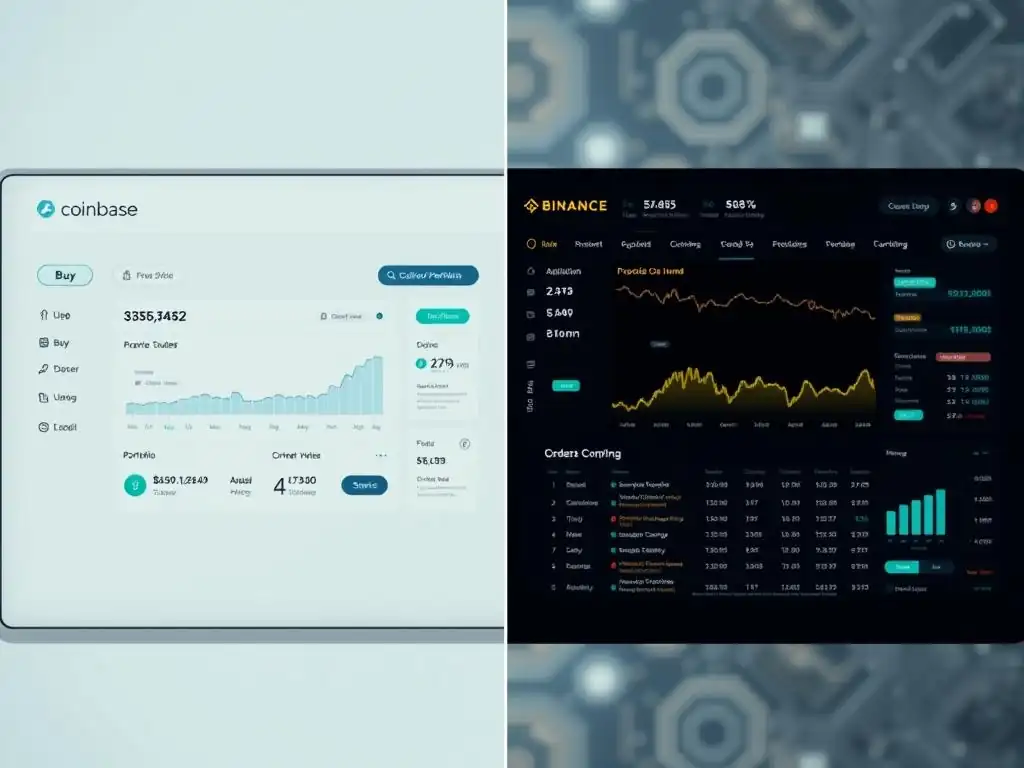
Ease of Use and User Interface (UI)
The user interface is paramount for beginners navigating a crypto exchange. Coinbase's platform, both web and mobile, is renowned for its clean, intuitive design. The process of signing up, verifying identity, and making a first purchase is streamlined and clearly guided, minimizing confusion for new users. Key information like portfolio value and basic transaction history is readily accessible on the main dashboard.
Binance offers a more feature-rich interface, which can be overwhelming for novices. However, it provides a "Lite" version of its mobile app specifically designed to simplify the experience, offering basic buy, sell, and convert functions. The standard "Pro" interface, while powerful, presents a wealth of data, charts, and trading options better suited for experienced users. For a beginner comparing the Coinbase Binance crypto exchange experience, Coinbase generally offers a simpler, less cluttered entry point.
Navigating the Coinbase Dashboard
The Coinbase dashboard is designed for clarity and ease of access to essential information. Upon logging in, users typically see their portfolio value, recent asset performance, and simple options to buy or sell cryptocurrencies. The layout is clean, with prominent buttons for key actions, making it easy for beginners to find what they need without digging through complex menus.
Accessing transaction history, managing payment methods, and navigating security settings are also straightforward processes on Coinbase. The platform prioritizes a guided experience, often presenting step-by-step instructions for actions like setting up 2-factor authentication or adding a bank account. This focus on user-friendliness makes the initial interaction with the Coinbase crypto exchange less daunting for newcomers.
Exploring the Binance Interface (Lite vs. Pro)
Binance presents a notable difference in its interface depending on the version used. The Binance Lite interface, available on the mobile app, is minimalist, focusing solely on buying, selling, and viewing portfolio balances. It removes advanced charting, order types, and various other features to provide a clean, beginner-friendly experience comparable in simplicity to Coinbase's basic functions.
The standard Binance Pro interface, accessible on both web and mobile, is significantly more complex. It features detailed trading charts, order books, multiple order types (limit, market, stop-limit, etc. ), margin trading, futures, and a vast array of other tools. While powerful, this complexity can be intimidating for someone just starting out. A beginner exploring the Binance crypto exchange should strongly consider starting with the Lite version to ease into the platform.
Which Platform Offers Simpler Crypto Trading?
For the absolute beginner whose primary goal is to simply buy or sell a few major cryptocurrencies with fiat currency, Coinbase generally offers a simpler and more intuitive trading experience out of the box. Its standard interface is less cluttered than Binance Pro, and the process of making a basic purchase is highly streamlined.
However, if a beginner is willing to use the Binance Lite app, the simplicity is comparable to Coinbase for basic functions. The main difference lies in the default experience: Coinbase is simple by default, while Binance requires the user to consciously switch to or use the Lite version to achieve similar simplicity, otherwise, they face the complexity of Binance Pro.
Supported Cryptocurrencies and Asset Variety
The range of available digital assets is a key factor when choosing a crypto exchange platform. Coinbase started with support for only a few major cryptocurrencies but has significantly expanded its offerings over time. It now supports over 200 different cryptocurrencies that users can buy, sell, or trade, including popular choices and a growing number of altcoins.
Binance is well-known for offering one of the widest selections of cryptocurrencies globally. The platform lists over 350 different digital assets and thousands of trading pairs. This extensive variety includes major coins, numerous altcoins, and often lists newer projects relatively early. For beginners looking for a Coinbase Binance crypto exchange comparison, Binance offers significantly more choice in terms of supported assets.
Coins Available on Coinbase for Beginners
Coinbase makes it easy for beginners to access the most popular and well-established cryptocurrencies. This includes Bitcoin (BTC), Ethereum (ETH), Litecoin (LTC), Bitcoin Cash (BCH), and others like Solana (SOL), Cardano (ADA), and Polkadot (DOT). The platform provides simple "Buy" options directly from the main interface for most listed assets.
The selection on Coinbase is curated, often prioritizing assets with larger market caps and perceived stability, although it has expanded to include many smaller cap coins. Beginners can confidently find and purchase widely recognized digital assets without being overwhelmed by obscure options. The Coinbase crypto exchange provides a solid foundation with essential coins.
Cryptocurrency Selection on Binance (Initial Options)
While Binance lists a vast number of cryptocurrencies, a beginner might initially focus on the most popular ones, which are readily available. These include Bitcoin, Ethereum, and a huge range of altcoins. Binance's strength lies in its depth of altcoin listings, offering access to smaller, potentially higher-risk or higher-reward assets not found on Coinbase.
For a beginner, the sheer volume of options on Binance can be daunting. However, they can easily find and trade the same major coins available on Coinbase. The platform also allows trading between various altcoin pairs (e.g., ETH/ADA, BNB/SOL), offering more trading possibilities than Coinbase's more limited direct fiat-to-crypto or crypto-to-crypto pairs for smaller assets. The Binance crypto exchange is the go-to for altcoin variety.
Finding Popular Digital Assets Like Bitcoin and Ethereum
Both Coinbase and Binance make it extremely easy to find and purchase major digital assets like Bitcoin (BTC) and Ethereum (ETH). These are typically featured prominently on their respective homepages or within the basic buy/sell sections. For a beginner, acquiring the most popular cryptocurrencies is a straightforward process on either platform.
Coinbase's simple "Buy" flow is perhaps marginally more guided for a first-time purchase of BTC or ETH. Binance Lite also simplifies this process significantly. On Binance Pro, while there are more ways to buy (e.g., using different order types), the basic market buy function for these major coins is still readily available. Regardless of whether a beginner chooses a Coinbase Binance crypto exchange, access to Bitcoin and Ethereum is guaranteed and simple.
Understanding Crypto Trading Fees and Costs
Fees are a crucial consideration when choosing a crypto exchange. Fee structures can be complex, varying by transaction type (buy, sell, convert, trade), volume, payment method, and the specific platform. Understanding these costs is essential for beginners to manage their investments effectively.
Both Coinbase and Binance charge fees for various services, including trading, deposits (in some cases or methods), and withdrawals. These fees directly impact the amount of crypto a user receives for their money or the profit they make from a trade. Comparing the fee structures of a Coinbase Binance crypto exchange is vital for minimizing costs.
Coinbase Fee Structure Explained
Coinbase's fee structure can be somewhat opaque for simple buy/sell transactions using their standard service. For smaller transactions, they often charge a flat fee or a percentage fee, whichever is greater, which can be relatively high (e.g., a fixed fee of a few dollars for small buys, or a percentage like 1.49% for bank transfers, up to nearly 4% for debit/credit card purchases).
For users who transition to or use the advanced trading interface (formerly Coinbase Pro), the fees are based on a maker-taker model, typically ranging from 0.05% to 0.60% depending on trading volume, which is significantly lower than the basic buy/sell fees. However, beginners often start with the simpler interface and incur the higher costs. Understanding these tiered fees is key when evaluating the Coinbase crypto exchange.
Binance Fee Structure for Beginners (Trading Fees)
Binance generally offers a more competitive fee structure, particularly for trading. Their standard spot trading fees start at 0.1% for both maker and taker orders. This rate can be reduced further by holding Binance's native token (BNB) or by achieving higher trading volumes.
For beginners making simple buy/sell transactions using the convert function or the Lite app, the fees might be slightly different but are often still lower than Coinbase's comparable basic service fees. While the overall fee structure on Binance is more complex due to the variety of services, the core trading fees are typically lower than those on Coinbase's basic service. The Binance crypto exchange is known for its competitive trading fees.
Deposit and Withdrawal Fees Comparison
Deposit fees for fiat currency via bank transfer (like ACH in the US or SEPA in Europe) are often free on both Coinbase and Binance (though check specific regions). Using debit/credit cards for deposits or direct purchases usually incurs a significant fee, often around 3-4% on both platforms.
Withdrawal fees vary by cryptocurrency and network congestion. Both platforms charge a network fee (miner fee) which is unavoidable, but exchanges may add their own service fee on top. Coinbase's withdrawal fees can sometimes appear higher as they may bundle the network fee with their service fee. Binance's withdrawal fees are generally considered competitive, though they vary widely by asset. Comparing the Coinbase Binance crypto exchange on withdrawal costs requires checking current rates for specific coins.
Minimizing Costs When Buying Crypto
Beginners can minimize costs by being mindful of payment methods and transaction types. Using bank transfers for deposits is typically cheaper than card payments on both platforms. On Coinbase, using the advanced trading interface for trades rather than the simple buy/sell option significantly reduces fees.
On Binance, using the standard spot trading interface or the convert function (checking the quoted rate carefully) is usually more cost-effective than card purchases. Holding BNB tokens on Binance can also provide fee discounts. Understanding these nuances helps beginners save money when using a Coinbase Binance crypto exchange.
Security Features and User Protection
Security is paramount when dealing with digital assets. Both Coinbase and Binance implement robust security measures to protect user funds and data. However, the responsibility for security is shared, and users must also follow best practices.
Key security features include two-factor authentication (2FA), cold storage of funds (keeping crypto offline), insurance policies, and compliance with regulatory standards. Evaluating the security posture is critical when choosing a Coinbase Binance crypto exchange platform.
How Coinbase Secures Your Funds
Coinbase employs industry-leading security practices. A significant majority (around 98%) of customer digital assets are stored in cold storage, offline, making them inaccessible to online threats. The small portion held online in hot wallets is insured against theft due to breaches of Coinbase's physical security, cyber security, or employee theft (though this insurance does not cover loss due to unauthorized access to a user's personal account).
Coinbase also offers standard security features like 2-factor authentication (using apps like Google Authenticator or Authy is recommended over SMS), address whitelisting, and email confirmations for withdrawals. Their long operational history and regulatory compliance in jurisdictions like the US contribute to their reputation for security within the Coinbase crypto exchange landscape.
Binance Security Measures and Best Practices
Binance also utilizes cold storage for a large portion of user funds. They have a Secure Asset Fund for Users (SAFU), an emergency insurance fund that allocates a percentage of trading fees to cover potential losses in extreme cases. This fund is a key aspect of Binance's user protection strategy.
Like Coinbase, Binance supports strong 2-factor authentication (authenticator app recommended), email and SMS notifications, and address management features. They also have advanced security options like anti-phishing codes and withdrawal address whitelisting. While Binance has faced security incidents in the past (like the 2019 breach covered by SAFU), they have continuously invested in enhancing their security infrastructure. Evaluating the Binance crypto exchange requires considering their extensive security protocols and insurance fund.
Protecting Your Digital Assets (2-Factor Authentication, etc.)
Regardless of the platform chosen, users play a critical role in securing their accounts. Enabling 2-Factor Authentication (2FA) is perhaps the single most important step, adding an extra layer of security beyond just a password. Using a dedicated authenticator app is more secure than SMS-based 2FA.
Other best practices include using a strong, unique password for the exchange, enabling withdrawal address whitelisting (restricting withdrawals to pre-approved addresses), being wary of phishing attempts via email or fake websites, and keeping personal devices secure. For both Coinbase and Binance crypto exchange users, proactive personal security measures are essential.
Payment Methods and Fiat Currency Support
The ability to easily deposit and withdraw traditional money (fiat currency) is crucial for beginners entering the crypto market. Both Coinbase and Binance support multiple fiat currencies and payment methods, though the options vary by region.
Common methods include bank transfers, debit cards, and credit cards. Understanding the available options and associated fees helps beginners fund their accounts and eventually cash out their investments. Comparing the Coinbase Binance crypto exchange on fiat support is key for accessibility.
Depositing USD, EUR, GBP on Coinbase
Coinbase offers robust support for major fiat currencies, including USD, EUR, and GBP, particularly in regions like the United States, Europe, and the UK. Users in the US can typically deposit USD via ACH bank transfer (often free), wire transfer (may have fees), or use debit cards for instant purchases (incurring higher fees, around 3.99%).
In Europe, SEPA transfers are commonly supported for EUR deposits, often free or low cost. UK users can use Faster Payments for GBP. The ease and reliability of fiat deposits are strong points for the Coinbase crypto exchange in supported regions.
Adding Fiat Currency to Binance (Bank Transfer, Card)
Binance supports a wider range of fiat currencies globally compared to Coinbase's focus on major Western currencies. However, the specific deposit methods and fees vary significantly depending on the user's country and the third-party payment processors Binance integrates with.
Common methods include bank transfers (like SEPA, Faster Payments, or regional equivalents), debit/credit card purchases (typically involving high fees, around 3-4%), and sometimes peer-to-peer (P2P) trading. While Binance offers more currency options, the reliability and speed of bank transfers can vary more by region compared to Coinbase's core markets. Evaluating the Binance crypto exchange for fiat depends heavily on location.
Buying Crypto with Credit Card or Debit Card
Both Coinbase and Binance allow users to purchase cryptocurrencies directly using credit or debit cards. This method offers instant access to crypto, which is convenient for beginners.
However, card purchases typically incur the highest fees on both platforms, often around 3-4% or more of the transaction value. While easy, using a card is the most expensive way to buy crypto on a Coinbase Binance crypto exchange. Beginners should be aware of these costs and consider cheaper methods like bank transfers if speed is not the absolute priority.
Customer Support and Help Resources
Access to reliable customer support and helpful resources is vital for beginners who are likely to have questions or encounter issues. The quality and accessibility of support can significantly impact a user's experience, especially when dealing with financial transactions.
Both Coinbase and Binance provide help centers and contact options, but user experiences with response times and effectiveness can vary. Comparing the support structures of a Coinbase Binance crypto exchange is important for peace of mind.
Accessing Support on Coinbase
Coinbase offers a comprehensive online help center with articles covering common questions and issues. They provide email support, and for certain issues or user tiers, they may offer phone support or live chat. In the past, Coinbase's support response times have sometimes been criticized, but they have invested in improving this area.
For basic inquiries, the help center is often sufficient. For account-specific problems, users typically need to submit a support ticket via email. The availability of phone support is limited but a valuable resource when accessible. Beginners using the Coinbase crypto exchange should explore the help center first.
Getting Help from Binance Support
Binance also has an extensive FAQ and help center. They primarily offer support via a ticketing system and live chat, which is available 24/7 in multiple languages. Given Binance's massive global user base, support response times can sometimes be delayed during peak periods.
While live chat is a convenient option, users might sometimes find themselves interacting with automated responses before reaching a human agent. The depth of the help center articles is significant, covering the platform's vast features. For beginners on the Binance crypto exchange, utilizing the live chat for immediate questions might be useful, though patience may be required.
Finding Educational Resources for New Crypto Investors
Both platforms offer educational resources, though in different formats. Coinbase has "Coinbase Earn," which provides short videos and quizzes about specific cryptocurrencies, rewarding users with a small amount of the crypto for completing the learning modules. This is an excellent, engaging way for beginners to learn about different assets and blockchain concepts.
Binance has "Binance Academy," a vast repository of articles and guides covering everything from basic blockchain concepts to advanced trading strategies. While comprehensive, it is less interactive than Coinbase Earn. For beginners comparing a Coinbase Binance crypto exchange on educational value, Coinbase Earn offers a unique, rewarding learning experience focused on individual assets, while Binance Academy provides a broader, deeper knowledge base.
Regulatory Compliance and Reputation
The regulatory standing of a crypto exchange is a critical factor for trust and security, especially for beginners. Compliance with financial regulations provides a layer of oversight and consumer protection, although the crypto regulatory landscape is still evolving globally.
The reputation of a platform regarding security incidents, customer service, and regulatory actions also plays a significant role in a beginner's decision-making process. Comparing the regulatory approach of a Coinbase Binance crypto exchange highlights different strategies.
Coinbase's Standing in Regulated Markets
Coinbase has made regulatory compliance a cornerstone of its operations, particularly in the United States. It is a publicly traded company on Nasdaq (COIN) and holds various licenses and registrations in the US, including state money transmitter licenses and regulatory oversight. This strong regulatory posture provides a significant level of trust for US-based users.
Coinbase also operates under regulations in other jurisdictions where it is available, adhering to local financial laws. Its commitment to compliance, including Know Your Customer (KYC) and Anti-Money Laundering (AML) procedures, makes it one of the most regulated and transparent major crypto exchanges globally. This is a key differentiator for the Coinbase crypto exchange.
Binance's Global Regulatory Landscape
Binance has a more complex global regulatory profile. As a company without a single global headquarters, it operates through various registered entities in different countries. While it seeks licenses and complies with regulations in many jurisdictions, it has also faced scrutiny and regulatory challenges in others, sometimes leading to restrictions on services for users in specific regions.
Binance has been actively working to increase its compliance efforts worldwide, obtaining licenses in various countries. However, its rapid global expansion and broad range of services mean its regulatory standing is less uniform and, in some regions, less established than Coinbase's. A beginner considering the Binance crypto exchange should be aware that its regulatory status can vary significantly depending on their location.
Trust and Reliability of Each Crypto Exchange Platform
Both Coinbase and Binance are considered among the most reliable and trusted crypto exchange platforms globally, each serving millions of users daily. Coinbase's long history, public listing, and strong regulatory compliance, especially in the US, contribute to its reputation for trust and stability.
Binance, despite facing regulatory hurdles in some areas, has built trust through its massive scale, technological prowess, and efforts to enhance security and compliance, including the SAFU insurance fund. While both platforms have experienced operational issues or security incidents over time, they have generally demonstrated resilience and commitment to user protection. The choice between a Coinbase Binance crypto exchange in terms of trust often depends on the user's location and their priority between stringent regulation (Coinbase) and global scale/features (Binance).
Coinbase for Beginners: Pros and Cons
Advantages of Using Coinbase as a First Exchange
Coinbase offers several compelling advantages for beginners entering the crypto market. Firstly, its user interface is exceptionally clean and intuitive, designed specifically to simplify the process of buying and selling cryptocurrencies. The guided steps for account setup, verification, and initial purchases minimize potential confusion for newcomers.
Secondly, Coinbase's strong focus on regulatory compliance, particularly in the United States, provides a significant level of trust and security assurance for users in regulated markets. Its status as a publicly traded company adds another layer of transparency. Finally, resources like Coinbase Earn offer a unique, rewarding way for beginners to learn about different digital assets while earning small amounts of crypto, facilitating education alongside investment. The Coinbase crypto exchange prioritizes ease of entry and regulatory trust.
Potential Drawbacks of Coinbase for
Frequently Asked Questions
What are the main differences between Coinbase and Binance for beginners?
Coinbase is generally considered more user-friendly with a simpler interface, making it ideal for beginners. Binance offers a wider range of cryptocurrencies and advanced trading features, which can be overwhelming for newcomers. Both are considered reputable crypto exchanges.
Which exchange, Coinbase or Binance, offers lower fees for trading cryptocurrencies?
Binance typically offers lower trading fees compared to Coinbase, especially for higher trading volumes. However, Coinbase Pro (now Coinbase Advanced Trade) offers competitive fees as well. Consider transaction fees and withdrawal fees when comparing.
Is Coinbase or Binance more secure for storing my cryptocurrency assets?
Both Coinbase and Binance employ robust security measures, including two-factor authentication and cold storage of assets. However, no exchange is completely immune to security breaches. Diversifying your holdings and using hardware wallets is recommended.
Which platform, Coinbase or Binance, offers a wider variety of cryptocurrencies for trading?
Binance generally lists a significantly wider selection of cryptocurrencies and altcoins compared to Coinbase. Coinbase focuses on more established and regulated cryptocurrencies. Consider which specific coins you are interested in trading.
How do Coinbase and Binance differ in terms of regulatory compliance and availability?
Coinbase is known for its strong focus on regulatory compliance and is available in fewer countries due to stricter regulations. Binance operates in more countries but faces greater regulatory scrutiny in some regions. Availability varies by location.
The digital currency landscape is constantly evolving, and understanding the nuances between platforms like Coinbase and Binance is now more crucial than ever. This comparison is not just about choosing an exchange; it's about empowering individuals to participate confidently in the future of finance. The accessibility and security of these platforms directly impact the widespread adoption of cryptocurrency, shaping how we interact with money and investments in the years to come.
The ongoing debate between Coinbase and Binance reflects a larger tension within the crypto world: balancing user-friendliness with advanced features and global reach. My own journey into cryptocurrency began with a similar dilemma, highlighting the importance of informed decision-making. The best investment you can make is an investment in yourself. The more you learn, the more you'll earn.
- Warren Buffett. This quote resonates deeply in the context of crypto, where continuous learning is essential for navigating the complexities and mitigating risks.
As you embark on your crypto journey, remember that the choice between Coinbase and Binance is a personal one, dependent on your individual needs and risk tolerance. Take the time to research, experiment, and continuously learn. Embrace the potential of this technology, but always proceed with caution and a commitment to responsible investing. The future of finance is being written now, and your informed participation is key to shaping its direction.
Unlock Your Crypto Journey: Choose Your Exchange Today!
Thank you for exploring the Coinbase versus Binance debate with us. We hope you now have a clearer understanding of which platform aligns best with your cryptocurrency goals. Are you ready to take the first step into the world of digital assets?
Here are a few actions you can take right now:
- Open an account with either Coinbase or Binance and make your first cryptocurrency purchase. Don’t let hesitation hold you back — even a small investment is a valuable starting point.
- Visit the Blockchain Trends website for detailed reviews and guides on various crypto platforms. Consider exploring other options like Kraken or Gemini to broaden your knowledge.
- Share this article with a friend interested in starting their own crypto journey. Helping others learn can reinforce your understanding!
Which exchange did you choose and why? Share your decision in the comments below!
Leave a Reply