
Crypto Trading Made Easy? BeginnerFriendliness Compared: Coinbase vs Binance vs Kraken

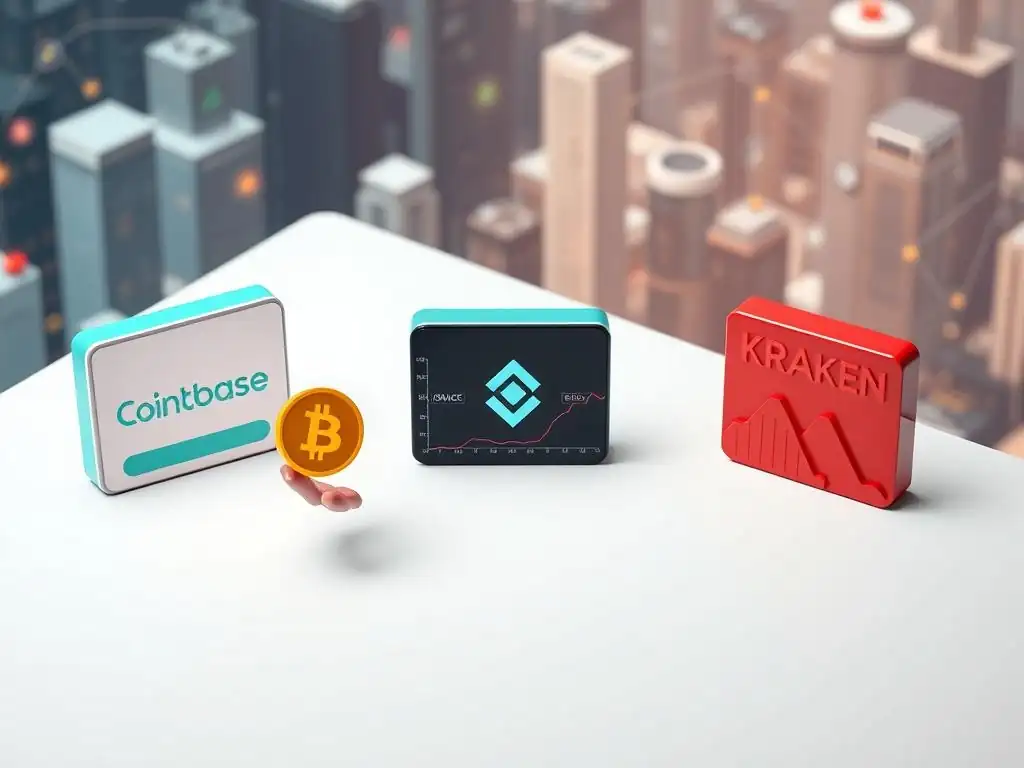
Welcome to Blockchain Trends, your go-to source for understanding the revolutionary impact of blockchain technology. Ever wondered which crypto exchange is truly the most user-friendly? Dive in as we tackle a crucial question for both newcomers and seasoned traders: Is crypto trading really made easy? Our in-depth Coinbase vs Binance comparison will break down the features, fees, and beginner-friendliness of these leading platforms (and a surprise contender! ), leaving you equipped to make informed decisions. Ready to unlock the future of finance?
- Crypto Trading Made Easy? Beginner-Friendliness Compared: Coinbase vs Binance vs Kraken
- Ease of Use: Which Platform is Most Beginner-Friendly?
- Understanding Fees: A Direct Coinbase vs Binance Comparison and Beyond
- Security and Trust: Protecting Your Digital Assets
- Frequently Asked Questions
- Final Reflection: Navigating the Crypto Frontier
- Unlock Your Crypto Journey Today!
Crypto Trading Made Easy? Beginner-Friendliness Compared: Coinbase vs Binance vs Kraken
Why Choosing the Right Crypto Exchange Matters for New Traders
Embarking on the journey of cryptocurrency trading can feel overwhelming for newcomers. The first crucial step, often underestimated, is selecting the right platform to buy, sell, and manage digital assets. For a beginner, the ideal exchange isn't necessarily the one with the most advanced features or the lowest fees, but rather one that balances accessibility, ease of use, security, and understandable fee structures. A platform that is difficult to navigate or presents complex jargon can quickly deter a new trader, leading to frustration and potentially costly errors. The choice significantly impacts the initial learning curve and overall trading experience.
A user-friendly interface, straightforward onboarding process, and readily available customer support are paramount for those just starting out. While experienced traders might prioritize deep liquidity, advanced order types, or marginal trading options, beginners typically need a simple spot market to buy Bitcoin (BTC), Ethereum (ETH), or a few other major altcoins.
Understanding how platforms like Coinbase, Binance, and Kraken cater to this specific audience is key to making an informed decision. This Coinbase vs Binance comparison, along with Kraken, aims to highlight the features that matter most when ease of use is the primary concern for a new entrant into the crypto market.
The cryptocurrency landscape is vast and constantly evolving, populated by hundreds of exchanges, each with its own set of features, fee structures, and regulatory standings. For someone new to the space, sifting through these options to find a platform that feels intuitive and safe is a significant challenge. Many platforms are designed with experienced traders in mind, featuring complex charting tools, multiple order book views, and a dizzying array of trading pairs that can be intimidating for a beginner. The search for simplicity often leads new users to look for platforms specifically marketed as beginner-friendly.
Finding a platform that simplifies the complex processes of crypto trading – from understanding wallet addresses to executing trades – is vital. A simple platform abstracts away much of the underlying technical complexity, allowing beginners to focus on the basics of buying and selling. This includes clear pricing information, easy-to-understand account balances, and streamlined deposit and withdrawal procedures. Our Coinbase vs Binance comparison and inclusion of Kraken will explore how these major exchanges address the need for simplicity and accessibility for those taking their first steps into the world of digital assets.
Introducing the Contenders: Coinbase, Binance, and Kraken
Coinbase, Binance, and Kraken stand out as three of the most prominent and widely recognized cryptocurrency exchanges globally. Each has a significant user base and offers a range of services, though they differ in their approach, target audience, and global presence. Coinbase, often considered a gateway for new users in the United States and other regions, is known for its simple interface and strong regulatory compliance in certain markets. It has historically prioritized ease of use over advanced trading features, making it a popular choice for first-time crypto buyers.
Binance is the world's largest exchange by trading volume, offering an extensive list of cryptocurrencies and advanced trading options. While it caters heavily to experienced traders, Binance has also made efforts to attract beginners with simpler interfaces and educational resources.
Kraken, one of the oldest exchanges in the space, is respected for its security, regulatory compliance, and a balance between beginner-friendly options and features for more advanced traders. This Coinbase vs Binance comparison, alongside Kraken, provides a look at how these industry giants stack up when evaluated through the lens of a beginner's needs, focusing on factors like user experience, fees, and security.
Ease of Use: Which Platform is Most Beginner-Friendly?
User Interface and Dashboard Simplicity: Coinbase vs Binance vs Kraken
The first impression a beginner gets from a crypto exchange is often through its user interface (UI) and dashboard. Coinbase is widely lauded for its exceptionally clean and intuitive design, particularly its main retail platform (distinct from Coinbase Pro or Advanced Trade). Upon logging in, users typically see a straightforward view of their portfolio value, recent asset performance, and simple options to buy, sell, or convert crypto.
The navigation is minimal, focusing on core functions, which significantly reduces the cognitive load for someone unfamiliar with trading platforms. This simplicity is a core reason for its popularity among newcomers, making the initial Coinbase vs Binance comparison on usability often lean towards Coinbase for absolute beginners.
Binance's platform, reflecting its broader range of services, can appear more complex. While it offers a "Lite" version designed for beginners, the standard interface presents a wealth of information, including various markets, trading pairs, and advanced tools. This can be overwhelming initially.
Kraken offers a middle ground; its standard interface is cleaner than Binance's full version but slightly more detailed than Coinbase's basic view. Kraken also provides different interfaces, including a "Kraken Lite" mode in its mobile app, aiming to simplify the experience. For sheer dashboard simplicity and ease of finding basic information without clutter, Coinbase generally holds an edge for the complete novice compared to the standard Binance or Kraken interfaces, though both competitors have introduced simpler modes.
Mobile App Experience for Buying and Selling Crypto
In today's mobile-first world, the quality and simplicity of an exchange's mobile application are critical for beginner users who prefer managing their finances on the go. Coinbase's mobile app mirrors the simplicity of its web platform, offering a highly intuitive experience for checking balances, buying, and selling cryptocurrencies. The process to execute a trade is streamlined, requiring minimal steps and clear confirmations. This focus on essential functions makes it very accessible for beginners performing basic transactions.
Binance's mobile app is powerful but, like its web counterpart, can be feature-rich to the point of being overwhelming in its standard mode. It offers a "Lite" mode within the app, which dramatically simplifies the interface to focus only on buying, selling, converting, and tracking a limited set of assets. This Lite mode significantly improves the beginner experience on mobile, making the Coinbase vs Binance comparison on mobile app usability much closer, provided the user switches to Binance Lite.
Kraken's mobile app is well-regarded for its balance of features and usability. It's generally considered less complex than the full Binance app but offers more functionality than the basic Coinbase app.
Kraken also features a "Lite" mode within its app, simplifying the view and trading process for beginners. Overall, while all three offer mobile apps, Coinbase and Binance (in Lite mode) are arguably the most immediately intuitive for a beginner's first mobile crypto purchase.
Onboarding Process: Signing Up and Verifying Your Account
The initial step of signing up and verifying an account can be a significant hurdle for new users, involving identity verification (KYC - Know Your Customer) and linking payment methods. Coinbase is known for having a relatively smooth and guided onboarding process. Users are typically prompted step-by-step through providing personal information, uploading identification documents (like a driver's license or passport), and setting up 2-Factor Authentication (2FA). The process is generally quick, often completed within minutes to a few hours, allowing beginners to start trading relatively fast once approved.
Binance's onboarding process is also straightforward for basic account creation and initial verification levels, often allowing users to deposit and trade with crypto relatively quickly after providing basic information. However, unlocking higher withdrawal limits and fiat currency support requires more extensive KYC verification, similar to Coinbase. This involves identity document uploads and facial recognition scans, which can sometimes take longer depending on volume and region.
Kraken's signup process is also designed to be clear, with different verification tiers ("Starter," "Intermediate," "Pro") that unlock increasing deposit/withdrawal limits and features, including fiat funding. The "Starter" tier is quick and allows basic crypto-to-crypto trading, but fiat deposits and withdrawals require "Intermediate" verification, which involves full KYC similar to Coinbase and Binance. In a Coinbase vs Binance comparison for onboarding speed and simplicity for full functionality including fiat, they are quite comparable, with Kraken requiring a slightly higher tier for fiat access initially.
Simple Crypto Buying Process: Buying Bitcoin (BTC), Ethereum (ETH), and Altcoins
The core task for most beginners is simply buying cryptocurrency. A beginner-friendly platform makes this process as intuitive as online shopping. On Coinbase, buying crypto is exceptionally simple. Users navigate to the asset they wish to buy (e.g., Bitcoin), enter the desired amount in fiat currency (e.g., $100), select a payment method (like a linked bank account or debit card), review the transaction details (including fees), and confirm. The process is presented clearly, minimizing potential confusion.
Binance offers multiple ways to buy crypto. The simplest for beginners is often the "Buy Crypto" option using a credit/debit card or bank transfer, or via the "Convert" function (available in Lite mode), which allows direct swaps between assets. The standard trading interface is more complex, involving order books, which is not beginner-friendly for a simple purchase. In a direct Coinbase vs Binance comparison using their simplest buying methods, Coinbase's standard buy flow is arguably more intuitive than Binance's various options, unless the user is specifically in Binance Lite. Kraken also provides a simple "Buy Crypto" option, similar to Coinbase, allowing users to purchase assets directly with fiat via various methods. While effective, some users find the interface slightly less polished than Coinbase's. For the most direct and guided path to purchasing major cryptocurrencies like BTC or ETH with fiat, Coinbase's primary buy function remains a benchmark for beginner simplicity.
Understanding Fees: A Direct Coinbase vs Binance Comparison and Beyond
Trading Fees Explained: Spot Trading Costs for Beginners
Understanding trading fees is crucial, as they directly impact profitability, especially for frequent traders or those making smaller transactions. For beginners using the simplest trading methods (like instant buys or market orders on the main platform), fees can sometimes be higher than those faced by advanced users on professional interfaces. Coinbase's fee structure for simple buys/sells on its retail platform uses a spread plus a transaction fee, which can be a fixed fee or a percentage, often tiered based on transaction value.
For smaller amounts (e.g., under $200), the fixed fee can represent a significant percentage. For example, buying $50 of Bitcoin might incur a fee of around $1.99, which is close to 4%. This structure is simple to understand but can be relatively expensive for small, frequent trades.
Binance's standard trading fees are based on a maker-taker model, typically starting around 0.10% for both makers and takers in their lowest tier, which is significantly lower than Coinbase's retail fees. However, accessing these lower fees often requires using the standard trading interface, which is less beginner-friendly.
Binance also charges fees for instant buy options using cards or other methods, which can be higher than the spot trading fees. Kraken also uses a maker-taker fee model for its spot market, with base fees often slightly higher than Binance's lowest tier (e.g., 0.16% maker / 0.26% taker) but still generally lower than Coinbase's retail fees for comparable transaction sizes.
For a direct Coinbase vs Binance comparison on basic trading costs, Binance's standard spot fees are much lower, but Coinbase's fee structure on its simple platform, while higher, is arguably easier for a beginner to grasp initially, even if the actual cost is higher.
Deposit and Withdrawal Fee Structures
Beyond trading, beginners need to consider the costs associated with moving money onto and off the exchange. Depositing fiat currency (like USD, EUR) varies by method and platform. Coinbase typically offers free standard bank transfers (ACH in the US, SEPA in Europe) but charges fees for instant transfers or debit/credit card deposits (e.g., 3.99% for cards). Crypto deposits are generally free. For withdrawals, standard bank transfers are usually free or low-cost, while wire transfers incur higher fees (e.g., $25 in the US).
Binance's fiat deposit and withdrawal fees depend heavily on the currency and method used, varying significantly by region. Some methods like SEPA transfers in Europe might have low or no fees, while card deposits can incur fees around 1-2%. Crypto deposit fees are typically zero, while crypto withdrawal fees are variable, depending on the network congestion and the specific cryptocurrency, designed to cover network transaction costs.
Kraken also has variable fiat deposit/withdrawal fees depending on the method (e.g., free SEPA deposits/withdrawals, but fees for wire transfers). Crypto deposit fees are generally free, and withdrawal fees are based on network costs, similar to Binance.
In a Coinbase vs Binance comparison for fiat movements, both offer some free methods (like ACH/SEPA), but fees apply for faster or alternative options, with percentages for card deposits being common across platforms. Crypto withdrawal fees are generally unavoidable network costs, though exchanges may add a small margin.
Fiat On-Ramps and Off-Ramps: Costs and Convenience
The process of converting traditional currency into crypto (on-ramp) and vice versa (off-ramp) is a critical function for beginners. Convenience often comes at a cost. Coinbase excels in providing easy fiat on-ramps, particularly in regulated markets like the US and Europe, offering seamless integration with bank accounts and debit cards. While convenient, using debit/credit cards incurs a relatively high fee (often 3.99%), making it a costly option for larger deposits, although bank transfers are typically free. The simplicity of linking accounts and initiating transfers is a major plus for beginners.
Binance offers numerous fiat deposit options globally, including bank transfers, card payments, and various regional payment methods. The availability and cost vary significantly by country. While bank transfers can be low-cost or free in many regions, the process might be less intuitive than Coinbase's for some users, and success rates can vary.
Card fees are comparable to Coinbase's (around 1-4%). Kraken also provides robust fiat on/off-ramps via bank transfers and other methods, with SEPA transfers being free in Europe and wire fees applying elsewhere. Their integration is reliable, but the interface for managing fiat balances and transfers might be slightly less streamlined than Coinbase's.
A Coinbase vs Binance comparison on fiat convenience highlights Coinbase's simplicity in core markets versus Binance's wider geographical reach and varied options. For beginners prioritizing ease of linking a bank account and making a first deposit, Coinbase often feels the most straightforward, despite potentially higher card fees.
Comparing Fee Models: Coinbase, Binance, and Kraken Side-by-Side
When comparing the fee structures of Coinbase, Binance, and Kraken from a beginner's perspective, several points stand out. Coinbase's retail platform uses a simple-to-understand, albeit often more expensive, fee structure involving spreads and fixed/percentage transaction fees, particularly noticeable on smaller trades. Binance offers significantly lower trading fees via its standard maker-taker model (starting around 0.10%), but accessing these requires using a less beginner-friendly interface. Its instant buy options have higher fees, comparable to or slightly lower than Coinbase's card fees. Kraken's spot trading fees (starting around 0.16%/0.26%) sit between Coinbase's retail fees and Binance's lowest tier, offering a balance.
For fiat on-ramps using common methods like bank transfers, all three offer low-cost or free options (e.g., ACH/SEPA), but charge higher percentages for card transactions (typically 1-4%). Crypto withdrawals on all platforms primarily reflect network transaction costs, with minor variations. In a direct Coinbase vs Binance comparison focused purely on cost for a simple spot trade, Binance is generally cheaper if the user can navigate its standard trading interface or utilizes a low-fee fiat deposit method for instant buys.
However, if a beginner uses the simplest, most intuitive method on each platform (Coinbase retail buy vs. Binance instant buy), the fees might be more competitive or even higher on Binance depending on the method and region. Kraken often provides a good balance of reasonable fees and a user experience that is less complex than full Binance but more detailed than Coinbase's basic view.
Security and Trust: Protecting Your Digital Assets
Account Security Features: 2FA and Beyond
Protecting a user's account from unauthorized access is paramount, especially in the digital asset space. All three exchanges strongly recommend and support Two-Factor Authentication (2FA), a critical layer of security. Coinbase offers various 2FA methods, including SMS, time-based one-time passwords (TOTP) via apps like Google Authenticator or Authy, and hardware security keys (like YubiKey), which are considered the most secure option. They also have features like address whitelisting and withdrawal limits.
Binance also provides robust 2FA options, including SMS, email, TOTP, and security keys. They offer additional security layers like withdrawal address management and anti-phishing codes sent via email.
Kraken is highly regarded for its security focus and offers a wide range of 2FA options, including TOTP, YubiKey support for login, funding, and trading, plus features like PGP/GPG for email communication security and withdrawal address lock settings. In a Coinbase vs Binance comparison on personal account security features, both are strong, but Kraken often goes a step further with advanced options like PGP and broader YubiKey integration across different account actions, appealing to users who prioritize maximum security control.
Platform Security Measures and Asset Insurance
Beyond individual account security, the security infrastructure of the exchange itself is vital. Exchanges hold vast amounts of user funds, making them prime targets for hackers. Coinbase is known for storing a significant majority of customer digital assets (reportedly 98% or more) in secure cold storage, offline wallets that are not connected to the internet.
They also maintain commercial crime insurance that protects a portion of digital assets held in online (hot) storage against losses from breaches. Fiat currency held in customer accounts is often held in custodial accounts and may be covered by FDIC or similar insurance depending on the jurisdiction and how it's held.
Binance also utilizes cold storage for a large percentage of user funds and has a Secure Asset Fund for Users (SAFU), an emergency insurance fund funded by a percentage of trading fees, designed to protect users in extreme cases. The exact percentage of funds in cold storage and the coverage details of SAFU are less transparent than Coinbase's disclosures.
Kraken has a long-standing reputation for security and also utilizes cold storage for the majority of assets. While they do not publicly detail a specific insurance fund like Binance's SAFU or Coinbase's hot wallet insurance, they emphasize their rigorous security protocols, proof-of-reserves audits, and lack of significant security breaches throughout their history.
In a Coinbase vs Binance comparison on platform security and insurance, Coinbase provides clearer information on hot wallet insurance and cold storage percentage, while Binance has the SAFU fund. Kraken relies more on its track record and robust internal security practices.
Regulatory Compliance and Its Impact
Regulatory compliance plays a significant role in the trust and perceived security of an exchange, particularly for beginners who may be less aware of potential risks. Operating within established legal frameworks can provide users with a degree of protection and recourse. Coinbase has strongly pursued regulatory compliance, particularly in the United States, where it is a publicly traded company (COIN) and operates under various state licenses and regulations. This level of regulatory oversight provides a strong layer of trust for many users, especially in the US, although compliance varies in other regions.
Binance's regulatory status is more complex and varies significantly across jurisdictions. Due to its rapid global expansion and broad range of services, it has faced scrutiny and regulatory challenges in numerous countries. While Binance has made efforts to increase compliance and works with regulators, its decentralized operational structure has historically led to less clear regulatory standing in some markets compared to Coinbase.
Kraken is also generally considered to be strong on regulatory compliance, particularly in the US and Europe, where it holds relevant licenses and adheres to financial regulations. In a Coinbase vs Binance comparison from a regulatory perspective, Coinbase generally has a stronger and clearer regulatory standing in key markets like the US, which can instill greater confidence in beginners concerned about platform legitimacy and safety. Kraken also fares well in this regard, often seen as a reliable, compliant option.
Frequently Asked Questions
What are the main differences between Coinbase and Binance?
Coinbase is known for its user-friendly interface, making it ideal for beginners, while Binance offers a wider range of trading options and lower fees, which might appeal to more experienced traders.
Which platform is better for beginners: Coinbase or Binance?
For beginners, Coinbase is generally better due to its simple layout and educational resources. It allows users to easily learn about cryptocurrency trading without feeling overwhelmed.
How do the fees compare between Coinbase and Binance?
Coinbase tends to have higher fees compared to Binance, which offers more competitive trading fees. Users should consider their trading volume when choosing between the two.
Are there any significant security differences between Coinbase and Binance?
Both platforms prioritize security, but Coinbase has a stronger reputation for safety, having never been hacked. Binance employs a variety of measures, but it has experienced security breaches in the past.
Can I use both platforms for trading?
Yes, many traders use both Coinbase and Binance to take advantage of their respective features. This allows users to benefit from Coinbase's ease of use and Binance's extensive trading options.
The digital currency landscape, once a niche corner of the internet, is now a bustling marketplace attracting individuals from all walks of life. The accessibility of platforms like Coinbase, Binance, and Kraken is undeniably shaping the future of finance, yet the ease of entry also demands a cautious and informed approach. Understanding the nuances of each platform, as we've explored, is crucial for anyone venturing into the world of crypto trading.
The ongoing influence of these platforms extends far beyond mere investment; they are democratizing access to financial tools and fostering a new generation of digital natives. My own journey into understanding these platforms has highlighted the importance of continuous learning and critical evaluation in this rapidly evolving space. The best investment you can make is in yourself. The more you learn, the more you'll earn.
- Warren Buffett. This sentiment resonates deeply when considering the complexities and potential rewards of crypto trading.
As you consider your own path in the crypto world, remember that informed participation is paramount. Take the time to thoroughly research each platform, understand the risks involved, and develop a strategy that aligns with your financial goals. The future of finance is being written now, and your choices today will shape your tomorrow. Embrace the opportunity to learn, adapt, and navigate the crypto frontier with confidence and wisdom.
Unlock Your Crypto Journey Today!
Thank you for exploring our comparison of leading crypto trading platforms. Now that you’re equipped with the knowledge to choose the right one for you, it’s time to take the next step and start your crypto adventure.
Here are a few ways to get started:
- Open an account with your chosen platform and complete the verification process. The best time to begin is now!
- Explore each platform’s demo mode, if available, to familiarize yourself with the interface without risking real funds. Experiment and find what works best for you.
- Share this article with a friend who’s interested in entering the world of cryptocurrency, and start learning together!
Are you ready to make your first crypto purchase and join the digital revolution? Which platform are you leaning toward, and which coin are you considering investing in?
Leave a Reply