
Hardware Wallets in the Age of Cybersecurity Threats: A Look at Ledger, Trezor, and KeepKey

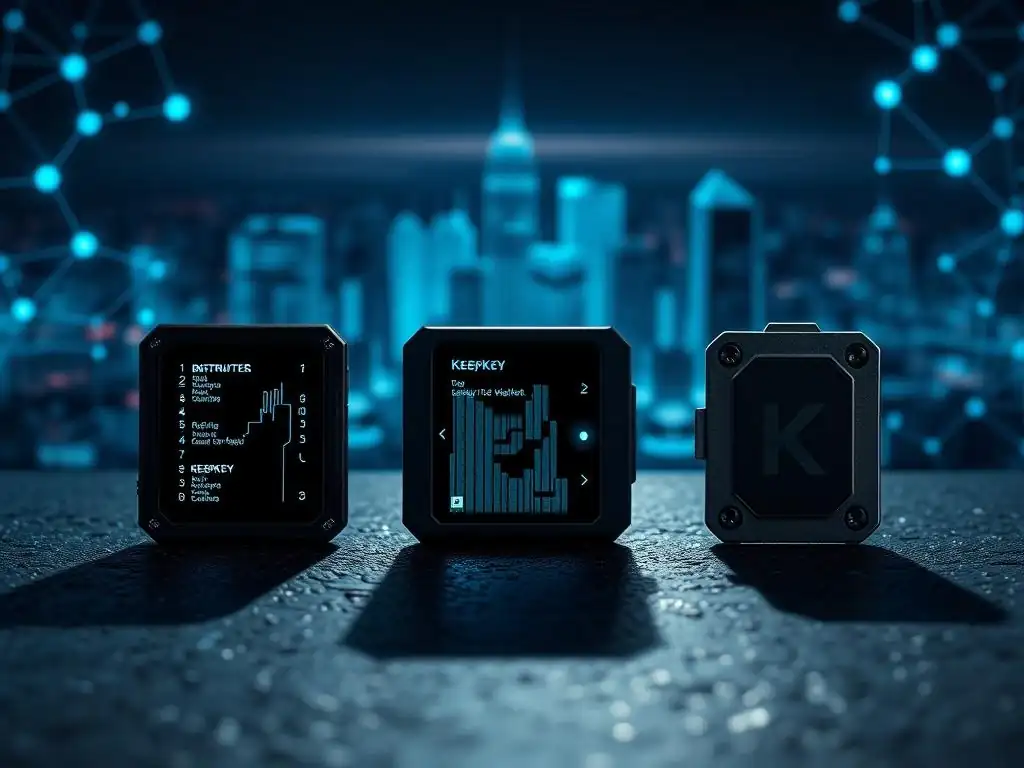
Welcome to Blockchain Trends, your compass in the ever-evolving world of decentralized technologies! Beyond the hype of cryptocurrencies, we delve into the real-world applications and transformative potential of blockchain. In an era of escalating cybersecurity threats, securing your digital assets is paramount. Are you ready to take control of your crypto security? Dive into our secure hardware wallet comparison guide and discover which device – Ledger, Trezor, or KeepKey – best safeguards your digital future. The answer might surprise you...
-
Secure Hardware Wallet Comparison Guide: Ledger, Trezor, and KeepKey
- Introduction to Hardware Wallets and Cybersecurity Threats
- Overview of Secure Hardware Wallets
- Ledger: A Leader in Crypto Security
- Trezor: Innovation in Hardware Wallets
- KeepKey: A Budget-Friendly Option
- Comparative Analysis: Ledger vs Trezor vs KeepKey
- Recommendations for Choosing the Right Secure Hardware Wallet
- Conclusion: The Future of Secure Hardware Wallets in Cybersecurity
- Call to Action
-
Frequently Asked Questions
- How do hardware wallets enhance security compared to software wallets?
- What are the key factors to consider when performing a secure hardware wallet comparison guide?
- Are Ledger, Trezor, and KeepKey equally secure?
- What measures should I take to protect my hardware wallet from physical theft or damage?
- What role does regulation play in the adoption and security of hardware wallets?
- Final Reflection: Securing Our Digital Future
- Unveil Your Peace of Mind: Secure Your Crypto Today!
Secure Hardware Wallet Comparison Guide: Ledger, Trezor, and KeepKey
Introduction to Hardware Wallets and Cybersecurity Threats
- Understanding the Importance of Hardware Wallets in Crypto Security
- The Rise of Cybersecurity Threats in the Digital Age
In the rapidly evolving landscape of digital assets, securing your cryptocurrency holdings is paramount. While software wallets and exchange accounts offer convenience, they are inherently more susceptible to online threats. This is where the importance of a secure hardware wallet becomes clear.
These physical devices are designed to store your private keys offline, creating a critical barrier between your valuable digital assets and the persistent dangers of the internet. As phishing attacks, malware, and exchange hacks become more sophisticated and frequent, relying solely on online security measures is increasingly risky. A robust security strategy for anyone holding cryptocurrency necessitates a hardware wallet as a foundational element.
The digital age has ushered in unprecedented connectivity but also a corresponding surge in cybersecurity threats. From individual users to large corporations, everyone is a potential target. For cryptocurrency holders, this translates to risks like having private keys stolen, being tricked into sending funds to malicious addresses, or falling victim to ransomware that demands crypto payments.
The sheer value concentrated in cryptocurrency holdings makes them particularly attractive targets for cybercriminals. This escalating threat landscape underscores the need for proactive and robust security solutions like those offered by dedicated secure hardware wallets, which are specifically engineered to resist these types of attacks by isolating the most critical piece of information: your private keys.
Overview of Secure Hardware Wallets
- What is a Secure Hardware Wallet?
- How Hardware Wallets Protect Your Cryptocurrency Assets
A secure hardware wallet is a specialized type of cryptocurrency wallet that stores the user's private keys in a secure, offline physical device. Unlike software wallets that reside on internet-connected computers or smartphones, hardware wallets ensure that private keys never leave the device itself, even when transacting. This physical isolation is the core principle behind their enhanced security.
These devices typically require manual confirmation for transactions directly on the device, providing an additional layer of protection against remote attacks. They are designed to be resistant to malware and viruses that might infect the computer or phone they are connected to, making them an essential tool for anyone serious about protecting their digital wealth.
The primary way hardware wallets protect your cryptocurrency assets is by keeping your private keys offline, in a state known as "cold storage." When you want to send cryptocurrency, you initiate the transaction on your computer or phone using a companion application or web interface. However, the crucial step of signing the transaction with your private key occurs inside the hardware wallet.
The unsigned transaction data is sent to the wallet, the wallet verifies and signs it internally using the offline private key, and then the signed transaction is sent back to the online device to be broadcast to the network. Since the private key never leaves the secure chip within the device, it remains safe even if the connected computer is compromised. This secure process is fundamental to the robust security offered by a hardware wallet comparison guide.
Ledger: A Leader in Crypto Security
Features of Ledger Hardware Wallets
- Cold Storage and Security Protocols
- Supported Cryptocurrencies and User Interface
Ledger has established itself as a major player in the secure hardware wallet market, largely due to its focus on robust security protocols. Their devices, such as the Nano S Plus and Nano X, utilize a certified secure element chip, similar to those found in credit cards and passports. This chip is designed to withstand sophisticated physical attacks and ensures that private keys generated and stored on the device remain isolated and protected.
The operating system, BOLOS (Blockchain Open Ledger Operating System), adds another layer of security by providing a secure environment for crypto applications to run, preventing them from accessing sensitive data from other applications or the device's core functions. This layered security approach is a cornerstone of the Ledger design philosophy.
Ledger devices support a wide array of cryptocurrencies, numbering well over 5,500 different coins and tokens, including major ones like Bitcoin, Ethereum, Ripple, and thousands of ERC-20 tokens. This extensive support is managed through the Ledger Live application, which serves as the primary user interface on desktop and mobile devices. Ledger Live allows users to manage their portfolios, send and receive crypto, and even stake certain assets directly from the app. The interface is generally considered intuitive and user-friendly, appealing to both beginners and experienced users navigating their secure hardware wallet comparison journey.
Advantages of Using Ledger
- Strong Brand Reputation and Security Track Record
- User-Friendly Features for Beginners and Experts
One of the most significant advantages of choosing a Ledger device is the company's strong brand reputation and established security track record. Having been on the market for several years, Ledger has built trust within the cryptocurrency community. While no system is entirely immune to issues, Ledger has demonstrated a commitment to security and has navigated past challenges by implementing fixes and improving their protocols. Their devices are widely recognized and recommended by security experts, contributing to confidence in their reliability as a secure hardware wallet solution.
Ledger devices are designed with user experience in mind, offering features that benefit both novice and expert users. The initial setup process, involving setting up a PIN and writing down a 24-word recovery phrase, is clearly guided. The Ledger Live application simplifies managing multiple cryptocurrencies and interacting with decentralized applications (dApps) via Ledger Connect (formerly Ledger Live's Discover section). Features like staking directly from the wallet add convenience, while the secure element chip provides peace of mind for those prioritizing top-tier security, making it a compelling option in a secure hardware wallet comparison guide.
Disadvantages of Ledger
- Pricing Considerations and Accessibility
- Potential Vulnerabilities and Concerns
While offering premium security, Ledger devices can be a significant investment, especially models like the Nano X. The higher price point compared to some competitors might be a barrier for users with smaller portfolios or those on a tight budget. Accessibility can also be a factor, particularly in regions with limited shipping options or import restrictions. While widely available online, purchasing directly from the official source is crucial to avoid potential supply chain attacks, which adds another layer of consideration for potential buyers conducting a secure hardware wallet comparison.
Despite their robust security, Ledger devices have faced scrutiny regarding potential vulnerabilities. Notably, a marketing database breach in 2020 exposed customer information, leading to phishing attempts targeting Ledger users. While this was not a breach of the hardware wallet's security itself (private keys remained safe), it highlighted risks associated with customer data handling. Furthermore, theoretical physical vulnerabilities requiring significant expertise and physical access have been demonstrated by security researchers. While these are highly improbable for the average user, they are points of consideration for those performing a deep secure hardware wallet comparison.
Trezor: Innovation in Hardware Wallets
Features of Trezor Hardware Wallets
- Multi-Currency Support and Open-Source Software
- Advanced Security Features and Recovery Options
Trezor, developed by SatoshiLabs, was one of the first secure hardware wallets on the market and has been a pioneer in the space. Trezor devices, including the Trezor One and Trezor Model T, offer extensive multi-currency support, handling over 9,000 different cryptocurrencies and tokens. A key distinguishing feature of Trezor is its commitment to open-source software. The firmware and hardware designs are publicly available, allowing the community to audit the code for vulnerabilities, fostering transparency and trust. This open approach is a core tenet of the Trezor philosophy.
Trezor incorporates advanced security features, including passphrase support which adds an extra layer of security beyond the standard recovery phrase. This allows users to create hidden wallets, making their funds virtually undetectable even if the primary recovery phrase is compromised. Trezor also provides robust recovery options based on the BIP39 standard, allowing users to restore their wallet on any compatible device using their recovery phrase. The Model T includes a touchscreen interface, enhancing usability and security by allowing sensitive data entry directly on the device, mitigating risks associated with a compromised computer.
Advantages of Using Trezor
- Beginner-Friendly Interface and Educational Resources
- Strong Community Support and Development
Trezor is often praised for its beginner-friendly interface and the wealth of educational resources available on its website. The Trezor Suite software provides a clear and intuitive way to manage assets, send and receive transactions, and access advanced features. The company also provides extensive documentation and guides, making it easier for newcomers to understand how to properly use and secure their hardware wallet. This focus on education is a significant advantage for users new to the world of secure hardware wallets.
As an open-source project, Trezor benefits from strong community support and continuous development. Security researchers and developers can contribute to identifying and fixing potential issues, leading to a more robust and secure product over time. This collaborative approach means that the software is constantly being reviewed and improved, providing an extra layer of confidence for users comparing secure hardware wallets. The active community also provides peer support and shares knowledge, which can be invaluable for users.
Disadvantages of Trezor
- Cost Comparison with Other Wallets
- Limitations on Some Advanced Features
Similar to Ledger, Trezor devices, particularly the flagship Model T, can be more expensive than some alternative hardware wallets. This higher price point might be a deterrent for users on a budget, although the Trezor One offers a more affordable entry point. When considering a secure hardware wallet comparison guide, cost is often a significant factor influencing a user's decision, and Trezor's premium models sit at the higher end of the price spectrum.
While offering broad support, Trezor's integration with certain advanced features or specific blockchain ecosystems might sometimes lag behind competitors. For example, while supporting many coins, direct integration with certain decentralized finance (DeFi) protocols or specific dApps might be more streamlined on other platforms. Users heavily involved in niche areas of the crypto space might need to verify specific compatibility before committing to a Trezor device, although this is constantly improving with community contributions.
KeepKey: A Budget-Friendly Option
Features of KeepKey Hardware Wallets
- Integration with ShapeShift and User Experience
- Security Features and Recovery Process
KeepKey positions itself as an accessible and user-friendly secure hardware wallet, often highlighted for its large, easy-to-read screen. Originally developed as an independent device, KeepKey was acquired by ShapeShift, a cryptocurrency exchange platform. This integration allows users to seamlessly exchange cryptocurrencies directly within the KeepKey client software, leveraging ShapeShift's exchange services. The user experience is designed to be straightforward, minimizing complexity for those who may be less technically inclined. The large display makes verifying transaction details and confirming actions on the device very clear.
In terms of security, KeepKey utilizes a secure microcontroller and requires physical confirmation for all transactions. Like Ledger and Trezor, it uses a 12-word recovery phrase (BIP39 standard) to back up private keys, allowing users to restore their wallet on any compatible device if the KeepKey is lost or damaged. The device generates private keys offline and keeps them isolated. While it doesn't feature a certified secure element chip like Ledger, its architecture is designed to prevent online theft of private keys by requiring physical interaction for every transaction.
Advantages of Using KeepKey
- Affordability and Value for Money
- Unique Design and User Interface
A major advantage of KeepKey is its affordability. It is often priced significantly lower than comparable models from Ledger and Trezor, making it an attractive option for users seeking a secure hardware wallet comparison guide on a budget. Despite the lower price, it provides core hardware wallet functionality, offering solid value for money, especially for those primarily holding major cryptocurrencies. This accessibility makes cold storage a more realistic option for a broader range of crypto investors.
KeepKey boasts a unique design with a prominent, high-resolution OLED display. This large screen size enhances the user interface by making it easier to read addresses, transaction details, and confirm actions directly on the device. This visual clarity can reduce the risk of errors and provides an extra layer of confidence during transactions. The sleek design also sets it apart aesthetically from its competitors.
Disadvantages of KeepKey
- Limited Cryptocurrency Support Compared to Competitors
- Lower Brand Recognition and Market Trust
One of the primary drawbacks of KeepKey is its more limited support for cryptocurrencies compared to Ledger and Trezor. While it covers major assets like Bitcoin, Ethereum, Litecoin, and some ERC-20 tokens, the list is substantially shorter than the thousands of coins supported by its rivals. Users holding a diverse portfolio of smaller altcoins might find KeepKey unsuitable, necessitating the use of multiple wallets or opting for a competitor with broader support. This limitation is a key consideration in a secure hardware wallet comparison.
KeepKey generally has lower brand recognition and market share compared to the long-standing leaders, Ledger and Trezor. While it has a dedicated user base, it doesn't benefit from the same level of widespread trust and community scrutiny as the more established players. Its integration with ShapeShift has also been a point of discussion, as some users prefer their hardware wallet provider to be completely independent of exchange services. This lower profile might influence the decision of users prioritizing widespread adoption and long-term market presence.
Comparative Analysis: Ledger vs Trezor vs KeepKey
Security Features Comparison
- Assessing the Security Protocols of Each Wallet
- Real-World Case Studies of Security Breaches
When assessing security features in a secure hardware wallet comparison, Ledger's use of a certified secure element chip (CC EAL5+) is a significant point of distinction, designed to resist sophisticated physical attacks. Trezor relies on a general-purpose microcontroller but compensates with a strong focus on open-source code and advanced features like passphrase support, which adds plausible deniability. KeepKey uses a secure microcontroller and relies heavily on the requirement for physical confirmation and offline key storage. While all three prevent online theft of private keys through standard malware, their approaches to resisting physical tampering and supply chain attacks differ.
Real-world case studies highlight different types of security challenges. While hardware wallets themselves have a strong track record of preventing private key theft from online threats, incidents like Ledger's marketing data breach underscore the importance of the company's overall security posture beyond the device itself.
Researchers have demonstrated theoretical physical attacks against all three devices under specific, controlled conditions requiring physical access and expertise, but these are generally considered impractical for remote attackers. The most common "breaches" involving hardware wallets typically stem from users compromising their recovery phrase (e.g., typing it into a computer or storing it insecurely) rather than a flaw in the device itself, emphasizing the user's role in maintaining security.
User Experience and Accessibility
- Comparing User Interfaces and Ease of Use
- Assessing Customer Support and Resources
Comparing user experience reveals distinct approaches. Ledger Live offers a polished, all-in-one platform for managing assets and accessing services, making it highly accessible, especially the mobile connectivity of the Nano X. Trezor Suite is also user-friendly, with a focus on clarity and educational resources, particularly beneficial for beginners. The Trezor Model T's touchscreen offers a direct interaction method. KeepKey stands out with its large screen, simplifying transaction verification, and its integration with ShapeShift allows for easy exchanges within the interface.
Customer support and available resources vary. Ledger and Trezor, being larger companies, generally offer extensive documentation, FAQs, and ticketing systems for support. The open-source nature of Trezor also means a large, active community forum where users can find help. KeepKey, while offering support, may have fewer resources available compared to the market leaders, which is a factor to consider when evaluating long-term usability and getting help if issues arise during your secure hardware wallet comparison journey.
Cost Analysis and Value for Money
- Price Comparison of Ledger, Trezor, and KeepKey
- Long-Term Investment Considerations in Hardware Wallets
In terms of cost, KeepKey is typically the most budget-friendly option, often priced significantly lower than Ledger and Trezor. The Trezor One offers a mid-range price point, while the Ledger Nano S Plus is comparable. The premium models, Ledger Nano X and Trezor Model T, are the most expensive, offering advanced features like Bluetooth (Nano X) or a touchscreen (Model T) and broader cryptocurrency support.
Considering a hardware wallet is a long-term investment in security. While KeepKey offers excellent value at a lower price for basic needs, the higher cost of Ledger and Trezor premium models might be justified for users holding a larger, more diverse portfolio or those who prioritize the highest level of security certification or advanced features. The value for money ultimately depends on individual needs, the amount and diversity of crypto held, and the desired balance between cost and features in a secure hardware wallet comparison.
Recommendations for Choosing the Right Secure Hardware Wallet
- Key Factors to Consider When Selecting a Hardware Wallet
- Tailoring Your Choice to Individual Needs and Threat Levels
Choosing the right secure hardware wallet involves considering several key factors. First, assess the range of cryptocurrencies you hold or plan to hold; ensure the wallet supports them. Second, consider your budget – prices vary significantly between basic and premium models. Third, evaluate ease of use and the user interface; some wallets are more intuitive for beginners. Fourth, research the company's security track record, the technology used (e.g., secure element), and whether the software is open source. Finally, think about additional features like mobile connectivity, staking support, or integrated exchange services.
Tailoring your choice to individual needs and threat levels is crucial. For users with a small amount of major cryptocurrencies and a limited budget, KeepKey or a basic model like the Trezor One might be sufficient, offering robust protection against online threats.
For those with substantial holdings, a diverse portfolio, or a higher perceived threat level, investing in a premium model like the Ledger Nano X or Trezor Model T, with broader coin support, advanced security features, and a strong reputation, might be a more appropriate choice. A thorough secure hardware wallet comparison based on these factors will help you make an informed decision.
Conclusion: The Future of Secure Hardware Wallets in Cybersecurity
- Recap of Key Insights from the Secure Hardware Wallet Comparison
- The Ongoing Importance of Hardware Wallets in a Changing Cybersecurity Landscape
This secure hardware wallet comparison guide has explored the features, advantages, and disadvantages of Ledger, Trezor, and KeepKey, highlighting their distinct approaches to securing digital assets. We've seen that while all three provide essential cold storage protection against online threats, they differ in terms of supported currencies, security architecture, user interface, and price. Ledger emphasizes certified secure elements, Trezor champions open-source transparency and advanced passphrase features, and KeepKey offers an affordable option with a user-friendly, large screen interface and ShapeShift integration.
As the cybersecurity landscape continues to evolve with increasingly sophisticated attacks, the importance of secure hardware wallets remains undiminished. They serve as a vital last line of defense, ensuring that private keys – the gateway to your digital wealth – are kept offline and out of reach of malicious actors.
While technological advancements may bring new forms of wallets and security measures, the core principle of isolating sensitive data remains paramount. Investing in a secure hardware wallet is not just about protecting today's assets; it's about building a resilient security foundation for the future of your cryptocurrency holdings in an ever-changing digital world.
Call to Action
- Explore More on Blockchain Trends: Stay Updated on Hardware Wallet Innovations
- Links to Purchase Ledger, Trezor, and KeepKey
Frequently Asked Questions
How do hardware wallets enhance security compared to software wallets?
Hardware wallets store your private keys offline, significantly reducing the risk of online hacking and malware attacks compared to software wallets. This physical isolation adds a crucial layer of security.
What are the key factors to consider when performing a secure hardware wallet comparison guide?
Consider factors such as supported cryptocurrencies, security certifications, ease of use, and price point. Also, research the manufacturer's reputation and open-source status.
Are Ledger, Trezor, and KeepKey equally secure?
While all three offer robust security, they differ in implementation details and security features. Ledger uses a secure element, while Trezor and KeepKey rely on microcontrollers, impacting vulnerability profiles.
What measures should I take to protect my hardware wallet from physical theft or damage?
Keep your hardware wallet in a secure location, separate from your recovery seed. Back up your recovery seed in a fireproof and waterproof container, and consider using a passphrase for extra security.
What role does regulation play in the adoption and security of hardware wallets?
Regulation can influence the standardization and certification of hardware wallets. Clear regulatory frameworks can increase consumer trust and encourage innovation in secure hardware wallet technology.
Final Reflection: Securing Our Digital Future
The proliferation of cybersecurity threats makes the need for robust digital asset protection more critical than ever, and this urgent necessity for secure hardware wallets is no longer a niche concern, but a mainstream imperative. The detailed comparison of Ledger, Trezor, and KeepKey highlights the diverse options available, but ultimately underscores the fundamental truth: proactive security measures are essential for navigating the complexities of the modern digital landscape.
The ongoing evolution of cryptocurrency and blockchain technology has profoundly impacted our understanding of ownership and value, and hardware wallets play a crucial role in safeguarding these assets. My own journey into understanding digital security has reinforced the importance of taking personal responsibility for protecting what is yours. Security is always excessive until it's not enough.
This quote perfectly encapsulates the delicate balance we must strike between convenience and robust protection in the digital age.
As you navigate the world of cryptocurrency and digital assets, remember that the choice of a secure hardware wallet is just the first step. I encourage you to delve deeper into understanding best practices for digital security, to stay informed about emerging threats, and to actively participate in building a more secure digital future for yourself and for others. Your vigilance and proactive measures are the strongest defense against the ever-evolving landscape of cybersecurity threats.
Unveil Your Peace of Mind: Secure Your Crypto Today!
Thanks for diving into the world of hardware wallets and cybersecurity! We hope you found valuable insights into protecting your digital assets. Now, it's time to take control and fortify your crypto holdings.
Here are some immediate steps you can take:
- Invest in a hardware wallet from a reputable provider like Ledger, Trezor, or KeepKey. Prioritize security and peace of mind!
- Explore open-source wallet firmware to understand potential vulnerabilities and contribute to a safer ecosystem.
- Share this article with your crypto community to spread awareness and encourage best security practices.
What specific features are you prioritizing for your next (or first!) hardware wallet? Let's discuss in the comments!
Leave a Reply