
Ledger vs Trezor vs KeepKey: A Comprehensive Guide to Choosing Your Crypto Wallet

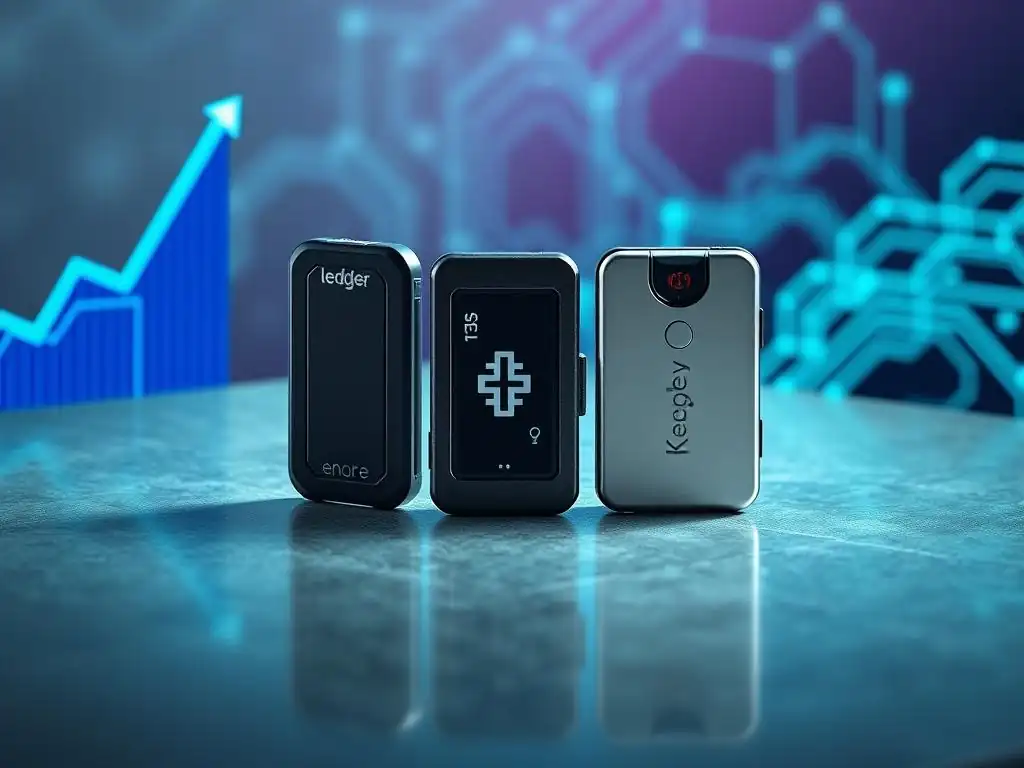
Welcome to Blockchain Trends, your definitive resource for navigating the ever-evolving world of decentralized technologies. Are you ready to secure your digital assets? Our exploration into blockchain's potential extends far beyond cryptocurrencies, but security remains paramount. In this vein, many people ask "What is the best crypto wallet?" Delve into our comprehensive Best Crypto Wallet Guide – comparing Ledger, Trezor, and KeepKey – and discover the perfect shield for your digital treasures. What features truly matter, and which wallet reigns supreme for your specific needs? Let the journey begin!
- Ledger Wallets: Features, Security, and Models.
-
Frequently Asked Questions
- What are the key differences between Ledger, Trezor, and KeepKey hardware wallets?
- Which hardware wallet is considered the most secure?
- What cryptocurrencies are supported by each of these hardware wallets?
- Are Ledger, Trezor, and KeepKey suitable for beginners?
- How do these hardware wallets protect against online threats?
- Final Reflection: Securing Your Digital Future
- Secure Your Crypto Future: Start Today!
Ledger Wallets: Features, Security, and Models.
Key Features of Ledger Wallets
Ledger hardware wallets are widely recognized for their extensive support for digital assets and their accompanying software, Ledger Live. This ecosystem allows users to manage a vast portfolio of cryptocurrencies and NFTs from a single interface, covering thousands of different assets including major coins like Bitcoin (BTC), Ethereum (ETH), XRP, and Cardano (ADA), alongside countless altcoins and tokens.
The integration with Ledger Live simplifies processes like sending, receiving, and even staking certain cryptocurrencies directly from the wallet, making it a comprehensive solution for crypto asset management beyond just basic storage. For anyone seeking the best crypto wallet guide for secure storage, understanding the breadth of asset support is paramount.
Beyond asset support, Ledger wallets offer practical features designed for usability and functionality. Modern models like the Nano S Plus and Nano X significantly increased the internal storage compared to their predecessors, allowing users to install and manage a larger number of applications simultaneously – typically around 100 different crypto apps, depending on the app size.
This is a crucial improvement for users holding a diverse range of cryptocurrencies. Additionally, Ledger Live provides features like portfolio tracking and access to decentralized applications (dApps) and services, enhancing the utility of the hardware wallet beyond merely holding private keys, positioning Ledger as a strong contender in any best crypto wallet guide.
Security Architecture and Protocols
At the core of Ledger's security model is the Secure Element chip, a tamper-resistant microcontroller used in highly sensitive applications like credit cards and passports. Ledger utilizes chips certified up to CC EAL5+, providing a robust layer of protection against physical and digital attacks aimed at extracting private keys.
Unlike standard microcontrollers, a Secure Element is designed to withstand sophisticated attempts at intrusion, ensuring that private keys generated and stored within the device never leave its secure environment. This hardware-based security is a fundamental reason why hardware wallets are recommended in any best crypto wallet guide for protecting significant crypto holdings.
Complementing the Secure Element is Ledger's proprietary operating system, BOLOS (Blockchain Open Ledger Operating System). BOLOS is designed to isolate applications from each other and from the core system, preventing one compromised application from affecting the security of others or exposing private keys.
Furthermore, Ledger wallets enforce a physical confirmation step for all transactions. Before any cryptocurrency can be sent, the user must manually verify the transaction details on the device's screen and confirm it by pressing physical buttons.
This mechanism prevents remote hacking attempts from initiating unauthorized transfers, as physical interaction with the device is always required, adding a critical layer of security discussed in any thorough best crypto wallet guide. While Ledger has experienced data breaches related to customer information in the past (e.g., the 2020 marketing database hack), it is crucial to distinguish this from the security of the device itself and the private keys stored within, which remained secure.
Popular Ledger Models: Nano S Plus and Nano X
The Ledger Nano S Plus represents the evolution of Ledger's original, highly popular Nano S model, offering a more powerful and user-friendly experience at an accessible price point. It features a larger screen, making it easier to verify transaction details and navigate the interface, and significantly expanded memory.
This increased storage capacity allows users to install and manage a much greater number of cryptocurrency applications simultaneously compared to the older Nano S, addressing a key limitation of the previous generation. The Nano S Plus connects to computers and Android mobile devices via USB, serving as a reliable and secure entry point into hardware wallet cold storage for those following a best crypto wallet guide for beginners or those with moderate crypto holdings.
The Ledger Nano X is Ledger's flagship device, designed for users who prioritize mobility and advanced features. Its key differentiator is the inclusion of Bluetooth connectivity, which allows seamless connection to iOS and Android mobile devices via the Ledger Live app without needing a cable. This makes managing crypto on the go significantly more convenient.
The Nano X also boasts a larger battery for extended wireless use and even more storage capacity than the Nano S Plus. While typically priced higher than the Nano S Plus, the Nano X's wireless capability and enhanced features position it as a premium choice for users seeking maximum flexibility and storage capacity in their best crypto wallet guide consideration.
Frequently Asked Questions
What are the key differences between Ledger, Trezor, and KeepKey hardware wallets?
The main differences lie in their security features, supported cryptocurrencies, and user interface. Ledger emphasizes security with its Secure Element chip, Trezor offers open-source transparency, and KeepKey focuses on simplicity and ease of use.
Which hardware wallet is considered the most secure?
While all three offer robust security, Ledger wallets generally are regarded as having a slight edge due to their Secure Element chip, designed to resist physical attacks, which offers enhanced protection against breaches.
What cryptocurrencies are supported by each of these hardware wallets?
Ledger and Trezor support a wide range of cryptocurrencies, including Bitcoin, Ethereum, and various altcoins. KeepKey supports a slightly smaller selection but covers most of the major digital assets.
Are Ledger, Trezor, and KeepKey suitable for beginners?
KeepKey is often recommended for beginners due to its simple and intuitive interface. Trezor is also relatively user-friendly. Ledger might require a bit more technical understanding, but offers extensive documentation.
How do these hardware wallets protect against online threats?
These wallets store your private keys offline, significantly reducing the risk of hacking or phishing attacks. Transactions must be physically confirmed on the device, adding another layer of security.
Final Reflection: Securing Your Digital Future
The journey through the world of crypto wallets, as detailed in this guide, highlights a crucial truth: digital asset security is paramount in today's rapidly evolving financial landscape. Choosing the right hardware wallet, whether it be a Ledger, Trezor, or KeepKey, is not merely a technical decision; it's an investment in peace of mind and control over your financial destiny. The stakes are high, and the consequences of negligence can be devastating, making informed choices more critical than ever.
The impact of secure crypto storage extends far beyond individual portfolios. It shapes the very foundation of trust within the decentralized ecosystem. As more individuals and institutions embrace cryptocurrencies, the need for robust security measures becomes increasingly apparent. The ongoing evolution of wallet technology reflects this demand, constantly pushing the boundaries of innovation to safeguard our digital assets. Security is always excessive until it's not enough.
This quote encapsulates the proactive mindset required to navigate the complexities of crypto security and underscores the importance of diligent research and careful selection.
Now, armed with the knowledge from this guide, I urge you to reflect on your own crypto journey. Consider your individual needs, risk tolerance, and technical expertise. Which wallet aligns best with your personal circumstances? Take the time to thoroughly research and understand the security features of your chosen device. Your digital future is in your hands. Embrace the responsibility, make informed decisions, and secure your assets with confidence.
Secure Your Crypto Future: Start Today!
Thank you for exploring the world of hardware wallets with us! We hope you've gained valuable insights into choosing the right solution for securing your digital assets. Now, let's put that knowledge into action.
Here are a few steps you can take right now:
- Review your current crypto holdings and select a wallet that best suits your needs and risk tolerance. Protecting your investments is the top priority.
- Dive deeper! Explore other articles on security and best practices in the crypto space to stay informed about the latest threats and advancements.
- Share this guide with a friend or family member who is also interested in cryptocurrencies. Helping others safeguard their assets benefits the entire community!
When choosing a hardware wallet, which feature is most important to you—security, ease of use, or device compatibility? Share your thoughts in the comments below!
Leave a Reply