
The Science of Secure Crypto Storage: Exploring Hardware Wallet Technology


Welcome to Blockchain Trends, your guide to understanding the revolutionary power of blockchain beyond the hype. Ever wondered about the invisible shield safeguarding your digital assets? Dive into our exploration of hardware wallet security benefits and discover how these devices are revolutionizing crypto storage. Prepare to unlock the science behind secure crypto management and why it's crucial for the future of decentralized finance. Ready to fortify your digital vault?
- Introduction to Hardware Wallet Security Benefits
- How Hardware Wallets Ensure Security for Your Crypto Assets
- The Science Behind Hardware Wallet Technology
- Exploring the Benefits of Hardware Wallet Security
- Best Hardware Wallets for Enhanced Security in 2024
- Common Misconceptions About Hardware Wallets
- Best Practices for Maximizing Hardware Wallet Security
- Conclusion: The Future of Hardware Wallet Security in Blockchain
-
Frequently Asked Questions
- How do hardware wallets enhance cryptocurrency security compared to software wallets?
- What are the key hardware wallet security benefits that differentiate them from exchange-based storage?
- Can hardware wallets protect against physical theft or loss, and what measures should users take?
- What are some potential vulnerabilities or drawbacks associated with using a hardware wallet, and how can they be mitigated?
- How does the hardware wallet security benefits impact the broader adoption of decentralized finance (DeFi) and blockchain technology?
- Final Reflection: Fortifying Digital Trust
- Secure Your Future: Embrace Crypto Confidence!
Introduction to Hardware Wallet Security Benefits
Understanding Hardware Wallets in Cryptocurrency
Hardware wallets represent a crucial layer of security for individuals holding cryptocurrency. Unlike software wallets that operate online or on devices connected to the internet, a hardware wallet is a physical device designed to store the private keys of a user's cryptocurrency offline. This physical isolation is fundamental to their security model, effectively creating a barrier against a wide range of online threats. Think of it as a specialized, highly secure mini-computer solely dedicated to managing cryptographic keys.
These devices typically connect to a computer or smartphone via USB or Bluetooth, but the critical transaction signing process happens within the secure environment of the wallet itself. The private key never leaves the device. When you want to send crypto, you initiate the transaction on your computer (using companion software), but the hardware wallet verifies the details and uses its internal private key to sign the transaction before broadcasting it to the network via the connected device. This process ensures that even if the computer is compromised, the private key remains safe on the hardware wallet.
The Importance of Secure Crypto Storage
The decentralized nature of cryptocurrencies grants users unprecedented control over their assets, but this power comes with significant responsibility, particularly regarding security. Unlike traditional banking where institutions manage security, crypto holders are their own bank. The digital nature of crypto assets makes them vulnerable to theft if the private keys that control them are compromised. Incidents involving millions, or even billions, of dollars lost to hacks on exchanges, online wallets, or personal devices underscore the critical need for robust security measures.
Secure crypto storage isn't just about preventing theft; it's about preserving access and control. Losing a private key or having it stolen means permanent loss of the associated funds. Estimates suggest that millions of Bitcoins, potentially valued at hundreds of billions of dollars at peak prices, are permanently lost due to lost keys or inaccessible wallets. This highlights that while online convenience is appealing, the hardware wallet security benefits of offline storage are paramount for anyone holding significant amounts of crypto or planning for long-term investment.
How Hardware Wallets Ensure Security for Your Crypto Assets
Key Features of Hardware Wallets
Hardware wallets employ a combination of technical features to provide their high level of security. At their core, they are built around the principle of keeping private keys isolated from internet-connected devices. This is achieved through specialized hardware and software designed specifically for cryptographic operations. Unlike a general-purpose computer or smartphone, a hardware wallet has a minimal attack surface, running only the essential code required for wallet functions.
- Physical Isolation: The device is designed to operate offline for key generation and transaction signing.
- Secure Element (Optional but common): Many modern hardware wallets include a dedicated secure chip, similar to those used in credit cards or passports, to protect sensitive data like private keys.
- PIN Protection: Requires a PIN to unlock the device, preventing unauthorized physical access.
- Seed Phrase Recovery: A backup mechanism, usually a 12, 18, or 24-word phrase, allowing recovery of funds if the device is lost or destroyed. This seed phrase is generated offline on the device and should be stored securely offline.
- Transaction Verification Display: A physical screen on the device displays transaction details (address, amount) for visual confirmation, preventing malware on the connected computer from altering transaction data without the user's knowledge.
Encryption and Private Key Management
Encryption plays a vital role within the hardware wallet ecosystem, though its application differs from typical file encryption. The most critical aspect is how the private key is generated and managed. When you set up a new hardware wallet, it typically generates a unique seed phrase (a sequence of random words) offline.
This seed phrase is the master key from which all your private keys for different cryptocurrencies are deterministically derived using standardized algorithms (like BIP32, BIP39, BIP44). The seed itself is often encrypted or stored within a secure element on the device, making it extremely difficult to extract even if the device is physically tampered with.
Crucially, the hardware wallet performs all cryptographic operations necessary to sign transactions internally. The private key never leaves the secure boundary of the device and is never exposed to the potentially compromised environment of the connecting computer or phone. When you initiate a transaction, the connected software sends the unsigned transaction details to the hardware wallet.
The wallet verifies the details on its secure screen and, upon user confirmation, uses the private key stored within its secure hardware to sign the transaction. The signed transaction is then sent back to the computer for broadcasting, but the private key itself remains protected inside the hardware wallet.
Offline Storage and Its Advantages
The primary and most significant security advantage of hardware wallets stems from their offline nature. By keeping private keys stored on a device that is not continuously connected to the internet, hardware wallets effectively neutralize the vast majority of online attack vectors. Malware, viruses, phishing attempts targeting your computer's wallet files, and remote hacking attempts become largely ineffective at stealing your private keys because those keys are physically inaccessible from the online world.
Consider the difference: a software wallet on your computer or phone is constantly exposed to potential threats lurking online. A single malicious email attachment, a compromised website, or a vulnerability in the operating system could potentially expose your private keys or wallet files. In contrast, a hardware wallet is only connected briefly when a transaction needs to be signed.
During this brief connection, the sensitive private key remains isolated within the device's secure hardware. This offline storage model provides a fundamental layer of security that software wallets simply cannot match, offering substantial hardware wallet security benefits against the most common forms of crypto theft.
Comparison of Hardware Wallets: Security Features
While sharing core principles, different hardware wallets offer varying security features and implementations. Understanding these differences is key to choosing the right device for your needs and maximizing hardware wallet security benefits. Key areas of comparison often include the type of secure element used (if any), the complexity of their firmware architecture, physical security features, and recovery processes.
Some wallets prioritize open-source firmware for transparency, allowing the community to audit the code, while others rely on proprietary, audited secure chips. Physical design also plays a role; some devices are more resistant to physical tampering attempts designed to extract data. The implementation of features like PIN protection, recovery seed handling, and transaction verification on the screen can also differ, impacting the overall user experience and security posture.
Trezor vs. Ledger: Which Offers Better Security?
Trezor and Ledger are two of the most prominent names in the hardware wallet market, each with a strong focus on security but employing slightly different philosophies. Ledger devices (like the Nano S Plus or Nano X) utilize a Secure Element chip (specifically, certified chips like CC EAL5+), which is a tamper-resistant microchip designed to withstand sophisticated physical attacks. The private keys are stored within this secure element, and critical operations are performed there. This approach relies on the certification and physical security of the chip itself.
Trezor devices (like the Model One or Model T) historically relied more on their open-source firmware and architecture for security, combined with robust software-level protection against physical attacks (like sophisticated side-channel analysis). While the Model T does incorporate a secure element, Trezor's philosophy often emphasizes the security benefits of open-source code that can be audited by anyone.
Both approaches have proven highly effective, with millions of users securing billions of dollars in assets. The "better" security often comes down to user preference regarding open-source transparency versus reliance on certified secure hardware, though both provide significant hardware wallet security benefits over software wallets.
KeepKey: A Unique Approach to Hardware Wallet Security
KeepKey, now part of the ShapeShift ecosystem, offers another perspective on hardware wallet security. Known for its larger display screen and focus on simplicity, KeepKey also employs a microcontroller to manage private keys offline. While it doesn't use a separate, certified secure element chip in the same way Ledger does, its security model relies on the isolation of the private key within the device's main processor and the robust encryption and authentication protocols it uses.
KeepKey's larger screen enhances the transaction verification process, making it easier for users to visually confirm details before signing, reducing the risk of malware-induced transaction alteration. Its integration with ShapeShift's platform also provides a streamlined way to swap assets directly from the wallet, though the core security benefit remains the offline storage and signing of private keys. Like Trezor, KeepKey's firmware is open-source, contributing to its transparency model and allowing for community security audits, adding another layer to its hardware wallet security benefits.
The Science Behind Hardware Wallet Technology
How Hardware Wallets Work: A Technical Overview
At a fundamental level, a hardware wallet is a minimalist computer designed solely for cryptographic operations related to digital asset management. It typically contains a microcontroller (CPU), secure storage for firmware and keys, a display, and physical buttons. When you set up the device, it generates a random number, often using a hardware-based random number generator (TRNG - True Random Number Generator), which is then used to create your master seed phrase. This process is critical and happens entirely offline.
When you connect the device to a computer and use companion software or a web interface, the software communicates with the wallet via a defined protocol (e.g., USB HID). The software sends requests, such as checking balances (which the wallet can do by providing public keys to the software, which then queries the blockchain) or creating a transaction. For sending funds, the software constructs the unsigned transaction and sends it to the hardware wallet. The wallet then displays the transaction details on its screen.
Only after the user physically confirms the details on the device itself by pressing buttons does the wallet use the stored private key (or derived private key for the specific address) to cryptographically sign the transaction internally. The signed transaction is then sent back to the computer for broadcast to the blockchain network. The private key never leaves the device.
The Role of Secure Elements in Hardware Wallets
A secure element (SE) is a tamper-resistant microchip designed to securely store sensitive data and perform cryptographic operations in isolation from the main processor. Think of it as a vault within the hardware wallet. Many modern hardware wallets, including Ledger devices, incorporate secure elements. These chips are subject to rigorous security certifications (like Common Criteria EAL levels, often EAL5+ or higher), which test their resistance to various attacks, including physical probing, side-channel analysis (analyzing power consumption or electromagnetic emissions), and fault injection.
When a hardware wallet uses a secure element, the most sensitive data, such as the master seed and private keys, is stored within this chip. The main microcontroller of the wallet interacts with the secure element through a defined interface. Even if the main microcontroller is compromised, it is designed to be extremely difficult, if not impossible, to extract the private key from the secure element.
The secure element performs the transaction signing operation internally, receiving the unsigned transaction data and returning only the signature. This adds a significant layer of physical and logical security, bolstering the hardware wallet security benefits against sophisticated attacks.
Understanding Firmware and Its Impact on Wallet Security
Firmware is the low-level software embedded in the hardware wallet's microcontroller that controls its operation. It's essentially the operating system of the device. The security of this firmware is paramount. Poorly written or vulnerable firmware could potentially be exploited to leak private keys or compromise the transaction signing process. This is why reputable hardware wallet manufacturers invest heavily in secure coding practices, rigorous testing, and often employ external security auditors.
The integrity and update process of the firmware are also critical for maintaining hardware wallet security. Manufacturers periodically release firmware updates to fix bugs, add support for new cryptocurrencies, and patch potential security vulnerabilities discovered after the device's release. Users are typically prompted to install these updates through the companion software.
It is crucial to only install official firmware updates obtained through the manufacturer's designated channels, as installing malicious firmware could compromise the device. The update process itself is usually secured using digital signatures, ensuring that the firmware being installed is authentic and hasn't been tampered with. Keeping firmware updated is a key practice for maximizing hardware wallet security benefits.
Exploring the Benefits of Hardware Wallet Security
Protection Against Hacking and Cyber Threats
One of the most compelling hardware wallet security benefits is the robust protection they offer against the prevalent cyber threats targeting cryptocurrency holders. Since private keys are stored offline on the device and never exposed to the internet, common attack vectors like malware, viruses, phishing scams attempting to steal wallet files, and remote hacking attempts on your computer become largely ineffective. An attacker might compromise your computer, install keyloggers, or try to trick you into revealing information, but they cannot directly access the private keys needed to spend your funds if those keys are confined within the hardware wallet.
Consider a scenario where a user's computer is infected with sophisticated malware. If they were using a software wallet, the malware could potentially scan for wallet files, capture passwords, or even alter transaction details before they are sent. With a hardware wallet, even if the computer is compromised, when the user initiates a transaction, the hardware wallet requires physical confirmation on its own screen.
If the malware tries to alter the recipient address or amount, the user will see the correct details on the hardware wallet's trusted display and can reject the transaction. This physical verification step, combined with offline key storage, provides a powerful defense against online threats, significantly enhancing hardware wallet security benefits.
User Control Over Private Keys
Hardware wallets fundamentally empower users by giving them complete and sole control over their private keys. When you hold crypto on an exchange or through certain custodial services, you don't actually hold the private keys – the service provider does. This means you are trusting them with the security of your funds and are subject to their terms of service, potential downtime, or even insolvency risks. Numerous incidents where exchanges were hacked or failed resulted in users losing access to their assets.
With a hardware wallet, you generate and control your private keys directly. The seed phrase you receive during setup is the master key to your funds, and only you have access to it (provided you store it securely offline). This aligns perfectly with the decentralized ethos of blockchain technology – removing the need for trusted intermediaries. This direct control over private keys is perhaps the most significant of the hardware wallet security benefits, ensuring that your assets are truly yours and accessible only by you, provided you maintain the security of your device and seed phrase.
Peace of Mind for Long-Term Investors
For individuals investing in cryptocurrency with a long-term perspective, securing assets for months or years is paramount. Hardware wallets provide significant peace of mind for these "hodlers" by offering a highly secure storage solution that minimizes ongoing risk. Leaving large amounts of crypto on an exchange or in a hot wallet (connected to the internet) for extended periods increases the potential exposure to hacks, platform failures, or personal device compromises over time.
Storing assets on a hardware wallet, disconnected from the internet when not in use, drastically reduces this exposure. Knowing that your private keys are safely stored offline, protected by a PIN and potentially a secure element, allows investors to hold their assets through market volatility without constant worry about the security of their holdings.
The process of needing the physical device and PIN to access funds adds a layer of friction that deters impulsive actions and protects against remote access attempts. This long-term, low-risk storage is a core component of the hardware wallet security benefits for building and preserving wealth in the crypto space.
Best Hardware Wallets for Enhanced Security in 2024
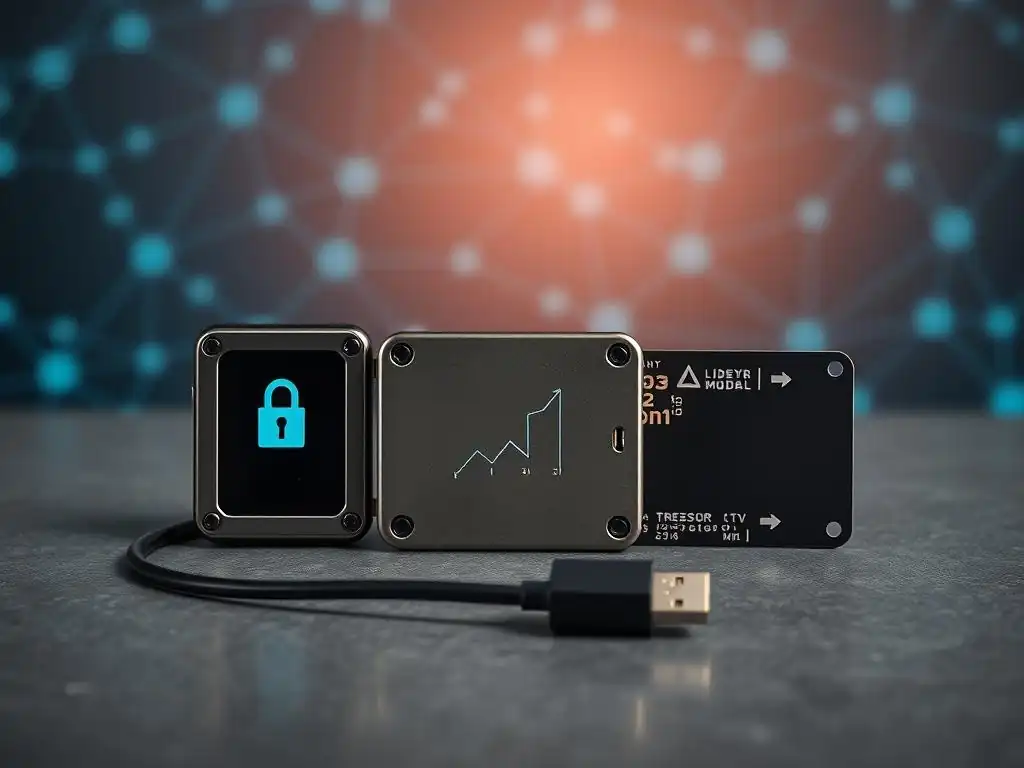
Ledger Nano X: A Comprehensive Review
The Ledger Nano X remains one of the most popular and widely used hardware wallets in 2024, known for its balance of security, features, and usability. Building on the success of its predecessor, the Nano S, the Nano X offers enhanced capabilities suitable for active crypto users and long-term holders alike. Its design is sleek and portable, resembling a USB drive.
The device supports a vast range of cryptocurrencies and tokens, reportedly over 5,500, making it versatile for users with diversified portfolios. A key feature is its Bluetooth connectivity, allowing it to be used wirelessly with mobile devices via the Ledger Live app, adding convenience without sacrificing security (transaction signing is still done securely within the device). It features a larger screen than the Nano S and more internal storage, allowing users to install more cryptocurrency apps simultaneously.
Features and Benefits of Ledger Nano X
The Ledger Nano X is built around a certified Secure Element chip (CC EAL5+), providing a high level of protection against physical and logical attacks. This secure chip is designed to isolate cryptographic secrets, making it extremely difficult to extract private keys. The device requires a PIN code upon connection and physical confirmation for all transactions on its built-in screen. The Ledger Live software, available for desktop and mobile, serves as a user-friendly interface for managing assets, checking balances, and sending/receiving funds, while the Nano X handles the critical signing process.
One of the significant hardware wallet security benefits of the Nano X is its robust recovery process based on a 24-word seed phrase generated offline. If the device is lost, stolen, or damaged, funds can be recovered on a new Ledger device or any compatible wallet using this seed phrase. The Bluetooth feature, while adding convenience, is implemented such that sensitive data like the seed phrase or private keys are never transmitted wirelessly; only public transaction details are sent to be signed by the secure element.
Pricing and Availability
As of 2024, the typical price for a Ledger Nano X is around $149 USD. This places it in the mid-to-high range for consumer hardware wallets. It is available for purchase directly from the official Ledger website and authorized retailers. Purchasing directly from the manufacturer is highly recommended to avoid the risk of receiving a tampered or counterfeit device, which could compromise hardware wallet security.
While the initial cost is higher than some entry-level software wallets or older hardware models, the price reflects the advanced features, certified secure element, and portability offered by the Nano X. For many users holding significant amounts of crypto, the cost is considered a worthwhile investment in robust hardware wallet security benefits and long-term peace of mind. Availability is generally good, though demand can fluctuate with market conditions.
Trezor Model T: Security and Usability Combined
The Trezor Model T is the flagship hardware wallet from SatoshiLabs, one of the pioneers in the hardware wallet space. Known for its strong emphasis on open-source code and user-friendly interface, the Model T provides a high level of security combined with enhanced usability features compared to its predecessor, the Trezor Model One. It features a full-color touchscreen interface, which simplifies navigation and transaction verification.
The Model T supports a wide array of cryptocurrencies and tokens, allowing users to manage a diverse portfolio. Its security model relies on a combination of a microcontroller and a secure element (unlike the Model One which relied solely on the microcontroller and software). The full-color touchscreen is a key differentiator, improving the visual confirmation of transaction details and making the device more intuitive to use, especially for beginners.
Key Features and User Experience
The Trezor Model T utilizes a combination of a Cortex-M4 microcontroller and a secure element (although the implementation philosophy differs from Ledger's, with Trezor emphasizing security through open-source audits). Private keys are stored securely within the device, and all signing operations occur internally. The device requires a PIN code entered via a randomized numpad on the touchscreen, mitigating the risk of keyloggers on the connected computer. The touchscreen also serves as a secure display for verifying transaction recipient addresses and amounts, a crucial step in preventing man-in-the-middle attacks.
The user experience with the Model T is generally considered excellent due to the touchscreen interface, which simplifies interaction compared to devices relying solely on physical buttons. The Trezor Suite software provides a comprehensive platform for managing assets, including features like coin control, privacy enhancements (like CoinJoin for Bitcoin), and easy firmware updates. The open-source nature of Trezor's firmware is a significant hardware wallet security benefit for users who value transparency and community auditing of the code. Recovery is based on a standard 12-word or 24-word seed phrase.
Pricing Insights for Trezor Model T
The Trezor Model T is positioned as a premium hardware wallet and typically retails for around $219 USD. This higher price point reflects its advanced features, particularly the full-color touchscreen and the inclusion of a secure element. Like Ledger, Trezor recommends purchasing directly from their official website or authorized resellers to ensure the device's integrity.
While it represents a larger initial investment than many other hardware wallets, the Model T's enhanced usability and robust security features, backed by a long-standing reputation in the industry, justify the cost for many users, especially those handling significant crypto values or prioritizing user experience alongside hardware wallet security benefits.
BitBox02: A Privacy-Focused Hardware Wallet
The BitBox02, developed by Shift Crypto, is another strong contender in the hardware wallet market, particularly popular among users who prioritize privacy and ease of backup. It stands out with its minimalist design, touch sensors for interaction, and unique microSD card backup feature. The BitBox02 is available in two versions: Multi edition (for Bitcoin, Ethereum, Litecoin, and ERC-20 tokens) and Bitcoin-only edition.
The device is built with a focus on security through simplicity and transparency. It features a microcontroller and a secure chip (ATECC608B) for enhanced protection. Its small size and durable construction make it easy to carry. The most distinctive feature is the automatic backup to a microSD card, which simplifies the recovery process compared to manually writing down a seed phrase, though manual seed phrase backup is also an option.
Unique Selling Points and Security Benefits
The BitBox02 offers several unique hardware wallet security benefits and features. Its touch sensors provide an alternative interaction method to buttons or screens. The automatic backup to a microSD card simplifies the initial setup and ongoing backup process, reducing the risk of errors when copying down a seed phrase. The device also supports U2F (Universal 2nd Factor) for securing online accounts, adding utility beyond crypto storage.
Security-wise, the BitBox02 uses a dual-chip architecture combining a microcontroller and a secure chip. The firmware is open-source and focuses on a minimal, auditable codebase. Shift Crypto emphasizes security through simplicity and robust testing. The Bitcoin-only version offers a reduced attack surface for users solely focused on Bitcoin. The requirement to confirm transactions on the device's small display, alongside the touch interaction, ensures user verification.
Cost and Where to Buy
The BitBox02 Multi edition is typically priced around $119 USD, placing it in the competitive mid-range of hardware wallets. The Bitcoin-only edition is similarly priced. It is primarily available for purchase directly from the official Shift Crypto website. As with other hardware wallets, buying directly from the manufacturer is the most secure way to acquire the device and guarantee its authenticity, thus preserving the intended hardware wallet security benefits.
The price is competitive for a device offering a secure chip, open-source firmware, and the unique microSD backup feature. For users prioritizing privacy, open-source transparency, and a simplified backup method, the BitBox02 presents a compelling option that delivers significant hardware wallet security benefits.
Common Misconceptions About Hardware Wallets
Debunking Myths: Are Hardware Wallets Foolproof?
A common misconception is that hardware wallets are absolutely foolproof or invincible to any form of attack. While they offer a vastly superior level of security compared to software wallets, they are not immune to all potential risks. The security of a hardware wallet system involves not just the device itself but also the user's practices and the security of the seed phrase backup. Believing a hardware wallet makes you invulnerable can lead to complacency, which is a significant security risk in itself.
For example, sophisticated physical attacks on the device are theoretically possible, although they typically require specialized equipment and expertise, making them impractical for targeting individual users compared to easier online attacks. More commonly, vulnerabilities could potentially exist in the firmware (though rare and quickly patched by reputable manufacturers) or, more significantly, in the user's handling of their seed phrase. If the seed phrase is compromised (e.g., stored insecurely online, photographed, or written down carelessly), an attacker can gain control of the funds regardless of how secure the hardware wallet device is.
The Reality: Risks and Best Practices for Using Hardware Wallets
The reality is that the primary risks associated with hardware wallets often relate to user error or the compromise of the recovery seed phrase, rather than inherent flaws in the device's core security design. Risks include:
- Compromised Seed Phrase: Storing the seed phrase insecurely, losing it, or generating it on a compromised device during setup.
- Physical Tampering: While difficult, sophisticated attacks exist. Buying only from official sources mitigates the risk of receiving a pre-tampered device.
- Firmware Vulnerabilities: Although rare, bugs can exist. Regularly updating firmware through official channels is crucial.
- User Error: Sending funds to the wrong address, failing to verify transaction details on the device screen, or falling for phishing scams that trick users into revealing their seed phrase.
To mitigate these risks and maximize hardware wallet security benefits, users must adhere to best practices. This includes carefully following the setup instructions, securely storing the seed phrase offline in a safe location, verifying transaction details on the device's screen before confirming, keeping the device firmware updated, and being vigilant against phishing attempts or social engineering attacks that try to trick them into compromising their seed phrase or PIN.
Best Practices for Maximizing Hardware Wallet Security
Setting Up Your Hardware Wallet Securely
Proper setup is the foundational step in maximizing hardware wallet security benefits. The most critical part of the setup process is the generation and secure storage of your recovery seed phrase.
- Purchase from Official Sources: Always buy your hardware wallet directly from the manufacturer's official website or an authorized reseller to avoid the risk of receiving a tampered device.
- Generate Seed Offline: Ensure the seed phrase is generated on the device itself, while it is offline. Never use a seed phrase provided by someone else or generated by software on your computer.
- Record Seed Phrase Manually: Write down your seed phrase clearly and accurately on the provided recovery sheets. Do this in a private location, away from cameras or prying eyes.
- Verify Seed Phrase: Most wallets will ask you to confirm a few words from your seed phrase during setup to ensure you have recorded it correctly. Do this carefully.
- Securely Store Seed Phrase: This is paramount. Store the physical copy of your seed phrase in a safe, secure location, like a fireproof safe or a secure deposit box. Do not store it digitally (e.g., on a computer, phone, cloud storage, or email). Consider making multiple copies and storing them in different secure locations for redundancy against fire or natural disaster.
- [x] Buy from official source
- [x] Generate seed phrase offline on device
- [x] Write down seed phrase manually
- [x] Verify seed phrase during setup
- [x] Store seed phrase securely offline
Ignoring these steps can render the hardware wallet's technical security features useless if the seed phrase falls into the wrong hands.
Regular Firmware Updates: Why They Matter
Firmware is the operating system of your hardware wallet, and like any software, it can have bugs or potential vulnerabilities that are discovered over time. Hardware wallet manufacturers regularly release firmware updates to address these issues, improve performance, add support for new cryptocurrencies, and enhance existing security features. Installing these updates is a crucial best practice for maintaining the highest level of hardware wallet security.
Ignoring firmware updates means leaving your device potentially vulnerable to exploits that have already been identified and patched. While critical vulnerabilities are rare for reputable manufacturers, updates also often include performance improvements and new features that enhance the usability and functionality of your wallet. Always perform updates through the official companion software provided by the manufacturer, following their instructions precisely. The update process is typically secured using digital signatures to ensure the firmware is legitimate and hasn't been tampered with.
Backup Strategies for Hardware Wallets
Having a robust backup strategy is as important as the hardware wallet itself. The primary backup is your recovery seed phrase. If your hardware wallet is lost, stolen, or destroyed, this seed phrase is the only way to recover access to your funds on a new device.
- Secure Physical Storage: Store the written copy of your seed phrase in a highly secure, private location, protected from theft, fire, and water. Using a waterproof and fireproof container or storing it in a safety deposit box is recommended.
- Multiple Secure Locations: Consider creating multiple copies of your seed phrase and storing them in different secure locations. This protects against the loss of a single storage location.
- Metal Backups: For maximum durability against fire and water, many users opt for metal seed phrase storage solutions (stamping or engraving the words onto metal plates).
- Passphrase (25th Word): For an extra layer of security, many wallets support adding a passphrase (often called the 25th word) to your standard 24-word seed phrase. This creates a hidden wallet. If someone finds your 24-word seed phrase, they cannot access your funds without the correct passphrase. Remember, losing this passphrase means permanently losing access to your funds, even with the correct 24-word seed.
- Regular Checks (for physical backups): Periodically check on your physical seed phrase backup to ensure it hasn't been damaged or compromised.
A compromised or lost seed phrase is the most common way users lose access to their crypto. Implementing a diligent backup strategy is non-negotiable for anyone relying on hardware wallet security benefits for significant holdings.
Conclusion: The Future of Hardware Wallet Security in Blockchain
Innovations on the Horizon for Secure Crypto Storage
The field of hardware wallet security is not static; it continues to evolve alongside the broader blockchain ecosystem and emerging threats. Future innovations are likely to focus on enhancing usability, improving resilience against sophisticated attacks, and potentially integrating with new decentralized technologies.
Areas of potential development include more advanced secure element technologies, perhaps offering even higher levels of certification or new cryptographic capabilities. Research into multi-party computation (MPC) could lead to wallets where the private key is never held in a single location but is instead split among multiple parties or devices, adding redundancy and potentially new security models. Biometric authentication (beyond simple fingerprint sensors) integrated securely within the device could offer alternative or additional layers of access control.
Furthermore, expect increased focus on seamless integration with decentralized applications (dApps) and DeFi platforms, allowing users to interact securely without exposing private keys. The ongoing development in this space aims to make hardware wallet security benefits even more accessible and robust.
Embracing Hardware Wallet Technology for Decentralized Futures
As blockchain technology matures and decentralization becomes more integrated into various aspects of finance and identity, the importance of secure, user-controlled storage solutions like hardware wallets will only grow. Relying on centralized custodians runs counter to the core principles of decentralization and introduces single points of failure that have historically led to significant losses for users.
Embracing hardware wallet technology is a proactive step towards taking full control of your digital assets and participating securely in the decentralized future. The hardware wallet security benefits they provide against hacking, malware, and exchange failures are essential for safeguarding wealth in the crypto space.
While no security measure is absolutely perfect, combining the inherent technical security of a hardware wallet with vigilant user practices regarding seed phrase management and firmware updates represents the current gold standard for secure crypto storage. As blockchain continues its transformative journey, hardware wallets will remain a critical tool for individuals seeking to manage their digital sovereignty safely and effectively.
Frequently Asked Questions
How do hardware wallets enhance cryptocurrency security compared to software wallets?
Hardware wallets store your private keys offline, making them immune to online hacking threats. This offline storage significantly reduces the risk of your crypto being stolen. Software wallets, conversely, are more vulnerable.
What are the key hardware wallet security benefits that differentiate them from exchange-based storage?
Hardware wallets provide complete control over your private keys, unlike exchanges. Exchanges are centralized targets for hacks, whereas hardware wallets keep your assets under your direct ownership.
Can hardware wallets protect against physical theft or loss, and what measures should users take?
Hardware wallets typically require a PIN and/or passphrase for access. Securely storing your recovery seed phrase is crucial; it allows you to recover your crypto if the device is lost or stolen.
What are some potential vulnerabilities or drawbacks associated with using a hardware wallet, and how can they be mitigated?
While hardware wallets significantly increase security, they are not foolproof. Users should purchase hardware wallets directly from reputable sources and be aware of phishing attempts.
How does the hardware wallet security benefits impact the broader adoption of decentralized finance (DeFi) and blockchain technology?
Hardware wallets provide the necessary security for users to confidently participate in DeFi. By mitigating risks, they encourage greater user participation and trust in decentralized systems.
Final Reflection: Fortifying Digital Trust
The exploration of hardware wallet technology underscores a crucial reality in today's digital landscape: the paramount importance of self-custody in securing our digital assets. As cryptocurrency adoption continues its exponential growth, the vulnerabilities inherent in centralized exchanges and software wallets become increasingly apparent. Hardware wallets, with their robust security features and offline storage capabilities, offer a tangible solution to mitigating these risks, empowering individuals to take control of their financial sovereignty.
The impact of hardware wallet security extends far beyond mere asset protection; it's about fostering trust and confidence in the decentralized future. The ability to securely store and manage cryptographic keys without relying on third parties is fundamental to the ethos of blockchain technology. It allows us to participate in the digital economy with greater peace of mind, knowing that our assets are shielded from potential hacks and breaches. Security is always excessive until it's not enough.
This quote perfectly encapsulates the proactive approach required when dealing with digital assets, and hardware wallets provide that essential layer of protection.
As you navigate the ever-evolving world of cryptocurrency, remember that knowledge is your strongest defense. Embrace the principles of self-custody, explore the hardware wallet options available, and take the necessary steps to safeguard your digital future. The power to protect your assets lies within your hands; choose to wield it wisely and contribute to a more secure and decentralized world.
Secure Your Future: Embrace Crypto Confidence!
Thank you for exploring the world of secure crypto storage with us. Now that you understand the science behind hardware wallets, it's time to take control of your digital assets. Let's move from knowledge to action!
Here's how you can boost your crypto security today:
- Prioritize your peace of mind by researching and investing in a reputable hardware wallet that aligns with your security needs. This is your first line of defense against online threats.
- Dive deeper into blockchain security by exploring the specific security certifications and independent audits of your chosen hardware wallet to ensure its reliability.
- Share this crucial knowledge! Discuss your hardware wallet setup experiences and security tips with fellow crypto enthusiasts to foster a safer and more informed community.
What security measures will you implement today to safeguard your crypto assets and contribute to a more secure blockchain ecosystem?
Leave a Reply