
Advanced DApp Architecture: Exploring State Channels and Plasma for Scalability


Welcome to Blockchain Trends, your go-to resource for understanding the real-world impact of blockchain technology! Are you ready to dive deeper than just cryptocurrencies? This week, we're tackling a crucial challenge in the DApp space: scalability. Explore how to design a scalable decentralized application architecture that can handle real-world user demands. Discover the power of State Channels and Plasma, and unlock the potential for truly decentralized and efficient systems. Intrigued? Let's get started!
- Introduction to Scalable Decentralized Application Architecture
-
State Channels: Enabling Off-Chain Transactions for Enhanced DApp Performance
- What are State Channels? A Deep Dive
- How State Channels Improve DApp Scalability: Reduced On-Chain Load
- State Channel Architecture: Components and Interaction
- Use Cases for State Channels in DApp Development: Micropayments, Real-Time Games
- Advantages and Disadvantages of State Channels for DApp Scaling
- Implementing State Channels: Technical Considerations and Challenges
-
Plasma: Building Scalable DApps with Child Chains
- Understanding Plasma: A Layer 2 Scaling Solution
- Plasma Architecture: Root Chain, Child Chains, and Merkle Trees
- How Plasma Enhances DApp Scalability: Increased Transaction Throughput
- Plasma Cash vs. Plasma MVP: Key Differences and Trade-offs
- Use Cases for Plasma in DApp Development: Decentralized Exchanges, Token Transfers
- Security Considerations for Plasma-Based DApps: Data Availability and Exit Games
- Implementing Plasma: Technical Considerations and Challenges
-
Comparing State Channels and Plasma: Choosing the Right Scaling Solution
- Scalability Comparison: Transaction Throughput and Latency
- Security Considerations: Strengths and Weaknesses of Each Approach
- Complexity of Implementation: Development Effort and Technical Expertise
- Cost Analysis: Comparing Transaction Fees and Resource Requirements
- Use Case Suitability: Matching Scaling Solutions to DApp Requirements
- Hybrid Approaches: Combining State Channels and Plasma for Optimal DApp Scalability
- The Future of Scalable DApp Design: Emerging Trends and Technologies
- Conclusion: Building the Next Generation of Scalable Decentralized Applications
-
Frequently Asked Questions
- What are state channels and how do they improve DApp scalability?
- How does Plasma contribute to the scalability of decentralized applications?
- What are the key differences between state channels and Plasma in terms of DApp architecture?
- What are some of the regulatory challenges facing DApps built using advanced architectures like state channels and Plasma?
- Why is choosing a scalable decentralized application architecture design important for the future of blockchain technology?
- Final Reflection: Embracing Scalable Decentralization
- Unlock Next-Level DApp Performance!
Introduction to Scalable Decentralized Application Architecture
The Need for Scalability in DApps: Addressing Current Limitations
Decentralized applications (DApps) have emerged as a transformative force, leveraging blockchain technology to offer transparency, security, and censorship resistance. However, their widespread adoption is significantly hampered by inherent limitations in the underlying blockchain networks, primarily concerning scalability. Many popular DApps struggle to handle a large volume of users or transactions without encountering crippling delays and exorbitant fees.
For instance, during peak network usage on a blockchain like Ethereum, simple interactions with a DApp can cost tens or even hundreds of dollars in gas fees and take minutes to confirm, rendering many applications impractical for everyday use. This fundamental challenge necessitates robust and effective scalable decentralized application architecture design.
The current state of DApp performance makes it difficult to compete with centralized alternatives that can handle millions of transactions per second at minimal cost. To facilitate mass adoption, DApps must be able to process a significantly higher volume of transactions, respond faster, and operate at a lower cost per transaction.
Without addressing these scalability issues, the potential of decentralized finance (DeFi), blockchain gaming, supply chain management, and other promising DApp categories remains largely unrealized. Developing a scalable decentralized application architecture design is not merely an optimization; it is a critical prerequisite for the future growth and utility of the decentralized web.
Understanding Blockchain Scalability Challenges: Throughput, Latency, and Cost
Blockchain scalability challenges primarily manifest in three key areas: throughput, latency, and cost. Throughput refers to the number of transactions a network can process per unit of time, often measured in transactions per second (TPS). Public blockchains like Bitcoin and Ethereum, designed for security and decentralization, typically have low throughput (e.g., Bitcoin around 7 TPS, Ethereum around 15-30 TPS before recent upgrades), which is insufficient for applications requiring high transaction volumes.
Latency is the time it takes for a transaction to be confirmed on the network. High latency means users experience significant delays, impacting the responsiveness and usability of DApps, particularly those requiring real-time interactions.
High transaction volume coupled with low throughput on the base layer leads to network congestion. In fee-market based blockchains, this congestion drives up transaction costs (gas fees) as users compete to have their transactions included in the next block. These unpredictable and often high costs make microtransactions or frequent interactions within DApps economically unfeasible for most users. A successful scalable decentralized application architecture design must directly address these three interconnected challenges, finding ways to drastically increase transaction throughput, reduce confirmation times, and lower transaction fees compared to direct interactions with the main chain.
Overview of Advanced DApp Scaling Solutions: State Channels and Plasma
To overcome the limitations of base-layer blockchains, developers have explored various Layer 2 scaling solutions that move a significant portion of transaction processing off the main chain. Two prominent examples of such advanced techniques in scalable decentralized application architecture design are State Channels and Plasma. While both aim to increase throughput and reduce costs by processing transactions off-chain, they employ different mechanisms and are suitable for different types of DApps.
State Channels enable participants to conduct multiple transactions off-chain within a secure channel, only interacting with the main chain to open and close the channel or resolve disputes. Plasma, on the other hand, creates nested child blockchains anchored to the main chain, allowing for a large number of transactions to occur on these child chains while periodically committing a summary hash back to the main chain for security. Understanding the principles, architecture, and trade-offs of State Channels and Plasma is crucial for designing a truly scalable decentralized application architecture.
State Channels: Enabling Off-Chain Transactions for Enhanced DApp Performance
What are State Channels? A Deep Dive
State Channels represent a class of Layer 2 scaling solutions that allow participants to transact with each other multiple times off-chain without involving the main blockchain for each transaction. Essentially, a state channel is a secure, private connection established between two or more parties. They lock a portion of the blockchain's state (e.g., tokens, data) into a multi-signature contract on the main chain. Once the channel is open, participants can update this state by exchanging cryptographically signed messages directly with each other. These signed messages represent valid, potential future states of the channel.
The key innovation is that only the initial state (opening the channel) and the final state (closing the channel) or a dispute need to be broadcast and settled on the main blockchain. All intermediate state updates occur off-chain. This significantly reduces the load on the main chain, drastically lowering transaction fees and increasing transaction speed within the channel.
For example, two users could exchange tokens back and forth thousands of times within a channel, and only two on-chain transactions (open and close) would be recorded on the main chain, plus potentially one if a dispute arises. This mechanism is fundamental for certain types of scalable decentralized application architecture design.
How State Channels Improve DApp Scalability: Reduced On-Chain Load
The primary way State Channels enhance DApp scalability is by drastically reducing the number of transactions that need to be processed and validated by the entire main blockchain network. Consider a DApp involving frequent, low-value transactions, like a simple game or a streaming service micropayment system. Without State Channels, each small interaction or payment would require an on-chain transaction, quickly overwhelming the network and making the DApp economically unviable due to fees and delays.
By utilizing a state channel, participants in such a DApp can conduct hundreds or thousands of interactions off-chain, reaching a final state. Only this final state, or the state just before a participant exits, needs to be submitted to the main chain. This pattern shifts the bulk of the computational and transactional load off the resource-constrained main chain, allowing the DApp to support a much higher volume of activity per user. This off-chain processing is a core component of effective scalable decentralized application architecture design for specific use cases.
State Channel Architecture: Components and Interaction
A typical state channel architecture involves several key components and interactions. It begins with an on-chain setup transaction where participants agree on the initial state and lock funds or data into a smart contract, often a multi-signature contract or a specifically designed channel contract. This contract acts as an arbiter and enforcer of the channel's rules. Once the channel is open, participants communicate off-chain, exchanging cryptographically signed messages that represent updates to the channel's state. Each new state update supersedes the previous one, and both (or all) participants must sign off on the new state.
To close the channel, participants can cooperatively agree on the final state and submit it to the on-chain contract. The contract verifies the signatures and the validity of the final state, then unlocks and distributes the funds or updates the state on the main chain accordingly. If a participant attempts to broadcast an outdated state to cheat, other participants have a time window (a "challenge period") to submit a more recent, valid state signed by all parties.
The on-chain contract enforces this rule, penalizing the cheating party and ensuring the correct state is finalized. This dispute resolution mechanism is critical to the security model of state channels in scalable decentralized application architecture design.
Use Cases for State Channels in DApp Development: Micropayments, Real-Time Games
State Channels are particularly well-suited for DApps requiring frequent, low-value interactions between a fixed set of participants, where the total number of participants is relatively small compared to the total user base of the DApp. A prime example is micropayments, such as paying for content streaming second by second or paying per article read. Instead of an on-chain transaction for each tiny payment, a state channel can be opened between the user and the content provider, allowing funds to be transferred off-chain incrementally until the channel is closed.
Another compelling use case is real-time, turn-based games. In a game of chess or poker on the blockchain, each move or action could theoretically be an on-chain transaction. This would be prohibitively slow and expensive. With a state channel, the players can exchange signed messages representing their moves off-chain in real-time. Only the final outcome of the game, or a participant exiting prematurely, needs to be settled on the main chain. This enables responsive gameplay previously impossible on the base layer, showcasing the power of scalable decentralized application architecture design using state channels.
Advantages and Disadvantages of State Channels for DApp Scaling
State Channels offer significant advantages for DApp scaling. The most notable benefit is extremely high transaction throughput within the channel. Once established, transactions within a channel can be processed almost instantly, limited only by network latency between participants, not blockchain block times. Transaction costs within the channel are effectively zero, as no gas fees are paid for off-chain updates. Security is high because the channel is secured by the underlying blockchain – participants can always fall back to the main chain to enforce the latest valid state, provided they keep a copy of signed state updates.
However, State Channels also have limitations. They are primarily suitable for interactions between a fixed, small number of participants. Adding new participants requires opening a new channel or complex channel management. Participants must remain online to monitor the channel and respond to potential disputes within the challenge period; if they go offline, they risk being cheated by a malicious counterparty submitting an old state.
Initial setup requires an on-chain transaction, incurring cost and latency. Finally, the total value locked within a channel must be determined upfront, limiting flexibility compared to solutions that don't require pre-funding. These trade-offs must be considered in scalable decentralized application architecture design.
Implementing State Channels: Technical Considerations and Challenges
Implementing State Channels requires careful technical design and presents several challenges. Developers need to build the off-chain communication layer that facilitates the exchange of signed state updates between participants. This involves managing state versions, ensuring reliable message delivery, and handling potential network disruptions. The on-chain component involves writing secure smart contracts that manage channel opening, closing, dispute resolution (including the challenge period), and fund distribution. The logic for verifying signed states and enforcing the latest valid state is critical.
Key challenges include managing the state itself off-chain – participants must reliably store the latest signed state updates. Designing a robust dispute resolution mechanism is paramount to prevent fraud; the challenge period needs to be long enough for participants to react but short enough to not delay finality excessively. Handling offline participants securely is complex and often requires trusted third parties (watchtowers) or other mechanisms, which can introduce centralization risks. Finally, generalizing state channels beyond simple value transfers to complex DApp states can be significantly more challenging, impacting the broader applicability of this scalable decentralized application architecture design pattern.
Plasma: Building Scalable DApps with Child Chains
Understanding Plasma: A Layer 2 Scaling Solution
Plasma is another framework for building scalable decentralized application architecture design by enabling off-chain transaction processing, but it uses a different approach than state channels. Developed initially by Joseph Poon and Vitalik Buterin, Plasma is a framework that allows the creation of nested, hierarchical blockchains (called "child chains" or "Plasma chains") anchored to a main root blockchain (like Ethereum). These child chains operate independently but periodically commit a summarized representation of their state – typically a Merkle root of all transactions within a certain period – back to a smart contract on the root chain.
This structure allows Plasma chains to process a massive number of transactions internally, achieving much higher throughput than the root chain. The security of the Plasma chain is derived from the root chain through these periodic commitments and a mechanism called the "exit game."
Users can transact quickly and cheaply on the child chain, and if there's any malicious activity or desire to move assets back to the main chain, they can initiate an exit process validated by the root chain contract. This framework provides a pathway for significantly increasing transaction volume for DApps requiring global, rather than just peer-to-peer, scaling.
Plasma Architecture: Root Chain, Child Chains, and Merkle Trees
The core Plasma architecture consists of a root chain (e.g., Ethereum) and one or more child chains. Each child chain is a separate blockchain with its own block producers (operators) and transaction processing rules. Transactions on the child chain are grouped into blocks, and the operator of the child chain periodically submits a Merkle root of these transactions (or the resulting state) to a smart contract deployed on the root chain. This root chain contract acts as the anchor and the ultimate arbiter.
The Merkle tree is a crucial data structure in Plasma. All transactions within a child chain block are arranged into a Merkle tree, and only the root hash of this tree is committed to the root chain. This allows anyone to verify if a specific transaction was included in a block on the child chain by using the transaction data and the Merkle path, without needing to download the entire child chain block data.
If the Merkle path is valid and matches the committed root on the main chain, it proves the transaction's inclusion. This mechanism is key to the verifiable nature of Plasma operations within a scalable decentralized application architecture design.
How Plasma Enhances DApp Scalability: Increased Transaction Throughput
Plasma significantly enhances DApp scalability by offloading the vast majority of transaction processing from the root chain to the child chains. While the root chain might process 15-30 transactions per second, a Plasma child chain, depending on its design and the capabilities of its operators, could potentially process hundreds or even thousands of transactions per second. Since only a single hash representing a block of transactions is committed to the root chain periodically (e.g., every few minutes), the root chain's capacity is utilized far more efficiently.
For DApps like decentralized exchanges (DEXs) or large-scale token transfer systems, where millions of transactions might occur daily, processing these on a Plasma chain dramatically reduces the burden on the main network. Users experience much faster transaction confirmations and significantly lower fees when transacting on the Plasma chain compared to the root chain. This enables scalable decentralized application architecture design that can handle user volumes and transaction rates approaching those of centralized systems, making DApps more competitive and usable.
Plasma Cash vs. Plasma MVP: Key Differences and Trade-offs
There are several variations of the Plasma framework, with Plasma MVP (Minimum Viable Plasma) and Plasma Cash being two prominent examples, each with different trade-offs. Plasma MVP is a more generalized design that allows for the transfer of any asset type (like ERC-20 tokens). However, it faces challenges with data availability and the complexity of the exit game, particularly concerning mass exits where many users try to withdraw funds simultaneously. Proving the validity of an exit in Plasma MVP often requires providing a history of all transactions involving the exiting UTXO (Unspent Transaction Output), which can be data-intensive.
Plasma Cash, on the other hand, is optimized specifically for transferring non-fungible tokens (NFTs) or unique denominations of tokens. It uses a different structure where each token is assigned a unique ID, and the Merkle tree structure is designed to prove the existence and history of individual tokens. This significantly simplifies the exit game, as proving ownership only requires providing the history of that specific token ID.
The trade-off is that Plasma Cash is less flexible for handling fungible tokens in a way that allows arbitrary splitting and merging (like standard ERC-20 transfers), although workarounds exist. Choosing between Plasma MVP and Plasma Cash depends on the specific needs of the DApp and the type of assets being handled, influencing the overall scalable decentralized application architecture design.
Use Cases for Plasma in DApp Development: Decentralized Exchanges, Token Transfers
Plasma is particularly well-suited for DApps that involve a high volume of fungible asset transfers or trading, making it an excellent fit for decentralized exchanges (DEXs) and large-scale payment networks. A DEX built on a Plasma chain can allow users to deposit funds from the root chain into the Plasma chain and then perform trades off-chain with instant confirmations and minimal fees. Only deposits and withdrawals interact with the root chain. This enables a trading experience far closer to centralized exchanges than possible on the root chain alone.
Large-scale token transfer applications, such as payment processors or platforms involving frequent value transfers between many users, can also leverage Plasma. Users can hold and transfer tokens on the Plasma chain, benefiting from high throughput and low costs. The root chain provides the security guarantee, allowing users to withdraw their funds if the Plasma operator misbehaves. This capability to handle numerous asset transfers across a potentially large user base makes Plasma a powerful component in scalable decentralized application architecture design.
Security Considerations for Plasma-Based DApps: Data Availability and Exit Games
While Plasma offers scalability, it introduces significant security considerations, primarily related to data availability and the complexity of the exit game. The security of Plasma relies on users being able to monitor the child chain and prove foul play on the root chain. If the child chain operator withholds block data (the transaction details needed to reconstruct the state and verify Merkle proofs), users cannot prove their balance or initiate a valid exit. This is the "data availability problem." Solutions involve requiring operators to publish data or using data availability committees, but it remains a key challenge.
The "exit game" is the mechanism by which users can withdraw their funds from the Plasma chain back to the root chain. It's designed to be trustless, allowing users to exit even if the operator is malicious. However, the exit game logic can be highly complex, especially in Plasma MVP, requiring users to challenge potentially fraudulent exits within a specific time frame.
A "mass exit" scenario, where many users try to exit simultaneously (e.g., if the operator goes offline or is suspected of malice), can potentially overload the root chain, creating a bottleneck. Robust design of the exit game and data availability mechanisms are critical for the security of a scalable decentralized application architecture design utilizing Plasma.
Implementing Plasma: Technical Considerations and Challenges
Implementing a Plasma chain involves significant technical complexity. Developers must build the child chain itself, including its consensus mechanism (which can be simpler than the root chain's, e.g., proof-of-authority by a single operator or a set of operators), transaction processing logic, and block creation. A sophisticated smart contract on the root chain is required to manage deposits, withdrawals, Merkle root commitments, and the entire exit game logic, including handling challenges and disputes.
Key challenges include designing a secure and efficient data availability solution for the child chain. The complexity of the exit game logic is substantial and needs to be rigorously tested to prevent vulnerabilities. Handling edge cases, such as operator downtime, network partitions, and mass exits, requires careful planning. User experience is also a challenge; users need to understand the exit game process and potentially run client software to monitor the child chain and their position. These factors contribute to the difficulty of implementing a robust and secure scalable decentralized application architecture design using Plasma.
Comparing State Channels and Plasma: Choosing the Right Scaling Solution
Scalability Comparison: Transaction Throughput and Latency
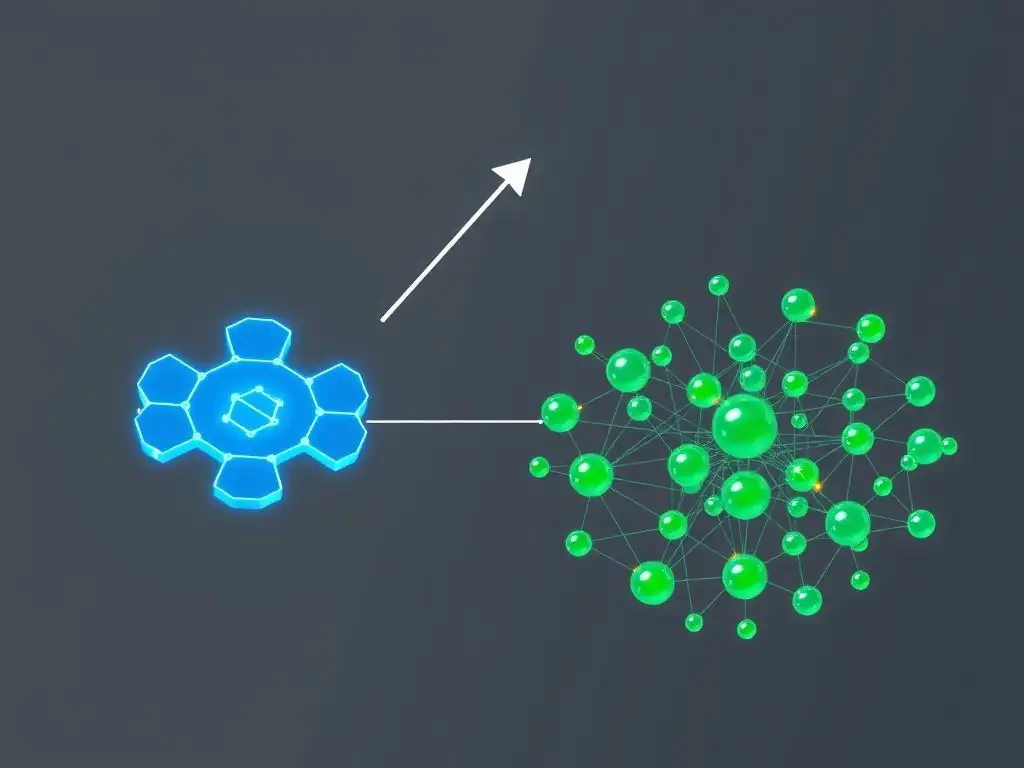
When comparing State Channels and Plasma in the context of scalable decentralized application architecture design, their scalability characteristics differ based on the interaction pattern. State Channels offer near-instantaneous transactions between channel participants once the channel is open. The throughput within a channel is extremely high, limited mainly by network latency between participants. However, their scalability is limited to the number of active channels and participants within each channel. They are not ideal for broadcasting transactions to a global state accessible by anyone.
Plasma, on the other hand, provides high transaction throughput on the child chain for a potentially large number of users. A single Plasma chain can process thousands of transactions per second, significantly increasing the overall capacity compared to the root chain.
While transactions on a Plasma chain are much faster and cheaper than on the root chain, they are not instantaneous like within a state channel; they still need to be included in a child chain block and potentially wait for a root chain commitment for stronger finality guarantees. Plasma offers broader scalability for interactions involving many users and a global state, whereas State Channels excel at private, peer-to-peer interactions.
Security Considerations: Strengths and Weaknesses of Each Approach
Both State Channels and Plasma derive their security from the underlying root chain, but their mechanisms and vulnerability points differ. State Channels rely on participants keeping track of the latest state and being online to challenge fraud within a limited time window. If a participant goes offline, they are vulnerable unless a watchtower service is used. The security is peer-to-peer; a problem in one channel doesn't affect others. The on-chain contract is relatively simple, primarily enforcing the latest state and dispute resolution.
Plasma's security is more complex and depends heavily on the data availability of the child chain and the robustness of the exit game. If data is withheld, users cannot exit safely. The complexity of the exit game can introduce bugs or vulnerabilities.
While a single malicious operator or bug can potentially affect all users on a specific Plasma chain, users can theoretically always exit to the root chain if they follow the protocol. The security model is more complex and relies on more active monitoring (or trusted third parties/committees for data availability) than State Channels, which is a crucial factor in scalable decentralized application architecture design choices.
Complexity of Implementation: Development Effort and Technical Expertise
Implementing both State Channels and Plasma requires significant technical expertise, but the nature of the complexity differs. State Channel implementation involves building secure off-chain communication protocols and relatively simple on-chain contracts for channel management and dispute resolution. The main complexity lies in managing the off-chain state reliably and handling edge cases like disconnections and disputes correctly across multiple participants. Building a generalized state channel framework that supports complex DApp states is particularly challenging.
Implementing a Plasma chain is generally considered more complex. It requires building and maintaining an entire child blockchain, including its consensus mechanism, transaction processing, and block production. The root chain contract for Plasma is substantially more complex than for State Channels, as it must handle deposits, withdrawals, Merkle proof verification, and the intricate logic of the exit game, including challenge periods and potentially multiple exit types (e.g., standard exits, challenging exits). The data availability solution also adds another layer of complexity. This higher implementation barrier impacts the feasibility of certain scalable decentralized application architecture design projects.
Cost Analysis: Comparing Transaction Fees and Resource Requirements
From a user's perspective, both State Channels and Plasma dramatically reduce transaction costs compared to performing every transaction directly on the root chain. Within an open state channel, transactions are virtually free, as they are just signed messages exchanged off-chain. The costs are primarily the initial on-chain transaction to open the channel and the final one to close it (or a dispute transaction).
On a Plasma chain, transaction fees are significantly lower than on the root chain, often fractions of a cent, because the cost of the periodic root commitment to the main chain is amortized over potentially thousands of child chain transactions. However, there are still fees associated with processing transactions on the child chain itself, paid to the child chain operators. Exiting from a Plasma chain back to the root chain requires an on-chain transaction, incurring root chain gas fees.
From a developer/operator perspective, running a Plasma chain requires more infrastructure and ongoing operational costs than managing state channels for a specific set of users. These cost structures influence which scalable decentralized application architecture design is more economically viable for different applications.
Use Case Suitability: Matching Scaling Solutions to DApp Requirements
The choice between State Channels and Plasma depends heavily on the specific requirements and interaction patterns of the DApp.
- State Channels are best suited for:
- DApps with frequent, peer-to-peer interactions between a small, fixed set of participants.
- Applications requiring near-instantaneous transactions (e.g., real-time games, streaming micropayments).
- Scenarios where participants can reliably stay online or use watchtowers.
- Plasma is generally better for:
- DApps with a large number of users interacting with a shared state (e.g., decentralized exchanges, large-scale token transfers).
- Applications requiring high overall transaction throughput across the platform rather than just between specific pairs.
- Use cases where the overhead of the Plasma chain (operator costs, exit game complexity) is justified by the volume of transactions.
A careful analysis of the DApp's user interaction model, transaction volume, asset types, and security requirements is essential for selecting the appropriate scalable decentralized application architecture design.
Hybrid Approaches: Combining State Channels and Plasma for Optimal DApp Scalability
Leveraging the Strengths of Both Scaling Solutions
Given the distinct advantages and disadvantages of State Channels and Plasma, a powerful approach to scalable decentralized application architecture design is to combine them in a hybrid model. This strategy aims to leverage the specific strengths of each solution for different parts of the DApp's functionality.
For instance, State Channels excel at providing instant, free interactions between a few parties, while Plasma is effective at handling high-volume transactions and asset transfers among many users. By integrating both, developers can create DApps that offer the best of both worlds: high throughput for broad interactions and instant finality for critical peer-to-peer actions.
A hybrid architecture can route different types of transactions or interactions to the most suitable Layer 2 solution. This allows a DApp to scale more effectively and provide a better user experience than relying on a single scaling technique. For example, a DApp might use a Plasma chain for managing user balances and facilitating trading or transfers between many users, while simultaneously using State Channels for real-time, interactive components or specific peer-to-peer payment flows within the DApp. This layered approach is becoming increasingly relevant in advanced scalable decentralized application architecture design.
Architecting Hybrid DApps: Design Considerations and Best Practices
Architecting hybrid DApps that combine State Channels and Plasma requires careful design considerations to ensure seamless interaction between the different layers and the root chain. Key considerations include how assets flow between the root chain, the Plasma chain, and within state channels. Deposits and withdrawals between the root chain and the Plasma chain need to be handled securely via the Plasma exit game. Moving assets from the Plasma chain into a state channel, or vice-versa, requires specific protocols to ensure the assets are correctly locked and unlocked on the respective layers.
Best practices for a hybrid scalable decentralized application architecture design include clearly defining the roles of each layer: the root chain for ultimate security and finality, the Plasma chain for bulk transaction processing and asset management, and State Channels for real-time, peer-to-peer interactions. Standardizing interfaces and protocols for moving assets between layers is crucial. Robust monitoring and error handling are essential, as issues on one layer can potentially impact others. Designing user interfaces that abstract away the complexity of interacting with multiple Layer 2 solutions is also important for usability.
Examples of Hybrid DApp Architectures: Gaming Platform Utilizing State Channels for In-Game Transactions and Plasma for Asset Management
A compelling example of a hybrid scalable decentralized application architecture design is a complex blockchain gaming platform. Such a platform might involve players holding various in-game assets (tokens, NFTs) and engaging in frequent, real-time actions within games, as well as trading assets with other players or withdrawing them to the main chain. Using only the root chain would be impossible due to the volume and speed required.
In a hybrid model, the platform could use a Plasma chain to manage the users' main in-game asset balances and facilitate trading of items between players in a marketplace. This provides high throughput and lower fees for these transactions compared to the root chain. For actual gameplay, where players make rapid moves or actions that might involve small state changes or token transfers between just the players involved in a match, State Channels could be used.
A state channel could be opened between the players at the start of a game, processing all in-game interactions instantly off-chain, and only settling the final outcome (e.g., distributing winnings or updating small state changes) back onto the Plasma chain or root chain once the game concludes. This separation of concerns allows the DApp to leverage the specific scaling strengths of each technology.
The Future of Scalable DApp Design: Emerging Trends and Technologies
Rollups: A Promising Alternative for DApp Scaling
Beyond State Channels and Plasma, newer Layer 2 scaling solutions are gaining prominence, particularly "Rollups." Rollups execute transactions off-chain but post transaction data (or proof of computation) onto the main chain. This key difference addresses Plasma's data availability problem, as the necessary data to reconstruct the state is available on the secure main chain.
There are two main types: Optimistic Rollups and ZK-Rollups. Optimistic Rollups assume transactions are valid by default and use a fraud proof system where anyone can challenge an invalid state transition within a time window. ZK-Rollups use zero-knowledge proofs to cryptographically prove the validity of off-chain state transitions, offering faster finality than Optimistic Rollups but being more computationally intensive.
Rollups are seen as a highly promising scalable decentralized application architecture design pattern because they offer high throughput (potentially thousands of TPS) while inheriting the strong security guarantees of the main chain, largely mitigating the data availability issue inherent in some earlier Layer 2 designs like Plasma. Many DApps, especially in the DeFi space, are exploring or migrating to Rollup-based architectures.
Validium: Exploring Data Availability Committee Based Scaling
Validium is another Layer 2 scaling solution that shares similarities with ZK-Rollups in that it uses zero-knowledge proofs to verify the validity of off-chain state transitions. However, the key difference lies in how data availability is handled. Unlike ZK-Rollups, which post transaction data onto the main chain, Validium stores transaction data off-chain, often managed by a committee of trusted operators or a decentralized network. This approach can achieve even higher throughput than ZK-Rollups because the data is not constrained by the main chain's data capacity.
However, the trade-off for this increased scalability is a different trust model regarding data availability. While users can verify that state transitions are valid via ZK proofs on the main chain, they rely on the data availability committee or off-chain storage providers to ensure they can access the data needed to reconstruct the state and withdraw their funds.
If the committee colludes or becomes unavailable, funds are not necessarily lost (as state transitions are proven valid), but they might be inaccessible until data is restored. Validium represents a different point on the scalability-decentralization-security spectrum for scalable decentralized application architecture design.
Unlike Layer 2 solutions which move computation off-chain, sharding is a technique aimed at achieving on-chain scalability for the base blockchain itself. Sharding involves splitting the blockchain network into smaller, interconnected segments called "shards." Each shard can process transactions and maintain its own state independently and in parallel with other shards. This allows the overall network throughput to increase significantly, potentially scaling linearly with the number of shards.
While complex to implement securely (especially ensuring secure communication and cross-shard transactions), sharding represents a fundamental approach to improving the base layer's capacity. If successfully implemented, sharding could drastically increase the throughput and reduce the cost of interacting directly with the main chain, benefiting all DApps deployed on it without requiring them to adopt specific Layer 2 frameworks like State Channels or Plasma. Future scalable decentralized application architecture design may increasingly rely on a combination of a sharded base layer and specialized Layer 2 solutions for further optimization.
Conclusion: Building the Next Generation of Scalable Decentralized Applications
Key Takeaways: Designing Scalable DApps with State Channels and Plasma
Developing truly scalable decentralized application architecture design is paramount for the mass adoption of DApps. The inherent limitations of base-layer blockchains in terms of throughput, latency, and cost necessitate the use of Layer 2 scaling solutions. State Channels and Plasma are two foundational techniques that paved the way for processing transactions off-chain, offering significant improvements over direct on-chain interactions.
State Channels excel at high-speed, low-cost interactions between a fixed set of parties, ideal for micropayments and real-time games. Plasma provides higher overall throughput for a larger number of users, making it suitable for applications like decentralized exchanges and widespread token transfers.
Both solutions have their own architectural nuances, implementation complexities, and security considerations, such as the need for participants to be online for State Channels and the data availability and exit game challenges in Plasma. Understanding these trade-offs is crucial. Increasingly, hybrid approaches that combine the strengths of different Layer 2 techniques are being explored to build more robust and flexible scalable decentralized application architecture design.
The Importance of Choosing the Right Scalability Solution for Your DApp
Selecting the appropriate scaling solution is one of the most critical decisions in designing a DApp. A mismatch between the DApp's requirements (e.g., user interaction patterns, transaction volume, asset types, acceptable latency, security needs) and the chosen scaling technology can severely limit its potential and user experience. A DApp requiring real-time interaction will fail if built solely on a Plasma chain without considering faster off-chain mechanisms. Similarly, a large-scale exchange would quickly become unusable if it attempted to rely only on State Channels between every pair of traders.
A thorough analysis of the DApp's expected usage profile is necessary. Will it primarily involve peer-to-peer interactions? A global marketplace? Frequent, small payments? Infrequent, large transfers? The answers to these questions directly inform whether State Channels, Plasma, newer solutions like Rollups or Validium, or a combination thereof, represents the most effective scalable decentralized application architecture design. This strategic decision impacts development complexity, security model, user experience, and ultimately, the DApp's viability.
The Future of DApp Architecture: Towards Mass Adoption
The landscape of scalable decentralized application architecture design is continuously evolving. While State Channels and Plasma established key patterns for off-chain scaling, newer technologies like Rollups (Optimistic and ZK) and Validium are addressing previous limitations, particularly regarding data availability and ease of use. Furthermore, ongoing developments in base-layer scalability, such as sharding and improved consensus mechanisms, promise to increase the underlying capacity of blockchains themselves.
The future of DApp architecture will likely involve a multi-layered approach, combining a more scalable base chain with specialized Layer 2 solutions tailored to different DApp needs. As these technologies mature and become easier to implement, the barrier to creating scalable decentralized application architecture design will lower, paving the way for DApps that can finally compete with and surpass their centralized counterparts in terms of performance and user experience. This progress is essential for moving decentralized applications from niche use cases to mainstream adoption.
Frequently Asked Questions
What are state channels and how do they improve DApp scalability?
State channels are a layer-two scaling solution that allows parties to conduct multiple transactions off-chain, only interacting with the main blockchain to open and close the channel. This significantly reduces the main chain congestion and transaction fees.
How does Plasma contribute to the scalability of decentralized applications?
Plasma is another layer-two scaling solution that creates "child chains" anchored to the main blockchain, allowing for parallel processing of transactions. This reduces the burden on the main chain and enhances throughput.
What are the key differences between state channels and Plasma in terms of DApp architecture?
State channels are best suited for applications involving a limited number of participants who frequently interact, while Plasma is more suitable for applications requiring high transaction throughput and handling a larger number of users. They differ in how they handle data validation and security.
What are some of the regulatory challenges facing DApps built using advanced architectures like state channels and Plasma?
Regulatory uncertainty surrounding decentralized technologies and smart contracts poses a significant challenge. Lack of clear legal frameworks for data privacy and liability can hinder adoption.
Why is choosing a scalable decentralized application architecture design important for the future of blockchain technology?
A scalable architecture is crucial for DApps to handle increasing user demand and transaction volumes without compromising performance or security. This is essential for mainstream adoption of blockchain technology beyond niche use cases.
Final Reflection: Embracing Scalable Decentralization
The exploration of state channels and Plasma, as vital components of scalable decentralized application architecture design, underscores a critical juncture in the evolution of blockchain technology. The limitations of traditional on-chain transactions demand innovative solutions, and these Layer-2 scaling solutions offer a tangible path toward realizing the true potential of DApps – a future where decentralization doesn't come at the cost of speed and efficiency.
This pursuit of scalability has profoundly shaped, and continues to shape, the development landscape. The ability to conduct a high volume of transactions off-chain, while still maintaining the security and integrity of the underlying blockchain, represents a paradigm shift. The future of decentralized applications hinges on our ability to overcome the scalability trilemma – balancing decentralization, security, and scalability.
This quote encapsulates the ongoing challenge and the importance of continued research and development in areas like state channels and Plasma.
As we look ahead, let us not only marvel at the technological advancements, but also consider the profound implications for the future of decentralized systems. How can we, as developers, users, and innovators, contribute to the responsible and effective implementation of these scaling solutions? Let us embrace the challenge of building a truly decentralized and scalable future, one DApp at a time.
Unlock Next-Level DApp Performance!
Thank you for exploring the cutting edge of DApp architecture with us! We hope this article shed light on how State Channels and Plasma can be harnessed to achieve remarkable scalability. Now, it's time to apply that knowledge and contribute to shaping the future of blockchain technology.
Here are some ways to get started:
- Create a simple DApp using State Channels or Plasma. Hands-on experimentation will deepen your understanding and help you tackle real-world challenges.
- Explore advanced topics such as combining multiple scaling techniques or participate in discussions on developer forums and open-source repositories to learn from the community.
- Share this article with fellow developers and blockchain enthusiasts. Let’s collaborate to build a more scalable and efficient blockchain ecosystem!
What innovative use case will you develop with these advanced scaling techniques? Share your ideas in the comments below!
Leave a Reply