
Asynchronous Operations in DApps: Improving Performance and User Experience


Welcome to Blockchain Trends, your guide to unraveling the real-world impact of blockchain technology! Beyond the hype of cryptocurrencies, we delve into the transformative power of decentralized systems, exploring everything from DeFi innovations to groundbreaking enterprise applications. Intrigued by how to build a better DApp? This week, we're diving deep into DApp performance optimization strategies, starting with a crucial look at asynchronous operations. Discover how implementing these techniques can significantly improve your DApp's responsiveness and user experience, and prepare to unlock a new level of efficiency. Keep reading to learn more!
-
Asynchronous Operations in DApps: Improving Performance and User Experience
- Introduction: The Need for Speed in Decentralized Applications
- Understanding Synchronous vs. Asynchronous Operations in DApps
- The Impact of Asynchronous Operations on DApp Performance
- DApp Performance Optimization Strategies: Leveraging Asynchronicity
- Tools and Technologies for Asynchronous DApp Development
- Case Studies: Asynchronous DApp Implementations in Action
- Challenges and Considerations for Asynchronous DApp Operations
- Best Practices for Implementing Asynchronous Operations in DApps
- The Future of Asynchronous Operations in Decentralized Applications
- Conclusion: Optimizing DApp Performance with Asynchronous Techniques
-
Frequently Asked Questions
- What are DApps and why is performance important?
- What are asynchronous operations in the context of DApps?
- How can asynchronous operations improve DApp performance?
- What are some specific examples of asynchronous operations used in DApps?
- What are some DApp performance optimization strategies beyond asynchronous operations?
- Final Reflection: Embracing Asynchronous Futures in Decentralized Applications
- Supercharge Your DApp Development!
Asynchronous Operations in DApps: Improving Performance and User Experience
Introduction: The Need for Speed in Decentralized Applications
Decentralized applications (DApps) offer compelling advantages like transparency, security, and censorship resistance, but they often face significant challenges regarding performance and user experience compared to their centralized counterparts. The inherent nature of blockchain — requiring consensus across a distributed network — can lead to slower transaction processing times and a less responsive interface. Users accustomed to instant feedback from traditional web applications can find DApps frustratingly slow, hindering mainstream adoption. This bottleneck is particularly pronounced for complex DApps involving numerous on-chain interactions or handling significant user traffic.
Addressing these performance limitations is crucial for the widespread success of the decentralized web. Users expect interactions to be smooth and near-instantaneous, even when underlying processes involve potentially slow blockchain operations. Therefore, implementing effective DApp performance optimization strategies is not just a technical challenge but a necessity for creating usable and competitive applications. Techniques that decouple user interface responsiveness from lengthy on-chain computations are essential to provide a seamless experience, ensuring that users remain engaged rather than abandoning the DApp due to perceived sluggishness.
Understanding Synchronous vs. Asynchronous Operations in DApps
Synchronous DApp Operations: Limitations and Bottlenecks
In a synchronous operation model, each task must complete before the next one can begin. When a user interacts with a DApp that relies heavily on synchronous calls to the blockchain, their interface might freeze or become unresponsive while waiting for the transaction to be mined and confirmed.
This is a significant limitation, especially considering that blockchain transaction confirmation times can vary widely, often ranging from seconds to several minutes depending on network congestion, gas prices, and the specific blockchain protocol. For example, a simple token transfer on Ethereum during peak congestion might take several minutes to finalize, completely blocking any further user interaction if the DApp is designed synchronously.
This synchronous approach creates bottlenecks that severely impact DApp performance. Imagine a DApp where a user needs to perform multiple actions, like approving a token spending limit and then executing a swap. If these are handled synchronously, the user must wait for the approval transaction to confirm before they can even initiate the swap transaction.
This sequential dependency introduces cumulative delays, making complex workflows tedious and slow. Furthermore, synchronous operations can tie up resources unnecessarily, both on the client-side (the user's browser) and potentially on the server-side or gateway interacting with the blockchain, limiting the DApp's ability to handle concurrent requests efficiently.
Asynchronous DApp Operations: Unlocking Scalability and Responsiveness
Asynchronous operations, in contrast, allow a DApp to initiate a task (like sending a blockchain transaction) and then continue processing other tasks or remaining responsive to user input without waiting for the initial task to complete. The DApp can be notified later, via mechanisms like callbacks or events, when the initiated task has finished or its status has changed.
This non-blocking approach is fundamental to modern web development and is increasingly vital for effective DApp performance optimization strategies. By adopting asynchronous patterns, DApps can ensure that the user interface remains fluid, allowing users to perform other actions while transactions are pending on the blockchain.
Implementing asynchronous operations unlocks significant potential for scalability and responsiveness in DApps. Instead of a single thread or process being tied up waiting for a blockchain response, multiple operations can be initiated concurrently. For instance, a user could initiate a token swap and then immediately browse other parts of the DApp or even initiate another unrelated transaction (if the DApp architecture allows) without the interface freezing.
This parallelization of tasks drastically improves perceived performance and allows the DApp to handle a higher volume of user interactions more efficiently. It shifts the paradigm from a rigid, waiting-based model to a dynamic, event-driven one, which is much better suited for the unpredictable latency inherent in blockchain networks.
The Impact of Asynchronous Operations on DApp Performance
Enhancing DApp User Experience through Asynchronous Processing
The most immediate and tangible benefit of integrating asynchronous operations into DApps is the significant enhancement of user experience. When a DApp handles potentially slow operations, such as interacting with a smart contract, asynchronously, the user interface doesn't freeze.
For example, when a user initiates a staking transaction, the DApp can display a "Transaction Pending" message and allow the user to navigate to other sections, view their portfolio, or even initiate another action (if logical within the DApp's flow) without being stuck on a loading screen. This non-blocking behavior mirrors the responsiveness users expect from high-quality web applications, drastically reducing frustration and improving overall usability.
Consider a decentralized exchange (DEX). In a synchronous model, placing an order might block the entire interface until the transaction confirms.
With asynchronous processing, the order can be submitted to the blockchain, and the DApp can immediately update the UI to show the order as "pending," allowing the user to place other orders, manage existing ones, or explore different trading pairs. This ability to continue interacting with the DApp while operations are in progress is a cornerstone of effective DApp performance optimization strategies focused on the user, making the application feel faster and more professional, even if the underlying blockchain confirmation time remains constant.
Reducing Transaction Latency with Asynchronous Techniques
While asynchronous operations don't inherently speed up the blockchain's confirmation time itself, they dramatically reduce the perceived latency from the user's perspective and optimize the DApp's ability to handle latency. By not waiting for a transaction to complete before moving on, the DApp can process subsequent user actions or display relevant information much sooner.
For instance, if a DApp needs to fetch data from a decentralized oracle or update a user's balance after a transaction, performing these tasks asynchronously means that the user doesn't have to wait for each step to finish sequentially. The DApp can initiate the transaction and simultaneously start fetching the updated balance or relevant oracle data, presenting the user with the latest information as soon as it becomes available, rather than waiting for the slowest part of the process.
Furthermore, asynchronous patterns enable more sophisticated DApp performance optimization strategies like batching or queuing transactions. Instead of sending each user action as an individual, blocking transaction request, a DApp can queue multiple actions and potentially batch them together or process them in the background.
This can lead to more efficient use of network resources and potentially lower gas costs (if batching is supported by the smart contract), while also ensuring that the user's immediate interaction with the interface is not delayed by the processing of previous actions. This decoupling of user input from blockchain finality is a key enabler for building high-throughput, responsive decentralized applications.
DApp Performance Optimization Strategies: Leveraging Asynchronicity
Utilizing Queues for Asynchronous Transaction Processing in DApps
One powerful DApp performance optimization strategy involves implementing a queue for outgoing blockchain transactions. Instead of sending a transaction directly to the network and waiting, the DApp adds it to a local or server-side queue. This allows the user interface to respond immediately, indicating that the action has been queued.
A separate process or service then picks up transactions from the queue and sends them to the blockchain sequentially or in optimized batches, managing nonce values and gas prices automatically. This pattern is particularly useful in DApps where users might perform rapid-fire actions, such as in a decentralized game or a high-frequency trading interface on a DEX.
Using a queue prevents issues like nonce conflicts (where transactions are sent out of order) and allows for more resilient error handling and retries. If a transaction fails, the queue manager can handle the error gracefully, perhaps notifying the user or attempting a retry, without interrupting the user's ongoing interaction with the DApp. This approach decouples the user's action from the complexities and potential delays of blockchain submission, significantly improving the perceived speed and reliability of the DApp. It centralizes the logic for interacting with the blockchain, making the client-side code simpler and more responsive.
Implementing Callbacks and Webhooks for Asynchronous Event Handling
Asynchronous operations often require mechanisms to notify the DApp client or a backend service when a blockchain event occurs or a transaction status changes. Callbacks and webhooks are essential tools for this. When a transaction is sent asynchronously, the DApp doesn't wait for its confirmation. Instead, it might provide a callback function that should be executed once the transaction is mined and confirmed. Similarly, for events emitted by smart contracts (e.g., a token transfer, an order fulfillment), the DApp can set up listeners that trigger specific callback functions when those events are detected on the blockchain.
For more complex DApps or those with server-side components, webhooks can be used. A backend service monitoring blockchain events or transaction statuses can send an HTTP request (a webhook) to a specified URL on the DApp's server or the user's client application (if supported), notifying it of the change.
This is a common pattern in centralized systems and is highly effective for DApp performance optimization strategies that involve backend processing or notifications that don't require the user's immediate attention. It ensures that the DApp's state is updated in response to on-chain events without the client having to constantly poll the blockchain, which is inefficient and resource-intensive.
Employing Asynchronous State Updates in DApps
Maintaining a responsive user interface while waiting for blockchain state changes is critical. Asynchronous state updates involve optimistically updating the DApp's UI based on a user's action before the corresponding blockchain transaction is confirmed. For example, if a user initiates a token swap, the DApp might immediately show the expected new balances (or the change in balance) in the UI, marked as "pending" or "unconfirmed." Once the transaction is confirmed on the blockchain, the DApp then verifies the actual outcome and updates the UI accordingly.
This "optimistic UI" approach significantly improves the perceived speed of the DApp. Users receive immediate visual feedback on their actions, which enhances usability. However, this strategy requires careful implementation to manage potential discrepancies if a transaction fails or results in an unexpected outcome. The DApp must be able to gracefully revert or adjust the UI state if the on-chain result differs from the optimistic update. Despite this complexity, employing asynchronous state updates is a powerful DApp performance optimization strategy that directly addresses the latency inherent in blockchain interactions by decoupling the user experience from the final on-chain confirmation.
Tools and Technologies for Asynchronous DApp Development
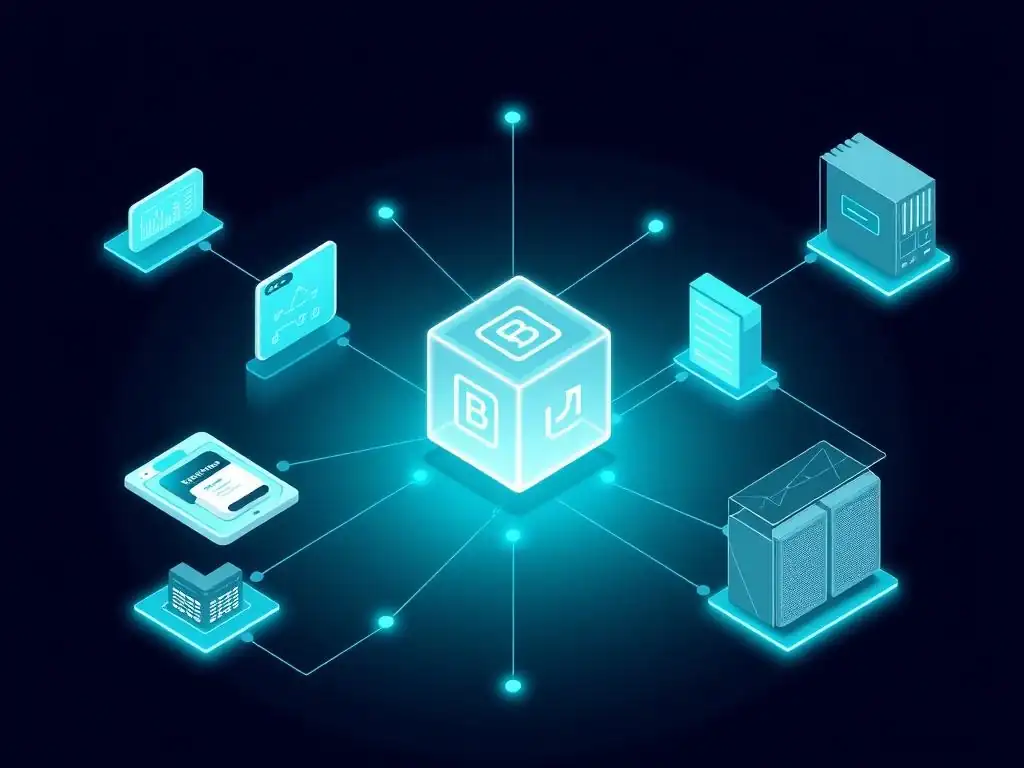
Asynchronous JavaScript and Web3 Integration
Modern JavaScript provides native support for asynchronous programming through Promises, async/await, and event loops, which are fundamental for building responsive DApps. Libraries like Web3.js or Ethers.js, commonly used to interact with Ethereum and compatible blockchains, are designed to work asynchronously. Functions for sending transactions, reading contract state, or subscribing to events typically return Promises, allowing developers to use async/await syntax to write asynchronous code that looks synchronous, improving readability while retaining non-blocking behavior.
For example, instead of const balance = web3.eth.getBalance(address); (synchronous, blocking), a DApp developer uses const balance = await web3.eth.getBalance(address); within an async function. While await pauses the execution of the current asynchronous function until the Promise resolves, it does not block the main JavaScript event loop, meaning the UI remains responsive. Leveraging these built-in JavaScript features and the asynchronous nature of blockchain interaction libraries is a foundational DApp performance optimization strategy for client-side development.
async function getUserBalance(address) {
  try {
    // Initiates the call without blocking the UI
    const balanceWei = await web3.eth.getBalance(address);
    const balanceEth = web3.utils.fromWei(balanceWei, 'ether');
    console.log(`Balance for ${address}: ${balanceEth} ETH`);
    // Update UI asynchronously after receiving balance
    updateBalanceDisplay(balanceEth);
  } catch (error) {
    console.error("Error fetching balance:", error);
    // Handle error in UI
    displayError("Could not fetch balance.");
  }
}

// Example of triggering asynchronously
// This call doesn't block the main execution flow
getUserBalance('0x...');
Off-Chain Computation for DApp Performance Improvement
Not every operation in a DApp needs to occur on the blockchain. Performing complex computations or data processing off-chain and only submitting the final result or verification proof on-chain is a significant DApp performance optimization strategy. This reduces gas costs, decreases latency, and increases the complexity of logic that can be handled. Technologies range from simple client-side computation to more complex setups involving trusted execution environments (TEEs) or zero-knowledge proofs (ZKPs) for verifiable off-chain computation.
For instance, a decentralized game might handle all game logic and state changes off-chain among participants or on a dedicated server, only committing final scores, significant item transfers, or game outcomes to the blockchain. This allows for real-time gameplay (which would be impossible with per-move on-chain transactions) while still leveraging the blockchain for finality and security. This approach requires careful design to maintain trust and security guarantees, often involving cryptographic proofs or frequent checkpoints on the chain, but the performance benefits for computation-heavy DApps are substantial.
Utilizing IPFS for Asynchronous Data Storage and Retrieval
Storing large amounts of data directly on the blockchain is prohibitively expensive and slow. Decentralized storage systems like IPFS (InterPlanetary File System) offer an asynchronous way to handle data associated with DApps. Instead of storing data on-chain, the data is stored on IPFS, and only the content-addressing hash (a unique identifier for the data) is stored on the blockchain. Retrieving this data is an asynchronous operation: the DApp requests the data from the IPFS network using the hash, and the data is streamed back as available, without blocking the DApp's main process.
This pattern is widely used for storing DApp metadata, user profiles, game assets, or other large files. For example, in a decentralized social media DApp, user posts or images would be stored on IPFS, with only the IPFS hash recorded in a smart contract associated with the user's profile. When viewing a user's feed, the DApp asynchronously fetches the content from IPFS based on the hashes retrieved from the blockchain. This significantly improves the DApp's performance and scalability compared to attempting to handle large data payloads on-chain, which is impractical.
Employing Chainlink for Asynchronous Oracle Data Feeds
DApps often need access to real-world data, such as price feeds, weather data, or event results. Blockchains cannot access this data directly; they require oracles. Chainlink provides decentralized oracle networks that fetch data from off-chain sources and make it available on-chain. Interacting with Chainlink oracles is inherently an asynchronous process. A smart contract requests data from a Chainlink oracle contract, and the oracle network fulfills the request off-chain. Once the data is retrieved and validated, the oracle node initiates a separate transaction to deliver the data back to the requesting smart contract.
This asynchronous request-and-callback pattern is fundamental to how Chainlink operates and serves as a key DApp performance optimization strategy for incorporating external data. The DApp or smart contract doesn't wait for the oracle to fetch the data; it makes the request and continues processing. When the oracle delivers the data via a subsequent transaction, a designated callback function in the smart contract is triggered to handle the received data. This prevents the DApp's on-chain logic from being blocked by potentially slow or complex off-chain data retrieval processes, enabling DApps to react to real-world events efficiently.
Case Studies: Asynchronous DApp Implementations in Action
Case Study 1: Uniswap V3 - Asynchronous Order Matching for Scalability
Uniswap, a leading decentralized exchange, while primarily relying on an automated market maker (AMM) model, incorporates elements where asynchronous processing is key to its performance and scalability, particularly in how interactions are handled and data is served. While v3's core swaps are synchronous transactions interacting with liquidity pools, the surrounding user experience benefits significantly from asynchronous patterns.
For example, fetching available liquidity for different price ranges or calculating potential trade execution paths based on complex concentrated liquidity positions are operations that are often performed off-chain or asynchronously in the user interface. The UI doesn't block while querying the blockchain for every piece of data; instead, it asynchronously fetches necessary pool data, historical prices, and user balances to present a responsive trading interface.
Furthermore, while the core swap transaction is synchronous, the DApp front-end manages the user's interaction flow asynchronously. When a user submits a swap, the UI updates immediately to show a pending state. It doesn't wait for the transaction to confirm before allowing the user to view other pools, check their portfolio, or navigate away.
The DApp asynchronously monitors the blockchain for the transaction's confirmation and updates the UI (e.g., showing the confirmed transaction, updating balances) once it's finalized. This decoupling of the user's action submission from the on-chain finality is a practical example of DApp performance optimization strategies that enhance user experience in a high-traffic DeFi application.
Case Study 2: Aave - Improving User Experience with Asynchronous Liquidation Notifications
Aave, a prominent decentralized lending protocol, leverages asynchronous operations to improve user experience, particularly regarding notifications and background processes like liquidations. While core lending and borrowing actions are synchronous blockchain transactions, Aave's ecosystem includes components that operate asynchronously. For instance, monitoring user positions and health factors that could trigger liquidation is a continuous process performed by keepers or bots, not the user interface itself. These monitoring agents operate off-chain and asynchronously, constantly checking conditions across the protocol.
When a user's position becomes eligible for liquidation, the notification to the user (via email, push notification, or within the DApp interface) is an asynchronous event. The user's DApp doesn't block while constantly checking their liquidation status; instead, an external service or background process asynchronously monitors the blockchain state and pushes notifications when necessary.
Similarly, the liquidation process itself, while triggered by an on-chain transaction from a liquidator, operates independently of the user's direct interaction with the DApp. This allows Aave to maintain a responsive interface for users managing their loans and deposits while critical background processes related to risk management and liquidation occur asynchronously, showcasing effective DApp performance optimization strategies for complex DeFi protocols.
Challenges and Considerations for Asynchronous DApp Operations
Managing State Consistency in Asynchronous DApps
One of the primary challenges when implementing asynchronous operations in DApps is maintaining state consistency. When the user interface optimistically updates based on an action that hasn't yet been confirmed on the blockchain, there's a risk that the transaction might fail or result in a different state than anticipated. For example, if a user initiates a token transfer and the UI immediately shows the tokens deducted, but the transaction later fails due to insufficient gas or a smart contract error, the UI's state becomes inconsistent with the actual blockchain state.
Developers must implement robust mechanisms to handle these discrepancies. This involves monitoring the status of pending transactions asynchronously and updating the UI to reflect the true state once the transaction is confirmed or rejected. Strategies include using unique transaction IDs, tracking transaction receipts, and implementing rollback or correction logic in the UI. Ensuring that the DApp can gracefully handle failed or pending transactions and eventually synchronize with the definitive blockchain state is crucial for user trust and is a complex aspect of DApp performance optimization strategies involving asynchronicity.
Handling Errors and Exceptions in Asynchronous Environments
Error handling in asynchronous DApps is more complex than in synchronous applications. Errors can occur at various stages: network issues when sending a transaction, transaction rejection by the blockchain (e.g., out of gas, revert), smart contract errors during execution, or failures in off-chain asynchronous processes (like oracle data retrieval). Since the DApp isn't waiting for the operation to complete, errors might occur later, requiring an event-driven approach to error notification and resolution.
Developers must design asynchronous code to catch and handle errors effectively using mechanisms like Promise .catch() blocks or try...catch within async functions. Furthermore, the DApp needs a strategy for notifying the user about asynchronous errors that occur in the background. This might involve persistent notifications within the UI, transaction history views that clearly indicate failed operations, and logging for debugging. Implementing comprehensive error handling is vital for robust DApp performance optimization strategies, ensuring that failures are managed gracefully and users are informed.
Security Implications of Asynchronous DApp Development
While asynchronous operations improve performance, they can introduce security considerations if not implemented carefully. For instance, optimistic UI updates should never be relied upon for sensitive operations or display critical, unconfirmed data (like final balances after a major transaction) without clear visual indicators that the state is pending. Malicious actors could potentially manipulate client-side state if the DApp relies solely on unconfirmed asynchronous updates without proper validation against the eventual blockchain state.
Furthermore, asynchronous interactions with external services (like oracles or off-chain computation layers) must be secured. Using signed messages, verification proofs, and ensuring that sensitive actions are ultimately confirmed on-chain based on verified data are essential. The design of asynchronous communication channels, such as webhooks, also requires security considerations, like verifying the origin of incoming requests. Security should always be a primary concern alongside DApp performance optimization strategies, especially when dealing with asynchronous interactions that extend beyond the core synchronous blockchain logic.
Best Practices for Implementing Asynchronous Operations in DApps
Prioritizing User Experience in Asynchronous Design
When implementing asynchronous operations, the primary goal should be enhancing user experience. This means designing the DApp interface to be responsive and informative while waiting for asynchronous processes. Use loading indicators, progress bars, and clear status messages (e.g., "Transaction Pending," "Confirming...") to keep users informed about background operations. Allow users to cancel pending actions if possible and provide clear feedback if an asynchronous operation fails or requires further attention.
Effective DApp performance optimization strategies centered on user experience involve managing expectations. Users understand that blockchain transactions take time. By providing immediate feedback that their action has been received and is being processed asynchronously, and then updating them on its status, you create a much better experience than a frozen interface. Design the flow so that users can continue using the DApp while waiting, making the latency less impactful.
Thorough Testing and Auditing of Asynchronous Code
Asynchronous code, with its non-linear execution flow, can be challenging to test. Race conditions, unexpected timing issues, and complex error states are more likely to occur. Thorough testing is paramount. This includes unit tests for individual asynchronous functions, integration tests to ensure different asynchronous components interact correctly, and end-to-end tests that simulate user flows involving multiple asynchronous operations.
Auditing asynchronous DApp code is also crucial, particularly for smart contracts that interact with asynchronous off-chain processes or receive data via asynchronous callbacks (like from oracles). Ensure that the contract handles unexpected or delayed data correctly and that state transitions are secure even with asynchronous inputs. Rigorous testing and auditing are non-negotiable DApp performance optimization strategies to ensure both functionality and security.
Monitoring and Optimizing Asynchronous DApp Performance
Once a DApp with asynchronous operations is deployed, continuous monitoring is essential. Track the performance of asynchronous tasks: how long do transactions stay in the queue? What is the average time from user action to UI confirmation? Are there specific asynchronous calls that frequently fail or take excessively long? Use monitoring tools to gain visibility into the behavior of both on-chain and off-chain asynchronous components.
Based on monitoring data, identify bottlenecks and areas for optimization. This might involve adjusting gas strategies for queued transactions, optimizing off-chain computation logic, improving the efficiency of data retrieval from IPFS or oracles, or refining the UI's state management for pending operations. Performance optimization for DApps is an ongoing process that requires data-driven insights derived from continuous monitoring of the asynchronous architecture.
The Future of Asynchronous Operations in Decentralized Applications
Emerging Trends in Asynchronous DApp Architecture
The trend towards more complex and performant DApps is driving innovation in asynchronous architecture. We are seeing increased adoption of patterns that fully embrace asynchronicity from the ground up, moving beyond simply wrapping synchronous blockchain calls in Promises. This includes event-driven architectures where DApps react primarily to blockchain events rather than constantly polling, and the use of specialized off-chain workers or relayers to handle background tasks like transaction submission, monitoring, and data processing.
Furthermore, advancements in areas like decentralized messaging protocols and publish-subscribe models are enabling more sophisticated asynchronous communication between DApp components, users, and off-chain services. The development of standards for off-chain data storage and computation verification is also maturing, making it easier and safer to move performance-sensitive operations off the main chain while maintaining trust. These emerging trends point towards DApps that are inherently more decoupled, responsive, and scalable due to deeper integration of asynchronous principles.
The Role of Layer-2 Solutions in Asynchronous DApp Scalability
Layer-2 scaling solutions (like rollups, state channels, and plasma) are fundamentally asynchronous in how they interact with the main chain (Layer 1). Operations often occur rapidly and cheaply on Layer 2, with periodic or batched settlements asynchronous to the user's immediate interaction occurring on Layer 1. For users interacting within the Layer-2 environment, transactions can be near-instantaneous, providing a highly responsive experience. The finality on Layer 1, which provides the ultimate security guarantee, happens asynchronously in the background, hours or minutes later depending on the specific Layer-2 design (e.g., optimistic vs. ZK rollups).
This architecture naturally aligns with and reinforces asynchronous DApp performance optimization strategies. DApps built on Layer 2 can leverage the speed of off-chain execution while relying on the asynchronous settlement process for security. This allows developers to build applications that feel as fast as centralized alternatives for everyday interactions, with the slower blockchain finality handled transparently and asynchronously in the background. As Layer-2 solutions mature and become more widely adopted, they will become increasingly central to building high-performance, asynchronous DApps capable of supporting mainstream user bases.
Conclusion: Optimizing DApp Performance with Asynchronous Techniques
Optimizing DApp performance is paramount for achieving mainstream adoption and providing a user experience that can compete with centralized applications. Asynchronous operations are not merely an option but a fundamental necessity for overcoming the inherent latency and throughput limitations of blockchain networks. By decoupling user interactions from synchronous blockchain calls, DApps can remain responsive, provide immediate feedback, and handle background processes efficiently.
Implementing DApp performance optimization strategies that leverage asynchronicity involves adopting various techniques: using queues for transaction management, employing callbacks and webhooks for event handling, and utilizing optimistic UI updates. Furthermore, integrating asynchronous tools and technologies like asynchronous JavaScript, off-chain computation, decentralized storage (IPFS), and oracle networks (Chainlink) is crucial.
While challenges like state consistency and error handling require careful consideration, the benefits in terms of enhanced user experience and improved scalability are significant. As DApp architectures evolve and Layer-2 solutions become more prevalent, asynchronous design patterns will continue to be central to building the next generation of high-performance decentralized applications.
Frequently Asked Questions
What are DApps and why is performance important?
DApps, or decentralized applications, are applications built on blockchain technology. Performance is crucial for user adoption, as slow DApps can lead to poor user experience and abandonment.
What are asynchronous operations in the context of DApps?
Asynchronous operations allow DApps to perform tasks in the background without blocking the user interface. This means users can continue interacting with the DApp while complex computations or network requests are processed.
How can asynchronous operations improve DApp performance?
By offloading tasks to the background, asynchronous operations prevent the DApp from freezing or becoming unresponsive. This leads to a smoother and more responsive user experience and improved overall performance.
What are some specific examples of asynchronous operations used in DApps?
Examples include fetching data from the blockchain, processing large transactions, or performing complex calculations. These tasks can be handled asynchronously to avoid delays in the user interface.
What are some DApp performance optimization strategies beyond asynchronous operations?
Other strategies include efficient data storage, optimizing smart contract code, and utilizing caching mechanisms to reduce the load on the blockchain.
Final Reflection: Embracing Asynchronous Futures in Decentralized Applications
The journey through asynchronous operations in DApps reveals a critical truth: performance is paramount for widespread adoption. The strategies explored, from non-blocking calls to message queues, aren't just technical improvements; they are fundamental to creating a user experience that rivals traditional web applications, paving the way for a truly decentralized future.
The impact of DApp performance extends far beyond mere convenience. It shapes the perception of blockchain technology itself, influencing whether it's seen as a viable alternative or a cumbersome novelty. The ability to seamlessly interact with decentralized applications is crucial for fostering trust and encouraging participation. The future of DApps hinges not just on their innovative functionalities, but on their ability to deliver a user experience that is both intuitive and performant.
This quote encapsulates the essence of our exploration, highlighting the inseparable link between performance and the long-term success of decentralized applications.
As we conclude, consider how you can champion DApp performance optimization strategies in your own projects and communities. Embrace the power of asynchronous operations, experiment with different architectures, and relentlessly pursue improvements in user experience. The future of decentralized applications is in our hands, and by prioritizing performance, we can unlock their full potential and usher in a new era of digital innovation.
Supercharge Your DApp Development!
Thank you for exploring how asynchronous operations can enhance your DApp’s performance and user experience. You now have the knowledge to build more responsive and efficient decentralized applications. What’s next?
Here are some steps to put your newfound understanding into practice:
- Start by refactoring a small part of your existing DApp to incorporate asynchronous operations. This hands-on approach will help you grasp the benefits and solidify your skills.
- Explore popular asynchronous libraries and frameworks used in blockchain development, especially those compatible with your smart contract language. Try out different tools to discover which best fits your project.
- Share this article with fellow blockchain developers and initiate discussions on innovative asynchronous techniques. Together, we can create a faster, more user-friendly decentralized future!
Are you ready to implement asynchronous operations and see their powerful impact on your DApp’s user experience?
Leave a Reply