
Beyond the Code: Understanding the Architecture of a Robust DApp BackEnd


Welcome to Blockchain Trends, your guide to understanding the revolutionary impact of blockchain technology beyond the hype. Are you ready to delve into the intricate world of Decentralized Applications? In this article, we unravel the complexities of DApp backend architecture development, uncovering the essential components and strategies required to build truly robust and scalable decentralized solutions. What are the critical considerations for security, performance, and maintainability? Let's explore the future, one block at a time...
Beyond the Code: Understanding the Architecture of a Robust DApp Backend
- Introduction to DApp Backend Architecture
- Core Components of a DApp Backend
- DApp Backend Development: Key Architectural Considerations
- DApp Backend Architecture Patterns: A Comparative Analysis
- Building a Scalable and Secure DApp Backend: A Step-by-Step Approach
- Monitoring and Maintaining Your DApp Backend
- The Future of DApp Backend Architecture
- Conclusion: Mastering DApp Backend Architecture for the Next Generation of Decentralized Applications
-
Frequently Asked Questions
- What are the key components of a robust DApp backend architecture?
- How does blockchain technology contribute to the security of a DApp backend?
- What are some popular blockchain platforms used for DApp backend development?
- What considerations are important when scaling a DApp backend?
- What are the regulatory considerations when developing a DApp backend?
- Final Reflection: Building Blocks of Decentralized Futures
- Unleash Your DApp's Potential!
Introduction to DApp Backend Architecture
Why a Solid Backend is Crucial for DApp Success
While the smart contracts often receive the spotlight in a decentralized application (DApp), they represent only one piece of the puzzle. A DApp backend architecture, distinct from the on-chain logic, is fundamental for handling everything that doesn't necessarily need to reside on the blockchain. This includes user interfaces, data indexing, off-chain computations, notifications, and interactions with traditional web services. Without a well-designed backend, a DApp risks being slow, difficult to use, and unable to provide a complete user experience, severely limiting its potential for adoption and growth.
The complexity of DApp backend architecture development lies in effectively bridging the decentralized world of the blockchain with the familiar patterns of web development. A poor backend design can introduce single points of failure, compromise security, or create bottlenecks that negate the benefits of decentralization.
For instance, a DApp relying on a centralized server to fetch data from the blockchain for its user interface is susceptible to that server going down, rendering the DApp unusable despite the smart contracts still functioning. Therefore, investing in a robust and well-thought-out backend is not merely an option but a necessity for any DApp aiming for real-world utility and widespread use.
The Importance of Scalability, Security, and Reliability in DApp Backends
Scalability is paramount for DApps expecting a growing user base. While the blockchain itself has throughput limitations (e.g., Ethereum currently processes around 15-30 transactions per second, though Layer 2 solutions significantly increase this), the off-chain backend must be able to handle a much higher volume of requests, such as fetching data for thousands or millions of users simultaneously, processing transactions off-chain before batching, or managing user sessions. A DApp backend architecture that cannot scale will quickly become unresponsive as usage increases, leading to user frustration and abandonment.
Security in DApp backend architecture development extends beyond smart contract audits. The backend handles sensitive information, manages user interactions with the blockchain (often involving private keys or signing requests), and integrates with various services. Vulnerabilities in the backend can lead to data breaches, unauthorized access, or exploits that drain user funds or disrupt the DApp's operation. Reliability ensures that the DApp is consistently available and performs as expected.
Downtime or erratic behavior in the backend erodes user trust. For example, a DeFi DApp experiencing backend downtime during volatile market conditions could prevent users from managing their positions, potentially leading to significant losses. Therefore, security, scalability, and reliability must be core considerations from the initial stages of DApp backend architecture design.
Core Components of a DApp Backend
Smart Contracts: The Foundation of Decentralized Logic
Smart contracts are self-executing programs stored on a blockchain that automatically run when predetermined conditions are met. They form the immutable core logic of many DApps, defining rules for interactions, managing assets, and executing decentralized processes. For instance, in a decentralized exchange (DEX), smart contracts handle token swaps, liquidity provision, and fee distribution. In a gaming DApp, they might manage in-game assets or define game rules. Their transparent and tamper-proof nature is a key feature of DApps, providing trust and verifiable execution.
However, smart contracts have limitations. They are generally slow, expensive to execute (due to gas costs), and have limited storage capacity. Crucially, they cannot directly access external data or execute complex computations efficiently. This is where the rest of the DApp backend architecture comes into play, providing the necessary infrastructure to interact with smart contracts, manage off-chain data, and deliver a rich user experience that goes beyond the raw capabilities of the blockchain itself.
Choosing the Right Smart Contract Language (Solidity, Vyper, etc.)
The choice of smart contract language significantly impacts the security, performance, and development experience of the on-chain component of your DApp backend architecture. Solidity is the most popular language for developing on Ethereum and other EVM-compatible blockchains like Polygon, Binance Smart Chain, and Avalanche. It is a Turing-complete language with syntax similar to JavaScript, making it accessible to many web developers. An estimated over 90% of existing smart contracts on Ethereum are written in Solidity, benefiting from a large developer community, extensive documentation, and numerous development tools.
Vyper is another language targeting the EVM, designed with security and simplicity in mind. It is Pythonic, intentionally non-Turing complete (lacking features like infinite loops) to make security analysis easier, and has fewer features than Solidity, reducing the potential for complex bugs.
While less widely adopted than Solidity, it has been used successfully in high-value protocols like early versions of Curve Finance, demonstrating its viability for critical applications where security is paramount. Other blockchains utilize different languages, such as Rust for Solana or Cairo for StarkNet, each with its own trade-offs in terms of performance, safety features, and ecosystem maturity, influencing the overall DApp backend development process.
Smart Contract Security Best Practices
Given that smart contracts often control valuable assets and execute critical logic, their security is paramount. Vulnerabilities can lead to catastrophic losses. A well-known historical example is The DAO hack in 2016, where a reentrancy vulnerability led to the theft of approximately $150 million worth of Ether at the time, resulting in the contentious Ethereum hard fork. Preventing such incidents requires rigorous security practices as part of the DApp backend architecture development process. This includes extensive unit, integration, and end-to-end testing covering all possible execution paths and edge cases.
Formal verification, using mathematical methods to prove the correctness of contract code, is increasingly used for critical components. Code audits by reputable third-party security firms are also essential before deployment to identify potential bugs and vulnerabilities like reentrancy, integer overflows/underflows (which caused the BeautyChain (BEC) token overflow hack in 2018), and access control issues. Utilizing battle-tested libraries like OpenZeppelin Contracts, which provide secure implementations of common patterns (e.g., ERC-20 tokens, access control), is another fundamental practice to reduce the risk of introducing known vulnerabilities.
Decentralized Storage Solutions (IPFS, Arweave, Swarm)
Blockchains are optimized for storing small amounts of transactional data, not large files like images, videos, or documents. Storing even a single megabyte of data directly on Ethereum, for example, could cost hundreds of thousands of dollars or more in gas fees depending on network conditions, and retrieving it would be slow and costly. Decentralized storage solutions provide an alternative for storing data off-chain while maintaining some level of decentralization and integrity guarantees, becoming a vital part of many DApp backend architectures.
Protocols like IPFS (InterPlanetary File System), Arweave, and Swarm offer decentralized networks for storing and sharing data. IPFS is a peer-to-peer distributed file system where content is addressed by its hash. Arweave provides perpetual data storage, paying a fee upfront to ensure data is stored forever. Swarm is Ethereum's native decentralized storage solution. By storing data on these networks and only storing the content hash on-chain (e.g., in a smart contract), DApps can significantly reduce gas costs and overcome the storage limitations of the blockchain, making DApp backend architecture development more practical for data-intensive applications.
Storing Data Off-Chain for Performance and Cost Efficiency
The primary motivation for using decentralized storage in DApp backend architecture is the stark difference in cost and performance compared to on-chain storage. Storing data on-chain is orders of magnitude more expensive; a simple 32-byte hash costs significantly less gas to store than even a few kilobytes of raw data. For DApps dealing with user profiles, digital art (NFTs), documents, or any form of media, storing this data off-chain is the only economically viable option.
Performance is also a major factor. Retrieving data directly from blockchain state can be slow, requiring interaction with a node and potentially iterating through complex data structures. Accessing data stored on IPFS or Arweave, while not as fast as a centralized CDN, is generally much faster than reading large data payloads from the blockchain state, especially when using dedicated gateway services or pinning services designed for quick retrieval. This performance gain is crucial for delivering a responsive user interface in DApp backend development.
Ensuring Data Integrity and Availability in Decentralized Storage
While data is stored off-chain, its integrity is typically guaranteed by storing a cryptographic hash of the data on the blockchain. This hash acts as a unique fingerprint. If the off-chain data is altered in any way, its hash will change, and the on-chain hash will no longer match, immediately indicating that the data has been tampered with. This hash-linking mechanism is a cornerstone of ensuring trust in data stored outside the blockchain within a DApp backend architecture.
Availability in decentralized storage networks varies. IPFS relies on nodes to store and serve content; if no nodes are hosting the data corresponding to a hash, it becomes unavailable. Pinning services are often used to ensure data is reliably hosted.
Arweave offers a unique model where users pay an upfront fee to incentivize nodes to store data perpetually, aiming for long-term availability. Swarm also provides incentives for nodes to store and serve data. While decentralized storage reduces reliance on a single provider, ensuring high availability often requires careful consideration of the specific protocol and potentially using commercial pinning or storage services.
APIs and Oracles: Bridging the Gap Between On-Chain and Off-Chain Data
Smart contracts are deterministic environments; they cannot make external API calls or directly access data from the internet. This isolation, while crucial for security and consensus, means they are blind to real-world information like asset prices, weather conditions, or the outcome of real-world events. To enable smart contracts to interact with the outside world and for off-chain components to interact with smart contracts, APIs and oracles are essential bridges in the DApp backend architecture.
APIs (Application Programming Interfaces) are used by the off-chain backend components to fetch data from traditional web services or interact with other systems. Oracles are specifically designed to feed this external data to smart contracts in a secure and verifiable manner. They act as data providers, querying off-world data sources, verifying their authenticity, and then publishing the data onto the blockchain for smart contracts to consume. This allows DApps to build logic based on information that originates outside the decentralized network.
Utilizing APIs to Access External Data and Services
The off-chain backend of a DApp frequently utilizes APIs to interact with various services that are not decentralized. This could include fetching historical price data from a cryptocurrency exchange API, retrieving user information from a traditional database, sending email notifications via a third-party service, or interacting with legacy enterprise systems. The DApp backend acts as an intermediary, handling the communication with these external APIs and processing the data before potentially using it in the user interface or preparing it to be sent to a smart contract via an oracle.
For example, a DApp that visualizes on-chain transaction data might use a backend service that calls APIs from blockchain explorers (like Etherscan) or indexing services (like The Graph) to retrieve and aggregate data more efficiently than reading directly from a node for presentation to the user. This off-chain processing, facilitated by APIs, is crucial for building performant and feature-rich DApps and is a key aspect of DApp backend architecture development.
Implementing Oracles for Reliable Data Feeds to Smart Contracts
Oracles are critical for DApps that require external data to trigger smart contract execution. Consider a decentralized insurance DApp that pays out claims based on weather data. The smart contract needs reliable, tamper-proof information about whether a specific weather event occurred. A centralized oracle is a single entity providing this data, posing a significant single point of failure and trust. If the centralized oracle is compromised or malicious, it can feed false data, leading to incorrect payouts.
Decentralized oracle networks, such as Chainlink or Band Protocol, address this by using multiple independent nodes to fetch data from various sources, aggregate it, and provide a single, more reliable data point to the smart contract. Chainlink, for instance, secures billions of dollars in value across various DeFi protocols by providing reliable price feeds derived from numerous exchanges and data aggregators. Implementing such a decentralized oracle solution is vital for ensuring the integrity and reliability of smart contract logic that depends on off-chain information, a complex but necessary part of DApp backend architecture development.
DApp Backend Development: Key Architectural Considerations
Choosing the Right Backend Frameworks and Tools
Selecting appropriate frameworks and tools is a foundational step in DApp backend architecture development. These tools facilitate everything from smart contract compilation and deployment to testing and debugging. The choice often depends on developer familiarity, project requirements, and the target blockchain ecosystem, though many tools are designed for EVM-compatible chains due to their prevalence.
Two of the most popular development frameworks for Ethereum and EVM-compatible chains are Truffle and Hardhat. Both provide environments for compiling, deploying, and testing smart contracts. However, they differ in their approach and feature sets, influencing the development workflow and overall DApp backend architecture. Evaluating their strengths and weaknesses is crucial for setting up an efficient development pipeline.
Truffle: Pros and Cons
Truffle is a mature and widely adopted development framework for Ethereum. It offers an integrated development environment (IDE) that includes a build pipeline, a console for interacting with contracts, and automated testing capabilities. Its longevity means there's a large community, extensive documentation, and many existing tutorials, making it relatively easy for developers new to the space to get started with DApp backend development. Truffle also comes bundled with Ganache, a personal blockchain for local development and testing, simplifying the setup process.
However, Truffle can feel somewhat monolithic, with less flexibility for customizing the build process compared to newer tools. Its compilation speed, particularly for large projects, can sometimes be slower. While effective, its testing framework and debugging capabilities, while functional, are often seen as less powerful or user-friendly than those offered by alternatives like Hardhat, leading some teams to migrate to newer toolchains as their DApp backend architecture development needs evolve.
Hardhat: Pros and Cons
Hardhat is a more modern Ethereum development environment that has gained significant popularity in recent years. Its key strengths include flexibility, speed, and an excellent developer experience, particularly around testing and debugging. Hardhat features a built-in Hardhat Network, a local Ethereum network designed specifically for development and testing, offering features like console.log directly within smart contracts for easier debugging – a major advantage. It also boasts a robust plugin ecosystem, allowing developers to add functionalities like Etherscan verification, gas reporting, and smart contract coverage analysis.
Hardhat's compilation is generally faster than Truffle's. Its plugin-based architecture allows for greater customization, enabling developers to tailor the environment precisely to their DApp backend architecture development needs. The primary drawback compared to Truffle might be that its setup requires slightly more configuration out-of-the-box, as it doesn't come as a single, tightly integrated package like Truffle with Ganache. However, its flexibility and debugging features often outweigh this initial hurdle for many development teams.
Scalability Strategies for DApp Backends
Scalability is a critical challenge in DApp backend architecture development, impacting both the on-chain and off-chain components. While blockchain scalability is being addressed by Layer 2 solutions and protocol upgrades, the off-chain backend serving the user interface, processing data, and managing interactions must also scale to meet demand. Failure to scale the backend can result in slow loading times, unresponsive interfaces, and an inability to handle a large number of concurrent users or complex operations.
Scaling strategies typically involve optimizing both the infrastructure hosting the off-chain backend services and the smart contract interactions themselves. For the off-chain components (APIs, databases, indexing services), traditional scaling methods apply. For the on-chain interactions, optimizing smart contract design and leveraging scaling solutions are key to managing costs and performance within the DApp backend architecture.
Horizontal Scaling vs. Vertical Scaling
Scaling the off-chain components of a DApp backend architecture can follow traditional patterns. Vertical scaling involves increasing the resources (CPU, RAM, storage) of existing servers. This is simpler but has physical limits; you can only make a single server so powerful. Horizontal scaling, on the other hand, involves adding more servers or instances to distribute the load. This is generally more flexible and provides better availability, as the failure of one instance doesn't necessarily take the whole system down.
For DApp backends, horizontal scaling is typically preferred for stateless or near-stateless services like API gateways, data indexing processors, and user interface servers. Components with state, like databases, require more complex horizontal scaling solutions (e.g., sharding, replication). Effective DApp backend architecture development often involves designing components to be as stateless as possible to facilitate easier horizontal scaling of the off-chain infrastructure.
Optimizing Smart Contract Execution and Gas Usage
Interacting with smart contracts costs gas, a fee paid to blockchain validators. The amount of gas depends on the complexity and number of operations performed by the contract. Efficient smart contract code uses less gas, reducing transaction costs for users and potentially speeding up transaction confirmation times. Optimizing smart contract execution is therefore a vital part of DApp backend development.
Techniques include minimizing state writes (which are the most expensive operations), using efficient data structures (like mappings instead of arrays for lookups where possible), optimizing loops, and caching results where appropriate. For example, a simple ERC-20 token transfer on Ethereum costs a base of 21,000 gas plus additional costs for state changes.
Complex DeFi interactions can cost hundreds of thousands or even millions of gas units. Using Layer 2 scaling solutions like Optimistic Rollups or ZK-Rollups, which process transactions off-chain and periodically batch them to the mainnet, can drastically reduce per-transaction gas costs and increase throughput, fundamentally changing the scaling approach for the on-chain part of the DApp backend architecture.
Security Considerations in DApp Backend Architecture
Security must be a top priority throughout the entire DApp backend architecture development lifecycle, not just for smart contracts. While smart contract security is critical due to the potential for direct loss of assets, the off-chain backend handles sensitive interactions, user data, and access points to the blockchain. A compromise in the backend can lead to unauthorized transactions, data breaches, or denial-of-service attacks.
Securing the communication between the off-chain backend and the blockchain is also crucial. This involves protecting the private keys or signing mechanisms used by the backend to send transactions on behalf of users or the DApp itself, ensuring secure API endpoints, and validating all data received from external sources or user inputs before it interacts with the blockchain or sensitive off-chain systems.
Preventing Common DApp Security Vulnerabilities (Reentrancy Attacks, Overflow/Underflow)
Beyond smart contracts, the off-chain backend can be vulnerable to common web security threats as well as specific DApp-related risks. Traditional vulnerabilities like SQL injection, cross-site scripting (XSS), and cross-site request forgery (CSRF) can affect backend APIs and user interfaces. Standard web security practices, such as input validation, using parameterized queries, and implementing appropriate HTTP headers, are essential.
Specific to DApps, the backend must handle user interactions carefully. For instance, preventing front-running requires careful transaction submission logic. Protecting against denial-of-service attacks involves rate limiting and robust infrastructure. The backend also needs to be mindful of how it constructs and submits transactions, ensuring that user inputs cannot be manipulated to cause unexpected behavior on-chain. Secure handling of user wallets and private keys, often involving prompting the user to sign transactions client-side rather than the backend holding keys, is a critical design pattern in DApp backend architecture development.
Implementing Access Control and Authentication Mechanisms
Access control and authentication are necessary for securing the off-chain components of the DApp backend architecture. Users interacting with the DApp interface or APIs need to be identified and authorized. While blockchain addresses provide a form of identity, traditional session management or token-based authentication (like JWTs) is often required for off-chain services. Connecting these two worlds securely is key.
A common approach is to use cryptographic signatures. A user can sign a message with their private key to prove ownership of a blockchain address without revealing the key itself. This signature can then be verified by the backend to authenticate the user for accessing off-chain services or data. Access control lists (ACLs) or role-based access control (RBAC) should be implemented on the backend to ensure users can only access the resources and perform the actions they are authorized for, protecting sensitive APIs and data stores.
DApp Backend Architecture Patterns: A Comparative Analysis
Software architecture patterns provide proven solutions for organizing code and services, and they are applicable to the off-chain components of a DApp backend architecture. Choosing the right pattern impacts development speed, maintainability, scalability, and resilience. Two common patterns to consider are monolithic and microservices architectures.
Another important pattern, often used in conjunction with monolithic or microservices, is layered architecture. This pattern helps in separating concerns within the codebase, making it easier to manage complexity and improve testability during DApp backend architecture development. The choice of pattern should align with the project's size, complexity, team structure, and scaling requirements.
Monolithic vs. Microservices Architecture for DApps
A monolithic DApp backend architecture involves building all off-chain backend logic into a single, large application. This application handles everything from API endpoints and data processing to interacting with blockchain nodes and decentralized storage. Development starts simply, as there's only one codebase to manage and deploy.
In contrast, a microservices architecture breaks down the off-chain backend into smaller, independent services that communicate with each other, typically over a network. For a DApp, this might mean separate services for user authentication, data indexing from the blockchain, interacting with decentralized storage, handling notifications, or managing specific application logic. Each service focuses on a specific business capability and can be developed, deployed, and scaled independently.
Advantages and Disadvantages of Each Approach
The primary advantage of a monolithic DApp backend architecture is its simplicity during initial development. It's easier to set up, test, and deploy a single application. This can be suitable for smaller DApps with limited complexity or small development teams. However, as the DApp grows, the codebase can become large and difficult to manage. Scaling requires scaling the entire application, even if only one part is experiencing high load. A bug in one part can potentially bring down the entire backend.
Microservices offer better scalability and resilience. Individual services can be scaled independently based on their specific load requirements. Failure in one service is less likely to affect others. Teams can work on different services concurrently, speeding up development in larger projects. However, microservices introduce significant complexity: managing multiple services, inter-service communication, distributed data management, and deployment orchestration are challenging. Debugging can also be harder as requests span multiple services. The overhead of managing microservices means this pattern is often overkill for simple DApps but can be beneficial for large, complex DApp backend architecture development.
Layered Architecture for DApp Backends
Layered architecture is a common pattern used to structure the codebase within a single application (monolithic) or within individual services (microservices). It divides the application into horizontal layers, each with a specific role and responsibility. Communication typically flows downwards through the layers.
A standard layered architecture for a DApp backend might include a Presentation Layer (handling the user interface and API endpoints), an Application Layer (containing the DApp's business logic and coordinating tasks), a Domain Layer (encapsulating core DApp concepts and interacting with smart contracts and decentralized storage), and an Infrastructure Layer (dealing with technical concerns like database access, interacting with blockchain nodes, and external APIs).
Separating Concerns for Maintainability and Testability
The main benefit of a layered architecture in DApp backend development is the clear separation of concerns. Each layer is responsible for a specific aspect of the application, reducing dependencies between components. This makes the codebase easier to understand, maintain, and modify. For example, changes in the user interface (Presentation Layer) should ideally not require changes in the core business logic (Application or Domain Layer).
Separation of concerns also greatly improves testability. Each layer, particularly the Application and Domain layers containing the core logic, can be tested independently without requiring the full stack. Mocking lower layers (like blockchain interactions in the Infrastructure layer) allows for faster and more reliable unit and integration tests. This structured approach is fundamental for building a robust and maintainable DApp backend architecture.
Building a Scalable and Secure DApp Backend: A Step-by-Step Approach
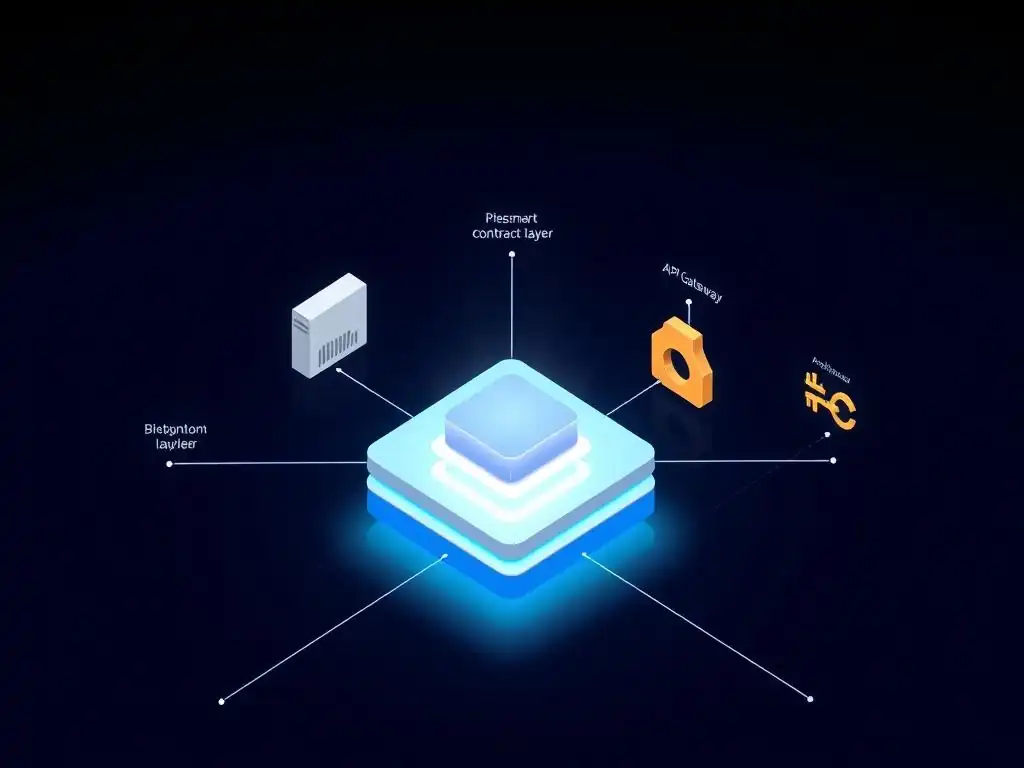
Building a robust and scalable DApp backend is an iterative process that requires careful planning and execution. Following a structured approach helps ensure that all critical aspects, from smart contract design to off-chain infrastructure, are addressed effectively. This step-by-step guide outlines the key phases in DApp backend architecture development.
This approach is not strictly linear and may involve revisiting previous steps as requirements evolve or new challenges arise. However, starting with a clear definition of functionality and progressively building out the components ensures a solid foundation for the DApp backend architecture.
Step 1: Define Your DApp's Functionality and Requirements
The initial step in DApp backend architecture development is to clearly define what your DApp will do, who its users are, and what problems it solves. This involves gathering detailed requirements, outlining core features, and identifying which parts of the application logic must be on-chain (e.g., asset ownership, core state changes requiring consensus) and which can or should be off-chain (e.g., user profiles, complex computations, data indexing, user interface).
This step also includes considering non-functional requirements such as expected user load, required transaction speed, security needs, and budget constraints (gas costs, infrastructure costs). A clear understanding of these requirements will heavily influence subsequent decisions about smart contract design, choice of blockchain, storage solutions, and the overall DApp backend architecture pattern.
Step 2: Design Your Smart Contracts and Data Model
Based on the defined on-chain requirements, design your smart contracts. This involves defining the state variables that will be stored on the blockchain, the functions that users or other contracts can call, and the events that will be emitted to signal state changes. Design the interactions between different contracts if your DApp uses multiple.
Simultaneously, design the data model for any data that will be stored off-chain, whether in decentralized storage or a traditional database used by the backend. Define the structure of this data and how it relates to the on-chain data (e.g., linking off-chain metadata for an NFT to its on-chain token ID via a hash). The design of the smart contracts and the off-chain data model are intrinsically linked in DApp backend architecture development.
Step 3: Choose Your Decentralized Storage Solution
With the data model defined and an understanding of what data needs to be stored off-chain, select the appropriate decentralized storage solution. Consider factors like the type of data (mutable vs. immutable), size, required availability guarantees, cost model (pay-per-use vs. pay-once), and ease of integration with your chosen blockchain and backend technologies.
If storing large, immutable files like media for NFTs, IPFS with a reliable pinning service or Arweave might be suitable. If storing smaller, potentially mutable data that doesn't need perpetual storage, other options or even a traditional database linked via on-chain hashes might be considered. This decision significantly impacts the data management aspect of the DApp backend architecture.
Step 4: Implement Your APIs and Oracles
Develop the off-chain backend services that will handle user interactions, process data, and communicate with the blockchain. This includes building APIs for the user interface to interact with, services to index data from the blockchain (e.g., listening for smart contract events), and logic for preparing and submitting transactions.
If your DApp requires external data, integrate with an oracle service. Choose a decentralized oracle network for critical data feeds. Implement the logic in your backend or smart contracts to interact with the chosen oracle, requesting data and handling the responses securely. This step is crucial for building the bridge between the decentralized and traditional parts of the DApp backend architecture.
Step 5: Deploy and Test Your DApp Backend
Deploy your smart contracts to a testnet first. Use tools like Truffle or Hardhat for deployment and migration management. Deploy your off-chain backend services to your chosen hosting environment (cloud servers, decentralized hosting, etc. ).
Conduct thorough testing across the entire DApp backend architecture. This includes unit tests for individual smart contracts and backend components, integration tests to ensure different parts communicate correctly, and end-to-end tests simulating user flows. Perform security audits on both smart contracts and the off-chain backend. Test scalability under simulated load. Only after rigorous testing should you consider deploying to a mainnet.
Monitoring and Maintaining Your DApp Backend
Deployment is not the end of DApp backend architecture development; it's the beginning of an ongoing process of monitoring, maintenance, and optimization. DApps operate in dynamic environments, with fluctuating network conditions, evolving user behavior, and constant security threats. Continuous monitoring and proactive maintenance are essential for ensuring the DApp remains performant, secure, and reliable.
This involves setting up systems to observe the health and performance of both the on-chain and off-chain components, being prepared to respond to issues, and regularly reviewing and updating the codebase and infrastructure. Neglecting maintenance can lead to degraded performance, security vulnerabilities, and eventual failure of the DApp.
Logging and Alerting for DApp Backend Health
Implementing comprehensive logging across all components of the DApp backend architecture is vital. Logs provide visibility into the application's behavior, helping diagnose errors, track user activity, and identify performance bottlenecks. Log important events such as transaction submissions, smart contract interactions, API calls, and errors.
Setting up an alerting system is equally important. Configure alerts for critical events, such as smart contract transaction failures, high error rates in backend services, unusual activity that might indicate a security issue, or performance degradation (e.g., slow API response times). Tools like Prometheus and Grafana can be used for monitoring metrics, while centralized logging platforms can help aggregate and analyze logs. Timely alerts allow the development team to react quickly to issues affecting the DApp backend architecture.
Performance Optimization and Tuning
Performance optimization is an ongoing task in DApp backend development. Regularly analyze performance metrics collected through monitoring. Identify bottlenecks in the off-chain backend, such as slow database queries, inefficient API endpoints, or issues with indexing blockchain data. Optimize these components to improve response times and throughput.
Review smart contract interactions from the backend. Are there opportunities to reduce gas usage by restructuring calls or optimizing on-chain logic? Can Layer 2 solutions be better utilized? Tuning the infrastructure hosting the backend services, such as adjusting server resources or optimizing database configurations, is also part of this process. Continuous performance tuning ensures the DApp backend architecture remains scalable and provides a smooth user experience even under increasing load.
Regular Security Audits and Updates
The security landscape for DApps is constantly evolving, with new vulnerabilities and attack vectors emerging. Regular security audits are essential for identifying potential weaknesses in both the smart contracts and the off-chain DApp backend architecture. Beyond initial audits, schedule periodic reviews, especially after significant code changes or feature additions.
Stay informed about common DApp security vulnerabilities and best practices. Promptly apply security patches and updates to all software components used in the backend infrastructure, including operating systems, libraries, and frameworks. If smart contracts are upgradeable, have a secure process for deploying updates to fix bugs or improve security. Maintaining a proactive security posture is crucial for protecting users and assets in the DApp backend architecture.
The Future of DApp Backend Architecture
The field of DApp backend architecture development is rapidly evolving, driven by advancements in blockchain technology, the emergence of new scaling solutions, and increasing demands for usability and performance. The future will likely see more sophisticated tools, standardized patterns, and greater abstraction of underlying blockchain complexities, making DApp development more accessible and powerful.
Emerging technologies are reshaping how DApps are built, pushing the boundaries of what's possible in decentralized applications. The evolution of decentralized backend development aims to address current limitations, improve efficiency, and enhance the user experience, paving the way for the next generation of Web3 applications.
Emerging Technologies and Trends
Layer 2 scaling solutions, such as Optimistic Rollups (e.g., Optimism, Arbitrum) and ZK-Rollups (e.g., zkSync, StarkNet), are fundamentally changing DApp backend architecture by moving most computation and state storage off the mainnet. The backend interacts with the Layer 2 network, which then batches transactions and settles them on Layer 1, drastically reducing gas costs and increasing transaction throughput to potentially thousands per second.
Decentralized Autonomous Organizations (DAOs) are influencing backend control and governance, allowing communities to manage DApp parameters or even backend upgrades. Serverless computing and edge computing are being explored for deploying off-chain backend components, leveraging decentralized infrastructure networks to improve resilience and reduce latency. Account abstraction aims to simplify user onboarding by decoupling wallet addresses from private keys, impacting how DApps handle authentication and transaction signing in the backend.
The Evolution of Decentralized Backend Development
Development tools are becoming more mature and specialized for DApp backend architecture development. We see better integrated development environments, more powerful debugging tools, formal verification tools becoming more accessible, and frameworks that abstract away some of the blockchain interaction complexities.
Standardized patterns are emerging for common DApp backend challenges, such as indexing blockchain data efficiently, managing off-chain state synchronized with on-chain events, and building secure API gateways. As the Web3 ecosystem matures, interoperability between different blockchains becomes more important, requiring backend strategies that can interact with multiple chains or leverage cross-chain communication protocols. The focus is shifting towards building more user-friendly, performant, and interconnected decentralized applications, with DApp backend development playing a pivotal role.
Conclusion: Mastering DApp Backend Architecture for the Next Generation of Decentralized Applications
Building successful decentralized applications requires more than just writing smart contracts. A robust, scalable, and secure DApp backend architecture is crucial for providing a functional user interface, handling off-chain logic, integrating with external services, and ensuring a positive user experience. The complexity of DApp backend architecture development lies in effectively combining the principles of blockchain technology with best practices from traditional software engineering.
By understanding the core components – smart contracts, decentralized storage, APIs, and oracles – and applying key architectural considerations like scalability, security, and choosing the right tools and patterns, developers can build backends that unlock the full potential of their DApps. The step-by-step approach, combined with continuous monitoring and maintenance, is essential for navigating the challenges of this dynamic field.
Key Takeaways for Building Robust and Scalable DApp Backends
Developing a DApp backend architecture demands attention to detail across multiple fronts. Prioritize security from day one, understanding that vulnerabilities can exist both on-chain and off-chain. Design for scalability by leveraging off-chain infrastructure effectively and utilizing Layer 2 solutions for on-chain interactions. Ensure reliability through robust error handling, monitoring, and redundant systems where necessary.
Choose development tools and architectural patterns that fit the project's complexity and team structure, whether a simpler monolithic design or a more complex microservices approach. Always employ rigorous testing and security audits. Remember that DApp backend architecture development is an ongoing process of optimization and adaptation to the evolving Web3 landscape.
The Potential of DApp Backend Development in Shaping the Future of Web3
The quality of DApp backend architecture directly impacts the usability and adoption of decentralized applications. As DApps move beyond niche use cases towards mainstream applications, the backend will become increasingly important in providing performance, features, and user experiences comparable to traditional web applications, while retaining the core benefits of decentralization.
Mastering DApp backend development is key to building the next generation of decentralized applications that can scale to millions of users, interact seamlessly with the real world, and deliver on the promise of Web3. The continuous innovation in this space is not just about writing better code; it's about designing systems that are resilient, efficient, and capable of powering a decentralized future.
Frequently Asked Questions
What are the key components of a robust DApp backend architecture?
The core components typically involve a blockchain network for data storage and transaction processing, smart contracts to define the application's logic, and an API layer facilitating communication between the frontend and the blockchain.
How does blockchain technology contribute to the security of a DApp backend?
Blockchain provides immutable and transparent data storage, making it difficult to tamper with the backend data. Decentralization also reduces the risk of a single point of failure or attack, enhancing overall security.
What are some popular blockchain platforms used for DApp backend development?
Ethereum is a widely used platform due to its smart contract capabilities and large developer community. Other options include EOS, Polkadot, and Solana, each offering unique features and advantages.
What considerations are important when scaling a DApp backend?
Scaling solutions often involve layer-2 scaling solutions (like rollups), sharding, or off-chain data storage to handle increased transaction volume and data load. Careful planning is crucial for performance and cost-effectiveness.
What are the regulatory considerations when developing a DApp backend?
Depending on the DApp's functionality, regulatory compliance may involve issues related to data privacy, security, and financial regulations. Staying informed about evolving blockchain regulations is essential.
Final Reflection: Building Blocks of Decentralized Futures
The exploration of DApp backend architecture development reveals more than just lines of code; it unveils the foundational structure upon which decentralized applications, and potentially entire future economies, will be built. Understanding these architectures is not merely an academic exercise, but a crucial step towards shaping a more transparent, secure, and equitable digital landscape. The principles discussed, from smart contract integration to data storage solutions, are actively being implemented and refined, impacting everything from decentralized finance to supply chain management.
The ongoing evolution of DApp backend architecture profoundly influences the cultural and social landscape by democratizing access to technology and empowering individuals to participate in new economic models. This shift towards decentralization resonates deeply with the desire for greater autonomy and control over our digital lives. The future is already here – it's just not evenly distributed.
- William Gibson. This quote perfectly encapsulates the current state of DApp development; while the potential is immense, widespread adoption hinges on simplifying the complexities and ensuring accessibility for all.
As you navigate the ever-evolving world of decentralized applications, remember that you are not just a user or a developer, but a builder of the future. Consider how you can contribute to the development of robust, secure, and user-friendly DApp backends. Reflect on the principles discussed and apply them to your own projects, fostering innovation and driving the adoption of decentralized technologies. The future of the web is being written now, and your contribution is vital.
Unleash Your DApp's Potential!
Thank you for exploring the architecture of decentralized application backends. You now have a clearer understanding of what it takes to build a robust and scalable DApp. It's time to turn that knowledge into action and take your development to the next level.
Are you ready to create something innovative? Here’s how to get started:
- Outline your DApp's architecture: Using what you've learned, sketch out the main components and their connections. Don’t hesitate to think big and plan for growth!
- Explore open-source frameworks for DApp backends: Discover tools that fit your project’s needs, experiment with different technologies, and contribute to the community!
- Share this article with fellow developers: Help spread the knowledge and foster collaboration—an essential part of blockchain innovation.
What is the first architectural decision you will make for your next DApp? Share your ideas in the comments below!
Leave a Reply