
Beyond Smart Contracts: Exploring Advanced Architectures for Future DApp Development

Welcome to Blockchain Trends, your portal to understanding the revolutionary potential of blockchain beyond the headlines!
Dive into the fascinating world of decentralized innovation where we explore the cutting-edge applications reshaping industries. Are you ready to unlock the secrets of the blockchain decentralized application architecture future? This is where we delve into advanced architectural approaches, moving beyond simple smart contracts to discover how to build truly scalable and robust DApps. Prepare to explore the next generation of decentralized systems and discover the future they unlock!
- Layered Architectures for Scalable DApps: Addressing Blockchain Bottlenecks
-
Frequently Asked Questions
- What are some key architectural advancements beyond traditional smart contracts for DApp development?
- How is blockchain technology being applied beyond cryptocurrencies in enterprise settings?
- What role does regulation play in shaping the future of blockchain decentralized application architecture?
- How do decentralized systems contribute to the transformative potential of blockchain technology?
- What does the future hold for blockchain decentralized application architecture?
- Final Reflection: Architecting the Decentralized Tomorrow
- Ignite Your DApp Innovation!
Layered Architectures for Scalable DApps: Addressing Blockchain Bottlenecks
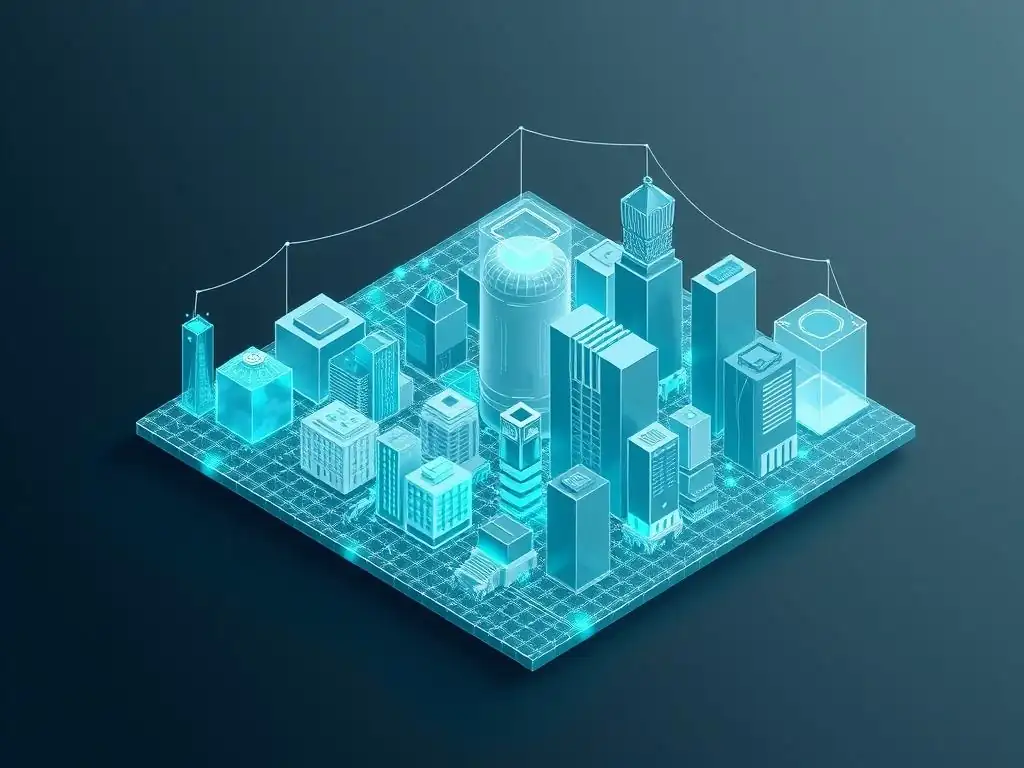
The inherent limitations of Layer-1 blockchains, particularly concerning transaction throughput and latency, pose significant challenges for building scalable and performant decentralized applications (DApps). As the demand for DApps grows, relying solely on the base layer often leads to network congestion, high transaction fees (gas costs), and slow confirmation times. This bottleneck stifles adoption and limits the complexity and interactivity of DApps, making advanced use cases like high-frequency trading, gaming, or mass-market social applications impractical on many popular blockchains. Overcoming these limitations is crucial for realizing the full potential of the blockchain decentralized application architecture future.
Layered architectures offer a promising solution by offloading a significant portion of transaction processing and computation from the main blockchain (Layer-1) to secondary layers (Layer-2). This approach maintains the security and decentralization guarantees of the underlying blockchain while vastly increasing transaction capacity and reducing costs. By processing transactions off-chain and only periodically settling batched results or proofs back onto Layer-1, these architectures enable DApps to handle millions of users and transactions, paving the way for widespread adoption and more sophisticated functionalities that were previously unfeasible on the base layer alone.
The Benefits of Layer-2 Solutions for DApp Performance
Layer-2 solutions dramatically enhance DApp performance primarily through increased transaction throughput and reduced costs. By processing transactions off-chain, these layers can achieve speeds orders of magnitude greater than typical Layer-1 blockchains. For instance, while Ethereum's mainnet handles around 15-30 transactions per second (TPS), Layer-2 solutions like optimistic and zk-rollups aim for thousands or even tens of thousands of TPS. This massive increase in capacity is essential for supporting complex DApps with high user interaction, such as decentralized exchanges handling frequent trades or gaming platforms requiring rapid state updates.
Furthermore, processing transactions off-chain significantly lowers transaction fees. The cost of executing a transaction on a Layer-2 is often a fraction of the cost on Layer-1 because the overhead of reaching global consensus for each individual transaction is avoided. Instead, only the cost of submitting a batch of transactions or a validity proof to the Layer-1 chain is incurred, which is then amortized across all transactions in the batch.
This cost reduction makes microtransactions viable and improves the overall economic efficiency of DApps, lowering the barrier to entry for users and enabling new business models within the blockchain ecosystem. The evolution towards these efficient layered architectures is a key component of the blockchain decentralized application architecture future.
Examples of Layer-2 Technologies: Optimistic Rollups, zk-Rollups, Validium
Optimistic Rollups operate by assuming transactions are valid by default and only running computation if challenged. Transaction data is posted to Layer-1, ensuring data availability and security, but execution happens off-chain. If a transaction is suspected of being fraudulent, a "fraud proof" is submitted to Layer-1, triggering the re-execution of the transaction to verify its validity. Examples include Arbitrum and Optimism, which have enabled significantly cheaper and faster transactions for popular DApps, with costs often less than 1% of Layer-1 fees and confirmation times reduced from minutes to seconds.
ZK-Rollups (Zero-Knowledge Rollups) use zero-knowledge proofs (like SNARKs or STARKs) to verify the validity of off-chain state transitions. Instead of posting transaction data directly to Layer-1, a cryptographic proof summarizing the validity of a batch of transactions is submitted. This proof is computationally intensive to generate but very quick for Layer-1 to verify.
Since validity is proven upfront, there's no need for a challenge period, leading to faster finality than optimistic rollups. zkSync and StarkNet are prominent examples, demonstrating throughput potential exceeding 2,000 TPS and offering strong security guarantees rooted in cryptography, contributing significantly to the capabilities of the blockchain decentralized application architecture future.
Validium is similar to ZK-Rollups in that it uses zero-knowledge proofs for validation, but it differs in how data availability is handled. Validium chains keep transaction data off-chain, often relying on a centralized or committee-based data availability solution. This provides even higher throughput and lower costs than ZK-Rollups because the cost of posting data to Layer-1 is eliminated.
However, this comes at the trade-off of a different data availability assumption; if the data availability provider fails, users might not be able to exit the Layer-2. Examples include Polygon zkEVM (in certain modes) and Immutable X, tailored for specific use cases like high-volume gaming or enterprise applications where trust assumptions about data availability might be acceptable for massive scale.
Building DApps with Layer-2: Practical Considerations
Developing DApps on Layer-2 introduces new complexities and considerations for developers. While Layer-2 solutions offer performance benefits, they often require adapting existing smart contract code or utilizing specific Layer-2 SDKs and frameworks. Developers need to understand the nuances of the chosen Layer-2 technology, including how state is managed off-chain, how transactions are sequenced and batched, and the procedures for depositing and withdrawing assets between Layer-1 and Layer-2. This involves learning new tools and potentially refactoring significant portions of a DApp's codebase, requiring a different development mindset compared to building solely on Layer-1.
Furthermore, developers must account for the security models and potential risks inherent in Layer-2 solutions. While Layer-2s inherit Layer-1 security, they introduce their own attack vectors related to fraud proofs, validity proofs, data availability, and operator behavior. Choosing a mature and audited Layer-2 platform is crucial.
Developers also need to consider the user experience implications, such as bridging assets between layers, which can sometimes involve delays (e.g., challenge periods in optimistic rollups) or require users to interact with multiple layers. Designing intuitive interfaces that abstract away these complexities is key to ensuring a smooth user experience for DApps built on these advanced blockchain decentralized application architecture future models.
Frequently Asked Questions
What are some key architectural advancements beyond traditional smart contracts for DApp development?
Architectural advancements include off-chain computation using solutions like Truebit, data storage solutions like IPFS and Arweave, and layer-2 scaling solutions such as rollups.
How is blockchain technology being applied beyond cryptocurrencies in enterprise settings?
Enterprises are leveraging blockchain for supply chain management, identity verification, and secure data sharing to improve efficiency and transparency. This is happening across industries.
What role does regulation play in shaping the future of blockchain decentralized application architecture?
Regulation impacts DApp development by influencing compliance requirements, legal frameworks, and user protection measures. It can either hinder or foster innovation.
How do decentralized systems contribute to the transformative potential of blockchain technology?
Decentralized systems ensure trustless transactions, transparency, and resistance to censorship, fostering a more equitable and secure digital environment for DApps.
What does the future hold for blockchain decentralized application architecture?
The future involves greater scalability, enhanced interoperability, and the widespread adoption of DApps across various sectors, driving innovation and reshaping traditional industries.
Final Reflection: Architecting the Decentralized Tomorrow
The exploration of advanced architectures for decentralized applications (DApps) is not merely an academic exercise; it's a critical imperative for shaping the future of the internet and beyond. The limitations of current smart contract-centric models demand innovative solutions, and the architectures discussed – from layer-2 scaling to inter-blockchain communication – represent the building blocks of a more robust, scalable, and user-friendly decentralized ecosystem.
This journey into the future of DApp development has underscored the profound influence of blockchain technology on our evolving digital landscape. The potential for truly decentralized and transparent systems is immense, but realizing this potential requires a commitment to continuous innovation and a willingness to move beyond established paradigms. The best way to predict the future is to create it.
- Peter Drucker. This quote perfectly encapsulates the spirit of DApp development; we are not passive observers, but active architects of a decentralized future.
As we stand on the cusp of a new era of decentralized applications, I invite you to consider the role you can play in shaping this future. Reflect on the architectures we've explored, the challenges we've identified, and the opportunities that lie ahead. How can you contribute to building more scalable, secure, and user-friendly DApps? The future of decentralization is not predetermined; it is being written now, by each of us. Let us strive to build a future where technology empowers individuals and fosters a more equitable and transparent world.
Ignite Your DApp Innovation!
Thank you for exploring the future of decentralized application development. We hope you gained valuable insights into advanced architectures and how they can transform your projects. Now, it's time to put that knowledge into action.
Consider experimenting with new architectural patterns for your next DApp prototype. Moving beyond traditional smart contracts opens up exciting new possibilities.
You can also explore open-source DApp projects on platforms like GitHub and contribute your expertise to those utilizing innovative architectures. Sharing knowledge and collaborating accelerates progress in the field.
Finally, share this article with fellow developers and engage in discussions about the future of DApp design on social media platforms such as X, Twitter, LinkedIn, and others.
What innovative DApp architecture will you explore first, and how do you think it will impact the blockchain landscape?
Leave a Reply