
Building a DAO Dashboard: FrontEnd Tools for Decentralized Organizations


Welcome to Blockchain Trends, your compass navigating the ever-evolving world of decentralized technology! Are you ready to unlock the potential of blockchain beyond just cryptocurrency?
This week, we delve into the heart of decentralized governance, exploring the essential elements of DAO dashboard development tools. Discover how these instruments are revolutionizing organizational transparency and member engagement. What are the key front-end technologies shaping the future of DAOs, and how can you leverage them to build a thriving decentralized community? Let's find out...
Building a DAO Dashboard: Front-End Tools for Decentralized Organizations
- Introduction: The Rise of DAO Dashboards and Front-End Development
- Key Considerations for DAO Dashboard Development Tools
- Top Front-End Frameworks and Libraries
- Essential UI/UX Components and Libraries
- Connecting Your DAO Dashboard to the Blockchain: API Integration
- Deploying Your DAO Dashboard: Best Practices
- Case Study: Examples of Successful DAO Dashboards
- Future Trends in DAO Dashboard Development
- Conclusion: Empowering DAOs with Effective Front-End Tools
-
Frequently Asked Questions
- What are the primary benefits of using a DAO dashboard?
- Which frontend frameworks are commonly used for DAO dashboard development?
- What kind of data sources are typically integrated into a DAO dashboard?
- What security considerations are important when developing a DAO dashboard?
- How can a DAO dashboard contribute to improved governance within the organization?
- Final Reflection: Empowering Decentralized Governance
- Dive Deeper into DAO Governance!
Introduction: The Rise of DAO Dashboards and Front-End Development
Understanding Decentralized Autonomous Organizations (DAOs)
Decentralized Autonomous Organizations (DAOs) represent a paradigm shift in organizational structure, leveraging blockchain technology to enable transparent, community-governed decision-making. Unlike traditional hierarchical entities, DAOs operate based on rules encoded in smart contracts, executed automatically on a blockchain. This structure allows participants to vote on proposals, manage shared funds, and contribute to the organization's direction without relying on central authority or intermediaries. The core principle is distributing power and responsibility across its members, typically token holders, fostering a more democratic and censorship-resistant model.
The growth of the decentralized finance (DeFi) space and other blockchain-based ecosystems has fueled the proliferation of DAOs. As of late 2023/early 2024, the total value locked (TVL) within DAO treasuries collectively amounts to billions of dollars, with estimates often exceeding $10 billion across major protocols like Uniswap, Aave, and Compound. Managing such significant capital and coordinating diverse communities requires robust interfaces. This necessity highlights the critical role of effective DAO dashboard development tools, which serve as the primary interaction layer between DAO members and the underlying smart contracts and data.
The Importance of User-Friendly DAO Dashboards
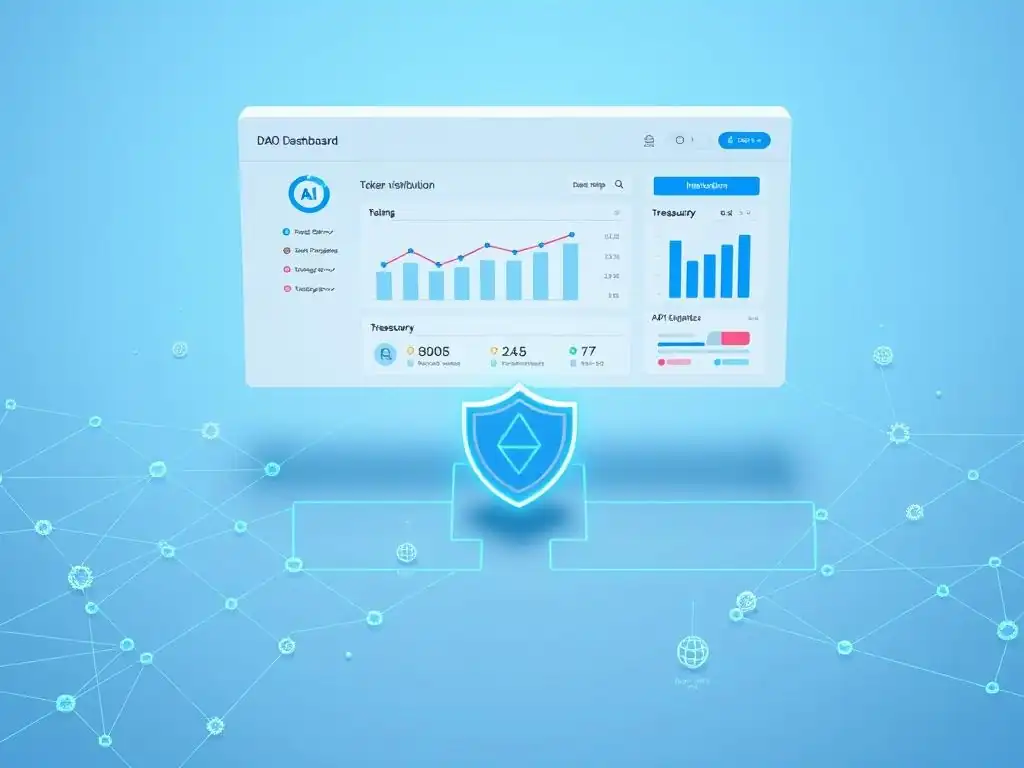
While the backend logic of a DAO resides securely on the blockchain, its accessibility and effectiveness hinge significantly on the quality of its front-end interface – the DAO dashboard. A well-designed dashboard translates complex blockchain data into intuitive visuals, allowing members to easily track treasury balances, monitor active proposals, understand voting mechanics, and participate in governance. Without a user-friendly interface, even the most sophisticated DAO smart contracts remain inaccessible to the majority of potential participants, hindering engagement and decentralization.
Poor user experience is a major barrier to DAO participation. Complex interfaces, slow loading times, and confusing data presentation can deter members from proposing ideas, voting on critical issues, or even understanding the current state of the organization.
Estimates suggest that voter participation rates in many large DAOs often hover between 5% and 20% of eligible token holders, a figure that could potentially improve with more intuitive interfaces. Therefore, investing in quality DAO dashboard development tools and prioritizing UI/UX design is not merely about aesthetics; it's fundamental to the DAO's operational efficiency, governance participation, and overall success in achieving its decentralized goals.
Choosing the Right Front-End Tools for Your DAO Dashboard
Selecting the appropriate front-end tools is a foundational step in building a successful DAO dashboard. The choice impacts development speed, application performance, scalability, maintainability, and the overall user experience. Developers must consider various factors, including the project's complexity, the team's expertise, the need for real-time data updates, and seamless integration with blockchain networks and smart contracts. The ecosystem of web development tools is vast, but specific requirements for interacting with decentralized protocols narrow down the most effective options.
Effective DAO dashboard development tools should facilitate easy connection to blockchain nodes (like Ethereum, Polygon, etc. ), handle asynchronous operations common in blockchain interactions, and provide robust state management for dynamic data. Furthermore, the tools should support creating responsive interfaces that work across different devices and screen sizes, given that DAO members may access the dashboard from desktops, tablets, or mobile phones. Making informed decisions early in the development process regarding frameworks, libraries, and APIs is crucial for laying a solid, scalable foundation for the DAO's public face.
Key Considerations for DAO Dashboard Development Tools
Blockchain Data Integration
Integrating blockchain data is perhaps the most critical function of a DAO dashboard, requiring robust DAO dashboard development tools. This involves fetching information directly from the blockchain, such as treasury balances held in various tokens (e.g., ETH, stablecoins, native governance tokens), current and past proposals, voting results, and individual member token holdings or voting power. Accessing this data typically involves interacting with blockchain nodes using specialized libraries that handle the low-level communication protocols. The dashboard must be able to query smart contract states and historical transaction logs efficiently.
The volume and frequency of data updates can be significant. For a large DAO with thousands of members and frequent proposals, the dashboard might need to process hundreds or thousands of past proposals and millions of on-chain events (like token transfers or vote casts) to provide a complete history.
Efficient data fetching and processing are paramount to prevent the dashboard from becoming slow or unresponsive. This often requires careful selection of libraries and potentially using indexing solutions like The Graph to query structured data instead of raw blockchain logs, drastically improving query performance from minutes down to seconds or milliseconds for complex data sets.
In the context of a DAO dashboard, "authentication" primarily refers to connecting a user's blockchain wallet (like MetaMask, WalletConnect, etc.) to the application. Unlike traditional web applications using email/password, users are identified by their public wallet address. The DAO dashboard development tools must support secure and seamless wallet connection flows, allowing the application to read the user's address and potentially sign transactions or messages on their behalf (with explicit user permission). This process confirms the user's identity within the decentralized ecosystem.
Authorization, then, determines what actions the connected user is allowed to perform based on their wallet address and associated on-chain data (e.g., token balance, governance rights). A user might be authorized to view proposals if they hold any governance tokens, propose a new initiative only if they hold a minimum threshold of tokens (e.g., 1,000 UNI for Uniswap, 25,000 AAVE for Aave), or vote only if they haven't already voted on a specific proposal.
The front-end tools must be capable of querying the relevant smart contracts or on-chain data to check these permissions dynamically and update the UI accordingly, enabling or disabling buttons and features based on the user's authorization level.
Real-Time Data Updates and Performance Optimization
Providing users with up-to-the-minute information is vital for a DAO dashboard. Governance decisions, treasury movements, and voting progress happen on the blockchain, and users expect the dashboard to reflect these changes quickly. Achieving near real-time data updates requires leveraging blockchain event listeners or polling mechanisms to detect changes in smart contract states or new blocks being mined. When a new proposal is submitted, a vote is cast, or a transaction confirms, the dashboard should ideally update within seconds to provide an accurate view of the DAO's current status.
Performance optimization is closely linked to real-time updates. Constantly fetching large amounts of data can quickly overwhelm the user's browser or backend infrastructure (if used). Effective DAO dashboard development tools and techniques are needed to manage this.
This includes implementing strategies like data caching, lazy loading of content, optimizing data queries (e.g., fetching only necessary fields), and using efficient data structures in the front-end state management. Minimizing the number and size of requests to the blockchain or indexing layers is crucial to ensure the dashboard remains fast and responsive, even under heavy load or with a large amount of historical data. A well-optimized dashboard should load key governance information typically within 3-5 seconds on a reasonable internet connection.
Security Best Practices
While the core security of the DAO's logic resides in audited smart contracts on the blockchain, the front-end dashboard is not immune to security risks. The dashboard is the user's interface for initiating sensitive actions like voting or executing treasury transactions. Therefore, securing the front-end is paramount. This involves protecting against common web vulnerabilities such as Cross-Site Scripting (XSS) and Cross-Site Request Forgery (CSRF). Input validation, proper sanitization of data fetched from potentially untrusted sources (though blockchain data is generally trustworthy, external APIs or data sources might not be), and using secure coding practices are essential.
Furthermore, the front-end must handle wallet interactions securely. This means never handling private keys, always relying on the user's wallet extension or mobile app to sign transactions, and clearly communicating to the user what transaction they are being asked to approve before they sign it. Implementing content security policies (CSP) can help mitigate the risk of injecting malicious scripts.
Regularly auditing the front-end codebase and dependencies for vulnerabilities is also a critical step. Although the front-end cannot compromise the smart contracts directly, a compromised dashboard could potentially phish users or trick them into signing malicious transactions, underscoring the need for rigorous security measures in DAO dashboard development tools and practices.
Top Front-End Frameworks and Libraries
React.js
React.js, a JavaScript library for building user interfaces developed by Facebook (now Meta), is one of the most popular choices for building complex web applications, including DAO dashboards. Its component-based architecture allows developers to build encapsulated pieces of UI and manage their state efficiently. This modularity simplifies the development of complex interfaces required for displaying diverse DAO information, from detailed proposal pages to interactive voting interfaces and treasury visualizations. Its large ecosystem and extensive community support mean a wealth of resources, tutorials, and third-party libraries are available.
The declarative nature of React makes it easier to reason about how the UI will behave in response to data changes, which is particularly useful when dealing with the dynamic and often asynchronous nature of blockchain data. Many prominent DApps and DAO dashboards have been built using React, demonstrating its capability and suitability for this domain.
Its performance is generally strong, especially when combined with techniques like virtual DOM diffing, which minimizes direct manipulation of the browser's DOM, leading to faster updates. The flexibility of React allows developers to pick and choose other libraries for routing, state management, and blockchain interaction, tailoring the tech stack to specific project needs.
React.js Benefits
React offers several key benefits that make it a leading choice among DAO dashboard development tools. Its component reusability significantly speeds up development time; common UI elements like buttons, data tables, or proposal cards can be built once and used throughout the dashboard. The predictability of its unidirectional data flow simplifies debugging and understanding how data changes affect the UI. React's strong community provides access to numerous open-source components and libraries, reducing the need to build everything from scratch.
Moreover, React Native allows developers to potentially share a significant portion of their codebase if they decide to build a native mobile application for the DAO dashboard in the future, offering a path to cross-platform development. The vast talent pool of developers proficient in React also makes it easier for DAO projects to find and hire contributors. Its robust ecosystem includes powerful developer tools for debugging and performance profiling, further enhancing the development workflow for building sophisticated DAO dashboards.
React.js Libraries for Blockchain Interaction
Integrating a React front-end with blockchain functionality requires specific libraries. web3-react is a popular library that simplifies connecting various wallet providers (MetaMask, WalletConnect, etc.) to a React application and managing the connection state. It abstracts away much of the complexity involved in handling different wallet types and network changes.
Another essential library is ethers.js or web3.js, which are JavaScript libraries for interacting with the Ethereum blockchain. While web3.js has been around longer, ethers.js is often preferred in modern development for its cleaner API, better documentation, and focus on security (e.g., explicit signing). These libraries allow the React application to call smart contract functions, send transactions, listen for events, and query blockchain data. Libraries like wagmi provide a more hooks-based approach specifically tailored for React, built on top of ethers.js, further simplifying blockchain interactions within React components. Using these specialized libraries alongside React forms a powerful combination for DAO dashboard development tools.
Vue.js
Vue.js is another progressive JavaScript framework widely used for building user interfaces. Known for its approachability, performance, and versatility, Vue can be adopted incrementally. It can serve as a library for adding interactive elements to existing pages or as a full-fledged framework for building complex single-page applications like DAO dashboards. Its template syntax is easy to understand, and its component system is powerful yet simpler to grasp for many developers compared to React or Angular.
Vue's ecosystem includes official libraries for routing ( Vue Router) and state management ( Pinia or Vuex), providing a cohesive development experience out-of-the-box. This integrated approach can sometimes lead to faster setup and development cycles, especially for teams already familiar with the Vue way of doing things. Performance is generally excellent, and its reactivity system efficiently updates the DOM when data changes. Vue's flexibility allows it to be easily integrated with various backend services and blockchain interaction libraries, positioning it as a strong candidate among DAO dashboard development tools.
Vue.js Advantages
Vue.js offers several advantages for building DAO dashboards. Its gentle learning curve makes it accessible to developers relatively new to front-end frameworks. The official tooling, like Vue CLI and DevTools, provides a smooth development experience with features like hot-reloading and component inspection. Vue's reactivity system is highly effective and often requires less boilerplate code compared to other frameworks for managing state updates.
The framework is also known for its excellent documentation, which is comprehensive and easy to follow. Vue's performance is competitive, and its bundle sizes are often smaller than those of Angular or even some React setups, leading to faster initial load times – an important factor for user retention. Its adaptability allows developers to use it for small components or large-scale applications, making it suitable for DAOs of varying sizes and complexity.
Vue.js Plugins for Blockchain Development
Integrating Vue.js with blockchain networks can be achieved using various libraries and plugins. Standard libraries like ethers.js and web3.js are fully compatible with Vue applications and are used to connect to wallets and interact with smart contracts. Developers can integrate these libraries into Vue components or use Vue's state management solutions ( Pinia, Vuex) to handle the blockchain connection state and data.
Specific plugins or community packages designed for Vue and blockchain interaction are also available, though the ecosystem might be slightly smaller than React's wagmi or web3-react. Developers often build custom composables (in Vue 3) or mixins (in Vue 2) to encapsulate blockchain logic and make it reusable across components. Using a wallet connection library like web3modal (which supports Vue) or integrating WalletConnect directly allows users to connect various wallet types seamlessly within the Vue-based DAO dashboard.
Angular
Angular, a comprehensive framework developed by Google, is designed for building large-scale, enterprise-grade applications. It provides a structured and opinionated approach to front-end development, including features like routing, state management, and HTTP client functionalities built into the core framework. This all-in-one nature can be advantageous for large DAO projects requiring a standardized architecture and long-term maintainability.
Angular uses TypeScript, a superset of JavaScript that adds static typing. This adds a layer of robustness, catching errors early in the development phase, which is particularly beneficial for complex applications like DAO dashboards where data accuracy and type safety are important. Its component-based architecture and dependency injection system promote modularity and testability. While often perceived as having a steeper learning curve than React or Vue, Angular's comprehensive feature set and strong structure appeal to teams prioritizing scalability and maintainability for extensive DAO dashboard development tools.
Angular's Strengths
Angular's main strengths lie in its comprehensive feature set and opinionated structure. It provides solutions for many common front-end challenges out-of-the-box, reducing the need to select and integrate numerous third-party libraries for core functionalities. This leads to more consistency across large codebases and simplifies collaboration within larger development teams. The use of TypeScript significantly improves code quality and maintainability, especially as the application grows.
Angular's command-line interface (CLI) is powerful, facilitating project creation, component generation, testing, and deployment with ease. Its performance is robust, particularly for complex applications, and features like change detection optimization contribute to efficient updates. For DAOs planning extensive dashboards with numerous features and a long development roadmap, Angular's structured approach and scalability features can be a significant advantage among the available DAO dashboard development tools.
Angular Modules for Blockchain Integration
Integrating Angular with blockchain requires leveraging JavaScript libraries like ethers.js or web3.js within the Angular application's services or components. Angular's service-oriented architecture is well-suited for encapsulating blockchain interaction logic. A dedicated Angular service can handle wallet connections, smart contract interactions, and data fetching from the blockchain, which can then be injected into various components that need access to this functionality.
While there aren't as many Angular-specific blockchain modules as there are React libraries like wagmi, the standard JavaScript libraries integrate seamlessly. Developers use Angular's dependency injection to provide instances of ethers.js or web3.js providers and signers throughout the application. Wallet connection libraries like web3modal can also be integrated into Angular services to handle the multi-wallet connection flow. The structured nature of Angular encourages building reusable services for all blockchain interactions, leading to clean and maintainable code for DAO dashboard development.
Svelte
Svelte is a relatively new approach to building user interfaces compared to the established frameworks. Instead of running in the browser at runtime like React, Vue, or Angular, Svelte is a compiler that shifts the work to the build step. It compiles your components into highly efficient imperative code that directly updates the DOM, resulting in smaller bundle sizes and potentially better runtime performance. This makes Svelte an attractive option for building fast and lightweight DAO dashboards.
Svelte's syntax is clean and easy to learn, often requiring less boilerplate code than other frameworks. It provides built-in solutions for reactivity and state management (stores), reducing the need for external libraries for these core features. While its ecosystem is smaller than React's or Vue's, it is growing rapidly, and many standard JavaScript libraries are compatible. For DAOs prioritizing performance and a minimal front-end footprint, Svelte offers a compelling alternative among DAO dashboard development tools.
Svelte's Performance Benefits
Svelte's primary advantage lies in its performance. By doing more work at compile time, it produces highly optimized JavaScript code that runs very efficiently in the browser. This results in faster initial load times and smoother runtime performance, especially on lower-end devices or complex interfaces. Benchmarks often show Svelte applications having smaller bundle sizes and faster hydration times compared to applications built with virtual DOM frameworks.
For a DAO dashboard that might need to display large lists of proposals or complex data visualizations, Svelte's performance characteristics can lead to a noticeably snappier user experience. The framework's built-in reactivity is also very efficient, automatically updating the UI when state changes without the overhead of a virtual DOM. This focus on performance makes Svelte a strong contender for DAO dashboard development where speed is a key requirement.
Svelte Libraries for Blockchain Connectivity
Integrating Svelte with blockchain networks follows a similar pattern to other frameworks: using standard JavaScript libraries like ethers.js or web3.js. These libraries are framework-agnostic and can be used within Svelte components or managed using Svelte's built-in store system for application-wide state. A Svelte store can hold the blockchain connection state, the connected wallet address, and instances of the provider or signer.
Community-developed Svelte libraries or examples for wallet connection and blockchain interaction are emerging. Developers can create reusable Svelte components or modules that encapsulate the logic for connecting wallets (e.g., integrating web3modal) and interacting with specific smart contracts. While the dedicated Svelte+blockchain library ecosystem is less mature than React's, the compatibility with standard JavaScript libraries ensures that Svelte is a viable option for building feature-rich DAO dashboards.
Essential UI/UX Components and Libraries
Data Visualization Libraries
DAO dashboards often need to present complex data – treasury holdings across various assets, voting power distribution, historical proposal outcomes, or participation rates – in an easily digestible format. Data visualization libraries are essential DAO dashboard development tools for achieving this. Libraries like Chart.js, Recharts (popular in React), or D3.js (more low-level and powerful) allow developers to create various charts and graphs, such as pie charts for token distribution, bar charts for voting results, or line graphs for treasury value over time.
Effective data visualization can transform raw blockchain data into actionable insights for DAO members. Showing the distribution of votes on a proposal visually, or displaying the growth of the treasury balance over months, significantly enhances user understanding and engagement. Choosing a library that is compatible with the chosen front-end framework and offers the necessary chart types and customization options is crucial for building an informative and visually appealing DAO dashboard. Implementing interactive features like tooltips on hover or filtering data can further improve the user experience.
UI Component Libraries
Building a consistent and aesthetically pleasing user interface from scratch for every component is time-consuming. UI component libraries provide pre-built, styled components that follow established design principles, significantly accelerating the development process for DAO dashboards. Popular options include Material UI (for React, based on Google's Material Design), Ant Design (for React, Vue, and Angular), or Bootstrap (framework-agnostic CSS/JS). These libraries offer ready-to-use components like buttons, forms, tables, modals, navigation bars, and cards.
Using a UI component library ensures visual consistency across the dashboard and helps implement responsive design principles more easily. Many libraries are also actively maintained and accessibility-conscious, which are important considerations for a public-facing application. While customization might be required to match the specific branding of a DAO, starting with a solid component library foundation allows developers to focus more on the unique logic and data integration aspects of the DAO dashboard development.
State Management Solutions
Managing the state of a front-end application, especially one as dynamic and data-rich as a DAO dashboard, can become complex. State management solutions provide centralized ways to store and update application data, making it easier to track changes and ensure consistency across different components. For React, popular options include Redux, Zustand, or the built-in Context API. Vue applications often use Pinia (recommended for Vue 3) or Vuex (for Vue 2). Angular has its own service-based approach and libraries like NgRx.
Effective state management is crucial for handling data fetched from the blockchain (e.g., user's wallet address, token balances, list of proposals) and application-specific UI state (e.g., loading indicators, modal visibility). A well-structured state management approach prevents prop-drilling and makes the application's data flow predictable and easier to debug. Choosing the right state management solution depends on the chosen framework and the complexity of the DAO dashboard, but it is a fundamental part of building a maintainable application with effective DAO dashboard development tools.
Connecting Your DAO Dashboard to the Blockchain: API Integration
Web3.js
Web3.js is a collection of libraries that allow you to interact with an Ethereum node, or any EVM-compatible blockchain. It provides a JavaScript API to communicate with the blockchain using JSON RPC. Developers use Web3.js to fetch block information, interact with smart contracts (calling read functions or sending transactions), manage accounts, and listen for events. It was one of the earliest and most widely used libraries for building decentralized applications (DApps).
For a DAO dashboard, Web3.js would be used to perform actions like getting the current network ID, fetching a user's balance of a specific token by calling a standard ERC-20 contract function like balanceOf, or encoding data to interact with the DAO's governance smart contract to submit a vote or create a proposal. While powerful, its API can sometimes be less intuitive than newer alternatives, and handling asynchronous operations and error management requires careful implementation.
Ethers.js
Ethers.js is another comprehensive JavaScript library for interacting with the Ethereum blockchain, often considered a modern alternative to Web3.js. It focuses on security, simplicity, and conciseness, providing a clean API for wallet management, interacting with contracts, and handling blockchain data. Ethers.js is generally preferred in contemporary front-end development for DApps and DAO dashboards due to its improved developer experience and security features.
With Ethers.js, a DAO dashboard can easily connect to a user's wallet provider (like MetaMask), get the signer object to represent the connected account capable of sending transactions, and create contract instances to interact with the DAO's smart contracts using their Application Binary Interface (ABI) and address. Fetching historical events, such as past votes or proposal creations, is straightforward with Ethers.js, enabling the dashboard to display a complete history of DAO activity. Many modern DAO dashboard development tools and libraries build upon Ethers.js.
GraphQL
While Web3.js and Ethers.js interact directly with blockchain nodes (or via a provider like Infura or Alchemy), querying complex or historical blockchain data directly can be inefficient. GraphQL is a query language for APIs and a runtime for fulfilling those queries with your existing data. In the blockchain space, services like The Graph provide decentralized indexing protocols that use GraphQL to query blockchain data that has been organized and structured by "subgraphs."
Using GraphQL endpoints provided by indexing services allows DAO dashboards to fetch specific, filtered, and structured data much more efficiently than querying raw blockchain nodes. For instance, instead of fetching all transaction logs for a governance contract and manually filtering for vote events, a GraphQL query can directly request a list of votes for a specific proposal, including the voter address, vote choice, and voting power. This significantly improves the performance and development speed for complex data displays, making GraphQL a valuable part of the DAO dashboard development tools stack for many projects.
Using Blockchain APIs
Beyond direct node interaction and indexing protocols like The Graph, various blockchain APIs provide aggregated or specialized data services. These can include APIs for fetching token prices (e.g., CoinGecko, CoinMarketCap APIs), ENS (Ethereum Name Service) resolution, or even data from Layer 2 scaling solutions that might not be directly queryable via standard Layer 1 node RPCs.
Integrating these APIs allows a DAO dashboard to provide richer context and functionality. Displaying the USD value of the DAO's treasury assets requires price data from external APIs. Resolving 0x... addresses to human-readable ENS names improves usability. While relying on centralized APIs introduces a point of centralization, they are often necessary for providing a complete and user-friendly experience that goes beyond raw on-chain data. Developers must carefully consider the trade-offs and potential reliance on third parties when incorporating such APIs into their DAO dashboard development tools stack.
Deploying Your DAO Dashboard: Best Practices
Choosing a Hosting Platform
Once the DAO dashboard front-end is developed, it needs to be deployed to be accessible to DAO members. Choosing the right hosting platform is crucial for ensuring reliability, performance, and potentially decentralization. Traditional web hosting platforms like Netlify, Vercel, or AWS S3 (for static sites) are common choices for hosting the static front-end files. These platforms offer excellent performance via Content Delivery Networks (CDNs) and ease of deployment.
For DAOs prioritizing decentralization at every layer, hosting the front-end on decentralized storage networks like IPFS (InterPlanetary File System) is an increasingly popular option. Services like Pinata or Filebase simplify pinning IPFS content. While IPFS offers censorship resistance, ensuring consistent availability often requires multiple pinning services. The choice of platform should balance performance, cost, ease of management, and the DAO's commitment to decentralization, influencing the overall architecture enabled by the chosen DAO dashboard development tools.
Optimizing for Performance and Scalability
Front-end performance and scalability are critical for a DAO dashboard that might serve a large and geographically distributed community. Optimization techniques include code splitting (loading only the necessary JavaScript for a given page), lazy loading components and data, image optimization, and efficient caching strategies. Using a CDN ensures that users load assets from a server geographically close to them, reducing latency.
Scalability on the front-end primarily relates to handling increasing numbers of users and larger volumes of data fetched from the blockchain or APIs. Efficient state management, optimized data fetching logic (e.g., pagination for long lists), and careful use of resources prevent the dashboard from becoming slow or crashing under heavy load. The chosen front-end framework and libraries (DAO dashboard development tools) play a significant role here, as some are inherently more performant or provide better tools for optimization than others.
Monitoring and Maintaining Your DAO Dashboard
Deploying the dashboard is not the final step; ongoing monitoring and maintenance are essential. This includes monitoring application performance (e.g., load times, API response times), tracking errors (using services like Sentry), and monitoring uptime. Collecting user feedback is also vital for identifying usability issues or missing features.
Regular maintenance involves updating dependencies (frameworks, libraries, blockchain interaction libraries) to incorporate new features, performance improvements, and security patches. As the underlying blockchain ecosystem evolves (e.g., network upgrades, changes in smart contracts), the dashboard may need updates to remain compatible. A well-maintained dashboard ensures a reliable and positive experience for DAO members, encouraging continued participation and trust in the organization's governance process facilitated by the chosen DAO dashboard development tools.
Case Study: Examples of Successful DAO Dashboards
Analyzing the Front-End Architecture of Aragon
Aragon is a platform for creating and managing DAOs, and its client application provides a comprehensive interface for interacting with DAOs built on its protocol. Historically, the Aragon client has utilized React as its primary front-end framework. This choice allowed them to leverage React's component-based architecture to build a modular and scalable application capable of handling various DAO functionalities, from treasury management to voting and permissioning.
The Aragon client architecture demonstrates how React can be effectively used with libraries like Ethers.js or Web3.js for blockchain interaction. They likely employ a robust state management solution (potentially Redux or similar) to handle the complex state derived from multiple smart contracts and user interactions. Their approach to DAO dashboard development tools involves creating reusable components for common DAO actions and data displays, supporting a variety of modules that DAOs can plug into their organization. The focus on a flexible and extensible architecture reflects the diverse needs of the DAOs built on their platform.
Exploring the Technology Stack Behind Snapshot
Snapshot is a widely used off-chain gasless multi-governance portal that allows DAOs to vote on proposals without incurring transaction costs. While the votes are signed cryptographically using users' wallets, the tallying and proposal creation happen off-chain, with results often posted on IPFS. Snapshot's front-end provides a simple, intuitive interface for creating proposals, viewing active and past votes, and connecting wallets.
Snapshot's public architecture information suggests they primarily use standard web technologies, including React for the front-end. Their implementation focuses heavily on efficient data fetching and caching, given the volume of proposals and votes they handle across numerous DAOs. They integrate with various wallet connectors and likely use libraries like Ethers.js to handle the cryptographic signing of votes. The simplicity and speed of the Snapshot interface highlight how effective use of standard front-end DAO dashboard development tools, combined with smart architectural choices (like off-chain voting), can lead to a highly adopted and successful platform for DAO governance.
Future Trends in DAO Dashboard Development
The Rise of Decentralized Front-Ends
While DAOs operate on decentralized blockchains, their front-end dashboards are often hosted on traditional centralized cloud infrastructure. This creates a potential point of failure or censorship. A growing trend in DAO dashboard development is the move towards hosting the front-end itself on decentralized storage networks like IPFS, Arweave, or Swarm. Services are emerging that facilitate deploying and updating these decentralized front-ends.
Decentralized front-ends enhance the censorship resistance of the DAO by making the interface for interacting with the smart contracts resilient to takedowns of traditional hosting providers. While challenges remain regarding performance, caching, and ease of updates compared to centralized hosting, the philosophical alignment with decentralization is a strong driver. Future DAO dashboard development tools and best practices will increasingly incorporate strategies for building and maintaining front-ends that are distributed and resilient.
The Integration of AI and Machine Learning
The vast amount of data generated by DAO activity – proposals, discussions, votes, treasury movements – presents an opportunity for analysis using AI and machine learning. Future DAO dashboards could integrate AI-powered features to provide members with deeper insights. This might include summarizing long proposal discussions, identifying key trends in voting patterns, predicting potential outcomes of proposals based on historical data, or even flagging potentially malicious proposals based on predefined criteria.
Integrating AI/ML models would require significant data processing, likely off-chain, with the front-end dashboard serving as the interface to display these insights. While this trend is still nascent, the potential for AI to enhance transparency, participation, and decision-making within DAOs is significant. As AI tools become more accessible, their integration into DAO dashboard development tools will likely increase, providing members with more sophisticated analytical capabilities.
Cross-Chain Compatibility and Interoperability
As the blockchain ecosystem expands beyond a single dominant chain, DAOs are increasingly operating or holding assets across multiple networks (e.g., Ethereum, Polygon, Solana, Cosmos). Future DAO dashboards will need to support cross-chain compatibility, allowing members to view assets, proposals, and vote across different chains from a single interface. This requires integrating with multiple blockchain networks and potentially cross-chain bridges.
Developing cross-chain dashboards adds complexity, requiring DAO dashboard development tools and techniques capable of handling interactions with diverse blockchain APIs and data structures. Standards for cross-chain communication and governance are still evolving, but the demand for seamless multi-chain experiences will drive the development of front-end tools and architectures that can abstract away the underlying blockchain complexity, providing a unified view for DAO members regardless of the network their assets or proposals reside on.
Conclusion: Empowering DAOs with Effective Front-End Tools
Choosing the Right Tools
The success of a Decentralized Autonomous Organization hinges not only on its robust smart contracts but critically on its ability to engage and empower its members through a user-friendly interface. Building an effective DAO dashboard requires careful consideration and selection of the right front-end DAO dashboard development tools. Frameworks like React, Vue, Angular, or Svelte provide the structural foundation, each with its strengths regarding performance, developer experience, and ecosystem size.
Beyond the core framework, essential libraries for blockchain interaction (like Ethers.js or Web3.js), data visualization (e.g., Chart.js), UI components (e.g., Material UI), and state management are vital. The choice of tools should align with the project's specific needs, the development team's expertise, and the desired user experience. Prioritizing performance, security, and maintainability throughout the development process is paramount to creating a dashboard that truly empowers DAO members.
The Future of DAO Governance.
The evolution of DAO dashboard development tools is intrinsically linked to the future of DAO governance itself. As DAOs become more sophisticated, managing larger treasuries and governing increasingly complex protocols, the demands on their front-end interfaces will grow. Future dashboards will likely feature more advanced data analytics, enhanced cross-chain capabilities, greater integration with decentralized storage, and potentially AI-driven insights.
Ultimately, the goal of effective DAO dashboard development is to lower the barrier to participation, making governance accessible and intuitive for a wider audience. By leveraging the best available front-end tools and practices, developers can build dashboards that foster informed decision-making, increase voter turnout, and strengthen the decentralized nature of these innovative organizations, paving the way for more effective and resilient forms of digital coordination.
Frequently Asked Questions
What are the primary benefits of using a DAO dashboard?
A DAO dashboard provides transparency and accessibility to crucial DAO information, like proposals, voting results, and treasury balances. This fosters greater community engagement and informed decision-making.
Which frontend frameworks are commonly used for DAO dashboard development?
Popular choices include React, Vue.js, and Angular due to their component-based architecture and robust ecosystem of libraries and tools. These frameworks facilitate the creation of interactive and dynamic user interfaces.
What kind of data sources are typically integrated into a DAO dashboard?
Dashboards often pull data from blockchain explorers, smart contracts, and governance platforms. Integrating these sources allows for a comprehensive overview of the DAO's activities and state.
What security considerations are important when developing a DAO dashboard?
Prioritize data integrity and user authentication to prevent manipulation or unauthorized access. Implement secure coding practices and conduct thorough testing to mitigate potential vulnerabilities.
How can a DAO dashboard contribute to improved governance within the organization?
By visualizing key metrics and providing easy access to relevant information, dashboards empower members to participate more effectively in governance processes. This promotes more informed voting and a stronger sense of ownership.
Final Reflection: Empowering Decentralized Governance
The journey of DAO dashboard development is far from over; in fact, it's just beginning to shape the future of decentralized governance. The tools and techniques discussed throughout this article are not merely technical solutions, but rather, they are the building blocks for a more transparent, accessible, and ultimately, more democratic future for organizations worldwide. The ability to visualize and interact with DAO data in a meaningful way is crucial for fostering active participation and informed decision-making, making this area of development increasingly relevant in today's rapidly evolving digital landscape.
The impact of effective DAO dashboards extends far beyond the technical realm, influencing the very fabric of how we organize and collaborate. Witnessing the growth of DAOs and the increasing sophistication of the tools that empower them has been profoundly inspiring, reinforcing the belief that technology can truly serve as a catalyst for positive social change. The future is already here – it's just not evenly distributed.
- William Gibson. This quote resonates deeply, reminding us that the work of democratizing access to information and empowering decentralized decision-making is an ongoing process, requiring continuous innovation and collaboration.
Now, as you consider the possibilities presented by these DAO dashboard development tools, I invite you to reflect on your own role in shaping this decentralized future. How can you leverage these technologies to contribute to more transparent and equitable organizations? How can you empower others to participate more actively in the governance of the communities they belong to? The power to build a more decentralized and democratic world lies within each of us. Let us embrace this opportunity and work together to create a future where everyone has a voice.
Dive Deeper into DAO Governance!
Thanks for exploring the world of DAO dashboards with us! We hope this article empowered you with a better understanding of the frontend tools available to build effective and transparent decentralized organizations. Ready to take the next step?
Here's how you can put your newfound knowledge into action:
- Start building your own basic DAO dashboard! Experiment with the suggested frameworks and libraries to get hands-on experience. This is the most impactful way to truly understand the concepts.
- Share this article with fellow DAO enthusiasts and discuss your favorite tools. Collaborative learning is key!
- Contribute to open-source dashboard projects on GitHub. Help improve the tooling and contribute to the DAO ecosystem.
What innovative feature would you prioritize implementing in your dream DAO dashboard?
Leave a Reply