
Building Serverless DApps: Leveraging Decentralized Infrastructure for Scalability and Efficiency


Welcome to Blockchain Trends, your compass in the rapidly evolving world of decentralized innovation. Ready to unlock the true power of blockchain beyond the headlines?
Dive in to discover the profound impact of blockchain on various industries, from groundbreaking DeFi solutions to transformative enterprise applications. This week, we're exploring the revolution in serverless decentralized application development benefits, uncovering how this paradigm shift can unlock unprecedented scalability and efficiency. Intrigued? Read on to learn how you can leverage decentralized infrastructure to build the future.
- Introduction to Serverless DApps and Decentralized Infrastructure
-
The Benefits of Serverless Decentralized Application Development
- Key Advantages of Serverless DApp Architecture
- Enhanced Scalability with Serverless DApps: Handling Increased User Demand
- Cost Optimization: Reducing Infrastructure Expenses with Serverless Computing
- Increased Efficiency and Faster Development Cycles in DApp Creation
- Improved Security and Reliability through Decentralized Infrastructure
-
Core Components of a Serverless DApp Architecture
- Blockchain Integration: Connecting Serverless Functions to the Blockchain
- Serverless Functions as a Service (FaaS) for DApp Logic
- Decentralized Storage Solutions: IPFS, Arweave, and Swarm
- API Gateways for Secure and Efficient DApp Endpoints
- Oracles: Bridging the Gap Between On-Chain and Off-Chain Data
-
Serverless DApp Development: A Step-by-Step Guide
- Step 1: Defining Your DApp's Functionality and Use Case
- Step 2: Selecting the Right Blockchain Platform and Smart Contract Language
- Step 3: Designing and Implementing Serverless Functions for Core Logic
- Step 4: Integrating with Decentralized Storage for Data Persistence
- Step 5: Deploying and Testing Your Serverless DApp on a Testnet
- Step 6: Monitoring and Optimizing Your DApp's Performance
-
Use Cases for Serverless Decentralized Applications
- Decentralized Finance (DeFi) Applications Using Serverless Architecture
- Serverless Solutions for Supply Chain Management on Blockchain
- Gaming DApps: Enhancing Scalability and User Experience
- Identity Management and Verification Systems with Serverless Technology
- Decentralized Data Marketplace with Serverless Architecture
- Challenges and Considerations in Building Serverless DApps
- The Future of Serverless Decentralized Application Development
- Conclusion: Embracing Serverless for Scalable and Efficient DApps
-
Frequently Asked Questions
- What are the key benefits of using a serverless architecture for decentralized applications (DApps)?
- How does a serverless DApp differ from a traditional DApp in terms of infrastructure management?
- What are some common challenges associated with developing serverless DApps, and how can they be mitigated?
- How does leveraging decentralized infrastructure contribute to the scalability and efficiency of serverless DApps?
- What are some real-world use cases where serverless DApp development offers significant advantages?
- Final Reflection: Embracing the Decentralized Future of Serverless
- Ignite Your Serverless DApp Journey!
Introduction to Serverless DApps and Decentralized Infrastructure
Serverless decentralized application development represents a significant evolution in how we build and deploy software on blockchain networks. By merging the architectural principles of serverless computing with the inherent distributed nature of decentralized infrastructure, developers can overcome some of the traditional hurdles associated with DApp development, particularly concerning operational overhead and efficiency. This approach abstracts away the complexities of managing underlying servers and infrastructure, allowing developers to focus primarily on the application logic and smart contracts that define the DApp's core functionality.
This combination is driven by the need for DApps to become more accessible, scalable, and cost-effective. Traditional DApps, while decentralized in their core logic and data storage, often rely on centralized components for frontend hosting, API gateways, or off-chain computations, creating potential points of failure or bottlenecks.
Embracing a serverless paradigm within the decentralized ecosystem seeks to push the boundaries of decentralization further, distributing computational tasks and data handling across a network of nodes rather than relying on a single point of control or a limited set of managed servers. The resulting architecture promises greater resilience and alignment with the core tenets of Web3.
Understanding Decentralized Applications (DApps) and Their Limitations
Decentralized Applications, or DApps, are applications that run on a peer-to-peer network of computers rather than a single server. They are typically built on blockchain technology, utilizing smart contracts to automate agreements and manage data in a transparent and immutable way. Examples range from decentralized finance (DeFi) platforms like Uniswap and Aave, which manage billions in Total Value Locked (TVL), to gaming applications, marketplaces, and identity management systems. A key characteristic is their censorship resistance and the elimination of a single point of control or failure, as the application logic and data are distributed across many nodes.
Despite their revolutionary potential, DApps often face practical limitations regarding scalability, performance, and operational cost. While the blockchain handles core logic and state changes, components like user interfaces, data indexing, and complex off-chain computations often require traditional server infrastructure. This reliance can lead to bottlenecks under heavy load, increased hosting costs, and potential centralization risks for these off-chain elements. For instance, a popular DApp might experience slow response times or require significant infrastructure investment to handle peak user traffic, somewhat contradicting the decentralized ethos it aims to embody.
Exploring the Serverless Architecture Paradigm
Serverless architecture is a software design pattern where the cloud provider manages the underlying infrastructure, allowing developers to run code without provisioning or managing servers. The core concept is "Functions as a Service" (FaaS), where developers deploy small, single-purpose functions that are triggered by events (like an HTTP request or a database change). Billing is typically based on actual execution time and resources consumed, rather than pre-provisioned capacity. This model significantly reduces operational overhead and allows for automatic scaling based on demand.
This paradigm has seen widespread adoption in traditional web development due to its cost efficiency and ease of scaling. Companies leveraging serverless often report reduced infrastructure costs, sometimes by 30% or more compared to traditional server setups, because they pay only for compute time used. Furthermore, development cycles can be accelerated as developers are freed from server maintenance tasks. The serverless model shifts the focus from infrastructure management to writing efficient, event-driven code, making it ideal for microservices and application backends that need to handle variable loads dynamically.
Why Combine Serverless and Decentralized Technologies? Addressing Scalability and Cost Challenges
Combining serverless architecture principles with decentralized technologies like blockchain aims to tackle the inherent scalability and cost limitations faced by many DApps today. By leveraging decentralized execution environments or FaaS layers built on decentralized networks, DApp developers can offload computational tasks that are too complex, expensive, or slow to run directly on the blockchain. This allows the blockchain to focus on its primary role: maintaining a secure, immutable ledger and executing core smart contract logic.
The integration promises enhanced scalability because decentralized serverless functions can potentially scale horizontally across a network of nodes based on demand, without requiring manual intervention or provisioning of centralized servers. This is particularly beneficial for DApps experiencing viral growth or unpredictable usage patterns. Furthermore, the cost structure shifts towards a pay-per-execution model, aligning with the resource consumption of the DApp's off-chain components and potentially leading to significant cost savings compared to maintaining always-on server infrastructure. This convergence is crucial for making serverless decentralized application development more viable and efficient for a wider range of use cases.
The Benefits of Serverless Decentralized Application Development
Developing decentralized applications using a serverless approach offers a compelling set of advantages that address many of the challenges inherent in traditional DApp architectures. This model liberates developers from the burden of infrastructure management, allowing them to concentrate on building robust, secure, and user-friendly applications. The benefits span improved scalability, significant cost reductions, faster development timelines, and enhanced reliability, making serverless decentralized application development an increasingly attractive option for the future of Web3.
By abstracting away server management, developers can deploy computational logic closer to the data source or the user, potentially reducing latency and improving application responsiveness. This is particularly relevant for DApps that require frequent off-chain computations or interactions. The operational simplicity introduced by the serverless model also translates directly into reduced maintenance overhead, freeing up valuable development resources to focus on feature development and innovation rather than infrastructure upkeep. These combined factors contribute to a more agile and efficient development process.
Key Advantages of Serverless DApp Architecture
The serverless DApp architecture provides several key advantages. Firstly, it dramatically reduces the operational overhead associated with managing servers, patching operating systems, and handling network configurations. This allows development teams, often lean in the blockchain space, to allocate more time to core DApp logic and user experience improvements. Secondly, it inherently supports automatic scaling, meaning the application can handle fluctuating user loads without manual intervention, ensuring consistent performance even during peak demand.
Another significant advantage is the potential for cost efficiency. With a pay-per-execution model, resources are consumed and billed only when the function is actively running, contrasting sharply with the fixed costs of maintaining dedicated servers or virtual machines, which may sit idle for significant periods. This cost structure is particularly beneficial for DApps with variable or unpredictable usage patterns.
Furthermore, serverless architectures often improve fault tolerance, as functions are designed to be stateless and can be easily replicated and executed across multiple nodes in a decentralized network, enhancing the overall resilience of the application. These factors collectively highlight the compelling serverless decentralized application development benefits.
Enhanced Scalability with Serverless DApps: Handling Increased User Demand
One of the most critical advantages of serverless decentralized application development is its inherent ability to handle increased user demand gracefully. As a DApp gains popularity, the number of transactions, queries, and interactions with off-chain components can surge dramatically. In a traditional architecture reliant on fixed server capacity, this would necessitate manual scaling efforts, which can be time-consuming and costly, potentially leading to performance degradation or outages if not managed proactively.
Serverless functions, by contrast, are designed to scale automatically in response to incoming requests. When demand increases, the underlying decentralized infrastructure or FaaS layer can instantiate more instances of the function to handle the load concurrently. For example, a DApp marketplace experiencing a rush of new listings or bids can have its off-chain indexing or notification functions scale out automatically. This elastic scalability ensures that the DApp remains responsive and available to users regardless of traffic spikes, providing a seamless user experience and supporting rapid growth without the need for constant manual capacity planning.
Cost Optimization: Reducing Infrastructure Expenses with Serverless Computing
Cost optimization is a primary driver for adopting serverless principles in decentralized application development. Traditional cloud or dedicated server hosting involves significant fixed costs, regardless of actual usage. This can be particularly burdensome for DApps in their early stages or those with inconsistent usage patterns. Serverless computing shifts this paradigm to a variable cost model based purely on execution time and resource consumption.
Consider a DApp that performs complex off-chain data processing only periodically, perhaps once a day or week. In a server-based model, the infrastructure needed for this processing would need to be maintained continuously. With a serverless approach, the function is invoked only when the processing is required, and costs are incurred only for the few minutes or hours it runs.
Estimates suggest that for workloads with variable or spiky traffic, serverless can reduce infrastructure costs by 30-50% compared to provisioning for peak capacity. This pay-per-use model makes serverless decentralized application development significantly more economical, especially for startups and projects with limited budgets, by eliminating wasteful spending on idle resources.
Increased Efficiency and Faster Development Cycles in DApp Creation
Serverless architecture significantly boosts efficiency and accelerates development cycles in building decentralized applications. By abstracting away the complexities of server management, developers can focus their efforts entirely on writing the application logic, smart contracts, and user interface. This streamlined focus eliminates time spent on tasks like server provisioning, configuration, patching, and scaling, which are typically part of traditional development workflows.
Furthermore, the modular nature of serverless functions encourages a microservices-like approach, breaking down complex DApps into smaller, manageable, and independently deployable components. This makes development, testing, and deployment faster and less prone to errors. Teams can work on different functions in parallel, and updates or bug fixes can be deployed to individual functions without affecting the entire application. This agility allows developers to iterate more quickly, respond faster to user feedback, and bring new features to market sooner, providing a competitive edge in the rapidly evolving DApp landscape.
Improved Security and Reliability through Decentralized Infrastructure
Leveraging decentralized infrastructure for serverless DApps inherently enhances both security and reliability compared to relying solely on centralized servers. In a centralized model, a single server failure or a successful attack on a data center can bring down the entire application. Decentralized infrastructure, by distributing computation and data across a network of nodes, eliminates these single points of failure. If one node goes offline or is compromised, other nodes in the network can continue to process requests and serve data.
Security is also improved because the attack surface is distributed. Instead of targeting a single server, malicious actors would need to compromise a significant portion of the decentralized network, which is considerably more difficult and expensive. While serverless functions still need careful security considerations (like input validation and access control), the underlying decentralized execution environment adds a layer of resilience against large-scale outages and attacks. This robust foundation contributes significantly to the overall reliability and trustworthiness of serverless decentralized applications, crucial factors for user adoption and confidence, further highlighting serverless decentralized application development benefits.
Core Components of a Serverless DApp Architecture
Building a serverless DApp requires orchestrating several distinct components that work together to provide a seamless, decentralized experience. These components include the blockchain itself, serverless functions that handle off-chain logic, decentralized storage solutions for persistent data, API gateways for secure access, and oracles to bring external data on-chain. Each piece plays a vital role in enabling the DApp to function efficiently and scalably without relying on traditional, centralized server infrastructure.
Understanding how these elements interact is crucial for designing and implementing a robust serverless decentralized application. The interplay between the immutable state stored on the blockchain and the dynamic computation handled by serverless functions is key. Decentralized storage ensures that data remains accessible and censorship-resistant, while API gateways and oracles provide the necessary interfaces for user interaction and access to external information. This modular design allows for flexibility and resilience in the face of changing requirements and network conditions.
Blockchain Integration: Connecting Serverless Functions to the Blockchain
Blockchain serves as the immutable backbone of a serverless DApp, storing the core state, executing critical smart contract logic, and recording all transactions. Serverless functions interact with the blockchain to read data, trigger smart contract executions, or listen for events. This connection is typically established using blockchain nodes (either self-hosted, though this would negate some serverless benefits, or via decentralized node providers) and libraries that allow functions to send transactions or query blockchain data.
For example, a serverless function might be triggered by an event on the blockchain, such as a new token transfer. This function could then process the event, perhaps update an off-chain index stored in decentralized storage, or send a notification. Conversely, a serverless function might be invoked by a user action (e.g., via a web interface) and then construct and send a transaction to a smart contract on the blockchain. Ensuring secure and efficient communication between the serverless environment and the blockchain is paramount, often requiring careful management of private keys (using secure secrets management) and transaction handling.
Serverless Functions as a Service (FaaS) for DApp Logic
In a serverless DApp, the computational logic that doesn't need to run directly on the blockchain is executed within a Serverless Functions as a Service (FaaS) layer. Unlike traditional cloud FaaS like AWS Lambda or Google Cloud Functions, this layer ideally runs on decentralized infrastructure, although some current implementations might use traditional cloud FaaS that interacts with decentralized components. These functions are typically stateless, short-lived, and designed to perform specific tasks triggered by events.
Examples of tasks handled by serverless functions include processing user inputs from a frontend, indexing blockchain data for faster querying, performing complex calculations that are too gas-intensive for smart contracts, generating reports, sending notifications, or interacting with external APIs via oracles. By moving this logic off-chain and into a scalable, pay-per-execution environment, the DApp can achieve better performance and lower transaction costs on the blockchain. This is a core element enabling the serverless decentralized application development benefits related to efficiency and cost.
Decentralized Storage Solutions: IPFS, Arweave, and Swarm
Decentralized storage is crucial for serverless DApps that handle significant amounts of data that are not suitable for direct storage on the blockchain (due to cost and capacity limitations). Solutions like IPFS (InterPlanetary File System), Arweave, and Swarm provide distributed, content-addressable storage where data is replicated across multiple nodes in a peer-to-peer network. This ensures data availability, censorship resistance, and immutability (when using content addressing).
Serverless functions often interact with decentralized storage. For instance, a function processing a user's uploaded profile picture might store the image on IPFS and then store only the content identifier (CID) on the blockchain or in another decentralized data store. Similarly, a function serving data to the DApp frontend might retrieve it from Arweave using its unique address. Using decentralized storage for static assets, user data, and application files aligns with the overall decentralized ethos and eliminates reliance on centralized cloud storage providers, reinforcing the resilience of the serverless decentralized application.
API Gateways for Secure and Efficient DApp Endpoints
While the core DApp logic and data are decentralized, users typically interact with the application through a user interface hosted on a web server or decentralized hosting. This interface often communicates with the serverless functions via an API. An API gateway acts as the entry point for these requests, routing them to the appropriate serverless function, handling authentication and authorization, rate limiting, and potentially transforming requests and responses.
In a serverless DApp context, this API gateway could itself be implemented using serverless functions or a dedicated decentralized gateway service. It provides a secure and managed way for the frontend or other clients to interact with the DApp's off-chain logic without needing direct access to the underlying functions or blockchain nodes. This layer is essential for providing a user-friendly and secure experience, abstracting away the complexity of the decentralized backend architecture and allowing for efficient management of API access.
Oracles: Bridging the Gap Between On-Chain and Off-Chain Data
Oracles are essential components for serverless DApps that need to interact with real-world data or external systems. Smart contracts on the blockchain cannot directly access information from outside the network. Oracles act as bridges, fetching data from external sources (like price feeds, weather data, or results of events) and making it available to smart contracts in a verifiable way.
In a serverless DApp architecture, serverless functions often work in conjunction with oracles. A function might be triggered to retrieve data from an external API, format it, and then submit it to an oracle contract on the blockchain. Alternatively, a smart contract might request data from an oracle, and a serverless function could be responsible for monitoring the oracle contract for such requests and fulfilling them by fetching the necessary off-chain information. This integration allows serverless DApps to incorporate real-world context and trigger logic based on external events, expanding their potential use cases significantly.
Serverless DApp Development: A Step-by-Step Guide
Developing a serverless decentralized application involves a structured process that combines principles from both traditional software development and blockchain engineering. This guide outlines the key steps, from defining the application's purpose to deployment and ongoing monitoring. Following these steps helps ensure a systematic approach to leveraging the benefits of serverless architecture within a decentralized ecosystem, leading to a more scalable, efficient, and robust DApp.
The process emphasizes careful planning and component selection, given the unique constraints and opportunities presented by decentralized infrastructure. Developers must consider how different layers—blockchain, serverless functions, and storage—will interact and manage data flow. Iterative development and thorough testing are also crucial, as deploying smart contracts and decentralized components often involves immutability and public visibility, making errors costly.
Step 1: Defining Your DApp's Functionality and Use Case
The initial step in serverless decentralized application development is clearly defining the core functionality and specific use case of your DApp. What problem will it solve? Who is the target audience? What are the key interactions users will have with the application? This involves outlining the user flows, identifying the data that needs to be managed, and determining which parts of the application logic must reside on the blockchain (e.g., state changes, ownership records, critical transaction logic) versus those that can be handled off-chain by serverless functions (e.g., data processing, indexing, notifications, complex calculations).
A clear definition helps in making crucial architectural decisions later on. For example, a DeFi lending protocol will require core lending and borrowing logic on-chain, while risk analysis or user dashboard data aggregation could be handled serverless. A decentralized social network might store user posts on decentralized storage with pointers on-chain, while feed generation and moderation logic could be serverless. Spending ample time on this foundational step ensures that the subsequent design and implementation align with the project's goals and leverage the strengths of both serverless and decentralized technologies effectively.
Step 2: Selecting the Right Blockchain Platform and Smart Contract Language
Choosing the appropriate blockchain platform is a critical decision that impacts the entire serverless decentralized application development process. Factors to consider include the network's consensus mechanism (Proof-of-Work, Proof-of-Stake, etc. ), transaction speed and cost (gas fees), scalability solutions (Layer 2s), developer tooling and ecosystem maturity, and the available smart contract language (e.g., Solidity for Ethereum/EVM-compatible chains, Rust for Solana/Polkadot). The choice should align with the DApp's requirements for throughput, cost sensitivity, and security.
For example, a high-frequency trading DApp might prioritize a platform with low fees and high throughput like Solana or a Layer 2 Ethereum solution like Polygon or Arbitrum, while a DApp focused on long-term data storage and immutability might favor Ethereum or Arweave. Once the platform is chosen, selecting the smart contract language is straightforward, typically dictated by the platform itself. Proficiency in the chosen language is essential for writing secure and efficient on-chain logic, which will interact with your serverless components.
Step 3: Designing and Implementing Serverless Functions for Core Logic
This step involves designing and implementing the off-chain logic using serverless functions. Based on the DApp definition, identify the tasks that will be performed by these functions. This could include functions for:
- Processing user input from the frontend.
- Interacting with smart contracts (reading state, sending transactions).
- Indexing and querying blockchain data.
- Performing complex calculations.
- Generating notifications or emails.
- Interacting with external APIs via oracles.
Implement these functions using a serverless framework or platform that supports your chosen decentralized infrastructure or provides the necessary connectors to blockchain networks and decentralized storage. Write concise, stateless functions that perform specific tasks. For instance, a function triggered by a new block could scan for specific events, or a function invoked via an API gateway could validate user input before relaying a transaction request to a smart contract. Focus on efficient code and handle potential errors gracefully, especially when interacting with external decentralized services.
Step 4: Integrating with Decentralized Storage for Data Persistence
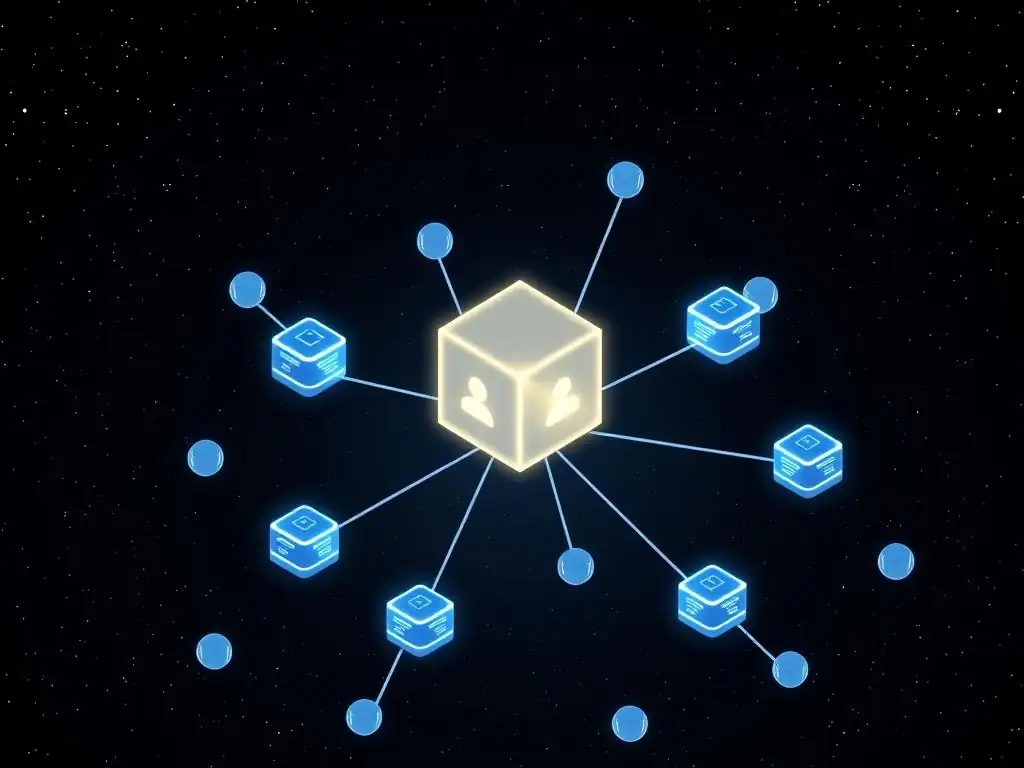
Integrate decentralized storage solutions for any data that doesn't reside directly on the blockchain. This typically includes user-uploaded files, static assets for the DApp's frontend (if decentralized hosting is used), or large datasets generated by off-chain processing. Choose a solution like IPFS, Arweave, or Swarm based on factors like data permanence requirements, cost, and ease of integration.
Your serverless functions will interact with this storage layer. Functions that handle data uploads will need to store the data on the decentralized storage network and potentially return a content identifier (CID) or address. Functions that serve data to the frontend will retrieve it using these identifiers. Ensure that the data is properly addressed and that your DApp's logic can reliably access it. For example, storing a user's profile image on IPFS and linking its CID to their on-chain identity allows the image to be retrieved from any IPFS node, enhancing resilience and decentralization.
Step 5: Deploying and Testing Your Serverless DApp on a Testnet
Before deploying to a live network, thoroughly deploy and test your entire serverless DApp architecture on a blockchain testnet (e.g., Goerli, Polygon Mumbai, Solana Devnet). This involves deploying your smart contracts to the testnet, deploying your serverless functions to your chosen decentralized FaaS or serverless platform, and ensuring that your decentralized storage is accessible.
Test all interactions between the components: frontend communicating with API gateway, API gateway triggering serverless functions, functions interacting with smart contracts and decentralized storage, and oracles providing data if applicable. Simulate various user flows and edge cases. Monitor transaction costs on the testnet and the execution costs of your serverless functions. This phase is crucial for identifying bugs, performance bottlenecks, and potential security vulnerabilities in a low-stakes environment before committing to the mainnet, where errors can be expensive or irreversible.
Step 6: Monitoring and Optimizing Your DApp's Performance
Once your serverless DApp is deployed to the mainnet, continuous monitoring and optimization are essential. Monitor the performance of your serverless functions (execution times, error rates, cold starts), the health and responsiveness of your decentralized storage integration, and the gas costs and transaction speeds on the blockchain. Use monitoring tools provided by your serverless platform and blockchain explorers to track key metrics.
Analyze user behavior and identify areas for optimization. Can some off-chain calculations be made more efficient? Are there ways to reduce the number or complexity of blockchain transactions? Can caching strategies be implemented for frequently accessed decentralized data? Optimization is an ongoing process aimed at improving the DApp's scalability, reducing operational costs (both gas fees and serverless execution costs), and enhancing the overall user experience. Regularly review performance data to make informed decisions about refactoring code or adjusting infrastructure configurations, further solidifying the benefits of serverless decentralized application development.
Use Cases for Serverless Decentralized Applications
The application of serverless architecture principles to decentralized development unlocks a wide array of potential use cases across various industries. By enabling more scalable, cost-efficient, and responsive off-chain computation, serverless DApps can tackle problems that were previously challenging for purely on-chain or traditional DApp architectures. These use cases span decentralized finance, supply chain management, gaming, identity verification, and data marketplaces, demonstrating the versatility and power of this combined approach.
The ability to handle variable workloads and reduce infrastructure complexity makes serverless DApps particularly well-suited for scenarios requiring dynamic interactions or processing large volumes of data off-chain. This section explores several prominent examples where the serverless model can significantly enhance the functionality and viability of decentralized applications, highlighting the practical serverless decentralized application development benefits.
Decentralized Finance (DeFi) Applications Using Serverless Architecture
DeFi is a prime area benefiting from serverless decentralized application development. While core trading, lending, and borrowing logic must reside in secure smart contracts on the blockchain, many auxiliary functions can be handled serverlessly. Examples include calculating complex interest rates off-chain before updating state on-chain, aggregating data from multiple sources for yield farming strategies, generating user portfolio reports, or implementing notification systems for liquidation alerts.
Consider a decentralized exchange (DEX). Order matching logic and state changes occur on-chain. However, providing users with real-time price charts, transaction history indexing, or calculating impermanent loss for liquidity providers can be computationally intensive. Serverless functions can perform these tasks efficiently off-chain, querying blockchain data, performing calculations, and serving the results to the user interface. This approach keeps the main blockchain lightweight and reduces gas costs for users interacting with the complex data analysis features of the DApp.
Serverless Solutions for Supply Chain Management on Blockchain
Blockchain is increasingly used in supply chain management for tracking goods, verifying authenticity, and ensuring transparency. A serverless architecture can enhance these applications by handling the significant volume of off-chain data processing and events generated throughout a supply chain. For instance, recording the movement of goods on the blockchain is feasible, but processing sensor data from shipments, generating alerts based on temperature deviations, or integrating with legacy enterprise resource planning (ERP) systems requires flexible off-chain computation.
Serverless functions can be triggered by blockchain events (e.g., a status update on a shipment) or external events (e.g., a sensor reading). A function could process temperature data from an IoT device attached to a container, compare it against predefined thresholds, and trigger a smart contract event if the temperature exceeds the limit, automatically initiating an insurance claim process. This allows for real-time monitoring and automated responses without burdening the blockchain with excessive computation, making the serverless decentralized application development approach highly practical for complex supply chain networks.
Gaming DApps: Enhancing Scalability and User Experience
Gaming DApps often face significant scalability challenges due to the high volume of interactions and the need for responsive user experiences. While critical game assets and ownership might be managed as NFTs on the blockchain, frequent in-game actions, complex physics calculations, or matchmaking logic are typically too performance-sensitive and costly to run on-chain. Serverless architecture offers a solution by providing scalable off-chain computation.
Imagine a decentralized game where players battle each other. The outcome of a battle might be recorded on-chain to update player stats or transfer items. However, the real-time simulation of the battle itself, including complex calculations based on player attributes and environmental factors, can be handled by serverless functions.
These functions can execute quickly based on player inputs, providing a smooth gaming experience, and only the final, critical result is committed to the blockchain. This hybrid approach leverages the strengths of both technologies, improving scalability and enabling richer gameplay that wouldn't be feasible purely on-chain, showcasing significant serverless decentralized application development benefits.
Identity Management and Verification Systems with Serverless Technology
Decentralized identity (DID) systems aim to give individuals more control over their personal data. While core identity claims and verifiable credentials can be managed on the blockchain, the process of verifying credentials, interacting with identity providers, or integrating with legacy verification systems often requires off-chain processing. Serverless functions are well-suited for these tasks.
A user might present a verifiable credential (e.g., proof of age) signed off-chain. A serverless function, triggered by a service requesting verification, could retrieve the credential, verify its signature against a public key stored on the blockchain or in a decentralized registry, and interact with external identity provider APIs if necessary. The result of the verification (a simple true/false) could then be used by the requesting service. This off-chain processing keeps the sensitive credential data off the public blockchain while leveraging the blockchain for trust anchors and verification logic, creating a more privacy-preserving and scalable identity system.
Decentralized Data Marketplace with Serverless Architecture
Decentralized data marketplaces allow individuals and organizations to share and monetize data in a secure and transparent way. While data ownership and access permissions can be managed via smart contracts, the actual storage, indexing, search, and processing of large datasets are better handled using decentralized storage and serverless computation.
A data provider might upload a dataset to decentralized storage (like Arweave). Serverless functions can then be used to index the data, make it searchable, and process data requests from consumers. When a data consumer purchases access via a smart contract, a serverless function could be triggered to provide the consumer with the necessary decryption keys or access credentials to retrieve the data from decentralized storage. This architecture ensures that the data itself remains decentralized while providing efficient search and access mechanisms, demonstrating how serverless decentralized application development can enable complex data-driven applications without centralized bottlenecks.
Challenges and Considerations in Building Serverless DApps
While serverless decentralized application development offers numerous advantages, it also presents unique challenges that developers must address. These challenges stem from the complexities of integrating disparate decentralized technologies, managing state in stateless environments, and ensuring performance and security across distributed systems. Successfully navigating these hurdles is crucial for building robust and reliable serverless DApps.
Developers need to carefully consider the trade-offs involved in offloading logic from the blockchain to a serverless layer. While it improves scalability and cost, it introduces dependencies on the serverless infrastructure and potentially increases complexity in managing the overall application state. Addressing these considerations upfront during the design phase is vital to avoid issues down the line and maximize the benefits of the serverless approach.
Security Considerations for Serverless DApps
Security is paramount in serverless decentralized application development, particularly when combining on-chain and off-chain components. While smart contracts require rigorous auditing, serverless functions introduce new potential attack vectors. Functions need to be secured against injection attacks, unauthorized access, and denial-of-service attempts. Proper input validation, output sanitization, and access control mechanisms are essential.
Managing secrets, such as private keys required for serverless functions to interact with smart contracts, is a critical security challenge. These keys must be stored securely using decentralized secrets management solutions or encrypted vaults accessible only to authorized functions. Furthermore, the communication channels between the serverless layer, the blockchain, and decentralized storage must be secured, typically using encryption and authentication protocols. Developers must adopt a holistic security approach, considering the security posture of each component and the interactions between them.
Addressing Latency and Performance Issues in Decentralized Systems
Latency and performance can be significant challenges in serverless decentralized application development due to the inherent nature of distributed networks and blockchain transaction times. Serverless functions, especially those running on decentralized infrastructure, might experience variable startup times ("cold starts") or delays in accessing data replicated across multiple nodes. Interactions with the blockchain involve transaction confirmation times, which can range from seconds to minutes depending on the network and current congestion.
To mitigate these issues, developers should design functions to be as efficient as possible and minimize dependencies on synchronous blockchain calls where possible. Caching frequently accessed data from the blockchain or decentralized storage can reduce latency. Asynchronous processing patterns, where serverless functions are triggered by events and perform tasks in the background rather than blocking a user request, can improve perceived performance. Choosing blockchain platforms or Layer 2 solutions with faster transaction times can also help. Careful architectural design is needed to balance the benefits of decentralization and serverless with the need for acceptable user experience.
Managing State in Serverless Environments
Serverless functions are typically stateless, meaning they do not retain memory or data between invocations. This statelessness simplifies scaling but requires careful consideration for managing application state that persists across multiple function executions or user sessions. In a serverless DApp, the source of truth for critical state is the blockchain. However, off-chain state, such as user preferences, cached data, or intermediate processing results, still needs to be managed.
Solutions for managing off-chain state in a serverless DApp include using decentralized databases (if available and suitable), decentralized key-value stores, or even leveraging decentralized storage with appropriate indexing mechanisms. Serverless functions would read and write state to these external stores. Developers must design their functions to be idempotent where possible, ensuring that multiple executions of the same function triggered by the same event do not lead to inconsistent state. Carefully managing state transitions and ensuring consistency between on-chain and off-chain data sources is a key architectural challenge in serverless decentralized application development.
Ensuring Data Consistency Across Decentralized Nodes
Ensuring data consistency across the various decentralized components (blockchain, decentralized storage, decentralized FaaS nodes) is another challenge. While the blockchain provides eventual consistency for its state, data stored in decentralized storage might have replication delays, and serverless functions executed on different nodes might operate on slightly different versions of cached data.
Developers must design the DApp to handle potential inconsistencies. This might involve reading data directly from the blockchain for critical operations, implementing strategies to verify data retrieved from decentralized storage against on-chain pointers (e.g., using IPFS CIDs stored on-chain), or using eventual consistency models where appropriate for less critical data. For scenarios requiring strong consistency, synchronous calls to the blockchain or careful coordination between serverless functions might be necessary, although this can impact performance. Understanding the consistency guarantees of each decentralized component is vital for building reliable serverless decentralized applications.
Managing Cold Starts in Serverless Functions
"Cold starts" are a common issue in serverless computing where the first invocation of an idle function takes longer to execute as the underlying infrastructure needs to initialize the execution environment. While this is a general serverless challenge, it can be particularly noticeable in decentralized serverless environments depending on the infrastructure's design and node distribution. Frequent cold starts can lead to increased latency and a degraded user experience, especially for DApps requiring quick responses to user interactions.
Strategies to mitigate cold starts include designing functions to be lightweight and initialize quickly, using provisioned concurrency (if the decentralized FaaS platform supports it) for functions requiring low latency, or implementing "warming" techniques where functions are periodically invoked to keep them active. However, warming techniques might incur additional costs. Developers need to balance the cost implications of keeping functions warm against the performance requirements of their DApp's specific use cases when optimizing serverless decentralized application development.
The Future of Serverless Decentralized Application Development
The field of serverless decentralized application development is still relatively nascent but holds immense promise for the future of Web3. As decentralized infrastructure evolves and matures, the capabilities and adoption of serverless DApps are expected to grow significantly. Emerging trends in both serverless computing and blockchain technology are converging to create more powerful, efficient, and user-friendly decentralized applications.
This convergence is poised to impact various industries, democratizing access to decentralized technologies and enabling innovative applications that were previously too complex or costly to build. The focus will increasingly be on abstracting away infrastructure complexities, allowing developers to concentrate on delivering value through decentralized logic and data, further solidifying the serverless decentralized application development benefits.
Emerging Trends in Serverless and Blockchain Technologies
Several emerging trends are shaping the future of serverless decentralized application development. On the serverless side, advancements include the development of more sophisticated decentralized FaaS platforms, improved state management solutions for stateless functions, and better tooling for monitoring and debugging distributed serverless applications. There is also research into standardizing interfaces for decentralized serverless execution environments.
Concurrently, blockchain technology is advancing rapidly with Layer 2 scaling solutions (like rollups and state channels) significantly increasing transaction throughput and reducing costs on base layers like Ethereum. Interoperability protocols are enabling communication between different blockchains. New consensus mechanisms are improving efficiency. These blockchain advancements make on-chain interactions faster and cheaper, creating a more fertile ground for serverless functions to interact with the blockchain efficiently. The combination of these trends is lowering the barrier to entry for serverless decentralized application development.
The Role of Serverless DApps in the Web3 Ecosystem
Serverless DApps are expected to play a crucial role in the broader Web3 ecosystem. By providing a scalable and cost-effective way to handle off-chain computation and data processing, they enable the development of more complex and feature-rich decentralized applications. They can bridge the gap between the core decentralized components (blockchain, decentralized storage) and user-facing interfaces, making Web3 applications more accessible and performant for mainstream users.
As the Web3 ecosystem grows to include more decentralized protocols for communication, identity, and data exchange, serverless functions can act as the glue that connects these disparate services. They can process data streams from decentralized social graphs, interact with decentralized identity providers, and facilitate transactions across different decentralized protocols. This positions serverless DApps as a key architectural pattern for building the next generation of decentralized internet services, leveraging the cumulative serverless decentralized application development benefits.
Potential Impact on Various Industries: From Finance to Healthcare
The potential impact of serverless decentralized application development spans numerous industries. In finance, beyond DeFi, serverless DApps could power decentralized insurance platforms with complex risk calculations handled off-chain, or enable fractional ownership of real-world assets with off-chain processing of income distributions. In healthcare, they could secure patient data using decentralized storage while serverless functions manage access control and facilitate secure data sharing for research, ensuring privacy and compliance.
Supply chain applications, as discussed, can become more efficient and reactive. In media and entertainment, serverless DApps could manage decentralized content distribution platforms, handling transcoding and serving content from decentralized storage. The pay-per-execution model makes it feasible for small businesses and individual creators to utilize complex decentralized workflows. The combination of decentralization's trust and transparency with serverless's efficiency and scalability opens up transformative possibilities across sectors.
Integration with Zero-Knowledge Proofs for Enhanced Privacy
An exciting future direction for serverless decentralized application development is the integration with zero-knowledge proofs (ZKPs). ZKPs are cryptographic techniques that allow one party to prove to another that a statement is true without revealing any information beyond the validity of the statement itself. This is particularly relevant for privacy-preserving DApps.
Serverless functions could be used to generate or verify ZKPs off-chain, where the computation is less expensive than on the blockchain. For instance, a serverless function could take private user data, compute a proof (e.g., proving the user is over 18 without revealing their birthdate), and then submit the compact proof to a smart contract on the blockchain for verification. This allows DApps to leverage the privacy benefits of ZKPs while keeping the computationally intensive proof generation off-chain in a scalable serverless environment, further enhancing the capabilities enabled by serverless decentralized application development.
Conclusion: Embracing Serverless for Scalable and Efficient DApps
The journey towards building truly scalable and efficient decentralized applications is significantly advanced by adopting serverless architecture principles. By offloading computational tasks and data processing from the blockchain to a flexible, pay-per-execution serverless layer running on decentralized infrastructure, developers can overcome many of the performance bottlenecks and cost inefficiencies that have historically limited DApp adoption. This approach allows the blockchain to focus on its core strengths: providing a secure, immutable, and transparent ledger for critical state and transaction logic.
Embracing serverless decentralized application development offers a compelling path forward for building the next generation of Web3 applications. It empowers developers to create more responsive, cost-effective, and resilient DApps that can handle variable workloads and scale automatically with user demand. As the underlying decentralized serverless infrastructure matures, the benefits will only become more pronounced, enabling innovative use cases across a wide range of industries.
Recap of Serverless DApp Development Benefits
To recap, the key serverless decentralized application development benefits include:
- Enhanced Scalability: Automatic scaling of off-chain computation to handle peak loads.
- Cost Optimization: Pay-per-execution model reduces infrastructure costs compared to fixed server expenses.
- Increased Efficiency: Developers focus on logic, not server management, accelerating development cycles.
- Faster Development: Modular nature of functions allows parallel development and quicker deployments.
- Improved Reliability: Elimination of single points of failure through decentralized infrastructure.
- Reduced Operational Overhead: Less time spent on server maintenance and provisioning.
These advantages collectively make serverless DApps a powerful paradigm for building the future of decentralized applications, addressing critical limitations of earlier architectures.
The Potential of Decentralized Infrastructure for the Future of Applications
The ongoing development and maturation of decentralized infrastructure—including decentralized FaaS platforms, decentralized storage networks, and robust oracle services—are fundamental to realizing the full potential of serverless DApps. As these underlying layers become more performant, reliable, and interoperable, they will provide a solid foundation for building complex, enterprise-grade decentralized applications without relying on centralized bottlenecks.
Decentralized infrastructure aligns with the core principles of Web3, promoting censorship resistance, user control, and transparency. Combining this foundation with the operational efficiencies of the serverless model creates a potent synergy. It enables applications that are not only decentralized in their core logic but also in their supporting computational and data layers, pushing the boundaries of what is possible in the decentralized web.
Call to Action: Exploring Serverless DApp Development for Your Next Project
For developers and organizations looking to build decentralized applications that are scalable, cost-efficient, and resilient, exploring serverless decentralized application development is highly recommended. Assess your project's requirements and identify which parts of the application logic can be effectively moved off-chain to a serverless layer. Research the available decentralized serverless platforms and tooling that integrate with your chosen blockchain ecosystem.
Start with a small component or a specific feature of your DApp to experiment with the serverless approach. Leverage testnets for development and deployment before moving to production. By strategically adopting serverless principles, you can significantly enhance your DApp's architecture, improve its performance and scalability, and reduce operational costs, positioning your project for success in the evolving decentralized landscape. The benefits of serverless decentralized application development are substantial and worth the exploration for any serious DApp builder.
Frequently Asked Questions
What are the key benefits of using a serverless architecture for decentralized applications (DApps)?
Using a serverless architecture offers benefits like automatic scaling to handle increased traffic, reduces operational overhead associated with managing servers, and often leads to cost optimization due to pay-as-you-go pricing.
How does a serverless DApp differ from a traditional DApp in terms of infrastructure management?
Traditional DApps often require developers to manage servers and infrastructure, while serverless DApps leverage cloud platforms to handle infrastructure management automatically, allowing developers to focus solely on application logic.
What are some common challenges associated with developing serverless DApps, and how can they be mitigated?
Challenges include dealing with cold starts (initial latency), managing state in a stateless environment, and ensuring security across distributed components. Mitigation strategies involve pre-warming functions, utilizing external state management solutions, and employing robust security protocols.
How does leveraging decentralized infrastructure contribute to the scalability and efficiency of serverless DApps?
Decentralized infrastructure, like blockchain networks, enables data redundancy and fault tolerance, enhancing the DApp's reliability. Furthermore, it allows for distributed computation, potentially improving performance and scalability by distributing the workload.
What are some real-world use cases where serverless DApp development offers significant advantages?
Use cases include supply chain management, where transparency and immutability are crucial; decentralized finance (DeFi) applications requiring high availability; and identity management systems needing enhanced security and user control.
Final Reflection: Embracing the Decentralized Future of Serverless
The exploration of serverless decentralized application development benefits culminates in a powerful realization: the convergence of these technologies isn't just a trend, it's a paradigm shift. The ability to build scalable, efficient, and resilient applications without the constraints of traditional infrastructure unlocks unprecedented opportunities for innovation and accessibility in the digital realm. This fusion empowers developers to focus on creating impactful solutions, rather than managing complex server environments.
This shift profoundly influences how we approach application development, fostering a more agile and democratized ecosystem. The potential for serverless DApps to revolutionize industries, from finance to healthcare, is immense, offering increased transparency, security, and user control. Decentralization is not just about technology; it's about empowering individuals and communities to shape their own digital future.
This quote encapsulates the core value proposition of serverless DApps: a future where technology serves humanity, not the other way around.
As we stand at the cusp of this technological revolution, I invite you to reflect on the possibilities presented by serverless decentralized application development. Consider how you can leverage these benefits to build innovative solutions that address real-world challenges. Embrace the decentralized future, and let's collectively build a more scalable, efficient, and equitable digital landscape for all.
Ignite Your Serverless DApp Journey!
Thank you for exploring the world of serverless DApps and decentralized infrastructure. We hope you've gained valuable insights into how to build scalable and efficient applications using these innovative technologies. Now, it's time to put that knowledge into practice!
Here’s how you can get started:
- Begin developing your first serverless DApp. Start with a simple project to gain hands-on experience with the tools and concepts discussed. Consider creating a basic token or a straightforward decentralized voting system.
- Explore various decentralized storage options. Research platforms like IPFS, Filecoin, or Arweave to determine which best fits your DApp’s requirements and budget. Try integrating them into your project.
- Share your progress! Document your journey building your serverless DApp on our community forum. This not only helps others but also reinforces your understanding.
What specific challenge are you most eager to tackle with serverless DApp architecture? Share your thoughts in the comments below!
Leave a Reply