
DApp Architecture for Social Media: Building Decentralized and UserOwned Social Platforms


Welcome to Blockchain Trends, your guide to understanding the revolutionary power of blockchain beyond the buzz. Dive into the world of decentralized finance, enterprise solutions, and the evolving regulatory landscape, as we explore the future of decentralized systems.
Are you ready to discover how blockchain is reshaping social interaction? Today, we unravel the intricacies of decentralized social media architecture, exploring how DApps are paving the way for user-owned platforms. Imagine a social network built on transparency, security, and true digital ownership. Intrigued? Let's delve into the DApp architecture that's making this vision a reality...
DApp Architecture for Social Media: Building Decentralized and User-Owned Social Platforms
- Introduction: The Need for Decentralized Social Media Architectures
- Understanding Decentralized Social Media Architecture
- Designing a Decentralized Social Media Architecture: A Layered Approach
- Key Features and Functionalities of a Decentralized Social Media DApp
- Addressing Scalability and Performance Challenges in Decentralized Social Media
- Security Considerations for Decentralized Social Media Architectures
- Real-World Examples of Decentralized Social Media Platforms
- The Future of Decentralized Social Media: Trends and Predictions
- Conclusion: Empowering Users Through Decentralized Social Media Architectures
-
Frequently Asked Questions
- What are the key advantages of using a DApp architecture for social media platforms?
- How does blockchain technology contribute to a more decentralized social media experience?
- What are some potential challenges in implementing a decentralized social media architecture?
- How does a decentralized social media platform address the issue of content moderation?
- What is the relationship between Decentralized Finance (DeFi) and Decentralized Social Media Architecture?
- Final Reflection: Embracing the Decentralized Social Future
- Reimagine Your Social Future: Take Control Now!
Centralized social media platforms, while connecting billions globally, inherently suffer from significant drawbacks stemming from their single points of control. Companies like Meta (Facebook, Instagram) or X (formerly Twitter) hold immense power over user data, content moderation policies, and even access to the platform itself. This control has led to numerous controversies, including data privacy violations, algorithmic manipulation affecting content visibility, and inconsistent or politically influenced censorship. For instance, the Cambridge Analytica scandal exposed how personal data from up to 87 million Facebook users was harvested without consent, highlighting the vulnerabilities and ethical concerns of centralized data custodianship.
Furthermore, the business models of these platforms are primarily driven by advertising revenue, incentivizing engagement above all else, often leading to filter bubbles, echo chambers, and the spread of misinformation. Content creators face unpredictable monetization and dependency on platform algorithms, which can change without notice. The lack of transparency in content moderation decisions and the opaque nature of how data is used and protected erode user trust. Users essentially become the product, surrendering control over their digital identity and interactions in exchange for the service, a fundamental flaw that a decentralized social media architecture aims to rectify.
Blockchain technology offers a compelling alternative to the centralized model by enabling the creation of decentralized applications (DApps) where control and data ownership are distributed among users. By leveraging blockchain's immutable ledger, cryptographic security, and smart contracts, a decentralized social media architecture can shift power away from a single corporation. Users can own their identity, control access to their data, and participate in the governance of the platform. This fundamental change promises greater transparency, censorship resistance, and a more equitable distribution of value generated on the network.
DApps built on blockchain can facilitate new forms of interaction and monetization. Instead of relying solely on advertising, decentralized social networks can explore models like token-based economies, where users earn tokens for contributing content, curating information, or participating in governance. These tokens could potentially be traded, used for platform features, or represent voting power.
The inherent transparency of blockchain also allows for verifiable content provenance and potentially more transparent moderation processes, perhaps managed by the community through token-weighted voting or other decentralized governance mechanisms. The vision is a social network where the community, not a corporation, dictates the rules and shares in the network's success.
The foundation of a decentralized social media architecture rests on several core principles distinct from traditional web applications. Decentralization is paramount, meaning there is no single entity controlling the network, data, or governance. User ownership of data and identity is another critical principle, ensuring individuals retain sovereignty over their digital presence and information, typically managed via cryptographic keys and decentralized identifiers (DIDs). Immutability, provided by the underlying blockchain, ensures that once data or transactions are recorded, they cannot be altered or deleted, offering a verifiable history of interactions and content.
Transparency is also key, as many aspects of the platform's operation, such as governance decisions, transaction histories, and smart contract code, are publicly auditable on the blockchain. This contrasts sharply with the black-box nature of centralized algorithms and policies. Finally, censorship resistance is a core goal, making it significantly harder for any single government, corporation, or individual to arbitrarily remove content or ban users, provided the content itself is stored decentrally and referenced on the immutable ledger. These principles collectively aim to create a more robust, fair, and user-centric online social environment.
A decentralized social media platform built with a DApp architecture comprises several interconnected components working together across different layers. At the base is the blockchain layer, which provides the decentralized ledger for recording identities, content hashes, interactions (likes, comments), and governance votes. This layer executes smart contracts that define the core logic of the social network, such as how users register, post content metadata, or cast votes.
Above the blockchain layer are decentralized storage solutions, necessary because storing large amounts of data like images and videos directly on most blockchains is prohibitively expensive and inefficient. Systems like IPFS or Arweave handle the storage of the actual content files, with only their unique cryptographic hashes stored on the blockchain for verification and referencing. The identity layer, often leveraging DIDs and Verifiable Credentials, manages user profiles and authentication without relying on centralized databases.
Finally, the application layer includes the smart contracts and the frontend user interface (web or mobile app) that users interact with, translating complex blockchain operations into a familiar social media experience. These components must be carefully integrated to deliver a functional and truly decentralized social media architecture.
Choosing the Right Blockchain for Your Social Media DApp: Ethereum, Polygon, Solana
Selecting the appropriate blockchain is a foundational decision impacting the entire decentralized social media architecture. Ethereum is a popular choice due to its large developer community, established ecosystem, and robust smart contract capabilities. However, its mainnet can suffer from high gas fees and congestion, impacting the cost and speed of frequent social interactions like liking or commenting. Platforms like Peepeth initially faced challenges related to Ethereum gas costs, which could make basic interactions expensive for users.
Layer 2 solutions like Polygon (a sidechain/scaling solution for Ethereum) offer significantly lower transaction costs and higher throughput, making it a more viable option for the high volume of micro-transactions and state changes typical of social media. For instance, transaction fees on Polygon are often fractions of a cent, compared to potentially dollars or even tens of dollars on Ethereum mainnet during peak times. Alternatively, newer blockchains like Solana promise extremely high transaction speeds (theoretically tens of thousands per second) and low costs through a different architectural approach (Proof-of-History combined with Proof-of-Stake).
However, these newer chains may have less mature ecosystems or face different challenges, such as network stability issues that Solana has experienced. The choice depends on balancing factors like cost, speed, security, decentralization level, and ecosystem maturity required for the specific decentralized social media architecture envisioned.
Consensus Mechanisms and Their Impact on Social Media Scalability: Proof-of-Stake, Delegated Proof-of-Stake
The consensus mechanism of the chosen blockchain directly affects the network's speed, cost, and scalability – critical factors for a decentralized social media architecture that needs to handle millions or billions of interactions. Proof-of-Stake (PoS), used by Ethereum 2.0 and many other modern blockchains, involves validators staking cryptocurrency to propose and validate blocks. PoS is significantly more energy-efficient than Proof-of-Work (PoW) and generally allows for faster block finality and higher transaction throughput. For a social DApp, faster finality means user actions (like posting or commenting) are confirmed more quickly, improving responsiveness.
Delegated Proof-of-Stake (DPoS), used by blockchains like EOS or Tron, takes PoS further by having token holders vote for a limited number of delegates who are responsible for validating transactions and maintaining the network. This can lead to even faster transaction speeds and higher throughput than standard PoS because fewer nodes are involved in the consensus process.
However, it introduces a higher degree of centralization compared to standard PoS or PoW, as power is concentrated among a smaller set of elected delegates. For a decentralized social media platform, DPoS offers performance benefits but requires careful consideration of the trade-off with the core principle of decentralization.
Decentralized Storage Solutions: IPFS, Arweave, Filecoin
Storing the vast amount of data generated by social media users – posts, images, videos, profiles – is a major challenge for decentralized social media architecture. Storing this data directly on most blockchains is impractical due to cost and capacity limitations. Decentralized storage solutions provide an alternative by distributing data across a network of nodes rather than a single server.
IPFS (InterPlanetary File System) is a peer-to-peer network for storing and sharing data where content is addressed by its hash (Content Addressing), making it easily verifiable and preventing duplication. While IPFS itself doesn't guarantee data persistence (a file is available as long as at least one node hosts it), it's a foundational technology.
Arweave offers a novel approach by providing permanent, decentralized data storage, paid for with a one-time fee. This is particularly appealing for archiving social media content that users want to ensure remains accessible indefinitely. Filecoin, built on IPFS, adds an economic layer by creating a marketplace for storage and retrieval, incentivizing nodes to store data reliably over time.
These solutions allow the decentralized social media DApp to store only the immutable references (hashes) to the content on the blockchain, while the actual content files are stored off-chain across the decentralized storage network. This hybrid approach balances the need for blockchain's immutability and transparency with the practical requirements of storing large, dynamic social media content.
Optimizing Data Storage for Social Media Content: Content Addressing, Caching Strategies
Efficiently managing data in a decentralized social media architecture requires more than just choosing a storage layer; it involves optimization strategies tailored to social media content. Content Addressing, central to systems like IPFS, means that the address of a piece of data is derived from its content (its cryptographic hash). This allows for easy verification that the retrieved data is exactly what was intended and enables efficient de-duplication across the network. When a user posts an image that already exists on the network, only the reference needs to be stored, not a duplicate copy of the image file itself.
Caching strategies are also crucial for improving performance and user experience. While decentralized storage provides resilience and censorship resistance, retrieving data from a distributed network can sometimes be slower than from a centralized server.
Implementing caching layers, potentially using traditional CDNs or decentralized caching solutions, can help serve frequently accessed content (like popular posts or profile pictures) more quickly to users. Additionally, structuring data intelligently – perhaps storing smaller pieces of metadata directly on the blockchain while larger media files are stored decentrally – is essential for minimizing blockchain transaction costs and optimizing data retrieval times in a decentralized social media architecture.
Building Intuitive User Interfaces for Blockchain-Based Social Media
Frontend development for a decentralized social media architecture presents unique challenges compared to traditional web development. The goal is to build user interfaces that feel familiar and intuitive, abstracting away the underlying complexity of blockchain interactions. Users should not need to understand gas fees, private keys, or smart contracts to simply post an update or like a photo. This requires careful design to integrate Web3 concepts seamlessly into standard UI patterns. For example, instead of a traditional login form, users might connect using a Web3 wallet, which the UI needs to guide them through clearly.
Handling asynchronous blockchain transactions is another key aspect. Unlike immediate database operations in centralized systems, blockchain transactions can take time to confirm (seconds to minutes depending on the network and load). The UI must provide clear feedback to the user about the status of their actions (e.g., "Posting..." - Transaction Pending...
- Posted!
). Error handling for failed transactions (due to insufficient funds, network issues, etc.) also needs to be user-friendly, explaining the problem in plain language rather than exposing technical blockchain errors. Successful frontend design is paramount for driving adoption of a decentralized social media platform.
Integrating Web3 Wallets and User Authentication
Integrating Web3 wallets is the standard method for user authentication and interaction within a decentralized social media architecture. Wallets like MetaMask, WalletConnect, or Brave Wallet serve as the user's digital identity and provide the means to sign transactions (like posting content, commenting, or voting) without revealing their private keys. When a user wants to perform an action that requires writing to the blockchain, the frontend application constructs the appropriate transaction and prompts the user to approve it via their connected wallet.
This process replaces traditional username/password authentication and server-side session management. The user's identity on the platform is often tied to their wallet address or a Decentralized Identifier (DID) associated with it. The frontend must handle connecting to the user's wallet, detecting which network they are on (and potentially prompting them to switch if necessary), and listening for wallet events (like account changes). Securely handling these interactions while providing a smooth user experience is a critical part of frontend development for a decentralized social media architecture.
User Profiles and Identity Management on the Blockchain
In a decentralized social media architecture, user profiles and identity management are fundamentally different from centralized systems. Instead of relying on a platform-specific database entry, user identity is often anchored to a blockchain address or a Decentralized Identifier (DID). A DID is a globally unique identifier that does not require a centralized registration authority. Users control their DIDs and can link them to various pieces of verifiable information (Verifiable Credentials) about themselves, such as attestations of reputation, skills, or even pseudonymous traits, all without needing permission from a central authority.
Profile data, such as a username, avatar hash, and bio, can be stored either directly on-chain (if small and infrequently updated) or more commonly, as metadata referenced by the user's DID or address, with the actual data stored on a decentralized storage network like IPFS. Updates to the profile would involve a blockchain transaction to update the reference or on-chain data. This gives users greater control over their digital identity and how it is presented across different decentralized platforms, as their DID can potentially be portable, fostering a more open and interconnected decentralized web.
Content Creation and Sharing: Posts, Images, and Videos
Content creation and sharing are core functionalities for any social media platform, and in a decentralized social media architecture, this process leverages both the blockchain and decentralized storage. When a user creates a post, the text, along with hashes referencing any attached images or videos stored on IPFS or Arweave, is typically bundled into a transaction and written to the blockchain via a smart contract call. This transaction records the immutable timestamp and authorship of the content on the public ledger.
The smart contract logic defines how this content is structured and associated with the user's identity. For media files, the application uploads the file to the decentralized storage network first, obtains the unique content hash, and then includes this hash in the blockchain transaction for the post.
Retrieving content involves querying the blockchain for posts by a user or based on certain criteria, retrieving the content hashes, and then using those hashes to fetch the actual files from the decentralized storage network. This ensures that while the content itself isn't bloating the blockchain, its existence and connection to the author are verifiable and immutable.
Social interactions like liking, commenting, and sharing also function through blockchain transactions in a decentralized social media architecture. A 'like' might involve calling a smart contract function associated with the specific post, incrementing a counter stored on-chain or emitting an event that is tracked by the application's backend indexer. Similarly, posting a comment typically involves a transaction that stores the comment text (or its hash if stored off-chain) and links it to the parent post and the author's identity via the smart contract.
These interactions, being recorded on the blockchain, are transparent and immutable. While storing every single like or comment directly on the main blockchain might become expensive and resource-intensive at scale, optimizations like using layer 2 solutions, state channels, or simply emitting blockchain events that are then indexed off-chain and presented by the frontend are crucial. The core principle remains that the fact of the interaction occurred, and who initiated it, is verifiable on the decentralized ledger, preventing manipulation of engagement metrics common in centralized platforms.
Moderation in decentralized social media architecture is one of the most complex challenges, moving away from centralized editorial control towards community-driven models. One common approach is community-based moderation, where users flag content, and a group of elected or algorithmically selected moderators reviews the flags. However, the decentralized ideal often leans towards more direct user participation.
Token-based voting is a prominent model, where users holding the platform's native token can vote on proposed content moderation actions (e.g., hide, label, or remove content) or even changes to the platform's rules. The weight of a user's vote is often proportional to the amount of tokens they hold, though other models like "one person, one vote" using decentralized identity proofs are also being explored.
Governance extends beyond content moderation to deciding the future direction of the platform itself. Changes to smart contract parameters, feature development priorities, or treasury spending can be decided through decentralized governance proposals and token-based voting mechanisms. This empowers the community to shape the platform, contrasting with the top-down decision-making of centralized companies. While challenges remain in preventing Sybil attacks, ensuring informed participation, and handling contentious issues, these decentralized models represent a significant step towards user-owned and governed social networks within a robust decentralized social media architecture.
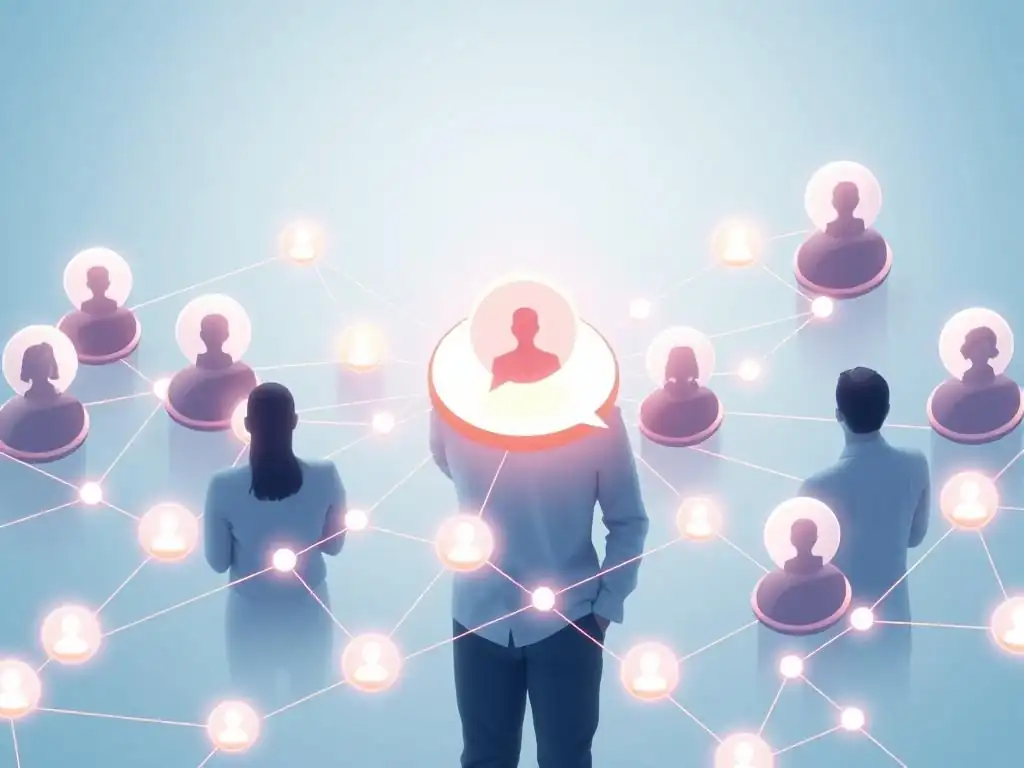
Off-Chain Computation and State Channels for Enhanced Scalability
Scalability is a significant hurdle for decentralized social media architecture, as blockchains, especially popular ones like Ethereum mainnet, have limited transaction throughput compared to centralized databases designed for millions of transactions per second. Off-chain computation and state channels are techniques used to handle a high volume of interactions without burdening the main blockchain for every single action.
State channels allow participants to conduct a series of transactions off-chain, only submitting the final state to the blockchain when the channel is closed. This is particularly useful for repetitive interactions between a small set of participants, like direct messaging or frequent small transfers.
More broadly, off-chain computation involves performing complex or frequent calculations and state updates outside the blockchain environment, only using the blockchain to record the final results or critical changes. For social media, this could mean handling interactions like viewing feeds, typing comments, or even simple likes off-chain, perhaps using a trusted execution environment or a layer 2 scaling solution like optimistic or zero-knowledge rollups (though the latter are more complex and often applied to transaction throughput).
The core idea is to minimize the number of expensive on-chain operations while maintaining the security and verifiability provided by the blockchain layer of the decentralized social media architecture.
Efficient smart contract design is crucial for managing costs and performance in a decentralized social media architecture, especially on blockchains where computation incurs gas fees. Smart contracts should be written to be as gas-efficient as possible, minimizing complex calculations and storage operations on-chain. For social media, this means carefully considering what data absolutely needs to be stored immutably on the blockchain (e.g., content hashes, user identity links, key governance votes) versus what can be stored off-chain and referenced.
Structuring data within smart contracts optimally can also reduce costs. For instance, using mappings instead of arrays when feasible, and avoiding unnecessary loops or computations within transaction execution paths. Upgradability mechanisms, while potentially introducing a degree of centralization, are often considered for DApps to allow for bug fixes and feature improvements without requiring a complete migration, which is complex for a large social network. Rigorous auditing and testing of smart contracts are also essential to prevent vulnerabilities that could be exploited, impacting the security and stability of the decentralized social media platform.
Caching and Content Delivery Networks (CDNs) for Faster Content Loading
While decentralized storage solutions like IPFS provide a robust way to store content without central points of failure, retrieving content from them can sometimes be slower than from traditional centralized servers. To provide a responsive user experience akin to existing social media platforms, caching and Content Delivery Networks (CDNs) play a vital role in a decentralized social media architecture. Caching frequently accessed data, such as popular posts, profile pictures, or trending content, closer to the user reduces retrieval times.
This caching can be implemented at various levels: browser caching, application-level caching, or by utilizing traditional or decentralized CDNs. A traditional CDN can serve cached copies of content fetched from the decentralized storage layer, providing speed benefits at the cost of introducing a centralized component for delivery (though the content's integrity can still be verified via the blockchain hash).
Decentralized CDN projects are also emerging, aiming to distribute caching nodes globally without a single point of control. Implementing effective caching strategies is essential for overcoming the latency challenges inherent in retrieving data from a distributed network and ensuring a smooth user experience for a decentralized social media platform.
Smart Contract Security Audits and Best Practices
The security of a decentralized social media architecture heavily relies on the integrity of its smart contracts. Since smart contracts handle critical logic like user identity, content referencing, and potentially token transfers or governance, any vulnerability can have severe consequences, including loss of funds, data manipulation, or platform disruption. Therefore, rigorous smart contract security audits by reputable third parties are not merely recommended but essential before deployment. These audits identify potential bugs, reentrancy issues, integer overflows, and other common smart contract vulnerabilities.
Adhering to best practices during smart contract development is equally important. This includes keeping contracts simple and modular, minimizing the amount of logic executed on-chain, using established and audited libraries (like OpenZeppelin), implementing access control mechanisms carefully, and writing comprehensive unit and integration tests. While blockchain immutability is a feature, it means that deployed smart contract bugs can be difficult or impossible to fix without complex upgrade patterns. Thus, investing heavily in secure coding practices and audits is paramount for the safety and reliability of a decentralized social media platform.
Protecting User Data and Privacy in a Decentralized Environment
While blockchain is transparent by design, protecting user data and privacy in a decentralized social media architecture requires careful consideration. Sensitive or private user information (like email addresses, phone numbers, or private messages) should never be stored directly on a public, immutable blockchain. Instead, only necessary public information (like a username or public profile data) or cryptographic hashes/references should be stored on-chain. Private data should be stored off-chain, ideally encrypted, using decentralized storage solutions where access is controlled by the user's cryptographic keys.
Techniques like zero-knowledge proofs (ZKPs) can potentially be used to verify certain user attributes or interactions without revealing the underlying data. For example, a ZKP could prove a user is over 18 without revealing their birthdate. Implementing end-to-end encryption for private messaging is also crucial, ensuring only the sender and recipient can read messages, even if they are stored on a decentralized network. Designing the system with privacy by design, minimizing the collection and on-chain exposure of personal data, is fundamental to building a privacy-preserving decentralized social media platform.
Preventing Spam and Malicious Activity on the Blockchain
Preventing spam, bots, and malicious activity is a constant battle for any social network, and it takes on a new dimension in a decentralized social media architecture. While blockchain can make certain types of attacks more expensive (e.g., requiring a transaction fee for every action), it also introduces new vectors.
Sybil attacks, where one entity creates many identities to gain disproportionate influence (e.g., in voting or reputation systems), are a risk if identity isn't handled robustly. Requiring a small stake or deposit to create an account or perform certain actions can deter low-cost spam, but this introduces a financial barrier to entry.
Reputation systems built on immutable on-chain interaction history can help identify and mitigate malicious actors. Community-based moderation, as discussed earlier, is another key defense, empowering users to flag and act upon spam or harmful content. However, designing these systems to be fair and resistant to manipulation is challenging. Research into decentralized identity verification (e.g., proof-of-personhood) and more sophisticated on-chain or off-chain reputation mechanisms is ongoing to build resilient defenses against spam and malicious behavior in decentralized social media.
Mastodon: Open-Source Decentralized Microblogging
Mastodon is a prominent example often cited in discussions about decentralized social media, though it operates on a federated model rather than a single blockchain. It's an open-source platform that allows anyone to run their own server (an "instance"), which can then interconnect and communicate with other instances. Users on different instances can follow and interact with each other, forming a large, distributed network. This architecture prevents any single entity from controlling the entire network, offering censorship resistance at the instance level (an instance owner can moderate their own server, but users can move to another instance).
While not using blockchain for its core operations (like storing posts or identities on-chain), Mastodon embodies key principles of decentralization, user control (over their instance choice), and community-based governance (each instance has its own moderation policies). Its success, particularly during periods of dissatisfaction with centralized platforms, demonstrates the user demand for alternatives. It highlights that a decentralized social media architecture can take different forms, and the federated approach offers a practical path to building large, interconnected networks outside of corporate control.
Peepeth: Ethereum-Based Alternative to Twitter
Peepeth was an early example of a decentralized social media platform built directly on a blockchain, specifically Ethereum. It functioned similarly to Twitter, allowing users to post short messages ("peeps"). Crucially, every peep was stored immutably on the Ethereum blockchain. This provided strong guarantees against censorship and ensured the permanence of content. User identity was tied to their Ethereum address.
However, Peepeth faced significant challenges primarily related to the limitations of the Ethereum mainnet at the time. Posting a peep required an Ethereum transaction, incurring gas fees. While initially perhaps manageable, as gas prices rose, the cost of basic interactions became prohibitively expensive for many users, hindering adoption and active participation.
This experience highlighted the critical need for scalable blockchain solutions or layer 2 approaches for any decentralized social media architecture aiming for mainstream adoption and frequent user interaction. Peepeth demonstrated the promise of on-chain content immutability but also exposed the practical scalability constraints of building a social network directly on a base layer blockchain not optimized for high transaction volume.
Analyzing the Strengths and Weaknesses of Existing Platforms
Analyzing platforms like Mastodon and Peepeth provides valuable insights for designing future decentralized social media architecture. Mastodon's strength lies in its federated model, which is relatively easy to scale horizontally by adding more instances and provides resilience through distribution. Its weakness is the reliance on instance administrators for moderation and the potential for fragmentation or incompatibility between instances. It also lacks the strong, native user ownership and potential for token economies that a blockchain can provide.
Peepeth's strength was its pure on-chain approach, offering true immutability and censorship resistance for content. Its major weakness was the lack of scalability and high transaction costs associated with using the Ethereum mainnet for every interaction. This demonstrates that while blockchain is powerful, a pragmatic decentralized social media architecture often requires a layered approach, leveraging off-chain solutions for high-frequency operations and reserving the blockchain for critical, low-volume functions like identity, content referencing, and governance. Future platforms must learn from these early attempts, balancing the ideals of decentralization with the practical requirements of usability, performance, and cost-effectiveness.
The Rise of User-Owned and Community-Governed Platforms
A clear trend in the future of decentralized social media architecture is the increasing focus on truly user-owned and community-governed platforms. Building on the core principles of blockchain, future networks are likely to give users not just control over their data and identity but also significant power in decision-making processes. This will move beyond simple token-weighted voting to potentially more sophisticated decentralized autonomous organizations (DAOs) that manage platform treasuries, development roadmaps, and policy enforcement.
We can expect to see more platforms where users earn ownership stakes (via tokens) in the network based on their contributions – whether it's content creation, curation, moderation, or infrastructure provision. This aligns incentives, turning users from mere consumers into stakeholders invested in the platform's success and health. The decentralized social media architecture of the future will likely prioritize robust on-chain or verifiable off-chain governance mechanisms that ensure the platform evolves according to the community's will, rather than corporate mandates.
Integration with Decentralized Finance (DeFi) and NFTs
The convergence of decentralized social media architecture with Decentralized Finance (DeFi) and Non-Fungible Tokens (NFTs) is another significant future trend. Social platforms can become hubs for economic activity where users can directly monetize their content or influence using tokens. Creators could issue their own social tokens, allowing followers to invest in their work or gain access to exclusive content. Tipping in cryptocurrency or platform tokens could become commonplace, bypassing traditional payment processors.
NFTs can revolutionize content ownership and distribution within social contexts. Artists, musicians, and writers could tokenize their work as NFTs, selling or trading it directly to their audience on the platform. Profile pictures as NFTs (like CryptoPunks or Bored Apes) are just the beginning; future decentralized social media might integrate NFT marketplaces, galleries, and features that leverage unique digital assets for identity, status, or access within communities. This integration creates new revenue streams and economic models that are native to the decentralized web.
The shift towards decentralized social media architecture has the potential to fundamentally alter the landscape of content creation and distribution. By removing centralized gatekeepers, creators gain more direct relationships with their audience and greater control over their content and how it's monetized. The immutability of blockchain can provide verifiable proof of authorship and timestamping, which is valuable for creators.
Furthermore, decentralized platforms can foster diverse content ecosystems by not relying on a single algorithmic feed controlled by a corporation. Community-curated feeds, token-gated content access, and direct peer-to-peer distribution models can emerge. While challenges like discoverability and combating misinformation in a censorship-resistant environment remain, the potential for creators to build sustainable careers independent of platform whims and for users to consume content free from algorithmic manipulation is a powerful vision driving the development of decentralized social media.
The journey toward truly decentralized social media is complex, requiring innovation across blockchain technology, decentralized storage, smart contract design, and user interface development. However, the core potential of blockchain to revolutionize social networking by shifting power from corporations to individuals is immense. By building a decentralized social media architecture, we can address many of the fundamental flaws inherent in the current centralized model – data privacy issues, lack of control, algorithmic manipulation, and opaque moderation.
Blockchain provides the technological backbone for user-owned identities, immutable content records, transparent interactions, and community-driven governance. While challenges related to scalability, usability, and security are significant and require ongoing development and refinement, the progress made by early projects and the continued evolution of blockchain technology and layer 2 solutions demonstrate that a viable and performant decentralized social media platform is within reach.
Ultimately, the goal of building decentralized social media architecture is to create a more transparent, fair, and user-centric social media landscape. Transparency is enhanced by public blockchain ledgers and open-source smart contracts. Fairness is promoted through community governance and equitable distribution of value. User-centricity is achieved by giving individuals ownership of their data, identity, and a voice in platform decisions.
This shift represents a fundamental change in how we interact online, moving towards a model where users are participants and owners, not just products. As the technology matures and adoption grows, decentralized social media has the potential to reshape online communication, fostering environments that are more resilient to censorship, more respectful of privacy, and more aligned with the interests of the people who use them. The development of robust decentralized social media architecture is a critical step towards realizing this future.
Frequently Asked Questions
DApp architectures offer enhanced user privacy by minimizing centralized data storage. They also promote greater transparency through blockchain's immutable ledger and foster user ownership of data and content.
Blockchain provides a distributed and secure foundation for storing data, making it resistant to censorship. Smart contracts automate processes, ensuring fair governance and transparent interactions between users.
Scalability is a major hurdle, as blockchain networks can be slower and more expensive than centralized databases. Usability can be complex for non-technical users, requiring intuitive interfaces. Regulation is also a developing field that needs to be accounted for.
Content moderation in a decentralized system often relies on community-based governance and voting mechanisms. Smart contracts can enforce rules, and users can have more control over the content they see and interact with.
Both leverage blockchain technology for increased user control and transparency. DeFi principles can be integrated into social media platforms to enable new monetization models and user-owned economies.
The exploration of decentralized social media architecture, as outlined in this article, is not merely a theoretical exercise; it's a critical step towards reclaiming control over our digital identities and interactions. In a world increasingly dominated by centralized platforms, the promise of user-owned and governed social networks offers a compelling alternative, one that prioritizes privacy, security, and genuine community.
This shift towards decentralized social media is more than just a technological upgrade; it represents a fundamental change in how we perceive and interact with online spaces. The potential for empowering individuals and fostering authentic connections, free from the constraints of algorithmic manipulation and data exploitation, is immense. The future of social media is not about bigger platforms, but about smaller, more meaningful communities.
This vision underscores the importance of building decentralized architectures that prioritize user autonomy and community governance.
As we stand on the cusp of this decentralized revolution, I invite you to consider your role in shaping the future of social interaction. Reflect on the power you hold to choose platforms that align with your values, to support projects that champion user ownership, and to actively participate in building a more equitable and transparent digital landscape. Let us collectively embrace the potential of decentralized social media to create a world where connection is truly empowering.
Thank you for exploring the possibilities of decentralized social media with us. We hope you're inspired by the potential of decentralized applications to transform online connections and that you've gained valuable insights into building user-owned platforms. Now, it's time to turn those ideas into action.
Here’s how you can get involved and contribute to the decentralized social revolution:
- Start by building your own small decentralized application, focusing on user authentication and data storage. This is your primary call to action!
- Explore the governance structures of existing decentralized social platforms and participate in their development through community discussions and proposals.
- Share this article with friends or colleagues who are interested in blockchain technology and social media innovation to encourage collaborative conversations.
What is one small step you'll take this week to help create a more decentralized, user-owned social media landscape? Share your plans in the comments below!
Leave a Reply