
DApp Development for the Internet of Things (IoT): Connecting Devices and Decentralization


Welcome to Blockchain Trends, your compass in the rapidly evolving world of decentralized technologies!
Are you ready to unlock the synergistic power of blockchain and the Internet of Things? Dive into our in-depth " IoT blockchain app development guide" to discover how DApps are revolutionizing device connectivity and security. This is more than just theory; it's a practical roadmap to building the future. Explore how blockchain is transforming IoT, and what exciting opportunities are emerging in this dynamic landscape.
- IoT Blockchain App Development Guide: Securing and Streamlining Connected Devices
- Advantages of IoT Blockchain App Development
- Core Considerations for IoT Blockchain App Development
- IoT Blockchain Applications: Practical Examples
-
Building Your First IoT Blockchain Application: A Practical Guide
- Step 1: Defining the Scope and Requirements of Your IoT Application
- Step 2: Selecting a Blockchain Platform [e.g., Ethereum, Hyperledger Fabric, IOTA]
- Step 3: Designing and Developing Secure Smart Contracts for Device Interaction
- Step 4: Integrating IoT Devices with the Blockchain Network and Data Oracles
- Step 5: Rigorous Testing and Secure Deployment of the DApp
- Addressing Challenges in IoT DApp Development
- Future Trends in IoT and Blockchain
- Conclusion: Building a Secure and Efficient Future with Decentralized IoT Applications
-
Frequently Asked Questions
- What are the primary benefits of using blockchain for IoT applications?
- What are some key considerations when developing a DApp for IoT devices?
- How does blockchain facilitate secure data exchange between IoT devices?
- What role does DeFi play in the context of IoT blockchain app development?
- What are the potential challenges facing IoT blockchain app development?
- Final Reflection: Bridging Worlds with Decentralized IoT
- Revolutionize Your IoT Vision: Build Your First DApp!
IoT Blockchain App Development Guide: Securing and Streamlining Connected Devices
Introduction: Decentralized Applications (DApps) and the Internet of Things (IoT)
The convergence of the Internet of Things (IoT) and Decentralized Applications (DApps) represents a pivotal shift in how we envision and interact with connected devices. IoT, characterized by a vast network of physical objects embedded with sensors, software, and other technologies, generates enormous volumes of data. This data, ranging from temperature readings and location information to intricate system diagnostics, holds immense potential but also presents significant challenges, particularly concerning security, data integrity, and centralized points of failure. Traditional centralized cloud architectures, while powerful, often struggle to adequately address the unique requirements of a truly distributed and autonomous IoT ecosystem.
Decentralized Applications (DApps), built on blockchain technology, offer a compelling alternative by operating on peer-to-peer networks without relying on a single entity. This inherent decentralization provides enhanced security, transparency, and immutability. By leveraging smart contracts, DApps can automate processes and transactions based on predefined conditions, removing the need for intermediaries. The integration of DApps with IoT devices opens up possibilities for creating secure, transparent, and autonomous systems, addressing many of the limitations faced by conventional IoT deployments and laying the groundwork for a robust IoT blockchain app development guide.
Synergy: Why Integrate IoT and Blockchain?
The combination of IoT and blockchain technology creates a powerful synergy that can unlock new levels of functionality and trust in connected environments. IoT devices produce data, while blockchain provides a secure, immutable ledger to record and verify that data.
This integration ensures that data collected from sensors is trustworthy and tamper-proof, which is critical for applications requiring high levels of integrity, such as supply chain tracking, industrial automation, or smart energy grids. Furthermore, smart contracts deployed on the blockchain can enable devices to interact and transact autonomously, based on verified data inputs from other devices or oracles, without human intervention or central authority.
Integrating blockchain into IoT infrastructure addresses fundamental issues like device authentication, data provenance, and secure communication. For instance, a significant challenge in large-scale IoT deployments is the potential for device spoofing or data manipulation. By assigning a unique identity to each device on the blockchain and recording its interactions, the system can verify the authenticity of data sources and detect anomalies. This synergy moves beyond simple data collection, enabling complex, trustless interactions between devices and systems, which is a core focus of any comprehensive IoT blockchain app development guide.
Advantages of IoT Blockchain App Development
Fortified Security for IoT Devices Through Blockchain Technology
Traditional IoT security models often rely on centralized servers, creating single points of failure that are vulnerable to cyberattacks. A breach in a central database can compromise millions of devices and their associated data. Blockchain technology fundamentally changes this by distributing the ledger across numerous nodes.
This makes it exponentially harder for malicious actors to alter data or compromise devices, as they would need to gain control of a majority of the network's nodes simultaneously, a computationally infeasible task for public blockchains. For example, in a smart home scenario, locking mechanisms controlled by a DApp on a blockchain could be far more resilient to hacking attempts than those relying on a single cloud server, providing a significant security uplift detailed in any good IoT blockchain app development guide.
Furthermore, blockchain facilitates robust device identity management and authentication. Each IoT device can be registered on the blockchain with a unique, cryptographically secured identity. This ensures that only legitimate devices can participate in the network and transmit data.
Smart contracts can enforce access controls, dictating which devices can interact with others and what data they are authorized to share. This decentralized approach to identity and access management drastically reduces the attack surface compared to systems relying on centralized credential databases, which are prime targets for attackers. Consider an industrial IoT network where critical machinery communicates; blockchain identity ensures only verified sensors and actuators can send commands or data.
Enhanced Data Integrity and Transparency in IoT Networks
The immutable nature of blockchain is a game-changer for data integrity in IoT systems. Once data from an IoT device is recorded on the blockchain, it cannot be altered or deleted without leaving a visible, auditable trail accessible to all authorized participants on the network. This provides an unprecedented level of trust in the data collected from devices.
For instance, in a cold chain logistics application, temperature data recorded by IoT sensors in shipping containers can be logged on a blockchain. If the temperature deviates from the required range, this event is permanently recorded, providing an indisputable record for insurance claims or quality control, a key aspect highlighted in an IoT blockchain app development guide.
Transparency is another significant benefit. While data on a blockchain is secure, the ledger itself is often public or permissioned, allowing authorized parties to view transactions and data history. This transparency is invaluable in multi-stakeholder environments, such as supply chains or collaborative industrial processes. Participants can independently verify the origin and integrity of data, fostering trust among different entities. For example, in an agricultural supply chain, farmers, distributors, and retailers could all access the blockchain ledger to verify data from IoT sensors tracking soil conditions, temperature during transport, and storage conditions, ensuring accountability and traceability throughout the process.
Automated Processes and Increased Efficiency via DApp Integration
Integrating DApps with IoT devices enables sophisticated automation through self-executing smart contracts. These contracts can trigger actions based on real-time data inputs from IoT sensors without requiring manual intervention or a central authority to approve each step. This automation can significantly increase efficiency and reduce operational overhead. For example, a smart contract could automatically order more inventory when a sensor detects stock levels dropping below a certain threshold, or trigger maintenance requests when sensors indicate equipment performance degradation. This level of autonomous interaction is a cornerstone of advanced IoT blockchain app development.
Beyond simple triggers, DApps can orchestrate complex workflows involving multiple IoT devices and systems. In a smart factory, a DApp could coordinate the actions of various robots, sensors, and production lines based on real-time data feedback, optimizing throughput and resource allocation. The decentralized nature ensures that these automated processes are resilient to single points of failure and operate based on verifiable data. A smart contract could, for instance, manage energy consumption in a building based on occupancy data from sensors, automatically adjusting HVAC systems and lighting to optimize efficiency, demonstrating the power of DApp-enabled automation.
Reduced Operational Costs in IoT Systems Using Decentralized Infrastructure
Deploying and managing large-scale IoT systems can be costly, especially when relying on centralized cloud infrastructure which often involves significant server maintenance, data storage fees, and bandwidth costs. By leveraging decentralized blockchain networks, some of these costs can be reduced. Data can potentially be stored in a more distributed manner, and the peer-to-peer architecture can alleviate the burden on central servers. Furthermore, automating processes through smart contracts reduces the need for manual oversight and administrative tasks, leading to lower labor costs. This is a significant consideration when planning an IoT blockchain app development strategy.
The elimination of intermediaries in transactions and data sharing can also lead to cost savings. In traditional models, various third parties might be involved in verifying data, processing payments, or managing access. Blockchain and smart contracts can handle these functions directly between devices or stakeholders, reducing transaction fees and administrative overhead. For instance, peer-to-peer energy trading in a smart grid, facilitated by a blockchain DApp, can eliminate the need for a traditional energy utility as the sole intermediary, potentially leading to lower energy costs for consumers and more efficient utilization of distributed renewable sources.
Core Considerations for IoT Blockchain App Development
Selecting an Appropriate Blockchain Platform for Your IoT DApp
Choosing the right blockchain platform is a critical decision in the IoT blockchain app development process, as different platforms offer varying levels of scalability, transaction speed, cost-effectiveness, and suitability for specific use cases. Public blockchains like Ethereum, with its large developer community and established smart contract capabilities, are suitable for applications requiring high transparency and decentralization, such as consumer-facing IoT marketplaces. However, they can face scalability issues and unpredictable transaction fees (gas costs) which might be prohibitive for high-volume, low-value IoT data transactions. Ethereum is undergoing upgrades (e.g., Ethereum 2.0) to address these, aiming for higher throughput.
Alternatively, permissioned blockchains like Hyperledger Fabric or R3 Corda are often preferred for enterprise IoT solutions where participants are known and regulated, such as supply chain management or industrial automation. These platforms offer better control over access, higher transaction speeds (often thousands per second compared to dozens for public chains), and lower, more predictable transaction costs.
Specialized platforms like IOTA are designed specifically for the "Machine Economy" with a focus on feeless microtransactions and high scalability using a Directed Acyclic Graph (DAG) structure instead of a traditional blockchain, making it potentially suitable for sensor data streams and device-to-device payments, a key consideration in an IoT blockchain app development guide. The choice depends heavily on the required level of decentralization, transaction volume, security needs, and the existing infrastructure of the involved parties.
Smart Contract Development for Autonomous IoT Device Management
Smart contracts are the operational backbone of IoT DApps, enabling devices to execute actions and exchange value autonomously based on predefined conditions verified by blockchain data. Developing secure and efficient smart contracts is paramount.
These contracts must be carefully designed to handle data inputs from potentially unreliable IoT sensors, interact securely with device APIs or data oracles, and manage device states or initiate transactions without errors. A common pitfall is writing vulnerable smart contracts; for example, the DAO hack in 2016, which resulted in the loss of millions of dollars, highlighted the critical need for rigorous auditing and testing of smart contract code.
Effective smart contract development for IoT involves defining clear rules for device interaction, data validation, and automated responses. For instance, a smart contract for a smart thermostat DApp might dictate that if the average temperature reported by three different room sensors exceeds 25°C for more than 10 minutes, the contract automatically sends a command to the air conditioning unit to turn on.
These contracts must be robust enough to handle edge cases, sensor failures, and network latency. Incorporating upgradeability mechanisms for smart contracts, where possible and secure, is also important as IoT device capabilities and application requirements evolve over time.
Data Privacy and Regulatory Compliance in Decentralized IoT Applications
While blockchain offers transparency, ensuring data privacy, especially for sensitive information collected by IoT devices (e.g., health data from wearables, location data from vehicles), is a significant challenge. Public blockchains are inherently transparent, meaning data recorded is visible to all. For applications dealing with personal or confidential information, strategies must be employed to protect privacy while leveraging blockchain's benefits.
This often involves storing sensitive data off-chain in encrypted databases and using the blockchain only to store encrypted hashes of the data or proofs of its existence and integrity. Zero-knowledge proofs (ZKPs) are another advanced technique that can verify the truth of a statement (e.g., a sensor reading is within a specific range) without revealing the underlying data itself.
Navigating regulatory and legal frameworks is also crucial for IoT blockchain app development. Regulations like GDPR in Europe impose strict requirements on how personal data is collected, processed, and stored, including the "right to be forgotten." The immutable nature of blockchain can conflict with this right if personal data is stored directly on the ledger.
Therefore, developers must design DApps that comply with relevant data protection laws by employing off-chain storage for personal data or utilizing privacy-preserving technologies. Understanding sector-specific regulations (e.g., HIPAA for healthcare data in the US) is also essential, as these will dictate how IoT device data can be handled and stored in a decentralized architecture.
Addressing Scalability Limitations in IoT Blockchain Development
The sheer volume of data generated by millions or billions of IoT devices poses a significant scalability challenge for many blockchain platforms. Traditional blockchains process transactions sequentially in blocks, leading to throughput limitations (e.g., Ethereum currently handles around 15-30 transactions per second, far less than what a large-scale IoT network might require). Recording every single sensor reading directly onto a blockchain can quickly overwhelm the network and lead to high transaction costs. Addressing scalability is paramount for the widespread adoption of IoT blockchain applications and is a key focus area in any advanced IoT blockchain app development guide.
Various solutions are being explored and implemented to address blockchain scalability for IoT. Layer 2 scaling solutions, such as state channels or rollups, process transactions off-chain and periodically commit summaries to the main chain, drastically increasing throughput. Sharding divides the blockchain into smaller, more manageable segments.
As mentioned, platforms like IOTA utilize alternative data structures (DAGs) designed for high transaction volumes and feeless transactions. Edge computing also plays a role, processing raw data locally on devices or gateways before sending only relevant, aggregated, or validated data to the blockchain, reducing the data load on the network. The choice of scaling solution depends on the specific requirements of the IoT application regarding transaction volume, latency, and decentralization needs.
IoT Blockchain Applications: Practical Examples
Supply Chain Traceability: Using Blockchain-Enabled IoT for Product Provenance
Supply chain management is one of the most prominent areas benefiting from IoT blockchain app development. IoT sensors attached to products, packaging, or vehicles can collect data on location, temperature, humidity, and handling conditions throughout the supply chain. Recording this data on a blockchain creates an immutable and transparent ledger of a product's journey from origin to destination.
This enhances traceability, combats counterfeiting, and improves accountability. For instance, companies like Walmart have piloted blockchain solutions (specifically Hyperledger Fabric) for tracking food produce, dramatically reducing the time it takes to trace the origin of contaminated food from days or weeks to mere seconds, significantly improving food safety.
Beyond food, blockchain-enabled IoT is used in tracking high-value goods, pharmaceuticals, and raw materials. Sensors can verify authenticity and conditions at each handover point. A smart contract can automatically trigger payment to a supplier once IoT data confirms that goods have arrived at a distribution center and meet specified quality parameters.
This eliminates manual verification steps and reduces disputes. The transparency provided by the blockchain allows all authorized parties – manufacturers, distributors, retailers, and even consumers – to access verified information about the product's history, building trust and ensuring provenance, a core application discussed in any IoT blockchain app development guide.
Smart Grids: Decentralized Energy Management and Distribution
IoT devices, such as smart meters, sensors on grid infrastructure, and distributed energy resources (like solar panels and battery storage), are transforming energy grids. Integrating these devices with blockchain DApps enables the development of decentralized smart grids. Blockchain can facilitate peer-to-peer energy trading, allowing households with excess solar energy to sell it directly to neighbors without relying solely on a central utility. Smart contracts can automate these transactions based on real-time energy production and consumption data from smart meters. Projects like Power Ledger have demonstrated successful trials of such peer-to-peer energy trading platforms.
Blockchain also enhances the security and resilience of the grid. IoT sensors monitoring grid infrastructure (transformers, power lines) can record their status and performance data on the blockchain, providing a secure and transparent record for maintenance and fault detection. Smart contracts can automatically trigger responses to grid events, such as load balancing or rerouting power during outages.
The decentralized nature reduces the risk of single points of failure in the control system. Furthermore, blockchain can be used for managing renewable energy certificates and carbon credits, securely tracking the generation and trading of green energy credits based on verified data from renewable energy IoT devices.
Healthcare: Secure and Transparent Remote Patient Monitoring
IoT devices in healthcare, such as wearable health trackers, remote patient monitoring devices, and smart medical equipment, collect vast amounts of sensitive patient data. Ensuring the security and privacy of this data is paramount. IoT blockchain app development offers a solution by providing a secure, tamper-proof ledger for storing encrypted patient data or metadata and managing access permissions via smart contracts.
Patients could potentially control who can access their health records (doctors, specialists, researchers) through a DApp interface, granting or revoking permissions on the blockchain. This puts patients in control of their data, addressing privacy concerns inherent in centralized systems.
Blockchain-enabled IoT can also improve the transparency and efficiency of clinical trials by securely recording data from remote monitoring devices. Data integrity is crucial in trials, and blockchain ensures that data collected from patients' homes via IoT devices is accurate and unaltered.
Furthermore, smart contracts can automate processes like releasing payments to participants upon completion of study milestones, verified by data from their wearable devices. Companies are exploring blockchain solutions for managing electronic health records (EHRs) and facilitating secure data sharing among healthcare providers, enhancing care coordination while maintaining patient privacy, a vital area covered in an IoT blockchain app development guide.
Agriculture: Optimizing Crop Yields with Blockchain-Based IoT Data
In agriculture, IoT sensors are used to monitor various environmental factors like soil moisture, temperature, humidity, and nutrient levels, as well as livestock health and location. Integrating these sensors with blockchain technology can improve farming efficiency, transparency, and sustainability. Data from soil sensors, weather stations, and drones can be recorded on a blockchain, providing farmers with a trusted, immutable record of field conditions. Smart contracts can analyze this data and automatically trigger actions, such as activating irrigation systems when soil moisture drops below a certain level or adjusting fertilizer application based on nutrient data.
Blockchain can also enhance agricultural supply chains, similar to general supply chain applications. Data from IoT sensors tracking produce from the farm to the market (temperature during transport, location) can be recorded on the blockchain, providing consumers with verifiable information about the origin and journey of their food. This supports organic farming verification, fair trade practices, and reduces food waste by ensuring proper handling. Furthermore, blockchain can facilitate microinsurance for farmers, with smart contracts automatically paying out claims based on verified weather data from IoT sensors, providing financial security against unpredictable environmental events.
Building Your First IoT Blockchain Application: A Practical Guide
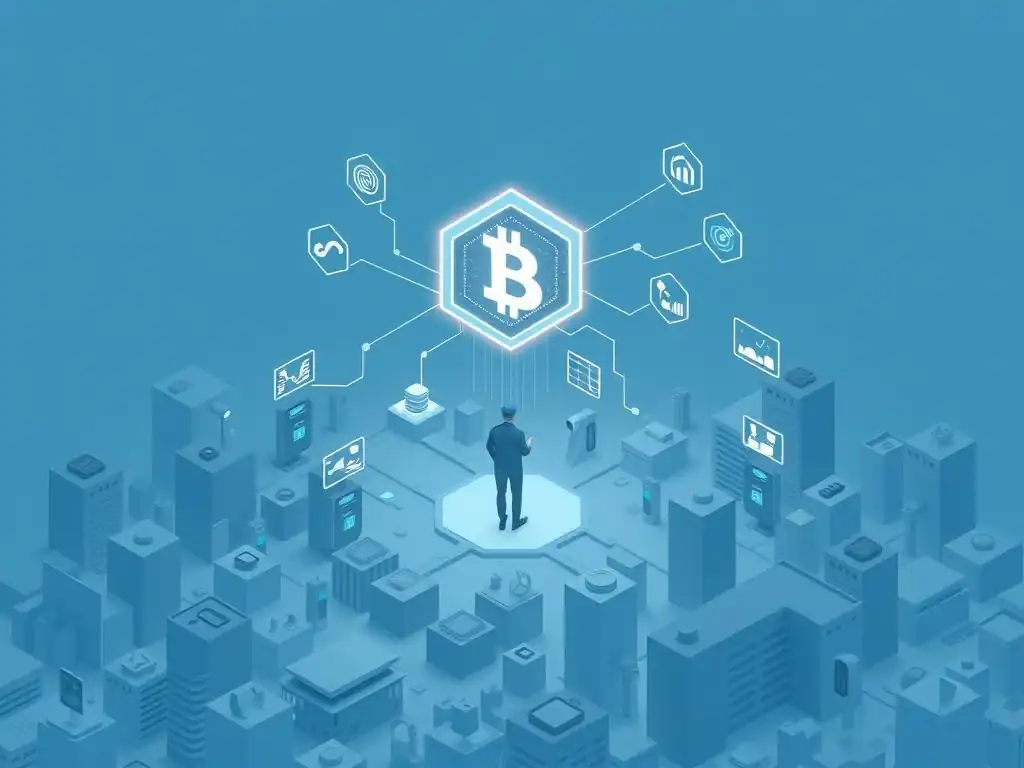
Step 1: Defining the Scope and Requirements of Your IoT Application
The initial and most crucial step in the IoT blockchain app development process is clearly defining the scope and requirements of your application. What specific problem are you trying to solve? What are the key functionalities needed?
Identify the types of IoT devices involved, the data they will collect, and how that data needs to be processed, stored, and utilized. Determine the level of decentralization required – does it need to be fully permissionless like a public chain, or would a permissioned network be more suitable for enterprise use? Consider the number of devices, the frequency of data transmission, and the required transaction throughput.
This step involves detailed use case analysis. For example, if building a smart grid peer-to-peer energy trading platform, you need to define how smart meters will interact, how energy data will be validated, the rules for trading, and how payments will be processed. Consider the stakeholders involved (households, utilities, regulators) and their respective access needs. Document all functional and non-functional requirements, including security standards, performance expectations (latency, throughput), and scalability needs. A well-defined scope prevents feature creep and provides a clear roadmap for the subsequent development steps in this IoT blockchain app development guide.
Step 2: Selecting a Blockchain Platform [e.g., Ethereum, Hyperledger Fabric, IOTA]
Based on the requirements defined in Step 1, select the most appropriate blockchain platform. Revisit the considerations discussed earlier regarding public vs. permissioned chains, scalability, transaction costs, smart contract capabilities, and the existing ecosystem and developer support. If your application requires high transparency and operates in a trustless environment with potentially many unknown participants, a public chain like Ethereum (perhaps with Layer 2 scaling) might be suitable.
If you are building an enterprise solution involving known entities and require high throughput and privacy, Hyperledger Fabric or Corda could be better choices. For feeless microtransactions and high volumes of device data, platforms like IOTA warrant consideration.
Evaluate the platform's documentation, developer tools (SDKs, APIs), and community support. Consider the programming languages supported for smart contract development (e.g., Solidity for Ethereum, Chaincode/Go for Hyperledger Fabric). Look into the platform's consensus mechanism and its implications for security and energy consumption. For instance, Proof-of-Work (PoW) chains like older Ethereum versions are energy-intensive, while Proof-of-Stake (PoS) or other mechanisms are more energy-efficient. Make an informed decision that aligns with your application's technical needs, business model, and regulatory environment.
Step 3: Designing and Developing Secure Smart Contracts for Device Interaction
Smart contracts are central to automating interactions in your IoT DApp. Design your smart contracts to handle the specific logic required for your application – whether it's managing device identities, processing data inputs from sensors, triggering actions based on data thresholds, or facilitating value exchange between devices or users. Use a secure and well-audited smart contract language. For Ethereum, Solidity is the standard. For Hyperledger Fabric, Chaincode can be written in Go, Node.js, or Java. Focus on writing clean, modular, and efficient code.
Prioritize security during development. Smart contracts are immutable once deployed, making vulnerabilities costly or impossible to fix without complex upgrade mechanisms. Follow best practices for smart contract security, such as reentrancy protection, integer overflow/underflow checks, and access control mechanisms.
Conduct thorough testing, including unit tests, integration tests, and formal verification if possible. Consider using established frameworks and libraries that have been audited. Given the potential value or critical operations managed by IoT DApps, investing in third-party security audits of your smart contracts by reputable firms is highly recommended before deployment, a crucial part of any serious IoT blockchain app development guide.
Step 4: Integrating IoT Devices with the Blockchain Network and Data Oracles
Connecting diverse IoT devices, often with limited processing power and connectivity, to a blockchain network is a technical challenge. Devices need a way to securely authenticate themselves and interact with the blockchain, typically by signing transactions. This often involves running lightweight client software on the devices or using a gateway device that aggregates data from multiple sensors and interacts with the blockchain on their behalf. The gateway approach can reduce the computational load on individual devices and minimize the number of transactions sent to the chain.
Data oracles are often necessary to bring real-world data from IoT devices onto the blockchain, as blockchains themselves cannot directly access external information. Oracles act as bridges, feeding verified data from sensors into smart contracts. Designing robust and trustworthy oracles is critical to prevent malicious actors from feeding false data to manipulate smart contract execution. Consider using decentralized oracle networks (like Chainlink) for increased reliability and security, or build your own oracle solution with strong data validation and consensus mechanisms among multiple data sources. Securely managing device keys and credentials used for authentication and transaction signing is also paramount.
Step 5: Rigorous Testing and Secure Deployment of the DApp
Before deploying your IoT blockchain application, rigorous testing is essential across all layers – from the individual IoT devices and sensors to the smart contracts and the DApp user interface. Test device connectivity and data transmission reliability. Test the smart contracts thoroughly under various scenarios, including edge cases and invalid inputs. Simulate high volumes of data and transactions to assess the platform's scalability and your DApp's performance. Conduct integration testing to ensure seamless interaction between devices, oracles, smart contracts, and any off-chain components.
Security testing is paramount. Conduct penetration testing on your DApp, gateway devices, and smart contracts. Look for vulnerabilities in the code, potential attack vectors on the network, and weaknesses in device authentication. Once testing is complete and you are confident in the DApp's stability and security, deploy it to the chosen blockchain network. Develop a deployment strategy that minimizes downtime and includes rollback plans in case of unforeseen issues. Implement continuous monitoring of the DApp's performance and security post-deployment, as recommended in any professional IoT blockchain app development guide.
Addressing Challenges in IoT DApp Development
Ensuring Interoperability Between Diverse IoT Devices and Blockchains
One of the major hurdles in large-scale IoT deployments is the fragmentation of the ecosystem, with a vast array of devices using different protocols, standards, and data formats. Integrating this diverse landscape with blockchain technology, which itself has multiple platforms and standards, adds another layer of complexity.
Ensuring seamless interoperability between heterogeneous IoT devices and different blockchain networks is a significant challenge for IoT blockchain app development. A sensor using MQTT might need to interact with a blockchain node expecting data formatted for a smart contract on Ethereum, while another device using CoAP needs to communicate with a Hyperledger network.
Addressing this requires developing middleware or gateway solutions that can translate between different IoT protocols and blockchain communication standards. Standardizing data formats and APIs for interaction between devices, gateways, and blockchain layers is crucial. Furthermore, achieving interoperability between different blockchain networks (cross-chain communication) is an active area of research and development. Solutions like atomic swaps or interoperability protocols (e.g., Polkadot, Cosmos) are being explored to enable assets or data to move between different chains, which could eventually allow IoT devices connected to one blockchain to securely interact with DApps or devices on another.
Mitigating Security Risks in IoT and Blockchain Architectures
While blockchain enhances security, integrating it with IoT introduces new potential attack vectors that must be carefully mitigated. IoT devices themselves are often resource-constrained and can be vulnerable if not properly secured. Compromised devices could be used to feed false data to the blockchain (the "garbage in, garbage out" problem) or participate in distributed denial-of-service (DDoS) attacks. Securely managing cryptographic keys on potentially insecure IoT devices is a significant challenge. If a device's private key is compromised, an attacker could potentially impersonate the device and send malicious transactions.
Mitigation strategies include implementing strong device authentication and identity management from the outset, potentially using hardware security modules (HSMs) on devices where feasible. Employing secure boot processes and over-the-air (OTA) firmware updates with cryptographic verification is essential to prevent devices from being compromised and manipulated.
On the blockchain side, robust data validation mechanisms, potentially involving multiple oracles or consensus among devices, can help detect and filter out malicious data inputs. Continuous security monitoring of both the IoT devices and the blockchain network is necessary to identify and respond to threats in real-time, a critical aspect of any comprehensive IoT blockchain app development guide.
The decentralized nature of blockchain and the borderless potential of IoT applications create complexities when navigating existing regulatory and legal frameworks. Data privacy regulations (like GDPR, CCPA) are designed for centralized data control and can be challenging to apply to distributed ledgers where data immutability is a core feature. Determining jurisdiction for decentralized applications operating across different geographic regions is also difficult. Furthermore, the legal status of smart contracts and the enforceability of agreements executed autonomously by code on a blockchain are still evolving areas of law.
Addressing these challenges requires careful consideration of the legal implications during the design phase of IoT blockchain app development. For data privacy, employing techniques like off-chain storage for sensitive data and using privacy-preserving technologies is crucial for compliance. Seeking legal counsel knowledgeable in both blockchain and IoT regulations is highly recommended. Designing DApps with flexibility to adapt to evolving legal requirements, potentially through upgradeable smart contracts or modular architectures, can help future-proof the application. Engaging with regulatory bodies and participating in industry discussions around standards and legal frameworks for decentralized technologies is also beneficial.
Future Trends in IoT and Blockchain
The Growth of Decentralized IoT Data Marketplaces
A significant future trend is the emergence of decentralized marketplaces for buying and selling IoT data. As billions of devices collect diverse data (environmental, health, location, industrial), blockchain can provide a secure and transparent platform for data producers (device owners) to share or monetize their data with data consumers (businesses, researchers) without intermediaries. Smart contracts can automate data exchange and payment based on predefined terms. This allows individuals and small businesses to benefit from the data they generate, fostering a more equitable data economy.
Platforms are being developed that allow individuals to securely contribute data from their smart home devices or wearables in exchange for cryptocurrency or tokens. Companies could purchase aggregated, anonymized data sets for market research or product development. The blockchain ensures the provenance and integrity of the data, building trust between buyers and sellers. This trend is poised to unlock significant value from the vast amounts of untapped IoT data and is a key area of innovation in IoT blockchain app development.
Edge Computing and Blockchain Integration for Real-Time Data Processing
Edge computing, processing data closer to where it is generated (on the device or a local gateway), is becoming increasingly important for IoT applications requiring low latency and real-time decision-making. Integrating edge computing with blockchain can enhance the efficiency and security of IoT data processing. Instead of sending all raw data to a central cloud or blockchain, data can be processed and analyzed at the edge. Only verified, relevant, or aggregated data is then sent to the blockchain for recording or triggering smart contracts. This reduces the data load on the network and minimizes transaction costs.
For instance, in an industrial setting, edge devices could process sensor data from machinery to detect anomalies in real-time. If an anomaly indicating potential failure is detected, the edge device could trigger a smart contract on the blockchain to initiate a maintenance request or alert relevant personnel. The blockchain record would provide an immutable audit trail of the event and the triggered action. This combination of edge processing for speed and blockchain for trust and auditability represents a powerful future direction for IoT blockchain app development.
The Impact of 5G and LPWAN Technologies on IoT Blockchain Performance
The rollout of advanced communication technologies like 5G and Low-Power Wide-Area Networks (LPWANs) will significantly impact the performance and capabilities of IoT blockchain applications. 5G offers extremely high bandwidth and ultra-low latency, enabling real-time communication between a massive number of devices. This is critical for applications requiring instantaneous data transfer and response, such as autonomous vehicles or remote surgery, and can facilitate faster interaction with blockchain networks.
LPWAN technologies (like LoRaWAN, NB-IoT) are designed for low-power, long-range communication for devices that send small amounts of data infrequently, such as environmental sensors or asset trackers. While their bandwidth is limited, their energy efficiency allows devices to operate for years on a single battery, enabling deployments in remote or hard-to-reach locations.
These networks can efficiently transmit sensor data to gateways that then interact with the blockchain. The combination of high-speed 5G for critical, real-time interactions and LPWANs for low-power data collection, both integrated with blockchain, will enable a wider range of scalable and efficient IoT blockchain app development possibilities in the future.
Conclusion: Building a Secure and Efficient Future with Decentralized IoT Applications
Frequently Asked Questions
What are the primary benefits of using blockchain for IoT applications?
Blockchain enhances IoT by providing improved security, increased transparency, and enhanced data integrity. This leads to more trustworthy and reliable IoT systems.
What are some key considerations when developing a DApp for IoT devices?
Key considerations include device resource limitations, data privacy regulations, and scalability concerns to ensure the DApp functions effectively within the IoT ecosystem.
How does blockchain facilitate secure data exchange between IoT devices?
Blockchain utilizes cryptography and a distributed ledger to create a tamper-proof record of data transactions, ensuring secure and auditable data exchange between devices.
What role does DeFi play in the context of IoT blockchain app development?
DeFi principles can enable decentralized payment systems for IoT devices, facilitating automated transactions and micro-payments based on device performance or data usage.
What are the potential challenges facing IoT blockchain app development?
Challenges include integration complexities, scalability limitations of some blockchain networks, and the high computational costs associated with blockchain operations.
Final Reflection: Bridging Worlds with Decentralized IoT
The journey we've explored, charting the course of DApp development for the Internet of Things, isn't just a theoretical exercise. It's a tangible roadmap for a future where devices communicate securely and autonomously, empowered by the transparency and resilience of blockchain technology. The potential to revolutionize industries, from supply chain management to smart homes, is not a distant dream, but a rapidly approaching reality.
This fusion of IoT and blockchain is more than just technological innovation; it's a shift in how we perceive trust and control in a connected world. Witnessing the convergence of these two powerful forces has been profoundly inspiring, highlighting the potential for a more equitable and secure digital landscape. The Internet of Things promises a world where everything is connected, but blockchain ensures that everything is trusted.
This quote encapsulates the core value proposition: building a future where data integrity and user autonomy are paramount.
As we conclude this exploration of IoT blockchain app development, I invite you to consider your own role in shaping this future. How can you leverage these technologies to create solutions that address real-world challenges? How can you contribute to a more decentralized, secure, and interconnected world? The possibilities are limitless, and the time to act is now. Let's build a future where technology empowers us all.
Revolutionize Your IoT Vision: Build Your First DApp!
Thank you for exploring the exciting world of decentralized applications for the Internet of Things. We hope you've gained valuable insights into how blockchain technology can enhance IoT devices and systems. Now, it's time to turn those insights into action!
Are you ready to connect physical devices with secure, decentralized networks? Here are some ways to get started:
- Begin prototyping a simple DApp for a single IoT device. Whether it's smart sensors, home automation systems, or a basic supply chain tracker, the key is to get hands-on and experiment. This is your first step toward creating real-world solutions.
- Explore open-source IoT and blockchain projects on platforms like GitHub. See how others are addressing similar challenges and contribute your own ideas!
- Share this article with colleagues and fellow innovators in the blockchain and IoT communities. Let’s foster a conversation and work toward a more connected, decentralized future!
What groundbreaking IoT application will you decentralize first? Share your ideas in the comments below!
Leave a Reply