
DApps and the Metaverse: Building Decentralized Experiences in Virtual Worlds

Welcome to Blockchain Trends, your compass in the rapidly evolving landscape of blockchain technology.
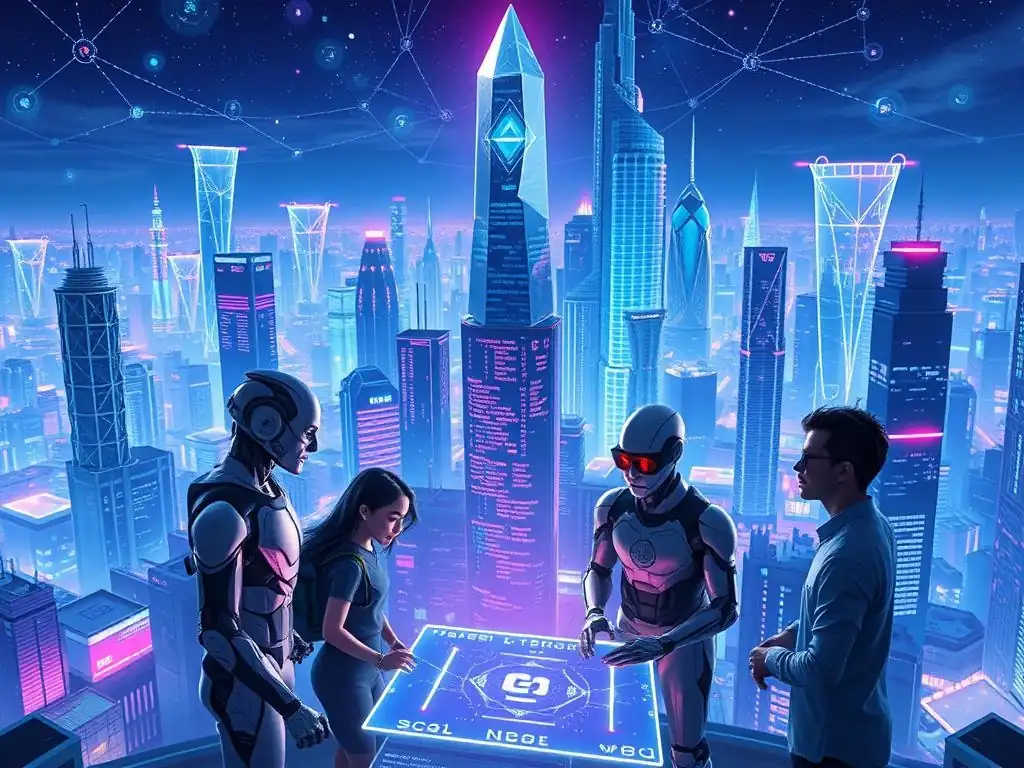
Imagine a future where the metaverse isn't controlled by a single entity, but powered by decentralized applications. Our latest exploration delves into the exciting world of Decentralized Metaverse App Development, uncovering how DApps are reshaping virtual experiences and empowering creators. Ready to build the future? Dive in and discover the potential!
- DApps and the Metaverse: Building Decentralized Experiences in Virtual Worlds
- Key Components of Decentralized Metaverse Applications
-
Decentralized Metaverse App Development: A Step-by-Step Guide
- Planning Your Decentralized Metaverse Application: Use Cases and Target Audience
- Choosing the Right Blockchain Platform for Your Metaverse Project: Ethereum, Solana, Polygon
- Designing Immersive User Experiences for Decentralized Virtual Worlds
- Integrating NFTs and Digital Assets into Your Metaverse DApp
- Implementing Smart Contracts for Secure and Transparent Interactions
- Testing and Deploying Your Decentralized Metaverse Application
- User Interface/User Experience (UI/UX) Considerations for Metaverse DApps
-
Use Cases: Examples of Decentralized Metaverse Applications
- Decentralized Gaming Platforms: Play-to-Earn and Community Ownership
- Virtual Land Ownership and Development: Creating and Monetizing Virtual Real Estate
- Decentralized Social Experiences: Connecting and Interacting in Virtual Worlds
- Decentralized Commerce and Marketplaces: Buying and Selling Digital Goods and Services
- Decentralized Art Galleries and Museums: Showcasing and Collecting Digital Art
-
Challenges and Opportunities in Decentralized Metaverse App Development
- Scalability Limitations and Potential Solutions
- Security Considerations and Best Practices for Smart Contracts
- Interoperability Challenges and the Need for Cross-Chain Solutions
- Governance and Community Management in Decentralized Metaverse Projects
- The Future of Decentralized Metaverse App Development: Trends and Innovations
- The Future of Decentralized Metaverse Experiences
- Conclusion: Embracing the Potential of Decentralized Metaverse App Development
-
Frequently Asked Questions
- What exactly is a Decentralized Metaverse App (DApp) and how does it differ from a regular metaverse app?
- How does blockchain technology enhance the security of metaverse applications?
- What are the primary benefits of using a decentralized approach for metaverse app development?
- What are the biggest challenges in developing DApps for the metaverse?
- What is the future outlook for Decentralized Metaverse App Development?
- Final Reflection: Embracing the Decentralized Metaverse
- Ignite Your Metaverse Journey!
DApps and the Metaverse: Building Decentralized Experiences in Virtual Worlds
What is the Metaverse and Why Decentralization Matters?
The Metaverse is envisioned as a persistent, interconnected network of virtual worlds, objects, and people, facilitating real-time interactions. It aims to transcend the limitations of physical reality, allowing users to engage in diverse activities such as working, socializing, gaming, and trading digital assets within immersive digital environments. While early iterations and centralized platforms like Meta's Horizon Worlds exist, the true potential of the Metaverse, as advocated by many technologists and futurists, lies in decentralization.
Decentralization is critical because it prevents any single entity from controlling the entire virtual ecosystem. In a decentralized Metaverse, no corporation or individual holds the keys to user data, digital identity, or asset ownership. This model fosters an open environment where users have true sovereignty over their digital lives, assets, and creations, contrasting sharply with the walled gardens of centralized platforms where terms of service can change arbitrarily, and accounts can be suspended without recourse. Decentralization ensures resilience, censorship resistance, and promotes an open standard for interoperability, which is fundamental for a truly interconnected network of virtual worlds.
The Role of DApps in Shaping Immersive Metaverse Experiences
Decentralized Applications, or DApps, are software applications that run on a decentralized network, typically a blockchain. Unlike traditional apps that rely on centralized servers, DApps operate transparently and immutably, their logic governed by smart contracts. Within the Metaverse, DApps serve as the functional layer, providing the core mechanics and interactions that make virtual worlds dynamic and useful.
DApps power everything from play-to-earn gaming economies and decentralized governance systems (DAOs) to virtual marketplaces for digital assets and platforms for hosting events or creating content. They enable users to participate in the Metaverse's economy, own their digital property (via NFTs), vote on the future development of virtual spaces, and interact peer-to-peer without requiring a central authority to facilitate the action. This integration is fundamental to realizing the vision of a user-owned and operated virtual universe, making Decentralized Metaverse App Development a crucial area of focus.
Benefits of Decentralized Metaverse App Development: Ownership, Interoperability, and Innovation
One of the foremost benefits of Decentralized Metaverse App Development is the enablement of true digital ownership. Through blockchain technology, particularly Non-Fungible Tokens (NFTs), users can own unique digital assets like virtual land, avatar wearables, or in-game items verifiable on a public ledger. This ownership is absolute; assets cannot be arbitrarily removed or duplicated by a central authority, providing users with control and the ability to freely trade or transfer their digital property.
Furthermore, decentralized approaches inherently promote interoperability. While challenges remain, the use of open blockchain protocols and standards (like ERC-721 for NFTs or common token standards) lays the groundwork for assets and identities to potentially traverse different virtual environments built on compatible networks. This contrasts with centralized platforms where assets are typically locked within a single ecosystem.
Finally, decentralization fosters innovation by lowering barriers to entry for developers and creators. Anyone can build DApps that interact with the decentralized Metaverse infrastructure, leading to a more diverse and rapidly evolving ecosystem without needing permission from a central gatekeeper. This open innovation model is a significant advantage of Decentralized Metaverse App Development.
Key Components of Decentralized Metaverse Applications
Blockchain Infrastructure for Metaverse DApps: Scalability and Security
The foundational layer for Decentralized Metaverse App Development is the blockchain infrastructure. This network provides the decentralized ledger for recording transactions, managing digital assets, and executing smart contracts. Key considerations when choosing a blockchain include its scalability (transaction throughput and latency) and security (resistance to attacks and consensus mechanism robustness).
Ethereum has been a popular choice due to its large developer community and established ecosystem, transitioning from Proof-of-Work (PoW) to Proof-of-Stake (PoS) to improve scalability and reduce energy consumption. While Ethereum mainnet transaction costs (gas fees) can be high during peak times (sometimes exceeding $50-$100 for complex operations in the past, though fluctuating significantly), its security record is strong.
Alternative blockchains are gaining traction for Decentralized Metaverse App Development, often prioritizing higher transaction speeds and lower costs. Solana, for instance, boasts theoretical speeds of tens of thousands of transactions per second with minimal fees (fractions of a cent), making it suitable for high-frequency interactions within a virtual world, though it has faced stability concerns.
Polygon, an Ethereum Layer 2 scaling solution, offers faster and cheaper transactions (often less than $0.10 per transaction) while benefiting from Ethereum's underlying security, making it a viable option for many Metaverse projects seeking scalability without abandoning the Ethereum ecosystem. Flow, developed by Dapper Labs, is another blockchain specifically designed for consumer-facing applications, including NFTs and games, focusing on ease of use and scalability.
Smart Contracts: The Building Blocks of Metaverse Interactions
Smart contracts are self-executing contracts with the terms of the agreement directly written into code. They run on the blockchain and automatically execute predefined actions when specific conditions are met, without the need for intermediaries. In the context of Decentralized Metaverse App Development, smart contracts are fundamental, automating virtually every interaction involving value or logic.
They manage the ownership and transfer of virtual land and NFTs, automate game rules and outcomes in play-to-earn games, facilitate decentralized governance voting within DAOs that manage virtual worlds, and power decentralized marketplaces for buying and selling digital assets. For example, a smart contract can ensure that when a user purchases an NFT wearable in a Metaverse store, the funds are automatically transferred to the seller, and the NFT is simultaneously transferred to the buyer's wallet, all transparently recorded on the blockchain.
The security and correctness of these smart contracts are paramount, as vulnerabilities can lead to significant financial losses, as seen in past incidents where faulty contract logic was exploited.
NFTs: Enabling Digital Ownership and Unique Assets in Virtual Worlds
Non-Fungible Tokens (NFTs) are cryptographic tokens on a blockchain that represent a unique asset. Unlike cryptocurrencies like Bitcoin or Ether, which are fungible (each unit is interchangeable), each NFT is distinct and cannot be replicated. This makes them ideal for representing unique digital items within the Metaverse, such as parcels of virtual land, custom avatar clothing, rare in-game items, digital art pieces, or even virtual buildings and experiences.
NFTs provide verifiable proof of ownership, scarcity, and authenticity for digital assets. Standards like Ethereum's ERC-721 and ERC-1155 (which allows for both unique and semi-fungible tokens) are commonly used in Decentralized Metaverse App Development. The value of these NFT assets can be substantial; for instance, virtual land parcels in popular metaverses like Decentraland and The Sandbox have sold for hundreds of thousands, and in some cases, millions of dollars, reflecting the perceived value and utility within those virtual economies. This ability to own, trade, and monetize unique digital creations is a cornerstone of the decentralized Metaverse experience.
Decentralized Storage Solutions for Metaverse Content: IPFS and Arweave
While blockchain is excellent for recording transactions and ownership (metadata for NFTs, smart contract logic), it is not efficient for storing large amounts of data like 3D models, textures, audio files, or complex scene descriptions that make up the visual and interactive elements of a virtual world. Storing this content on centralized servers would reintroduce a single point of failure and control, undermining the decentralized ethos.
Decentralized storage solutions address this challenge. IPFS (InterPlanetary File System) is a peer-to-peer network protocol designed to store and share hypermedia in a distributed manner. Content is addressed by its hash, ensuring its integrity.
Arweave is another solution offering permanent, decentralized data storage, where users pay a one-time fee to store data indefinitely. Decentralized Metaverse App Development often utilizes these technologies to store the actual digital assets associated with NFTs (like the 3D model of an avatar accessory) or the data comprising virtual environments, ensuring that the content remains accessible and censorship-resistant as long as the network exists, independent of any single company's servers.
Decentralized Metaverse App Development: A Step-by-Step Guide
Planning Your Decentralized Metaverse Application: Use Cases and Target Audience
The initial phase of Decentralized Metaverse App Development involves thorough planning. This begins with clearly defining the core use case for your application. Will it be a game, a social hub, a marketplace, a platform for virtual events, or something entirely new? Identifying the primary purpose will guide subsequent technical and design decisions. Equally important is understanding your target audience – who are you building this for? Are they experienced crypto users, gamers, artists, businesses, or a broader mainstream audience? Their technical familiarity and expectations will heavily influence the required user experience and onboarding process.
Developing a clear scope, outlining key features, and creating user stories are essential steps in this planning phase. Consider the unique advantages that decentralization brings to your specific use case. How does true ownership, transparency, or censorship resistance enhance the user experience or enable new possibilities that aren't feasible with centralized alternatives? For example, if building a game, focus on how play-to-earn mechanics or player-owned assets create a more engaging and rewarding experience compared to traditional gaming models.
Choosing the Right Blockchain Platform for Your Metaverse Project: Ethereum, Solana, Polygon
Selecting the appropriate blockchain platform is a critical decision in Decentralized Metaverse App Development, impacting everything from transaction costs and speed to security and the available developer tools. As discussed earlier, various platforms offer different trade-offs. Ethereum (including Layer 2 solutions like Polygon) remains popular due to its robust security, large developer community, and extensive tooling and existing user base familiar with MetaMask and ERC standards. It's a strong choice for applications where security and network effects are paramount, provided scaling solutions are utilized to manage fees and speed.
Solana offers significantly higher transaction throughput and lower fees, making it attractive for applications requiring rapid, low-cost interactions, such as fast-paced games or high-volume trading. However, it has a younger ecosystem and has experienced network outages. Other chains like Flow or Binance Smart Chain (now BNB Chain) also present options with varying degrees of decentralization, performance, and ecosystem maturity. The choice should align with the application's specific needs regarding transaction volume, required speed, cost sensitivity, and the desired level of decentralization and security.
Designing Immersive User Experiences for Decentralized Virtual Worlds
Designing the user experience (UX) for a decentralized Metaverse application presents unique challenges compared to traditional software. Beyond creating visually appealing and immersive 3D environments, the design must seamlessly integrate blockchain interactions. This involves designing intuitive ways for users to connect their wallets (e.g., MetaMask, Phantom), view and manage their owned NFTs, initiate and approve blockchain transactions (like trading assets or participating in governance), and understand the status of these on-chain actions without being overwhelmed by technical jargon.
The virtual world itself needs careful design to be engaging and navigable. This includes avatar customization systems, spatial audio for realistic communication, intuitive movement controls, and interactive elements within the environment. The goal is to make the blockchain aspects feel like a natural part of the virtual world experience, rather than a separate, cumbersome interface. Successful Decentralized Metaverse App Development requires balancing technical innovation with user-centric design principles to ensure accessibility and enjoyment for a broad audience.
Integrating NFTs and Digital Assets into Your Metaverse DApp
Integrating NFTs is central to enabling digital ownership within your decentralized Metaverse application. This involves several technical steps. First, you need to define the properties and metadata for the digital assets that will be represented as NFTs (e.g., a unique ID, name, description, link to the asset's visual data on IPFS). Then, you'll need to implement the smart contract logic for minting these NFTs, typically following standards like ERC-721 or ERC-1155 on your chosen blockchain.
The application's front-end must be able to read the blockchain to display the NFTs owned by a user's wallet address. This involves interacting with blockchain nodes or APIs (like Alchemy or Infura).
You also need to integrate functionality for users to interact with their NFTs within the virtual world – equipping wearables on avatars, placing virtual furniture in land parcels, or displaying digital art in galleries. Furthermore, implementing marketplace features, either directly within your DApp or integrating with existing platforms like OpenSea or Blur via their APIs, is crucial for allowing users to trade their owned assets, which is a key aspect of the decentralized economy.
Implementing Smart Contracts for Secure and Transparent Interactions
Smart contract development is the backbone of a decentralized Metaverse DApp's logic. These contracts govern core functionalities such as user registration (often tied to wallet addresses), asset creation and management (minting, transferring, burning NFTs), defining game mechanics or social interactions that involve value exchange, and managing decentralized governance mechanisms (like voting power based on token holdings). Smart contracts must be written in languages compatible with the chosen blockchain, such as Solidity for Ethereum/Polygon or Rust for Solana.
Given the immutability of deployed smart contracts and the value they control, security is paramount. Rigorous testing, including unit tests and integration tests, is essential. Furthermore, professional smart contract audits by reputable third parties are highly recommended to identify vulnerabilities before deployment. Examples of past exploits, such as reentrancy attacks or integer overflows, highlight the critical need for secure coding practices and expert review. Transparently publishing the smart contract code allows the community to verify its logic and security, aligning with the decentralized ethos.
Testing and Deploying Your Decentralized Metaverse Application
Before launching a decentralized Metaverse application to the public, extensive testing is mandatory. This includes unit testing for individual smart contract functions, integration testing to ensure different smart contracts and front-end components interact correctly, and comprehensive end-to-end testing within a test environment. Testing should simulate various user scenarios, including wallet interactions, transaction confirmations, asset transfers, and interactions within the virtual world itself. Performance testing is also crucial to assess how the application handles a large number of concurrent users and on-chain transactions.
Deployment involves deploying the audited smart contracts to the chosen blockchain network (starting with a testnet like Ethereum's Goerli or Sepolia before moving to the mainnet). The front-end application, which interacts with these smart contracts and renders the virtual world, is then typically hosted on decentralized storage solutions like IPFS or traditional hosting, configured to connect to the blockchain nodes or APIs. A phased rollout, starting with a beta or alpha release for a limited group of users, can help identify issues in a live environment before a full public launch.
User Interface/User Experience (UI/UX) Considerations for Metaverse DApps
Effective UI/UX design is crucial for the adoption of Decentralized Metaverse App Development. While the backend relies on complex blockchain technology, the user-facing interface should be as intuitive and familiar as possible. This means designing clear and accessible interfaces for wallet connection and management, making on-chain transactions understandable (e.g., explaining gas fees and confirmation times in simple terms), and seamlessly integrating the display and interaction with digital assets like NFTs within the virtual environment.
Designing for immersion is key in a Metaverse context. The UI should ideally complement the virtual world rather than detract from it. This might involve using in-world UI elements, context-aware menus, and clear visual feedback for actions, especially those involving blockchain transactions. Minimizing friction points, such as complex onboarding processes or confusing transaction flows, is vital for attracting and retaining users, particularly those new to blockchain technology. A well-designed UI/UX bridges the gap between the technical decentralization and a user-friendly, engaging virtual experience.
Use Cases: Examples of Decentralized Metaverse Applications
Decentralized Gaming Platforms: Play-to-Earn and Community Ownership
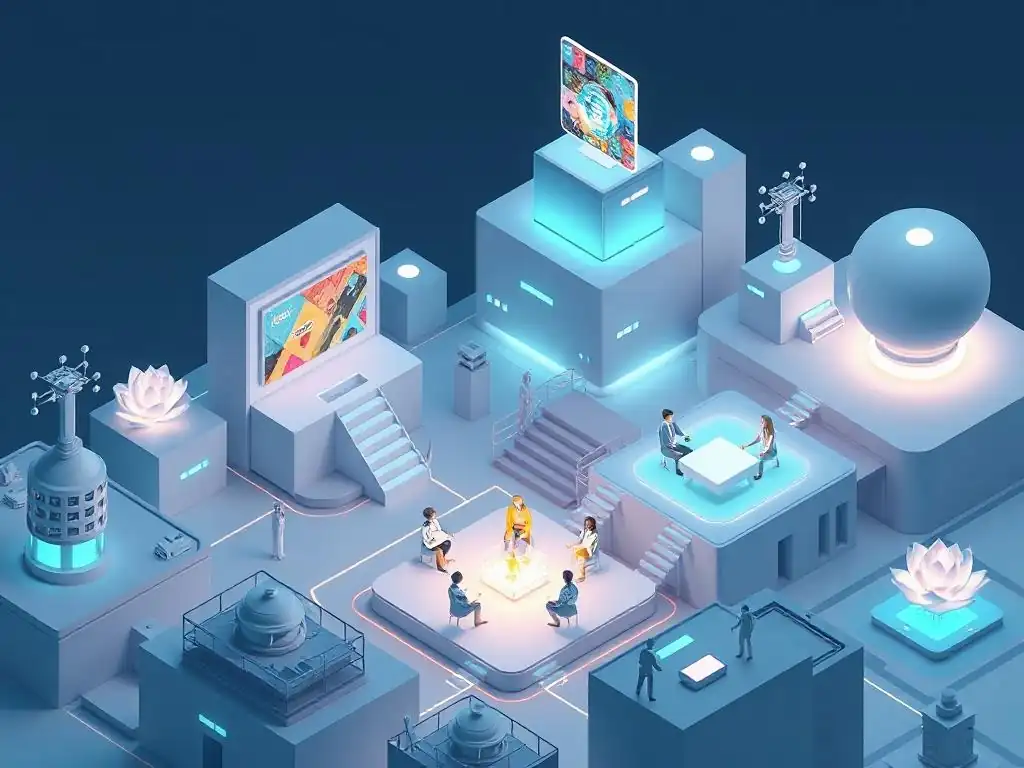
Decentralized gaming platforms are one of the most prominent use cases in Decentralized Metaverse App Development. These platforms leverage blockchain to enable 'play-to-earn' (P2E) models, where players can earn tangible value, typically in the form of cryptocurrency or NFTs, through gameplay. Axie Infinity, for instance, popularized this model, allowing players to earn tokens ( SLP and AXS) and breed/trade NFT creatures (Axies). At its peak, Axie Infinity reportedly had millions of daily active users and generated billions in NFT trading volume.
Beyond P2E, DApps in gaming enable true community ownership. Games like The Sandbox and Decentraland allow users to own virtual land (as NFTs) and create their own experiences on it. Furthermore, many decentralized games are governed by DAOs, giving token holders a say in the game's development, economy, and future direction. This shift from traditional centralized game publishers to community-driven models fundamentally changes the relationship between players and game creators.
Virtual Land Ownership and Development: Creating and Monetizing Virtual Real Estate
Virtual land ownership, represented by NFTs, is a core component of many decentralized metaverses. Platforms like Decentraland and The Sandbox consist of a fixed number of land parcels that can be bought, sold, and developed by users. Owning virtual land allows users to build experiences, host events, display NFT art, or even run virtual businesses.
The value of this virtual real estate can appreciate based on its location, scarcity, and the popularity of the surrounding areas or the platform itself. For example, in Decentraland, land parcels near popular districts or plazas often command higher prices. In late 2021, Republic Realm famously purchased a plot of virtual land in The Sandbox for a reported $4.3 million, highlighting the significant market value that can be attached to prime virtual real estate. Decentralized Metaverse App Development enables the secure and transparent ownership and trading of these valuable digital assets.
While social interaction is a feature in many metaverses, some platforms focus specifically on creating decentralized social experiences. These DApps aim to provide spaces where users can connect, communicate, and build communities without relying on a central authority for identity or moderation. Platforms like Somnium Space or Cryptovoxels (now Voxels) offer persistent virtual worlds where users own their avatars and land, facilitating social gatherings, events, and exhibitions.
Blockchain technology underpins identity management (linking avatars/profiles to wallet addresses), content ownership (user-created structures or items as NFTs), and potentially decentralized moderation or reputation systems. The goal is to create social environments where users have more control over their presence and interactions, free from the potential censorship or data harvesting practices of centralized social media giants. Decentralized Metaverse App Development in this area focuses on building robust identity layers and tools for community building within the virtual space.
Decentralized Commerce and Marketplaces: Buying and Selling Digital Goods and Services
A vibrant economy is crucial for a thriving metaverse, and Decentralized Metaverse App Development facilitates this through integrated commerce and marketplaces. Within these virtual worlds, users can buy and sell digital goods and services, often represented by NFTs, directly using cryptocurrencies. This includes trading virtual land, avatar wearables, in-game items, digital art, or even offering services like virtual architecture or event planning.
Marketplaces are typically powered by smart contracts that automate the transaction process – ensuring that upon purchase, the correct cryptocurrency amount is transferred from the buyer to the seller, and the NFT asset is simultaneously transferred from the seller to the buyer's wallet. Platforms like Decentraland have built-in marketplaces for their specific assets, while integration with broader NFT marketplaces is also common. This decentralized approach removes intermediaries, potentially reducing fees and giving creators and users more control over their transactions.
Decentralized Art Galleries and Museums: Showcasing and Collecting Digital Art
The rise of NFTs has significantly impacted the digital art world, and decentralized metaverses provide ideal venues for showcasing and collecting this art. Decentralized Metaverse App Development enables the creation of virtual art galleries and museums where artists can display their NFT artworks to a global audience. Collectors can purchase these pieces directly within the virtual space, with ownership verifiably recorded on the blockchain.
These virtual galleries can replicate real-world exhibition experiences, allowing avatars to walk through spaces designed to highlight the digital art. Examples include dedicated art districts within metaverses or platforms specifically built for NFT art exhibition. This provides artists with new avenues for distribution and monetization, bypassing traditional gallery systems, and offers collectors new ways to experience and interact with digital art in an immersive environment.
Challenges and Opportunities in Decentralized Metaverse App Development
Scalability Limitations and Potential Solutions
One of the most significant challenges in Decentralized Metaverse App Development is achieving the scale required to support millions of concurrent users interacting in real-time within a complex virtual environment. Current blockchain technologies, especially those with high security like Ethereum mainnet, can struggle with high transaction throughput and incur significant costs (gas fees) during periods of high network activity.
While Layer 2 solutions like Polygon or optimistic/zk-rollups significantly improve transaction speed and reduce costs (often reducing gas fees by 90% or more and increasing transactions per second from ~15 to thousands), they add complexity and can introduce their own security considerations.
Alternative blockchains like Solana or Flow offer higher native throughput but may involve trade-offs in decentralization or network stability. The opportunity lies in the ongoing research and development in blockchain scaling technologies. Future solutions, including further Layer 2 advancements, sharding implementations (like those planned for Ethereum), and cross-chain communication protocols, aim to provide the necessary infrastructure for truly massive, interactive decentralized metaverses. Developers must carefully evaluate the scaling needs of their specific application when choosing a platform.
Security Considerations and Best Practices for Smart Contracts
The security of smart contracts is paramount in Decentralized Metaverse App Development, as vulnerabilities can lead to irreversible loss of digital assets or funds. Unlike traditional applications, smart contracts, once deployed, are immutable, meaning bugs or security flaws cannot typically be fixed easily without deploying a new version, which can be complex and risky. High-profile incidents, such as the hack of the Ronin Network (a sidechain for Axie Infinity) in 2022, which resulted in losses exceeding $600 million, underscore the critical need for robust security measures.
Best practices include writing clean, modular, and simple code, minimizing the attack surface. Thorough testing, including edge cases and potential malicious inputs, is essential. Furthermore, engaging professional smart contract auditors is highly recommended. These experts specialize in identifying vulnerabilities like reentrancy attacks, integer overflows/underflows, or access control issues. Following secure development guidelines and staying updated on common exploits are vital steps to mitigate risks in Decentralized Metaverse App Development.
Interoperability Challenges and the Need for Cross-Chain Solutions
A key promise of the decentralized Metaverse is interoperability – the ability for users, avatars, and assets to move seamlessly between different virtual worlds and platforms. Currently, achieving true interoperability is challenging because many metaverse platforms are built on different blockchains or use distinct technical standards. An NFT owned on Ethereum might not be easily usable or even displayable in a virtual world built on Solana or Flow.
Efforts are underway to address this through the development of interoperability standards and cross-chain solutions like bridges (protocols that allow assets to be transferred between different blockchains). However, bridges themselves have been targets of significant hacks, highlighting their complexity and security risks. The opportunity lies in the collaborative development of open standards for identity, assets, and virtual world representations that can be adopted across various decentralized platforms, fostering a more connected and less fragmented Metaverse ecosystem.
Governance and Community Management in Decentralized Metaverse Projects
Many decentralized metaverse projects aim for community ownership and governance through Decentralized Autonomous Organizations (DAOs). In a DAO, token holders can vote on proposals regarding the project's development, treasury management, or rule changes. While this aligns with decentralization principles, implementing effective DAO governance presents challenges. Issues include low voter participation, the potential for whale (large token holder) dominance, difficulty in reaching consensus on complex technical or strategic decisions, and effectively managing community input and potential disputes.
Developing effective governance models requires careful consideration of token distribution, voting mechanisms (e.g., weighted voting, quadratic voting), proposal processes, and communication channels. Building engaged and active communities is also crucial for successful decentralized governance. The opportunity lies in innovating governance structures that are more inclusive, efficient, and resilient, ensuring that the decentralized Metaverse truly reflects the will of its users and contributors.
The Future of Decentralized Metaverse App Development: Trends and Innovations
The field of Decentralized Metaverse App Development is rapidly evolving, driven by continuous innovation in blockchain technology and related fields. Future trends likely include increased integration with Artificial Intelligence (AI) for creating more dynamic and responsive virtual environments and non-player characters (NPCs). Advancements in rendering technology and streaming will enable more realistic and immersive graphics accessible on a wider range of devices, including mobile and lower-spec hardware.
Further abstraction of blockchain complexities will be crucial for mainstream adoption. This means developing wallets and interfaces that are easier to use, potentially abstracting away seed phrases and gas fees for the end-user. The convergence of blockchain with other technologies like edge computing and decentralized physical infrastructure networks (DePIN) could also play a role in powering the massive computational and storage needs of future metaverses. The opportunity lies in leveraging these trends to build more accessible, performant, and engaging decentralized virtual experiences.
The Future of Decentralized Metaverse Experiences
The Evolution of Metaverse DApps: Increased Immersion and Interactivity
The current generation of Metaverse DApps, while groundbreaking, often offer relatively basic interactions and visual fidelity compared to high-end centralized gaming or simulation platforms. The future will see a significant evolution towards increased immersion and interactivity. Advancements in rendering engines, real-time networking, and the wider adoption of VR/AR technologies will enable virtual worlds that are visually richer and more responsive.
Future Decentralized Metaverse App Development will focus on building DApps that support complex, real-time physics, more sophisticated AI-driven NPCs, and deeper integration with physical devices and sensors. This will allow for more nuanced interactions, realistic simulations, and truly immersive experiences that blur the lines between the physical and digital worlds. Imagine DApps enabling complex collaborative creative projects in virtual studios, highly realistic simulations for training, or live events with unprecedented levels of audience participation and immersion, all underpinned by decentralized principles.
The Impact of Decentralized Metaverse Applications on the Creator Economy
Decentralized Metaverse Applications are poised to have a transformative impact on the creator economy. By enabling true digital ownership through NFTs and facilitating peer-to-peer transactions via smart contracts, they empower creators – artists, musicians, designers, developers, builders – to directly monetize their creations and skills within virtual worlds without relying on traditional platforms or intermediaries that often take significant cuts (e.g., app stores taking 30% of revenue).
Creators can mint their digital art, music, or virtual assets as NFTs and sell them directly to consumers in decentralized marketplaces, retaining a much larger share of the revenue. They can build experiences or games on their owned virtual land and monetize them. Decentralized governance structures also mean creators who contribute significantly can gain influence or ownership within the platforms themselves. This shift fosters a more equitable and direct relationship between creators and their audience, unlocking new economic opportunities.
The Role of Blockchain in Shaping the Future of Virtual Worlds
Blockchain technology serves as the fundamental enabler for the vision of an open, decentralized Metaverse. Its core properties – transparency, immutability, and the ability to verify ownership without a central authority – are essential for building virtual worlds where users have agency and control. Blockchain ensures that the history of transactions, ownership of assets, and the rules governing interactions (encoded in smart contracts) are publicly verifiable and resistant to tampering.
This contrasts sharply with centralized virtual environments where the platform provider controls all data, rules, and assets. The continued evolution and adoption of blockchain technology, including improvements in scalability, security, and ease of use, will be crucial in shaping the future of virtual worlds towards a more open, interconnected, and user-owned paradigm. Decentralized Metaverse App Development is directly driving this future by building the applications and infrastructure that realize this potential.
Ethical Considerations of Decentralized Metaverse Development
While decentralization offers significant benefits, Decentralized Metaverse App Development also raises important ethical considerations. One concern is digital inequality; the cost of acquiring necessary hardware (VR headsets, powerful PCs) and initial digital assets (like NFTs) can create barriers to entry, potentially excluding those with limited financial resources from fully participating.
Another challenge is moderation and safety in decentralized spaces. Without a central authority, enforcing rules against harassment, hate speech, or other harmful behaviors becomes complex. While decentralized governance through DAOs can address this, designing effective and fair moderation systems that respect free expression while protecting users is a significant ethical and technical hurdle. Furthermore, the environmental impact of certain blockchain consensus mechanisms (though Proof-of-Stake significantly reduces this compared to Proof-of-Work) remains a consideration for developers choosing their platform and designing their applications. Addressing these ethical dimensions is crucial for building inclusive and safe decentralized virtual worlds.
Conclusion: Embracing the Potential of Decentralized Metaverse App Development
The convergence of DApps and the Metaverse represents a pivotal shift towards building virtual worlds that are open, user-owned, and resistant to centralized control. Decentralized Metaverse App Development is the key to unlocking this potential, leveraging blockchain technology to enable true digital ownership via NFTs, automate interactions through smart contracts, and provide a resilient infrastructure for immersive experiences. While challenges related to scalability, security, and interoperability persist, ongoing innovation in blockchain technology and collaborative development efforts are paving the way for increasingly sophisticated and accessible decentralized metaverses.
The benefits of enhanced ownership, greater interoperability, and a thriving creator economy underscore the transformative power of building decentralized applications within these emerging virtual frontiers. Embracing Decentralized Metaverse App Development is essential for shaping a future where digital experiences are truly owned and governed by the communities that inhabit them.
Frequently Asked Questions
What exactly is a Decentralized Metaverse App (DApp) and how does it differ from a regular metaverse app?
A Decentralized Metaverse App (DApp) leverages blockchain technology for key functionalities. Unlike regular metaverse apps, DApps offer greater transparency and user ownership due to their decentralized nature. This leads to increased trust and control.
How does blockchain technology enhance the security of metaverse applications?
Blockchain's inherent properties, such as immutability and cryptography, significantly boost security. This makes DApps resistant to tampering and unauthorized access. In the metaverse, this ensures the integrity of virtual assets and transactions.
What are the primary benefits of using a decentralized approach for metaverse app development?
Decentralized approaches offer benefits like enhanced data security, and increased user control over their assets and experiences. They also promote greater transparency and reduce reliance on centralized authorities.
What are the biggest challenges in developing DApps for the metaverse?
Challenges include scalability issues with blockchain networks, the complexity of smart contract development, and the need for improved user interfaces to appeal to a wider audience. Interoperability between different metaverse platforms is also a key challenge.
What is the future outlook for Decentralized Metaverse App Development?
The future is bright, with increasing adoption driven by growing interest in Web3 and the metaverse. Expect to see more sophisticated DApps offering richer, more immersive, and truly user-owned experiences. Regulation will also play a key role in shaping the future landscape.
Final Reflection: Embracing the Decentralized Metaverse
The journey through DApps and the Metaverse reveals a profound truth: the future of virtual worlds hinges on decentralization. As we stand on the cusp of widespread Metaverse adoption, the principles of ownership, transparency, and community governance, so central to DApp development, are no longer optional; they are fundamental to creating truly immersive and equitable digital experiences.
The potential of a decentralized Metaverse to reshape our social and economic interactions is undeniable. Witnessing the nascent stages of this revolution, and understanding the power it places in the hands of creators and users, is both inspiring and humbling. The Metaverse is coming, and it will affect every product, company, and person it touches.
- Matthew Ball. This quote underscores the magnitude of the shift, and the crucial role decentralized app development will play in shaping its trajectory.
Now, consider the possibilities. How can you contribute to building a Metaverse that empowers individuals and fosters genuine connection? Reflect on the principles of decentralization and how you can apply them, not just in the virtual world, but in your own life. The future of the Metaverse is not predetermined; it is being built, brick by digital brick, by those who dare to imagine a more open and equitable digital reality. Let's build it together.
Ignite Your Metaverse Journey!
Thank you for exploring the exciting intersection of decentralized applications and virtual worlds. We hope you've gained valuable insights into how blockchain technology is shaping the future of immersive experiences. Now, let's put that knowledge into action.
Ready to dive deeper? Here's how you can get started:
- Build your first simple decentralized application for a virtual environment. Don't worry about perfection; focus on learning the fundamentals!
- Explore existing integration of decentralized applications within popular metaverse platforms. What unique experiences are others creating?
- Share this article with fellow blockchain enthusiasts and spark a conversation about the future of decentralized virtual worlds.
What is the most exciting application of decentralized applications in the metaverse that you envision building? Share your ideas in the comments below!
Leave a Reply