
Enterprise DApps: Exploring Blockchain Solutions for Business Transformation


Welcome to Blockchain Trends, your definitive source for navigating the evolving landscape of blockchain technology. Are you ready to uncover the secrets to unlocking real-world value beyond cryptocurrencies? This article delves into the burgeoning realm of enterprise DApps, offering a comprehensive look at blockchain business transformation solutions. Curious about how decentralized applications are revolutionizing industries and reshaping the future of business? Let's explore the possibilities...
Enterprise DApps: Exploring Blockchain Solutions for Business Transformation
- Introduction: The Rise of Decentralized Applications in the Enterprise
- Why Choose Blockchain for Your Business? Exploring the Benefits
-
Key Applications of Enterprise DApps Across Industries
- Blockchain Solutions for Supply Chain Management
- Transforming Finance with Decentralized Finance (DeFi) for Enterprises
- Securing Intellectual Property with Blockchain-Based Solutions
- Healthcare Innovation: DApps for Data Management and Patient Empowerment
- Streamlining Identity Management and KYC/AML Compliance
- Building and Deploying Enterprise DApps: A Step-by-Step Guide
- Overcoming the Challenges of Enterprise DApp Adoption
- Real-World Examples of Successful Enterprise DApp Implementations
- The Future of Enterprise DApps: Trends and Predictions
- Conclusion: Embracing Blockchain for Sustainable Business Growth
-
Frequently Asked Questions
- What are Enterprise DApps and how do they contribute to Blockchain business transformation solutions?
- How can Blockchain business transformation solutions implemented via DApps improve supply chain management?
- What regulatory challenges might businesses face when adopting Blockchain business transformation solutions through Enterprise DApps?
- Beyond supply chain, what are some other potential use cases for Enterprise DApps in Blockchain business transformation solutions?
- What are the key considerations for a business looking to implement Blockchain business transformation solutions using Enterprise DApps?
- Final Reflection: Embracing the Decentralized Future
- Reimagine Your Business: Embrace DApp Innovation!
Introduction: The Rise of Decentralized Applications in the Enterprise
Decentralized Applications, or DApps, represent a significant evolution in software development, moving away from centralized control towards distributed networks. While their origins are deeply rooted in the cryptocurrency world, DApps are increasingly being recognized for their potential to drive fundamental blockchain business transformation solutions within established enterprises. This shift is powered by the inherent characteristics of blockchain technology, such as immutability, transparency, and security, which offer compelling advantages over traditional systems. As businesses seek greater efficiency, trust, and resilience, the exploration and adoption of enterprise-grade DApps are accelerating across various sectors.
Understanding the Potential of Blockchain for Business Transformation
Blockchain technology holds the promise of revolutionizing how businesses operate by creating trustless, transparent, and efficient systems. At its core, blockchain is a distributed ledger technology (DLT) that records transactions across many computers, making it virtually impossible to alter past records. This foundational capability enables blockchain business transformation solutions that can streamline complex processes, enhance security, and foster entirely new business models. The potential lies in removing reliance on intermediaries, reducing operational friction, and establishing a single, shared source of truth for data among participating entities.
This transformative potential is particularly relevant in areas plagued by inefficiency, lack of trust, or high transaction costs. Industries like supply chain, finance, and healthcare are exploring blockchain to address long-standing challenges. For instance, studies have estimated that blockchain could reduce supply chain costs by 10-25% and improve efficiency by 15-30% by 2030, highlighting the scale of potential blockchain business transformation solutions. The technology moves beyond simple record-keeping to enable automated execution of agreements via smart contracts, further unlocking value and efficiency.
Defining Enterprise DApps and Their Key Characteristics
Enterprise DApps are decentralized applications specifically designed and built for use within or between businesses. Unlike consumer-focused DApps often found on public blockchains, enterprise DApps frequently leverage private or consortium blockchains, offering greater control over access, scalability, and governance. They are engineered to meet the stringent requirements of corporate environments, including high transaction throughput, integration with existing IT infrastructure, and robust security protocols. These DApps are the practical implementation layer that delivers blockchain business transformation solutions tailored to specific industry needs.
Key characteristics of enterprise DApps include permissioned access, where only authorized participants can join the network; enhanced performance and scalability compared to many public blockchains; and often, a focus on specific business functions like supply chain tracking, digital identity management, or inter-company settlements. While they retain core DApp principles like smart contract automation and distributed ledger technology, they are designed with enterprise-grade reliability and compliance in mind. For example, an enterprise supply chain DApp might process thousands of transactions per minute across a consortium of manufacturers, logistics providers, and retailers, requiring performance levels far beyond early blockchain applications.
Why Choose Blockchain for Your Business? Exploring the Benefits
Adopting blockchain technology, particularly through the implementation of enterprise DApps, offers a multitude of benefits that can significantly enhance business operations and strategic positioning. These advantages collectively form the basis for effective blockchain business transformation solutions. Businesses exploring DLT are often motivated by the promise of improved security, greater efficiency, enhanced data management, and reduced costs, all of which contribute to a more resilient and competitive enterprise.
Enhanced Security and Transparency with Distributed Ledger Technology (DLT)
One of the most compelling reasons for businesses to adopt blockchain is the enhanced security and transparency provided by Distributed Ledger Technology. Because data is replicated and shared across a network of nodes, rather than stored in a single, vulnerable location, the risk of a single point of failure or data manipulation is drastically reduced. Every transaction is cryptographically sealed and linked to the previous one, creating an immutable and auditable trail. This inherent security makes DLT a powerful component of blockchain business transformation solutions, particularly in sensitive areas like financial transactions, record-keeping, and identity management.
Transparency is another key benefit. While not all enterprise blockchains are public, consortium or private blockchains can provide controlled transparency among authorized participants. This means that all relevant parties in a business process, such as a supply chain or a financial consortium, can access the same, up-to-date, and verified information simultaneously. This shared view eliminates discrepancies and disputes, building trust among stakeholders. For instance, in a trade finance scenario, all banks and trading partners involved can see the status of a letter of credit or shipment in real-time on the DLT, significantly improving visibility and reducing fraud potential.
Streamlined Operations and Increased Efficiency Through Automation
Enterprise DApps, powered by smart contracts, can automate business processes that traditionally required manual intervention, intermediaries, or lengthy reconciliation procedures. Smart contracts are self-executing contracts with the terms of the agreement directly written into code. Once predefined conditions are met, the smart contract automatically triggers the next step in a process, such as releasing payment upon verification of goods delivery or transferring ownership of a digital asset. This automation capability is a core element of blockchain business transformation solutions, leading to significant operational efficiencies.
The automation facilitated by DApps can drastically reduce processing times and eliminate bottlenecks. For example, processing international trade finance transactions can take days or even weeks using traditional methods involving multiple documents and approvals. A DApp utilizing smart contracts can potentially reduce this to hours or minutes by automating verification and settlement steps. This not only speeds up operations but also reduces the administrative burden and associated costs, freeing up resources for more strategic activities.
Improved Data Management and Supply Chain Visibility
Data management is a critical challenge for many enterprises, especially those with complex operations spanning multiple partners and geographies. Blockchain provides a robust solution by creating a single, immutable, and shared source of truth for data. Data recorded on a DLT is highly reliable because it is validated by multiple nodes and cannot be retrospectively altered without detection. This improves data integrity and reduces errors that often arise from disparate systems and manual data entry. This enhanced data reliability is fundamental to building effective blockchain business transformation solutions.
Furthermore, DApps built on blockchain can offer unprecedented visibility across complex supply chains. By tracking the movement and status of goods, components, or raw materials at every step – from origin to destination – businesses and consumers gain transparency. Each touchpoint in the supply chain can record information (e.g., location, temperature, ownership transfer) onto the DLT via a DApp interface.
This creates a detailed, verifiable history of a product, which is invaluable for quality control, compliance, recalls, and combating counterfeit goods. For example, tracking a food item from farm to fork allows immediate identification of the source in case of contamination, a capability demonstrated by companies exploring blockchain business transformation solutions in this sector.
Reduced Costs and Intermediaries
One of the most significant economic benefits of adopting blockchain and enterprise DApps is the potential for substantial cost reduction. Much of the cost in traditional business processes is associated with intermediaries – banks, brokers, clearinghouses, escrow services, and verification agents – who facilitate trust and transactions between parties. Blockchain's trustless nature, enabled by its distributed consensus mechanisms and cryptographic security, can significantly reduce or even eliminate the need for some of these intermediaries. This disintermediation is a powerful driver of blockchain business transformation solutions.
Beyond removing intermediaries, DApps can lower operational costs by automating manual tasks, reducing paperwork, and minimizing disputes. For instance, reconciliation processes between businesses can be simplified or eliminated entirely if transactions are recorded and settled on a shared, immutable ledger. The reduction in administrative overhead, transaction fees, and the prevention of fraud and errors all contribute to a healthier bottom line. While initial investment in blockchain infrastructure and DApp development can be substantial, the long-term cost savings and efficiency gains often provide a compelling return on investment.
Key Applications of Enterprise DApps Across Industries
Enterprise DApps are not confined to a single sector; their versatility allows them to be applied across a wide range of industries, addressing specific pain points and unlocking new opportunities for blockchain business transformation solutions. From managing complex global logistics to securing sensitive patient data, DApps offer tailored functionalities that leverage the unique capabilities of blockchain technology. Exploring these diverse applications provides insight into the practical impact of decentralized solutions in the business world.
Blockchain Solutions for Supply Chain Management
Supply chain management is one of the most widely explored and promising areas for enterprise DApps. Global supply chains are notoriously complex, involving numerous parties, geographical locations, and transactions. Challenges include lack of transparency, difficulty in tracking goods, managing documentation, and ensuring authenticity. Blockchain business transformation solutions in this domain aim to create a shared, immutable record of a product's journey, improving visibility, traceability, and trust among participants.
DApps in supply chain management can facilitate various functions, such as tracking the origin and movement of goods, verifying authenticity, managing inventory, automating payments upon delivery milestones (via smart contracts), and handling customs documentation. For example, a DApp could track a shipment of pharmaceuticals from the manufacturing plant, through various distributors and transporters, to the final pharmacy.
Each transfer of custody or status change is recorded on the DLT, providing an undeniable audit trail that helps prevent counterfeiting and ensures regulatory compliance. The ability to instantly verify the provenance of goods adds significant value for both businesses and end consumers.
Transforming Finance with Decentralized Finance (DeFi) for Enterprises
While the term "DeFi" is often associated with consumer-facing applications on public blockchains, the underlying principles of decentralized finance are being adapted to create blockchain business transformation solutions within the enterprise world. Enterprise DeFi focuses on applying DLT and smart contracts to traditional financial processes like trade finance, cross-border payments, lending, and asset tokenization, aiming to increase efficiency, reduce costs, and improve accessibility.
Enterprise DeFi DApps can streamline complex financial workflows. For instance, DApps for trade finance can digitize and automate the process of issuing letters of credit, presenting documents, and settling payments among banks and trading partners, potentially reducing settlement times from days to hours. Another application is the tokenization of real-world assets (like real estate, commodities, or company shares), representing ownership rights as digital tokens on a blockchain. This can increase liquidity, simplify fractional ownership, and automate dividend distributions or royalty payments via smart contracts, opening up new avenues for capital formation and asset management within businesses.
Securing Intellectual Property with Blockchain-Based Solutions
Protecting intellectual property (IP) is a critical concern for businesses across all industries. Traditional methods often involve complex legal processes and centralized databases that can be vulnerable to data breaches or disputes over timestamps and ownership. Blockchain-based DApps offer novel blockchain business transformation solutions for securing and managing IP by providing an immutable and verifiable record of creation and ownership.
DApps for IP management can allow creators to timestamp their work (e.g., designs, code, music, research papers) onto a blockchain, providing undeniable proof of existence at a specific point in time. This can be invaluable in patent disputes or copyright claims.
Furthermore, smart contracts can be used to automate licensing agreements, royalty payments, and the transfer of IP rights, ensuring that creators are compensated automatically whenever their work is used according to predefined terms. For example, a DApp could track the usage of a licensed software component and automatically distribute micropayments to the original developer based on usage metrics recorded on the ledger.
Healthcare Innovation: DApps for Data Management and Patient Empowerment
The healthcare industry faces significant challenges related to data siloization, interoperability, security, and patient access to their own health records. Enterprise DApps are being explored as blockchain business transformation solutions to address these issues, aiming to improve data management, enhance patient privacy, and streamline administrative processes.
Healthcare DApps can enable secure and interoperable sharing of patient data among authorized healthcare providers, researchers, and patients themselves. By storing encrypted patient records on a DLT (with access controlled by private keys), DApps can ensure that data is only accessed by approved parties, maintaining privacy and compliance with regulations like HIPAA. Patients could use a DApp to control who sees their health information and grant temporary access for specific purposes. Furthermore, DApps can streamline processes like insurance claims processing, drug traceability (preventing counterfeiting), and managing clinical trial data with enhanced transparency and auditability.
Streamlining Identity Management and KYC/AML Compliance
Managing digital identities and complying with Know Your Customer (KYC) and Anti-Money Laundering (AML) regulations is a costly and complex task for many businesses, particularly in financial services. Each institution often conducts its own verification process, leading to duplication of effort and poor customer experience. Enterprise DApps are emerging as blockchain business transformation solutions to create more efficient and secure identity management systems.
DApps for identity management can allow individuals or entities to create a self-sovereign digital identity, verified once by a trusted authority and stored securely on a blockchain. The user then controls access to this verified identity, selectively sharing necessary credentials with businesses requiring verification (e.g., for opening a bank account or signing up for a service).
This eliminates the need for repeated verification processes by different entities, reducing costs and improving efficiency for businesses while giving users more control over their data. Smart contracts can automate the process of requesting and granting access to identity attributes, simplifying compliance workflows and reducing the potential for fraud.
Building and Deploying Enterprise DApps: A Step-by-Step Guide
Developing and implementing enterprise DApps requires a structured approach, involving careful planning, technical expertise, and consideration of integration and long-term maintenance. It's a process that goes beyond simple software development, involving strategic decisions about technology, governance, and adoption within the organization and potentially across a consortium of partners. Successfully navigating these steps is crucial for realizing the full potential of blockchain business transformation solutions.
[ ] Define clear business problem and objectives
[ ] Choose appropriate blockchain platform
[ ] Design DApp architecture and smart contracts
[ ] Develop and test smart contracts
[ ] Build front-end interface and integrate with smart contracts
[ ] Integrate DApp with existing enterprise systems
[ ] Conduct comprehensive security audits and testing
[ ] Plan and execute deployment strategy
[ ] Establish governance and maintenance protocols
[ ] Train users and manage change
Choosing the Right Blockchain Platform for Your Business Needs
Selecting the appropriate blockchain platform is a foundational decision in building enterprise DApps. The choice depends heavily on the specific business requirements, including factors like required transaction throughput, latency, privacy needs, consensus mechanism preferences, smart contract capabilities, and the ecosystem of developers and tools available. Public blockchains like Ethereum or newer ones like Solana might be suitable for certain use cases requiring maximum decentralization and transparency, but enterprise requirements often lean towards permissioned platforms offering more control and performance.
Enterprise-grade platforms like Hyperledger Fabric, R3 Corda, and Quorum (an Ethereum-based platform) are popular choices for blockchain business transformation solutions. Hyperledger Fabric, for instance, is highly modular and configurable, allowing businesses to choose consensus mechanisms and membership services tailored to their needs, and supports smart contracts (called "chaincode") in multiple programming languages. R3 Corda is designed specifically for regulated industries like financial services, focusing on privacy and direct peer-to-peer transactions.
Quorum offers a permissioned version of Ethereum with features like private transactions, making it suitable for applications requiring data confidentiality among participants. The decision process often involves evaluating proof-of-concept implementations on several platforms to assess their fit for the specific enterprise DApp use case.
Smart Contract Development and Security Best Practices
Smart contracts are the operational logic of most DApps, automating agreements and processes based on predefined rules. Their development requires specialized skills and adherence to rigorous security best practices, as vulnerabilities in smart contracts can lead to significant financial losses or system failures. Writing secure and efficient smart contracts is paramount for the reliability of blockchain business transformation solutions.
Development typically involves languages like Solidity (for Ethereum and Quorum), Go or Node.js (for Hyperledger Fabric chaincode), or Kotlin/Java (for Corda CorDapps). Key security practices include thorough testing, formal verification (mathematically proving the correctness of the code), and comprehensive security audits by independent third parties. Common vulnerabilities like reentrancy attacks, integer overflows/underflows, and access control issues must be meticulously addressed during the coding and testing phases.
Code should be kept as simple and modular as possible, and battle-tested libraries should be preferred. Given that smart contract code is often immutable once deployed, identifying and mitigating risks before deployment is critically important.
Integrating DApps with Existing Enterprise Systems
Enterprise DApps rarely operate in isolation; they must integrate seamlessly with existing legacy systems, databases, and applications (like ERP, CRM, or supply chain management systems) to be effective blockchain business transformation solutions. This integration layer is often complex and requires careful planning and execution.
Integration can be achieved through various methods, including APIs (Application Programming Interfaces), middleware, and specialized connectors. DApps need to be able to receive data from existing systems (e.g., order details from an ERP) to trigger smart contract execution and send data back to those systems (e.g., confirmed transaction status).
For example, a supply chain DApp might pull shipping data from a logistics provider's database via an API, record it on the ledger, and then push the updated status back to the company's internal tracking system. Ensuring data consistency and synchronization between the decentralized ledger and centralized systems is a key technical challenge that requires robust integration architecture and data governance policies.
Testing and Auditing Your Enterprise DApp for Security and Performance
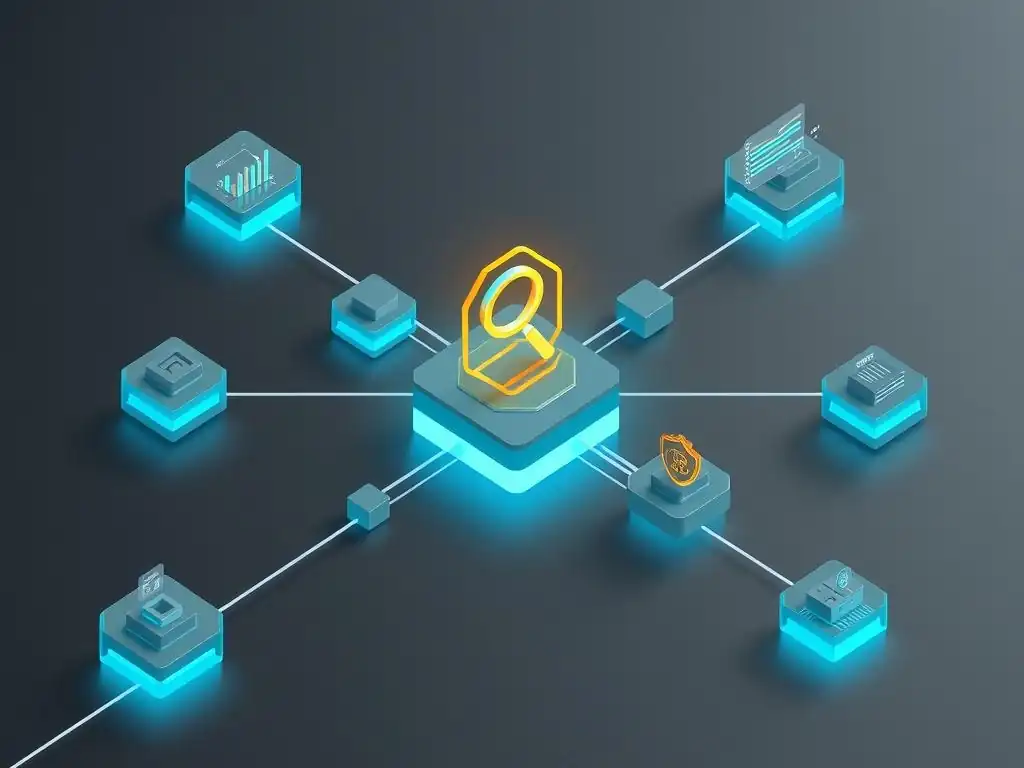
Before deployment, rigorous testing and auditing are essential to ensure the security, performance, and reliability of an enterprise DApp. This phase is critical for mitigating risks and building confidence in the blockchain business transformation solutions being implemented.
Testing should cover unit testing of smart contracts, integration testing with other systems, and comprehensive end-to-end testing of the entire DApp workflow. Performance testing is crucial for enterprise applications, verifying that the DApp can handle the required transaction volume and latency under peak load conditions. Security auditing involves a detailed review of the smart contract code and the overall DApp architecture by security experts to identify and rectify potential vulnerabilities.
Penetration testing can also be conducted to simulate attacks and assess the DApp's resilience. Industry best practices recommend multiple rounds of internal and external audits, especially for DApps handling high-value transactions or sensitive data.
Deployment and Maintenance Strategies for Long-Term Success
Deploying an enterprise DApp involves not just launching the code onto the blockchain network but also managing the infrastructure, onboarding participants, and establishing ongoing maintenance protocols. A well-defined deployment strategy is vital for the successful rollout and adoption of blockchain business transformation solutions.
Deployment varies depending on the chosen platform (e.g., deploying chaincode on Hyperledger Fabric peers or smart contracts on Quorum nodes). It also involves setting up the necessary infrastructure, which could be on-premises or cloud-based (e.g., using services like AWS Blockchain or Azure Blockchain Service).
Post-deployment, ongoing maintenance is necessary, including monitoring network performance, managing node updates, handling potential issues, and potentially upgrading smart contracts (if the platform and design allow, as smart contracts are typically immutable). Establishing clear governance frameworks for managing network participants, handling disputes, and implementing future updates is also crucial for the long-term success and evolution of the enterprise DApp.
Overcoming the Challenges of Enterprise DApp Adoption
Despite the compelling benefits, the path to adopting enterprise DApps and realizing blockchain business transformation solutions is not without its hurdles. Organizations must address significant technical, regulatory, and organizational challenges to successfully implement and scale decentralized applications within their existing structures and processes. Navigating these obstacles requires careful planning, investment, and a willingness to adapt.
Addressing Scalability and Performance Issues
One of the primary technical challenges for enterprise DApps, particularly those handling high transaction volumes, is ensuring adequate scalability and performance. While public blockchains have inherent limitations in throughput, enterprise and consortium blockchains are designed to offer higher performance, but scaling still requires careful consideration of network architecture, consensus mechanisms, and hardware resources.
Achieving enterprise-level scalability often involves choosing platforms optimized for throughput, implementing efficient smart contract design, and optimizing network configurations. Some platforms utilize consensus mechanisms (like Proof-of-Authority or PBFT) that are faster than public chain alternatives (like Proof-of-Work). Techniques like sharding, off-chain transactions (e.g., using state channels or sidechains), and layer 2 scaling solutions are also being explored and developed to increase transaction capacity. For instance, a financial DApp processing thousands of interbank transactions per second requires a platform and architecture capable of handling such volume reliably and with low latency, a key consideration for successful blockchain business transformation solutions.
The regulatory landscape surrounding blockchain technology and DApps is still evolving, presenting significant challenges for enterprises operating in regulated industries. Businesses must ensure that their DApps comply with existing laws and regulations, which can vary significantly across jurisdictions. Legal considerations regarding smart contracts, data privacy, and the legal status of decentralized entities also need careful attention.
Ensuring compliance involves understanding how regulations like GDPR (for data privacy), financial regulations (like KYC/AML), and industry-specific rules apply to DApp operations. For example, while blockchain is often immutable, GDPR requires the right to erasure of personal data, creating a tension that must be resolved through architectural design choices (e.g., storing sensitive data off-chain with hashed references on-chain).
The legal enforceability of smart contracts is another area of development; while code can automate execution, the legal framework for interpreting and enforcing smart contract terms in a court of law is still maturing. Enterprises developing blockchain business transformation solutions must engage legal and compliance experts early in the process.
Ensuring Data Privacy and Security in a Decentralized Environment
While blockchain offers enhanced security through cryptography and distribution, ensuring data privacy and overall system security in an enterprise DApp context requires specific architectural choices and ongoing vigilance. Not all data belongs on an immutable public ledger, especially sensitive business information or personal data.
Enterprise DApps often employ strategies to balance transparency with privacy needs. This includes using permissioned networks where participation and data access are restricted, employing cryptographic techniques like zero-knowledge proofs to verify information without revealing the underlying data, or storing sensitive data off-chain in traditional databases while using the blockchain for integrity checks and access control management.
Security extends beyond the blockchain layer to include securing the DApp's front-end, integration points with existing systems, and the private keys that control access to assets and functions. A single point of failure in these peripheral components can compromise the entire system, highlighting the need for a holistic security approach when implementing blockchain business transformation solutions.
Educating and Training Employees on Blockchain Technology
A significant non-technical challenge is the need to educate and train employees on blockchain technology and how to interact with enterprise DApps. Blockchain introduces new concepts and workflows that can be unfamiliar to the existing workforce. Lack of understanding can lead to resistance to adoption, errors in usage, and missed opportunities to leverage the technology effectively.
Implementing blockchain business transformation solutions requires a change management strategy that includes comprehensive training programs for different levels of the organization – from executives who need to understand the strategic implications to technical staff who will build and maintain the DApps, and end-users who will interact with them daily. Training should cover the basics of blockchain, the specific functionality of the enterprise DApp, and the new processes enabled by the technology. Building internal expertise and championing adoption from within the organization is crucial for overcoming inertia and ensuring the successful integration of DApps into daily business operations.
Real-World Examples of Successful Enterprise DApp Implementations
Examining real-world case studies provides concrete evidence of how enterprise DApps are already delivering tangible blockchain business transformation solutions. These examples showcase the application of blockchain technology to solve complex business problems, improve efficiency, and create new value across different industries. While still relatively early in the adoption curve, these implementations demonstrate the practical viability and impact of enterprise DApps.
Case Study 1: Maersk & IBM - TradeLens Blockchain Platform for Global Trade
One of the most prominent examples of an enterprise DApp consortium is TradeLens, a platform developed by Maersk and IBM. Launched in 2018, TradeLens is a blockchain-based shipping solution designed to provide a single, shared source of truth for container shipments across the global supply chain. The platform connects shippers, freight forwarders, inland transportation providers, ports and terminals, customs authorities, and ocean carriers.
TradeLens uses a permissioned blockchain network (originally based on Hyperledger Fabric) to digitize and automate shipping processes. Participants can securely share and access supply chain events and documents in near real-time. This DApp solution addresses the inefficiencies and lack of transparency inherent in traditional paper-based and disparate systems used in global trade. By providing enhanced visibility and streamlining document flows, TradeLens aims to reduce the time and cost associated with moving goods across borders. Early reports suggested potential reductions in transit time and administrative effort, demonstrating the power of blockchain business transformation solutions in complex multi-party environments.
Case Study 2: Walmart - Blockchain for Food Traceability
Walmart has been a significant early adopter of blockchain technology, particularly for improving food traceability within its supply chain. Working with IBM, Walmart implemented a blockchain-based DApp solution to track food products, starting with mangoes and later expanding to leafy greens. This initiative was driven by the need to improve safety and efficiency in responding to foodborne illness outbreaks.
Before implementing the DApp, tracing the origin of a food item could take days or even weeks, requiring manual calls and searching through paper records. Walmart's blockchain DApp allows them to trace the origin of food from farm to store in seconds. Each step in the supply chain – from the farm where it was grown, to the packer, shipper, and retailer – records data onto the shared ledger via the DApp interface.
This verifiable, immutable record drastically speeds up the traceback process during a recall, potentially saving lives and reducing economic losses. This case study highlights how blockchain business transformation solutions can deliver critical improvements in public safety and operational responsiveness.
Lessons Learned and Best Practices from Early Adopters
The experiences of early adopters like Maersk, IBM, and Walmart offer valuable lessons and best practices for other enterprises considering DApp implementation. One key lesson is the importance of collaboration and building a consortium. Many significant blockchain business transformation solutions involve multiple organizations, requiring governance frameworks and incentives for participation.
Another lesson is the need for a clear, specific use case that blockchain is uniquely positioned to solve. Trying to apply blockchain everywhere is inefficient; success comes from identifying pain points where trust, transparency, or automation across multiple parties are critical. Starting with pilot programs and gradually expanding the scope is often more effective than attempting a large-scale rollout from day one.
Furthermore, these cases underscore the importance of robust technology partners, skilled development teams, and a focus on integrating the DApp with existing business processes rather than replacing everything overnight. Change management and user adoption are also crucial factors determining the ultimate success of these blockchain business transformation solutions.
The Future of Enterprise DApps: Trends and Predictions
The landscape of enterprise DApps and blockchain business transformation solutions is continuously evolving. Several key trends and predictions point towards the future direction of this technology, suggesting increased sophistication, broader adoption, and deeper integration with other emerging technologies. Understanding these trends is vital for businesses planning their long-term blockchain strategy.
The Convergence of Blockchain, AI, and IoT
A significant trend is the increasing convergence of blockchain with other disruptive technologies like Artificial Intelligence (AI) and the Internet of Things (IoT). This convergence can create more powerful and automated blockchain business transformation solutions. IoT devices can collect real-world data (e.g., sensor readings like temperature or location) and feed it directly into a blockchain ledger via a DApp, triggering smart contracts based on verified physical events.
AI can be used to analyze the vast amounts of immutable data stored on enterprise blockchains, identifying patterns, optimizing processes, or predicting outcomes with high confidence. For example, an AI algorithm could analyze supply chain data recorded on a DApp to predict potential delays or identify inefficient routes. Smart contracts could then automatically trigger alternative actions based on these AI-driven insights. This synergy between secure data recording (blockchain), intelligent analysis (AI), and real-world data input (IoT) promises to unlock advanced levels of automation and efficiency in enterprise DApps.
The Growing Importance of Interoperability and Cross-Chain Solutions
Currently, many enterprise DApps operate within siloed blockchain networks (either private, consortium, or specific public chains). However, as the number of DApps and blockchain networks grows, the need for interoperability – the ability for different blockchains and DApps to communicate and exchange data or assets – becomes critical. Future blockchain business transformation solutions will increasingly require seamless interaction across different ledgers.
Solutions for cross-chain interoperability are under active development. These include atomic swaps (allowing direct peer-to-peer exchange of assets between different blockchains), cross-chain bridges (protocols enabling asset or data transfer), and standardized protocols like Polkadot or Cosmos that are built with interoperability in mind. For enterprises, this means a supply chain DApp on one network might need to interact with a trade finance DApp on another, or a digital identity DApp might need to verify credentials across different industry consortia. Achieving this level of interoperability will significantly expand the potential and reach of enterprise DApps.
The Evolution of DApp Governance and Decentralized Autonomous Organizations (DAOs)
As enterprise DApps become more complex and involve multiple stakeholders, the models for their governance are also evolving. While early enterprise DApps often had centralized or consortium-based governance structures, there is a growing interest in incorporating principles from Decentralized Autonomous Organizations (DAOs). DAOs use smart contracts to encode organizational rules and decision-making processes, allowing stakeholders to participate in governance through token-based voting or other decentralized mechanisms.
For enterprise consortia, elements of DAO governance could be used to manage upgrades to the DApp, resolve disputes among participants, or manage shared resources on the network in a more transparent and democratic way. While full decentralization might not be suitable for all enterprise use cases due to regulatory or control requirements, hybrid models incorporating decentralized governance principles are likely to emerge. This evolution in governance models will be crucial for the long-term sustainability and fairness of multi-party blockchain business transformation solutions.
Blockchain Business Transformation Solutions: Looking Ahead
Looking ahead, the trajectory for blockchain business transformation solutions powered by enterprise DApps is one of increasing maturity and integration. We can expect to see more industry-specific DApp platforms emerge, offering tailored functionalities and compliance features. The focus will shift from foundational infrastructure to the development of sophisticated applications that leverage the unique properties of blockchain for specific business outcomes.
Furthermore, as regulatory clarity improves and technical challenges like scalability are further addressed, adoption is likely to accelerate across a broader range of enterprises, including small and medium-sized businesses through DApp-as-a-Service models. The emphasis will be on creating interconnected ecosystems of DApps that can interact seamlessly, unlocking network effects and generating exponential value for participating businesses. The future points towards a business landscape where decentralized applications are not just experimental projects but integral components of core operational and strategic frameworks.
Conclusion: Embracing Blockchain for Sustainable Business Growth
The journey into enterprise DApps represents a significant opportunity for businesses to embark on a path of sustainable growth and transformation. By leveraging the foundational strengths of blockchain technology – enhanced security, transparency, efficiency, and automation – enterprises can build robust, resilient, and innovative blockchain business transformation solutions. While challenges related to technology, regulation, and organizational change exist, the potential rewards in terms of cost savings, new revenue streams, and improved competitive positioning are substantial.
Key Takeaways: Implementing Blockchain Transformation Solutions
Implementing effective blockchain business transformation solutions through enterprise DApps requires a strategic and phased approach. Key takeaways include starting with a clear understanding of the business problem blockchain can solve, selecting the right technology platform tailored to enterprise needs, prioritizing security and rigorous testing in smart contract development, and planning for seamless integration with existing systems. Equally important are addressing the non-technical aspects: navigating the evolving regulatory landscape, ensuring data privacy, and investing in employee education and training to foster adoption and proficiency with the new decentralized systems.
The Long-Term Impact of Enterprise DApps on the Business Landscape
The long-term impact of enterprise DApps on the business landscape is expected to be profound. They are poised to reshape traditional industry structures by enabling disintermediation and fostering new models of collaboration and value exchange among businesses. As DApps become more sophisticated and interconnected, they will form the backbone of decentralized business networks, leading to greater efficiency, transparency, and trust across entire ecosystems.
The convergence with AI and IoT will further amplify their capabilities, creating highly automated and intelligent business processes. Embracing enterprise DApps today positions businesses to thrive in this increasingly decentralized and digitally transformed future, making blockchain business transformation solutions a strategic imperative for sustainable success.
Frequently Asked Questions
What are Enterprise DApps and how do they contribute to Blockchain business transformation solutions?
Enterprise DApps, or decentralized applications, are blockchain-based applications designed for business use. They contribute to Blockchain business transformation solutions by offering increased transparency, security, and efficiency in business processes.
How can Blockchain business transformation solutions implemented via DApps improve supply chain management?
DApps can provide immutable records of transactions and movements, ensuring transparency and traceability throughout the supply chain. This enhances trust and reduces fraud, leading to Blockchain business transformation solutions.
What regulatory challenges might businesses face when adopting Blockchain business transformation solutions through Enterprise DApps?
Regulations surrounding blockchain technology are still evolving, creating uncertainty for businesses. Companies need to navigate issues like data privacy, compliance, and legal frameworks when implementing Blockchain business transformation solutions.
Beyond supply chain, what are some other potential use cases for Enterprise DApps in Blockchain business transformation solutions?
DApps can be used for identity management, voting systems, and secure data storage, leading to more efficient and trustworthy business operations. This helps with achieving wider Blockchain business transformation solutions.
What are the key considerations for a business looking to implement Blockchain business transformation solutions using Enterprise DApps?
Businesses should consider scalability, security, and interoperability when choosing a blockchain platform and developing their DApps. Understanding the specific business needs is also crucial for successful Blockchain business transformation solutions.
Okay, here's a final reflection designed to close your article "Enterprise DApps: Exploring Blockchain Solutions for Business Transformation," optimized for the keyword "Blockchain business transformation solutions," and following the structure you provided:
Final Reflection: Embracing the Decentralized Future
The journey through the landscape of Enterprise DApps has revealed the immense potential of blockchain business transformation solutions to reshape industries and redefine operational paradigms. From enhanced transparency and security to streamlined processes and novel business models, the benefits are undeniable. The question is no longer if blockchain will impact businesses, but how quickly and how profoundly it will do so.
The ongoing evolution of DApps is not merely a technological advancement; it's a cultural shift. We are witnessing a move towards greater decentralization, trust, and collaboration, principles that resonate deeply in today's interconnected world. The future of business is decentralized, and blockchain is the key to unlocking that future.
This sentiment underscores the profound impact that blockchain technology, and specifically Enterprise DApps, will have on the very fabric of how we conduct business.
As we stand at the cusp of this decentralized revolution, let us not be passive observers. Instead, let us embrace the challenge, explore the possibilities, and actively contribute to shaping a future where blockchain empowers businesses to thrive, innovate, and create lasting value. Consider how you can integrate these principles into your own organization, and become a pioneer in the era of blockchain business transformation.
Reimagine Your Business: Embrace DApp Innovation!
Thank you for exploring the world of enterprise decentralized applications and discovering their potential to transform how businesses operate. With this knowledge, you can now consider how these innovative solutions might benefit your organization.
Are you ready to take the next step?
- Start by identifying a specific business process within your company that could be improved or streamlined through a decentralized application. Focus on areas where transparency, security, or efficiency are especially important.
- Look into successful implementations of enterprise DApps across various industries and examine the impact they've made. What lessons can you apply to your own context?
- Share this article with your colleagues to initiate a discussion about the possibilities DApps offer your team. Collaborative ideas often lead to unexpected opportunities.
What is the first DApp application you would consider implementing to drive meaningful change in your organization? Share your thoughts below!
Leave a Reply