
Interoperability in DApp Architecture: Connecting Decentralized Applications Across Blockchains


Welcome to Blockchain Trends, your compass in the rapidly evolving world of decentralized innovation. Beyond the hype, blockchain technology is reshaping industries, and we're here to guide you through its real-world applications. Curious about the future of decentralized applications? Our feature article dives deep into Blockchain DApp interoperability challenges solutions, exploring how developers are bridging the gaps between different blockchains to unlock a truly interconnected decentralized future. Discover the innovative solutions and architectural patterns shaping the next generation of DApps, and uncover the potential that awaits. Let's explore!
Interoperability in DApp Architecture: Connecting Decentralized Applications Across Blockchains
- Introduction: The Need for DApp Interoperability Across Blockchains
- Blockchain DApp Interoperability Challenges: Obstacles to Cross-Chain Communication
- Solutions for Blockchain DApp Interoperability: Enabling Cross-Chain Functionality
- Architecting Interoperable DApps: Design Principles and Best Practices
- Real-World Examples of Interoperable DApps: Case Studies and Use Cases
- The Future of Blockchain DApp Interoperability: Trends and Predictions
- Conclusion: Overcoming Blockchain DApp Interoperability Challenges for a Connected Web3
-
Frequently Asked Questions
- What are some of the biggest blockchain DApp interoperability challenges that developers face?
- How does cross-chain communication benefit the overall blockchain ecosystem?
- What are some potential solutions for addressing blockchain DApp interoperability challenges?
- How does regulation play a role in the future of blockchain DApp interoperability?
- What is the future outlook for blockchain DApp interoperability, and what advancements can we expect?
- Final Reflection: Bridging the Decentralized Future
- Unlock the Future: Start Building Your Interoperable DApp Today!
Introduction: The Need for DApp Interoperability Across Blockchains
Understanding the Limitations of Isolated DApps
Decentralized applications (DApps) have traditionally resided within the confines of a single blockchain network. This siloed architecture inherently limits their potential reach and functionality. A DApp built on Ethereum, for instance, cannot directly interact with assets, data, or users on the Solana or Polkadot networks without relying on external mechanisms.
This isolation creates fragmented ecosystems where liquidity is locked within specific chains, user bases are segregated, and the overall utility of the decentralized web is constrained. The inability for DApps to seamlessly communicate and share information hinders the development of complex, multi-chain applications that could leverage the unique strengths of different protocols.
Furthermore, this fragmentation prevents the fluid movement of assets and data essential for a truly interconnected Web3. Users often face cumbersome processes, high fees, and increased risks when attempting to transfer value or information between different blockchain environments. This friction diminishes the overall user experience and acts as a significant barrier to mainstream adoption of DApps. Addressing these limitations is paramount for unlocking the full potential of decentralized technologies and fostering a more integrated and efficient digital landscape where DApps can collaborate and compose across network boundaries.
Why Blockchain DApp Interoperability Matters for the Future of Web3
The future of Web3 hinges significantly on the ability of DApps to operate and interact across different blockchain networks. True blockchain DApp interoperability challenges solutions are not merely technical conveniences but fundamental requirements for building a robust, scalable, and user-friendly decentralized ecosystem. Interoperability enables DApps to access broader liquidity pools, reaching users and assets previously confined to other chains. This cross-chain access facilitates more sophisticated financial applications, enhances the efficiency of decentralized exchanges (DEXs), and opens up new possibilities for supply chain management, gaming, and identity solutions that require data and asset flow across diverse environments.
Moreover, interoperability fosters innovation by allowing developers to build applications that combine the best features of multiple blockchains. A DApp could, for example, leverage Ethereum's established DeFi ecosystem, Solana's high throughput for gaming logic, and a specialized chain's privacy features for sensitive data, all within a single user experience.
This cross-pollination of capabilities accelerates development and leads to more powerful and versatile DApps. Overcoming blockchain DApp interoperability challenges solutions is therefore critical for realizing the vision of a connected, open, and censorship-resistant internet where decentralized applications can interact freely and securely, driving growth and adoption across the entire Web3 space.
Blockchain DApp Interoperability Challenges: Obstacles to Cross-Chain Communication
Technical Barriers: Addressing Heterogeneous Blockchain Protocols
One of the most significant blockchain DApp interoperability challenges lies in the fundamental technical differences between various blockchain protocols. Each blockchain often operates with its own consensus mechanism (e.g., Proof-of-Work, Proof-of-Stake, Delegated Proof-of-Stake), virtual machine (e.g., Ethereum Virtual Machine - EVM, WebAssembly - WASM), programming language (e.g., Solidity, Rust), data structure, and state model. These inherent architectural distinctions make direct communication and state synchronization between chains incredibly complex. It's akin to trying to get two computers running entirely different operating systems and speaking different languages to execute the same program simultaneously without a translator or compatibility layer.
Establishing reliable communication requires building intricate interfaces or middleware that can interpret the data and logic from one chain and translate it into a format understandable by another. This involves complexities like handling different transaction finality times, verifying proofs of state from disparate consensus systems, and ensuring data integrity when information is passed between networks with varying security guarantees. The technical overhead and complexity in developing and maintaining these cross-chain communication channels are substantial, often requiring deep expertise in multiple blockchain architectures, which represents a major hurdle in finding effective blockchain DApp interoperability challenges solutions.
Security Concerns: Mitigating Risks in Cross-Chain Transactions
Security is paramount in any decentralized system, and cross-chain operations introduce new and complex attack vectors, posing significant blockchain DApp interoperability challenges. When assets or data move between chains, they often rely on intermediary systems like bridges or relayers. These systems become high-value targets for malicious actors.
Hacks on cross-chain bridges have resulted in massive losses, highlighting the fragility of current solutions. For example, the Ronin Bridge hack in March 2022 resulted in the theft of approximately $625 million, and the Wormhole bridge hack in February 2022 led to a loss of around $320 million. These incidents underscore the critical need for robust security models that can withstand sophisticated attacks targeting validator sets, smart contracts managing locked assets, or oracle networks relaying information.
Ensuring the integrity of cross-chain transactions requires verifying the validity of events occurring on a source chain before actions are triggered on a destination chain. This verification process, especially when involving non-native tokens or data, is susceptible to manipulation if the verification mechanism is centralized, relies on a small set of validators, or is vulnerable to Sybil attacks.
Designing secure mechanisms that are truly decentralized and cryptographically sound across heterogeneous environments is an ongoing challenge. Mitigating these security risks is perhaps the most critical aspect of developing reliable blockchain DApp interoperability challenges solutions, as user trust and the safety of assets are fundamental.
Scalability Issues: Ensuring Performance in Interoperable DApp Architectures
While interoperability aims to connect disparate networks, the mechanisms used to achieve this connection can introduce their own scalability limitations, adding to the blockchain DApp interoperability challenges. Cross-chain transactions often require processing steps on multiple chains, potentially involving locking assets on one chain, relaying a message, and then minting or unlocking assets on another. This multi-step process can increase transaction latency and overall processing time compared to purely on-chain operations. As the volume of cross-chain activity grows, these bottlenecks can strain the capacity of the interoperability layer and the underlying chains involved.
Furthermore, the verification mechanisms used by interoperability solutions can add significant computational overhead. For instance, light clients or zero-knowledge proofs used to verify state transitions across chains require substantial processing power. If the interoperability solution becomes a bottleneck, it can limit the overall throughput of the interconnected DApps, hindering their ability to scale to handle large user bases or high transaction volumes. Finding scalable blockchain DApp interoperability challenges solutions that can handle increasing demand without sacrificing performance or security is a crucial area of research and development.
Data Consistency and Integrity Across Different Blockchains
Maintaining data consistency and integrity across multiple, asynchronously updating blockchain ledgers presents a complex challenge for DApp interoperability. Each blockchain processes transactions and updates its state independently. When a DApp operating across chains needs to rely on data originating from another network, ensuring that the information is accurate, timely, and has reached finality on the source chain before being acted upon elsewhere is critical. Discrepancies or delays in data propagation can lead to inconsistencies, double-spending risks, or incorrect state updates in the DApp.
Consider a cross-chain lending protocol where collateral is held on one chain and debt on another. If the price feed used to determine the loan-to-value ratio originates from a third chain via an oracle network, ensuring that the price data is consistent and reliable across all relevant chains at the moment of a potential liquidation event is paramount.
Achieving this level of synchronized consistency in a decentralized manner, without relying on a single point of truth, is a significant hurdle. Developing robust mechanisms for cross-chain data verification and state synchronization is essential for building reliable blockchain DApp interoperability challenges solutions.
Solutions for Blockchain DApp Interoperability: Enabling Cross-Chain Functionality
Cross-Chain Bridges: Facilitating Asset Transfers and Data Sharing
Cross-chain bridges are one of the most common types of blockchain DApp interoperability challenges solutions, designed primarily to enable the transfer of assets and, in some cases, data between different blockchain networks. They typically work by locking assets on one chain and minting wrapped or corresponding assets on another, or by burning assets on one chain and releasing native assets on another.
Bridges serve as crucial connectors, allowing users and DApps to move liquidity and utilize assets across previously isolated ecosystems. This has been particularly vital for the growth of DeFi on chains beyond Ethereum, enabling users to access various protocols and yield opportunities.
While essential, the design and implementation of bridges vary significantly, impacting their security and trust assumptions. Understanding the different types of bridges and their underlying mechanisms is key to evaluating their suitability for specific DApp use cases. The reliance on these intermediary mechanisms, however, also makes them potential points of failure or attack vectors, as demonstrated by numerous high-profile bridge hacks. Therefore, careful consideration of the security architecture is paramount when utilizing or building cross-chain bridges as blockchain DApp interoperability challenges solutions.
Types of Blockchain Bridges: Centralized Bridges, Decentralized Bridges
Blockchain bridges can broadly be categorized based on their architecture and trust model. Centralized bridges rely on a trusted third party, such as a company or consortium, to custody assets and validate cross-chain transfers. While often simple to use and potentially faster, they introduce a single point of failure and require users to trust the operator with their assets, fundamentally going against the decentralized ethos of blockchain. Examples include early versions of wrapped tokens managed by centralized entities.
Decentralized bridges, on the other hand, aim to minimize or eliminate reliance on a single trusted party. They achieve this through various mechanisms, such as relying on a decentralized network of validators (e.g., multi-party computation or threshold signature schemes), utilizing light clients to verify state changes on the source chain, or employing optimistic or zero-knowledge proofs.
Examples include bridges like the Multichain (formerly Anyswap) protocol, which uses a network of MPC nodes, or newer designs integrating zero-knowledge proofs for enhanced security verification. While more complex to build and operate, decentralized bridges offer a higher degree of censorship resistance and trustlessness, aligning better with the core principles of Web3 and providing more robust blockchain DApp interoperability challenges solutions.
Security Considerations for Implementing Cross-Chain Bridges
Security is the Achilles' heel for many cross-chain bridges, making it a critical consideration when implementing blockchain DApp interoperability challenges solutions. The primary risks involve the security of the smart contracts managing locked assets, the integrity of the validator or relayer network responsible for verifying and relaying messages, and the potential for oracle manipulation if external data feeds are used. Rigorous auditing of bridge smart contracts is non-negotiable, but even audited code can contain vulnerabilities or be exploited through complex attack vectors.
The security model of the validator network is equally important. A small, centralized, or easily compromisable set of validators can collude to steal locked assets or falsify transactions. Decentralized validator sets, robust consensus mechanisms among validators, and cryptographically verifiable proofs (like light client proofs or zero-knowledge proofs) are essential for enhancing security. Furthermore, implementing robust monitoring systems, multi-signature requirements for critical operations, and bug bounty programs are crucial steps in mitigating the significant risks associated with cross-chain bridge security and improving blockchain DApp interoperability challenges solutions.
Layer-Zero Protocols: Creating an Interoperable Foundation for Blockchains
Layer-Zero protocols represent an alternative approach to addressing blockchain DApp interoperability challenges by providing a foundational layer upon which various blockchains can connect and communicate. Unlike bridges that connect two specific chains, Layer-Zero protocols aim to create a universal messaging layer that allows any connected chain to send and receive messages to any other connected chain. They typically achieve this by separating the communication layer from the execution layer of individual blockchains. A message is sent from a source chain, relayed through the Layer-Zero network, and then delivered and executed on the destination chain.
These protocols often utilize concepts like decentralized relayers and oracles to pass information between chains and a network of verifiers (sometimes based on light clients or similar proof mechanisms) to ensure the validity of the messages being relayed. By abstracting away the chain-specific complexities, Layer-Zero protocols aim to provide a more generalized and scalable solution for cross-chain communication, potentially reducing the need for bespoke bridges between every pair of chains.
This architectural approach offers a promising path towards a more interconnected multi-chain ecosystem, enabling the development of truly cross-chain native DApps as part of the broader blockchain DApp interoperability challenges solutions landscape.
Sidechains and Parachains: Extending Functionality and Interoperability
Sidechains and parachains offer ways to extend the functionality and improve the interoperability of a main blockchain by creating parallel chains that can communicate with the main chain. A sidechain is a separate blockchain that runs independently but is connected to a main chain (like Bitcoin or Ethereum) via a two-way peg, allowing assets to be moved between the two.
Sidechains can have their own consensus mechanisms and parameters, offering flexibility for specific DApp use cases that might require higher throughput or different features than the main chain. Examples include Polygon (as an Ethereum sidechain/scaling solution) or Liquid Network (as a Bitcoin sidechain).
Parachains, as implemented in the Polkadot ecosystem, are specialized blockchains that connect to a central Relay Chain. They share the security of the Relay Chain and can communicate with other parachains via the Inter-Blockchain Communication (IBC) protocol (though IBC is also used by Cosmos, it's a core component of Polkadot's vision).
This architecture is inherently designed for interoperability, allowing DApps to be deployed on specialized parachains that can seamlessly interact with DApps and assets on other parachains within the ecosystem. Both sidechains and parachains provide environments where DApps can operate with different characteristics while maintaining connectivity to a broader network, offering valuable blockchain DApp interoperability challenges solutions within their respective frameworks.
Interoperable Smart Contracts: Developing Cross-Chain Logic
Developing smart contracts capable of operating or coordinating logic across multiple blockchains is a sophisticated approach to blockchain DApp interoperability challenges solutions. This doesn't necessarily mean a single smart contract exists on multiple chains simultaneously, but rather that contracts on different chains are designed to interact and coordinate their actions based on events occurring on other networks. This requires mechanisms for smart contracts on one chain to securely receive and verify information about the state or events on another chain.
Achieving this often involves a combination of the previously mentioned solutions, such as using message-passing protocols (like Layer-Zero or IBC) or relying on oracle networks specifically designed to relay and attest to cross-chain data. For example, a DApp might have a component contract on Ethereum and another on Polygon.
An action on Polygon might trigger an event that is relayed via a bridge or messaging protocol to Ethereum, where the Ethereum contract then executes a specific function based on the verified information. Designing these distributed smart contract systems requires careful consideration of state synchronization, error handling, and security across asynchronous environments.
Using Oracle Networks to Validate Data in Interoperable DApps
Oracle networks play a crucial role in enabling interoperable DApps, particularly when smart contracts on one chain need external data, including data originating from other blockchains, to execute logic. Traditional oracles bring real-world data onto a blockchain, but cross-chain oracle networks are specialized to fetch data from one blockchain and provide it reliably and securely to smart contracts on another. This is essential for DApps that need to know the state of assets, balances, or events on a different network to function correctly.
However, relying on oracles introduces a potential point of centralization or failure if the oracle network is not sufficiently decentralized or is susceptible to manipulation. A compromised oracle could feed false information about the state of another chain, leading to incorrect or malicious actions on the consuming chain. Therefore, selecting or building robust, decentralized oracle networks with strong security guarantees and transparent data sourcing mechanisms is vital for the reliability and security of interoperable DApps that depend on cross-chain data feeds, forming a key part of addressing blockchain DApp interoperability challenges solutions.
Architecting Interoperable DApps: Design Principles and Best Practices
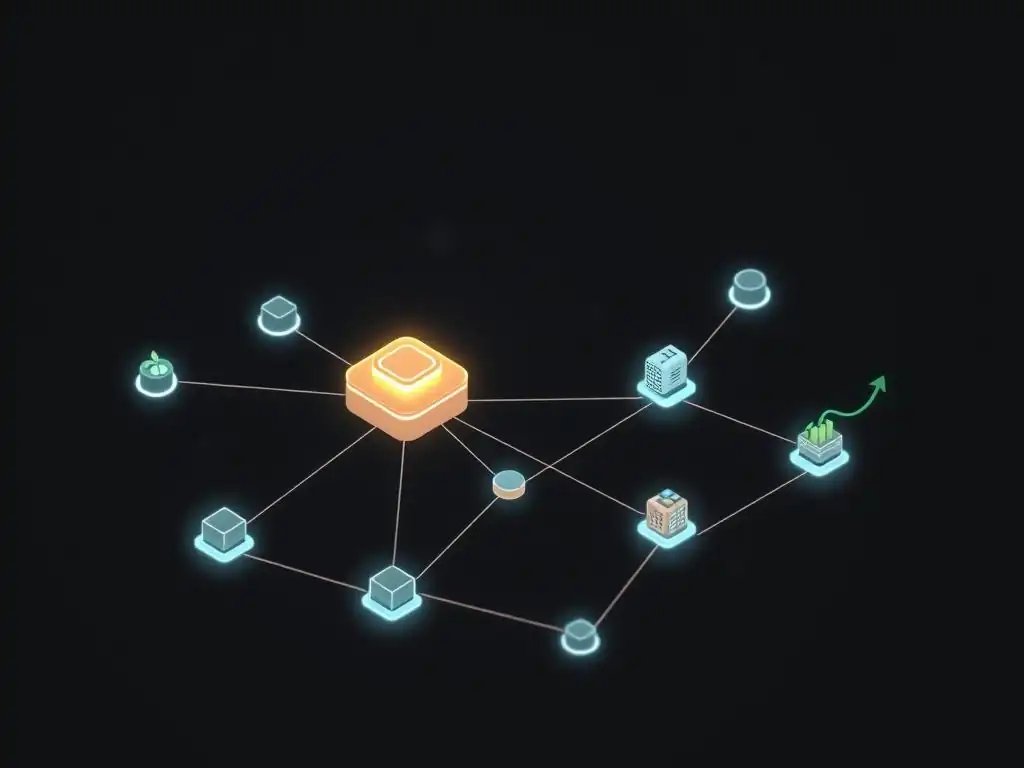
Selecting the Right Interoperability Solution for Your DApp
Choosing the appropriate interoperability solution is a critical architectural decision when building cross-chain DApps. The selection depends heavily on the specific use case, the types of assets or data being transferred, the required security guarantees, the target blockchains, and the acceptable level of complexity and trust assumptions. For simple asset transfers between two chains, a well-audited and robust bridge might suffice. For DApps requiring complex cross-chain logic and message passing across multiple networks, a Layer-Zero protocol or building within an interconnected ecosystem like Polkadot or Cosmos might be more suitable.
Developers must carefully evaluate the security model of each potential solution. What are the trust assumptions? How decentralized is the verification mechanism? What historical security incidents has the solution faced, and how were they addressed? Understanding the trade-offs between ease of implementation, cost, performance, and security is paramount. Furthermore, considering the future roadmap and adoption of the interoperability protocol is important, as its long-term viability will impact the DApp's sustainability. Thorough research and risk assessment are essential steps in navigating the complex landscape of blockchain DApp interoperability challenges solutions.
Designing for Modularity and Adaptability
Architecting interoperable DApps with modularity and adaptability in mind is crucial for long-term success in a rapidly evolving multi-chain environment. Given the nascent state of cross-chain technology and the potential for new and improved interoperability solutions to emerge, DApps should be designed in a way that allows them to easily switch between or integrate with different interoperability protocols. This means abstracting the cross-chain communication logic from the core DApp functionality.
By designing modular components for specific cross-chain interactions (e.g., a module for asset locking/minting via a bridge, another for message passing via a Layer-Zero protocol), developers can more easily upgrade or replace the interoperability layer without rebuilding the entire application. This approach enhances resilience, allows the DApp to leverage the best available blockchain DApp interoperability challenges solutions as they mature, and future-proofs the application against potential vulnerabilities or limitations of a single interoperability method.
Ensuring User Experience in Cross-Chain DApps
A seamless and intuitive user experience is vital for the adoption of interoperable DApps. Cross-chain operations inherently involve more steps and potential points of friction than single-chain interactions. Users may need to interact with multiple wallets, understand different network fees, and navigate longer transaction times. A poorly designed cross-chain flow can confuse users and lead to errors or lost funds.
DApp developers must prioritize simplifying the user journey. This involves providing clear instructions, abstracting away technical complexities where possible, offering real-time feedback on the status of cross-chain transactions, and handling potential errors gracefully. Wallets and interfaces need to evolve to better support multi-chain interactions. Ultimately, the success of blockchain DApp interoperability challenges solutions hinges on whether they can deliver a user experience that is as smooth, or ideally smoother, than interacting with siloed applications, making the benefits of cross-chain functionality accessible to a broader audience.
Real-World Examples of Interoperable DApps: Case Studies and Use Cases
Case Study 1: Chainflip - Cross-Chain DEX
Chainflip is a decentralized exchange protocol specifically designed for cross-chain swaps of native assets without the need for wrapped tokens or centralized intermediaries. It aims to address one of the core blockchain DApp interoperability challenges in DeFi: the inability to easily trade native assets like BTC, ETH, DOT, or SOL directly and trustlessly. Chainflip utilizes a network of validators running a State Chain and employs threshold signature schemes to manage vaults on connected blockchains (like Bitcoin, Ethereum, Polkadot, and others).
When a user initiates a swap (e.g., BTC to ETH), they send BTC to a Chainflip-controlled Bitcoin address. The validators collectively sign off on this deposit on the State Chain. Once confirmed, the protocol triggers an ETH transfer from a Chainflip-controlled Ethereum vault to the user's specified address.
This process is managed by the decentralized validator network, removing the need for a centralized bridge operator or wrapped tokens. As of late 2023/early 2024, Chainflip has been progressing towards its mainnet launch, showcasing a novel approach to solving the cross-chain DEX problem and demonstrating a practical application of blockchain DApp interoperability challenges solutions.
Case Study 2: Cosmos - Inter-Blockchain Communication Protocol
Cosmos is often referred to as the "internet of blockchains," built around the vision of enabling interoperability between independent blockchains. Its core technology for achieving this is the Inter-Blockchain Communication (IBC) protocol. IBC is a standard protocol that allows different blockchains (called "zones" or "app-chains" in Cosmos terminology) to reliably and securely exchange data and assets. It works through a system of light clients running on each chain and relayers that transport packets of data between them.
IBC provides a framework for connection, ordering, and authentication of data packets between heterogeneous chains. Chains connected via IBC can send messages, transfer tokens (using a lock-and-mint or burn-and-mint mechanism), and even execute cross-chain contract calls. This architecture has fostered a growing ecosystem of interconnected application-specific blockchains, such as Osmosis (a DEX), Cronos (an EVM-compatible chain), and others, which can seamlessly interact. The success of IBC demonstrates a robust and widely adopted solution for blockchain DApp interoperability challenges, proving that a network of interconnected, sovereign chains is achievable.
Applications of Interoperability in Supply Chain Management
Interoperability is poised to revolutionize supply chain management by enabling the tracking of goods and information across different blockchain networks used by various participants in the supply chain (e.g., manufacturers, logistics providers, regulators). A product might be initially recorded on a private enterprise blockchain by the manufacturer, its shipment tracked on a public blockchain like Ethereum by a logistics company, and customs clearance recorded on another chain used by governmental agencies.
Blockchain DApp interoperability challenges solutions allow these disparate records to be linked and verified. For example, cross-chain messaging could update a smart contract on the enterprise chain with proof of export from the customs chain. This creates a more transparent, efficient, and secure supply chain where data silos are broken down, reducing fraud and improving traceability. While still evolving, pilot programs leveraging interoperability for supply chain visibility are underway, demonstrating the practical benefits of connecting blockchain networks in enterprise contexts.
Interoperability in Decentralized Finance (DeFi) Use Cases
DeFi is arguably the area where blockchain DApp interoperability challenges solutions are most actively being pursued and implemented. The ability to move assets and data seamlessly between different DeFi protocols on various chains is fundamental to unlocking greater liquidity, capital efficiency, and user choice. Interoperability enables cross-chain yield farming strategies, where users can deposit collateral on one chain to borrow assets on another, or move assets to whichever chain offers the best lending or staking rates.
Cross-chain DEXs, like the Chainflip example, allow for native asset swaps, reducing reliance on wrapped tokens and the risks associated with them. Interoperability also facilitates cross-chain lending and borrowing, synthetic assets that track the value of assets on other chains, and broader access to novel financial instruments regardless of the user's preferred network. As of early 2024, the total value locked (TVL) in cross-chain protocols, primarily bridges and DEXs, represents billions of dollars, indicating the significant demand and growing ecosystem built upon blockchain DApp interoperability challenges solutions in the DeFi space.
The Future of Blockchain DApp Interoperability: Trends and Predictions
Advancements in Cross-Chain Technology
The field of blockchain DApp interoperability is experiencing rapid technological advancements. Beyond existing solutions like bridges and Layer-Zero protocols, research and development are focusing on more secure and generalized methods. One significant trend is the increasing use of zero-knowledge proofs (ZKPs) to verify cross-chain transactions and state changes without revealing underlying data. ZKPs offer a promising path towards trust-minimized interoperability, potentially reducing reliance on external validators or complex multi-party computation schemes, thereby addressing some of the key blockchain DApp interoperability challenges.
Another area of development involves improving the efficiency and scalability of message-passing protocols. Future iterations aim to reduce latency, increase throughput, and lower the costs associated with cross-chain communication. Furthermore, there is ongoing work on developing more robust and decentralized oracle networks specifically tailored for cross-chain data verification. These technological strides are expected to make cross-chain interactions more seamless, secure, and scalable, paving the way for more complex and widely adopted interoperable DApps.
The Role of Standards in Promoting Interoperability
The development and adoption of common standards are crucial for the future of blockchain DApp interoperability. Just as standards like HTTP and TCP/IP were essential for the growth of the internet, standardized protocols for cross-chain communication can significantly reduce complexity and foster greater compatibility between different networks and DApps. Efforts are underway within various blockchain ecosystems and by cross-chain protocol developers to define these standards.
Protocols like Cosmos's IBC have established a de facto standard for communication within its ecosystem and are being explored for connections to other chains. Similarly, proposals for cross-chain token standards or message formats are being discussed within communities like Ethereum (e.g., via EIPs) and others. The widespread adoption of such standards would lower the barrier to entry for developers, reduce the risk of fragmentation, and accelerate the creation of truly interoperable DApps, effectively providing common frameworks for tackling blockchain DApp interoperability challenges solutions at a protocol level.
The Impact of Interoperability on the DApp Ecosystem
The increasing prevalence of blockchain DApp interoperability will have a profound impact on the entire DApp ecosystem. It will break down existing silos, allowing DApps to access larger user bases, deeper liquidity, and a wider range of functionalities across different networks. This will foster greater competition and innovation, as DApps will no longer be limited by the constraints of a single blockchain. For users, it will mean a more integrated and flexible Web3 experience, where they can utilize assets and services across chains without cumbersome processes.
Interoperability is expected to drive the next wave of DApp development, enabling entirely new categories of decentralized applications that are natively cross-chain. This includes sophisticated DeFi protocols that can manage positions across multiple networks, cross-chain gaming experiences where in-game assets can be used or traded on different platforms, and decentralized identity solutions that function universally across the multi-chain landscape. Overcoming blockchain DApp interoperability challenges solutions is not just a technical pursuit; it is a necessary step towards realizing the full potential of a decentralized, interconnected digital future.
Conclusion: Overcoming Blockchain DApp Interoperability Challenges for a Connected Web3
Achieving true blockchain DApp interoperability is one of the most significant technical and architectural hurdles facing the decentralized web today. The inherent heterogeneity of blockchain protocols, coupled with complex security risks, scalability concerns, and data consistency issues, presents formidable blockchain DApp interoperability challenges. However, the progress being made in developing and implementing various solutions—from cross-chain bridges and Layer-Zero protocols to sidechains, parachains, and interoperable smart contracts—demonstrates a clear path forward.
These diverse blockchain DApp interoperability challenges solutions, while each having its own trade-offs and specific use cases, are collectively building the infrastructure for a more connected and functional Web3. Real-world examples in DeFi, supply chain, and dedicated interoperability ecosystems like Cosmos and Polkadot highlight the tangible benefits already being realized. As technology advances, standards emerge, and developers adopt best practices in architecting cross-chain applications, the vision of a seamless, interconnected network of decentralized applications moves closer to reality, promising a future where the limitations of isolated blockchains are overcome, unleashing the full transformative potential of DApps.
Frequently Asked Questions
What are some of the biggest blockchain DApp interoperability challenges that developers face?
One major challenge is the lack of standardized communication protocols between different blockchains. This makes it difficult for DApps on separate chains to seamlessly exchange data or assets. Another hurdle is the security risk associated with cross-chain transactions, as vulnerabilities in one chain could be exploited to compromise others.
How does cross-chain communication benefit the overall blockchain ecosystem?
Cross-chain communication enables greater flexibility and scalability for DApps. It also fosters innovation and collaboration by allowing developers to leverage the unique strengths of different blockchains. Ultimately, it can lead to a more interconnected and efficient decentralized ecosystem.
What are some potential solutions for addressing blockchain DApp interoperability challenges?
Solutions include developing standardized protocols like IBC (Inter-Blockchain Communication), using bridges to facilitate asset transfers, and implementing atomic swaps for trustless cross-chain transactions. Also, research and development into advanced cryptographic techniques are crucial.
How does regulation play a role in the future of blockchain DApp interoperability?
Clear and consistent regulations can provide legal clarity and foster trust in cross-chain solutions. However, overly restrictive regulations could stifle innovation and hinder the development of interoperable DApps. A balanced approach is needed.
What is the future outlook for blockchain DApp interoperability, and what advancements can we expect?
The future looks promising, with increasing investment in interoperability solutions. We can expect to see more sophisticated bridges, improved security protocols, and greater adoption of standardized communication methods, ultimately leading to a more connected and useful decentralized web.
Final Reflection: Bridging the Decentralized Future
The exploration of Blockchain DApp interoperability challenges and solutions reveals more than just technical hurdles; it highlights the nascent stage of a truly interconnected decentralized ecosystem. The limitations we face today in connecting DApps across different blockchains are not merely inconveniences, but significant barriers to the realization of Web3's full potential. Overcoming these challenges is paramount to unlocking a future where data and value flow seamlessly between diverse decentralized applications, fostering innovation and user empowerment on an unprecedented scale.
The promise of interoperability has profoundly shaped the development of decentralized technologies, and its continued pursuit is essential for realizing a truly decentralized and interconnected world. Witnessing the evolution of cross-chain solutions, from simple token bridges to sophisticated communication protocols, underscores the unwavering commitment to breaking down the silos that currently define the blockchain landscape. The future of blockchain is not about one chain to rule them all, but about a network of interconnected chains that work together to create a more robust and resilient ecosystem.
This vision fuels the ongoing efforts to achieve seamless interoperability, paving the way for a more collaborative and user-centric decentralized future.
As we stand at the cusp of this interconnected future, let us reflect on the lessons learned and the opportunities that lie ahead. Consider how you can contribute to this transformative journey, whether through supporting interoperable DApps, advocating for open standards, or simply embracing the potential of a truly decentralized web. The future of blockchain is not predetermined; it is shaped by the choices we make today. Embrace the challenge, explore the possibilities, and become an active participant in building a future where decentralized applications transcend the boundaries of individual blockchains, creating a truly interconnected and empowered digital world.
Unlock the Future: Start Building Your Interoperable DApp Today!
Thanks for exploring the power of interoperability in DApp architecture with us. We hope you've gained valuable insights into connecting decentralized applications across different blockchains and are excited about the possibilities. Now, it's time to put that knowledge into action!
Here are a few steps you can take to further your journey:
- Begin prototyping a simple DApp that bridges two different blockchain networks. This is the most effective way to understand the real-world challenges and opportunities of interoperability.
- Explore and contribute to open-source interoperability projects like Cosmos, Polkadot, or LayerZero. Sharing your knowledge and experience will help shape the future of blockchain communication.
- Surprise yourself: Try integrating a less common blockchain like Tezos or Algorand into your next DApp project to explore unique features and expand the ecosystem.
Ready to take the leap and build the interconnected future of DApps? Share your biggest challenge or your most exciting idea for interoperable DApps in the comments below!
Leave a Reply