
Layer 2 Solutions for DApp Scalability: Architecting for High Performance and Low Fees


Welcome to Blockchain Trends!
Intrigued by how blockchain technology is revolutionizing industries beyond just cryptocurrency? You've come to the right place. Dive into our exploration of decentralized finance (DeFi), enterprise blockchain applications, evolving regulations, and the future of decentralized systems.
Today, we're tackling a critical challenge for DApp developers: scalability. Discover the cutting-edge advancements in Layer 2 scaling solutions and learn how they're architecting a future where decentralized applications can achieve high performance and dramatically lower transaction fees. Ready to unlock the potential of truly scalable DApps? Let's begin!
Layer 2 Solutions for DApp Scalability: Architecting for High Performance and Low Fees
- Introduction to DApp Scalability Challenges on Layer 1
- What are Layer 2 Scaling Solutions? An Overview
- Categories of Layer 2 Scaling Solutions for Decentralized Finance
- Optimizing DApp Architecture with Layer 2: A Deep Dive
- Case Studies: Successful DApp Protocols Leveraging Layer 2 for Scalability
- Future Trends in Layer 2 DApp Development
- Conclusion: Scaling DApp for Mass Adoption with Layer 2
-
Frequently Asked Questions
- What are Layer 2 scaling solutions, and why are they important for DApps?
- How do Layer 2 solutions differ from Layer 1 scaling solutions?
- What are some common types of Layer 2 scaling solutions?
- How do Layer 2 solutions help reduce transaction fees for DApp users?
- What are the potential challenges and considerations when implementing Layer 2 solutions for DApps?
- Final Reflection: Scaling the Future of Decentralized Applications
- Unleash Your DApp's Potential Now!
Introduction to DApp Scalability Challenges on Layer 1
Understanding the Limitations of Ethereum for DApp Applications
Ethereum, the dominant platform for decentralized applications (DApps), faces significant scalability challenges inherent in its Layer 1 architecture. Its proof-of-work (soon to be proof-of-stake) consensus mechanism, while providing robust security and decentralization, limits the network's transaction processing capacity. The current Layer 1 throughput is generally cited as around 15-30 transactions per second (TPS), which is insufficient to support the growing demand from popular DApps, especially those in the decentralized finance (DeFi) sector, gaming, and NFTs. This limitation creates bottlenecks, leading to slow transaction confirmations and, critically, high transaction costs.
The state bloat on the Ethereum mainnet is another critical limitation. Every transaction and smart contract interaction modifies the global state, which must be stored and processed by all nodes. As the network grows and more DApps are deployed, the size of the state increases dramatically. This makes it more difficult and resource-intensive for nodes to sync and validate transactions, further hindering scalability and potentially centralizing node operation to only those with significant hardware resources. Addressing these fundamental constraints requires innovative approaches like Layer 2 scaling solutions that move computation and state storage off the main chain.
The Need for Scalable DApp Architectures: Beyond Transaction Throughput
Scalability for DApps extends beyond merely increasing the number of transactions per second. A truly scalable architecture must also address latency, cost-efficiency, and the ability to handle complex computations off-chain. Many DApps, particularly in DeFi, involve intricate interactions between multiple smart contracts, requiring numerous on-chain operations for a single user action (e.g., swapping tokens, providing liquidity, or managing collateral). On Layer 1, each of these operations incurs a gas fee and adds to network congestion.
Furthermore, the user experience in DApps is severely impacted by Layer 1 limitations. Slow transaction times and unpredictable, high gas fees make DApps cumbersome and expensive for everyday use, limiting their potential for mass adoption. Layer 2 scaling solutions are essential to abstract away these complexities and costs, enabling DApps to offer near-instant transactions at minimal cost, comparable to traditional web applications, thus unlocking new use cases and attracting a broader user base.
High Gas Fees and Congestion: Impact on DApp User Experience
High gas fees and network congestion are perhaps the most tangible and frustrating consequences of Layer 1 limitations for DApp users. During periods of high network activity, such as major NFT drops or volatile market movements in DeFi, gas prices on Ethereum can skyrocket, sometimes reaching hundreds or even thousands of dollars for a single complex transaction. This makes interacting with DApps prohibitively expensive for many users, effectively pricing out smaller transactions and limiting participation.
This unpredictable cost structure also hinders developers. Designing DApps that are economically viable for users when transaction costs are volatile and high is challenging. Congestion leads to long waiting times for transactions to be confirmed, sometimes minutes or even hours, which is unacceptable for applications requiring quick interactions, like trading or gaming. Layer 2 scaling solutions directly target these issues by processing transactions off the main chain, where costs are drastically reduced (often to cents) and throughput is orders of magnitude higher, providing a much smoother and more accessible user experience for DApps.
What are Layer 2 Scaling Solutions? An Overview
Defining Layer 2: Off-Chain Scaling for Enhanced DApp Performance
Layer 2 scaling solutions refer to a variety of frameworks built on top of a Layer 1 blockchain, like Ethereum, designed to handle transactions off the main chain while still inheriting its security guarantees. Instead of processing every transaction individually on the Layer 1 network, Layer 2 solutions bundle multiple transactions together or process them in a separate environment. They then periodically submit a summary or proof of these off-chain transactions back to the Layer 1 chain. This significantly reduces the load on the mainnet, enabling higher transaction throughput and lower costs.
The key principle behind Layer 2 is to leverage the Layer 1 chain primarily for security, data availability, and finality, while offloading the heavy computational and storage burden of individual transactions. By executing transactions off-chain, Layer 2 solutions can achieve speeds and costs that are impractical on Layer 1, making DApps, especially complex DeFi protocols, much more efficient and user-friendly. These scaling solutions are critical for the continued growth and mass adoption of decentralized applications.
Key Characteristics of Effective Layer 2 Solutions for DApp
Effective Layer 2 scaling solutions for DApps share several key characteristics. Firstly, they must offer significantly higher transaction throughput compared to Layer 1, often measured in thousands of transactions per second. Secondly, they must drastically reduce transaction costs, ideally bringing them down to a fraction of a cent for simple operations. Low latency is also crucial, enabling near-instantaneous transaction confirmations for a smooth user experience.
Security is paramount; a robust Layer 2 solution must inherit the security of the underlying Layer 1 chain. This means that funds moved to Layer 2 should remain secure and users should be able to withdraw them back to Layer 1 reliably. Other important characteristics include ease of development and deployment for DApp creators, interoperability with existing Layer 1 contracts and infrastructure, and the ability to support complex smart contract logic required by many DApps, particularly in DeFi.
Different Types of Layer 2 Architectures: A Comparative Analysis
Layer 2 scaling solutions employ various architectures, each with its own trade-offs regarding security, performance, and complexity. The main categories include State Channels, Sidechains, and Rollups (Optimistic and ZK-Rollups), as well as related concepts like Validium. State Channels, while offering very high speed and low cost for direct, repeated interactions between a fixed set of participants (like payment channels), are less suitable for general-purpose DApps involving many users and complex smart contract logic.
Sidechains are independent blockchains with their own consensus mechanisms, connected to the Layer 1 chain via a two-way bridge. They offer high throughput but their security is independent of the Layer 1, potentially requiring users to trust the sidechain's validators. Rollups, on the other hand, execute transactions off-chain but post transaction data or cryptographic proofs back to the Layer 1, inheriting its security model more directly.
Optimistic Rollups assume transactions are valid by default and use fraud proofs, while ZK-Rollups use complex cryptographic validity proofs. Validium is similar to ZK-Rollups but data is stored off-chain, offering higher throughput but different security assumptions regarding data availability. Each of these Layer 2 scaling solutions presents different capabilities for DApp developers.
Categories of Layer 2 Scaling Solutions for Decentralized Finance
State Channels: Direct User Interactions for Payment Applications
State Channels represent one of the earliest forms of Layer 2 scaling solutions. They enable two or more participants to conduct multiple transactions off-chain without involving the main Layer 1 chain for each interaction. A channel is opened by locking funds in a multisignature contract on Layer 1. Participants can then update their shared state (e.g., balances in a payment channel) off-chain by signing messages. Only the final state needs to be broadcast and settled on Layer 1 when the channel is closed or if a dispute arises.
While State Channels offer extremely high transaction speeds and near-zero costs once the channel is open, their applicability is somewhat limited. They are best suited for specific use cases involving repeated interactions between a fixed group of participants, such as micropayment streams or simple game states. They are generally not ideal for complex, open-access DApps like decentralized exchanges or lending protocols where interactions are dynamic and involve a large, changing user base, making them less common as general Layer 2 scaling solutions for complex DeFi.
Sidechains: Independent Blockchains for Specific DApp Functionality
Sidechains are distinct blockchains connected to the Layer 1 mainnet via a bridge, allowing assets to be moved between the two chains. Unlike State Channels or Rollups, sidechains have their own consensus mechanisms (e.g., Proof-of-Stake, Proof-of-Authority) and their own sets of validators. Transactions are processed and validated entirely on the sidechain, offering significantly higher throughput and lower fees compared to Layer 1. Examples include Polygon PoS (though often debated if it's a pure sidechain or something hybrid), Skale, and Ronin (used for Axie Infinity).
The trade-off with sidechains is that their security is dependent on their own consensus mechanism and validators, not directly on the Layer 1 chain's security. Users must trust the sidechain's validators to be honest and secure. While they offer a high degree of flexibility and compatibility with Layer 1 EVM (Ethereum Virtual Machine), making it easier for DApps to migrate, this security difference is a key consideration when evaluating Layer 2 scaling solutions. For DApps where maximum decentralization and Layer 1 security inheritance are paramount, other Layer 2 options might be preferred.
Rollups: Optimistic and Zero-Knowledge (ZK) Rollups for DApp Scaling
Rollups are currently among the most promising and widely adopted Layer 2 scaling solutions for general-purpose DApps, especially in DeFi. They execute transactions off-chain but "rollup" batches of transactions and post the transaction data or a proof of validity back to the Layer 1 chain. This allows Rollups to inherit the security of the Layer 1 while providing massive improvements in throughput and cost. There are two main types: Optimistic Rollups and ZK-Rollups, differing in how they ensure the validity of the off-chain state transitions.
By posting data back to Layer 1, Rollups ensure data availability, meaning anyone can reconstruct the full state of the Rollup chain from the data on Layer 1. This is crucial for security, allowing users to withdraw their funds even if the Layer 2 operator becomes malicious or goes offline. The primary distinction lies in their validation method: Optimistic Rollups assume validity and use fraud proofs, while ZK-Rollups prove validity cryptographically. Both approaches provide robust Layer 2 scaling solutions for DApps.
Optimistic Rollups: Enhancing DApp Scalability with Fraud Proofs
Optimistic Rollups operate under the assumption that transactions executed off-chain are valid by default. They publish batches of transactions and the resulting state root to the Layer 1 chain without immediate proof of validity. There is a challenge period (typically around 7 days) during which anyone can submit a "fraud proof" to the Layer 1 if they believe a transaction or state transition in a batch is incorrect. If a fraud proof is successful, the invalid batch is reverted on Layer 1, and the sequencer (the entity that posted the batch) is penalized.
This "optimistic" approach allows for high transaction throughput and EVM compatibility, making it relatively easy for existing Layer 1 DApps to migrate. However, the reliance on a challenge period means that withdrawing assets from an Optimistic Rollup back to Layer 1 typically takes the duration of this period (e.g., 7 days), although faster withdrawal options via liquidity providers exist. Prominent examples include Arbitrum and Optimism, which host significant portions of the DeFi ecosystem, demonstrating the effectiveness of this type of Layer 2 scaling solution.
ZK-Rollups: Achieving DApp Scalability with Cryptographic Proofs
ZK-Rollups (Zero-Knowledge Rollups) provide a different approach to validating off-chain transactions. Instead of assuming validity, they generate cryptographic validity proofs (specifically, ZK-SNARKs or ZK-STARKs) for each batch of transactions executed off-chain. This proof is then posted to the Layer 1 chain along with the state root update. The Layer 1 smart contract can quickly and efficiently verify the proof, cryptographically guaranteeing the correctness of all transactions in the batch without needing to re-execute them.
The key advantage of ZK-Rollups is that once the validity proof is verified on Layer 1, the state transition is considered final. This allows for much faster withdrawals back to Layer 1 compared to Optimistic Rollups, often completed within minutes or hours.
However, generating the complex ZK proofs is computationally intensive, and building ZK-Rollup compatible DApps or porting existing ones has historically been more challenging due to the lack of full EVM compatibility (though this is changing rapidly with projects like zkSync and Polygon zkEVM). Despite the complexity, ZK-Rollups are seen as a powerful Layer 2 scaling solution for achieving high performance and strong security guarantees.
Validium: Data Availability Considerations for DApp Security
Validium is a scaling solution that shares similarities with ZK-Rollups in that it uses validity proofs (ZK-SNARKs or ZK-STARKs) to verify off-chain state transitions. However, the key difference lies in how transaction data is handled. In Validium, transaction data is not posted to the Layer 1 chain; instead, it is stored off-chain by a separate data availability committee or service. This dramatically increases throughput capacity compared to Rollups, as the Layer 1 is not burdened with storing large amounts of transaction data.
The trade-off for this higher throughput is a different security model regarding data availability. While the validity proofs on Layer 1 ensure that state transitions are correct, users rely on the data availability committee to provide the necessary data to reconstruct the state and withdraw their funds.
If the data availability committee fails or becomes malicious and withholds data, users might be unable to access their assets, even though the funds are technically secure on the Layer 2 contract. This makes Validium potentially less suitable for DApps requiring the highest level of decentralized data availability assurance, though it can be a viable Layer 2 scaling solution for specific applications like exchanges (e.g., Immutable X for NFTs, dYdX initially used a StarkEx Validium-like system) where the operator provides data availability guarantees.
Optimizing DApp Architecture with Layer 2: A Deep Dive
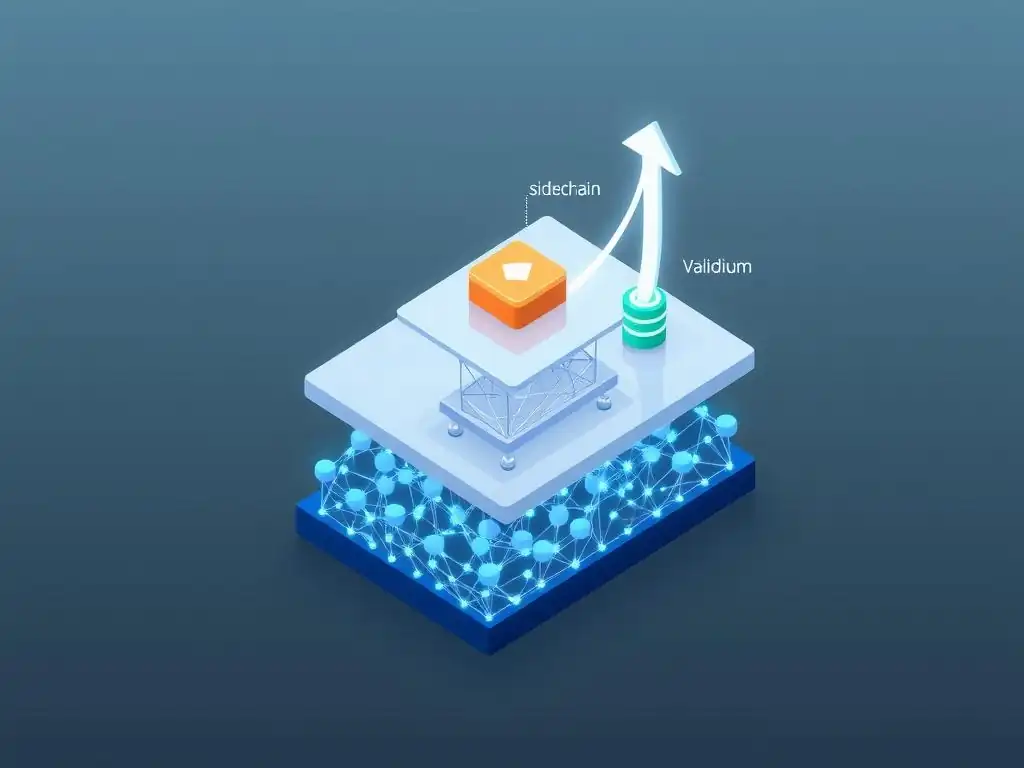
Designing DApp Protocols for Layer 2 Integration: Best Practices
Designing DApp protocols with Layer 2 integration in mind requires a shift in architectural thinking. Developers should identify which parts of their application benefit most from Layer 2 scaling solutions – typically high-frequency, low-value transactions or complex computations that are expensive on Layer 1. This might involve separating core protocol logic that must reside on Layer 1 (e.g., token contracts, governance) from the execution layer that handles user interactions (e.g., trading, lending, gaming moves) which can be moved to Layer 2.
Best practices include designing smart contracts that are modular and can interact seamlessly with Layer 2 bridges and exit mechanisms. Developers should consider the specific features and limitations of the chosen Layer 2 solution, such as transaction costs, finality times, and EVM compatibility. Utilizing Layer 2 native features, like precompiled contracts for cryptographic operations on ZK-Rollups or efficient data structures, can further optimize performance. Thorough testing on Layer 2 testnets and understanding withdrawal procedures are also critical steps before deployment to ensure a smooth user experience with these Layer 2 scaling solutions.
Selecting the Right Layer 2 Solution for Your DApp Protocol's Needs
Choosing among the various Layer 2 scaling solutions depends heavily on the specific requirements of the DApp protocol. For DApps requiring high throughput and low latency for simple, repeated interactions between a few parties, State Channels might be considered, though less common for general DApps. For DApps needing high throughput and EVM compatibility but where some trust in the sidechain validators is acceptable, a Sidechain could be an option.
For most complex DApps, particularly in DeFi, Rollups are often the preferred choice due to their security inheritance from Layer 1. The decision between Optimistic Rollups and ZK-Rollups depends on factors like the need for fast withdrawals (favoring ZK-Rollups), the complexity of the smart contracts to be ported (Optimistic Rollups historically had easier EVM compatibility, though ZK-EVMs are changing this), and the development resources available (ZK-Rollup development can be more complex).
Validium might be suitable for specific use cases like exchanges or gaming where the operator can provide data availability guarantees and ultra-high throughput is needed. A careful analysis of the DApp's transaction patterns, security requirements, and user base needs is crucial when selecting the optimal Layer 2 scaling solution.
Security Considerations when Implementing Layer 2 for DApp
Implementing Layer 2 scaling solutions introduces new security considerations that DApp developers must address. While Rollups inherit Layer 1 security for state validity and data availability (in the case of Optimistic and ZK-Rollups), the bridges connecting Layer 1 and Layer 2 can be potential points of vulnerability if not implemented correctly. Exploits targeting bridge contracts have resulted in significant losses in the past, highlighting the critical importance of rigorous auditing and secure bridge design.
Developers must also consider the security of the Layer 2 operator (sequencer/prover) in Rollup systems. While Rollups are designed to be trust-minimized, the operator plays a crucial role in batching transactions and submitting them to Layer 1. Mechanisms for handling malicious or inactive operators (e.g., forced withdrawals, decentralized sequencing) are important. For Sidechains and Validium, the security of the off-chain consensus mechanism or data availability committee is paramount. Users must understand the security model of the Layer 2 scaling solution they are using and the associated risks, making transparent communication from DApp developers essential.
Case Studies: Successful DApp Protocols Leveraging Layer 2 for Scalability
Uniswap V3: Achieving High Throughput with Optimistic Rollups (Arbitrum/Optimism)
Uniswap, the leading decentralized exchange, deployed instances of its V3 protocol on Optimistic Rollups like Arbitrum and Optimism to address the high gas fees and congestion faced by users on Ethereum Layer 1. By moving trading activity to these Layer 2 scaling solutions, Uniswap users can perform token swaps and manage liquidity positions at a fraction of the cost compared to the mainnet. While a swap on Layer 1 could cost anywhere from $10 to $100+ depending on network conditions, the same operation on Arbitrum or Optimism typically costs less than a dollar, often just a few cents.
This move significantly increased accessibility for users with smaller capital, enabling them to participate in DeFi without transaction costs eating heavily into their profits. The high throughput of these Layer 2 networks also allows for faster transaction confirmations, improving the overall trading experience. While Layer 1 still holds the largest TVL (Total Value Locked) for Uniswap, the Layer 2 deployments have seen substantial adoption, demonstrating the effectiveness of Optimistic Rollups as Layer 2 scaling solutions for high-frequency DApps like DEXs.
dYdX: Reducing Gas Fees with ZK-Rollups (StarkWare)
dYdX, a prominent decentralized derivatives exchange, chose a ZK-Rollup solution built by StarkWare (specifically, a StarkEx system initially operating more like a Validium with off-chain data, later moving towards ZK-Rollup characteristics with on-chain data availability for specific features) to provide a high-performance trading experience. Trading derivatives involves frequent actions like opening/closing positions, placing limit orders, and managing collateral, which would be prohibitively expensive and slow on Layer 1.
By leveraging ZK-Rollups, dYdX was able to offer perpetual trading with significantly lower transaction fees (often fractions of a cent per trade) and much higher transaction throughput compared to what would be possible on Layer 1 Ethereum. The use of validity proofs ensures the integrity of trades executed off-chain. This implementation showcases how ZK-Rollups can serve as powerful Layer 2 scaling solutions for complex financial DApps requiring high performance and low costs, enabling a trading experience competitive with centralized exchanges in terms of speed and cost, while maintaining the benefits of decentralization.
Analyzing the Impact of Layer 2 on DApp User Adoption
The deployment of major DApps like Uniswap and dYdX onto Layer 2 scaling solutions has had a measurable impact on user adoption and activity. Data from Layer 2 networks shows millions of transactions processed daily and significant amounts of value locked, indicating that users are actively migrating to or starting their interactions on these scaled environments. The reduction in gas fees has lowered the barrier to entry for new users and enabled existing users to engage in more frequent and complex interactions within DApps.
For instance, Layer 2 networks hosting DeFi applications often report transaction volumes far exceeding Layer 1 during peak times for specific DApps deployed there. While precise, universally comparable adoption metrics across all Layer 2s are complex to track, the growth in unique addresses, daily active users, and Total Value Locked on platforms like Arbitrum, Optimism, zkSync, and Polygon PoS (acting as a scaling layer) strongly suggests that Layer 2 scaling solutions are successfully driving DApp usage by making the decentralized ecosystem more affordable and performant.
Future Trends in Layer 2 DApp Development
Advancements in Rollup Technology and Their Impact on DApp
The field of Layer 2 scaling solutions, particularly Rollup technology, is rapidly evolving. Significant advancements are being made in areas like ZK-EVMs (Zero-Knowledge Ethereum Virtual Machines), which aim to make ZK-Rollups fully compatible with existing Ethereum smart contracts and developer tooling. This will drastically lower the barrier for DApp developers to port their applications to ZK-Rollups, potentially combining the ease of development found on Optimistic Rollups with the fast finality of ZK-Rollups.
Further research and development are focused on optimizing proof generation times and costs for ZK-Rollups, improving the efficiency of fraud proof systems in Optimistic Rollups, and developing more sophisticated data compression techniques to minimize the data posted to Layer 1. These technological improvements will further enhance the performance, reduce costs, and increase the scalability potential of Rollups, enabling even more complex and resource-intensive DApps to thrive on Layer 2 scaling solutions.
Interoperability Between Layer 2 Solutions and DApp Protocols
As multiple Layer 2 scaling solutions gain traction, interoperability between them becomes increasingly important for the DApp ecosystem. Users and DApps residing on different Layer 2 networks currently face challenges in seamlessly interacting or transferring assets without going back through the Layer 1 mainnet, which reintroduces costs and delays. Future trends include the development of Layer 2 to Layer 2 bridges and protocols designed to facilitate direct communication and value transfer between different Layer 2 networks.
Solutions like generalized message passing protocols (e.g., LayerZero, Wormhole) and specialized Layer 2 interoperability layers are being developed to address this. Enhanced interoperability will unlock new possibilities for DApps, allowing them to leverage the unique strengths of different Layer 2s and compose services across multiple scaled environments. This will create a more connected and efficient decentralized ecosystem powered by diverse Layer 2 scaling solutions.
The Evolution of DApp Architecture: Layer 2 and Beyond
The advent of Layer 2 scaling solutions marks a significant evolution in DApp architecture, moving towards a multi-layer paradigm. Developers are increasingly designing DApps with core logic on Layer 1 for maximum security and decentralization, while housing user-facing interactions and high-volume operations on Layer 2. This tiered architecture allows DApps to balance security, performance, and cost-efficiency effectively.
Looking beyond current Layer 2s, research is ongoing into Layer 3 solutions, which could be built on top of Layer 2s to provide application-specific scaling or further specialization. Concepts like fractal scaling, where scaling layers are stacked, are being explored. The future of DApp architecture will likely involve a complex interplay of Layer 1, various Layer 2 scaling solutions optimized for different purposes, and potentially future Layer 3s, creating a highly scalable and specialized decentralized computing stack capable of supporting a global user base and diverse applications.
Conclusion: Scaling DApp for Mass Adoption with Layer 2
The Importance of Layer 2 Solutions for the Future of Decentralized Finance
Layer 2 scaling solutions are not just an incremental improvement; they are a fundamental requirement for the mass adoption of DApps, particularly in the burgeoning field of decentralized finance. The limitations of Layer 1 in terms of throughput, cost, and latency present insurmountable barriers for widespread usage. Without Layer 2, interacting with DApps remains expensive and cumbersome, limiting the technology's reach to a relatively small number of dedicated users.
By drastically reducing transaction costs and increasing transaction speeds, Layer 2 solutions make DApps accessible and usable for everyday consumers and businesses. They enable new types of applications and interactions that were previously economically or technically unfeasible on Layer 1. The future growth and mainstream integration of the decentralized web heavily depend on the continued development and successful implementation of robust and user-friendly Layer 2 scaling solutions.
Key Takeaways for DApp Developers: Choosing the Right Scaling Strategy
For DApp developers, understanding and strategically adopting Layer 2 scaling solutions is no longer optional but essential. The key takeaways involve first identifying the specific scaling needs of their application – what kind of transactions are frequent? What level of security and finality is required? How important is EVM compatibility? This analysis will guide the selection process among the different types of Layer 2 architectures available.
Developers should carefully evaluate the trade-offs of State Channels, Sidechains, Optimistic Rollups, ZK-Rollups, and Validium in the context of their DApp's design and user base. Building with Layer 2 in mind from the outset, designing modular contracts, and prioritizing security in bridge interactions are critical best practices. Engaging with specific Layer 2 communities and leveraging their developer resources can also accelerate the integration process of these vital Layer 2 scaling solutions.
Embracing Layer 2: Building High-Performance, Low-Fee DApp Protocols
Embracing Layer 2 scaling solutions is synonymous with building DApp protocols ready for mass adoption. By moving the bulk of user interactions and computations off-chain, developers can create applications that offer performance and user experience comparable to traditional centralized services, while retaining the core benefits of decentralization and censorship resistance provided by the Layer 1 blockchain.
The ongoing innovation in Layer 2 technology, coupled with increasing developer tooling and user familiarity, makes now the opportune time to integrate these scaling solutions. Building high-performance, low-fee DApps is not just about technical capability; it's about unlocking the true potential of decentralized technology to serve a global audience, making the vision of a decentralized future a practical reality through effective Layer 2 scaling solutions.
Frequently Asked Questions
What are Layer 2 scaling solutions, and why are they important for DApps?
Layer 2 solutions are off-chain scaling methods designed to improve the transaction throughput and reduce fees of decentralized applications (DApps) built on blockchains. They're important because they address the limitations of base-layer blockchains like Ethereum.
How do Layer 2 solutions differ from Layer 1 scaling solutions?
Layer 1 solutions modify the base protocol of the blockchain, while Layer 2 solutions operate on top of the existing blockchain without changing its core rules. This allows for faster implementation and less risk of disrupting the entire network.
What are some common types of Layer 2 scaling solutions?
Common Layer 2 scaling solutions include state channels, rollups (both optimistic and zero-knowledge), and sidechains. Each offers different trade-offs in terms of security, scalability, and complexity.
How do Layer 2 solutions help reduce transaction fees for DApp users?
By processing transactions off-chain and only settling the final result on the main chain, Layer 2 solutions significantly reduce the gas costs associated with each individual transaction. This makes DApps more accessible and affordable.
What are the potential challenges and considerations when implementing Layer 2 solutions for DApps?
Challenges include the complexity of integration, the need for robust security measures to prevent fraud, and potential liquidity fragmentation across different Layer 2 networks. Careful planning and consideration are crucial for successful implementation.
Final Reflection: Scaling the Future of Decentralized Applications
The exploration of Layer 2 scaling solutions underscores a critical juncture in the evolution of blockchain technology. The promise of decentralized applications hinges on their ability to scale efficiently and affordably, and the advancements discussed in this article represent significant strides towards realizing that potential. The current demand for faster, cheaper transactions necessitates a continued focus on these innovative solutions to unlock the true power of Web3.
The impact of Layer 2 solutions extends far beyond mere technical improvements; it shapes the very accessibility and usability of decentralized technologies for a broader audience. The ability to interact with DApps without incurring exorbitant fees or experiencing frustrating delays is paramount to their mainstream adoption. The future of finance is decentralized, but it must also be accessible.
This quote encapsulates the core challenge: ensuring that the benefits of decentralization are not limited to a privileged few, but are available to everyone.
As we look ahead, let us not only celebrate the progress made in Layer 2 scaling solutions but also commit to fostering further innovation and collaboration within the blockchain community. Consider how you can contribute to this ongoing evolution, whether through developing new solutions, advocating for their adoption, or simply educating others about their potential. The future of decentralized applications is being built today, and your participation is crucial in shaping a more scalable, accessible, and equitable digital landscape.
Unleash Your DApp's Potential Now!
Thank you for diving into the world of Layer 2 solutions and discovering how they can revolutionize your DApp's scalability. You've now gained valuable insights into achieving high performance and low fees. Let's put that knowledge into action!
Here's how you can leverage Layer 2 and supercharge your DApp:
- Implement Layer 2 scaling today! Start by exploring options like Optimistic Rollups, ZK-Rollups, or Validium, based on your DApp's specific needs and security requirements. Prioritize your research based on your project’s current architecture.
- Share this article with fellow developers and enthusiasts on your favorite social platform. Spark a discussion and collaborate on innovative scaling strategies.
- Brainstorm unconventional uses for Layer 2 in your DApp, pushing the boundaries of what's possible with decentralized applications. Consider niche use cases other applications may have missed!
Ready to transform your DApp into a high-performance, low-fee powerhouse? Share your initial Layer 2 strategy with us in the comments below!
Leave a Reply