
RealWorld DApp FrontEnd Examples: Case Studies in Blockchain Application


Welcome to Blockchain Trends, your compass in the rapidly evolving world of decentralized technology. Forget just cryptocurrencies; we delve deep into the transformative power of blockchain across industries. Ever wondered how cutting-edge companies are building the next generation of user interfaces for decentralized applications? This article explores real-world Blockchain decentralized application frontend examples, offering insightful case studies that reveal the future of DApp user experience. Discover the designs, technologies, and strategies shaping the landscape – and what it all means for you. Intrigued? Let's dive in!
- Introduction: Understanding the Importance of DApp Front-Ends
-
Case Study 1: Uniswap V3 Front-End
- Overview of Uniswap V3
- Front-End Architecture and Technologies Used
- User Interface (UI) and User Experience (UX) Design for Decentralized Exchange
- Security Considerations in the Uniswap V3 Front-End
- Code Snippets and Implementation Highlights [Example: Swapping Tokens]
- Lessons Learned and Best Practices from the Uniswap V3 Front-End
-
Case Study 2: OpenSea Front-End
- Introduction to the OpenSea NFT Marketplace
- Data Visualization and Tracking on the Front-End
- Implementing Secure Authentication for NFT Trading
- Integrating with NFT Standards (ERC-721, ERC-1155)
- Handling Complex Data Structures on the Front-End
- Performance Optimization for Large-Scale NFT Marketplaces
- Case Study 3: Aave Front-End
-
Comparing the DApp Front-End Examples: Key Takeaways
- Front-End Architecture Patterns in Different DApp Types
- Common Challenges and Solutions in DApp Front-End Development
- Choosing the Right Technologies for Your DApp Front-End
- Optimizing User Experience (UX) in Blockchain Applications
- The Future of Blockchain Decentralized Application Front-End Development
- Conclusion: Building the Next Generation of DApp Front-Ends
-
Frequently Asked Questions
- What are some real-world examples of blockchain decentralized application (DApp) frontends?
- Why is a well-designed frontend important for a blockchain DApp?
- How do DApp frontends differ from traditional web application frontends?
- What technologies are commonly used to build DApp frontends?
- What are some common challenges in developing DApp frontends?
- Final Reflection: Bridging the Blockchain Gap
- Ignite Your DApp Journey: Build the Future of Blockchain!
Introduction: Understanding the Importance of DApp Front-Ends
The Role of the Front-End in Blockchain Decentralized Applications
The front-end serves as the crucial interface between a user and a blockchain decentralized application (DApp). While the back-end logic, smart contracts, and decentralized network handle the core operations – such as token transfers, smart contract interactions, and data storage – it is the front-end that allows users to interact with these complex systems in a comprehensible way. It translates the technical details of the blockchain into a user-friendly experience, enabling actions like swapping tokens, listing NFTs, or depositing funds into a lending pool without requiring deep technical knowledge of the underlying blockchain protocols.
Effectively, the front-end is the gateway to the decentralized world. It is responsible for rendering the user interface, handling user input, connecting to blockchain wallets (like MetaMask or WalletConnect), querying blockchain data (via nodes or APIs like Infura or Alchemy), constructing and signing transactions, and presenting transaction statuses back to the user.
A well-designed and functional front-end is paramount for the adoption and usability of any DApp, as even the most innovative blockchain technology remains inaccessible if the user interface is poor or difficult to navigate. Exploring real-world Blockchain decentralized application frontend examples highlights the diverse approaches taken to bridge this gap.
Why Real-World DApp Front-End Examples Matter
Examining real-world Blockchain decentralized application frontend examples provides invaluable insights into practical implementation challenges and solutions. Unlike traditional web development, DApp front-ends must account for unique factors such as asynchronous blockchain interactions, gas fees, transaction delays, network congestion, and the inherent immutability of on-chain data. Learning from successful projects like Uniswap, OpenSea, and Aave offers developers concrete patterns and strategies for handling these complexities.
Analyzing these case studies allows us to understand how leading DApps tackle issues like state management with blockchain data, ensuring secure wallet integration, optimizing performance for potentially large data sets (like NFT collections), and providing clear feedback to users about transaction progress and potential costs. These examples serve as blueprints, demonstrating effective ways to build robust, user-friendly interfaces that abstract away the technical intricacies of blockchain, making decentralized applications accessible to a wider audience.
Key Considerations for DApp Front-End Development
Developing the front-end for a blockchain decentralized application involves several critical considerations that differentiate it from standard web development. Firstly, state management is significantly more complex, as the front-end needs to synchronize its local state with the decentralized state stored on the blockchain, which updates asynchronously and unpredictably. This requires robust mechanisms for querying chain data, listening for events, and handling potential data inconsistencies.
Secondly, security is paramount. The front-end is the point where users interact with their wallets and sign transactions. Malicious code in the front-end could potentially lead to loss of funds.
Therefore, secure coding practices, careful handling of private keys (which should never touch the front-end), secure wallet integration, and rigorous testing are essential. Other key factors include performance optimization, especially for data-heavy applications; designing intuitive user flows that account for blockchain specificities like transaction confirmations and gas fees; and ensuring compatibility with various blockchain networks and wallet providers. These factors are clearly illustrated in the detailed analysis of various Blockchain decentralized application frontend examples.
Case Study 1: Uniswap V3 Front-End
Overview of Uniswap V3
Uniswap V3 is a leading decentralized exchange (DEX) protocol operating primarily on the Ethereum blockchain, with deployments on other networks like Polygon and Arbitrum. It allows users to swap various cryptocurrencies directly from their wallets without needing a centralized intermediary. Uniswap V3 introduced significant innovations over its predecessors, most notably concentrated liquidity, which allows liquidity providers to allocate their capital within specific price ranges. This aims to increase capital efficiency and potentially earn higher fees.
The protocol's core functionality is governed by a set of smart contracts. The front-end, accessible via a web browser, provides the user interface for interacting with these contracts. It fetches token lists, retrieves real-time price feeds from liquidity pools, allows users to input swap amounts, calculates potential output and gas costs, facilitates the connection to user wallets, and guides users through the transaction signing process. This front-end is a prime example of a functional Blockchain decentralized application frontend example for DeFi.
Front-End Architecture and Technologies Used
The Uniswap V3 front-end is primarily built using React, a popular JavaScript library for building user interfaces. It leverages libraries like Redux or Zustand for state management, handling complex application state including wallet connection status, token balances, transaction states, and pool data. Interaction with the blockchain is typically managed through libraries like Ethers.js or Web3.js, which provide APIs to connect to Ethereum nodes, read data from smart contracts, estimate gas, and send signed transactions.
Data fetching often involves querying blockchain nodes directly or utilizing services like The Graph for more complex, aggregated data queries (e.g., historical price data or pool statistics). The front-end architecture is designed to be modular, separating concerns like UI components, blockchain interaction logic, state management, and utility functions. This separation enhances maintainability and scalability.
User Interface (UI) and User Experience (UX) Design for Decentralized Exchange
The UI/UX design of the Uniswap V3 front-end is centered around simplicity and clarity, despite the underlying complexity of the protocol. The core swap interface is straightforward: select input token, select output token, enter amount. The front-end provides real-time feedback on exchange rates, price impact, and estimated gas fees before the user confirms the transaction.
A key UX challenge for a DEX front-end is managing asynchronous operations and providing clear feedback on transaction status. Uniswap's interface effectively uses visual indicators and notifications to inform users when a transaction is pending, confirmed, or failed. It also guides users through the process of adding tokens to their wallet and managing liquidity positions, which can be complex tasks. This focus on simplifying complex processes is a hallmark of effective Blockchain decentralized application frontend examples.
Security Considerations in the Uniswap V3 Front-End
Security is paramount in the Uniswap V3 front-end, as it handles user interactions involving significant financial value. The front-end itself does not hold user private keys; instead, it relies on secure browser extensions or mobile wallets (like MetaMask, WalletConnect) to manage keys and sign transactions. The front-end constructs the transaction payload based on user input and the protocol's smart contracts but passes it to the wallet for signing.
Defensive programming is crucial to prevent potential vulnerabilities. This includes sanitizing user input, validating data received from the blockchain, and ensuring that the front-end correctly interacts with the verified addresses of the official Uniswap smart contracts. Regular security audits and code reviews are also vital to identify and mitigate potential risks in the front-end codebase.
Code Snippets and Implementation Highlights [Example: Swapping Tokens]
While providing full, runnable code is beyond this format, we can illustrate a conceptual flow using simplified inline code examples typical in Blockchain decentralized application frontend examples.
A core interaction is swapping tokens. The front-end would typically:
- Get user input for
inputAmountandoutputToken. - Query the Uniswap V3 smart contract (or a helper function) to estimate the
outputAmountfor the giveninputAmountand token pair, considering current liquidity. - Check if the user has sufficient balance of the
inputToken. - If swapping a token other than the native chain currency (e.g., ETH), the front-end checks if the Uniswap router contract has sufficient allowance to spend the user's
inputToken. If not, it prompts the user to approve the router contract, requiring a separate transaction. - Construct the swap transaction payload using the appropriate router contract method (e.g.,
exactInputSingleorexactOutputSingle), including parameters like path (token addresses), recipient, amount, minimum acceptable output amount (slippage tolerance), and deadline. - Use the connected wallet library (e.g., Ethers.js) to send the transaction:
// Example (simplified conceptual code)
const signer = provider.getSigner();
const routerContract = new ethers.Contract(routerAddress, routerABI, signer);

const tx = await routerContract.exactInputSingle({
    tokenIn: inputTokenAddress,
    tokenOut: outputTokenAddress,
    fee: poolFee, // e.g., 3000 for 0.3%
    recipient: userAddress,
    deadline: swapDeadline, // e.g., current time + 20 minutes
    amountIn: amountInWei,
    amountOutMinimum: amountOutMinimumWei, // Calculated based on slippage tolerance
    sqrtPriceLimitX96: 0, // Optional, can be 0
});

console.log('Transaction hash:', tx.hash);
// Front-end then tracks tx status and updates UI
- Display the transaction hash and track its confirmation status on the blockchain.
Lessons Learned and Best Practices from the Uniswap V3 Front-End
One major lesson from the Uniswap V3 front-end is the importance of optimizing data fetching. Constantly querying chain data for real-time price updates can be inefficient. Leveraging services like The Graph or specialized APIs for historical and aggregated data improves performance. Another key learning is the need for clear error handling and user feedback regarding blockchain interactions – explaining gas fees, transaction speed, potential failures (like out-of-gas or reverted transactions), and slippage is crucial for user trust in a decentralized context.
Best practices include minimizing the amount of data stored in the front-end state that should be treated as canonical blockchain state, relying instead on efficient queries. Implementing robust wallet connection logic that handles different wallet types and potential connection issues gracefully is also vital. Lastly, prioritizing mobile responsiveness is key, as many users interact with DApps on mobile devices, often via mobile wallets. Studying these successful Blockchain decentralized application frontend examples provides a strong foundation.
Case Study 2: OpenSea Front-End
Introduction to the OpenSea NFT Marketplace
OpenSea is one of the largest and most well-known decentralized marketplaces for non-fungible tokens (NFTs). It operates on multiple blockchains, including Ethereum, Polygon, Klaytn, and Solana, allowing users to mint, buy, sell, and discover a vast array of digital assets, from digital art and collectibles to virtual world items and gaming assets. While OpenSea utilizes smart contracts for core trading logic, a significant part of its user experience relies on off-chain indexing and a sophisticated front-end to handle the sheer volume and diversity of NFT data.
The OpenSea front-end acts as a comprehensive browser for the NFT ecosystem. It allows users to search and filter NFTs, view detailed information about individual tokens (metadata, history, traits), manage their own collections, create listings (for sale or auction), and execute purchases or bids by interacting with their connected wallet and the relevant smart contracts. As a popular NFT platform, its interface is a significant Blockchain decentralized application frontend example.
Data Visualization and Tracking on the Front-End
Handling and presenting the vast amount of data associated with NFTs is a major challenge for a marketplace front-end like OpenSea. Each NFT has unique metadata (name, description, image, traits) and ownership history. Collections have attributes, floor prices, trading volume, and royalties. The front-end must efficiently fetch, process, and visualize this data.
OpenSea leverages off-chain databases and indexing services (like its own API or external services) to aggregate and serve this data quickly. The front-end is responsible for presenting this data in a visually appealing and organized manner, using galleries, filters, sorting options, and detailed item pages. Tracking includes displaying ownership history, listing history, offer history, and real-time changes in floor price or volume for collections. This requires a robust data pipeline and sophisticated front-end rendering capabilities, showcasing a complex Blockchain decentralized application frontend example focused on data.
Implementing Secure Authentication for NFT Trading
Unlike traditional websites with username/password authentication, DApps typically use wallet-based authentication. For a marketplace like OpenSea, this means verifying that the user interacting with the front-end is the owner of the connected wallet address. This is often achieved through a signature request. The front-end prompts the user's wallet to sign a specific message (e.g., "Sign in to OpenSea"). The signed message is then sent to the OpenSea backend (which interacts with blockchain data or its indexer) to verify the signature against the claimed address.
This signature-based approach provides a secure way to authenticate users without requiring them to share private keys or create traditional accounts. Once authenticated, the front-end can display the user's assets and enable trading actions. When a user initiates a trade (buy, sell, bid), the front-end constructs the necessary transaction payload and passes it to the wallet for signing and broadcasting to the blockchain.
Integrating with NFT Standards (ERC-721, ERC-1155)
The OpenSea front-end must seamlessly integrate with various NFT token standards used on the supported blockchains, primarily ERC-721 and ERC-1155 on Ethereum/Polygon. ERC-721 represents unique, non-fungible tokens (like a single piece of art), while ERC-1155 allows for both fungible and semi-fungible tokens (like multiple copies of a game item).
The front-end needs to understand the structure and events associated with these standards to correctly display token metadata, ownership, and facilitate transfers and approvals. When listing an ERC-721 token, the front-end interacts with the token's smart contract (via the user's wallet) to potentially approve the marketplace's escrow or trading contract to manage the specific token ID.
For ERC-1155, it might need to approve the marketplace contract to manage a certain quantity of a token ID. The front-end provides the necessary UI flows for users to grant these approvals, which are critical steps before a token can be traded on the platform.
Handling Complex Data Structures on the Front-End
NFTs involve complex and often nested data structures, especially when dealing with metadata, traits, and collection attributes. Metadata can be stored on-chain, off-chain via IPFS, or on centralized servers. The OpenSea front-end needs to fetch this metadata reliably, often parsing JSON files referenced by a token's URI.
Displaying traits and their rarity, filtering based on attributes, and calculating collection statistics (like floor price per trait) requires processing and structuring this data efficiently. The front-end often relies on pre-processed data from OpenSea's indexing API to handle the scale. Presenting this information clearly to users, allowing them to filter and sort based on these complex attributes, is a significant front-end challenge that requires careful data handling and UI design.
Performance Optimization for Large-Scale NFT Marketplaces
Given the potentially massive number of NFTs and collections listed on a platform like OpenSea, performance optimization is critical for the front-end. Loading thousands or even millions of items quickly and rendering them smoothly is a major challenge. Techniques employed include pagination, lazy loading of images and data as the user scrolls, optimizing image delivery (e.g., using CDNs and various formats), and client-side data caching.
Efficiently querying and displaying real-time data like prices, bids, and listing statuses also requires optimization. While the core trading logic is on-chain, relying heavily on off-chain indexed data for browsing and searching significantly improves front-end responsiveness compared to purely relying on direct blockchain queries. This hybrid approach, common in large-scale Blockchain decentralized application frontend examples, balances decentralization with usability.
Case Study 3: Aave Front-End
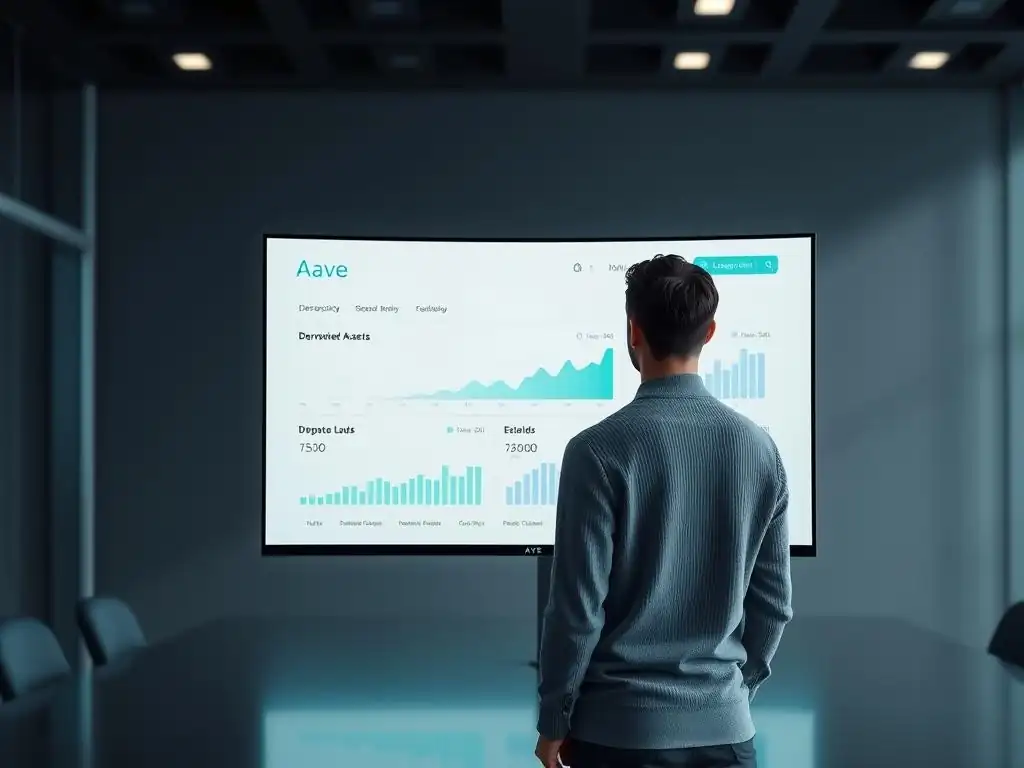
Exploring the Features of the Aave Lending Protocol
Aave is a prominent decentralized finance (DeFi) protocol that enables users to lend and borrow cryptocurrencies. Users can deposit their assets into liquidity pools to earn interest (acting as lenders) or borrow assets by providing collateral (acting as borrowers). The protocol uses a sophisticated algorithm to determine interest rates based on the supply and demand within each pool. Aave operates on multiple networks, including Ethereum, Polygon, and Avalanche.
The Aave front-end provides a user-friendly interface to interact with the protocol's smart contracts. It allows users to view available markets, deposit assets into lending pools, borrow assets against their collateral, manage their borrowing positions (monitoring health factor, repaying loans), and withdraw their deposited funds. It's a prime example among Blockchain decentralized application frontend examples focusing on lending and borrowing.
Implementing User Deposits and Borrowing
The core functionality of the Aave front-end revolves around facilitating deposits and borrows. When a user wants to deposit assets, the front-end guides them through selecting the asset and amount. Before the deposit transaction, if the asset is not native chain currency, the front-end checks if the Aave LendingPool contract has sufficient allowance to transfer the user's tokens from their wallet. If not, it prompts the user to perform an approval transaction first, which is a standard ERC-20 interaction pattern in DeFi front-ends.
For borrowing, the front-end calculates the user's borrowing capacity based on their collateral and the protocol's rules (e.g., Loan-to-Value ratio). It allows users to select the asset and amount to borrow. The front-end constructs the borrow transaction, passing the parameters to the user's wallet for signing. It must also clearly display potential risks, such as the liquidation threshold and health factor, helping users manage their positions safely.
Handling Real-Time Interest Rate Updates
Interest rates in DeFi lending protocols like Aave are dynamic, changing based on the utilization rate of assets within the pools. The Aave front-end needs to display these interest rates in near real-time to provide accurate information to users. This typically involves subscribing to data feeds from the Aave protocol's smart contracts or querying an API that aggregates this data.
The front-end must efficiently update the UI to reflect these changing rates without overwhelming the user or making excessive blockchain calls. This often involves polling data at regular intervals or listening for specific events emitted by the smart contracts, although direct event listening can be complex to manage at scale in a front-end. Displaying both the Annual Percentage Rate (APR) for lenders and borrowers, and sometimes the Annual Percentage Yield (APY) which accounts for compounding, requires careful calculation and presentation.
Governance Mechanisms on the Front-End
Aave is governed by its token holders (AAVE holders) through a decentralized governance process. The Aave front-end provides an interface for users to participate in this governance. This includes viewing proposed Aave Improvement Proposals (AIPs), reading proposal details, and casting votes using their staked AAVE tokens.
The front-end connects to the Aave governance smart contracts to fetch proposal data and submit voting transactions. This part of the front-end requires careful design to present complex governance information clearly and guide users through the voting process, which involves signing transactions to record their vote on-chain. Including governance features expands the scope of typical Blockchain decentralized application frontend examples beyond just financial transactions.
Integrating with WalletConnect
WalletConnect is a widely adopted open protocol that allows decentralized applications (DApps) to connect with mobile wallets. For a multi-chain protocol like Aave, integrating WalletConnect is essential to provide a seamless experience for users who prefer mobile wallets over browser extensions. The Aave front-end implements the WalletConnect library to establish a secure connection between the browser-based interface and the user's mobile wallet application.
When a user chooses to connect via WalletConnect, the front-end displays a QR code (or a deep link on mobile). The user scans the QR code with their mobile wallet, which establishes an encrypted connection. All subsequent transaction requests initiated on the desktop front-end are then relayed securely via the WalletConnect protocol to the mobile wallet for the user to review and sign. This enhances accessibility and security for mobile users.
Challenges of Building a Secure and Scalable Lending Protocol Front-End
Building a front-end for a lending protocol like Aave presents unique challenges. Security is paramount, as vulnerabilities could lead to users losing deposited funds or collateral. The front-end must correctly interact with complex smart contract logic, including interest rate calculations, liquidation thresholds, and collateralization ratios. Any miscalculation or incorrect parameter in a transaction request initiated by the front-end could have severe financial consequences for the user.
Scalability is also a concern, especially when displaying market data for numerous assets across multiple networks. The front-end needs to efficiently fetch and update potentially large amounts of data without becoming slow or unresponsive. Furthermore, providing clear and understandable information about the risks involved in lending and borrowing (like impermanent loss in some contexts or liquidation risk) through the UI is a significant UX challenge. These complexities make Aave a valuable study among Blockchain decentralized application frontend examples.
Comparing the DApp Front-End Examples: Key Takeaways
Front-End Architecture Patterns in Different DApp Types
Examining Uniswap (DEX), OpenSea (NFT Marketplace), and Aave (Lending Protocol) reveals common and distinct front-end architecture patterns in Blockchain decentralized application frontend examples. All three heavily rely on modern JavaScript frameworks (like React) and state management libraries to handle complex, reactive UIs. They also universally use libraries like Ethers.js or Web3.js for blockchain interaction and wallet integration (including WalletConnect).
However, their data handling strategies differ based on the application's needs. Uniswap focuses on real-time price feeds and transaction states, often querying pool data directly or via specialized APIs. OpenSea, dealing with vast amounts of static and dynamic NFT data, relies heavily on off-chain indexing and APIs for performance. Aave balances real-time interest rate updates with user-specific position data, requiring efficient querying of both pool and user-specific contract states. The choice between direct blockchain queries, The Graph, or custom APIs depends on the data volume, complexity, and required update frequency.
Common Challenges and Solutions in DApp Front-End Development
Several challenges are common across these Blockchain decentralized application frontend examples. Asynchronous blockchain interactions are a universal hurdle; front-ends must provide clear loading states, pending indicators, and notifications for transaction confirmations or failures. Handling wallet connections and different wallet types (browser extensions, mobile, hardware) requires robust, multi-wallet integration logic. Managing gas fees and allowing users to adjust them (where supported) is another critical UX consideration.
Solutions often involve implementing standardized patterns for wallet interaction (like EIP-1193 providers), using libraries that abstract away some blockchain complexities, implementing optimistic UI updates where possible (showing potential results before transaction confirmation, with clear caveats), and providing detailed transaction breakdowns including estimated gas costs. Implementing robust error handling for blockchain-specific errors (e.g., transaction reverts) is also essential.
Choosing the Right Technologies for Your DApp Front-End
The choice of technologies for a DApp front-end depends on the project's complexity, the development team's expertise, and the specific requirements. React, Vue, and Angular are popular choices for building complex, single-page applications. Libraries like Ethers.js and Web3.js are standard for Ethereum-based interactions, while other chains have their own equivalents (e.g., Solana's web3.js).
For state management, options range from simple React hooks ( useState, useReducer, useContext) to more powerful libraries like Redux, Zustand, or MobX, depending on the application's scale and state complexity. Data fetching strategies might involve direct RPC calls, GraphQL queries (The Graph), or custom REST APIs interacting with off-chain indexers. For visual components, UI libraries like Material UI or Chakra UI can speed up development, while custom designs are often needed for unique branding.
Optimizing User Experience (UX) in Blockchain Applications
Optimizing UX is crucial for driving adoption of decentralized applications. This involves simplifying complex blockchain concepts for the user. For example, explaining gas fees, transaction speeds, and security warnings clearly. Providing intuitive flows for common actions like swapping, lending, or trading is key.
Good UX in DApps also means providing timely feedback on transaction status, handling potential errors gracefully, and ensuring the interface is responsive across different devices. Abstracting away technical details, such as hexadecimal addresses or complex contract interactions, and presenting them in a human-readable format significantly improves usability. Designing for potential network delays and providing options for transaction speed (via gas price adjustments) further enhances the user experience in these Blockchain decentralized application frontend examples.
The Future of Blockchain Decentralized Application Front-End Development
The future of Blockchain decentralized application frontend development is likely to focus on further abstraction of blockchain complexities, improved performance, and enhanced security. We may see more sophisticated state management solutions specifically tailored for decentralized data, better tools for real-time data synchronization across various networks, and more seamless multi-chain user experiences.
Advancements in layer 2 scaling solutions and new blockchain architectures may also influence front-end design, potentially reducing transaction costs and increasing speed, which in turn simplifies the user experience. Furthermore, as DApps move beyond finance and collectibles into areas like decentralized social media, gaming, and identity, front-ends will need to evolve to support a wider range of interactions and data types, pushing the boundaries of what is possible with Blockchain decentralized application frontend examples.
Conclusion: Building the Next Generation of DApp Front-Ends
Frequently Asked Questions
What are some real-world examples of blockchain decentralized application (DApp) frontends?
Several exist! Consider platforms that integrate decentralized finance (DeFi), supply chain tracking systems utilizing blockchain, or even decentralized social media platforms. These all require user-friendly frontends.
Why is a well-designed frontend important for a blockchain DApp?
A compelling frontend is crucial for user adoption and interaction. If the application is difficult to navigate or understand, users will likely abandon it, hindering the success of the decentralized system.
How do DApp frontends differ from traditional web application frontends?
DApp frontends must interact with a blockchain network, often requiring integration with wallets and handling cryptographic signatures. This adds complexity compared to traditional applications.
What technologies are commonly used to build DApp frontends?
Common technologies include JavaScript frameworks like React, Vue.js, and Angular, along with libraries for interacting with blockchain APIs, such as Web3.js or Ethers.js.
What are some common challenges in developing DApp frontends?
Challenges include managing gas fees, ensuring security vulnerabilities are addressed, and providing a seamless user experience during blockchain transactions, which can sometimes be slow.
Final Reflection: Bridging the Blockchain Gap
The exploration of real-world decentralized application frontends reveals more than just code; it unveils the tangible potential of blockchain technology to reshape user experiences and empower individuals. The examples presented showcase the diverse applications already in motion, proving that the future of the web is not just a theoretical concept, but a rapidly evolving reality. This shift towards decentralized applications promises a more transparent, secure, and user-centric digital landscape.
The impact of these DApp frontends extends far beyond the technical realm, influencing how we interact with data, conduct transactions, and participate in online communities. Witnessing this evolution firsthand reinforces the importance of understanding and contributing to the development of decentralized technologies. The future is already here – it's just not evenly distributed.
- William Gibson. This quote perfectly encapsulates the current state of DApps; while still nascent, their potential to democratize access and reshape industries is undeniable.
Now, consider how you can contribute to this transformative movement. Reflect on the examples presented and identify areas where you can leverage your skills to build, improve, or simply advocate for the adoption of decentralized applications. The future of the web is being written today, and your participation is crucial in shaping a more equitable and empowering digital world for all.
Ignite Your DApp Journey: Build the Future of Blockchain!
Thanks for diving into the world of DApp frontends and exploring real-world examples with us! We hope you've gained valuable insights and inspiration to build your own decentralized applications. Ready to turn those insights into reality?
Here are some ways you can take your DApp development to the next level:
- Start building! Choose one of the DApp frontend examples discussed and begin coding a simplified version to solidify your understanding and gain practical experience. This hands-on approach is crucial to mastering the concepts.
- Explore beyond the code: Delve into the UI/UX design principles specific to DApps. Understanding how to create user-friendly interfaces for blockchain applications is key to adoption.
- Share your favorite example! Help spread the word about the DApps that inspire you by sharing this article and your insights with your network on social media.
What innovative DApp idea are you most excited to bring to life, and what frontend framework will you use to build it?
Leave a Reply