
The Role of IPFS in DApp Architecture: Decentralized File Storage and Content Addressing


Welcome to Blockchain Trends!
Are you ready to delve deeper into the real power of blockchain? Beyond the hype of cryptocurrencies lies a revolutionary technology transforming industries. This week, we're unlocking the secrets of IPFS decentralized file storage and its vital role in building robust and resilient DApps. Discover how IPFS is reshaping content addressing and fundamentally changing the landscape of decentralized applications. Intrigued? Let's explore the future of DApp architecture together...
The Role of IPFS in DApp Architecture: Decentralized File Storage and Content Addressing
- Introduction: Understanding Decentralized Applications (DApps) and the Need for Decentralized Storage
- What is IPFS? Exploring the InterPlanetary File System
- IPFS Decentralized File Storage: How it Works in DApp Architecture
- Benefits of Using IPFS for DApp File Storage
- Integrating IPFS with DApps: Practical Implementation and Examples
- IPFS vs. Traditional Storage Solutions for DApps: A Comparison
- Addressing the Challenges and Limitations of IPFS
- IPFS and the Future of Decentralized Applications
- Best Practices for Implementing IPFS in DApp Architecture
- Conclusion: Embracing IPFS for Robust and Scalable DApp Architecture
-
Frequently Asked Questions
- How does IPFS contribute to the architecture of Decentralized Applications (DApps)?
- What are the key advantages of using IPFS for file storage compared to traditional centralized storage solutions?
- How does IPFS's content addressing system work, and why is it important for DApps?
- What impact does IPFS have on the scalability and performance of DApps?
- What are some potential challenges or limitations when integrating IPFS into a DApp architecture?
- Final Reflection: Embracing Decentralized Futures
- Dive Deeper: Unlock the Power of Decentralized Storage!
Introduction: Understanding Decentralized Applications (DApps) and the Need for Decentralized Storage
The Evolution of Web Architecture and the Rise of DApps
The history of web architecture has evolved from static HTML pages to dynamic, user-centric platforms. This progression has laid the groundwork for decentralized applications (DApps) that harness blockchain and peer-to-peer technologies to create systems that are less reliant on central authorities. As internet users increasingly demand privacy, control, and resiliency, DApps have emerged as a promising alternative to traditional client-server models.
In recent years, the emergence of blockchain trends and the development of decentralized systems have highlighted the potential of DApps to revolutionize various sectors. This evolution is not just a reaction to centralized systems but a proactive step toward building a more transparent, resilient, and censorship-resistant internet. The rapid growth of blockchain communities and developer ecosystems underscores the urgency to rethink how data is stored, managed, and secured.
Challenges of Traditional Storage in DApp Development
Traditional storage solutions, predominantly centralized, often introduce single points of failure and vulnerability to censorship. These storage models can slow down performance and hinder the scalability of DApps. Developers frequently confront issues such as high operational costs, data breaches, and compliance risks when relying on centralized cloud providers and servers.
Moreover, traditional systems require robust security measures and complex regulatory frameworks to ensure data integrity and privacy. In contrast, DApps demand storage solutions that seamlessly support decentralized interactions, automated trustless transactions, and enhanced security protocols. This misalignment between traditional storage paradigms and decentralized architecture necessitates innovative storage solutions that cater to the unique demands of blockchain-based applications.
Introducing IPFS: A Solution for Decentralized File Storage
The InterPlanetary File System (IPFS) offers a transformative approach to file storage by leveraging a peer-to-peer network to store and share data. IPFS decentralized file storage eliminates single points of failure and paves the way for true data sovereignty. This system is particularly valuable for DApp developers who require secure, scalable, and cost-efficient mechanisms to store and retrieve large volumes of data.
By embracing IPFS, DApp developers can bypass many of the limitations encountered with traditional storage providers. IPFS uses content addressing rather than location addressing, ensuring that files are referenced by their unique cryptographic hash. This not only enhances security and data integrity but also allows the network to efficiently track and share changes, making it an ideal solution for modern decentralized ecosystems.
What is IPFS? Exploring the InterPlanetary File System
IPFS Explained: A Peer-to-Peer Distributed File System
IPFS is a next-generation, peer-to-peer distributed file system designed to make the web faster, safer, and more open. Unlike traditional file systems, IPFS links computing devices with the same system of files, forming a robust, immutable network that resists censorship and centralized control. This decentralized nature fosters an environment where data redundancy and resilience are built into the network architecture.
At its core, IPFS decentralizes file storage by breaking down files into smaller blocks, each linked together and stored across various nodes in the network. This methodology reduces the risk of data loss and enables efficient retrieval even when some nodes go offline. The use of cryptographic hashes to identify files means that once data is uploaded, its integrity is verifiable and tamper-resistant, which is essential for building trustworthy DApp ecosystems.
Content Addressing vs. Location Addressing: How IPFS Differs
Traditional storage systems rely on location-based addressing, where files are retrieved from a specific server or URL. In contrast, IPFS uses content addressing, meaning that any piece of data is identified by its unique hash generated from the content itself. This fundamental difference ensures that even if multiple copies of the same file exist, they all share a singular identity, eliminating redundancy and enhancing data verification processes.
The content addressing model of IPFS has significant implications for data security and integrity. With this system, a change to the file—even a single bit—results in a completely new hash, making unauthorized modifications immediately detectable. As a result, IPFS decentralized file storage offers a transparent and robust method for managing data across distributed networks, which is crucial for applications requiring high levels of trust and reliability.
Key Features of IPFS: Immutability, Decentralization, and Content Persistence
One of the standout attributes of IPFS is its immutability. Once a file is stored on the network, its content remains unchanged unless explicitly updated with a new version. This immutability guarantees that data remains consistent over time, a critical factor for historical records and audit trails in DApps.
In addition, IPFS emphasizes decentralization by distributing data across a global network of nodes. This significantly reduces dependence on any single entity and enhances the resilience of the network against targeted attacks and censorship. Coupled with content persistence techniques, such as pinning, IPFS ensures that files are reliably retained and can be accessed even in adverse network conditions. Together, these features provide a solid foundation for robust, secure, and scalable DApp file storage.
IPFS Decentralized File Storage: How it Works in DApp Architecture
Storing Data on IPFS: A Step-by-Step Guide
Storing data on IPFS involves a series of well-defined steps that convert traditional file storage practices into a decentralized model. Initially, when a file is added to IPFS, it is split into smaller blocks and each block is assigned a unique cryptographic hash. These blocks are then distributed across multiple nodes in the IPFS network, ensuring that the file is redundantly stored.
Developers can interact with IPFS using a local daemon or through programmatic interfaces provided by IPFS libraries. The process typically involves using commands or API calls that generate the file’s hash and register it within the distributed network. This methodology not only secures the data but also enables seamless scaling as additional nodes can participate in data replication and retrieval.
Retrieving Data from IPFS: Ensuring Data Availability
Retrieving data from IPFS is as efficient as it is secure. Users request files by their unique hash, prompting the network to locate and assemble the corresponding blocks from the nodes that store them. This decentralized retrieval process minimizes bottlenecks and circumvents the need for a central server, significantly enhancing data availability and access speeds.
IPFS leverages a distributed hash table (DHT) that dynamically keeps track of the location of each block within the network. The use of persistent connections and caching mechanisms further ensures that once data is requested, subsequent retrievals are faster and more efficient. Through these mechanisms, IPFS decentralized file storage secures data against network interruptions and improves the overall reliability of DApp operations.
IPFS Hash: The Foundation of Content Addressing
At the heart of IPFS lies the concept of the IPFS hash, a cryptographic fingerprint that uniquely identifies and verifies files across the network. This hash is generated using robust algorithms, ensuring that even the slightest modification in file content will result in a completely different hash. Thus, it forms the backbone of the content addressing system.
The IPFS hash not only guarantees data integrity but also simplifies the process of data sharing and verification across the network. Developers can use this hash to quickly reference and access content without relying on potentially outdated URLs. In the context of DApp architecture, this approach enhances security and efficiency by eliminating the vulnerabilities associated with traditional location-based addressing.
Benefits of Using IPFS for DApp File Storage
Enhanced Security and Data Integrity with IPFS
IPFS decentralized file storage offers a substantial boost in security compared to traditional storage systems. The use of cryptographic hashes ensures that any alteration to data is instantly detectable, which fortifies the network against tampering and cyber attacks. This is particularly crucial for DApps where trust and data integrity are paramount.
Furthermore, by distributing data across multiple nodes, IPFS minimizes the risk of data loss stemming from server failures or targeted attacks. This decentralized approach enhances the overall security posture of DApps, making them more resilient and trustworthy. The inherent immutability and verifiability provided by IPFS support enterprise-class applications that require stringent security measures and consistent data integrity.
Improved Performance and Scalability for DApps
The decentralized nature of IPFS not only enhances security but also significantly boosts performance and scalability. Unlike centralized storage systems that can become bottlenecks under high demand, IPFS allows simultaneous data retrieval from multiple nodes. This parallelism results in faster load times and improved user experiences, particularly for data-intensive DApps.
Scalability is another key advantage of using IPFS. As the network grows and more nodes join, the storage capacity and distribution capability increase proportionately. This elastic scalability is critical for DApps that are expected to handle large amounts of data and traffic, ensuring that performance remains consistent even during peak usage times.
Reduced Costs and Dependency on Centralized Servers
One of the most appealing aspects of IPFS decentralized file storage is its potential to reduce costs. By eliminating the need for centralized servers and proprietary cloud infrastructure, DApp developers can significantly cut operational expenses. Decentralized storage allows for the repurposing of existing hardware and incentivizes community participation in maintaining the network.
In addition, reducing dependency on major cloud providers such as AWS, Azure, or Google Cloud lowers the risks associated with vendor lock-in. The cost savings accumulated from utilizing a distributed network can be redirected toward further innovation and development, allowing DApps to focus on delivering enhanced functionalities and improved user experiences.
Censorship Resistance and Data Sovereignty with IPFS
IPFS is designed to empower users by providing robust censorship resistance and ensuring data sovereignty. In an era where centralized services can be prone to political pressure or regulatory intervention, IPFS decentralizes control by distributing data across a network of independent nodes. This means no single entity can easily remove or censor content hosted on IPFS.
Data sovereignty is further enhanced as users retain control over their own data. By leveraging a peer-to-peer network, IPFS ensures that information remains accessible without the interference typical of centralized systems. This openness supports the creation of truly decentralized applications that align with the ideals of a free and open internet.
Integrating IPFS with DApps: Practical Implementation and Examples
Connecting Your DApp to the IPFS Network
Connecting a DApp to the IPFS network involves configuring nodes and integrating API calls that communicate with the decentralized storage system. Developers can start by setting up a local IPFS node or leveraging cloud-based nodes maintained by trusted community members. Once connected, the DApp can interact with IPFS seamlessly, using simple commands to store and retrieve files.
Establishing this connection is streamlined by available libraries that abstract much of the low-level complexity. Whether you are building a small-scale DApp or a large enterprise solution, the integration process is designed to minimize friction while maximizing security and performance. This integration allows for fast, direct access to decentralized file storage, thereby enhancing the overall functionality and reliability of the DApp.
Using IPFS APIs and Libraries for DApp Development
A wide array of IPFS APIs and libraries are available to simplify the development of decentralized applications. Languages like JavaScript, Python, and Go offer mature libraries that enable developers to harness the full power of IPFS while writing concise and efficient code. These tools provide functionalities for adding files, retrieving content, and managing IPFS nodes—all from within your application code.
For example, using a typical JavaScript library, developers can call methods such as ipfs.add() and ipfs.cat() to smoothly integrate file storage and retrieval into their DApps. This abstraction not only saves development time but also ensures that best practices in security and performance are consistently applied. Leveraging these APIs, developers have successfully built secure, scalable, and efficient DApps that benefit from the decentralized infrastructure provided by IPFS.
Case Study 1: Peergos: Decentralized, Secure Storage and Sharing
Peergos stands out as a compelling example of a DApp that integrates IPFS decentralized file storage into its core functionality. This platform combines encryption with decentralized storage to offer users a secure space for personal data and content sharing. By leveraging IPFS, Peergos ensures that user data is distributed across multiple nodes, reducing risks associated with central server breaches.
The architecture of Peergos demonstrates how IPFS can be effectively used to enhance file security and accessibility. The platform's implementation showcases real-world benefits such as reduced latency, improved uptime, and enhanced scalability without compromising on data privacy. Peergos successfully illustrates the practical application of integrating IPFS within a DApp to create a secure, distributed storage system.
Case Study 2: Audius: Decentralized Music Streaming Platform
Audius is another notable example where IPFS plays a vital role in decentralizing media storage and delivery. This platform leverages IPFS to host music files, allowing artists to distribute their work without the gatekeeping typically associated with centralized streaming services. With IPFS decentralized file storage, Audius achieves both a robust content delivery network and enhanced copyright protection mechanisms.
By offloading the storage of large media files to IPFS, Audius reduces costs and minimizes dependence on centralized cloud infrastructure. Users experience faster streaming speeds and improved data resilience, while artists gain better control over their content. The success of Audius underscores the potential of IPFS to revolutionize traditional media delivery models by embracing decentralization.
IPFS vs. Traditional Storage Solutions for DApps: A Comparison
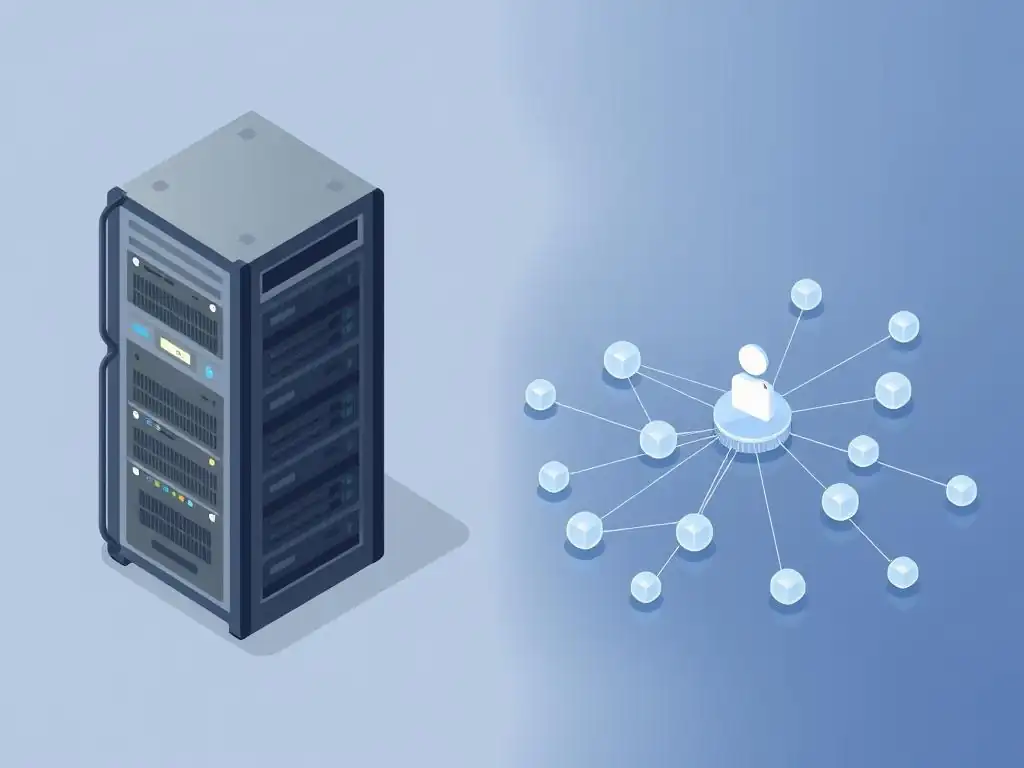
IPFS vs. Centralized Cloud Storage (AWS, Azure, Google Cloud)
Centralized cloud storage solutions, such as AWS, Azure, and Google Cloud, have long dominated the market by offering high availability and scalable resources. However, these systems come with significant drawbacks including single points of failure and vulnerability to censorship. IPFS decentralizes file storage by distributing data across numerous nodes, thereby eliminating reliance on one centralized source and reducing associated risks.
Moreover, while centralized services often involve recurring costs and potential vendor lock-in, IPFS provides a cost-effective alternative that leverages community resources. As DApps require a higher level of trust and security, the decentralized approach of IPFS presents tangible benefits by improving resilience against data breaches and operational downtimes—a clear advantage over traditional cloud storage frameworks.
IPFS vs. Decentralized Storage Alternatives (Filecoin, Arweave)
While IPFS is at the forefront of decentralized file storage, it is part of a broader ecosystem that includes alternatives like Filecoin and Arweave. Filecoin is closely related to IPFS but introduces a native incentive layer for data storage, encouraging participants to provide reliable storage through economic rewards. Arweave, on the other hand, focuses on permanent data storage with a different consensus mechanism.
Each solution has its own merits: IPFS offers a seamless integration experience with DApps via content addressing and a peer-to-peer network, while alternatives may provide enhanced incentives or specific use-case optimizations. For developers, choosing the right solution involves evaluating their DApp’s requirements for cost, permanence, and network incentives. IPFS remains a popular choice due to its proven reliability and ease of deployment in a variety of decentralized application environments.
Choosing the Right Storage Solution for Your DApp: Key Considerations
Selecting the optimal storage solution for a DApp involves a careful evaluation of multiple factors including security, performance, scalability, and cost. IPFS decentralized file storage provides high resistance to censorship and data tampering, making it suitable for applications that demand trust and transparency. Developers must also consider network latency, the ability to scale with user demands, and integration complexity.
Practical considerations include the maturity of the technology, community support, and available developer tools. Real-world implementations have shown that while IPFS offers many advantages, its performance can vary based on network conditions and node availability. Therefore, a hybrid approach that combines IPFS with other storage solutions might sometimes be the best strategy for ensuring robust and efficient DApp operations.
Addressing the Challenges and Limitations of IPFS
Data Persistence and Pinning Strategies
Data persistence is a critical concern when using any decentralized storage solution. In IPFS, ensuring that data remains available over time often requires a process known as pinning. Pinning involves designating certain nodes to permanently store specific data blocks, thereby guarding against garbage collection and accidental deletion.
A well-thought-out pinning strategy can dramatically enhance the longevity and reliability of files within a DApp. Organizations often employ dedicated pinning services or maintain private pinning nodes to support important datasets. These strategies have proven effective in environments where data integrity and persistence are non-negotiable, such as in enterprise applications or legacy blockchain systems.
Garbage Collection and Storage Management on IPFS
IPFS nodes are designed to free up storage space by removing unpinned data through garbage collection. While this process helps manage node resources efficiently, it can pose challenges for ensuring that all necessary data remains available to DApps. Developers must carefully manage node storage policies to avoid unintended data loss.
Effective storage management on IPFS involves monitoring node performance and making intelligent decisions about which data to pin. By scheduling regular audits and utilizing automated tools to assess storage needs, it is possible to maintain high data availability. These practices not only secure the integrity of IPFS decentralized file storage but also optimize system performance in long-term deployments.
Latency and Performance Optimization for DApps using IPFS
Latency issues can arise in distributed networks, and IPFS is no exception. Since files are retrieved from multiple nodes in different geographical locations, there can sometimes be delays in data assembly and delivery. Optimizing performance often requires strategic node placement and content distribution to minimize latency.
Developers can employ several best practices to mitigate latency, including edge caching and load balancing techniques that distribute requests uniformly. Detailed monitoring of network performance using available analytics tools also provides insights into bottlenecks and areas of improvement. Consequently, continuous performance optimization is crucial for maintaining a smooth and efficient user experience in DApps that rely on IPFS decentralized file storage.
Scalability Considerations for Large-Scale DApp Deployments
As DApps grow and attract more users, scalability becomes a core concern in decentralized systems. IPFS must handle increasing volumes of data and an expanding network of nodes without compromising performance. Scaling IPFS effectively involves not only technical improvements in data routing and caching but also robust network governance practices.
Case studies have shown that leveraging community-driven nodes and integrating advanced load balancing techniques can significantly improve scalability. Investors and developers alike are focused on enhancing network protocols and optimizing algorithms that handle large-scale file distribution. By continuously refining these strategies, IPFS remains a strong contender for powering high-demand DApps in a way that traditional storage solutions simply cannot match.
IPFS and the Future of Decentralized Applications
IPFS and the Web3 Vision: Building a Decentralized Internet
The Web3 vision calls for an internet that gives users control over their own data and breaks free from centralized control, and at its core, IPFS is integral to this evolution. By enabling decentralized file storage, IPFS contributes to the creation of an open, resilient, and censorship-resistant internet that aligns with the principles of Web3. Developers and entrepreneurs can leverage IPFS to build applications where trust is algorithmically enforced and data remains under direct user control.
This transformative approach is already influencing how digital services are conceptualized, from social networks to financial platforms. Real-world innovations are emerging that harness IPFS to overcome the limitations of traditional, centralized infrastructures. With the momentum behind Web3 growing every day, IPFS is well-positioned to become a key pillar in the broader movement toward a decentralized digital economy.
The Role of IPFS in Decentralized Media and Content Creation
The decentralized file storage capabilities of IPFS open up new opportunities for media platforms, empowering creators to distribute content without intermediaries. This technological shift enables more equitable revenue models and ensures that media creators can maintain ownership over their work. Consequently, IPFS is increasingly integrated into platforms that prioritize free speech and creative freedom.
Platforms adopting IPFS have reported tangible benefits including faster content delivery, reduced bandwidth costs, and enhanced resistance to censorship. These advancements not only support smaller content creators but also challenge the hegemony of centralized media companies. By redefining how media is stored and shared, IPFS is fostering a renaissance in digital content creation that aligns closely with the ideals of decentralization.
Decentralized social media platforms benefit greatly from the security, resilience, and censorship resistance provided by IPFS. By distributing user-generated content across a network of nodes, these platforms gain protection against data tampering and centralized control. Users can interact, share, and engage freely without worrying about unilateral content removal or surveillance.
As the demand for private, secure, and user-centric social platforms grows, IPFS serves as a critical infrastructure component. Early implementations have demonstrated improved uptime, enhanced user trust, and reduced vulnerability to external interference. This reliability makes IPFS an attractive option for developers looking to build social media networks that prioritize free expression and data integrity on a decentralized foundation.
Emerging Trends and Innovations in IPFS Technology
The IPFS community is continuously innovating to address existing challenges and introduce new functionalities that support an ever-expanding ecosystem of decentralized applications. Recent developments include improved data sharding techniques, enhanced consensus algorithms, and more robust incentivization mechanisms to encourage node participation.
Innovations in areas such as integration with blockchain smart contracts and the development of hybrid storage models are already shaping the next generation of decentralized file storage. As these trends gain traction, industries ranging from entertainment to finance are expected to leverage IPFS to enhance existing systems. The forward momentum in research and development assures that IPFS will remain at the cutting edge of decentralized technology, offering practical and scalable solutions for the future of DApps.
Best Practices for Implementing IPFS in DApp Architecture
Optimizing IPFS Performance for Your DApp
To maximize the benefits of IPFS decentralized file storage, it is essential to optimize node performance and network interactions. Developers can achieve this by strategically selecting node locations, fine-tuning caching strategies, and leveraging performance analytics to identify potential bottlenecks. Regular updates and software optimizations further enhance network throughput and reliability.
Incorporating best practices involves monitoring key performance indicators such as data retrieval times and node health. By adopting a proactive approach to system monitoring, developers can quickly adapt to performance challenges and ensure that their DApp remains fast and responsive even as usage grows.
Ensuring Data Security and Privacy on IPFS
Data security and privacy are fundamental concerns when integrating any file storage system into a DApp. When working with IPFS, it is crucial to implement encryption at both rest and in transit. Developers should also adopt strategies like data sharding and access control mechanisms to enhance security further.
Integrating secure practices involves leveraging established cryptographic protocols and continuously auditing the implementation for vulnerabilities. By coupling IPFS decentralized file storage with robust security protocols, DApps can provide users with a trustworthy and secure environment for sensitive information and transactional data.
Managing IPFS Nodes and Infrastructure
Efficient node management is vital for maintaining the health and performance of an IPFS network. Developers should consider employing automated node management tools that monitor node uptime, resource utilization, and network latency. These tools can trigger alerts and help maintain an optimal configuration.
Adopting a decentralized management framework also involves training technical teams to handle infrastructure issues proactively. Regular node audits, coupled with community-driven support, ensure that the network remains robust and responsive to emerging challenges. These practices ultimately sustain the efficiency and security of IPFS decentralized file storage in a live DApp environment.
Monitoring and Maintaining Your IPFS Implementation
Ongoing maintenance and monitoring are key to ensuring the long-term success of an IPFS-based DApp. Developers should implement comprehensive logging and alert systems to track network performance and potential security issues. Regular audits and performance reviews enable continuous improvements and timely responses to any anomalies.
Proactive maintenance strategies include scheduled updates, performance benchmarking, and community feedback loops. By maintaining a vigilant stance, developers can ensure that the IPFS implementation consistently meets the operational demands of a dynamic, user-driven application landscape.
Conclusion: Embracing IPFS for Robust and Scalable DApp Architecture
The Transformative Potential of IPFS Decentralized File Storage
IPFS decentralized file storage encapsulates a transformative vision for the future of DApp architecture. By eliminating many of the limitations associated with centralized storage, IPFS enhances security, scalability, and performance. Its use of content addressing and distributed networks paves the way for applications that are inherently more resilient and trustworthy.
Real-world deployments have already demonstrated that integrating IPFS into DApps leads to tangible benefits including reduced operational costs, improved data integrity, and greater user empowerment. The proven success of projects leveraging IPFS stands as a testament to its potential in reshaping the digital landscape in the era of Web3.
Future Outlook for IPFS and DApp Development
The future of decentralized applications is inextricably linked with the continued evolution of IPFS. As network infrastructure, node participation, and integration tools improve, IPFS is set to play an ever more critical role in the digital economy. Innovations in scalability, performance optimization, and user-centric enhancements are expected to further accelerate DApp adoption.
DApp developers are encouraged to keep abreast of emerging trends in IPFS technology as these innovations open new horizons for building robust, scalable, and secure applications. The forward-looking vision of a decentralized internet makes the investment in IPFS not just a technical decision, but a strategic move towards a more distributed digital future.
Resources for Further Learning about IPFS
For those interested in deepening their understanding of IPFS, a wealth of resources is available through community forums, technical publications, and developer documentation. Engaging with these materials can provide practical insights into best practices, emerging challenges, and innovative solutions related to decentralized file storage.
By continually exploring these resources, DApp developers and technology enthusiasts can ensure they remain at the forefront of innovation—empowering them to harness the full potential of IPFS decentralized file storage in revolutionizing the architecture of decentralized applications.
This concludes the detailed exploration of IPFS in DApp architecture, offering a comprehensive look at its mechanisms, benefits, and future potential in the evolving digital landscape.
Frequently Asked Questions
How does IPFS contribute to the architecture of Decentralized Applications (DApps)?
IPFS provides decentralized file storage and content addressing, allowing DApps to store and retrieve data without relying on centralized servers, improving resilience and censorship resistance. This enables developers to build more robust and truly decentralized applications.
What are the key advantages of using IPFS for file storage compared to traditional centralized storage solutions?
IPFS offers content addressing, ensuring that files are identified by their content rather than location, making them tamper-proof and easily verifiable. This contrasts with centralized solutions which are vulnerable to single points of failure.
How does IPFS's content addressing system work, and why is it important for DApps?
IPFS uses content identifiers (CIDs), cryptographic hashes of the file's content, to address files. This ensures that retrieving a file always yields the correct and unaltered version, crucial for data integrity in DApps.
What impact does IPFS have on the scalability and performance of DApps?
By distributing file storage across a decentralized network, IPFS can improve scalability and reduce latency by allowing users to retrieve data from multiple nodes simultaneously. This can enhance the overall performance of DApps.
What are some potential challenges or limitations when integrating IPFS into a DApp architecture?
Challenges include dealing with pinning services to ensure data persistence, managing bandwidth costs associated with data retrieval, and understanding the complexities of the IPFS network.
Final Reflection: Embracing Decentralized Futures
The journey through the architecture of decentralized applications (DApps) and the pivotal role of IPFS in achieving truly decentralized file storage underscores a crucial shift in how we perceive and interact with data. The promise of IPFS decentralized file storage isn't just about technological advancement; it's about reclaiming control over our digital assets and fostering a more resilient and equitable internet. The implications for data security, censorship resistance, and the overall democratization of information are profound and increasingly relevant in today's centralized digital landscape.
The impact of IPFS extends far beyond the technical realm, influencing the very fabric of our digital culture. The ability to permanently and immutably store data, accessible to anyone, anywhere, represents a fundamental shift in power dynamics. It empowers creators, protects against data loss, and fosters a more transparent and accountable digital ecosystem. The Internet was built to be decentralized, but it's become increasingly centralized over time. IPFS is a key technology for restoring the original vision of a truly decentralized web.
This quote encapsulates the driving force behind IPFS and its potential to reshape our online world.
As we conclude this exploration of IPFS and its role in DApp architecture, I invite you to consider the implications of decentralized file storage in your own life. How can you leverage these technologies to protect your data, support independent creators, and contribute to a more open and equitable internet? The future of the web is being built today, and your choices, your contributions, and your understanding of these technologies will shape that future. Embrace the potential of IPFS and become an active participant in building a truly decentralized world.
Okay, I'm ready to craft a compelling Call to Action for an article titled "The Role of IPFS in DApp Architecture: Decentralized File Storage and Content Addressing" on the website "Blockchain Trends" (blockchaintrends.org). Here it is:
Dive Deeper: Unlock the Power of Decentralized Storage!
Thank you for exploring the potential of IPFS in revolutionizing DApp architecture. We hope you now have a clearer understanding of how decentralized file storage and content addressing can enhance the security, efficiency, and resilience of decentralized applications. Ready to take the next step?
Here's how you can put your knowledge into action:
- Start experimenting with IPFS in your own DApp project: Immediately begin integrating IPFS for static content storage. This hands-on experience is crucial for mastering the technology. This is your primary action!
- Explore existing DApps leveraging IPFS for inspiration and insights. Analyze their architecture and identify best practices.
- Share this article with fellow blockchain enthusiasts and developers to foster a wider understanding of IPFS.
What innovative ways can you envision using IPFS to solve real-world data storage challenges within the DApp ecosystem?
Leave a Reply