
The Role of Oracles in DApp Architecture: Bridging the Gap Between OnChain and OffChain Data


Welcome to Blockchain Trends, your guide to navigating the ever-evolving world of blockchain technology! Beyond the hype of cryptocurrencies, lies a universe of innovation. Intrigued by how decentralized applications (DApps) connect with the real world? This week, we delve into the crucial role of blockchain oracles data integration, exploring how these vital components are shaping the future of DApp architecture and bringing off-chain data on-chain. Discover the challenges, solutions, and transformative potential that awaits!
The Role of Oracles in DApp Architecture: Bridging the Gap Between OnChain and OffChain Data
- Introduction to Blockchain Oracles and DApp Ecosystems
- Exploring Different Types of Blockchain Oracles
- The Importance of Secure and Reliable Oracles for DApps
- Practical Applications of Blockchain Oracles in DApp Architecture
- Designing DApps with Oracle Integration: Best Practices and Considerations
- The Future of Blockchain Oracles and DApp Development
- Conclusion: Empowering DApps with Real-World Data Through Blockchain Oracles
-
Frequently Asked Questions
- How do blockchain oracles facilitate data integration for DApps?
- What are the key challenges in implementing blockchain oracles within a DApp architecture?
- Beyond cryptocurrencies, how are blockchain oracles being used in enterprise applications?
- What role do blockchain oracles play in the decentralized finance (DeFi) space?
- What are the regulatory considerations surrounding the use of blockchain oracles for data integration?
- Final Reflection: Embracing the Power of Connected Data
- Unleash the Power of Oracles: Build the Future of DApps!
Introduction to Blockchain Oracles and DApp Ecosystems
Understanding the Need for External Data in Decentralized Applications
Decentralized applications (DApps) operate on blockchain networks, benefiting from properties like transparency, immutability, and censorship resistance. However, smart contracts, the executable logic underlying most DApps, are inherently isolated from the outside world. They cannot directly access real-world information such as financial market prices, weather conditions, sports results, or data from legacy systems and APIs. This limitation is often referred to as the "oracle problem."
Without a reliable mechanism to feed external data into the blockchain, the utility of many potential DApps is severely restricted. A decentralized insurance DApp covering flight delays, for example, needs accurate, tamper-proof data about actual flight arrival times to trigger a payout. Similarly, a Decentralized Finance (DeFi) lending protocol requires precise, up-to-the-minute price data for collateral assets to manage liquidations effectively. Bridging this gap between the deterministic, on-chain environment and the dynamic, off-chain world is fundamental for DApps to interact with and react to real-world events.
Defining Blockchain Oracles: Secure Data Feeds for Smart Contracts
Blockchain oracles serve as secure intermediaries that connect smart contracts with external data. They act as data feeds, fetching information from various off-chain sources, verifying its accuracy and integrity, and then transmitting it onto the blockchain in a format that smart contracts can understand and utilize. These oracles are essential infrastructure components that enable smart contracts to execute based on conditions that occur outside the blockchain network itself.
An oracle system typically involves several steps: a smart contract requests specific data, the oracle node or network retrieves the data from one or more external sources (like APIs, databases, or sensors), it validates the data to ensure accuracy and reliability, and finally, it delivers the processed data onto the blockchain, often through a transaction that updates a specific data feed or variable accessible by the requesting smart contract. This process is critical for enabling complex and practical DApp functionalities.
Blockchain Oracles Data Integration: A Critical Component of DApp Functionality
Effective blockchain oracles data integration is not merely about fetching data; it's about ensuring that the data delivered on-chain is reliable, secure, and timely. The reliability of a DApp that depends on external information is directly tied to the quality and trustworthiness of its oracle integration. If the oracle provides incorrect, manipulated, or outdated data, the smart contract relying on it could execute flawed logic, leading to significant financial losses or incorrect outcomes.
The process of integrating blockchain oracles data involves selecting appropriate data sources, designing robust data aggregation and validation mechanisms, and implementing secure communication protocols between the off-chain world and the smart contract. For instance, a DeFi protocol managing billions in assets under management (AUM) relies heavily on highly available and accurate price feeds, often aggregated from dozens or hundreds of exchanges to mitigate the risk of single-source manipulation. Successful blockchain oracles data integration is therefore foundational to building robust, secure, and truly functional decentralized applications.
Exploring Different Types of Blockchain Oracles
Data Feed Oracles: Providing Real-World Information On-Chain
Data feed oracles are perhaps the most common type, specializing in bringing specific, frequently updated real-world information onto the blockchain. Their primary function is to provide smart contracts with critical external data points, such as asset prices (e.g., ETH/USD, BTC/EUR), weather conditions, election results, or the outcome of real-world events. This data is typically sourced from APIs, data providers, or sensor networks.
A prominent example of data feed oracles is their use in DeFi protocols. Platforms like MakerDAO, Aave, and Compound utilize decentralized price feeds from oracle networks to determine the value of collateral assets and trigger liquidation mechanisms when prices fall below a certain threshold. These price feeds are often aggregated from multiple sources to increase reliability and resist manipulation, ensuring that critical financial operations within these DApps are based on accurate market data. Robust blockchain oracles data integration for price feeds is essential for maintaining the stability and security of DeFi ecosystems.
Compute Oracles: Offloading Complex Calculations for Enhanced DApp Performance
Compute oracles extend the capabilities of smart contracts by performing complex computations off-chain that would be prohibitively expensive or impossible to execute directly on the blockchain due to gas limits and computational constraints. These oracles can handle tasks such as running complex simulations, performing data analysis, generating verifiable random numbers, or executing code in trusted execution environments (TEEs).
By offloading intensive computation, compute oracles enable DApps to incorporate more sophisticated logic and features without sacrificing performance or incurring excessive transaction costs. For instance, a decentralized gaming DApp might use a compute oracle to run complex game physics simulations or determine the outcome of a computationally intensive event. This allows for richer, more dynamic gameplay experiences that wouldn't be feasible with purely on-chain computation, showcasing another dimension of effective blockchain oracles data integration.
Cross-Chain Oracles: Enabling Interoperability Between Blockchains
Cross-chain oracles facilitate communication and data transfer between different blockchain networks. Since blockchains are typically siloed and cannot natively interact with each other, cross-chain oracles are crucial for enabling interoperability, allowing smart contracts on one chain to access data or trigger actions on another.
These oracles are vital for applications like cross-chain bridges, which allow users to transfer assets between different blockchains, or for DApps that need to leverage data or functionality available on a separate network. For example, a DApp on Ethereum might need to verify the state of a contract on Binance Smart Chain or access data from a network optimized for specific tasks. Cross-chain blockchain oracles data integration breaks down blockchain silos, paving the way for a more interconnected decentralized ecosystem.
State Oracles: Verifying the State of Off-Chain Systems
State oracles are specialized in verifying the state or outcome of events in the real world or in specific off-chain systems. Unlike data feed oracles that provide continuous streams of data, state oracles are typically used to confirm whether a specific condition has been met or a particular event has occurred off-chain.
Examples include verifying if a shipment has reached its destination in a supply chain DApp, confirming the outcome of a sports match for a prediction market, or checking if a specific condition in a legal contract has been fulfilled. These oracles often rely on proofs or attestations from trusted parties or verifiable data sources to confirm the off-chain state, providing the necessary trigger for smart contracts to execute contingent logic based on real-world events.
The Importance of Secure and Reliable Oracles for DApps
Oracle Security Risks: Potential Vulnerabilities and Attack Vectors
The critical role of oracles in feeding data to DApps makes them a prime target for malicious actors. Oracle security risks can arise from various points in the data pipeline. A centralized oracle is a single point of failure; if compromised, it can feed incorrect data, leading to devastating consequences for dependent smart contracts, such as incorrect liquidations, unfair game outcomes, or fraudulent insurance payouts. This is often referred to as the "oracle problem" in the context of security.
Attack vectors include data manipulation at the source, during transmission, or by the oracle node itself if it's malicious or compromised. For example, a flash loan attack combined with oracle manipulation has been used to exploit DeFi protocols by temporarily distorting asset prices reported by a vulnerable oracle, allowing attackers to profit at the expense of other users. Ensuring robust blockchain oracles data integration is paramount to mitigating these risks.
Ensuring Data Integrity: Methods for Verifying Oracle Data
To combat security risks, oracle systems employ various methods to ensure data integrity and reliability. One common approach is data aggregation, where data for a single query is sourced from multiple independent nodes or data providers. By requiring a consensus or median value from numerous sources, the system becomes more resistant to manipulation by any single malicious actor or compromised data source. For instance, a price feed might aggregate data from dozens of exchanges.
Other methods include cryptographic proofs, such as TLSNotary proofs, which can verify that data was fetched from a specific website via a secure connection. Reputation systems for oracle nodes, staking mechanisms that penalize dishonest behavior, and economic incentives for providing accurate data also contribute to maintaining data integrity. These techniques are essential components of secure blockchain oracles data integration frameworks.
Reputation Systems and Oracle Selection: Building Trust and Transparency
Reputation systems play a significant role in decentralized oracle networks by tracking the historical performance and reliability of individual oracle nodes. Nodes that consistently provide accurate and timely data build a positive reputation, making them more likely to be selected by DApps. Conversely, nodes that provide incorrect or late data are penalized, potentially through staking mechanisms where they lose staked collateral, damaging their reputation and reducing their chances of being selected in the future.
DApps can use these reputation systems and staking metrics to select a set of trusted and reliable oracle nodes for their specific data needs. Transparency in how data is sourced, aggregated, and delivered on-chain is also crucial. Users and developers should be able to verify the process and the nodes involved. Choosing oracle providers with established track records and transparent operations is a key best practice for secure blockchain oracles data integration.
Practical Applications of Blockchain Oracles in DApp Architecture
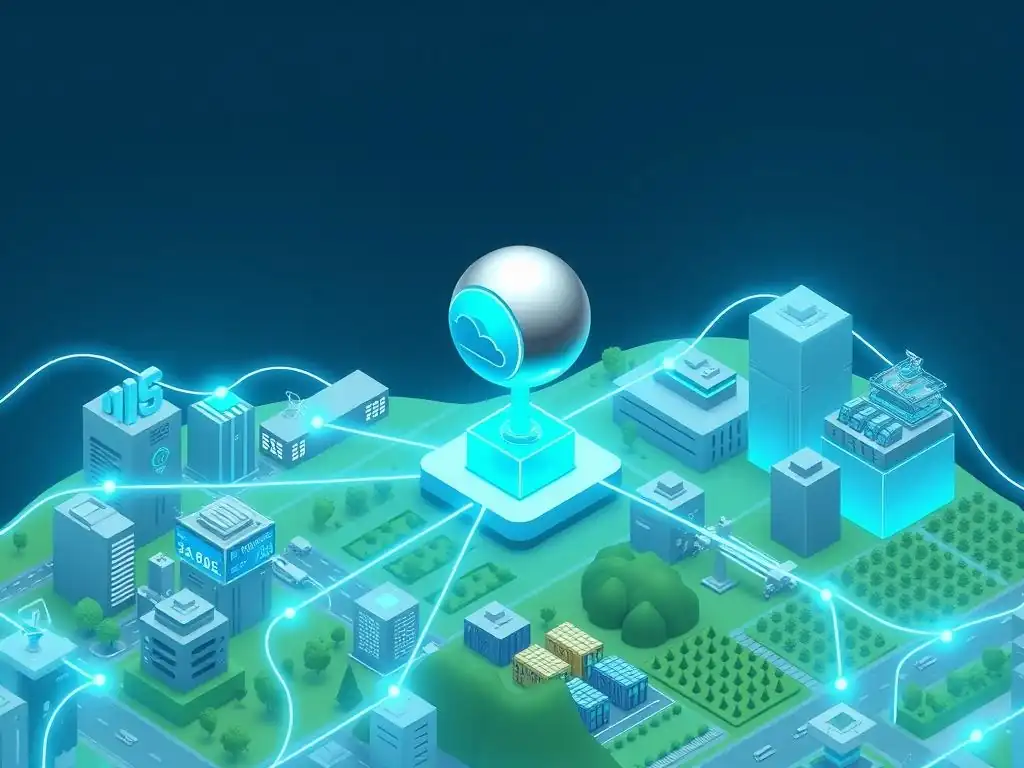
DeFi Applications: Price Feeds, Lending Platforms, and Synthetic Assets
Decentralized Finance (DeFi) is arguably the sector most dependent on reliable blockchain oracles data integration. Core DeFi protocols like lending platforms (Aave, Compound) and stablecoins (MakerDAO) rely heavily on accurate, real-time price feeds for collateral valuation, liquidation mechanisms, and interest rate calculations. Inaccurate price data can lead to under-collateralized loans or unfair liquidations, risking protocol stability and user funds.
Synthetic asset platforms, which allow users to trade tokenized derivatives representing real-world assets (like stocks, commodities, or foreign currencies), also require precise price data feeds to peg the value of synthetic assets to their real-world counterparts. For example, a synthetic stock token needs a continuous price feed reflecting the actual stock market price. The integrity and security of these price feeds are paramount, underpinning the vast TVL (Total Value Locked) in the DeFi ecosystem, which has often exceeded tens of billions of dollars.
Supply Chain Management: Tracking Product Provenance and Authenticity
Blockchain technology offers immense potential for improving transparency and traceability in supply chains. DApps in this sector can use oracles to integrate data from various off-chain sources, such as sensors (temperature, location), RFID tags, shipping manifests, and inspection reports. This allows for immutable tracking of goods from origin to destination.
For instance, a DApp tracking pharmaceutical products could use temperature sensors integrated via oracles to ensure goods were stored correctly throughout transit, triggering alerts or actions if conditions deviate. Oracles can also verify the authenticity of documents or certifications related to the supply chain. Effective blockchain oracles data integration provides verifiable, end-to-end visibility, enhancing trust and efficiency in complex global supply chains.
Insurance DApps: Triggering Payouts Based on Real-World Events
Decentralized insurance DApps leverage smart contracts to automate claims processing based on the occurrence of specific real-world events. Oracles are essential for providing verifiable data about these events, acting as the trigger for smart contract execution. Examples include flight delay insurance, crop insurance based on weather data, or parametric insurance triggered by natural disaster data (e.g., earthquake magnitude, hurricane wind speed).
For a flight delay insurance DApp like Etherisc, an oracle might fetch data from flight tracking APIs to confirm if a specific flight was delayed by more than the insured threshold. For crop insurance, oracles could provide data from weather stations or satellite imagery regarding rainfall or temperature in a specific region. The reliability and impartiality of the oracle data are critical for ensuring fair and automated claims payouts, demonstrating a powerful application of blockchain oracles data integration in automating traditional processes.
Gaming DApps: Integrating External Data for Dynamic Gameplay
Blockchain-based gaming DApps can use oracles to introduce elements of unpredictability, fairness, and real-world interaction into gameplay. This includes integrating verifiable random number generation (VRF) for in-game events like loot box drops or critical outcomes, using real-world sports scores for fantasy sports DApps, or incorporating data from other games or platforms.
For games requiring provably fair randomness, oracles like Chainlink VRF provide a secure and verifiable way to generate random numbers off-chain and deliver cryptographic proofs on-chain, preventing manipulation. Fantasy sports DApps on the blockchain need oracles to feed real-time scores and statistics from professional sports leagues to settle outcomes and distribute winnings. This blockchain oracles data integration allows for more engaging, dynamic, and trustworthy gaming experiences compared to traditional centralized systems.
Designing DApps with Oracle Integration: Best Practices and Considerations
Choosing the Right Oracle Solution for Your DApp Needs
Selecting the appropriate oracle solution is a critical design decision that significantly impacts the security, reliability, cost, and performance of a DApp. Factors to consider include the type of data required (price feeds, events, computation), the required update frequency and latency, the number and diversity of data sources needed, the security model of the oracle network (centralized vs. decentralized, staking, reputation), and the cost of data retrieval and delivery on-chain.
Developers should evaluate different oracle providers based on their track record, supported blockchains, the quality and number of their data feeds, and the robustness of their security mechanisms. For high-value DApps, opting for decentralized oracle networks (DONs) that aggregate data from multiple independent nodes and sources is generally recommended to minimize single points of failure and enhance security through collective intelligence and economic incentives. Thorough research into available blockchain oracles data integration options is essential.
Developing Secure Smart Contracts that Interact with Oracles
Integrating oracle data securely into smart contracts requires careful design and implementation. Smart contracts should be built to handle potential issues such as data latency, temporary unavailability of oracle data, or even receiving potentially stale or incorrect data (though robust oracle networks aim to prevent this). Using design patterns like the "pull" pattern, where the smart contract requests data when needed rather than relying on the oracle to "push" it, can offer more control and reduce risks associated with unexpected updates.
Implementing proper access control to oracle functions within the smart contract is also vital, ensuring only authorized oracle addresses can update data feeds. Incorporating fallback mechanisms or circuit breakers can help mitigate risks if oracle data is unavailable or seems suspicious, preventing the smart contract from executing logic based on faulty information. Auditing smart contracts for oracle interaction vulnerabilities is a crucial step in the development process.
Handling Oracle Data Updates and Error Scenarios
Smart contracts need to be designed to gracefully handle updates from oracles and anticipate potential error scenarios. Oracle data doesn't appear instantly on-chain; there is always some latency involved depending on block times and oracle network processing. DApps should account for this latency and avoid making critical decisions based on data that might be slightly outdated, especially in fast-moving markets.
Furthermore, smart contracts should include logic to manage situations where an oracle call fails, returns an error, or provides data that falls outside expected parameters. This might involve pausing certain DApp functions, reverting transactions, or implementing a manual override in extreme cases (though decentralization aims to minimize the need for manual intervention). Robust error handling within the smart contract is as important as the reliability of the blockchain oracles data integration itself.
Cost Optimization Strategies for Oracle Usage
Accessing data from oracles incurs costs, primarily in the form of gas fees required to write the data onto the blockchain. For DApps that require frequent data updates, these costs can become significant. Developers should implement strategies to optimize oracle usage and minimize expenses.
One strategy is to only request oracle data when it is absolutely necessary for the DApp's logic to execute. For example, a lending protocol might only need to update collateral prices when a user interacts with their position (deposit, withdraw, borrow) or when a liquidation is imminent, rather than updating every block. Batching multiple data requests into a single oracle call when possible can also reduce transaction costs. Exploring oracle networks that offer cost-effective solutions or different pricing models can also be beneficial for managing the expenses associated with blockchain oracles data integration.
The Future of Blockchain Oracles and DApp Development
Advancements in Oracle Technology: Decentralized Oracle Networks (DONs)
The future of blockchain oracles is increasingly focused on decentralization and enhanced security. Decentralized Oracle Networks (DONs), pioneered by projects like Chainlink and Band Protocol, represent a significant advancement over earlier, more centralized oracle models. DONs utilize a distributed network of independent oracle nodes that collectively fetch, aggregate, and validate data, drastically reducing the risk of single points of failure and increasing resistance to manipulation.
Further advancements include the integration of technologies like Trusted Execution Environments (TEEs) and Zero-Knowledge Proofs (ZKPs) to enhance data privacy and verifiability during the off-chain processing phase. The development of more sophisticated aggregation techniques and reputation systems within DONs continues to improve the reliability and accuracy of the data delivered on-chain, paving the way for more complex and secure DApps that rely heavily on blockchain oracles data integration.
The Impact of Oracles on the Scalability and Efficiency of DApps
Oracles play a crucial role in improving the scalability and efficiency of DApps, albeit indirectly. By performing computationally intensive tasks or retrieving large amounts of data off-chain, oracles alleviate the burden on the blockchain itself. This offloading helps to reduce gas costs, decrease transaction times, and free up limited block space, allowing the blockchain to process more transactions related to the core logic of the DApp.
For example, using a compute oracle to run complex simulations for a game means the blockchain only needs to record the final, verified outcome, rather than executing the entire simulation step-by-step. Similarly, fetching aggregated price data via an oracle is far more efficient than attempting to replicate the logic of aggregating data from multiple exchanges directly within a smart contract. This optimized use of on-chain resources, enabled by effective blockchain oracles data integration, is vital for the broader adoption and scaling of decentralized applications.
Emerging Trends in Oracle Data Integration and DApp Innovation
Several emerging trends are shaping the future of blockchain oracles and their integration into DApps. One trend is the development of specialized oracles for specific data types or industries, such as oracles focused on climate data, identity verification, or specific enterprise resource planning (ERP) systems. Another is the increasing demand for verifiable randomness functions (VRFs) for use cases beyond gaming, including fair distribution mechanisms or decentralized lotteries.
The convergence of oracles with other cutting-edge technologies like Artificial Intelligence (AI) and Machine Learning (ML) is also on the horizon, potentially enabling smart contracts to react to complex patterns or predictions based on off-chain analysis. As oracle technology matures and becomes more versatile and secure, the possibilities for innovative DApps that deeply interact with the real world through sophisticated blockchain oracles data integration will continue to expand, unlocking new use cases across various sectors.
Conclusion: Empowering DApps with Real-World Data Through Blockchain Oracles
The Transformative Potential of Oracles in Expanding DApp Capabilities
Blockchain oracles are indispensable infrastructure components that unlock the true potential of decentralized applications. By securely and reliably bridging the gap between isolated smart contracts and the dynamic, data-rich external world, oracles empower DApps to move beyond simple token transfers and execute complex logic based on real-world events and information. This connectivity is transformative, enabling the creation of DApps that can automate agreements based on financial markets, manage global supply chains, automate insurance claims, and power dynamic gaming experiences.
The transformative potential lies in the ability to create decentralized systems that are not only secure and transparent but also reactive and relevant to the world we live in. Without robust blockchain oracles data integration, DApps would largely remain confined to the digital realm of the blockchain itself. Oracles are the conduits that allow DApps to interact with and impact the physical and digital systems around us, making them truly powerful tools for innovation and disruption across numerous industries.
Key Takeaways: Secure, Reliable, and Efficient Oracle Integration for DApp Success
Building successful and impactful decentralized applications requires careful consideration and implementation of blockchain oracles data integration. The security and reliability of the oracle solution are paramount, as vulnerabilities can have severe consequences for the DApp and its users. Developers must prioritize choosing decentralized oracle networks, implementing secure smart contract interaction patterns, and designing for potential error scenarios.
- Prioritize Security: Choose decentralized oracle networks (DONs) to avoid single points of failure.
- Ensure Data Integrity: Utilize data aggregation from multiple sources and verification mechanisms.
- Select Carefully: Evaluate oracle providers based on reputation, supported data, and security model.
- Design Robust Contracts: Implement error handling, access control, and consider data latency.
- Optimize Costs: Strategically manage oracle calls to minimize on-chain expenses.
Effective blockchain oracles data integration is not just a technical requirement; it is a strategic imperative for any DApp aiming to interact with the real world. As oracle technology continues to evolve, becoming more decentralized, secure, and versatile, the possibilities for innovative and impactful DApps will only continue to grow, further blurring the lines between the on-chain and off-chain worlds.
Frequently Asked Questions
How do blockchain oracles facilitate data integration for DApps?
Blockchain oracles act as a crucial bridge between on-chain and off-chain data. They retrieve external data from various sources and feed it into the blockchain, enabling DApps to interact with the real world.
What are the key challenges in implementing blockchain oracles within a DApp architecture?
Implementing oracles presents challenges like ensuring data accuracy, maintaining oracle security to prevent manipulation, and selecting the right oracle type for the specific DApp needs.
Beyond cryptocurrencies, how are blockchain oracles being used in enterprise applications?
In enterprise settings, oracles are used for supply chain tracking, verifying insurance claims, and automating contract execution based on real-world events, demonstrating their utility beyond cryptocurrencies.
What role do blockchain oracles play in the decentralized finance (DeFi) space?
In DeFi, oracles provide accurate price feeds for trading platforms, collateralization ratios for lending protocols, and ensure the proper functioning of decentralized exchanges (DEXs).
What are the regulatory considerations surrounding the use of blockchain oracles for data integration?
Regulation is still evolving, but key concerns include data privacy, accountability for inaccurate data, and ensuring compliance with existing data protection laws when using oracles to transfer off-chain information.
Final Reflection: Embracing the Power of Connected Data
The exploration of blockchain oracles and their pivotal role in DApp architecture reveals a fundamental truth: the true potential of decentralized applications lies in their ability to seamlessly integrate with the real world. The limitations of on-chain data alone highlight the necessity of these bridges, transforming isolated blockchains into dynamic ecosystems capable of responding to and interacting with off-chain information. This integration is not just a technical necessity; it's the key to unlocking a future where blockchain technology permeates every aspect of our lives.
The ongoing evolution of blockchain oracles underscores their profound influence on the cultural and social landscape. The ability to trustlessly access and verify external data empowers individuals and organizations alike, fostering transparency and accountability in a way never before imagined. This shift towards verifiable truth is not merely a technological advancement; it's a societal transformation. Data is the new oil, but only if it's trustworthy. Blockchain oracles are the refineries that ensure its integrity.
As we stand on the cusp of a more interconnected future, let us reflect on the power of blockchain oracles and their potential to reshape our world. Consider how you can leverage this technology to build more transparent, reliable, and impactful applications. Embrace the challenge of bridging the gap between on-chain and off-chain data, and together, let's unlock the full potential of decentralized innovation.
Unleash the Power of Oracles: Build the Future of DApps!
Thank you for exploring how oracles connect blockchain networks with real-world data. Now that you understand their importance, it's time to take action and start building.
Ready to get started?
- Experiment: Try integrating a simple oracle into your next personal DApp project to see how it enables real-world data access.
- Research options: Look into various oracle providers to understand their features and limitations. Share your findings with the community!
- Join the discussion: Follow Blockchain Trends on social media and share this article with fellow developers interested in creating innovative DApps.
What groundbreaking DApp will you develop using the power of oracles? Share your ideas below!
Leave a Reply