
The Role of Oracles in Decentralized Gaming: Bringing RealWorld Events into Games

Welcome to Blockchain Trends, your guide to understanding the real-world impact of blockchain technology.
Ever wondered how decentralized gaming connects with events beyond the digital realm? Our latest exploration delves into the critical role of blockchain oracles in seamlessly integrating real-world data into gaming experiences. Discover how these vital components are shaping the future of interactive entertainment and creating truly immersive, decentralized worlds. Read on to uncover the innovative applications and potential challenges of blockchain oracles gaming integration.
The Role of Oracles in Decentralized Gaming: Bringing Real-World Events into Games
- Introduction: Blockchain Oracles and the Evolution of Gaming
- Understanding Blockchain Oracles: Bridging the Gap Between On-Chain and Off-Chain Data
- Enhancing Decentralized Gaming with Oracles: Use Cases and Applications
- Challenges and Considerations for Oracle Integration in Gaming
- The Future of Blockchain Oracles in Gaming: Innovation and Potential
- Conclusion: Unleashing the Potential of Decentralized Gaming with Blockchain Oracles.
-
Frequently Asked Questions
- What exactly are blockchain oracles and why are they important for decentralized gaming?
- How do blockchain oracles facilitate the integration of real-world events into games?
- What are some examples of how blockchain oracles can be used in gaming?
- What are the potential security risks associated with using blockchain oracles in gaming?
- How does the integration of blockchain oracles enhance the overall gaming experience?
- Final Reflection: Bridging Realities in the Metaverse
- Ignite Your Game: Build the Future of Decentralized Play!
Introduction: Blockchain Oracles and the Evolution of Gaming
Decentralized gaming, often built on blockchain technology, promises unprecedented levels of ownership, transparency, and player agency. Unlike traditional games where assets and rules are controlled by a central entity, blockchain games leverage smart contracts to automate logic and manage digital items as non-fungible tokens (NFTs). However, smart contracts are inherently isolated environments; they can only access data and execute logic based on information already present on their specific blockchain. This creates a significant limitation: they cannot directly interact with or react to events happening in the real world or on other digital platforms outside their native chain.
This is where blockchain oracles become indispensable. Oracles serve as secure intermediaries that fetch, verify, and deliver external data to smart contracts, effectively bridging the gap between the on-chain and off-chain worlds.
For decentralized gaming, this "Blockchain oracles gaming integration" is not just a technical detail; it's a fundamental requirement for creating dynamic, responsive, and truly engaging experiences that go beyond simple token transfers or collectible ownership. Without reliable oracle data, blockchain games would struggle to incorporate elements like fluctuating market prices, weather conditions, sports results, or truly random outcomes, severely limiting their complexity and appeal compared to traditional gaming counterparts.
Understanding Blockchain Oracles: Bridging the Gap Between On-Chain and Off-Chain Data
What are Blockchain Oracles? A Deep Dive
Blockchain oracles are third-party services that provide smart contracts with external information. They are necessary because blockchains are deterministic systems designed to ensure that every node on the network arrives at the same state. Allowing smart contracts direct, unverified access to external data sources could compromise this determinism, as different nodes might retrieve different data at different times or from unreliable sources, leading to consensus failures. Oracles solve this by acting as trusted data feeds that bring verified information onto the blockchain in a structured format that smart contracts can understand and utilize.
Think of an oracle as a translator or a data courier for the blockchain. A smart contract might need to know the current price of an in-game asset on a decentralized exchange, the result of a real-world sporting event that affects a game's outcome, or a truly random number for a loot box opening. The smart contract sends a request to an oracle network, which then retrieves this information from an external API or data source.
The oracle processes and formats the data, potentially aggregating it from multiple sources for redundancy and accuracy, and then sends it back onto the blockchain, usually triggering a transaction that updates the smart contract's state. This "Blockchain oracles gaming integration" ensures the smart contract operates on accurate, relevant information from outside its native environment.
How Oracles Work in a Decentralized Ecosystem
In a decentralized ecosystem, oracle services often operate through networks rather than single points of failure. A decentralized oracle network (DON) typically consists of multiple independent oracle nodes. When a smart contract requires off-chain data, it sends a request to the DON. Individual oracle nodes within the network then independently retrieve the requested data from various external sources. For instance, if a game needs the price of ETH for an in-game transaction, nodes might query several reputable cryptocurrency price APIs.
Once the data is retrieved by multiple nodes, the DON aggregates the responses. This aggregation process usually involves mechanisms like taking a median or average of the reported values, discarding outliers, and requiring a consensus among a majority of participating nodes. This multi-source, multi-node approach significantly enhances the reliability and security of the data delivered to the smart contract, mitigating the risk of a single oracle being compromised or providing incorrect data.
The final, aggregated data point is then written onto the blockchain, making it available for the smart contract to execute its logic, such as adjusting an in-game market price or determining the outcome of a wager based on real-world results. This robust process is key to secure and reliable "Blockchain oracles gaming integration".
Enhancing Decentralized Gaming with Oracles: Use Cases and Applications
Real-World Events Driving In-Game Dynamics: Oracle Use Cases
Integrating real-world events into decentralized games through oracles unlocks a layer of dynamic interaction previously limited to centralized platforms. Consider a blockchain-based fantasy sports game where player performance in real-life matches directly impacts their in-game stats or value. Oracles are essential for securely bringing official match statistics, scores, and player data onto the blockchain. For example, data feeds from sports statistics providers delivered via oracles could update a player's score in the blockchain game minutes after a goal is scored in the real world, triggering smart contracts to award points or distribute rewards.
Another compelling use case for "Blockchain oracles gaming integration" is incorporating environmental factors or real-world news into game narratives or mechanics. A strategy game could use oracle data on real-world weather patterns to influence in-game conditions, such as a virtual battle being impacted by a real-world storm in a specific geographic location. Similarly, a simulation game might use oracles to fetch real-world stock market data, allowing players to manage virtual portfolios tied to actual market fluctuations. These integrations make games more immersive and unpredictable, directly linking player experience to events happening outside the game's native code.
Fair and Transparent Gaming Outcomes: Oracles for Random Number Generation (RNG)
Randomness is a cornerstone of many game mechanics, from shuffling decks in card games to determining loot drop rarity or critical hit chances. In blockchain games, achieving provably fair and tamper-proof randomness is crucial for maintaining player trust. Relying on pseudo-random number generators (PRNGs) within smart contracts is problematic because their outcomes can potentially be predicted or manipulated by miners or sophisticated users who can see the transaction details before they are confirmed.
Oracles offer a solution by providing verifiable randomness generated off-chain and delivered securely to the smart contract. Services like Chainlink's Verifiable Random Function (VRF) use cryptographic proofs to demonstrate that the randomness was generated without bias and cannot be tampered with. The smart contract requests randomness from the oracle, which generates a random number and a cryptographic proof.
The smart contract then verifies this proof on-chain before using the random number, ensuring that the outcome was genuinely random and fair to all players. This form of "Blockchain oracles gaming integration" is vital for the integrity of games relying on chance.
Dynamic In-Game Economies: Oracles for Price Feeds and Asset Valuation
The value of in-game assets, especially NFTs, can fluctuate significantly based on market demand, rarity, and utility. Integrating real-time market data via oracles allows for the creation of dynamic in-game economies that reflect external market conditions. For instance, an in-game marketplace might use oracle price feeds to automatically adjust the cost of crafting materials or the value of items based on their current trading price on external decentralized exchanges (DEXs) or NFT marketplaces like OpenSea.
Oracles can also provide price data for cryptocurrencies used within the game, enabling features like automated conversions, dynamic entry fees based on fiat value, or stablecoin payouts that maintain consistent purchasing power regardless of crypto volatility. A game might use an oracle feed for the ETH/USD price to ensure that a $5 entry fee, paid in ETH, always requires the equivalent amount of ETH at the time of the transaction.
This level of "Blockchain oracles gaming integration" facilitates more sophisticated economic models within games, potentially leading to more stable and predictable revenue streams for developers and fairer value exchange for players.
Challenges and Considerations for Oracle Integration in Gaming
Security Risks and Mitigation Strategies: Ensuring Data Integrity
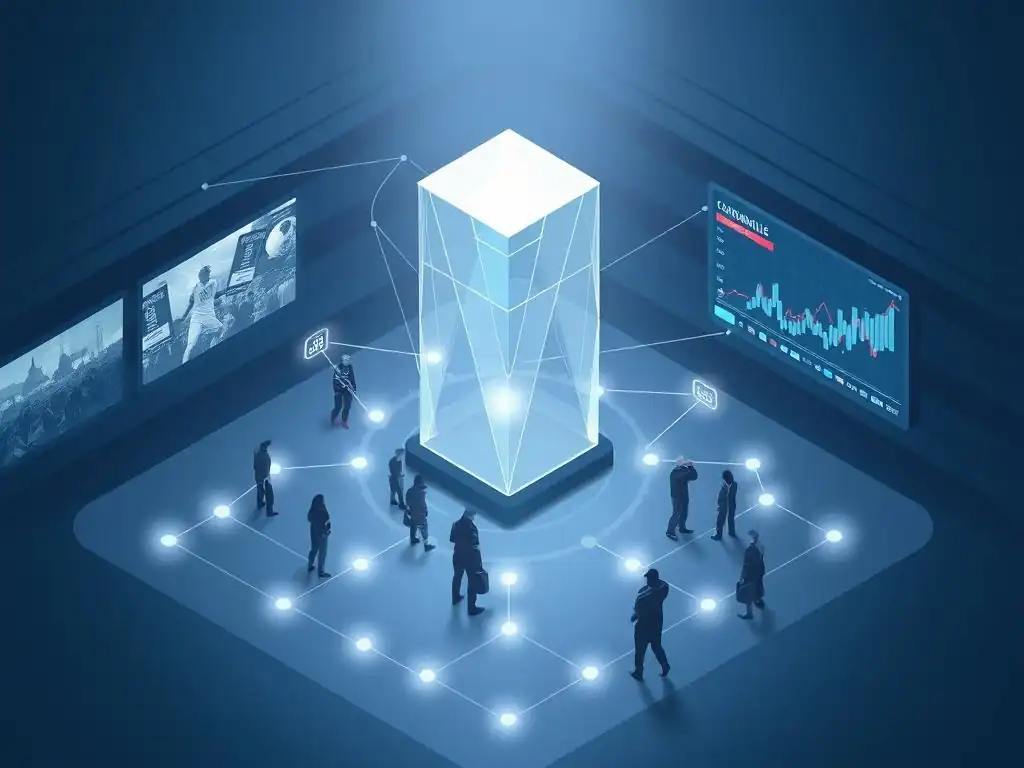
While oracles solve the problem of accessing external data, they introduce their own set of security considerations. The primary risk is the "oracle problem" itself: if the oracle providing data is compromised or malicious, it could feed incorrect or manipulated information to the smart contract, leading to unfair game outcomes, economic exploits, or loss of user funds. A single, centralized oracle represents a single point of failure.
To mitigate these risks, decentralized oracle networks (DONs) are preferred for "Blockchain oracles gaming integration". DONs aggregate data from multiple independent nodes, reducing reliance on any single source. Further strategies include using robust data source validation, cryptographic proofs (as seen with VRF), reputation systems for oracle nodes, and implementing dispute resolution mechanisms. Smart contract developers must also be careful in how they design their logic to handle potential data inconsistencies or delays from oracles, perhaps by setting thresholds or fallback mechanisms.
Scalability and Performance: Optimizing Oracle Integration for Real-Time Gaming
Many blockchain games, particularly those aiming for real-time interaction or fast-paced gameplay, require low latency and high throughput. Integrating oracles can introduce performance bottlenecks. Fetching data from an oracle, waiting for consensus within a DON, and writing the data onto the blockchain involves network latency and transaction confirmation times, which can be significant on some blockchains. This is particularly challenging for data that needs to be updated very frequently, such as player positions in a fast-moving game or rapidly changing market prices impacting live auctions.
Optimizing "Blockchain oracles gaming integration" for performance often involves careful design choices. Developers might differentiate between data that needs real-time updates (requiring faster, potentially more expensive oracle calls) and data that can be updated less frequently (using standard feeds). Utilizing oracle networks optimized for specific blockchain layers (e.g., Layer 2 solutions) or those that offer faster data delivery mechanisms can help. Some game mechanics might also use a hybrid approach, relying on off-chain logic for real-time actions and using oracles only to periodically sync critical states or finalize outcomes on-chain.
Cost Efficiency: Balancing Oracle Usage with Game Development Budgets
Calling an oracle service, especially a decentralized one, typically incurs costs. These costs include the transaction fees (gas) required to trigger the smart contract function that requests data and receives the oracle's response, as well as potential fees paid to the oracle network providers for their service. For games that require frequent oracle calls for dynamic features, these costs can accumulate rapidly and become a significant factor in the game's operational budget or potentially passed on to players.
Balancing the need for dynamic, oracle-fed features with cost efficiency is a key consideration for "Blockchain oracles gaming integration". Developers must carefully evaluate which game mechanics truly require real-time, oracle-provided data and which can rely on less frequent updates or alternative mechanisms. Strategies include batching multiple data requests into a single oracle call where possible, choosing oracle networks with more favorable pricing models, or designing game economies that can absorb or distribute these costs effectively. Creative solutions might involve sponsoring oracle calls for players or integrating the cost into in-game transactions.
The Future of Blockchain Oracles in Gaming: Innovation and Potential
Emerging Trends: Hybrid Smart Contracts and Advanced Oracle Solutions
The evolution of "Blockchain oracles gaming integration" is moving towards more sophisticated architectures, notably hybrid smart contracts. These contracts combine the transparency and security of on-chain logic with the power and flexibility of off-chain computation and data provided by oracles.
This allows for more complex game mechanics that are too computationally expensive or require data unavailable directly on the blockchain. For example, a game could use an oracle network not just for data feeds but also for off-chain verifiable computation, such as running complex physics simulations or AI opponents, with the results being securely fed back onto the chain to influence the game state.
Advanced oracle solutions are also expanding beyond simple data feeds to include services like secure off-chain computation environments, cross-chain interoperability protocols, and decentralized identity verification. These capabilities pave the way for richer gaming experiences, enabling features like complex procedural content generation influenced by external factors, secure matchmaking based on off-chain player data, or verified cross-game asset utility. The integration of these advanced oracle functions is set to push the boundaries of what is possible within decentralized gaming.
The Metaverse and Interoperable Gaming: Oracles as a Key Enabler
The concept of the metaverse envisions persistent, interconnected virtual worlds where assets, identities, and experiences can flow seamlessly between different platforms. Achieving this vision, especially across different blockchain networks or even between blockchain and traditional platforms, requires robust interoperability solutions. Oracles are poised to play a critical role in enabling this interoperability, particularly in decentralized gaming.
Oracles can act as bridges, verifying the state of assets or data on one blockchain and securely reporting it to another, allowing for cross-chain asset transfers or interactions. They can also connect blockchain-based game assets to experiences in non-blockchain metaverse environments, by providing verifiable proof of ownership or status.
Furthermore, oracles can facilitate the transfer of reputation or progress data between different games or metaverse components, creating a more unified and persistent player identity across the decentralized digital landscape. Secure and reliable "Blockchain oracles gaming integration" is therefore not just about enhancing individual games but is fundamental to building the interconnected gaming ecosystems of the future metaverse.
Conclusion: Unleashing the Potential of Decentralized Gaming with Blockchain Oracles.
Blockchain technology offers a powerful foundation for building decentralized games, providing true ownership and transparent mechanics. However, the inherent limitation of smart contracts being unable to access external data presents a significant hurdle for creating dynamic and interactive experiences. This is where blockchain oracles become not just useful, but essential. By securely and reliably bringing real-world information and verifiable randomness onto the blockchain, oracles enable a wealth of possibilities for decentralized gaming.
From driving in-game dynamics based on real-world events and ensuring provably fair outcomes through secure randomness to powering dynamic in-game economies with real-time market data, "Blockchain oracles gaming integration" is a transformative force. While challenges related to security, scalability, and cost must be carefully addressed, the ongoing innovation in oracle technology, including the rise of decentralized oracle networks and advanced services, is continuously expanding the potential.
As the decentralized gaming landscape evolves and moves towards interconnected metaverse experiences, blockchain oracles will remain a critical piece of infrastructure, unlocking new levels of complexity, engagement, and interoperability for players and developers alike.
Frequently Asked Questions
What exactly are blockchain oracles and why are they important for decentralized gaming?
Blockchain oracles are third-party services that provide external data to smart contracts on the blockchain. They're vital for decentralized gaming because they allow games to incorporate real-world events and data, making gameplay more dynamic and engaging.
How do blockchain oracles facilitate the integration of real-world events into games?
Oracles act as a bridge, verifying and transmitting data from off-chain sources, such as sports scores or weather conditions, directly into the game's smart contracts. This allows game logic to react to these external events, creating dynamic and unpredictable gameplay.
What are some examples of how blockchain oracles can be used in gaming?
Examples include using oracles to determine the outcome of in-game events based on real-world sports results, adjusting in-game prices based on real-time market data, or creating dynamic environments influenced by actual weather patterns.
What are the potential security risks associated with using blockchain oracles in gaming?
A major risk is the "oracle problem," where a compromised or unreliable oracle can feed false or manipulated data into the game, leading to unfair or predictable outcomes. Careful oracle selection and diversification are crucial.
How does the integration of blockchain oracles enhance the overall gaming experience?
By bringing in real-world information, oracles make games more immersive and interactive. They also enable new types of gameplay and unique gaming experiences that are not possible with traditional centralized systems.
Okay, here's a final reflection designed to close your article, "The Role of Oracles in Decentralized Gaming: Bringing Real-World Events into Games," optimized for the keyword "Blockchain oracles gaming integration" and following the structure you provided:
Final Reflection: Bridging Realities in the Metaverse
The exploration of blockchain oracles in decentralized gaming reveals a transformative potential, and the integration of real-world data into virtual worlds is no longer a futuristic fantasy, but a tangible reality. As we've seen, oracles are the crucial link, enabling dynamic and engaging gaming experiences that respond to events happening outside the digital realm, fundamentally altering how we interact with and perceive games.
The impact of this technology extends far beyond mere entertainment. The ability to weave real-world occurrences into the fabric of gameplay fosters a deeper sense of immersion and connection, blurring the lines between the physical and digital. This has profound implications for how we learn, socialize, and even conduct business within these evolving ecosystems. Gaming is undergoing a radical transformation, moving from a passive pastime to an active, interconnected experience that mirrors and enriches our lives.
This integration is not just about adding novelty; it's about creating truly responsive and meaningful virtual environments.
Now, as you step away from this exploration of blockchain oracles and their role in gaming, consider the possibilities that lie ahead. How can you, as a developer, a gamer, or simply an interested observer, contribute to the responsible and innovative development of this technology? Let us all strive to build decentralized gaming experiences that are not only entertaining but also enriching, transparent, and truly reflective of the world we inhabit. The future of gaming is not just about escaping reality; it's about augmenting it.
Ignite Your Game: Build the Future of Decentralized Play!
Thanks for exploring the exciting world of oracles and decentralized gaming! Now that you understand how these technologies are transforming the gaming experience, it’s time to turn that knowledge into action. The future of gaming is in your hands—here’s how you can get involved:
- Get started: Try building a simple game prototype that integrates a real-world data feed. Imagine a weather-based loot system or a game where in-game events reflect real-world market movements!:
- Share this article with fellow gamers, developers, and blockchain enthusiasts who are passionate about innovation. Let’s start a conversation about the endless possibilities of oracles in gaming.
- Contribute your ideas to gaming communities focused on blockchain. Brainstorm new ways to use oracles within games—think beyond the obvious applications.
What innovative oracle-powered gaming mechanic are you most excited to see come to life? Share your thoughts in the comments below!
Leave a Reply