
SelfSovereign Identity DApps: Empowering Users with Smart Contract Control


Welcome to Blockchain Trends, your guide to navigating the evolving landscape of decentralized technology.
Imagine a world where you, and only you, control your digital identity. Our deep dive into SelfSovereign Identity DApp development reveals how smart contracts are revolutionizing personal data management. Curious about how this innovative approach empowers users and reshapes the future of digital interactions? Dive in and discover the potential!
Self-Sovereign Identity DApps: Empowering Users with Smart Contract Control
- Introduction to Self-Sovereign Identity (SSI) and Decentralized Applications (DApps)
- The Need for Self-Sovereign Identity DApp Development
- Key Components of a Self-Sovereign Identity DApp
- Building a Self-Sovereign Identity DApp: A Step-by-Step Guide
- Benefits of Self-Sovereign Identity DApps
- Use Cases for SSI DApps: Beyond the Basics
- Challenges and Considerations in SSI DApp Development
- The Future of Self-Sovereign Identity DApps: Trends and Predictions
- Conclusion: Empowering Users Through Self-Sovereign Identity DApps
-
Frequently Asked Questions
- What is a Self-Sovereign Identity (SSI) DApp?
- How does blockchain technology enable Self-Sovereign Identity?
- What are the benefits of using SSI DApps compared to traditional identity systems?
- What is involved in Self-Sovereign Identity DApp development?
- What are some potential applications of SSI DApps beyond individual identity?
- Final Reflection: Reclaiming Digital Ownership
- Unlock Your Identity's Potential: Start Building Today!
Introduction to Self-Sovereign Identity (SSI) and Decentralized Applications (DApps)
Understanding Self-Sovereign Identity: Putting Users in Control
Self-Sovereign Identity (SSI) is a model for digital identity that gives individuals control over their own digital identity. Unlike traditional systems where identity is managed by central authorities (governments, corporations) or federated systems where identity is managed by third parties (like social media providers), SSI places the individual at the center.
The core principle is that users should be able to store their identity data securely, control who can access it, and choose how and when to share it, without relying on a single, vulnerable central database. This approach leverages decentralized technologies, particularly blockchain, to create immutable records and verifiable interactions, shifting the power dynamic from institutions to individuals.
The goal of SSI is to create a more trustworthy and privacy-preserving digital world. It aims to reduce reliance on fragile, data-hoarding silos that are prone to breaches. Estimates suggest that data breaches cost companies billions annually, with the global average cost per breach reaching approximately \$4.45 million in 2023, according to IBM's Cost of a Data Breach Report. Many of these breaches involve sensitive personal identity information. SSI seeks to mitigate this risk by distributing control and minimizing the amount of personal data held by any single entity, making individuals the custodians of their own information.
Exploring the Intersection of SSI and DApps: A New Paradigm
The convergence of Self-Sovereign Identity and Decentralized Applications (DApps) represents a powerful paradigm shift in how we manage digital interactions and trust online. DApps, built on blockchain or other distributed ledger technologies, inherently operate without a central authority, aligning perfectly with the decentralized nature of SSI. By integrating SSI principles into DApp development, developers can create applications where users not only control their assets and interactions through private keys but also control their digital identity and the data associated with it. This synergy enables applications that are fundamentally more private, secure, and user-centric.
This integration moves beyond simple authentication and authorization within a DApp. It allows for the creation of rich, verifiable identity profiles that are owned and managed by the user. For example, a user could prove their age or educational qualifications to a DApp without revealing their name or date of birth, using verifiable credentials.
This selective disclosure, facilitated by SSI within a DApp context, enhances privacy significantly compared to traditional web applications that often require users to share excessive personal information. The process of SelfSovereign Identity DApp development is therefore crucial for building the next generation of truly decentralized and privacy-aware digital services.
The Need for Self-Sovereign Identity DApp Development
Data Privacy Concerns and Centralized Identity Management
Contemporary digital life is plagued by significant data privacy concerns, largely stemming from the prevalent model of centralized identity management. Major corporations and government bodies hold vast databases containing sensitive personal information, from social security numbers and health records to browsing history and financial details. While these entities are tasked with protecting this data, history shows repeated failures. High-profile data breaches affecting millions of individuals occur regularly. For instance, the 2017 Equifax breach exposed the personal data of approximately 147 million people, highlighting the systemic risks associated with centralizing vast amounts of sensitive information.
This centralization creates honeypots for malicious actors and gives unchecked power to the entities holding the data. Users often have limited visibility into how their data is used, shared, or protected. The lack of control and transparency fuels public distrust and makes individuals vulnerable to identity theft, surveillance, and manipulation. Addressing these fundamental flaws requires a shift away from centralized models towards systems where individuals regain control, making SelfSovereign Identity DApp development a critical area for innovation.
The Limitations of Traditional Identity Systems
Traditional identity systems, whether physical (like passports and driver's licenses) or digital (like username/password accounts and federated logins), suffer from inherent limitations in the digital age. Physical documents are cumbersome for online interactions and prone to forgery. Digital accounts are typically tied to specific service providers, leading to fragmented identities across different platforms. Users must create and manage numerous accounts, each with its own set of credentials, increasing the risk of weak passwords and credential stuffing attacks. A study by Verizon in 2023 found that stolen credentials were involved in a significant percentage of data breaches.
Furthermore, traditional systems often require users to overshare information. Proving you are over 18 to access certain content shouldn't require revealing your exact birth date and address, yet many systems demand this. Recovering lost credentials can be a bureaucratic nightmare, and identity verification processes (like KYC) are often expensive, time-consuming, and repetitive across different services. These limitations highlight the urgent need for more efficient, secure, and user-centric identity solutions that Self-Sovereign Identity DApp development aims to provide.
How DApps Can Revolutionize Identity Management with SSI
Decentralized Applications (DApps), built on immutable and transparent ledgers like blockchain, offer a revolutionary framework for implementing SSI and transforming identity management. By leveraging smart contracts, DApps can facilitate the issuance, storage, and verification of identity attributes (credentials) in a trustless manner, without needing a central authority. The user holds their private keys, which control access to their identity data, typically stored in a secure digital wallet. Instead of sharing raw data, users share cryptographically verifiable proofs about their attributes.
For example, a university could issue a verifiable credential for a degree to a student's SSI wallet. When applying for a job via a DApp, the student can selectively prove they hold a degree from that university, without revealing the degree type, graduation date, or even their full name, unless necessary and explicitly permitted. This granular control and selective disclosure, underpinned by blockchain's immutability and smart contracts' automated logic, fundamentally changes the identity paradigm. It empowers users, reduces fraud potential, and streamlines verification processes across various applications, making SelfSovereign Identity DApp development a key driver for future digital interactions.
Key Components of a Self-Sovereign Identity DApp
Decentralized Identifiers (DIDs): The Foundation of SSI
Decentralized Identifiers (DIDs) are a core component of Self-Sovereign Identity systems and fundamental to any SelfSovereign Identity DApp development project. DIDs are new types of identifiers designed to enable verifiable, decentralized digital identity. Unlike traditional identifiers (like email addresses or usernames) that are tied to specific organizations or domains, DIDs are globally unique identifiers that do not require a centralized registration authority. They are typically registered on a decentralized ledger, such as a blockchain, which provides an immutable and tamper-proof record.
Each DID is associated with a DID document, a simple JSON document that contains information necessary to use the DID. This includes public keys for cryptographic operations (like verification of signatures or encryption), service endpoints for interacting with the identity subject (like communication channels or identity hubs), and potentially other metadata.
The DID document is resolvable via a DID method specification, which defines how a specific type of DID is created, resolved, and updated on a particular ledger or system. Standards bodies like the W3C have been instrumental in defining the DID specification, providing a common framework for developers engaged in SelfSovereign Identity DApp development across different platforms.
Verifiable Credentials (VCs): Secure and Portable Identity Data
Verifiable Credentials (VCs) are digital representations of physical credentials (like a driver's license, degree, or professional certification) or attributes (like age, address, or employment status). They are central to sharing identity information within an SSI framework and are crucial for the functionality of SelfSovereign Identity DApps.
A VC is essentially a tamper-evident set of claims about a subject, issued by a trusted authority (the "Issuer") and held by the subject (the "Holder"). The Holder can then present this credential to a third party (the "Verifier"), who can cryptographically verify its authenticity and integrity against the Issuer's public key and potentially information recorded on a decentralized ledger.
The W3C Verifiable Credentials Data Model provides a standard way to express these credentials, typically using JSON-LD. This standardization is vital for interoperability, allowing VCs issued on one platform or system to be verified by another. VCs enable selective disclosure; a Holder can choose to share only specific claims from a credential rather than the entire document.
For instance, instead of sharing a full driver's license to prove they are over 21, a user can present a VC that only attests to their age being >= 21, issued by the licensing authority. This capability significantly enhances user privacy and is a key feature enabled through effective SelfSovereign Identity DApp development.
Smart Contracts: Enabling Automated Trust and Control
Smart contracts are self-executing contracts with the terms of the agreement directly written into code. They run on a blockchain and automatically execute when predetermined conditions are met, without the need for intermediaries. In the context of Self-Sovereign Identity DApp development, smart contracts play a pivotal role in managing the decentralized aspects of identity. They can be used to anchor DIDs to a ledger, record the revocation status of Verifiable Credentials, and manage the relationships and permissions between Issuers, Holders, and Verifiers.
For example, a smart contract can maintain a registry mapping DIDs to the location of their DID documents (often stored off-chain in decentralized storage). Another smart contract might handle the logic for credential issuance, ensuring that only authorized Issuers can create VCs of a certain type and potentially recording a hash of the issued credential on-chain for later verification or revocation checks.
Smart contracts also underpin the logic for handling credential revocation, allowing an Issuer to update the status of a VC on the ledger if it is no longer valid (e.g., a certificate expires or is revoked). The secure and robust development of these smart contracts is paramount for the trustworthiness and functionality of any SSI DApp.
Wallets: User-Friendly Interfaces for Managing Identity
Identity wallets are crucial user-facing components in the SSI ecosystem and are essential for the usability of SelfSovereign Identity DApps. An identity wallet is a digital application, typically running on a user's smartphone or computer, that serves as a secure repository for the user's private keys, DIDs, and Verifiable Credentials. It acts as the user's agent, allowing them to manage their digital identity, receive credentials from Issuers, store them securely, and present them selectively to Verifiers.
Beyond just storage, modern identity wallets provide user-friendly interfaces for interacting with SSI DApps. They facilitate secure authentication by signing transactions or challenges using the user's private key associated with their DID. They also enable users to view the details of their VCs, understand what information is being requested by a Verifier, and explicitly authorize the sharing of specific credentials or claims.
The design and development of intuitive and secure identity wallets are critical steps in SelfSovereign Identity DApp development, as the wallet is the primary tool through which users interact with their decentralized identity. Prominent examples include wallet apps developed by SSI initiatives like Trinsic, Evernym (now Avast), and various open-source projects.
Building a Self-Sovereign Identity DApp: A Step-by-Step Guide
Step 1: Choosing the Right Blockchain Platform [e.g., Ethereum, Polygon, Sovrin]
The first crucial step in SelfSovereign Identity DApp development is selecting the appropriate blockchain or distributed ledger technology (DLT) platform. The choice depends on several factors, including the required transaction throughput, cost (gas fees), consensus mechanism, smart contract capabilities, existing ecosystem, and specific features relevant to identity management. Different platforms offer varied strengths for SSI applications.
Ethereum, for instance, offers robust smart contract functionality and a large developer community, making it a popular choice, though gas costs and scalability can be considerations. Layer 2 solutions like Polygon provide higher throughput and lower costs, building on Ethereum's security. Dedicated SSI networks like Sovrin were specifically designed with identity in mind, offering features optimized for DID and VC management, though they might have smaller ecosystems.
Other options include Hyperledger Indy, specifically built for decentralized identity, or enterprise-focused platforms like Hyperledger Fabric. Evaluating the technical requirements and target audience of the SSI DApp is essential for making an informed platform decision during the initial phase of development.
Step 2: Designing Smart Contracts for Identity Management
Designing the smart contracts is a central part of SelfSovereign Identity DApp development. These contracts encode the logic for managing DIDs, VCs, and the interactions between parties. Clarity, security, and efficiency are paramount.
Creating Smart Contracts for DID Management
Smart contracts are fundamental for anchoring DIDs to a decentralized ledger and managing their associated DID documents and public keys. A common pattern involves a DID registry contract. This contract doesn't store the entire DID document (which can be large and frequently updated) but rather stores a pointer (like a hash or a URI) to where the latest DID document can be found (e.g., in decentralized storage like IPFS or a dedicated identity hub). The contract also maintains a mapping between the DID and the controller's public key, enabling verification of updates.
The smart contract defines functions for creating a new DID entry, updating the pointer to the DID document (only permissible by the authorized controller, verified via signature), and potentially marking a DID as deactivated. For instance, an updateDIDDocumentHash(bytes32 didHash, string newHash) function might require a signature from the key associated with didHash before updating the stored hash. Secure access control and prevention of unauthorized updates are critical considerations when developing these contracts for managing the lifecycle of a DID on the ledger.
Implementing VC Issuance and Verification Logic
Smart contracts can also support the lifecycle of Verifiable Credentials, although the VC itself (containing personal claims) is typically not stored on-chain for privacy reasons. Instead, smart contracts often manage VC status or metadata. An Issuer might interact with a smart contract to register their public signing key or to anchor a commitment (like a hash or Merkle root) representing a batch of issued VCs. More commonly, smart contracts are used to manage revocation lists or registries.
A smart contract can maintain a list of revoked VC identifiers (VC IDs). When a Verifier receives a VC, they can query this smart contract with the VC ID or a hash derived from it to check if it has been revoked by the Issuer. The contract logic might include functions like revokeCredential(bytes32 vcIdHash) callable only by the registered Issuer of that credential. This on-chain revocation check provides a tamper-proof mechanism for Verifiers to trust the current validity status of a VC, significantly enhancing the security model of SSI DApps.
Step 3: Developing the DApp Frontend and User Interface
The frontend and UI development are crucial for the adoption and usability of any DApp, especially those involving identity management. The user interface must be intuitive and clearly communicate complex SSI concepts.
Integrating with User Wallets for Secure Authentication
A key aspect of the frontend is integrating with identity wallets. Since the user's keys and credentials reside in their wallet, the DApp frontend needs to interact with it for authentication and authorization. This is typically done using wallet connection libraries (e.g., web3.js or ethers.js for Ethereum-based wallets, or specific SDKs for dedicated SSI wallets). Instead of traditional username/password logins, the DApp requests the user to sign a message using their private key, proving control over a specific DID.
The DApp frontend uses the wallet's API to request operations like "sign this transaction," "present a credential proving X," or "authorize sharing Y data." The wallet prompts the user for confirmation, ensuring the user is aware of and consents to the action. This secure, signature-based interaction model is a cornerstone of SSI DApp development, eliminating the need for the DApp to store user passwords or sensitive keys. A well-designed UI clearly explains why a signature or credential presentation is needed and what information is being shared.
Creating Intuitive Interfaces for Managing Identity Data
The frontend must provide users with an easy way to view, manage, and control their identity data stored within their wallet or linked via their DID. This includes displaying received Verifiable Credentials clearly, showing which claims are included in each VC, and indicating the Issuer. The interface should allow users to understand permissions associated with their DIDs and manage keys or recovery phrases securely (though key management itself is often handled by the wallet).
Furthermore, the UI should facilitate the process of presenting credentials to Verifiers. This might involve a request from the DApp (e.g., "Please provide a credential proving you are a resident of Country X"), and the wallet/frontend guides the user through selecting the appropriate credential and authorizing its sharing. The goal is to abstract away the underlying cryptographic complexity, making it as simple as possible for users to interact with their decentralized identity, thereby lowering the barrier to entry for SSI DApps.
Step 4: Testing and Deploying the SSI DApp
Rigorous testing and careful deployment are the final stages in the SelfSovereign Identity DApp development lifecycle. Given the sensitive nature of identity data, security and reliability are paramount.
Testing involves multiple layers. Smart contracts must undergo extensive unit testing, integration testing, and formal verification where possible to ensure they behave as expected and are free from vulnerabilities. Tools like Truffle, Hardhat, or specific DLT testing frameworks are used.
Security audits by reputable third parties are highly recommended for smart contracts handling identity logic, as bugs could compromise user privacy or control. Frontend testing includes standard web application testing (unit, integration, end-to-end) focusing on wallet connectivity, credential presentation flows, and user interactions. Performance and scalability testing are also necessary, especially considering the potential load on the chosen blockchain network.
Deployment involves deploying the smart contracts to the chosen blockchain network and deploying the frontend application to a hosting environment (which can be centralized or decentralized, though decentralized hosting like IPFS aligns better with the SSI ethos). Post-deployment monitoring is essential to track performance, identify issues, and respond to potential security threats. A phased rollout, starting with testnets or limited user groups, can help identify unforeseen problems before a full public launch. Effective SelfSovereign Identity DApp development includes a strong emphasis on security and testing throughout the entire process.
Benefits of Self-Sovereign Identity DApps
Enhanced User Privacy and Control Over Personal Data
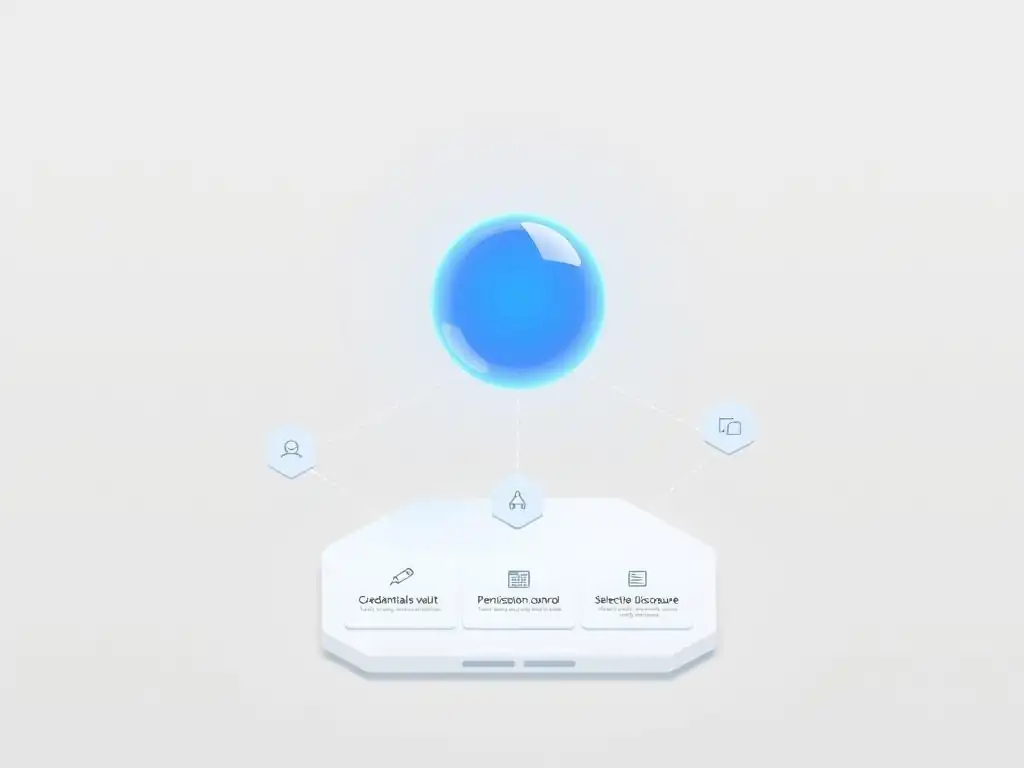
One of the most significant benefits of Self-Sovereign Identity DApps is the dramatic improvement in user privacy and control over personal data. In traditional systems, users routinely surrender vast amounts of personal information to service providers, often without full knowledge of how it will be used or protected. SSI DApps reverse this model. Users store their identity data and credentials in their personal wallets, under their direct control via private keys.
When interacting with a service (a DApp or even a traditional service integrating with SSI), users can selectively disclose only the specific pieces of information required. Proving age doesn't require sharing a full birth date; proving professional status doesn't require sharing an entire resume. This minimized data sharing footprint drastically reduces the risk of large-scale data breaches impacting individuals and empowers users to make informed decisions about their data, a core promise of SelfSovereign Identity DApp development.
Increased Security and Resistance to Identity Theft
SSI DApps inherently offer increased security compared to traditional identity systems. Reliance on username/password combinations, which are vulnerable to phishing and brute-force attacks, is eliminated. Authentication is based on cryptographic proof of key ownership, a far more secure method. Since sensitive personal data is not stored in centralized databases by DApps, these applications do not become attractive targets for mass data theft like traditional services.
Furthermore, the use of Verifiable Credentials anchored or verifiable via a blockchain makes identity attributes significantly harder to forge. A credential issued by a trusted entity is cryptographically signed, and its validity can be checked against an immutable ledger. This makes it extremely difficult for malicious actors to create fake identities or credentials, offering robust resistance to identity theft and fraud within the ecosystems built through SelfSovereign Identity DApp development.
Improved Interoperability and Portability of Identity
Traditional digital identities are fragmented and siloed. An identity created for one service (e.g., a banking portal) is typically not usable for another (e.g., a healthcare provider). Users must repeatedly register, verify their identity, and manage separate accounts across different platforms. SSI DApps promote interoperability and portability. A user's DID and the VCs associated with it are not tied to a specific application or provider.
A verifiable credential for a university degree, issued once, can be used to prove educational qualifications to multiple potential employers, professional networks, or further education providers, all interacting with the user's SSI wallet via different DApps or services. This eliminates redundant identity verification processes, saves time and effort for users, and creates a more seamless digital experience across various domains. This universal usability is a key goal enabled by standardized SelfSovereign Identity DApp development.
Reduced Costs and Complexity in Identity Management
Implementing SSI through DApps can lead to significant reductions in costs and complexity for both users and organizations. For users, managing a single identity wallet replaces the need to remember countless usernames and passwords and undergo repetitive identity verification processes. This simplifies their digital lives and reduces the burden of managing their online presence.
For organizations, particularly those heavily reliant on Know Your Customer (KYC) and Anti-Money Laundering (AML) procedures, SSI can dramatically lower operational costs. Instead of onboarding each customer from scratch, collecting documents, and performing checks internally or through expensive third parties (which can cost \$10 to \$100+ per user depending on the industry and verification level), organizations can leverage pre-verified credentials presented by the user.
A business could request a VC proving the user's identity has already been verified to a certain standard by a trusted identity provider, significantly streamlining onboarding and reducing the associated overhead. This efficiency is a major driver for the adoption of solutions resulting from SelfSovereign Identity DApp development.
Use Cases for SSI DApps: Beyond the Basics
Decentralized KYC/AML for Financial Services
One of the most promising and impactful use cases for SSI DApps is in decentralizing Know Your Customer (KYC) and Anti-Money Laundering (AML) processes within the financial services industry. Traditional KYC is costly, repetitive, and involves users sharing sensitive documents with multiple institutions. With an SSI DApp, a user could get verified once by a trusted identity provider (e.g., a bank or a specialized verification service) and receive a set of Verifiable Credentials attesting to their identity and verification status.
When opening an account with another financial institution, instead of repeating the full KYC process, the user can simply present the relevant VCs through an SSI DApp. The institution (the Verifier) can cryptographically verify the credentials' authenticity and check their revocation status on the ledger. This approach significantly reduces onboarding time (from days to potentially minutes), lowers costs for institutions (estimates vary, but reductions of 50% or more are often cited in pilot programs), and enhances user privacy by minimizing data sharing. This is a prime area for SelfSovereign Identity DApp development.
Secure Healthcare Data Management
Healthcare is another domain ripe for transformation through SSI DApps. Patients generate vast amounts of sensitive health data across various providers (hospitals, clinics, labs, pharmacies). This data is often siloed, difficult to access, and challenging for patients to control. An SSI DApp can empower patients to manage their healthcare identity and data.
A hospital could issue VCs for medical records, test results, or vaccination status to a patient's SSI wallet. The patient could then selectively share specific records with a new specialist, an insurance provider, or even for research purposes, all while maintaining control and visibility over who accesses what information. This enhances patient privacy, improves data portability between providers, and can streamline processes like getting second opinions or managing chronic conditions. Developing SSI DApps for healthcare requires careful consideration of regulations like HIPAA in the US or GDPR in Europe, but the potential for empowering patients is immense.
Supply Chain Traceability and Authentication
SSI principles and DApps can bring unprecedented transparency and trustworthiness to supply chains. In a complex supply chain, verifying the origin, authenticity, and journey of goods is challenging, leading to issues like counterfeiting, unethical sourcing, and lack of accountability. Using SSI, products or components can be assigned DIDs, and each entity involved in the supply chain (manufacturers, shippers, distributors, retailers) can be represented by their own SSI.
As a product moves through the chain, each participant can issue Verifiable Credentials about their interaction with it – e.g., "Manufactured by X on Date Y," "Shipped from Location A to B by Carrier Z," "Certified organic by Auditor P." These VCs are collected and associated with the product's DID. Consumers or businesses can then use an SSI DApp to scan a product's QR code (linking to its DID) and view a verifiable history of its journey and attributes, without needing to trust a single company's database.
This level of verifiable traceability, enabled by SelfSovereign Identity DApp development, builds trust and combats fraud.
Digital Voting and Governance
Secure and verifiable digital voting and decentralized governance are critical applications where SSI DApps can provide a robust solution. Traditional online voting systems often face challenges related to security, transparency, and ensuring that only eligible individuals vote and that each person votes only once. SSI can address these issues by providing a secure, verifiable, and privacy-preserving identity layer.
Using an SSI DApp, an election authority or a decentralized autonomous organization (DAO) could issue a Verifiable Credential to eligible voters proving their right to vote (e.g., "Eligible Voter in District X", "DAO Member with Y Tokens"). When casting a vote via the DApp, the user presents this VC to the voting smart contract.
The contract verifies the VC's authenticity and eligibility status without needing to know the user's real-world identity, ensuring anonymity while preventing double voting. This combination of verifiable eligibility and privacy is essential for trustworthy digital democracy and decentralized governance, driving the need for specialized SelfSovereign Identity DApp development.
Challenges and Considerations in SSI DApp Development
Scalability and Performance of Blockchain Networks
A significant challenge in SelfSovereign Identity DApp development relates to the scalability and performance limitations of underlying blockchain networks. While DLTs provide the necessary decentralization and immutability, many public blockchains, particularly proof-of-work chains like Ethereum (prior to The Merge and ongoing upgrades), have faced issues with low transaction throughput and high transaction costs (gas fees) during periods of high network congestion. Identity operations, such as registering DIDs, updating DID documents, or checking VC revocation status on-chain, can contribute to network load.
While Layer 2 solutions, sidechains, and alternative consensus mechanisms (like proof-of-stake or delegated proof-of-stake) have dramatically improved throughput and reduced costs on many platforms (e.g., Polygon handles thousands of transactions per second with minimal fees), developers must carefully select a platform that can handle the expected volume of identity-related operations for their specific SSI DApp use case. Designing smart contracts and data storage solutions efficiently to minimize on-chain transactions is also crucial for performance and cost-effectiveness.
Ensuring User Accessibility and Usability
Despite the technical elegance of SSI, ensuring user accessibility and usability remains a major hurdle for widespread adoption of SSI DApps. The concepts of DIDs, VCs, private keys, and blockchain transactions can be complex for average users. Managing a secure identity wallet, understanding recovery phrases, and navigating interactions with smart contracts require a certain level of digital literacy and security awareness that is not yet universal.
Developers engaged in SelfSovereign Identity DApp development must prioritize creating intuitive and user-friendly interfaces that abstract away the underlying technical complexities. This includes designing wallet interfaces that are easy to understand, providing clear explanations during credential presentation or signature requests, and offering robust but simple-to-use key management and recovery options. Onboarding flows need to be streamlined, and educational resources should be readily available to help users understand the benefits and responsibilities of managing their own digital identity.
Regulatory Compliance and Legal Frameworks
Navigating the complex and evolving landscape of regulatory compliance and legal frameworks is a critical challenge in SelfSovereign Identity DApp development. While SSI offers potential benefits for privacy and compliance (e.g., by facilitating selective disclosure under GDPR's data minimization principles), the legal status and requirements surrounding decentralized identity, DIDs, VCs, and blockchain-based operations are still unclear or inconsistent across different jurisdictions.
Issues such as the legal recognition of DIDs and VCs as valid forms of identification, the responsibilities of Issuers and Verifiers, compliance with data protection regulations when handling identity data (even if controlled by the user), and the legal implications of smart contract execution need careful consideration. For example, while a VC contains claims about a user, the underlying data used to issue that VC might still be subject to regulations.
Developers must work closely with legal experts to ensure their SSI DApps comply with relevant laws, including data privacy regulations (like GDPR, CCPA), industry-specific regulations (like KYC/AML in finance, HIPAA in healthcare), and emerging blockchain legislation.
Security Audits and Smart Contract Vulnerabilities
Security is paramount in SSI DApp development, and vulnerabilities in smart contracts or the overall system design can have severe consequences, potentially leading to loss of control over identity, privacy breaches, or financial losses. Smart contracts, once deployed, are typically immutable, meaning bugs or security flaws cannot be easily fixed. History is replete with examples of significant losses due to smart contract vulnerabilities, such as the DAO hack.
Therefore, rigorous security practices are essential. This includes following secure coding best practices for smart contracts, conducting thorough internal code reviews, and critically, commissioning independent security audits by experienced blockchain security firms. Audits can identify potential vulnerabilities like reentrancy attacks, integer overflows, access control issues, and logical flaws. Beyond smart contracts, the security of off-chain components like identity wallets, APIs, and storage solutions must also be ensured. A comprehensive security strategy, including regular audits and penetration testing, is non-negotiable for trustworthy SelfSovereign Identity DApp development.
The Future of Self-Sovereign Identity DApps: Trends and Predictions
Increased Adoption of SSI Standards and Protocols
The future of Self-Sovereign Identity DApps will heavily rely on the increased adoption and maturity of underlying SSI standards and protocols, such as the W3C DID and Verifiable Credentials specifications. As more organizations and developers align with these global standards, the interoperability of SSI solutions will improve dramatically. This means a VC issued by an entity using one SSI framework will be easily verifiable by an application built on a different framework, as long as both adhere to the standards.
We are already seeing major technology companies and industry consortiums investing in and contributing to these standards. As implementation guides, developer tools, and best practices become more refined, the barrier to entry for SelfSovereign Identity DApp development will lower, accelerating the creation of diverse applications. Increased standardization will foster a more cohesive global decentralized identity ecosystem, moving away from fragmented, proprietary solutions towards a truly interconnected network of trust.
Integration with Existing Identity Systems
While SSI represents a paradigm shift, its widespread adoption will likely involve integration with existing, traditional identity systems rather than outright replacement in the short to medium term. Future SSI DApps will increasingly feature bridges and connectors that allow users to link their decentralized identity with centralized accounts or use government-issued credentials as a basis for issuing Verifiable Credentials in their SSI wallet.
This hybrid approach acknowledges the reality of current infrastructure and user habits. For example, a bank might still require traditional KYC initially but then issue VCs that the user can leverage elsewhere. Conversely, a DApp might allow login via an SSI wallet but also offer traditional email/password as an option during a transition phase. This pragmatic integration strategy will help onboard users and organizations gradually into the decentralized identity space, expanding the reach and utility of applications built through SelfSovereign Identity DApp development.
The Rise of Decentralized Identity Ecosystems
Looking ahead, we can anticipate the emergence and growth of comprehensive decentralized identity ecosystems. These will be networks of Issuers (governments, universities, companies), Holders (individuals, organizations, devices), and Verifiers (applications, services) all interacting using DIDs, VCs, and SSI DApps built on interoperable protocols. These ecosystems will span various sectors, from finance and healthcare to education and supply chain.
Within these ecosystems, marketplaces for identity services might emerge, allowing users to find trusted Issuers for specific credentials or enabling Verifiers to access reliable identity verification services. The network effect will be powerful: as more entities join and issue/accept VCs, the value and utility of participating in the ecosystem will increase for everyone. This growth will fuel further innovation in SelfSovereign Identity DApp development, leading to more sophisticated and interconnected applications.
Advancements in Zero-Knowledge Proofs for Enhanced Privacy
Future Self-Sovereign Identity DApps will increasingly leverage advanced cryptographic techniques, particularly Zero-Knowledge Proofs (ZKPs), to enhance user privacy. ZKPs allow one party (the prover) to prove to another party (the verifier) that a statement is true, without revealing any information beyond the validity of the statement itself.
In the context of SSI, this means a user could prove they meet a certain requirement (e.g., "I am over 21," "I have a valid professional license," "My income is above X") using a VC, without disclosing the underlying age, license number, or exact income figure contained in the credential. This capability offers a superior level of privacy compared to even selective disclosure, where some minimal data is still revealed. As ZKP technology matures and becomes more accessible for developers, its integration into SelfSovereign Identity DApp development will set a new standard for privacy-preserving digital interactions.
Conclusion: Empowering Users Through Self-Sovereign Identity DApps
The Potential of DApps to Transform Identity Management
Self-Sovereign Identity DApps hold immense potential to fundamentally transform how identity is managed in the digital age. By shifting control from centralized authorities to individual users, leveraging the security and transparency of blockchain or DLTs, and utilizing components like DIDs and Verifiable Credentials, SSI DApps can create a digital world where identity is more private, secure, portable, and user-centric.
This model addresses the critical failures of traditional systems, reducing the risks of data breaches and identity theft while empowering individuals with unprecedented control over their personal information. The ongoing evolution in SelfSovereign Identity DApp development is a key driver behind this transformation.
From streamlining complex processes like KYC/AML in finance to enabling patients to control their health records and building trustworthy supply chains, the use cases for SSI DApps are vast and impactful. While challenges related to scalability, usability, regulation, and security remain, the rapid advancements in blockchain technology, SSI standards, and cryptographic techniques like ZKPs are paving the way for overcoming these hurdles. The future points towards interconnected decentralized identity ecosystems where SSI DApps are integral to everyday digital interactions.
Call to Action: Exploring and Contributing to the SSI DApp Ecosystem
The journey towards a truly decentralized and user-controlled digital identity is ongoing, and SelfSovereign Identity DApp development is at the forefront of this movement. For developers, this represents a significant opportunity to build applications that are not only innovative but also contribute to a more equitable and privacy-respecting digital future. Exploring existing SSI frameworks, experimenting with DID and VC standards, and contributing to open-source identity projects are excellent ways to get involved.
For businesses and organizations, understanding and adopting SSI principles and exploring the integration of SSI DApps can lead to enhanced security, reduced operational costs, and improved trust with users. As the technology matures and standards solidify, early adopters will be well-positioned to capitalize on the benefits of this transformative approach to identity management. Engaging with the SSI community, piloting SSI solutions, and investing in SelfSovereign Identity DApp development expertise are crucial steps towards embracing this new paradigm.
Frequently Asked Questions
What is a Self-Sovereign Identity (SSI) DApp?
An SSI DApp is a decentralized application built on blockchain that allows users to control their own digital identity. Unlike traditional systems, users, not centralized authorities, manage and own their identity data.
How does blockchain technology enable Self-Sovereign Identity?
Blockchain provides a secure and immutable ledger for storing verifiable credentials. Smart contracts automate the validation and verification process, ensuring trust and transparency in identity management.
What are the benefits of using SSI DApps compared to traditional identity systems?
SSI DApps offer enhanced privacy and security by giving users control over their data. They also promote data portability and interoperability, allowing users to seamlessly share their credentials across different platforms.
What is involved in Self-Sovereign Identity DApp development?
SSI DApp development involves understanding blockchain technology, smart contract programming (e.g., Solidity), and standards like Decentralized Identifiers (DIDs) and Verifiable Credentials (VCs). It also requires careful consideration of user experience and security best practices.
What are some potential applications of SSI DApps beyond individual identity?
Beyond personal identity, SSI DApps can be used for supply chain management, credential verification in education, and secure access control in various industries. This promotes trust and transparency across different use cases.
Final Reflection: Reclaiming Digital Ownership
The journey through Self-Sovereign Identity DApp development reveals a powerful truth: the future of identity lies in user empowerment. No longer passive recipients of centrally controlled credentials, individuals can now wield smart contracts to manage their digital lives with unprecedented autonomy. This shift isn't just theoretical; it's a tangible movement reshaping how we interact with the digital world, demanding a re-evaluation of trust and control.
The impact of Self-Sovereign Identity DApps extends far beyond technological innovation. It represents a fundamental shift in power dynamics, placing individuals at the center of their digital existence. This paradigm shift resonates deeply, especially in an era where data breaches and privacy violations are commonplace. Identity is not just something you have; it's something you create.
This quote underscores the potential of SSI DApps to enable individuals to actively shape and control their digital identities, fostering a more equitable and secure online environment.
As we stand on the cusp of this new era, I invite you to consider your own digital footprint. How much control do you truly have over your personal data? What steps can you take to reclaim ownership and embrace the potential of Self-Sovereign Identity? The future of identity is being built now, and your participation is crucial in shaping a more secure, private, and empowering digital world for all.
Unlock Your Identity's Potential: Start Building Today!
Thank you for exploring the world of self-sovereign identity decentralized applications. You now have a solid understanding of how these technologies empower users with greater control over their digital identities. Are you ready to take the next step and actively participate in this revolution?
Here are a few things you can do right now:
- Begin experimenting with creating your own basic self-sovereign identity application using a popular framework like Hyperledger Aries or Sovrin. Focus on understanding the fundamental concepts rather than perfection.
- Join the active community of developers and identity experts on platforms like GitHub or Discord, sharing your experiences and contributing to ongoing discussions.
- Explore existing decentralized identity applications and provide feedback to developers. Your insights can help shape the future of digital identity management.
What innovative use case for self-sovereign identity applications are you most excited to see realized? Share your thoughts in the comments below!
Leave a Reply