
Smart Contracts and Decentralized Finance (DeFi): A Deep Dive

Welcome to Blockchain Trends, your compass in the ever-evolving world of decentralized technology. Ever wondered how blockchain is revolutionizing industries beyond just Bitcoin? This week, we delve into the powerful intersection of DeFi and smart contracts, exploring the myriad applications that are reshaping finance as we know it. Intrigued by the potential of DeFi smart contracts applications to disrupt traditional systems? Join us as we uncover the possibilities and challenges ahead, sparking a conversation about the future of decentralized finance.
Smart Contracts and Decentralized Finance (DeFi): A Deep Dive
- Introduction to DeFi and the Role of Smart Contracts
- How DeFi Smart Contracts Work: A Technical Overview
- Key DeFi Smart Contract Applications: Use Cases and Examples
- Benefits of Using Smart Contracts in DeFi
- Challenges and Risks of DeFi Smart Contracts
- The Future of DeFi Smart Contracts: Innovation and Evolution
- Conclusion: The Transformative Potential of DeFi Smart Contracts
-
Frequently Asked Questions
- What are DeFi smart contracts and how do they differ from traditional contracts?
- How do DeFi smart contracts enhance the functionality of Decentralized Finance (DeFi) applications?
- What are some common use cases of DeFi smart contract applications beyond basic trading?
- What are the potential risks associated with using DeFi smart contracts?
- How is the regulatory landscape evolving for DeFi smart contracts and applications?
- Final Reflection: The Enduring Promise of Decentralized Trust
- Launch Your DeFi Journey!
Introduction to DeFi and the Role of Smart Contracts
Understanding Decentralized Finance (DeFi): An Overview
Decentralized Finance, commonly known as DeFi, represents a paradigm shift in the global financial system. It leverages blockchain technology to build open, permissionless, and transparent financial services that are accessible to anyone with an internet connection. Unlike traditional finance, which relies on centralized intermediaries like banks and brokers, DeFi protocols operate on decentralized networks, primarily Ethereum, enabling peer-to-peer financial interactions without a central authority. This ecosystem encompasses a wide range of applications, from lending and borrowing to trading and asset management.
The growth of the DeFi sector has been exponential since its emergence around 2018-2019. While market capitalization fluctuates significantly, the total value locked (TVL) in DeFi protocols has reached hundreds of billions of dollars at its peak, demonstrating substantial user adoption and capital flow. This growth is fueled by the promise of greater accessibility, lower fees (in some cases), increased transparency, and innovative financial products not readily available in traditional markets. Understanding the foundational technology, particularly smart contracts, is crucial to grasping the potential and mechanics of these DeFi smart contracts applications.
The Crucial Role of Smart Contracts in DeFi Ecosystems
At the heart of every DeFi protocol lies the smart contract. These self-executing contracts, with the terms of the agreement directly written into code, automate complex financial operations on the blockchain. They eliminate the need for manual processing and trust in intermediaries, as the code dictates the execution based on predefined conditions. When these conditions are met, the smart contract automatically executes the agreed-upon action, such as transferring funds, releasing collateral, or distributing interest.
Smart contracts provide the backbone for DeFi's core principles: automation, transparency, and immutability. Once deployed on a blockchain like Ethereum, the contract's code is publicly verifiable, and its execution is guaranteed by the network's consensus mechanism. This ensures that transactions and financial agreements are carried out exactly as programmed, without the possibility of censorship, fraud, or third-party interference. This reliance on code for trust is what distinguishes DeFi from traditional finance and powers its diverse array of DeFi smart contracts applications.
Defining DeFi Smart Contracts Applications: Scope and Impact
DeFi smart contracts applications span a broad spectrum of financial services, essentially recreating and innovating upon traditional financial instruments and processes in a decentralized manner. These applications include decentralized exchanges (DEXs), lending and borrowing platforms, yield farming protocols, insurance products, asset management tools, and stablecoins. Each category utilizes smart contracts to automate specific functions, such as price discovery, interest rate calculation, collateral management, and reward distribution.
The impact of these DeFi smart contracts applications is profound, aiming to make finance more open, efficient, and equitable. By removing gatekeepers, they allow anyone to participate in financial markets globally. For instance, a user in one country can lend cryptocurrency to a user in another without needing a bank account or credit check, solely based on the rules encoded in the smart contract. This democratization of finance, enabled by robust DeFi smart contracts applications, has the potential to onboard billions of unbanked or underbanked individuals into the global financial system.
How DeFi Smart Contracts Work: A Technical Overview
Anatomy of a DeFi Smart Contract: Code and Functionality
A DeFi smart contract is essentially a piece of code deployed on a blockchain that contains functions and data. Think of it as a digital vending machine: you put in certain inputs (like cryptocurrency), and if the conditions are met (e.g., correct amount, valid transaction), the machine automatically dispenses the output (like tokens or access to a service). The code defines the rules, logic, and state variables that govern how the contract interacts with users and other contracts on the network.
The functionality within a DeFi smart contract is determined by its specific purpose. A lending smart contract, for example, will have functions to deposit collateral, borrow funds against that collateral, accrue interest based on supply and demand algorithms, and handle liquidations if collateral value drops below a certain threshold. These functions are publicly accessible and can be triggered by users or other smart contracts through blockchain transactions. The contract's state data, such as the total amount of collateral deposited, outstanding loans, and current interest rates, is stored immutably on the blockchain.
Blockchain Technology and Smart Contract Execution Environments
Smart contracts are executed on a blockchain network that supports programmable functionality, with Ethereum being the most prominent example. The Ethereum Virtual Machine (EVM) is the runtime environment for executing smart contracts. When a transaction is initiated to interact with a smart contract (e.g., calling a function), this transaction is broadcast to the network, validated by nodes, and included in a block.
Once included in a block, the transaction is processed by every node on the network running the EVM. The EVM executes the smart contract code exactly as written, updating the contract's state and potentially transferring assets according to the defined logic. This distributed execution across the network ensures that the smart contract's behavior is consistent and verifiable by everyone, eliminating single points of failure and enforcing the rules of the DeFi smart contracts applications. Other blockchains like Binance Smart Chain, Polygon, Solana, and Avalanche also support smart contracts, often with their own virtual machines or compatible environments.
Smart Contract Languages for DeFi: Solidity and Beyond
Solidity is the most widely used programming language for writing smart contracts on the Ethereum blockchain and other EVM-compatible networks. It is a high-level, object-oriented language designed specifically for developing smart contracts. Solidity allows developers to define complex logic for various DeFi smart contracts applications, including token standards (like ERC-20 for fungible tokens and ERC-721 for non-fungible tokens), decentralized exchange mechanisms, lending protocols, and more.
While Solidity is dominant in the EVM ecosystem, other languages are gaining traction on different blockchains. Vyper, also for the EVM, is a Pythonic language designed for security and simplicity, though less feature-rich than Solidity. Rust is used for smart contract development on blockchains like Solana and Polkadot, known for its performance and memory safety features. Haskell is used by the Cardano platform. The choice of language depends on the target blockchain and the specific requirements of the DeFi smart contracts applications being built.
Securing DeFi Smart Contracts: Best Practices and Audits
Given that DeFi smart contracts directly handle user funds, security is paramount. Vulnerabilities in the code can lead to significant financial losses, as demonstrated by numerous hacks in the sector. Best practices for securing DeFi smart contracts include thorough testing (unit tests, integration tests, formal verification), adhering to established design patterns, and minimizing the contract's attack surface by keeping the code as simple and modular as possible.
Independent security audits are a critical step before deploying DeFi smart contracts applications to a live network. Professional auditing firms review the codebase line by line, identify potential vulnerabilities (such as reentrancy attacks, integer overflows, or access control issues), and provide recommendations for remediation. While audits significantly reduce risk, they do not guarantee absolute security, and continuous monitoring and bug bounty programs are often implemented post-deployment to identify and address potential issues.
Key DeFi Smart Contract Applications: Use Cases and Examples
Decentralized Exchanges (DEXs): Automated Market Makers (AMMs) and Order Books
Decentralized Exchanges (DEXs) allow users to trade cryptocurrencies directly with each other without needing a centralized intermediary to hold funds. Smart contracts are fundamental to their operation. There are two primary models for DEXs: Automated Market Makers (AMMs) and Order Books. AMMs, powered entirely by smart contracts, use liquidity pools and algorithms to determine asset prices and facilitate trades, eliminating the need for traditional buyers and sellers to match orders directly.
Order Book DEXs, while sometimes leveraging smart contracts for settlement, often rely on off-chain components for order matching to improve speed and reduce gas costs. However, the core logic for managing asset custody and executing trades based on matched orders is still typically handled by smart contracts to ensure decentralization and trustlessness in the final settlement layer. Both models represent significant DeFi smart contracts applications transforming how digital assets are traded.
Uniswap and Sushiswap: Case Studies in AMM Smart Contracts
Uniswap is a pioneering example of an AMM DEX built on Ethereum, relying heavily on a set of smart contracts. Its core mechanism uses liquidity pools, where users deposit pairs of tokens (e.g., ETH and DAI). The smart contract maintains a constant product formula ( x * y = k) to determine the price of assets during trades. When a user buys one asset from the pool, the supply of that asset decreases while the supply of the other increases, causing the price to shift according to the formula. The smart contract automatically handles the token swaps and fee distribution to liquidity providers.
Sushiswap emerged as a fork of Uniswap, also utilizing AMM smart contracts but introducing additional features like yield farming incentives (liquidity mining) and a governance token. Both platforms demonstrate the power of relatively simple smart contract logic to create highly liquid and permissionless trading environments. Their success, handling billions in trading volume, underscores the effectiveness of AMM DeFi smart contracts applications.
Order Book DEXs: Implementing Limit Orders with Smart Contracts
While less common for purely on-chain execution due to gas costs, some DEXs utilize smart contracts to manage order books or facilitate settlement. For instance, early versions of protocols like EtherDelta used smart contracts to handle the deposit, withdrawal, and trading of tokens based on a decentralized order book. Users would sign orders off-chain and submit them to the smart contract for execution only when a match was found.
Modern order book DEXs often employ Layer-2 solutions or hybrid approaches to achieve higher throughput and lower fees. However, the underlying principle of using smart contracts for final settlement, ensuring that assets are exchanged correctly and trustlessly once orders are matched (whether on-chain or off-chain), remains a key component in ensuring the decentralized nature of these DeFi smart contracts applications. Platforms like dYdX, while operating on Layer 2, still rely on smart contract principles for aspects of their architecture.
Lending and Borrowing Platforms: Smart Contract-Based Credit Markets
DeFi lending and borrowing platforms allow users to earn interest on their crypto holdings by lending them out or borrow funds by providing collateral. These platforms operate entirely through smart contracts, automating the entire process from deposit to repayment or liquidation. There are no traditional banks involved; instead, users interact directly with the smart contract pool.
The smart contracts manage pools of assets supplied by lenders and borrowed by borrowers. They automatically calculate interest rates based on supply and demand algorithms, accrue interest for lenders, and manage collateral provided by borrowers. This automation through DeFi smart contracts applications creates highly efficient and transparent credit markets accessible globally.
Aave and Compound: Automated Lending Pools and Interest Rate Algorithms
Aave and Compound are leading examples of decentralized lending protocols built on smart contracts. In these systems, users deposit assets into liquidity pools, which are managed by smart contracts. Lenders earn interest from these pools, calculated algorithmically based on the utilization rate of the assets. Borrowers can then borrow assets from these same pools by providing sufficient collateral, typically more value than the borrowed amount (overcollateralization).
The smart contracts in Aave and Compound dynamically adjust interest rates in real-time based on the supply and demand within each asset pool. If an asset pool is highly utilized, the borrowing rate increases, incentivizing lenders to supply more assets and borrowers to repay. Conversely, if utilization is low, borrowing rates decrease. These complex interest rate models are fully automated and enforced by the smart contract code, showcasing sophisticated DeFi smart contracts applications.
Collateralization and Liquidation Mechanisms in DeFi Lending
A key function of lending smart contracts is managing collateral and handling liquidations. When a user borrows assets, they must deposit collateral into the smart contract. The contract continuously monitors the value of the borrowed assets relative to the collateral value. If the collateral ratio (collateral value divided by borrowed value) falls below a predefined threshold (e.g., 150% collateral for a 100% loan), the smart contract triggers a liquidation process.
During liquidation, the smart contract typically allows liquidators (other network participants) to repay a portion of the borrower's debt and, in return, purchase the borrower's collateral at a discount. This automated liquidation process, enforced by the smart contract, is crucial for maintaining the solvency of the lending pool and protecting lenders' funds. The rules and parameters for collateralization and liquidation are hardcoded into the smart contract, providing transparency and predictability for users of these DeFi smart contracts applications.
Yield Farming and Staking: Earning Rewards with DeFi Smart Contracts
Yield farming and staking are popular strategies in DeFi that allow users to earn passive income on their cryptocurrency holdings by participating in various protocols. Both rely heavily on smart contracts to manage deposits, calculate rewards, and distribute payouts automatically. These activities incentivize users to provide liquidity, secure networks, or participate in governance.
Yield farming often involves users depositing funds into liquidity pools or lending protocols and receiving additional tokens (often governance tokens of the protocol) as a reward for their participation. Staking typically involves locking up tokens to support the operations or security of a blockchain network or a specific protocol, earning rewards in return. Both are significant DeFi smart contracts applications driving user engagement and capital towards decentralized protocols.
Liquidity Mining: Incentivizing Participation in DeFi Protocols
Liquidity mining is a specific form of yield farming where users provide liquidity to a protocol (e.g., depositing assets into a DEX's AMM pool or a lending protocol's pool) and are rewarded with the protocol's native token. The smart contract tracks the user's contribution to the pool over time and calculates the proportional share of the distributed reward tokens.
For example, a protocol might allocate a certain amount of its governance token to be distributed daily among liquidity providers. The smart contract determines each provider's share based on the amount and duration of their liquidity contribution. This incentivizes users to lock up their assets, increasing the protocol's liquidity and utility. The entire reward distribution process is automated by the smart contract, making it a key component of these DeFi smart contracts applications.
Staking Mechanisms: Securing Networks and Earning Rewards
Staking, particularly in Proof-of-Stake (PoS) blockchain networks, involves users locking up their tokens to participate in the network's consensus mechanism. By staking, users help validate transactions and secure the network. In return, they earn staking rewards, typically in the form of newly minted tokens or transaction fees. Smart contracts can be used to manage staking pools, allowing users to delegate their tokens to a validator without running their own node.
In the context of DeFi protocols, staking can also refer to locking tokens to gain governance rights, earn a portion of protocol revenue, or provide insurance against protocol risks. Smart contracts manage the staking process, including locking periods, reward calculation, and distribution. For instance, users might stake a protocol's native token to earn a share of the fees generated by the protocol, with the smart contract handling the collection and distribution of these fees. These staking mechanisms are vital DeFi smart contracts applications that align user incentives with the protocol's success.
Stablecoins: Algorithmic Stability via Smart Contract Logic
Stablecoins are cryptocurrencies designed to maintain a stable value relative to a specific asset, typically a fiat currency like the US dollar. While some stablecoins are backed by centralized reserves (like USDT or USDC), others are algorithmic, relying on smart contracts to maintain their peg through dynamic supply adjustments or collateralization mechanisms. These algorithmic stablecoins are prime examples of complex DeFi smart contracts applications.
Algorithmic stablecoins use smart contracts to manage the supply of the stablecoin and potentially another volatile token (often called the "protocol token") to maintain stability. When the stablecoin's price rises above its peg, the smart contract might allow users to mint new stablecoins by depositing the protocol token, increasing supply and pushing the price down. Conversely, if the price falls below the peg, the contract might incentivize users to burn stablecoins in exchange for the protocol token, reducing supply and increasing the price.
DAI and MakerDAO: Decentralized Stablecoins and Governance
DAI, created by the MakerDAO protocol, is one of the most successful decentralized stablecoins. It maintains its peg to the US dollar through a system of collateralized debt positions (CDPs), now known as Maker Vaults, managed by smart contracts. Users lock up accepted cryptocurrencies (like ETH or WBTC) as collateral in a Vault smart contract and mint DAI against it. The amount of DAI they can mint is limited by a collateralization ratio (e.g., 150%).
The Maker Protocol's smart contracts handle the creation and management of these Vaults, monitor the collateralization levels, and trigger liquidations if a Vault's collateral ratio falls below the minimum requirement. The protocol is governed by MKR token holders, who vote on key parameters like acceptable collateral types, stability fees (interest rates for borrowing DAI), and liquidation ratios. This complex interplay of smart contracts and decentralized governance makes DAI a robust example of a DeFi smart contracts application providing stable value.
Smart Contract-Based Oracles for Price Stability
Algorithmic stablecoins, like DAI, rely on accurate price feeds for the collateral assets to maintain their peg and manage liquidations effectively. Since blockchain networks are deterministic and cannot directly access external data, they need oracles to bring real-world information onto the chain. Smart contract-based oracles play a crucial role in providing these price feeds to DeFi protocols.
Oracle smart contracts receive data from external sources (like price aggregators or decentralized networks of reporters), verify its accuracy, and make it available for other smart contracts to consume. For instance, the Maker Protocol uses decentralized oracles to feed the current market prices of collateral assets into the Vault smart contracts. This allows the smart contracts to determine the value of collateral in real-time and execute liquidations when necessary, ensuring the stability mechanism functions correctly. Reliable oracles are indispensable components of many DeFi smart contracts applications.
Benefits of Using Smart Contracts in DeFi
Transparency and Auditability: Verifying Transactions on the Blockchain
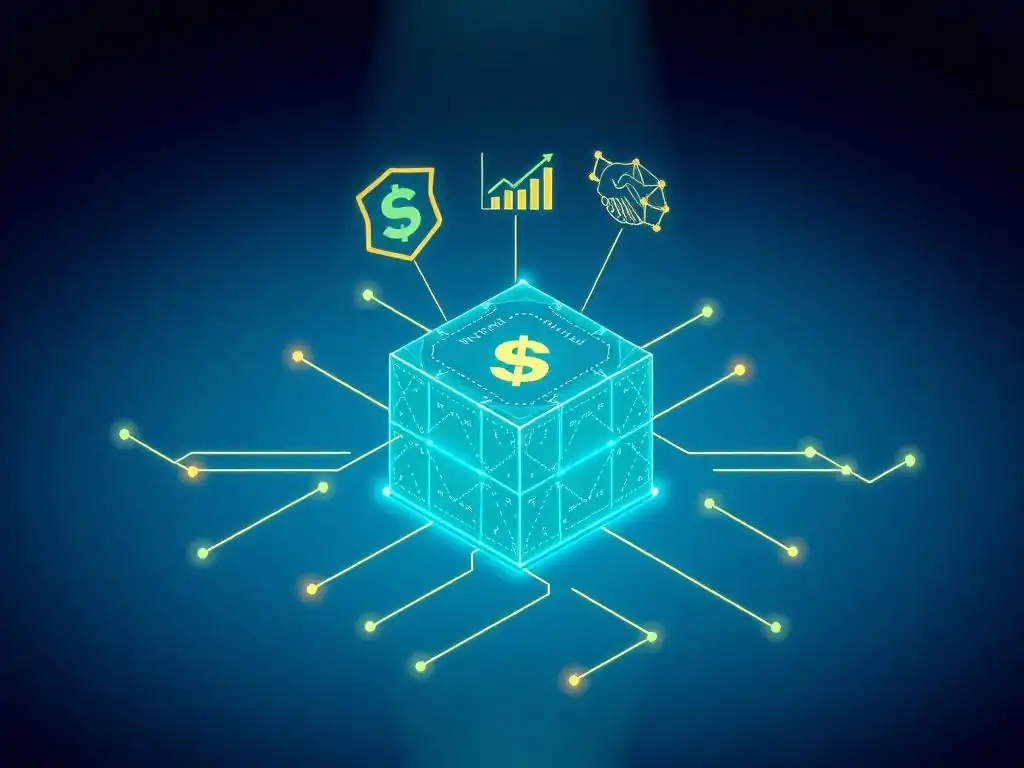
One of the major advantages of using smart contracts in DeFi is the inherent transparency they provide. The code of the smart contract is typically open-source and deployed on a public blockchain. This means anyone can read and audit the code to understand exactly how the protocol works and how their funds are being handled. This eliminates the "black box" nature of traditional financial institutions, where the internal workings are opaque.
Furthermore, every interaction with a DeFi smart contract is a transaction recorded on the blockchain. These transactions are publicly viewable and verifiable. Users can track their deposits, withdrawals, trades, and interest accruals directly on the blockchain explorer. This level of transparency is unprecedented in finance, allowing users to independently audit the protocol's activity and verify that the smart contract is executing as expected. This trust-through-verification is a core benefit of DeFi smart contracts applications.
Automation and Efficiency: Reducing Intermediaries in Financial Processes
Smart contracts automate financial processes that traditionally require manual intervention and multiple intermediaries. For example, in traditional lending, borrowers and lenders interact through banks or brokers, involving paperwork, approvals, and processing time. In DeFi lending, the smart contract automatically matches lenders and borrowers, calculates interest, manages collateral, and handles repayments or liquidations based on predefined rules, all without human involvement.
This automation significantly reduces operational costs, speeds up transactions, and eliminates the need for trusted third parties. By disintermediating financial services, DeFi smart contracts applications offer greater efficiency and potentially lower fees (though gas costs can vary). This streamlining of processes makes financial interactions faster and more direct, benefiting users globally.
Programmability and Composability: Building Complex DeFi Applications
Smart contracts are programmable, meaning developers can write complex logic to create innovative financial products and services. More importantly, smart contracts on the same blockchain can interact with each other seamlessly. This concept, known as composability or "money legos," allows developers to build new DeFi applications by combining existing smart contracts like building blocks.
For instance, a yield farming protocol might integrate with a DEX smart contract to automatically swap tokens received as rewards or interact with a lending protocol smart contract to use staked assets as collateral. This composability fosters rapid innovation, allowing developers to create sophisticated financial strategies and products by layering different DeFi smart contracts applications on top of one another. This interoperability is a unique and powerful feature of the DeFi ecosystem.
Accessibility and Inclusion: Expanding Financial Services to a Wider Audience
DeFi smart contracts applications are inherently permissionless, meaning anyone with an internet connection and a crypto wallet can access them. There are no account opening requirements, credit checks, or geographical restrictions imposed by centralized entities. This opens up financial services to a global audience, including individuals in regions with underdeveloped traditional financial infrastructure or those who are unbanked or underbanked.
Whether it's participating in a global lending market, trading assets on a DEX, or earning yield through staking, DeFi provides opportunities that were previously inaccessible to many. This increased accessibility, facilitated by the open and permissionless nature of smart contracts, is a significant step towards creating a more inclusive global financial system. The reach and availability of DeFi smart contracts applications empower individuals worldwide.
Challenges and Risks of DeFi Smart Contracts
Security Vulnerabilities: Smart Contract Exploits and Hacks
Despite their potential, DeFi smart contracts are not without risks, with security vulnerabilities being a primary concern. Errors or flaws in the smart contract code can be exploited by malicious actors, leading to significant financial losses. Unlike traditional systems where errors can sometimes be corrected, smart contracts on immutable blockchains are difficult or impossible to alter once deployed, making exploits permanent and irreversible.
Historical examples include the infamous DAO hack in 2016, which resulted in the loss of millions of Ether and ultimately led to the Ethereum hard fork. More recently, protocols like Poly Network and Wormhole have suffered exploits resulting in hundreds of millions of dollars in losses due to vulnerabilities in their smart contracts or related bridge mechanisms. While audits and best practices mitigate risk, the complexity of DeFi smart contracts applications means vulnerabilities can still exist.
Scalability Issues: Transaction Throughput and Network Congestion
Many DeFi smart contracts applications are currently built on blockchains like Ethereum, which, particularly on its mainnet (Layer 1), can face scalability issues. The network has limited transaction throughput, meaning it can only process a certain number of transactions per second. During periods of high demand, this leads to network congestion, slow transaction times, and significantly increased transaction fees (gas costs).
High gas fees can make interacting with DeFi smart contracts prohibitively expensive, especially for users with smaller amounts of capital. Executing even simple actions like swapping tokens on a DEX or claiming yield can cost tens or even hundreds of dollars in gas fees when the network is busy. This limits accessibility and hinders the widespread adoption of DeFi smart contracts applications, particularly for everyday transactions.
Regulatory Uncertainty: Legal and Compliance Challenges in DeFi
The decentralized nature of DeFi and the borderless operation of smart contracts pose significant challenges for regulators worldwide. The lack of a central entity responsible for the protocol raises questions about jurisdiction, consumer protection, anti-money laundering (AML), and know-your-customer (KYC) requirements. Different jurisdictions are taking varying approaches to regulating DeFi, creating a complex and uncertain legal landscape.
This regulatory uncertainty creates risks for developers, users, and investors in the DeFi space. Future regulations could potentially impact the design, operation, or accessibility of existing DeFi smart contracts applications. Navigating this evolving regulatory environment while maintaining the core principles of decentralization is a major challenge for the future growth of DeFi.
Impermanent Loss in AMMs: Understanding and Mitigating the Risk
Users providing liquidity to Automated Market Maker (AMM) smart contracts face a unique risk called impermanent loss. This occurs when the price of the assets deposited into a liquidity pool changes relative to when they were deposited. The AMM rebalances the pool according to its algorithm, which can result in the liquidity provider withdrawing a lower total dollar value than if they had simply held the original assets outside the pool.
Impermanent loss is not realized until the liquidity is withdrawn, hence the term "impermanent," but it can become permanent if the provider exits the pool. While trading fees earned by the smart contract can often offset small amounts of impermanent loss, significant price divergence can lead to substantial losses for liquidity providers. Understanding and mitigating this risk is crucial for participants in AMM-based DeFi smart contracts applications. Various strategies and protocol designs attempt to reduce or compensate for impermanent loss.
The Future of DeFi Smart Contracts: Innovation and Evolution
Layer-2 Scaling Solutions for DeFi: Optimistic Rollups and ZK-Rollups
Addressing the scalability challenges of Layer 1 blockchains like Ethereum is crucial for the future of DeFi. Layer-2 scaling solutions operate on top of the main blockchain, processing transactions off-chain while periodically submitting bundled transaction data or proofs back to the Layer 1 chain for security and finality. Optimistic Rollups and Zero-Knowledge (ZK) Rollups are leading Layer-2 technologies poised to significantly improve the performance of DeFi smart contracts applications.
Optimistic Rollups assume transactions are valid by default but allow a period for anyone to challenge and prove fraud. ZK-Rollups use cryptographic proofs (ZK-SNARKs or ZK-STARKs) to instantly verify the validity of off-chain transactions. Both technologies can increase transaction throughput by orders of magnitude and drastically reduce transaction costs, making DeFi more accessible and enabling new types of applications that require higher speed and lower fees.
Cross-Chain DeFi: Interoperability Between Different Blockchains
Currently, most DeFi smart contracts applications operate within a single blockchain ecosystem (e.g., Ethereum DeFi). However, the future envisions a more interconnected DeFi landscape where assets and protocols can interact across different blockchains. Cross-chain bridges and interoperability protocols are being developed to enable this.
These solutions often involve smart contracts on different chains communicating with each other, allowing users to move assets or execute transactions across disparate networks like Ethereum, Polygon, Solana, and others. Achieving true cross-chain composability securely is a complex challenge, but successful implementation would expand the total addressable market for DeFi and unlock new possibilities for DeFi smart contracts applications.
Institutional Adoption of DeFi: Integrating Smart Contracts into Traditional Finance
While DeFi is currently dominated by retail users and crypto-native firms, there is growing interest from traditional financial institutions (TradFi). Banks, asset managers, and other financial firms are exploring how to leverage blockchain and smart contracts to improve their existing processes, create new products, and access decentralized liquidity.
This could involve creating permissioned DeFi protocols for interbank settlements, tokenizing traditional assets, or using smart contracts for automated clearing and settlement. Integrating DeFi smart contracts applications into traditional finance would require addressing regulatory concerns, identity verification (KYC/AML), and enterprise-grade security and scalability. The potential impact is significant, bridging the gap between decentralized and traditional financial systems.
Real World Asset (RWA) Integration and Smart Contracts
A key area of innovation in DeFi is the integration of Real World Assets (RWAs) onto the blockchain. This involves tokenizing tangible or intangible assets from the physical world, such as real estate, invoices, commodities, or equities, and representing them as tokens (e.g., ERC-20 or ERC-721) on a blockchain. Smart contracts are essential for managing the tokenization process, verifying ownership, distributing income streams (like rent or interest), and facilitating trading or lending against these tokenized assets within DeFi protocols.
Bringing RWAs into DeFi expands the potential use cases beyond purely digital assets, connecting the vast value of the traditional economy with the efficiency and accessibility of decentralized finance. Protocols are being developed that allow users to borrow stablecoins against tokenized real estate or earn yield by providing liquidity for pools backed by tokenized invoices. This RWA integration, powered by sophisticated DeFi smart contracts applications, represents a significant frontier for the industry's growth.
Conclusion: The Transformative Potential of DeFi Smart Contracts
Recap of Key DeFi Smart Contracts Applications and Benefits
We have explored how smart contracts serve as the foundational technology for Decentralized Finance. From powering the automated trading on Uniswap and Sushiswap, to enabling trustless lending and borrowing on platforms like Aave and Compound, and facilitating passive income through yield farming and staking, DeFi smart contracts applications are reshaping the financial landscape. They also underpin the operation of decentralized stablecoins like DAI, demonstrating their versatility.
The benefits offered by these applications are substantial: increased transparency and auditability due to public blockchain ledgers and open-source code; enhanced automation and efficiency by removing intermediaries; unprecedented programmability and composability allowing for rapid innovation; and greater accessibility and financial inclusion for individuals worldwide. These advantages highlight the transformative potential inherent in DeFi smart contracts.
The Evolving Landscape of DeFi and the Future of Decentralized Finance
The Decentralized Finance ecosystem is still in its early stages, constantly evolving with new protocols, technologies, and use cases emerging. The development of Layer-2 scaling solutions promises to address current limitations related to transaction speed and cost, paving the way for broader adoption. Efforts towards cross-chain interoperability aim to create a more unified and liquid global decentralized market.
As the technology matures and regulatory clarity potentially increases, we may see greater institutional participation and the integration of real-world assets into DeFi protocols. While challenges such as security vulnerabilities and regulatory uncertainty persist, the ongoing innovation and development in the field of DeFi smart contracts applications suggest a future where decentralized finance plays an increasingly significant role in the global economy.
Continued Development and Community Growth in DeFi
The strength of DeFi lies not only in its technology but also in its vibrant and active community of developers, users, and researchers. This community-driven approach fosters continuous improvement, security vigilance, and the exploration of new possibilities for DeFi smart contracts. Open-source development allows for collaboration and scrutiny, contributing to the resilience and innovation of the ecosystem.
As more individuals and entities recognize the potential of decentralized, programmable finance, the ecosystem is likely to see continued growth in terms of users, capital, and the diversity of DeFi smart contracts applications. The journey of DeFi is far from over, and the ongoing development of smart contract technology will be key to unlocking its full potential and realizing a more open, efficient, and inclusive financial future.
Frequently Asked Questions
What are DeFi smart contracts and how do they differ from traditional contracts?
DeFi smart contracts are self-executing agreements written in code and stored on a blockchain. Unlike traditional contracts, they automatically enforce terms when conditions are met, reducing the need for intermediaries. This automation and transparency are key differentiators.
How do DeFi smart contracts enhance the functionality of Decentralized Finance (DeFi) applications?
DeFi smart contracts enable key DeFi functionalities like lending, borrowing, and trading without central authorities. They provide the underlying logic for decentralized exchanges (DEXs), yield farming platforms, and other innovative financial instruments.
What are some common use cases of DeFi smart contract applications beyond basic trading?
Beyond trading, DeFi smart contracts are used for automated market makers (AMMs), decentralized insurance, and supply chain management. They are also being explored for identity management and even decentralized governance systems.
What are the potential risks associated with using DeFi smart contracts?
Risks include smart contract vulnerabilities that can be exploited by hackers, leading to loss of funds. Other concerns include regulatory uncertainty and the potential for impermanent loss in AMMs.
How is the regulatory landscape evolving for DeFi smart contracts and applications?
Regulation of DeFi is still evolving, with governments grappling with how to apply existing laws to decentralized and borderless systems. There is ongoing debate about liability, compliance, and consumer protection in the DeFi space.
Final Reflection: The Enduring Promise of Decentralized Trust
The exploration of Smart Contracts and Decentralized Finance (DeFi) reveals a landscape brimming with potential, yet also fraught with challenges. The true power of DeFi smart contracts applications lies not just in their technological sophistication, but in their capacity to reshape financial systems and empower individuals in unprecedented ways. This potential is more relevant than ever as traditional financial institutions grapple with issues of trust, transparency, and accessibility.
The rise of DeFi, fueled by the ingenuity of smart contracts, has undeniably left an indelible mark on the financial world. It has challenged the status quo, democratized access to financial services, and fostered a culture of innovation that continues to push the boundaries of what's possible. This ongoing evolution is crucial, reminding us that technology, at its best, should serve to uplift and empower. The future of finance is decentralized, permissionless, and built on open-source protocols.
- Chris Dixon
As we stand at the cusp of this financial revolution, let us not merely be passive observers. Let us embrace the possibilities offered by DeFi smart contracts applications, while remaining vigilant about the risks and complexities involved. Consider how you can leverage these technologies to build a more equitable and accessible financial future, not just for yourself, but for the global community. Explore, learn, and contribute to the ongoing evolution of DeFi, ensuring that its promise of decentralized trust becomes a reality for all.
Launch Your DeFi Journey!
Thank you for exploring the world of smart contracts and decentralized finance with us! We hope this deep dive has sparked your curiosity and given you a clear understanding of this revolutionary technology. Now, it’s time to put that knowledge into practice.
Here are some steps to help you advance your DeFi experience:
- Start with a reputable platform and a modest amount of cryptocurrency to explore lending and borrowing directly. This practical approach will help reinforce your understanding.
- Join the discussion: Participate in the Blockchain Trends forum to share your thoughts, ask questions, and connect with others interested in DeFi.
- Discover new opportunities: Research lesser-known DeFi protocols and share your insights with your community.
What small DeFi experiment are you excited to try this week? Share your ideas in the comments below!
Leave a Reply