
Social Media DApps: Reimagining Social Networks with Decentralization

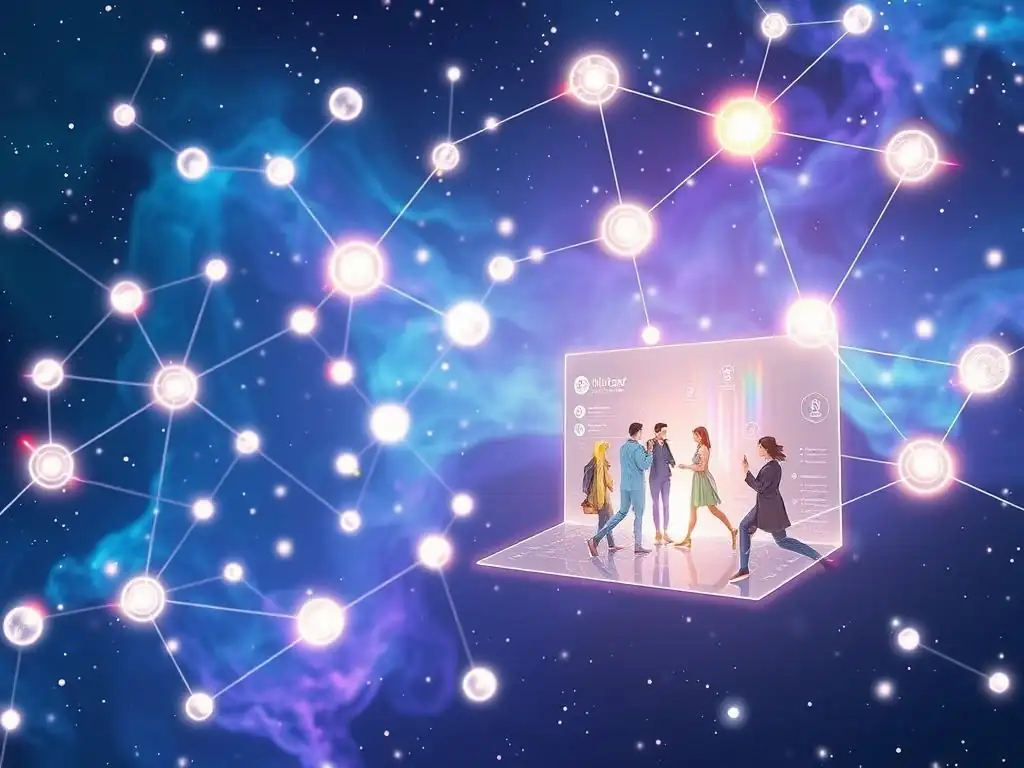
Welcome to Blockchain Trends, your guide to understanding the revolutionary impact of blockchain beyond the hype. Delve into the world of Decentralized Applications (DApps) and discover how they're reshaping industries. This week, we're exploring the burgeoning landscape of Decentralized Social Media Platforms. But what are the real benefits of moving social interaction onto the blockchain? Read on to uncover the advantages and challenges of this exciting new paradigm.
-
Social Media DApps: Reimagining Social Networks with Decentralization
- Introduction: The Evolution of Social Media and the Rise of DApps
- Understanding Decentralized Social Media Platforms
- What are Social Media DApps? A Deep Dive
- The Core Technologies Behind DeSo Platforms
- Decentralized Social Media Platforms Benefits: Addressing the Limitations of Web2
- Enhanced Privacy and Data Ownership: Regaining Control of Your Information
- Censorship Resistance and Freedom of Expression
- Monetization Opportunities for Creators and Users
- Improved Security and Resistance to Manipulation
- Exploring Existing Decentralized Social Media Platforms
- Challenges and Future of Decentralized Social Networks
- Conclusion: The Transformative Potential of Decentralized Social Media
-
Frequently Asked Questions
- What are the main benefits of decentralized social media platforms?
- How do social media DApps (Decentralized Applications) differ from traditional social networks?
- What are some examples of real-world applications of decentralized social media platforms?
- What challenges do decentralized social media platforms face in achieving mainstream adoption?
- How is the regulatory landscape shaping the future of decentralized social media platforms?
- Final Reflection: Embracing the Decentralized Social Revolution
- Unleash the Power of Decentralized Socializing!
Social media has fundamentally reshaped how we communicate, share information, and build communities over the past two decades. From early forums and bulletin boards to the dominant platforms of today like Facebook, Twitter, and Instagram, these networks have become integral to daily life for billions. However, the centralized model upon which most of these platforms are built has increasingly come under scrutiny, raising concerns about data privacy, censorship, and the concentration of power in the hands of a few corporations. This growing dissatisfaction has paved the way for exploring alternative models.
The advent of blockchain technology, initially popularized by cryptocurrencies like Bitcoin and Ethereum, has opened up new possibilities for decentralized applications (DApps). DApps operate on peer-to-peer networks, typically blockchains, removing the need for a central authority. This distributed architecture offers the potential to build digital services, including social networks, that are more resilient, transparent, and user-centric. The concept of applying this decentralized paradigm to social media is gaining traction, proposing a significant shift from the current landscape towards platforms where users have greater control and ownership.
Decentralized social media platforms, often referred to as DeSo, represent a paradigm shift from traditional, centralized social networks. Unlike Web2 platforms where user data, content, and platform governance are controlled by a single entity (the company), DeSo platforms distribute these elements across a network of participants, often using blockchain or other distributed ledger technologies. This distribution aims to eliminate single points of failure and reduce the power held by platform operators.
The core idea is to empower users. Instead of being mere consumers of content and data generators whose information is harvested and monetized by the platform, users on decentralized social media platforms can potentially own their data, have a say in platform governance, and even directly benefit from the network's growth. This structure aligns with the broader Web3 vision of a more open, decentralized, and user-controlled internet, directly addressing many of the limitations and ethical concerns associated with current social media giants.
Social Media DApps are applications built on decentralized networks, specifically designed to facilitate social interactions, content sharing, and community building without relying on a central server or authority. They leverage the underlying technology of blockchains or similar distributed systems to manage user identities, store content (or references to content stored on decentralized file systems), and handle interactions in a transparent and immutable manner.
Functionally, Social Media DApps often mimic features found in traditional social networks, such as creating profiles, posting updates, sharing media, following others, and joining groups. However, the fundamental difference lies in their architecture and governance model. For instance, instead of user data residing in a company's private database, it might be encrypted and stored on a decentralized storage network like IPFS, with only the user holding the key. Platform rules and updates could be governed by decentralized autonomous organizations (DAOs), allowing the community to vote on key decisions, a stark contrast to the top-down decision-making prevalent in centralized platforms.
The Core Technologies Behind DeSo Platforms
Decentralized social media platforms are built upon a stack of decentralized technologies. At the foundation is typically a blockchain or distributed ledger technology (DLT), such as Ethereum, Solana, Polkadot, or purpose-built chains like the DeSo blockchain itself. This layer provides a secure, transparent, and immutable record of transactions and interactions, such as posting content or transferring value.
Layer 2 solutions and other scaling techniques are often employed to handle the high transaction volume required for social interactions, addressing the scalability limitations of some base blockchains. Decentralized storage solutions, like IPFS (InterPlanetary File System) or Arweave, are crucial for storing the large amounts of data generated by users, such as images and videos, in a distributed and resilient manner. Smart contracts automate rules and agreements on the blockchain, enabling features like content monetization, decentralized identity management, and community governance mechanisms like DAOs. Together, these technologies form the backbone of a decentralized social media ecosystem.
The move towards decentralized social media platforms is driven by a desire to overcome significant drawbacks inherent in the centralized Web2 model. These limitations include issues around privacy, data control, censorship, and equitable value distribution. The benefits offered by decentralized social media platforms directly address these concerns, proposing a more equitable and user-centric online social experience.
One of the primary decentralized social media platforms benefits is the potential for enhanced user control over personal data. In the Web2 world, users often trade their data and attention for free access to services, leading to business models heavily reliant on targeted advertising and data exploitation. Decentralized alternatives aim to shift this dynamic, giving users ownership and control over their digital identity and content, and enabling them to decide how their data is used, if at all. This fundamental change is seen as a crucial step towards a more ethical internet.
Enhanced Privacy and Data Ownership: Regaining Control of Your Information
Privacy is a paramount concern for users of traditional social media. Centralized platforms collect vast amounts of personal data, often with opaque terms of service, leading to concerns about surveillance, data breaches, and misuse. For example, major platforms have faced numerous incidents involving the exposure of data affecting millions, highlighting the risks of centralized data storage.
Decentralized social media platforms offer enhanced privacy by design. User data can be stored on decentralized storage networks, encrypted, and accessible only with the user's private key. This architecture minimizes the risk of large-scale data breaches from a single point of failure. Furthermore, the principle of self-sovereign identity, often integrated into DeSo platforms, allows users to control their digital identity and share only necessary information, promoting a model where users own and manage their data rather than the platform.
Censorship Resistance and Freedom of Expression
Centralized social media platforms have significant power to moderate content, which can lead to censorship, deplatforming, and the suppression of certain viewpoints. While content moderation is necessary to combat hate speech and illegal content, centralized control can be arbitrary, politically influenced, or lack transparency, impacting freedom of expression globally. Reports of accounts being suspended or content removed without clear justification are common.
Decentralized social media platforms are inherently more resistant to censorship. Because content and user data are distributed across a network and often governed by community consensus or immutable blockchain rules, no single entity can easily remove content or ban users unilaterally. While moderation mechanisms can still exist (e.g., through community voting or reputation systems), they are designed to be more transparent and decentralized, offering greater assurance that legitimate expression will not be arbitrarily suppressed, which is a key decentralized social media platforms benefit.
Monetization Opportunities for Creators and Users
In the traditional social media model, the vast majority of advertising revenue and platform value is captured by the platform operators. Content creators often struggle to monetize their work directly, relying on complex algorithms, brand deals, or external platforms. Users, who generate the content and attention that drives the platform's value, receive little to no direct compensation.
Decentralized social media platforms can create more equitable monetization models. Using blockchain technology, platforms can enable direct peer-to-peer payments, tipping mechanisms using cryptocurrencies, or tokenized economies where users and creators earn tokens for their contributions (e.g., posting, curating, engaging). Some platforms experiment with models where users earn a share of network fees or are rewarded for identifying valuable content. For instance, platforms like Steemit (though an earlier example) explored rewarding users with tokens for posting and curating content, illustrating the potential for users to directly benefit from their activity, representing significant decentralized social media platforms benefits.
Improved Security and Resistance to Manipulation
Centralized systems are attractive targets for hackers and malicious actors. A single successful attack can compromise the entire platform, exposing user data or disrupting service. Furthermore, the centralized control over algorithms and data flows makes these platforms susceptible to manipulation, such as the spread of misinformation, propaganda, and filter bubbles influenced by opaque algorithmic biases.
Decentralized social media platforms, by distributing data and operations across a network, are more resilient to single points of failure and denial-of-service attacks. The transparent and immutable nature of blockchain can make it harder to tamper with content history or user interactions without leaving a verifiable trace. While not immune to all forms of manipulation (like spam or coordinated attacks), the open and distributed nature can potentially make it easier for the community to identify and mitigate malicious activity compared to opaque centralized systems. This inherent robustness is a key advantage among the decentralized social media platforms benefits.
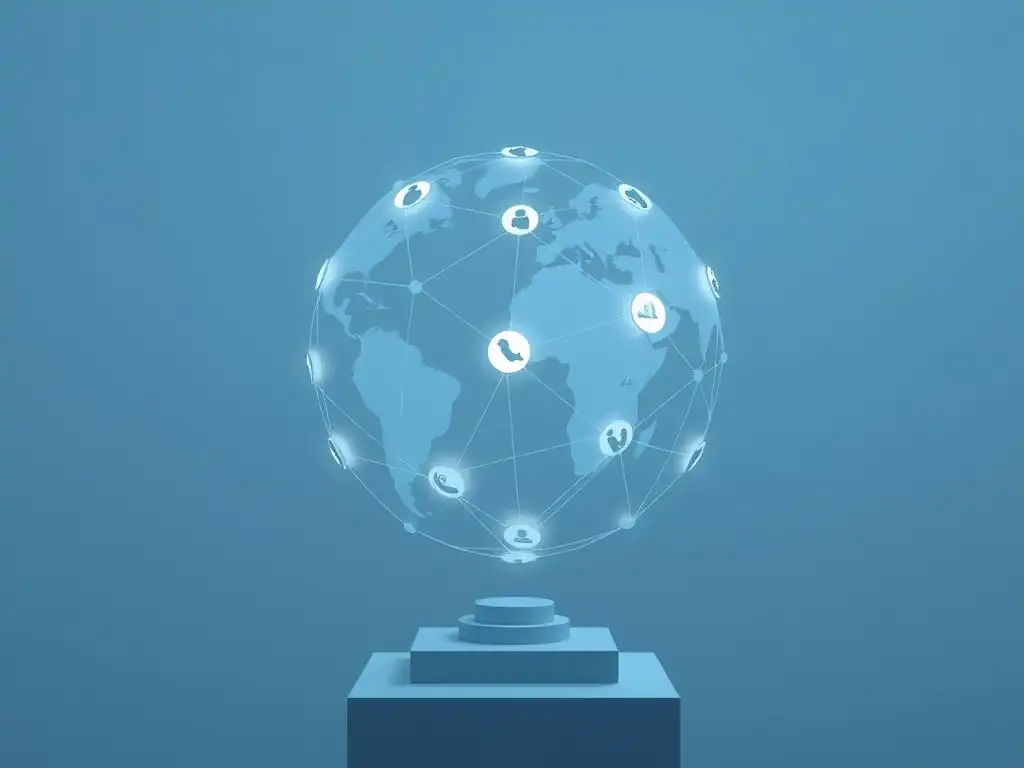
A Comparative Analysis of Leading DeSo Platforms
The decentralized social media landscape is still evolving, with several platforms offering different approaches and feature sets. Platforms like Mastodon, while not blockchain-based, represent a decentralized federated model where independent servers can interact. Blockchain-based platforms include protocols like DeSo (Decentralized Social), which aims to build a base layer for decentralized social applications, and applications like Lens Protocol, which is a decentralized social graph built on Polygon, allowing developers to build social media experiences on top of user-owned profiles.
Comparing these platforms involves looking at their underlying technology (blockchain vs. federated), their governance models (DAO vs. server-based), their approach to data storage (on-chain, decentralized storage, or server-based), and their specific features (e.g., content types, monetization tools). For example, Lens Protocol focuses on owning your social graph, meaning your followers and content history are portable across different applications built on the protocol. DeSo provides a blockchain specifically optimized for social transactions.
Mastodon offers a network of interconnected, independently run instances. Each presents a unique vision for the future of decentralized social media, offering different sets of decentralized social media platforms benefits depending on their architecture.
Use Cases and Real-World Applications of DeSo
Decentralized social media platforms are finding various real-world applications beyond simply replacing traditional platforms. One significant use case is building niche communities around specific interests, where users value data control and censorship resistance. For instance, communities focused on sensitive topics, artistic expression, or political activism might prefer the uncensorable nature offered by certain DeSo platforms.
Another application is creating platforms where content creators have more control and better monetization options. Artists, writers, and musicians can use DeSo platforms to publish content directly to their audience, receive direct support via crypto payments, or even tokenize their work and engage with fans in novel ways. Furthermore, DeSo can be used to build specialized professional networks, academic collaboration platforms, or news aggregation services where transparency of information flow and resistance to manipulation are critical, leveraging the inherent decentralized social media platforms benefits for specific needs.
Scalability and Performance Issues
Despite the compelling vision and decentralized social media platforms benefits, significant technical challenges remain for decentralized social networks. Scalability is a major hurdle. Blockchains, especially public ones, can process a limited number of transactions per second compared to the millions handled by centralized platforms during peak times. Social media generates a massive volume of interactions (posts, likes, comments), and achieving the necessary throughput without sacrificing decentralization or increasing costs is complex.
While Layer 2 solutions and more performant blockchains are being developed, maintaining a smooth, real-time user experience comparable to Web2 platforms remains difficult. Issues like transaction latency, network congestion, and potentially high transaction fees for frequent small interactions (like liking a post) can hinder mainstream adoption. Overcoming these performance bottlenecks is crucial for DeSo platforms to compete effectively with their centralized counterparts and fully realize the decentralized social media platforms benefits.
User Adoption and Education
One of the most significant non-technical challenges facing decentralized social media platforms is achieving widespread user adoption. Billions of users are deeply entrenched in existing Web2 platforms, which offer convenience, network effects (all their friends are there), and intuitive user interfaces built over years of refinement. DeSo platforms often require users to manage private keys, understand blockchain concepts, and navigate interfaces that can be less polished than their centralized competitors.
Educating the average user about the benefits of decentralization, data ownership, and privacy is a substantial task. Many users prioritize ease of use and network size over abstract principles of decentralization. Onboarding millions of non-technical users, providing robust and user-friendly tools for managing digital assets and identities, and building network effects comparable to Web2 giants are critical steps required for decentralized social media platforms to move from niche communities to mainstream success.
The decentralized nature of DeSo platforms presents complex regulatory and legal challenges. Who is responsible for content moderation when there's no central authority? How do platforms comply with regulations regarding illegal content, hate speech, or misinformation? The lack of a single point of control makes it difficult for regulators to apply existing laws designed for centralized entities.
Furthermore, the use of tokens for monetization or governance can bring DeSo platforms under the purview of securities regulations in various jurisdictions. Data privacy laws like GDPR also pose questions about how decentralized networks handle user data and the 'right to be forgotten' when data is immutable on a blockchain. Navigating this evolving legal landscape and developing frameworks that allow DeSo platforms to operate legally while maintaining their decentralized principles is an ongoing and significant challenge.
The rise of decentralized social media platforms signals a potential turning point in the evolution of online social interaction. By leveraging blockchain and distributed ledger technologies, these platforms offer a compelling alternative to the centralized models that currently dominate the digital landscape. The decentralized social media platforms benefits—including enhanced privacy and data ownership, increased censorship resistance, new monetization opportunities for users and creators, and improved security—directly address many of the critical flaws identified in Web2 social networks.
While significant challenges related to scalability, user adoption, and regulation still need to be overcome, the ongoing development and growing interest in DeSo indicate a strong desire for a more open, transparent, and user-controlled internet. As technology matures and user interfaces become more intuitive, decentralized social media has the potential to fundamentally reimagine how we connect, share, and build communities online, shifting power back towards the users and ushering in a new era of social networking.
Frequently Asked Questions
Decentralized platforms offer enhanced data privacy and user control. This means users have more autonomy over their content and personal information, reducing reliance on centralized entities. They also present a resistance to censorship.
Traditional networks are centrally controlled, while DApps leverage blockchain technology for decentralized governance. This results in greater transparency, less manipulation, and more equitable content distribution.
Examples include platforms focusing on content ownership and creator monetization, such as those using NFTs (Non-Fungible Tokens) to reward users. Others explore decentralized moderation systems.
Challenges include scalability issues, complex user interfaces, and the need for effective content moderation solutions. Overcoming these hurdles is crucial for widespread acceptance.
The regulatory environment is still evolving, with governments grappling to understand and regulate blockchain-based technologies. Clear guidelines are needed to foster innovation while addressing potential risks like illegal content and data security.
The promise of decentralized social media platforms benefits is no longer a distant dream, but a tangible reality rapidly reshaping how we connect and communicate online. As we've explored the potential of Social Media DApps, it's clear that the shift towards user empowerment, data privacy, and community governance is not just a technological advancement, but a fundamental shift in the power dynamics of the digital world.
The impact of this movement extends far beyond the technical specifications of blockchain and smart contracts. It's about reclaiming control over our digital identities and fostering a more authentic and equitable online experience. The current centralized model, with its inherent biases and data exploitation, has fueled a growing desire for alternatives. The internet was supposed to be a democratizing force, but it's become a tool for surveillance and control. Decentralization offers a path back to the original vision.
This sentiment underscores the urgency and importance of exploring and supporting decentralized social media platforms.
Now, consider the implications of this revolution for your own digital life. How can you actively participate in shaping a more decentralized and user-centric online world? Explore these platforms, support developers building innovative solutions, and most importantly, demand transparency and accountability from the social networks you use. The future of social media is not predetermined; it's being built right now, and your voice and actions can help shape a future where connection is truly empowering.
Thank you for exploring the future of social networking with us. You now have a solid understanding of how decentralized applications are transforming social media. It's time to take that knowledge and put it into action!
Here’s how you can dive deeper into this exciting space:
- Start by exploring and creating an account on at least one social media decentralized application. Try out platforms that are built on blockchain technology and offer decentralized features. Experience the difference firsthand! This is your primary step.
- Delve into the technical aspects by researching the blockchain technology that underpins a platform you find interesting. Understand how it works, and consider contributing to open-source projects related to it!
- Share this article with friends, family, or colleagues who are curious about the future of social media or blockchain technology. Spread the word and spark a conversation!
What are your initial thoughts on using decentralized social platforms compared to traditional ones? Let's discuss in the comments below!
Leave a Reply