
Unveiling the DApp Revolution: Why Decentralized Apps Are Poised to Disrupt Industries

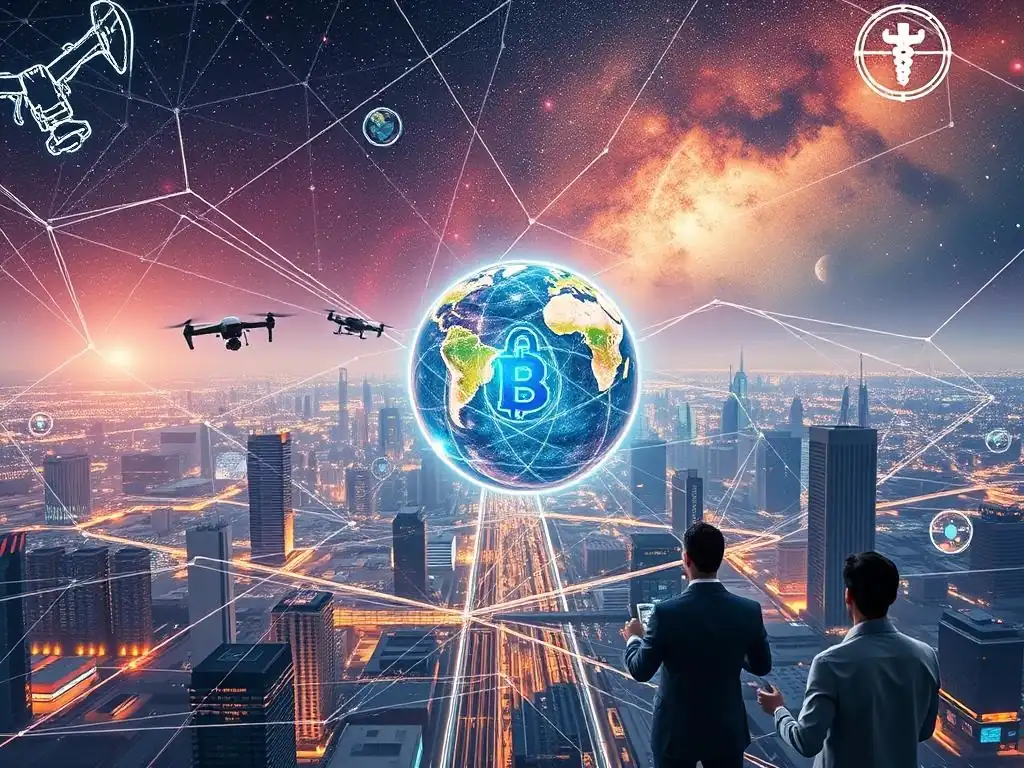
Welcome to Blockchain Trends, your compass in the rapidly evolving world of decentralized technology. Delve into the transformative power of blockchain beyond the hype of cryptocurrencies, and discover how it's reshaping industries. Ready to witness the decentralized applications transforming industries? Let's explore how DApps are poised to revolutionize everything you thought you knew.
Unveiling the DApp Revolution: Why Decentralized Apps Are Poised to Disrupt Industries
- Understanding the Rise of Decentralized Applications (DApps)
- Decentralized Applications Transforming Industries: Real-World Use Cases
- The Benefits of Decentralized Applications: Advantages Over Traditional Systems
- Overcoming the Challenges of DApp Development and Adoption
- The Future of DApps: Predicting the Next Wave of Innovation
- Developing Decentralized Applications: Key Considerations
- Conclusion: Embracing the Potential of Decentralized Applications
-
Frequently Asked Questions
- What exactly are Decentralized Applications (DApps), and how are they different from traditional apps?
- How are DApps transforming industries beyond just finance and cryptocurrencies?
- What are the main benefits of using DApps compared to centralized applications?
- What are the current challenges hindering the widespread adoption of DApps?
- How is the regulatory landscape evolving to accommodate the rise of Decentralized Applications?
- Final Reflection: Embracing the Decentralized Future
- Ignite Your DApp Journey!
Understanding the Rise of Decentralized Applications (DApps)
What are Decentralized Applications (DApps) and How Do They Differ from Traditional Apps?
Decentralized applications, or DApps, represent a fundamental shift in how software is built and operated. Unlike traditional applications that rely on centralized servers owned and controlled by a single entity, DApps are built on decentralized networks, typically blockchain technology. This means their backend code runs on a peer-to-peer network rather than a single server farm. Users interact directly with the application's smart contracts deployed on the blockchain, eliminating the need for an intermediary. This architecture inherently distributes control and data across many nodes, making DApps resilient to single points of failure and censorship.
The core distinction lies in control and data management. Traditional applications, like social media platforms or online banking services, store user data and manage operations on their private servers. This gives the controlling company immense power over user data, content, and service availability.
DApps, conversely, store data on the blockchain (or decentralized storage solutions linked to it) and execute logic via immutable smart contracts. Once deployed, the rules of a DApp are transparent and cannot be changed unilaterally by a single party, fostering trust and predictability. This shift towards user-centric control and transparent operations is a key driver behind the growing interest in decentralized applications transforming industries.
Key Characteristics of DApps: Transparency, Security, and Autonomy
Transparency is a cornerstone of DApps. Because the underlying code (smart contracts) and transaction data are often public on the blockchain, users can verify how the application works and track transactions. This open ledger approach contrasts sharply with the opaque 'black box' nature of many traditional applications where internal processes and data handling are hidden from users. For instance, on public blockchains like Ethereum, anyone can inspect the code of a deployed DApp and view transaction history, promoting accountability and reducing the need for trust in a central authority.
Security is another defining characteristic, stemming from the decentralized nature of the blockchain. Data is distributed across numerous nodes, making it extremely difficult for malicious actors to tamper with it without controlling a majority of the network (a 51% attack), which is computationally prohibitive for large, established blockchains. Smart contracts, while not immune to bugs, are designed to execute logic automatically and immutably once conditions are met, removing human error and manipulation from the execution process.
This robust security framework makes decentralized applications transforming industries in areas where data integrity and trust are paramount. Furthermore, DApps offer a degree of autonomy, often allowing users greater control over their data and digital identities, sometimes without requiring traditional identity verification.
The Growing Ecosystem of DApps: Current Trends and Future Projections
The DApp ecosystem has experienced significant growth, expanding far beyond its initial focus on cryptocurrencies and simple token transfers. Early DApps primarily revolved around gambling and collectibles, but the landscape has matured dramatically. Today, decentralized applications transforming industries span finance, gaming, supply chain, healthcare, and more. The total value locked (TVL) in DeFi DApps alone reached tens of billions of dollars in recent years, indicating substantial user adoption and capital flow into decentralized finance protocols. This growth is fueled by increasing developer interest and the maturation of underlying blockchain infrastructure.
Looking ahead, projections for the DApp ecosystem are optimistic, though challenges remain. Analysts predict continued expansion, particularly in sectors benefiting from transparency and disintermediation. The rise of Layer 2 scaling solutions is addressing some of the historical limitations around transaction speed and cost, making DApps more viable for mainstream use.
Furthermore, the integration of DApps with emerging technologies like AI and IoT is expected to create novel use cases, further accelerating their adoption. While mass consumer adoption still faces hurdles like user experience complexity and regulatory clarity, the trajectory suggests that decentralized applications transforming industries will become an increasingly significant part of the digital economy over the next decade.
Decentralized Applications Transforming Industries: Real-World Use Cases
DApps in Finance (DeFi): Revolutionizing Lending, Borrowing, and Trading
Decentralized Finance, or DeFi, is arguably the most prominent sector where decentralized applications transforming industries are making a significant impact. DeFi DApps aim to recreate traditional financial services – such as lending, borrowing, trading, and insurance – using blockchain technology and smart contracts. These protocols operate without central intermediaries like banks or brokers, allowing users to interact directly with pooled assets based on predefined, transparent rules. For example, users can deposit cryptocurrency into a lending pool and earn interest, or borrow assets by collateralizing their holdings, all executed autonomously by smart contracts.
The appeal of DeFi lies in its accessibility, transparency, and efficiency. Anyone with an internet connection and a crypto wallet can participate, regardless of geographical location or traditional financial status. Transaction fees are often lower than traditional finance, and processes like loan origination can happen in minutes rather than days.
The total value locked (TVL) across various DeFi protocols has fluctuated but reached peaks exceeding $150 billion, demonstrating substantial capital allocation within this decentralized system. This surge reflects a growing global interest in financial services that are open, permissionless, and resistant to censorship, showcasing how decentralized applications transforming industries are creating parallel financial markets.
The Impact of DeFi on Traditional Financial Institutions
The rise of DeFi presents both a challenge and an opportunity for traditional financial institutions (TradFi). On one hand, DeFi protocols offer competitive alternatives to services like high-yield savings accounts, instant loans, and efficient asset trading, potentially eroding market share from established players. The transparency and lower overhead of some DeFi operations highlight areas where TradFi could improve efficiency. Some institutions are exploring how to integrate blockchain technology or even offer regulated versions of decentralized finance services to remain competitive.
Conversely, TradFi institutions possess significant capital, regulatory expertise, and established customer bases that DeFi currently lacks on a large scale. Many are investigating the underlying technology, exploring private blockchains or permissioned DApps for interbank settlements, asset tokenization, or improved compliance. While a direct, immediate replacement of TradFi by DeFi is unlikely, the innovations pioneered by decentralized applications transforming industries in the financial sector are undoubtedly pushing traditional institutions to adapt, explore blockchain solutions, and potentially collaborate or acquire companies operating in the decentralized space.
Examples of Successful DeFi DApps: Aave, Uniswap, Compound
Several DeFi DApps have achieved significant traction and demonstrate the power of decentralized finance. Aave is a prominent decentralized lending and borrowing protocol that allows users to earn interest on deposits and borrow assets. It has managed billions in total value locked, facilitating significant volumes of decentralized credit. Its flash loan feature, allowing uncollateralized loans within a single transaction, highlights the innovative possibilities enabled by smart contracts.
Uniswap is a leading decentralized exchange (DEX) built on Ethereum. It utilizes an Automated Market Maker (AMM) model, allowing users to trade tokens directly against liquidity pools provided by other users, rather than relying on traditional order books. Uniswap has processed trading volumes exceeding trillions of dollars since its inception, offering a permissionless and censorship-resistant way to swap crypto assets.
Compound is another major lending protocol, known for pioneering the concept of algorithmic interest rates based on supply and demand. These platforms exemplify how decentralized applications transforming industries are building alternative financial infrastructures that are open, programmable, and community-governed, challenging the long-held dominance of centralized financial intermediaries.
DApps in Supply Chain Management: Enhancing Traceability and Efficiency
Supply chain management is an area ripe for disruption by decentralized applications transforming industries. Traditional supply chains often suffer from a lack of transparency, fragmented data, and inefficient communication between participants. Goods move through complex networks involving multiple parties – producers, manufacturers, distributors, logistics providers, and retailers – each maintaining their own separate records. This siloed approach makes it difficult to track goods in real-time, verify their origin, or quickly identify points of failure or fraud.
DApps built on blockchain can create a shared, immutable ledger accessible to all authorized participants in a supply chain. As goods move, each transfer of ownership, quality check, or location update can be recorded as a transaction on the blockchain. This creates a single, verifiable source of truth for the product's journey.
For example, a DApp could track a shipment of high-value goods from its point of origin in Asia to a retail store in Europe, with each handler scanning a QR code to update its status on the blockchain. This level of granular, transparent tracking is a significant improvement over traditional paper-based systems or disparate databases.
How Blockchain-Based DApps Improve Supply Chain Transparency
Blockchain-based DApps inherently improve supply chain transparency by providing a secure, shared ledger that is visible (though potentially permissioned) to all relevant stakeholders. When data about a product's journey – such as its manufacturing date, source of raw materials, transport details, and handling – is recorded on a blockchain via a DApp, it creates an immutable audit trail. This means that once information is added, it cannot be altered or deleted, preventing fraudulent claims about a product's history or origin.
This enhanced transparency allows businesses and consumers alike to have greater confidence in the authenticity and provenance of goods. It facilitates quicker identification of issues like contamination in food products or counterfeit goods in luxury markets. For instance, a DApp could allow a consumer to scan a product's QR code and see the entire history of its production and distribution recorded on the blockchain. This level of visibility, enabled by decentralized applications transforming industries, builds trust and can streamline processes like recalls or quality assurance checks.
Case Study: DApp Implementation in Food Traceability
A compelling example of decentralized applications transforming industries is in food traceability. Consider a large food producer or retailer implementing a blockchain-based DApp to track a specific product, like leafy greens. Historically, tracing the source of contaminated produce during an outbreak could take days or weeks, leading to widespread, costly recalls and significant health risks. With a DApp, each batch of greens is assigned a unique identifier recorded on the blockchain.
As the greens move from the farm to processing, packaging, distribution centers, and finally to individual stores, each step is recorded on the DApp via smart contracts. If a contamination issue is reported at a retail location, the DApp allows for near-instant traceback to the specific farm, field, and harvest date of the affected batch.
This precision enables targeted, rapid recalls limited only to the problematic produce, significantly reducing waste, costs, and the duration of public health risks. While specific company names might vary based on recent news, major retailers and food corporations have piloted or implemented such systems, demonstrating the practical benefits of decentralized applications transforming industries like agriculture and food distribution.
DApps in Healthcare: Secure Data Management and Patient Empowerment
The healthcare industry grapples with complex challenges related to data security, privacy, interoperability, and patient access to their own information. Patient records are often fragmented across different providers, stored in disparate, incompatible systems. This makes it difficult to share critical information quickly and securely, hindering coordinated care and medical research. Decentralized applications transforming industries like healthcare offer potential solutions by leveraging blockchain's security and distributed nature.
DApps in healthcare can create secure, patient-centric systems for managing electronic health records (EHRs), clinical trial data, and even health insurance claims. By storing encrypted data on decentralized networks and using blockchain to manage access permissions via smart contracts, DApps can give patients greater control over who can view their sensitive medical information. This shifts the paradigm from healthcare providers being the sole custodians of data to patients becoming active participants in managing their health records, enhancing privacy and potentially improving data accuracy and accessibility.
Utilizing DApps for Electronic Health Records (EHR)
Implementing DApps for Electronic Health Records (EHRs) aims to address the current limitations of siloed, centralized systems. A DApp could allow a patient's EHR data to be stored securely and immutably on a blockchain or a decentralized storage system linked to it. The blockchain would then serve as a ledger managing encrypted pointers to this data and controlling access permissions. Using the DApp, a patient could grant specific healthcare providers (doctors, specialists, hospitals) temporary or permanent access to view or update specific parts of their record via smart contracts.
This approach ensures that the patient retains control over their data while enabling seamless and secure sharing between authorized parties, irrespective of the different software systems used by providers. For example, a patient visiting a new specialist could grant them access to relevant past records instantly through the DApp, avoiding delays and the need for manual transfer of files.
While full-scale, widespread adoption is still in early stages due to regulatory hurdles and the complexity of integrating with legacy systems, pilot projects demonstrate the potential for decentralized applications transforming industries like health information management to improve efficiency and patient outcomes.
Addressing Privacy Concerns with Decentralized Healthcare Solutions
Privacy is paramount in healthcare, and traditional systems are vulnerable to breaches and unauthorized access. Decentralized applications transforming industries in healthcare offer enhanced privacy guarantees compared to centralized databases. By encrypting patient data and storing it off-chain (while using the blockchain for managing access), DApps can minimize the risk of a single point of data compromise. The use of cryptographic keys ensures that only authorized parties can decrypt and view the information.
Furthermore, the patient's consent for data access can be managed directly through smart contracts on the DApp. This provides an auditable log of who accessed the data and when, offering a level of transparency and control often missing in traditional systems.
While the immutability of blockchain requires careful consideration regarding the "right to be forgotten," techniques like using off-chain storage with blockchain-managed access keys or zero-knowledge proofs are being explored to balance transparency with necessary data privacy, demonstrating the nuanced approach required for decentralized applications transforming industries with strict regulatory requirements like HIPAA in the United States or GDPR in Europe.
DApps in Gaming: Creating Decentralized and Player-Owned Economies
The gaming industry is experiencing a significant transformation driven by decentralized applications, particularly those incorporating Non-Fungible Tokens (NFTs) and play-to-earn models. Traditional games often feature centralized economies where in-game assets (like skins, weapons, or virtual land) are owned by the game developers, and players merely license their use. This means players cannot truly own, trade, or sell these assets outside the confines of the game platform, limiting their value and portability.
DApps in gaming leverage blockchain technology to give players true ownership of their in-game assets, often represented as NFTs. These assets are stored on the blockchain, verifiable, and can be freely traded on decentralized marketplaces outside the game itself. This creates player-owned economies where the value of in-game items is determined by market forces, not solely by the game developer. This shift is fundamentally changing the relationship between players and games, turning gaming from a pure consumption activity into one with potential economic opportunities, highlighting how decentralized applications transforming industries like entertainment are empowering users.
The Rise of Play-to-Earn (P2E) Gaming with DApps
Play-to-Earn (P2E) gaming is a direct result of the integration of DApps and blockchain into the gaming world. In P2E games, players can earn valuable assets – typically cryptocurrency tokens or NFTs – through gameplay, participation, or contributing to the game's ecosystem. These earned assets can then be sold or traded on open markets, providing players with tangible economic rewards for their time and effort. This model is a significant departure from traditional games where player effort primarily benefits the game developer.
The P2E model, powered by decentralized applications transforming industries, has seen rapid growth, particularly in developing economies where the income earned from playing can be meaningful. It creates a new form of digital labor and ownership. While the economic sustainability of some P2E models is still debated, the core concept of rewarding players with real value and granting them ownership of digital assets is a powerful paradigm shift. The most successful P2E DApps have attracted millions of users and generated substantial transaction volumes, demonstrating the market demand for player-centric gaming economies.
Examples of Popular Blockchain Games: Axie Infinity, Decentraland
Axie Infinity is one of the most well-known examples of a P2E blockchain game. Players collect, breed, and battle creatures called Axies (represented as NFTs). By winning battles or participating in other game activities, players can earn Smooth Love Potion (SLP) tokens, which can be sold on cryptocurrency exchanges. The game's economy generated significant revenue and attracted a large player base, particularly in countries like the Philippines, showcasing the real-world economic impact of decentralized applications transforming industries like gaming.
Decentraland is another prominent example, focusing on virtual worlds and digital real estate. It is a decentralized virtual reality platform powered by the Ethereum blockchain. Users can buy, build upon, and monetize virtual parcels of land (represented as LAND NFTs). Within Decentraland, users can create and experience content, build businesses, and interact with others. The platform is governed by a Decentralized Autonomous Organization (DAO), giving token holders a say in its future development. Decentraland exemplifies how decentralized applications transforming industries can create persistent, user-owned virtual economies and social spaces.
The Benefits of Decentralized Applications: Advantages Over Traditional Systems
Enhanced Security and Data Privacy with DApps
One of the primary advantages of decentralized applications transforming industries is their inherent security and data privacy benefits. Unlike traditional applications where data is stored in centralized servers vulnerable to hacking and breaches, DApps leverage the distributed ledger technology of blockchain. Data stored on a blockchain is replicated across numerous nodes, making it extremely difficult for a single point of attack to compromise the entire network. Transactions are cryptographically secured and linked together, creating an immutable and tamper-evident record.
Furthermore, DApps often employ encryption to protect sensitive user data, and access control is managed through public and private keys, giving users direct control over who can access their information. This contrasts with centralized systems where users often relinquish control over their data to the service provider. While smart contracts can have vulnerabilities if not properly audited, the underlying architecture of DApps offers a robust foundation for protecting data integrity and enhancing user privacy, crucial factors as decentralized applications transforming industries handle increasingly sensitive information.
Increased Transparency and Accountability Through Blockchain Technology
Transparency is a core tenet of many DApps. Because the code (smart contracts) and transaction history are often publicly accessible on the underlying blockchain, users can verify how the application works and track the flow of assets or data. This open nature fosters trust by removing the need for users to blindly trust a central authority's claims about its operations or data handling. For instance, in a decentralized crowdfunding DApp, anyone can see how much money has been raised and verify that the funds are being held or distributed according to the smart contract's rules.
This transparency also leads to increased accountability. Any action taken within the DApp that is recorded on the blockchain leaves an immutable trail. This makes it difficult for malicious actors to engage in hidden activities or for central operators (if they exist in a hybrid model) to act against the stated rules. While sensitive data might be encrypted or stored off-chain, the logic of the DApp and the record of interactions provide a level of visibility that is fundamentally different from traditional opaque systems, demonstrating how decentralized applications transforming industries promote verifiable interactions.
Reduced Costs and Intermediaries in DApp Transactions
Decentralized applications transforming industries often lead to reduced costs by eliminating intermediaries. Traditional transactions across various sectors – finance, real estate, supply chain – typically involve multiple parties who each take a fee (banks, brokers, escrow agents, payment processors). DApps, by operating on a peer-to-peer network and executing logic via automated smart contracts, can facilitate direct interactions between users.
In DeFi, for example, lending and borrowing can occur directly between users via smart contracts, bypassing banks and potentially lowering interest rates and fees. In supply chains, DApps can streamline payments and verification processes between parties, reducing administrative overhead. While blockchain transaction fees (gas fees) exist, particularly on busy networks like Ethereum, Layer 2 solutions and alternative blockchains are continually working to reduce these costs. The potential for significant cost reduction through disintermediation is a major draw for businesses and users exploring decentralized applications transforming industries.
Greater User Control and Ownership of Data
One of the most compelling benefits of DApps is the potential for greater user control and ownership of data and digital assets. In traditional systems, user data is typically owned and controlled by the platform provider. Users are often just consumers of a service, with limited rights over their digital footprint or assets acquired within the platform. DApps shift this power dynamic.
With DApps, users often control their identity and data through cryptographic keys, not usernames and passwords managed by a company. Digital assets, whether cryptocurrency, NFTs representing in-game items, or tokenized real estate, can be truly owned by the user on the blockchain, portable across different platforms (if compatible), and not subject to the whims of a central authority. This empowerment, allowing users to manage their digital lives with more autonomy, is a fundamental shift enabled by decentralized applications transforming industries across the digital landscape.
Overcoming the Challenges of DApp Development and Adoption

Scalability Issues and Potential Solutions for DApps
Scalability has been a significant challenge for many decentralized applications, particularly those built on earlier blockchain architectures like Ethereum 1.0. Blockchains process transactions sequentially in blocks, and the number of transactions they can handle per second (TPS) is limited compared to centralized systems. This limitation can lead to network congestion, slow transaction times, and high transaction fees (gas costs), especially during periods of high demand, making DApps less practical for mass adoption requiring rapid, low-cost interactions.
Fortunately, significant progress is being made to address these scalability issues. Solutions fall broadly into two categories: Layer 1 scaling (improvements to the base blockchain protocol, like Ethereum's transition to Proof-of-Stake and sharding) and Layer 2 scaling (protocols built on top of the main chain that handle transactions off-chain before settling them on Layer 1). Examples of Layer 2 solutions include rollups (Optimistic and Zero-Knowledge), sidechains, and state channels. These technologies aim to drastically increase transaction throughput and reduce costs, making decentralized applications transforming industries more viable for high-volume use cases like gaming or micro-payments.
User Experience (UX) Challenges in Decentralized Applications
Despite their technical advantages, DApps often face significant user experience (UX) challenges compared to their centralized counterparts. Traditional apps are designed for ease of use, often abstracting away complex technical details. DApps, however, frequently require users to manage private keys, understand concepts like gas fees, interact with browser extensions (like MetaMask), and navigate interfaces that can be less intuitive than polished Web2 applications. The consequences of errors, such as sending funds to the wrong address or losing a private key, can be irreversible, adding a layer of anxiety for new users.
Improving DApp UX is crucial for mass adoption. This involves developing more user-friendly wallet interfaces, abstracting away blockchain complexities where possible, providing clearer explanations of processes like transactions and gas fees, and designing interfaces that feel more familiar to users accustomed to traditional web and mobile apps.
Projects are working on solutions like meta-transactions (allowing users to pay gas fees in the token they are transacting, or having a third party sponsor fees), improved onboarding flows, and mobile-native DApp browsers. Addressing these UX hurdles is essential if decentralized applications transforming industries are to reach a broad audience beyond early adopters.
Regulatory Uncertainty Surrounding DApps and Blockchain Technology
The regulatory landscape for DApps and blockchain technology remains complex and uncertain across many jurisdictions. Because DApps operate in a decentralized manner and can facilitate peer-to-peer interactions without traditional intermediaries, they often don't fit neatly into existing regulatory frameworks designed for centralized entities. Questions arise regarding who is responsible for compliance within a decentralized protocol, especially if it is controlled by a DAO or has no single identifiable operator.
Regulators worldwide are grappling with how to apply existing laws (e.g., securities law, anti-money laundering/counter-terrorism financing regulations, data privacy laws) to decentralized protocols and the tokens associated with them. This uncertainty creates risks for both developers and users of DApps and can stifle innovation and adoption. Clearer regulatory guidance, tailored to the unique characteristics of decentralized systems, is needed. While some DApps may fall under existing regulations, others may require new approaches. Navigating this evolving legal environment is a critical challenge for the growth of decentralized applications transforming industries.
Security Vulnerabilities and Smart Contract Audits
While blockchain technology itself is generally secure, the smart contracts that power DApps can contain vulnerabilities. Smart contracts are code, and like any code, they can have bugs or logical flaws that malicious actors can exploit. Exploits of smart contract vulnerabilities have led to significant financial losses in the past, with millions of dollars worth of cryptocurrency stolen from vulnerable DApps and DeFi protocols. This risk is compounded by the immutable nature of blockchain – once a vulnerable contract is deployed, it can be difficult or impossible to fix without complex upgrade mechanisms.
To mitigate these risks, rigorous security practices are essential during DApp development. This includes comprehensive testing, formal verification methods, and, most importantly, independent audits of smart contracts by reputable security firms. An audit involves experts reviewing the smart contract code line by line to identify potential vulnerabilities before the DApp is deployed. While audits significantly reduce risk, they do not eliminate it entirely. Continuous monitoring and the development of robust incident response plans are also crucial. Ensuring the security of smart contracts is paramount for building trust and enabling the widespread adoption of decentralized applications transforming industries.
The Future of DApps: Predicting the Next Wave of Innovation
The Convergence of DApps with Other Emerging Technologies (AI, IoT)
The future of decentralized applications transforming industries will likely involve significant convergence with other cutting-edge technologies, particularly Artificial Intelligence (AI) and the Internet of Things (IoT). Integrating DApps with IoT devices can enhance security, data integrity, and automation. For example, DApps could manage and verify data streams from IoT sensors in a supply chain or smart city, ensuring that the data is trustworthy and hasn't been tampered with. Smart contracts could automatically trigger actions based on verified IoT data, such as releasing payment upon delivery confirmation from a sensor.
The combination of DApps and AI holds even more transformative potential. AI algorithms often require vast amounts of data, and DApps can provide secure, transparent, and potentially privacy-preserving ways to access and manage this data, possibly rewarding data providers via tokens. Decentralized AI marketplaces, where AI models or computational resources are tokenized and traded on a DApp, could emerge. Furthermore, DApps could be used to govern decentralized AI systems, ensuring transparency and preventing single points of control. This convergence promises to create highly intelligent, automated, and trustworthy systems as decentralized applications transforming industries integrate with these powerful technologies.
The Role of DApps in the Metaverse and Web3
Decentralized applications are expected to play a foundational role in the development of the metaverse and the broader vision of Web3. The metaverse, envisioned as a persistent, interconnected set of virtual worlds and experiences, will require robust infrastructure for digital identity, ownership, value exchange, and governance. DApps provide the ideal building blocks for these elements. NFTs can represent virtual assets (land, avatars, items) with verifiable ownership on the blockchain, enabling true digital property rights within the metaverse.
Cryptocurrencies and tokens managed by DApps will serve as the native currencies and economic mechanisms within these virtual worlds, facilitating seamless transactions and creating player-owned economies, as seen in games like Decentraland. Furthermore, DAOs, a form of decentralized governance enabled by DApps, could govern aspects of the metaverse, allowing users to have a say in the rules and development of the virtual spaces they inhabit.
Web3, often described as the decentralized internet, relies heavily on DApps to shift power from large corporations to users, enabling decentralized social networks, data storage, and computing. The growth of the metaverse and Web3 is inextricably linked to the continued evolution and adoption of decentralized applications transforming industries and digital interactions.
Mass Adoption of Decentralized Applications: A Realistic Timeline
Predicting a precise timeline for the mass adoption of decentralized applications transforming industries is challenging, as it depends on overcoming current hurdles and the pace of technological development and regulatory clarity. However, it is likely to be a gradual process rather than a sudden switch. Early adoption is already occurring in specific niches like DeFi and blockchain gaming, which have found product-market fit with specific user segments.
Widespread adoption will likely accelerate as UX improves, scalability solutions mature, and regulatory frameworks become clearer. This could happen over the next 5-10 years. Consumer-facing DApps that abstract away blockchain complexities and offer clear value propositions (e.g., secure digital identity, verifiable credentials, fractional ownership of assets) are more likely to gain traction first.
Enterprise adoption might proceed more slowly but could involve large-scale implementations in areas like supply chain or interbank settlements once pilot projects demonstrate clear ROI and regulatory certainty is achieved. While challenges remain, the trajectory of innovation and increasing interest from developers and users suggest that decentralized applications transforming industries are on a path towards broader, though perhaps not universal, adoption in the coming decade.
Developing Decentralized Applications: Key Considerations
Choosing the Right Blockchain Platform for Your DApp: Ethereum, Solana, Polygon
Selecting the appropriate blockchain platform is a critical initial decision when developing a DApp. The choice significantly impacts the DApp's performance, cost, security, and developer experience. Ethereum is currently the largest and most established smart contract platform, with a vast developer community, extensive tooling, and robust security history (though historically challenged by high gas fees and scalability before its Proof-of-Stake transition). Its large ecosystem makes it a popular choice, especially for DeFi and NFT projects.
Other platforms offer different trade-offs. Solana, for instance, is known for its high transaction throughput and low costs, making it attractive for applications requiring frequent, fast interactions like certain types of gaming or high-frequency trading DApps, though its network has experienced stability issues.
Polygon, an Ethereum Layer 2 scaling solution, provides a framework for building scalable DApps with lower transaction fees while benefiting from Ethereum's security and ecosystem. Developers must evaluate factors like consensus mechanism, transaction speed and cost, programming language (e.g., Solidity for Ethereum/Polygon, Rust for Solana), security model, developer tooling, and community support based on the specific requirements and goals of their decentralized application.
Essential Tools and Frameworks for DApp Development: Truffle, Hardhat, Web3.js
Developing decentralized applications requires a specific set of tools and frameworks designed to interact with blockchain networks and smart contracts. For Ethereum-based development, popular frameworks include Truffle and Hardhat. Truffle provides a development environment, testing framework, and asset pipeline for blockchains using the Ethereum Virtual Machine (EVM). It simplifies tasks like compiling, deploying, and testing smart contracts.
Hardhat is another widely used Ethereum development environment known for its flexibility, speed, and built-in debugging capabilities. It offers features like a local Ethereum network specifically for development and testing, making the iteration process faster. To enable front-end applications (like websites) to interact with smart contracts on the blockchain, libraries like Web3.js or Ethers.js are essential. These JavaScript libraries allow developers to connect to a blockchain node, manage accounts, send transactions, and interact with deployed smart contracts from a web browser or server-side application. Mastering these tools is fundamental for anyone looking to build decentralized applications transforming industries.
Smart Contract Development Best Practices: Security and Efficiency
Smart contract development requires rigorous adherence to best practices due to the immutable nature of deployed code and the potential for significant financial loss from vulnerabilities. Security is paramount. Developers must follow secure coding patterns, avoid common pitfalls like reentrancy bugs or integer overflows, and be mindful of potential attack vectors. Using established, audited libraries and frameworks where possible can reduce risk.
Efficiency is also key, particularly on blockchains with transaction fees tied to computation (like Ethereum's gas system). Writing optimized smart contracts that consume less gas can significantly reduce costs for users interacting with the DApp. This involves minimizing storage operations, optimizing loops, and choosing efficient data structures.
Furthermore, conducting thorough testing, including unit tests, integration tests, and formal verification, is crucial before deploying contracts to a live network. Finally, undergoing independent smart contract audits by experienced security professionals is a non-negotiable step for any serious DApp project aiming for reliability and user trust, ensuring the decentralized applications transforming industries are built on secure foundations.
Conclusion: Embracing the Potential of Decentralized Applications
Decentralized Applications: A Paradigm Shift Across Industries
Decentralized applications represent a profound paradigm shift, moving away from centralized control and towards distributed, transparent, and user-centric models. As we have explored, decentralized applications transforming industries are already making significant inroads across diverse sectors, from revolutionizing finance with DeFi protocols to enhancing traceability in supply chains, securing patient data in healthcare, and empowering players in the gaming world. This shift is driven by the inherent advantages of DApps, including enhanced security, increased transparency, reduced reliance on intermediaries, and greater user control.
While challenges related to scalability, user experience, and regulation persist, the rapid pace of innovation in the blockchain space, particularly with Layer 2 solutions and improved tooling, is actively addressing these issues. The potential benefits – creating more equitable financial systems, building more resilient supply chains, enabling secure and private data management, and fostering true digital ownership – are compelling enough to drive continued development and adoption. The journey towards a fully decentralized future is ongoing, but the impact of decentralized applications transforming industries is undeniable and set to grow.
The Importance of Education and Awareness in Driving DApp Adoption
Driving the mass adoption of decentralized applications requires more than just technological advancement; it necessitates widespread education and increased awareness. The concepts underlying DApps, such as blockchain, smart contracts, private keys, and decentralized governance, are complex and unfamiliar to the average internet user. A lack of understanding can lead to apprehension, security risks (e.g., losing funds due to mishandling private keys), and an inability to appreciate the benefits that DApps offer over traditional systems.
Efforts to simplify the user experience must be coupled with clear, accessible educational resources explaining how DApps work, their advantages, and how to use them safely. This includes tutorials, guides, and user-friendly interfaces that abstract away technical jargon. Developers, businesses, and blockchain advocates all have a role to play in demystifying DApps and highlighting their real-world utility. Increasing public awareness and digital literacy around decentralized technologies is a crucial step in unlocking the full potential of decentralized applications transforming industries for a global audience.
The Long-Term Vision: A Decentralized Future Powered by DApps
The long-term vision for decentralized applications transforming industries is a future where digital interactions, services, and economies are more open, transparent, secure, and user-controlled. DApps are key enablers of this vision, forming the building blocks of Web3 and potentially underpinning large parts of the emerging metaverse. Imagine financial systems that are accessible to everyone, supply chains that are fully transparent and verifiable, digital identities that are owned and controlled by individuals, and online communities that are governed democratically by their participants.
This decentralized future, powered by robust and user-friendly DApps, promises a more equitable and resilient digital landscape. While the path forward involves navigating technological hurdles, regulatory landscapes, and the complexities of human adoption, the foundational principles of decentralization offer a powerful alternative to the current centralized digital infrastructure. The ongoing development and deployment of decentralized applications transforming industries are not just creating new applications; they are laying the groundwork for a fundamentally different way we interact with technology and each other in the digital age.
Frequently Asked Questions
What exactly are Decentralized Applications (DApps), and how are they different from traditional apps?
DApps are applications that run on a blockchain network, making them decentralized and transparent. Unlike traditional apps controlled by a central entity, DApps operate with distributed governance and data storage.
How are DApps transforming industries beyond just finance and cryptocurrencies?
DApps are being applied to diverse sectors such as supply chain management, healthcare, and voting systems. They improve transparency, enhance security, and foster greater efficiency in these processes.
What are the main benefits of using DApps compared to centralized applications?
Key benefits include enhanced security due to the immutable nature of blockchain, increased transparency through open-source code, and greater user control over their data with no single point of failure.
What are the current challenges hindering the widespread adoption of DApps?
Scalability issues on certain blockchains, the complexity of developing and using DApps, and the need for clearer regulatory frameworks are significant hurdles. User experience also needs improvement.
How is the regulatory landscape evolving to accommodate the rise of Decentralized Applications?
Governments worldwide are grappling with how to regulate DApps, focusing on issues like data privacy, security, and compliance with existing laws. Clarity in regulation is crucial for mainstream adoption.
Final Reflection: Embracing the Decentralized Future
The journey through the world of Decentralized Applications (DApps) reveals a profound truth: the potential for decentralized applications transforming industries is no longer a distant dream, but a rapidly approaching reality. From finance to healthcare, supply chain management to entertainment, the principles of transparency, security, and user empowerment are reshaping the foundations of how we interact with technology and each other. The revolution is underway, and its impact will be felt across every sector.
This exploration has underscored the transformative power of DApps, highlighting their ability to foster trust and efficiency in ways previously unimaginable. Witnessing the rise of these innovative solutions has not only broadened my understanding of technological advancements but also deepened my appreciation for the human desire for autonomy and control. As the saying goes, The future is already here – it's just not evenly distributed.
- William Gibson. DApps are striving to distribute that future more equitably, empowering individuals and communities in the process.
Now, as we stand at the cusp of this decentralized future, the question is not if DApps will transform industries, but how we can best harness their potential for the betterment of society. Consider the implications of this technology in your own life, in your own field. How can you contribute to building a more transparent, secure, and equitable future? The power to shape this revolution lies within each of us. Let us embrace the challenge and work together to unlock the full potential of decentralized applications transforming industries.
Ignite Your DApp Journey!
Thanks for diving into the world of Decentralized Apps! We hope you've gained valuable insights into their potential to reshape industries. Now, it's time to take action and become a part of the DApp revolution. Here are a few steps you can take to get started:
- Dive headfirst and explore a DApp today! Head over to a DApp store like DappRadar and find a project that sparks your interest. Get hands-on experience with the future of technology. This is the most important step!
- Delve deeper and learn about DApp development. Explore online courses or workshops to understand the fundamentals of building and deploying DApps.
- Share this article with your network and spark a conversation about the transformative power of DApps! Let's spread the word and build a more decentralized future together.
Which DApp will you explore first and how will it change your perspective on the digital landscape? Share your thoughts below!
Leave a Reply