
Advanced DeFi Concepts: Taking Your Understanding Beyond the Basics


Welcome to Blockchain Trends, your guide to understanding the revolutionary potential of blockchain technology. Beyond the headlines and hype, we delve into the real-world applications of this groundbreaking innovation. Curious about how decentralized finance is reshaping the financial landscape? Our latest deep dive into DeFi concepts explained simply will take your understanding beyond the basics. Prepare to unlock the intricacies of DeFi and discover its transformative power. Let's explore!
- Understanding DeFi: Beyond the Basics
- Diving Deeper: Advanced DeFi Concepts Explained Simply
- Decentralized Autonomous Organizations (DAOs) in DeFi
- DeFi Security: Protecting Your Investments
- The Future of DeFi: Trends and Innovations
- Mastering DeFi Concepts: Next Steps
-
Frequently Asked Questions
- What are some examples of advanced DeFi concepts beyond basic lending and borrowing?
- How does understanding governance tokens impact participation in DeFi projects?
- What are the key risks associated with advanced yield farming strategies?
- How are enterprises leveraging blockchain technology and DeFi principles beyond cryptocurrency?
- How is regulation shaping the future of DeFi and what are some potential impacts?
- Final Reflection: Embracing the Decentralized Future
- Unlock Your DeFi Potential: Start Building Today!
Understanding DeFi: Beyond the Basics
A Quick Recap of Basic DeFi Principles
Decentralized Finance, or DeFi, fundamentally aims to recreate traditional financial services using blockchain technology, removing central intermediaries like banks and brokers. At its core, basic DeFi involves concepts such as decentralized exchanges (DEXs) like Uniswap or PancakeSwap, where users trade tokens directly from their wallets via automated market makers (AMMs).
Lending and borrowing protocols, such as Aave or Compound, allow users to earn interest on deposited crypto assets or borrow by providing collateral, all governed by smart contracts on a blockchain, typically Ethereum. Understanding these foundational DeFi concepts explained simply is the first step, enabling participation in activities like providing liquidity to earn trading fees or staking assets for yield.
Moving beyond the surface level of these basic operations reveals the complexity and potential of DeFi. While the initial interaction might seem straightforward – swapping tokens or depositing assets – the underlying mechanics of smart contracts, token standards (like ERC-20), and consensus mechanisms are crucial.
Early users quickly learned about transaction fees (gas) on networks like Ethereum, the concept of network congestion affecting transaction times, and the importance of self-custody using non-custodial wallets. These basic building blocks, while seemingly simple, form the foundation upon which more advanced DeFi concepts are built, requiring a deeper dive into how these protocols truly function and interact within the ecosystem.
Why Advance Your DeFi Knowledge?
Advancing your understanding of DeFi concepts is essential for maximizing opportunities and mitigating risks in this rapidly evolving space. The DeFi landscape is constantly innovating, introducing new protocols, strategies, and financial instruments that go far beyond simple token swaps or basic lending.
Without a deeper grasp of advanced topics like impermanent loss in liquidity provision, sophisticated yield farming strategies, or the mechanics of flash loans, participants may miss out on potentially higher returns or, more critically, expose themselves to unforeseen vulnerabilities and significant financial losses. For instance, participating in complex yield farming without understanding the associated risks can lead to unexpected liquidation or loss of principal.
Furthermore, a sophisticated understanding of DeFi concepts explained simply empowers users to make informed decisions about which protocols to interact with, how to manage their portfolio effectively across different platforms, and how to assess the inherent risks of novel financial products. As the total value locked (TVL) in DeFi protocols has grown significantly, reaching tens of billions of dollars across various chains, so too has the complexity and potential impact of smart contract bugs, economic exploits, and market volatility.
Educating oneself on advanced concepts is not just about chasing higher yields; it is a necessary step towards responsible participation, enabling users to navigate the complexities, identify potential red flags, and protect their digital assets in a decentralized environment.
Diving Deeper: Advanced DeFi Concepts Explained Simply
Impermanent Loss: Understanding and Mitigation Strategies
What is Impermanent Loss in DeFi?
Impermanent loss is a significant risk faced by liquidity providers (LPs) in automated market maker (AMM) protocols, such as Uniswap or SushiSwap. It occurs when the price of assets within a liquidity pool changes relative to when the LP initially deposited them. If the price ratio of the deposited tokens diverges significantly, the LP will have fewer of the asset that appreciated in value and more of the asset that depreciated (relative to their initial deposit value), compared to simply holding the assets outside the pool.
This difference, the impermanent loss, represents an opportunity cost – the LP would have been better off just holding their tokens ("hodling") instead of providing liquidity. The loss is termed "impermanent" because it only materializes if the LP withdraws their liquidity while the price divergence persists; if the prices return to the ratio they were at deposit time, the impermanent loss disappears.
Consider a simple example: an LP deposits 1 ETH and 1000 DAI into a pool, where 1 ETH is priced at 1000 DAI. The total value deposited is $2000. If the price of ETH doubles to 2000 DAI while the LP's assets are in the pool, an arbitrageur will trade DAI for ETH in that pool until the price ratio reflects the new market price, based on the AMM's constant product formula (x * y = k).
The LP might now have approximately 0.707 ETH and 1414 DAI in the pool. The total value is roughly 0.707 * 2000 + 1414 = $1414 + $1414 = $2828. If the LP had simply held the assets, they would have 1 ETH ($2000) and 1000 DAI ($1000), totaling $3000.
The difference, $3000 - $2828 = $172, is the impermanent loss in this simplified scenario. This illustrates one of the key DeFi concepts explained simply but with significant financial implications for LPs.
Factors Contributing to Impermanent Loss
The primary factor contributing to impermanent loss is volatility, specifically the divergence in price between the two (or more) assets in a liquidity pool. The greater the price change of one asset relative to another, the higher the potential impermanent loss.
Pools composed of assets that typically move together, such as two stablecoins (e.g., USDT and USDC) or two wrapped versions of the same asset on different chains, will experience minimal impermanent loss because their price ratio remains relatively stable. However, pools consisting of highly volatile assets like a small-cap altcoin paired with ETH or a stablecoin are significantly more susceptible to large impermanent loss.
Another contributing factor is the trading volume within the pool. While impermanent loss is a risk, LPs earn revenue from trading fees paid by users who swap tokens using the pool. High trading volume generates more fees, which can potentially offset or even exceed the impermanent loss.
Therefore, LPs often seek pools with high trading activity relative to the amount of liquidity provided. However, relying solely on fees to cover potential impermanent loss is risky, as fee generation is variable and not guaranteed to keep pace with significant price swings. Understanding these dynamics is crucial for anyone seeking to master advanced DeFi concepts explained simply.
Strategies to Minimize Impermanent Loss
Several strategies exist to mitigate impermanent loss, though none can eliminate it entirely in volatile pairs. One common approach is to provide liquidity to pools containing assets with low price correlation or low volatility. Stablecoin-to-stablecoin pools are a prime example, where impermanent loss is minimal due to the pegged nature of the assets. Another strategy involves choosing pools on platforms designed specifically to reduce impermanent loss, such as Curve Finance, which specializes in stablecoin swaps and similarly priced assets, using a different AMM formula optimized for these pairs.
Furthermore, LPs can focus on pools that offer high trading fees or additional incentives, such as yield farming rewards paid in the protocol's native token. These extra earnings can help compensate for potential impermanent loss. Some newer protocols are also experimenting with various mechanisms, like active liquidity management (as seen in Uniswap v3 with concentrated liquidity) or insurance protocols, although these often introduce their own complexities and risks. Ultimately, the decision to provide liquidity involves weighing the potential fee and reward earnings against the risk of impermanent loss, a key consideration when exploring advanced DeFi concepts.
Yield Farming Strategies: Optimizing Your DeFi Returns
Understanding Yield Farming Mechanics
Yield farming, also known as liquidity mining, is a core practice in DeFi where users leverage their crypto assets to generate passive income. At its most basic level, yield farming involves depositing or staking cryptocurrency in a DeFi protocol to earn rewards, often in the form of additional cryptocurrency.
These rewards can come from various sources, including transaction fees generated by liquidity pools, interest payments from lending protocols, or emissions of the protocol's native governance token distributed to incentivize participation. The process typically involves depositing assets into a smart contract, which then puts those assets to work in various DeFi activities.
The mechanics often involve providing liquidity to a DEX pool, receiving LP tokens in return, and then staking these LP tokens in a separate farming contract to earn rewards. Alternatively, users might deposit single assets into lending protocols to earn interest. The annual percentage yield (APY) or annual percentage rate (APR) displayed by protocols indicates the potential return, but it's crucial to understand that these figures are often variable and can fluctuate significantly based on market conditions, protocol usage, and reward structures. Grasping these fundamental yield farming DeFi concepts explained simply is the gateway to more advanced strategies.
Advanced Yield Farming Techniques: Auto-Compounding and Cross-Chain Farming
Moving beyond basic staking, advanced yield farming techniques aim to optimize returns through automation and diversification across different blockchain networks. Auto-compounding protocols, like Yearn.finance or Beefy Finance, automatically harvest farming rewards (often protocol tokens) and reinvest them back into the farming pool or a more profitable strategy.
This process, done frequently by the protocol's smart contracts (often pooled to save on gas fees), significantly boosts effective yields through the power of compounding, saving users manual effort and transaction costs. A simple strategy earning 50% APR might achieve a much higher APY (e.g., 65% or more) with daily auto-compounding, depending on the frequency and gas costs involved.
Cross-chain yield farming involves deploying assets across multiple blockchain networks (like Ethereum, Binance Smart Chain, Polygon, Solana, etc.) to access different protocols and higher yielding opportunities. This requires users to bridge their assets between chains, which introduces additional steps, costs (bridging fees), and risks (bridge security). However, it allows farmers to capitalize on incentives offered by protocols on newer or less congested chains, which might offer higher APYs to attract liquidity. Managing assets across multiple chains adds complexity, requiring users to understand different network mechanics, wallet setups, and the specific risks associated with each chain and bridging solution.
Risks Associated with Advanced Yield Farming
While advanced yield farming techniques offer the potential for higher returns, they also come with elevated risks. Smart contract risk is paramount; the complex smart contracts underlying farming strategies, especially auto-compounders and cross-chain bridges, can contain bugs or vulnerabilities that could lead to the loss of deposited funds. Historically, numerous exploits have targeted yield farming protocols, resulting in millions of dollars lost. For example, the Harvest Finance exploit in October 2020 resulted in attackers draining over $24 million by manipulating stablecoin prices in a liquidity pool.
Other risks include impermanent loss, which is still relevant for farming strategies involving LP tokens. Liquidation risk exists if assets are used as collateral in lending protocols and their value drops below a certain threshold. Economic risks, such as the inflation of reward tokens (driving down their price) or changes in protocol parameters, can drastically reduce expected yields. Regulatory uncertainty also looms over the DeFi space. Effectively managing these risks requires a deep understanding of the specific protocols used, constant monitoring of positions, and diversification across different strategies and chains.
Flash Loans: Power and Potential in DeFi
Exploring the Functionality of Flash Loans
Flash loans are an innovative and powerful concept unique to DeFi. They are uncollateralized loans that must be borrowed and repaid within the same blockchain transaction. This means that if the borrower cannot repay the loan amount plus a small fee by the end of the transaction, the entire transaction is automatically reversed, as if nothing ever happened. This atomic nature is what makes them uncollateralized – the security isn't based on deposited collateral, but on the certainty that the loan is repaid before the transaction concludes. Popular protocols offering flash loans include Aave and dYdX.
The technical requirement is that all actions involving the flash loan – borrowing, utilizing the funds in one or more operations, and repaying – must be bundled into a single transaction block. If any step fails, or the final repayment is short, the entire transaction is reverted by the blockchain protocol, guaranteeing the lender's funds are returned.
This unique characteristic enables operations that would be impossible in traditional finance without significant capital upfront, opening up new possibilities for arbitrage, collateral swaps, and other complex financial maneuvers within DeFi. Understanding these powerful DeFi concepts explained simply reveals a unique aspect of decentralized finance.
Use Cases for Flash Loans: Arbitrage and Collateral Swaps
Flash loans are primarily used for capital-efficient strategies like arbitrage and collateral swaps. Arbitrage involves exploiting price differences for the same asset across different decentralized exchanges. With a flash loan, an arbitrageur can borrow a large sum, buy the asset on the DEX where it's cheaper, sell it on the DEX where it's more expensive, repay the flash loan plus fee, and pocket the difference – all in one transaction.
This allows profit from price discrepancies without needing to own the initial capital. For example, an arbitrageur might borrow 1 million DAI, use it to buy ETH on Uniswap, sell that ETH for DAI on SushiSwap at a slightly higher price, and repay the 1 million DAI plus fee to the flash loan provider, keeping the profit.
Another common use case is collateral swapping in lending protocols. Suppose a user has ETH locked as collateral in a protocol like Compound to borrow DAI, but they want to switch their collateral to a different asset, say, WBTC, perhaps due to changing market conditions or yield opportunities.
Without a flash loan, they would need enough free capital to repay the DAI loan, unlock their ETH, and then deposit WBTC. With a flash loan, they can borrow DAI via a flash loan, use the borrowed DAI to repay their existing DAI loan on Compound, unlock their ETH collateral, swap the ETH for WBTC, deposit the WBTC as new collateral, potentially borrow DAI again against the new WBTC collateral, and then repay the flash loan using the newly borrowed or other available DAI.
This complex sequence is executed atomically within a single transaction, showcasing the power of flash loans for efficient asset management.
Security Considerations for Flash Loans
Despite their innovative nature, flash loans introduce unique security considerations, primarily related to smart contract risk. While the flash loan protocol itself is typically secure due to the atomic repayment requirement, the smart contract logic that utilizes the flash loan is a potential point of failure. Attackers can exploit vulnerabilities in poorly written or audited smart contracts that interact with flash loans, often through price manipulation or reentrancy attacks (though reentrancy is less common now due to preventative measures).
A infamous example was the bZx flash loan attacks in February 2020, where attackers used flash loans to manipulate asset prices on a DEX and profit from lending protocols, exploiting logic flaws in bZx's protocol. The attacks resulted in hundreds of thousands of dollars in losses.
This highlights that while flash loans enable powerful operations, the security lies not just in the flash loan contract itself, but in the entire chain of smart contract interactions initiated within that single transaction. Developers building applications that use flash loans must implement robust security measures and undergo thorough audits to prevent such exploits.
Decentralized Autonomous Organizations (DAOs) in DeFi
The Role of DAOs in DeFi Governance
Decentralized Autonomous Organizations (DAOs) play a critical role in the governance of many DeFi protocols, embodying the decentralized ethos of the space. Instead of a single entity or small team making all decisions, DAOs empower token holders to collectively govern the protocol's parameters, upgrades, and future direction. This typically involves holding a governance token (e.g., MKR for MakerDAO, COMP for Compound, AAVE for Aave), which grants voting rights. The weight of a user's vote is often proportional to the amount of governance tokens they hold, although some DAOs implement variations like quadratic voting or delegation.
The decisions made by DAOs are crucial for the health and evolution of DeFi protocols. They include setting interest rates for lending pools, adjusting collateralization ratios, adding support for new assets, allocating treasury funds, and implementing protocol upgrades. This distributed governance model aims to make protocols more resilient, transparent, and aligned with the interests of their users and stakeholders compared to traditional corporate structures. It ensures that significant changes require community consensus, reducing the risk of arbitrary decisions by a central authority. Understanding DAO mechanics is key to grasping advanced DeFi concepts.
DAO Structures and Voting Mechanisms
DAO structures vary, but a common model involves token holders submitting proposals, which are then voted upon by the community. A proposal might require a minimum number of governance tokens to be submitted and a quorum (a minimum percentage of total voting power participating) and a threshold (a minimum percentage of votes in favor) to pass. Voting periods are typically set for a specific duration, such as 3 to 7 days. The outcome of the vote is then often executed automatically by smart contracts, provided the proposal involves changes that can be enacted on-chain.
Voting mechanisms can range from simple token-weighted voting (1 token = 1 vote) to more complex systems. Some DAOs allow token holders to delegate their voting power to a third party, such as a respected community member or a dedicated delegate, enabling participation even for those who don't have the time or expertise to evaluate every proposal.
Other models explore concepts like conviction voting, where the longer a token is held and staked for a proposal, the more weight its vote gains, favoring sustained support over temporary surges. These diverse structures reflect ongoing experimentation in finding the most effective and equitable ways to govern decentralized systems.
Examples of Successful DeFi DAOs: MakerDAO, Aave DAO
MakerDAO is one of the earliest and most prominent examples of a successful DeFi DAO. It governs the Maker Protocol, which issues the decentralized stablecoin DAI. MKR token holders vote on key parameters like the Stability Fee (the interest rate paid by borrowers of DAI), the Debt Ceiling (the maximum amount of DAI that can be generated from a specific collateral type), and the types of collateral accepted.
This governance process is critical for maintaining DAI's peg to the US dollar and the overall health of the protocol. Since its inception, MakerDAO has processed hundreds of governance polls and executive votes, demonstrating active community participation in managing a multi-billion dollar protocol.
Aave DAO is another leading example, governing the Aave Protocol, a major decentralized lending and borrowing platform. AAVE token holders propose and vote on upgrades, risk parameters for different assets (like Loan-to-Value ratios), and the distribution of protocol fees. The Aave governance forum is active with discussions on various proposals, from integrating new assets to deploying on new blockchain networks. These examples showcase how DAOs are not just theoretical constructs but operational entities effectively managing complex financial protocols with significant value locked, proving the viability of decentralized governance for advanced DeFi concepts.
DeFi Security: Protecting Your Investments
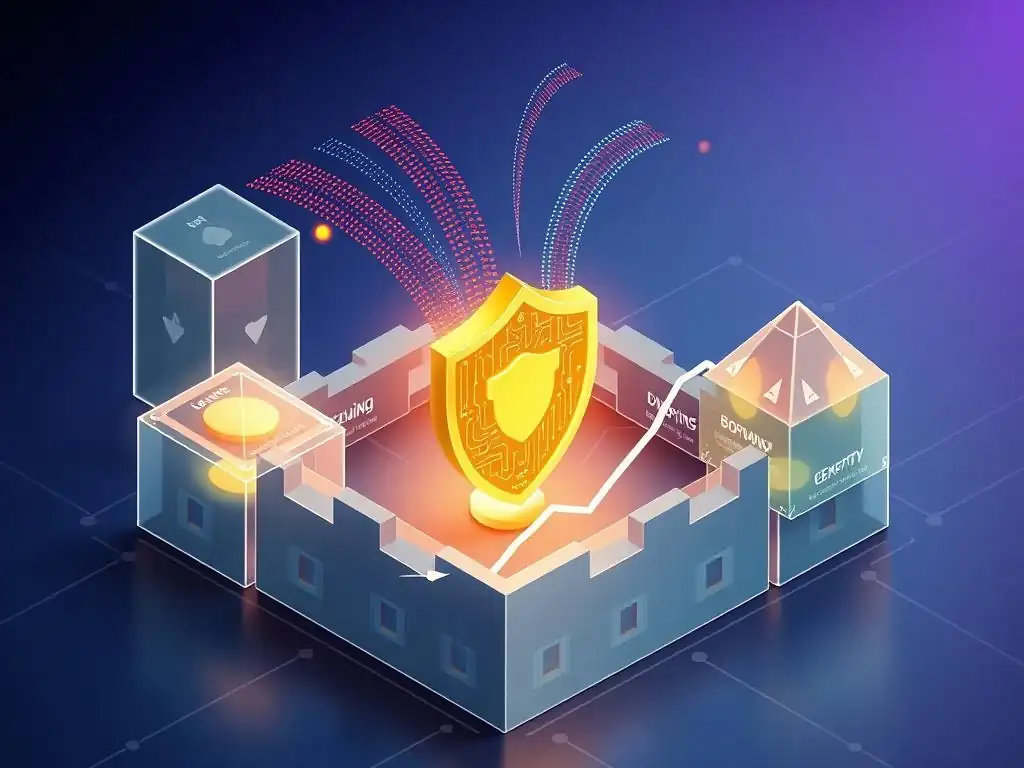
Smart Contract Audits and Security Best Practices
Security is paramount in DeFi, as interactions occur directly with smart contracts, which are immutable once deployed and control user funds. A fundamental security practice is the auditing of smart contracts by reputable third-party security firms. These audits involve rigorous analysis of the code to identify vulnerabilities such as reentrancy risks, integer overflows, logic errors, and potential attack vectors.
While an audit does not guarantee a contract is exploit-proof, it significantly reduces the likelihood of undiscovered major bugs. Protocols like Uniswap, Aave, and Compound regularly undergo audits by firms like ConsenSys Diligence, Trail of Bits, or PeckShield before deploying significant upgrades.
Beyond audits, developers follow security best practices such as writing modular, simple code, using established and tested libraries, and implementing robust testing frameworks (unit tests, integration tests, formal verification). For users, security best practices involve using non-custodial wallets (like MetaMask, Ledger, Trezor) and understanding how to manage private keys securely. Users should also exercise caution when interacting with new or unaudited protocols, starting with small amounts to test functionality and trust before committing larger sums. Always double-check the protocol's official website and smart contract addresses to avoid phishing scams.
Understanding DeFi Hacks and Vulnerabilities
DeFi has unfortunately been a target for numerous hacks and exploits, providing valuable, albeit costly, lessons in security. Understanding common vulnerabilities is crucial for navigating the space safely. One type of exploit involves flash loans used in conjunction with price oracle manipulation. Attackers take out a flash loan, use it to temporarily manipulate the price of an asset on a low-liquidity DEX, and then exploit this manipulated price in another protocol (e.g., a lending protocol to borrow assets at an incorrect valuation) before repaying the flash loan. The bZx attacks mentioned earlier are prime examples.
Another vulnerability arises from logic errors in smart contracts, such as incorrect handling of fees, interest calculations, or interactions between different protocols. The infamous DAO hack in 2016, while predating modern DeFi, highlighted the risk of reentrancy attacks, where an attacker could repeatedly call a function before the state update was finalized. While reentrancy is largely mitigated now using checks-effects-interactions patterns, new complex interactions between protocols can still create unforeseen vulnerabilities.
Users must be aware that even audited protocols can have undiscovered bugs or be affected by exploits in other protocols they interact with. The total value lost to DeFi hacks has been substantial, exceeding billions of dollars over the years, highlighting the real risks involved.
Risk Management Strategies for DeFi Users
Effective risk management is vital for anyone participating in DeFi. The first step is thorough research (DYOR - Do Your Own Research) into any protocol before depositing funds. This includes understanding the protocol's mechanics, the team behind it, its audit history, and the specific risks associated with the assets being used. Diversification is another key strategy – spreading investments across multiple protocols and asset types reduces exposure to the failure of any single platform or the volatility of a specific asset.
Users should also understand and manage their collateralization ratios in lending protocols to avoid liquidation, especially during periods of high market volatility. Setting alerts for price movements and maintaining sufficient collateral buffers are prudent measures. Utilizing hardware wallets for storing private keys provides the highest level of security against online threats.
Finally, users should be wary of unusually high APY promises, as these often come with commensurate, if not higher, risks, including potential rug pulls (where developers abandon a project and steal user funds) or unsustainable tokenomics. A cautious and informed approach is the best defense in the dynamic world of DeFi.
The Future of DeFi: Trends and Innovations
Layer-2 Scaling Solutions for DeFi
One of the most significant challenges facing DeFi, particularly on Ethereum, has been high transaction fees (gas costs) and network congestion, which make interacting with protocols expensive and slow for smaller users. Layer-2 (L2) scaling solutions are poised to revolutionize DeFi by processing transactions off the main Ethereum chain (Layer 1) and then bundling them together or using cryptographic proofs to finalize them on L1. Technologies like Optimistic Rollups (e.g., Optimism, Arbitrum) and ZK-Rollups (e.g., zkSync, StarkNet) promise dramatically lower transaction costs and higher throughput.
The migration of major DeFi protocols to L2 networks is already underway. Uniswap v3 is deployed on Optimism and Arbitrum, Aave and Compound have expanded to Polygon (a sidechain often considered part of the L2 scaling ecosystem), and many new protocols are launching directly on L2s.
This shift is expected to make DeFi accessible to a much broader user base, enabling micro-transactions, more frequent interactions with protocols (like claiming farming rewards more often), and supporting more complex financial strategies that were previously uneconomical due to gas fees. The widespread adoption of L2s is a critical step in the evolution of DeFi concepts explained simply and accessibly.
Institutional Adoption of DeFi
While DeFi originated from a grassroots, retail-driven movement, there is growing interest and participation from institutional players. Traditional financial institutions, hedge funds, and corporations are exploring ways to engage with DeFi, attracted by the potential for transparent, efficient, and novel financial products. This is manifesting in several ways: institutions are investing in DeFi protocols and governance tokens, exploring the tokenization of real-world assets (RWAs) to bring them on-chain, and utilizing DeFi protocols for activities like borrowing, lending, and yield generation through regulated intermediaries or segregated pools.
Examples include regulated entities providing access to DeFi yields for accredited investors or piloting the use of blockchain for clearing and settlement. The development of institutional-grade DeFi platforms that prioritize compliance, security, and identity verification is also underway. While institutional adoption faces hurdles like regulatory clarity, custody solutions, and internal infrastructure requirements, their increasing interest signals a maturation of the DeFi space and could bring significant capital and innovation, further solidifying advanced DeFi concepts in the broader financial landscape.
The Evolution of DeFi Regulations
Regulatory frameworks for DeFi are still nascent and vary significantly across jurisdictions, creating uncertainty for users and protocols alike. Regulators globally are grappling with how to classify and oversee decentralized protocols, stablecoins, DAOs, and various DeFi activities. Key areas of focus include consumer protection, anti-money laundering (AML) and know-your-customer (KYC) requirements, financial stability risks, and taxation. The decentralized nature of DeFi presents unique challenges for traditional regulatory approaches designed for centralized entities.
The future is likely to see increased regulatory scrutiny and potentially the development of tailored frameworks for DeFi. This could involve regulations targeting specific functions (e.g., lending, exchanges), specific entities (e.g., front-end operators, protocol developers, DAO participants), or specific assets (e.g., stablecoins). While some argue that regulation could stifle innovation, proponents believe clear and sensible rules could increase mainstream and institutional adoption by providing legal certainty and reducing risks. Navigating the evolving regulatory landscape will be a critical factor shaping the future growth and structure of the DeFi ecosystem.
Mastering DeFi Concepts: Next Steps
Resources for Continued Learning in DeFi
Mastering advanced DeFi concepts requires continuous learning and hands-on experience. The space evolves rapidly, with new protocols, strategies, and challenges emerging constantly. Excellent resources for continued learning include:
- Official Protocol Documentation: The whitepapers and documentation of major protocols like Uniswap, Aave, Compound, and MakerDAO provide deep technical insights into their mechanics.
- Community Forums and Discords: Engaging with the communities on platforms like Discord, Telegram, and dedicated forums offers real-time insights, allows asking questions, and provides exposure to ongoing discussions about proposals and developments.
- DeFi Analytics Platforms: Websites like DeFi Llama, Dune Analytics, and Token Terminal provide valuable data on TVL, trading volumes, yields, and protocol revenue, helping users assess the health and activity of different platforms.
- Educational Websites and Newsletters: Numerous websites, blogs, and newsletters specialize in breaking down complex DeFi topics and providing updates on the latest trends and security alerts.
- Smart Contract Security Audits: Reading publicly available smart contract audit reports can provide insights into common vulnerabilities and security considerations.
- Hands-on Experimentation: Starting with small amounts, experimenting with different protocols on testnets or mainnet is an invaluable way to solidify theoretical knowledge and understand the practical implications of various DeFi concepts.
By leveraging these resources and maintaining a proactive approach to education, users can deepen their understanding of advanced DeFi concepts, navigate the ecosystem more effectively, and make more informed decisions in this exciting frontier of finance.
Frequently Asked Questions
What are some examples of advanced DeFi concepts beyond basic lending and borrowing?
Beyond basic functionalities, you'll encounter concepts like yield farming using complex strategies, impermanent loss mitigation techniques in liquidity pools, and governance tokens that grant voting rights within DeFi protocols.
How does understanding governance tokens impact participation in DeFi projects?
Governance tokens empower users to participate in the decision-making processes of DeFi projects. This includes voting on proposals related to protocol upgrades, fee structures, and even the allocation of resources.
What are the key risks associated with advanced yield farming strategies?
Advanced yield farming carries risks such as smart contract vulnerabilities, impermanent loss becoming significant due to volatile markets, and the potential for rug pulls from less reputable platforms.
How are enterprises leveraging blockchain technology and DeFi principles beyond cryptocurrency?
Enterprises are exploring applications like supply chain management using blockchain for transparency, tokenized assets for easier transfer of ownership, and decentralized identity solutions for secure data management.
How is regulation shaping the future of DeFi and what are some potential impacts?
Regulatory frameworks are evolving to address DeFi's unique challenges, potentially impacting protocol design, KYC/AML compliance, and the overall accessibility of decentralized financial services for both individuals and institutions.
Final Reflection: Embracing the Decentralized Future
The journey through advanced DeFi concepts, as we've explored, reveals not just intricate mechanisms but a fundamental shift in how we perceive and interact with finance. The power of decentralized finance lies in its potential to democratize access and empower individuals, a promise that resonates even more profoundly in today's increasingly interconnected and rapidly evolving global economy. Understanding these concepts is no longer a niche pursuit, but a crucial step towards navigating the future of finance.
The impact of DeFi extends far beyond the realm of cryptocurrency enthusiasts; it’s reshaping the very foundations of trust and transparency in financial systems. Witnessing this evolution firsthand has been incredibly inspiring, highlighting the potential for innovation to create a more equitable and accessible financial landscape. The future of finance is decentralized, and the future is now.
This quote encapsulates the urgency and excitement surrounding DeFi, urging us to embrace its transformative power.
As we conclude this exploration of advanced DeFi concepts, I invite you to consider how these principles can be applied in your own life. Reflect on the potential for decentralized technologies to empower you, to provide greater control over your financial future, and to contribute to a more inclusive and transparent global economy. The future of finance is being built now, and your understanding and participation are vital to shaping its direction.
Unlock Your DeFi Potential: Start Building Today!
Thank you for exploring advanced DeFi concepts with us! We hope this article has equipped you with the knowledge to confidently navigate the complexities of decentralized finance. Now, it’s time to put that knowledge into practice.
Here are some ways to further your DeFi journey:
- Set up a testnet wallet and experiment with yield farming on a simulated DeFi platform. Don't just read about it—experience it!
- Share your insights and questions about advanced DeFi topics in the comments below. Let’s learn from each other.
- Explore emerging DeFi protocols and governance models, such as those involving NFTs or tokenized real-world assets, and share your interesting findings. You might discover the next big innovation!
What DeFi platform or concept are you most eager to explore, and why? Let us know in the comments!
Leave a Reply