
Advanced Risk Management Techniques in DeFi Lending: Protecting Your Capital

Welcome to Blockchain Trends, your premier source for understanding the revolutionary impact of blockchain technology.
Delve into the future of finance as we explore Advanced Risk Management Techniques in DeFi Lending. Are you prepared to navigate the complexities of decentralized finance and safeguard your investments? Uncover crucial strategies for DeFi lending risk mitigation and unlock the potential of a more secure and transparent financial landscape. Keep reading to discover how to protect your capital and thrive in the evolving world of DeFi.
- Advanced Risk Management Techniques in DeFi Lending: Protecting Your Capital
- Understanding the Landscape of DeFi Lending Risks
- Advanced DeFi Lending Risk Mitigation Strategies
- The Role of Over-Collateralization in DeFi Lending Risk Management
- Monitoring and Alert Systems for DeFi Lending Risk Detection
- DeFi Lending Platform Security Best Practices
- Case Studies: Analyzing DeFi Lending Risk Mitigation Successes and Failures
- The Future of DeFi Lending Risk Management
- Conclusion: Empowering Users with DeFi Lending Risk Awareness for Capital Protection
-
Frequently Asked Questions
- What are the primary risks associated with participating in DeFi lending platforms?
- How can over-collateralization help mitigate risks in DeFi lending?
- What role do decentralized oracles play in managing risk in DeFi lending platforms?
- How does understanding smart contract audits contribute to DeFi lending risk mitigation?
- What regulatory challenges exist for DeFi lending, and how might future regulations impact risk management?
- Final Reflection: Navigating the Uncertainties of DeFi Lending
- Fortify Your DeFi Future!
Advanced Risk Management Techniques in DeFi Lending: Protecting Your Capital
Decentralized Finance (DeFi) lending and borrowing platforms have revolutionized access to financial services, offering unprecedented transparency and accessibility compared to traditional systems. However, this innovative landscape is not without its unique set of risks. Participants engaging in DeFi lending activities, whether as lenders providing capital to earn yield or borrowers leveraging assets, face potential exposure to smart contract vulnerabilities, oracle failures, liquidation events, and broader market volatility. Understanding these risks is the first crucial step towards effective DeFi lending risk mitigation.
Navigating the complexities of DeFi requires a proactive approach to protecting one's capital. While the potential yields in DeFi lending can be attractive, they often come with commensurate risks that differ significantly from those in traditional finance. This article explores advanced strategies and techniques essential for managing these risks, providing insights into securing your position and enhancing your overall DeFi lending risk mitigation posture in this rapidly evolving ecosystem. Effective risk management is not just about avoiding losses; it's about building resilience and sustainability in your DeFi participation.
Understanding the Landscape of DeFi Lending Risks
Smart Contract Vulnerabilities and Audit Strategies for DeFi Lending Protocols
Smart contracts form the backbone of DeFi lending protocols, automating lending, borrowing, and liquidation processes based on predefined code. However, flaws or bugs within this code can create significant vulnerabilities, potentially leading to loss of funds. These vulnerabilities can range from simple coding errors to complex logic flaws that malicious actors can exploit, sometimes through flash loan attacks or reentrancy exploits.
A single, unaddressed vulnerability can compromise millions, or even billions, of dollars in Total Value Locked (TVL) within a protocol. For instance, a protocol might have a bug in how it handles interest accrual or collateral calculations, leading to incorrect balances or exploitable conditions.
To combat smart contract risk, rigorous auditing is paramount for effective DeFi lending risk mitigation. Reputable DeFi protocols invest heavily in security audits conducted by multiple independent third-party firms. These audits involve extensive code review, vulnerability testing, and formal verification to identify and rectify potential weaknesses before deployment.
While audits significantly reduce risk, they are not a silver bullet; even audited protocols can experience exploits if new attack vectors are discovered or if changes are introduced without subsequent audits. Many protocols also implement bug bounty programs, incentivizing white-hat hackers to find and report vulnerabilities for rewards, adding another layer of defense against potential exploits. A typical comprehensive audit for a large DeFi protocol can cost upwards of $100,000, reflecting the critical importance placed on code security.
Oracle Manipulation: A Major Threat to DeFi Lending Platforms
DeFi lending protocols rely heavily on oracles to provide real-world data, primarily asset prices, to the blockchain. This price data is critical for determining loan-to-value (LTV) ratios, calculating interest rates, and triggering liquidations. If an oracle feeds incorrect or manipulated price data to a protocol, it can lead to severe consequences.
For example, if an attacker can force an oracle to report a temporarily inflated price for an asset they are using as collateral, they could borrow significantly more capital than their collateral is truly worth. Conversely, if an oracle reports a drastically deflated price, healthy loan positions could be unfairly liquidated.
Oracle manipulation has been the vector for several high-profile DeFi exploits, demonstrating the need for robust DeFi lending risk mitigation strategies focused on data integrity. Early incidents involved attackers manipulating prices on low-liquidity decentralized exchanges (DEXs) and using those manipulated prices via simple oracles connected to those specific DEXs. Modern protocols mitigate this by using decentralized oracle networks, such as Chainlink, which aggregate data from numerous sources and employ cryptographic proofs to ensure accuracy and resistance to manipulation.
These networks are designed to be significantly more robust and expensive to attack than single-source oracles, though they are not entirely immune to systemic risks or sophisticated attacks. Protocols also employ time-weighted average prices (TWAPs) from multiple sources to smooth out price feeds and make short-term manipulation more difficult.
Liquidation Risks in DeFi Lending: Causes and Mitigation Strategies
Liquidation risk is inherent in collateralized DeFi lending. When the value of a borrower's collateral falls below a certain threshold relative to their outstanding loan (the liquidation threshold or minimum collateralization ratio), their collateral is automatically sold off to repay the loan and cover associated fees. This process is automated by liquidation bots that constantly monitor the blockchain for positions eligible for liquidation.
Rapid and significant price drops in collateral assets, especially during periods of high market volatility, are the primary cause of forced liquidations. If collateral value plummets faster than liquidators can act, or if there isn't enough liquidity to sell the collateral, the protocol could face bad debt.
Mitigating liquidation risk is a key aspect of effective DeFi lending risk mitigation for both borrowers and lenders. Borrowers can reduce this risk by maintaining a high collateralization ratio well above the minimum required by the protocol (e.g., maintaining 200% collateralization when the minimum is 150%). Proactive monitoring of one's loan health factor is also crucial; tools and dashboards provided by protocols or third parties can alert users as their position approaches the liquidation threshold.
Lenders benefit from the protocol's design, which includes liquidation penalties and buffer capital, but they still face risk if cascading liquidations or oracle failures prevent timely collateral sales. Diversifying collateral types and monitoring overall market health are strategies lenders might consider indirectly.
Regulatory Uncertainty and Its Impact on DeFi Lending Risk
The regulatory landscape surrounding DeFi is still developing globally, creating significant uncertainty for protocols and users alike. Governments and financial regulators are grappling with how to classify and oversee decentralized protocols, tokens, and activities like lending. Potential regulatory actions could range from requiring KYC/AML (Know Your Customer/Anti-Money Laundering) checks on users, imposing licensing requirements on protocol developers or front-end operators, or even classifying certain tokens used as collateral or governance tokens as securities. Such actions could significantly impact how protocols operate, who can access them, and the overall legality of participation in certain jurisdictions.
This regulatory uncertainty introduces a layer of risk that is difficult for individual users or even protocols to fully mitigate. A sudden regulatory change could potentially force a protocol to shut down services in a region, freeze assets, or require users to undergo verification processes they are unwilling or unable to complete.
While some protocols are exploring decentralized governance structures to distribute control and potentially navigate regulatory challenges, the path forward remains unclear. Users should stay informed about potential regulatory developments in their jurisdiction and understand that while DeFi aims to be permissionless, the points of interaction with the traditional financial system and the developers/operators of protocols remain potential targets for regulation, impacting DeFi lending risk mitigation efforts.
Advanced DeFi Lending Risk Mitigation Strategies
Diversification of Lending and Borrowing Activities in DeFi
Diversification is a fundamental principle of risk management across all financial domains, and it is equally critical, if not more so, in the volatile and rapidly evolving world of DeFi lending. Simply placing all capital into a single lending pool on one protocol exposes a user to the cumulative risks of that specific protocol, its smart contracts, its oracles, and the specific assets involved. A failure in any one of these components could lead to significant losses.
Diversifying involves spreading capital across multiple reputable DeFi lending protocols, each with different codebase, audit history, and risk profiles. For example, instead of lending 100% of stablecoins on Protocol A, a user might lend 40% on Protocol A, 30% on Protocol B, and 30% on Protocol C.
Beyond diversifying across protocols, effective DeFi lending risk mitigation through diversification also involves varying the types of assets lent or borrowed and the specific pools utilized. Lending different stablecoins (USDC, DAI, USDT) instead of just one reduces exposure to potential issues with a single stablecoin. Lending different cryptocurrencies (ETH, wBTC, LINK) across various pools further spreads risk.
Borrowers can also diversify their collateral types and borrowing positions across platforms. While diversification doesn't eliminate risk, it significantly reduces the impact of a single point of failure, whether it's a smart contract exploit on one platform or a specific asset experiencing extreme, unpredicted price volatility.
Hedging Strategies for DeFi Lending: Managing Volatility
Market volatility is a constant factor in DeFi, and significant price swings in collateral assets are a primary driver of liquidation risk for borrowers and potential bad debt for lenders. Advanced DeFi lending risk mitigation involves employing hedging strategies to offset potential losses from adverse price movements. For borrowers, this often means hedging the downside risk of their collateral asset.
For instance, if a user borrows stablecoins against ETH collateral, they are exposed to the risk of ETH's price dropping. They could hedge this by taking a short position on ETH perpetual futures or options on a derivatives exchange (either centralized or decentralized).
A simple hedging example for an ETH borrower might involve borrowing $10,000 against ETH and simultaneously shorting $5,000-$10,000 worth of ETH futures. If ETH price drops, the loss in collateral value might be offset, at least partially, by gains on the short position. Lenders, while less directly exposed to liquidation cascades than borrowers are to individual liquidation, can also use hedging.
For example, if lending a volatile asset, they might hedge by shorting that asset to protect against a broad market downturn affecting their lent principal. These strategies require careful management and understanding of derivatives markets, as they introduce their own set of risks, including margin calls on short positions or funding rate volatility.
Using Insurance Protocols to Protect Against DeFi Lending Risks
A growing area of DeFi lending risk mitigation involves dedicated decentralized insurance protocols. These platforms allow users to purchase coverage against specific risks, most commonly smart contract exploits or oracle failures on particular DeFi protocols. Users pay a premium (often in stablecoins or native tokens) for coverage over a set period.
If a covered event occurs (e.g., a smart contract vulnerability leads to a loss of funds deposited in a specific lending pool), policyholders can submit a claim. Claims are typically assessed by decentralized communities or expert panels, and if approved, compensation is paid out from a pool of capital staked by underwriters.
Protocols like Nexus Mutual are prominent examples in this space, offering coverage for major DeFi platforms including lending protocols like Aave or Compound. The cost of insurance varies based on the protocol's perceived risk and the amount of coverage purchased; coverage for a widely used, heavily audited protocol might cost 2-3% per year of the covered amount, while coverage for newer or less-audited protocols could be significantly higher.
For users with substantial capital in DeFi lending, purchasing insurance can be a valuable part of their DeFi lending risk mitigation strategy, transferring the risk of a catastrophic protocol failure to the insurance pool, though it's important to understand the specific risks covered and the claims assessment process.
Implementing Risk Scoring Models for DeFi Lending Pools
Advanced DeFi lending platforms are increasingly looking towards implementing sophisticated risk scoring models for individual lending pools or even individual borrower positions (in the case of under-collateralized or institutional lending). These models go beyond simple collateralization ratios to assess a more holistic view of risk. Factors considered might include the volatility profile and liquidity of the collateral asset, the historical performance of the specific lending pool, the utilization rate of the pool (high utilization can increase withdrawal risk for lenders), and potentially even cross-protocol dependencies.
By assigning a dynamic risk score, protocols or sophisticated users can make more informed decisions. For lenders, a risk score could help them allocate capital to pools that offer a better risk-adjusted yield. A pool lending a highly volatile, low-liquidity asset might have a higher interest rate but also a higher risk score, prompting cautious lenders to avoid it or allocate less capital.
For borrowers, a risk score could potentially influence interest rates or required collateralization levels. While fully decentralized, sophisticated risk scoring is complex to implement on-chain, off-chain analytics combined with on-chain data are being used to inform protocol parameter adjustments and provide users with better tools for their personal DeFi lending risk mitigation.
The Role of Over-Collateralization in DeFi Lending Risk Management
Benefits and Limitations of Over-Collateralization in DeFi Lending
Over-collateralization is the cornerstone of most permissionless DeFi lending protocols. It requires borrowers to deposit digital assets with a market value significantly greater than the amount of the loan they receive. A common initial collateralization ratio might be 150% or more, meaning a borrower must deposit $150 worth of ETH, for example, to borrow $100 worth of stablecoins.
The primary benefit of this model is that it provides a substantial buffer against price volatility in the collateral asset. If the collateral's value drops, there is a cushion before the position reaches the liquidation threshold, protecting the lender's capital. This mechanism allows for permissionless access to credit, as lenders don't need to assess the borrower's creditworthiness; the collateral secures the loan.
However, over-collateralization also has significant limitations, particularly from a capital efficiency perspective. Requiring users to lock up more value than they receive in a loan is inefficient compared to traditional under-collateralized or unsecured loans available to creditworthy borrowers in legacy finance. This capital inefficiency can limit the total volume of lending and borrowing activity.
Furthermore, while it protects lenders during moderate price swings, extreme market crashes can still lead to rapid, large-scale liquidations that strain the system, potentially resulting in bad debt if collateral cannot be sold quickly or at sufficient prices. The reliance on volatile crypto assets as collateral also means borrowers are constantly exposed to market risk on their deposited funds, even while using the borrowed capital.
Exploring Alternative Collateralization Mechanisms in DeFi
While over-collateralization remains dominant, the DeFi space is actively exploring alternative mechanisms to improve capital efficiency and expand the types of assets that can be used as collateral, enhancing future DeFi lending risk mitigation. One approach is the development of under-collateralized lending for institutions or creditworthy entities. Protocols like Aave Arc or Maple Finance facilitate lending pools specifically for whitelisted institutions that undergo KYC/AML checks and traditional credit assessment. These models rely on reputation, legal agreements, and sometimes partial collateralization rather than the high ratios seen in permissionless protocols, offering better capital efficiency.
Another area of exploration is the use of non-fungible tokens (NFTs) as collateral. Platforms are emerging that allow users to borrow against valuable NFTs, such as digital art or virtual land. This presents unique challenges for DeFi lending risk mitigation, as NFTs are generally illiquid and notoriously difficult to price accurately and dynamically compared to fungible tokens like ETH or stablecoins.
Valuing NFTs often requires sophisticated appraisal models, oracles specifically designed for NFTs, and mechanisms for liquidating unique assets. While promising for unlocking value stored in NFTs, these methods introduce complex new risks related to valuation, liquidity, and the subjective nature of asset appraisal, requiring careful protocol design and risk parameter tuning.
Monitoring and Alert Systems for DeFi Lending Risk Detection
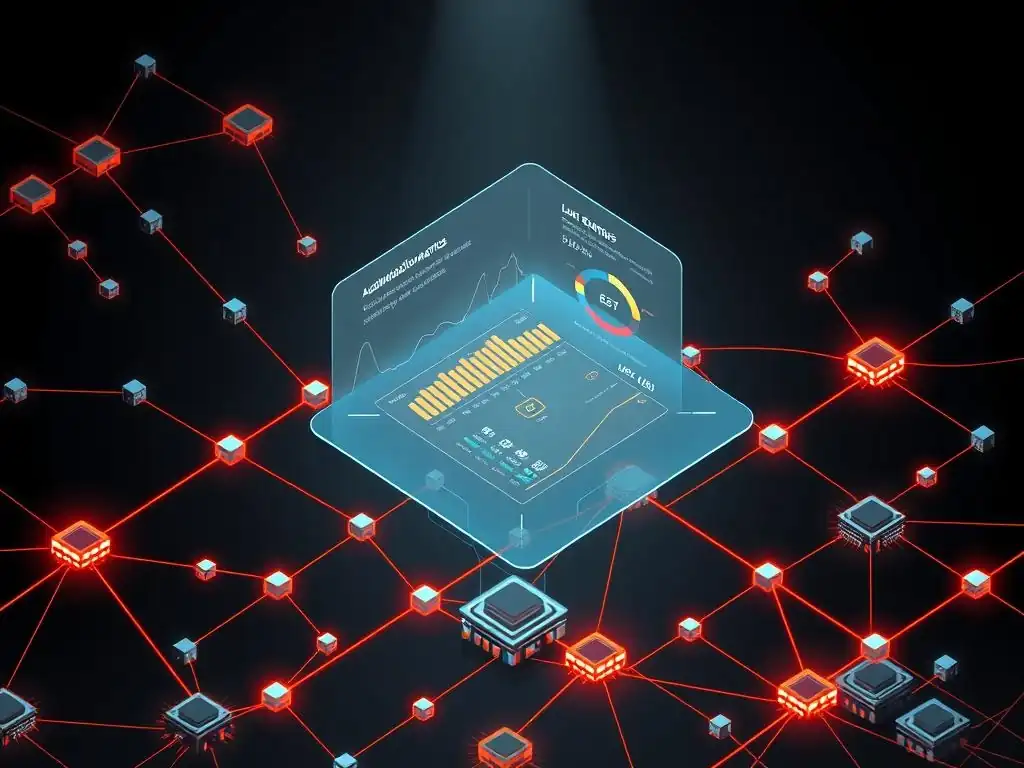
Setting Up Real-Time Monitoring for DeFi Lending Protocols
For participants in DeFi lending, especially borrowers, real-time monitoring of their positions is an absolutely critical component of DeFi lending risk mitigation. The highly volatile nature of crypto markets means that the value of collateral can change rapidly, pushing a loan position closer to the liquidation threshold in minutes or hours, not days. Relying solely on periodic checks is insufficient.
Users need systems that provide continuous updates on their loan's health factor – a metric provided by most lending protocols indicating how close a position is to being liquidated. A health factor of 1.0 typically means the position is at the liquidation threshold.
Many DeFi lending protocols offer dashboards that display a user's current loan details, including collateral value, borrowed amount, and health factor. However, relying only on the protocol's interface requires active checking. More advanced strategies involve setting up automated alerts.
Services like DeFi Saver, Zapper, or specific protocol-native notification systems allow users to configure alerts via email, Telegram, or Discord when their health factor drops below a predefined level (e.g., below 1.2 or 1.1). Some tools even offer automated strategies, like automatically adding more collateral or repaying a portion of the debt if the health factor falls too low, providing a layer of automation in DeFi lending risk mitigation.
Utilizing On-Chain Analytics to Identify Potential DeFi Lending Risks
Beyond monitoring personal positions, leveraging on-chain analytics tools can provide broader insights into the health and potential risks of the DeFi lending protocols being used. The transparency of blockchain allows anyone to analyze transaction data, contract states, and key metrics. Tools like Dune Analytics, Nansen, Etherscan, or community-built dashboards provide visibility into metrics such as Total Value Locked (TVL), protocol-wide collateralization ratios, cumulative liquidation volumes, distribution of collateral assets, and large outstanding loan positions.
Analyzing these metrics can help identify potential systemic risks or stress points within a protocol, contributing to a user's overall DeFi lending risk mitigation strategy. For instance, a sudden spike in liquidation volume might indicate market stress or a potential issue with the protocol's liquidation mechanism.
A concentration of TVL in a single, potentially risky asset, or a significant portion of loans sitting just above the liquidation threshold, could signal heightened risk for lenders in that protocol. While requiring some technical understanding to interpret, on-chain analytics offer a powerful, independent way to assess the health and potential vulnerabilities of the DeFi lending ecosystem.
DeFi Lending Platform Security Best Practices
Implementing Robust Security Audits for DeFi Lending Platforms
For teams building and maintaining DeFi lending platforms, implementing robust security audits is not merely a best practice; it is an absolute necessity for establishing trust and ensuring the safety of user funds. Before a protocol's smart contracts are deployed to a mainnet, they must undergo comprehensive security reviews by multiple, reputable third-party auditing firms.
These audits involve static analysis of the code, dynamic testing, and manual review to identify vulnerabilities like reentrancy, integer overflows, access control issues, and logic bugs that could be exploited. A single audit is often insufficient; follow-up audits are needed for significant code changes or upgrades.
Beyond initial audits, continuous security practices are crucial for ongoing DeFi lending risk mitigation. This includes establishing bug bounty programs with meaningful rewards to incentivize security researchers to responsibly disclose vulnerabilities. Protocols should also have internal security teams that continuously monitor the code, review proposed changes, and stay abreast of the latest attack vectors seen across the DeFi space.
Engaging the community in security discussions and having clear incident response plans are also vital. A protocol that demonstrates a strong commitment to security through repeated audits and proactive measures builds confidence among users and contributes significantly to overall ecosystem stability.
User Education: A Critical Component of DeFi Lending Risk Management
While protocols bear responsibility for the security of their smart contracts, user education is an equally critical, often overlooked, component of effective DeFi lending risk management. Users interacting with these platforms must understand the fundamental risks involved, including smart contract risk, liquidation risk, and the potential for impermanent loss if providing liquidity to certain pools (though less direct in pure lending). Education empowers users to make informed decisions about which protocols to use, how much collateral to deposit, and how to monitor their positions effectively.
Protocols and the broader DeFi community have a role to play in providing clear, accessible educational resources. This includes documentation explaining how the protocol works, tutorials on managing loan positions, and clear warnings about the risks involved.
Users should be educated on the importance of maintaining healthy collateralization ratios, setting up monitoring alerts, and understanding that past performance or audit results are not guarantees against future exploits or losses. Empowered users who understand the mechanics and risks of DeFi lending are better equipped to protect their own capital and contribute to a safer ecosystem, making education a fundamental aspect of successful DeFi lending risk mitigation.
Case Studies: Analyzing DeFi Lending Risk Mitigation Successes and Failures
Compound Finance: Successful Liquidation Mechanisms During Market Volatility
Compound Finance, one of the pioneering DeFi lending protocols, provides a compelling case study in the effectiveness of automated liquidation mechanisms as a core component of DeFi lending risk mitigation. During periods of extreme market volatility, such as the significant crypto price drops in May 2021 and May 2022, the Compound protocol experienced massive liquidation events. Millions of dollars worth of collateral (primarily ETH and wBTC) were automatically sold off via liquidation bots to cover outstanding stablecoin loans as borrowers' collateral ratios fell below the required thresholds.
Despite the scale and speed of these liquidations, the Compound protocol's liquidation engine largely functioned as designed. The automated process ensured that loans remained solvent by selling collateral to repay debt, preventing significant bad debt accrual within the protocol itself. While individual borrowers suffered losses through liquidation, the protocol's core function of maintaining solvency through over-collateralization and automated selling proved robust under stress. This demonstrated that well-designed and properly incentivized liquidation systems are a powerful tool for systemic DeFi lending risk mitigation, even in turbulent markets, although they do transfer the market risk directly to the borrower.
Iron Finance: Learning from a Collateralization Failure
The collapse of Iron Finance in June 2021, involving the TITAN token and IRON stablecoin, serves as a stark reminder of the risks associated with complex, multi-asset collateralization models and highlights potential pitfalls in DeFi lending risk mitigation. IRON was a partially collateralized stablecoin, intended to be pegged 1:1 with USD, backed by a mix of stablecoins (like USDC) and the protocol's native token, TITAN.
As the price of TITAN, which was not backed by external assets, plummeted rapidly during a market downturn and what was described as a "bank run" where users rushed to redeem IRON, the collateralization mechanism broke down.
The rapid decline in TITAN's price meant it could no longer effectively serve as collateral for IRON. The system entered a death spiral where selling pressure on TITAN to redeem IRON further crashed TITAN's price, making the IRON stablecoin increasingly under-collateralized.
This event, while not a traditional over-collateralized lending protocol failure in the mold of Aave or Compound, underscores the critical importance of the quality and stability of assets used as collateral and the risks inherent in using volatile, endogenous protocol tokens as significant collateral components within DeFi systems designed to maintain stability or solvency. It was a harsh lesson in the interconnectedness of risks and the need for robust mechanisms even in complex collateral models, informing future DeFi lending risk mitigation efforts.
The Future of DeFi Lending Risk Management
Emerging Technologies and Their Potential to Reduce DeFi Lending Risks
The field of DeFi lending risk management is continuously evolving, driven by technological advancements and lessons learned from past incidents. Several emerging technologies hold the potential to further reduce risks in DeFi lending. Zero-Knowledge Proofs (ZKPs), for instance, could potentially allow users to prove creditworthiness or identity attributes without revealing the underlying data, opening doors for more under-collateralized lending while preserving privacy. This could significantly improve capital efficiency compared to current over-collateralized models.
Furthermore, advancements in cross-chain interoperability could introduce new risks but also new avenues for risk mitigation. Protocols exploring cross-chain lending need robust security models to prevent exploits across different blockchain environments. Technologies like secure multi-party computation (MPC) or advanced cryptography could play a role in securing cross-chain transactions and data flows, enhancing the overall security posture for DeFi lending operating across multiple networks. The integration of machine learning and AI could also potentially improve risk scoring models, oracle accuracy, and anomaly detection within protocols, providing more dynamic and sophisticated DeFi lending risk mitigation tools.
The Evolution of DeFi Lending Insurance Solutions
DeFi insurance protocols are still in their nascent stages but are rapidly evolving, promising more comprehensive and accessible DeFi lending risk mitigation. Currently, coverage is often limited to specific smart contract exploits on particular protocols. The future could see insurance solutions offering coverage against a wider range of risks, including oracle failures, specific market events (though this is more complex), or even regulatory actions impacting deposited funds.
The mechanisms for providing and assessing insurance are also likely to become more sophisticated. We may see more diverse models for underwriting risk, potentially involving tokenized risk tranches or automated, on-chain claims assessment processes. As the DeFi market matures and attracts more institutional participation, the demand for robust, reliable insurance will grow, incentivizing innovation in this sector. While challenges remain regarding scalability, capital efficiency for underwriters, and the complexity of defining and verifying covered events, the evolution of DeFi insurance is a critical trend for enhancing overall DeFi lending risk mitigation and increasing user confidence in the ecosystem.
Conclusion: Empowering Users with DeFi Lending Risk Awareness for Capital Protection
DeFi lending offers exciting opportunities for yield generation and flexible borrowing, but it is imperative for participants to approach it with a clear understanding of the inherent risks. From the foundational risks of smart contract vulnerabilities and oracle dependency to the pervasive threat of liquidation due to market volatility and the evolving challenge of regulatory uncertainty, the landscape requires diligence. Effective DeFi lending risk mitigation is not the sole responsibility of the protocols; it is a shared endeavor that heavily relies on informed user behavior and the adoption of proactive strategies.
By implementing advanced techniques such as diversifying capital across protocols and assets, exploring hedging strategies to manage market exposure, utilizing decentralized insurance protocols, and actively monitoring positions with real-time tools and on-chain analytics, users can significantly enhance their ability to protect their capital. Staying educated about the mechanics of DeFi lending, understanding the security practices of the protocols they use, and learning from historical case studies are all vital components of a robust personal DeFi lending risk mitigation plan.
As the DeFi space continues to innovate, so too will the tools and strategies available for managing risk, empowering users to participate more safely and effectively in the decentralized financial future.
Frequently Asked Questions
What are the primary risks associated with participating in DeFi lending platforms?
DeFi lending carries risks like smart contract vulnerabilities, liquidation risks due to price volatility, and impermanent loss in liquidity pools. These factors can lead to loss of capital.
How can over-collateralization help mitigate risks in DeFi lending?
Over-collateralization requires borrowers to deposit more collateral than the loan value, acting as a safety net against price fluctuations. This reduces lender losses in case of default.
What role do decentralized oracles play in managing risk in DeFi lending platforms?
Oracles provide real-world data (like asset prices) to smart contracts. Reliable oracles are crucial for accurate liquidations and preventing manipulation, minimizing risk.
How does understanding smart contract audits contribute to DeFi lending risk mitigation?
Audits identify potential vulnerabilities and bugs in the smart contract code. Reviewing audit reports helps lenders assess the platform's security and trustworthiness.
What regulatory challenges exist for DeFi lending, and how might future regulations impact risk management?
The lack of clear regulations creates uncertainty and potential legal liabilities. Future regulations may introduce compliance requirements that enhance risk management practices but could also increase costs.
The exploration of advanced risk management techniques in DeFi lending underscores a crucial reality: responsible participation is paramount in this rapidly evolving landscape. The potential for high returns in DeFi lending is undeniable, but without a thorough understanding and implementation of mitigation strategies, capital remains vulnerable to significant losses. This article serves as a reminder that informed decision-making is the cornerstone of sustainable growth within the decentralized finance ecosystem.
The rise of DeFi lending has undeniably reshaped the financial landscape, offering unprecedented access to capital and investment opportunities. However, this democratization of finance comes with the responsibility to understand and manage the inherent risks. The complexity of smart contracts, the volatility of crypto assets, and the potential for exploits demand a proactive approach to risk mitigation. As the space matures, the ability to navigate these uncertainties will be the defining factor for long-term success. Risk comes from not knowing what you're doing.
- Warren Buffett
Ultimately, the future of DeFi lending hinges on our collective commitment to security and stability. It's not enough to simply chase yield; we must prioritize the protection of our capital and the integrity of the ecosystem. Consider the strategies discussed in this article – diversification, collateralization ratios, insurance protocols, and smart contract audits – not just as theoretical concepts, but as practical tools to safeguard your investments.
Embrace a mindset of continuous learning and adaptation, and actively contribute to the development of a more resilient and trustworthy DeFi lending environment. Your diligence will not only protect your own capital but will also pave the way for a more secure and prosperous future for all participants.
Fortify Your DeFi Future!
Thank you for exploring advanced risk management in DeFi lending. We hope this article has provided valuable insights to help you navigate this dynamic and complex landscape with greater confidence. Now, it’s time to apply what you've learned and take steps to secure your financial future.
Here’s how you can get started:
- Implement a diversified lending portfolio: Avoid putting all your funds into a single platform or asset type. Spreading your investments across multiple DeFi lending platforms and assets can significantly reduce risk.
- Utilize advanced risk assessment tools: Platforms like Aave and Compound offer tools to evaluate risk levels. Understanding how they calculate risk scores can help you make informed lending decisions.
- Share this article: Help fellow DeFi enthusiasts learn about effective risk management strategies and contribute to building a safer, more resilient DeFi ecosystem.
Which risk management technique are you most excited to try in your own DeFi lending strategy? Share your thoughts in the comments below!
Leave a Reply