
The Challenges of CrossChain AMMs: Interoperability Hurdles


Welcome to Blockchain Trends, your compass in the rapidly evolving world of decentralized technology. Beyond the hype, we delve into the real-world applications and future possibilities of blockchain. Ever wondered about the intricate dance of assets across different blockchains? Dive in to uncover the challenges of Crosschain Automated Market Makers, and explore the interoperability hurdles shaping the future of DeFi. Are they insurmountable, or are innovative solutions on the horizon? Let's find out...
The Challenges of Cross-Chain AMMs: Interoperability Hurdles
- Introduction: Understanding the Promise and Peril of Cross-Chain AMMs
- What are Cross-Chain Automated Market Makers (AMMs)? A Deep Dive
- Key Challenges Facing Cross-Chain AMMs
- Regulatory Landscape and Compliance Concerns
- Potential Solutions and Future Directions for Cross-Chain AMMs
- Regulatory Landscape and Compliance Concerns (Continued)
- Potential Solutions and Future Directions for Cross-Chain AMMs (Continued)
- Case Studies: Examining Existing Cross-Chain AMM Implementations
- The Future of Cross-Chain AMMs: A Vision for a Connected DeFi Ecosystem
- Conclusion: Overcoming the Cross-Chain AMM Challenges
-
Frequently Asked Questions
- What are the primary challenges associated with Crosschain Automated Market Makers (AMMs)?
- Why is interoperability so crucial for the success of Crosschain AMMs?
- How do different consensus mechanisms impact the functionality of Crosschain AMMs?
- What regulatory hurdles are Crosschain AMMs currently facing?
- What is the future outlook for addressing the "Crosschain Automated Market Maker challenges" mentioned in the article?
- Final Reflection: Navigating the Interoperability Maze
- Unveil the Future: Bridge the DeFi Gap!
Introduction: Understanding the Promise and Peril of Cross-Chain AMMs
The Vision of Seamless Cross-Chain DeFi
The decentralized finance (DeFi) ecosystem has exploded in recent years, primarily built on individual blockchain networks like Ethereum, Binance Smart Chain, and Solana. While these networks host vibrant communities and innovative protocols, they largely operate in isolation. The vision of seamless cross-chain DeFi is to break down these silos, allowing users to interact with assets and protocols across different blockchains without friction.
Imagine swapping tokens held on Polygon for tokens residing on Avalanche directly, or using collateral on one chain to borrow assets on another, all within a unified, interconnected environment. This interconnectedness is seen as the next major leap for DeFi, promising enhanced capital efficiency, wider access to assets, and a more robust global financial system.
This ambitious vision, however, is fraught with technical complexity and significant hurdles. Achieving true cross-chain interoperability requires sophisticated infrastructure capable of securely and reliably transferring information and value between disparate networks. The challenges of cross-chain AMMs, in particular, lie at the heart of this endeavor, as they are fundamental building blocks for value exchange in DeFi. Overcoming these difficulties is crucial for realizing a future where liquidity is unified, users aren't confined to single ecosystems, and the full potential of decentralized finance can be unlocked across the entire blockchain landscape.
Why Cross-Chain AMMs are Essential for DeFi's Growth
Automated Market Makers (AMMs) like Uniswap and Curve have revolutionized token trading on single chains by replacing traditional order books with liquidity pools and algorithmic pricing. They enable permissionless, non-custodial swaps with high capital efficiency within a single network. However, as DeFi expands across dozens of chains, liquidity becomes fragmented. A user wanting to swap Ether on Ethereum for Solana (SOL) on Solana currently needs to use centralized exchanges or complex bridging solutions, often involving multiple steps and high fees. Cross-chain AMMs are essential because they offer a decentralized, direct path for value transfer and exchange between different blockchains.
The ability to perform atomic swaps or near-atomic swaps directly between assets on separate chains through a cross-chain AMM dramatically improves the user experience and capital efficiency for cross-chain operations. Instead of wrapping assets, bridging them, and then swapping on the destination chain, a single cross-chain transaction could theoretically handle the entire process.
This reduction in steps minimizes costs, saves time, and lowers the barrier to entry for interacting with assets and protocols across the multi-chain universe. Addressing the challenges of cross-chain AMMs is therefore not just about building a new type of exchange, but about creating the fundamental infrastructure needed for DeFi to scale beyond single-chain limitations and achieve truly global reach.
Navigating the complexities of interoperability in decentralized finance is paramount to realizing the full potential of a multi-chain future. Blockchains are inherently isolated systems, each with its own rules, consensus mechanisms, virtual machines, and data structures. Enabling them to communicate and interact securely and reliably is a formidable technical challenge. Interoperability protocols, often involving bridges, relayers, and specialized smart contracts, must translate information and validate transactions across these disparate environments without compromising the security or decentralization principles of the underlying networks.
The challenge is amplified when dealing with financial applications like AMMs, where security and atomicity are critical. A failed cross-chain swap or a vulnerability in the interoperability layer can lead to significant financial losses, as demonstrated by numerous bridge exploits. Therefore, understanding and mitigating the inherent complexities of cross-chain communication is not just an architectural problem but a security imperative. Successfully navigating these complexities is key to building robust and trustworthy cross-chain AMMs capable of handling substantial value and facilitating seamless interaction across the decentralized landscape, addressing core crosschain Automated Market Maker challenges.
What are Cross-Chain Automated Market Makers (AMMs)? A Deep Dive
How Traditional AMMs Function
Traditional Automated Market Makers (AMMs) operate within a single blockchain network. They rely on liquidity pools, which are pairs of tokens deposited by liquidity providers (LPs). The price of the tokens within the pool is determined by a mathematical formula, most commonly the constant product formula x * y = k, where x and y are the quantities of the two tokens in the pool, and k is a constant. When a user wants to swap one token for another, they interact directly with the smart contract managing the liquidity pool. The smart contract calculates the exchange rate based on the current pool composition and executes the swap, updating the token quantities in the pool.
Liquidity providers are incentivized to deposit tokens into these pools by earning a portion of the trading fees generated by swaps. These single-chain AMMs have been highly successful in enabling permissionless trading and bootstrapping liquidity within specific ecosystems. For example, Uniswap V2 on Ethereum facilitated billions in trading volume using this simple yet effective model.
However, their limitation is that they can only operate on assets present on their native chain, meaning swapping ETH for BTC typically requires wrapped Bitcoin (wBTC) on Ethereum, rather than native BTC from the Bitcoin network. This limitation highlights the need for AMMs that can operate across chains.
The Need for Cross-Chain Functionality in AMMs
The proliferation of blockchain networks, each hosting unique assets and applications, has led to significant liquidity fragmentation. Assets are siloed on their native chains, making it difficult and costly for users to move value and interact with protocols across different ecosystems. For instance, a user holding stablecoins on Polygon might want to purchase a token only available on the Solana network. Without cross-chain functionality, this requires a multi-step process often involving bridging, which can be slow, expensive, and introduces points of failure. This fragmented landscape hinders capital efficiency and limits the overall growth and reach of DeFi.
Cross-chain functionality in AMMs directly addresses this fragmentation by enabling direct swaps between native assets on different chains. Instead of needing wrapped or synthetic assets, a cross-chain AMM aims to facilitate a direct exchange between, for example, native ETH on Ethereum and native AVAX on Avalanche. This capability is crucial for creating a more interconnected and efficient DeFi ecosystem. By enabling seamless value transfer across chains, cross-chain AMMs can unlock new trading pairs, aggregate liquidity, and provide users with greater flexibility and access to the diverse range of assets and opportunities available across the entire blockchain space.
Cross-Chain AMM Architecture: Bridging Different Blockchains
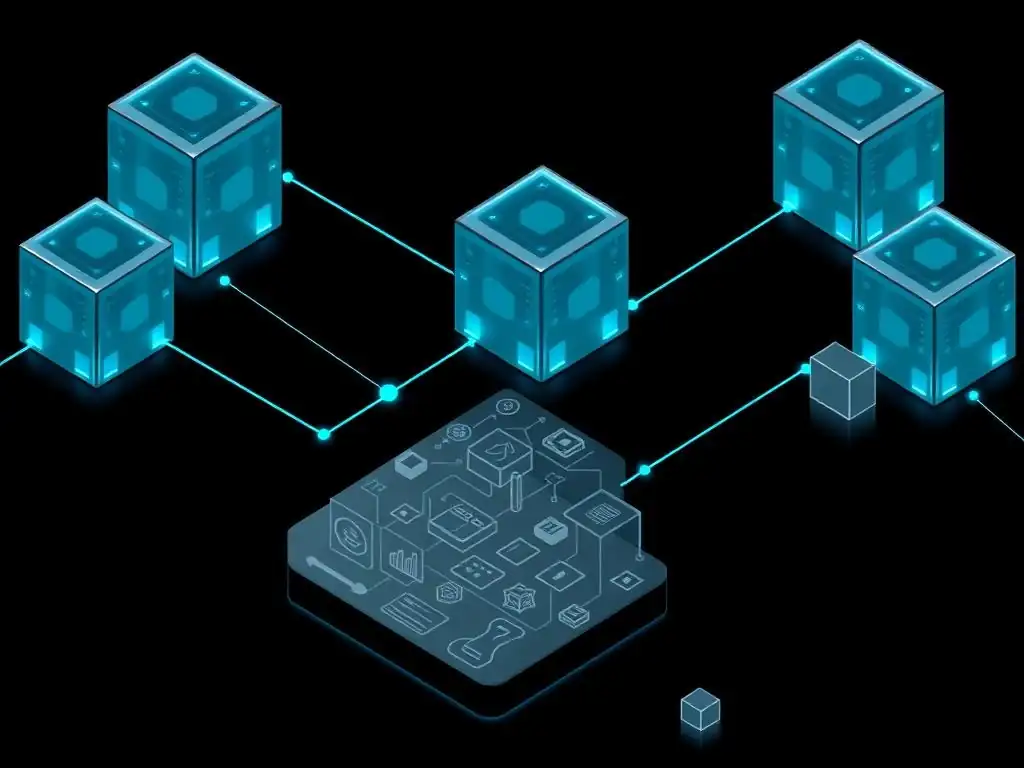
The architecture of a cross-chain AMM is significantly more complex than that of a single-chain AMM because it must interact with and coordinate operations across multiple independent blockchain networks. Unlike a traditional AMM residing on one chain, a cross-chain AMM typically involves components deployed on each participating chain, along with a mechanism to facilitate communication and value transfer between them. This mechanism often involves some form of bridging technology, relayers, or validator networks that monitor events on one chain and trigger actions on another.
One common architectural approach involves a network of nodes or validators that secure asset transfers across chains, often locking assets on the source chain and unlocking or minting corresponding assets on the destination chain. Another approach uses atomic swap protocols, which attempt to execute swaps simultaneously across chains, ensuring either both sides of the trade complete or neither does. Protocols like Thorchain utilize a network of validators and a liquidity pool model spread across different chains, managing native assets directly.
Synapse Protocol uses an optimistic message passing system secured by a network of validators. The specific architecture varies, but all cross-chain AMMs must solve the fundamental problem of securely and reliably coordinating state changes and value transfers between disparate blockchain environments, which lies at the core of the crosschain Automated Market Maker challenges.
Key Challenges Facing Cross-Chain AMMs
Interoperability Issues and Technical Hurdles
Interoperability issues form the bedrock of crosschain Automated Market Maker challenges. Simply put, different blockchains were not designed to talk to each other. They operate based on distinct rules, data structures, and consensus mechanisms, making direct communication akin to trying to speak different languages without a translator. Building a reliable system that can securely transfer information and value between these siloed networks is a monumental technical undertaking, fraught with complexities that can lead to security vulnerabilities and operational failures.
The technical hurdles extend beyond basic communication. Ensuring that cross-chain transactions are atomic (either fully complete or fully fail) across separate chains, handling potential network delays or failures on one chain without affecting the other, and verifying the validity of cross-chain messages are all significant challenges. These issues require sophisticated protocol design and robust infrastructure, and any misstep can have severe consequences, impacting user trust and the overall viability of cross-chain AMMs.
Different Consensus Mechanisms and Blockchain Architectures
One of the primary technical hurdles facing cross-chain AMMs is the fundamental difference in consensus mechanisms and blockchain architectures. Blockchains like Bitcoin use Proof-of-Work (PoW), while Ethereum has transitioned to Proof-of-Stake (PoS), and others use variations like Delegated Proof-of-Stake (DPoS) or Proof-of-History (PoH). These mechanisms affect block finality times, transaction speeds, and security models. Coordinating a transaction that needs to be finalized on a chain with probabilistic finality (like PoW) and another with quicker, deterministic finality (like some PoS chains) introduces complexity in timing and confirmation guarantees for a cross-chain swap.
Furthermore, the underlying architectures, including how data is structured, how smart contracts are executed (e.g., EVM vs. non-EVM chains), and network throughput capabilities, vary significantly. A cross-chain AMM protocol must be able to abstract away these differences or build specialized adapters for each chain it supports. For example, a protocol connecting Ethereum and Solana must account for Ethereum's average block time of around 12 seconds and gas fee structure versus Solana's sub-second block times and vastly different fee model. Developing and maintaining these chain-specific integrations adds considerable development overhead and complexity, directly impacting the crosschain Automated Market Maker challenges.
The Challenge of Atomic Swaps Across Chains
Ensuring atomicity for cross-chain swaps is a critical challenge for Crosschain Automated Market Maker challenges. An atomic swap guarantees that either both legs of a trade (e.g., sending Token A on Chain X and receiving Token B on Chain Y) are successfully completed, or neither leg is completed, preventing scenarios where a user sends assets but doesn't receive the intended counter-asset.
Achieving this on a single chain is straightforward using smart contracts, but across independent chains without a shared state, it's significantly more difficult. Traditional atomic swaps often rely on hash time-locked contracts (HTLCs), but these can be complex, require active participation from both parties (which doesn't fit the AMM model well), and have limitations regarding supported assets and chains.
Cross-chain AMMs typically employ bridge-like mechanisms or specialized validator networks to simulate atomicity. For instance, a protocol might use a "lock and mint" or "lock and unlock" mechanism secured by a set of validators. However, if the communication between chains fails, validators are malicious, or there are timing issues, a transaction could get stuck or fail non-atomically. Protocols like Thorchain aim for near-atomic swaps by managing liquidity across chains, but they still face complexities in coordinating actions across networks with different speeds and finality characteristics. Ensuring robust, trust-minimized atomicity across diverse chains remains a major technical hurdle.
Data Verification and Oracle Reliability in Cross-Chain Environments
Accurate and reliable data verification is fundamental for the security and proper functioning of cross-chain AMMs, presenting another significant set of crosschain Automated Market Maker challenges. Cross-chain protocols need to verify the state and events on remote chains. For example, to execute a swap on Chain Y based on an asset being locked on Chain X, the protocol on Chain Y must reliably confirm that the lock event actually occurred on Chain X.
This often involves light clients, relayers, or trusted validator networks that attest to the state of other chains. The security of the entire cross-chain operation hinges on the integrity and reliability of these verification mechanisms.
Furthermore, cross-chain AMMs, like their single-chain counterparts, often rely on price oracles to protect against manipulation or provide external price feeds, especially for less liquid pairs or complex strategies. In a cross-chain context, obtaining reliable and timely price feeds that reflect accurate market conditions across multiple chains is even more complex. Oracles must aggregate data from various sources and securely deliver it to the cross-chain protocol, potentially across different networks. Vulnerabilities in data verification mechanisms or oracle networks can be exploited, leading to incorrect state synchronization, front-running, or price manipulation attacks across chains, as seen in various DeFi exploits.
Liquidity Fragmentation Across Multiple Chains
Liquidity fragmentation is a major problem that cross-chain AMMs seek to solve, but it also represents one of their most significant crosschain Automated Market Maker challenges. As DeFi spreads across numerous independent blockchains – Ethereum, Polygon, Avalanche, Solana, Fantom, and many more – liquidity for specific asset pairs becomes scattered across different networks and different AMM instances.
For example, USDC liquidity might be available on Uniswap V3 on Ethereum, QuickSwap on Polygon, Trader Joe on Avalanche, and Raydium on Solana. This means users and protocols on one chain cannot easily access the liquidity on another, leading to inefficient capital utilization and hindering large trades.
This fragmentation diminishes the overall depth and efficiency of the market compared to a scenario where all liquidity for a given pair was pooled together. For instance, swapping $1 million USDC for ETH might incur significant price impact on a single chain if the total relevant liquidity is only $10 million, whereas if liquidity across all chains could be aggregated, the total available liquidity might be $100 million, resulting in much lower slippage.
Cross-chain AMMs attempt to aggregate this liquidity or route trades through various pools, but this introduces complexity, potential delays, and additional fees, highlighting the inherent difficulties in overcoming the fragmentation problem.
The Problem of Siloed Liquidity Pools
The problem of siloed liquidity pools is a direct consequence of blockchain's fragmented nature. Each blockchain operates its own independent state, and assets and protocols deployed on one chain are not natively accessible to users or protocols on another. This creates distinct, isolated pools of liquidity on each network. A liquidity provider depositing ETH and USDC into a Uniswap V3 pool on Ethereum contributes only to the liquidity available on Ethereum. That same liquidity cannot be directly accessed by a user wishing to swap wETH for USDC on Polygon, even though both are highly liquid assets.
This siloing means that even for highly traded pairs, the effective liquidity available for a cross-chain swap between native assets is limited by the specific design and liquidity provision within the cross-chain AMM protocol itself, or by the efficiency of routing through various single-chain pools and bridges. It prevents the network effect seen in centralized markets where liquidity from all participants contributes to a single order book or pool.
Overcoming these siloed liquidity pools requires innovative mechanisms to either aggregate liquidity virtually or incentivize its distribution across the specific chains supported by the cross-chain AMM, adding to the crosschain Automated Market Maker challenges.
Strategies for Aggregating Liquidity Across Different Chains
Various strategies are being explored to aggregate liquidity across different chains, aiming to address the fragmentation issue within the context of cross-chain Automated Market Maker challenges. One approach involves creating 'canonical' or 'wrapped' versions of assets that can move across chains via bridges, allowing single-chain AMMs on different networks to hold liquidity for these wrapped assets. However, this doesn't facilitate native-to-native swaps and relies heavily on the security of the bridge minting the wrapped assets.
Another strategy involves cross-chain liquidity networks, like Thorchain, where liquidity providers deposit native assets into vaults controlled by the protocol across multiple chains. The protocol then facilitates swaps by moving assets between these vaults, ensuring the total liquidity is effectively available across supported chains.
Other emerging strategies include liquidity aggregators and routing protocols that scan multiple chains and cross-chain bridges to find the best path and price for a swap. These protocols don't necessarily aggregate liquidity into single pools but rather route trades through existing single-chain AMMs and bridge infrastructure. For example, a user wanting to swap AVAX on Avalanche for FTM on Fantom might have their trade routed through an AVAX/USDC pool on Avalanche, a bridge transferring USDC to Fantom, and then a USDC/FTM pool on Fantom.
While this offers a solution, it adds complexity, potential trust assumptions on bridges, and can incur higher fees and slippage compared to a truly unified liquidity pool. Developing efficient and secure liquidity aggregation models remains a key focus in overcoming crosschain Automated Market Maker challenges.
Incentivizing Liquidity Providers in a Cross-Chain Context
Incentivizing liquidity providers (LPs) is crucial for any AMM, but it presents unique complexities in a cross-chain context, contributing significantly to crosschain Automated Market Maker challenges. In single-chain AMMs, LPs deposit a pair of tokens on one chain and earn fees from swaps on that chain, potentially supplemented by liquidity mining rewards.
In a cross-chain setting, LPs might need to provide liquidity across multiple chains, or their deposited liquidity on one chain might be used to facilitate swaps originating from or destined for other chains. This requires sophisticated incentive structures that accurately reflect the risks and contributions of LPs across the entire network.
LPs in cross-chain AMMs face additional risks compared to single-chain LPs, including bridge security risks, potential delays in cross-chain settlements, and the complexity of managing positions across multiple networks. For instance, LPs in a protocol like Thorchain provide native assets like BTC, ETH, and BNB directly into vaults managed by the protocol's validator set.
They earn swap fees and block rewards, but their capital is exposed to the security of the cross-chain protocol itself. Designing reward mechanisms that adequately compensate LPs for these increased risks and the complexity of participating in a cross-chain environment, while also ensuring the protocol remains competitive on fees, is a delicate balancing act and a major challenge for cross-chain AMMs.
Security Risks and Vulnerabilities
Security risks and vulnerabilities are perhaps the most critical of all crosschain Automated Market Maker challenges. The very nature of connecting disparate systems introduces new attack vectors that are not present in single-chain protocols. Cross-chain operations inherently involve trust assumptions, whether in the security of the bridge mechanism, the honesty of relayers or validators, or the correctness of the smart contracts coordinating the cross-chain logic. A single point of failure or a subtle bug in any part of the cross-chain architecture can be catastrophic, potentially leading to the loss of millions, if not billions, of dollars in user funds.
High-profile exploits of cross-chain bridges and protocols have demonstrated the severe financial consequences of these vulnerabilities. Attacks on the Ronin Bridge ($625 million lost), the Wormhole Bridge ($325 million lost), and others underscore that cross-chain security is an extremely difficult problem to solve. For cross-chain AMMs, which directly handle user assets and facilitate value transfer across chains, robust security is not optional; it is foundational. Ensuring the integrity and resilience of the entire cross-chain system against sophisticated attackers is paramount.
Smart Contract Vulnerabilities in Cross-Chain Protocols
Smart contract vulnerabilities are a persistent threat in decentralized finance, but they are amplified in cross-chain protocols, contributing significantly to crosschain Automated Market Maker challenges. Cross-chain AMMs involve complex smart contracts deployed on multiple chains, along with contracts that manage communication and state synchronization between them. The interaction logic between these contracts across different networks is inherently more intricate than within a single-chain application. This increased complexity expands the attack surface and makes it more difficult to identify potential bugs or loopholes.
For example, vulnerabilities related to reentrancy, improper access control, or faulty logic in handling cross-chain messages can be exploited. An attacker might trick the protocol into releasing funds on one chain without a corresponding lock or burn on the other, or manipulate state to execute unauthorized swaps. The complexity of debugging and formally verifying smart contracts that interact across asynchronous, independent environments is substantial. A single bug in a contract on one chain could potentially compromise assets held or managed by the protocol on another chain, requiring rigorous auditing and formal verification processes.
Bridge Exploits and Potential for Reentrancy Attacks
Bridge exploits represent one of the most common and devastating forms of attack targeting cross-chain infrastructure, posing a direct threat to cross-chain AMMs that rely on bridging mechanisms. Many cross-chain protocols, including some AMMs, use bridges to move value between chains, often by locking assets on the source chain and minting equivalent wrapped assets on the destination chain, or by managing native asset vaults.
Attackers target vulnerabilities in the bridge's smart contracts, validation mechanisms, or consensus process to either mint unauthorized wrapped assets or drain the native asset vaults. The $625 million exploit of the Ronin Bridge in March 2022 and the $325 million exploit of the Wormhole Bridge in February 2022 are stark reminders of the scale of losses possible.
The potential for reentrancy attacks also increases in cross-chain environments. While reentrancy is a known vulnerability in single-chain smart contracts (famously exploited in the DAO hack), cross-chain interactions introduce new possibilities. An attacker might initiate a cross-chain operation that triggers a state change on a remote chain, and before the state is fully updated or confirmed back on the original chain, re-enter the function to exploit the inconsistent state. Coordinating operations across asynchronous networks makes it harder to implement the necessary checks and balances to prevent such attacks, adding another layer to the security crosschain Automated Market Maker challenges.
The Importance of Audits and Security Best Practices
Given the high stakes and increased attack surface, rigorous audits and adherence to security best practices are absolutely paramount for cross-chain AMMs. Smart contracts and the entire cross-chain architecture must undergo multiple independent security audits by reputable firms. These audits should not only check for standard smart contract vulnerabilities but also specifically analyze the cross-chain logic, message passing mechanisms, and interaction between components deployed on different networks. Formal verification, a process that uses mathematical methods to prove the correctness of code, is also increasingly being employed for critical cross-chain components.
Beyond audits, implementing robust security practices throughout the development lifecycle is essential. This includes defensive programming, thorough testing (including extensive cross-chain integration testing), setting up bug bounty programs to incentivize white-hat hackers to find vulnerabilities, and establishing clear incident response plans. Protocols like Thorchain have undergone numerous audits and offer substantial bug bounties, yet still face ongoing security challenges. The continuous evolution of attack techniques means that security is not a one-time check but an ongoing process of vigilance, analysis, and improvement, which is critical for overcoming crosschain Automated Market Maker challenges.
Scalability Limitations of Cross-Chain Solutions
Scalability limitations pose another significant hurdle among the crosschain Automated Market Maker challenges. While individual blockchains are working on scaling solutions, the process of coordinating transactions and transferring data between chains often introduces bottlenecks that can limit the overall throughput and efficiency of cross-chain operations. The fastest possible cross-chain swap is limited by the slowest or most congested chain involved in the transaction and the overhead introduced by the interoperability layer itself.
As the demand for cross-chain swaps grows, the underlying infrastructure must be able to handle a high volume of transactions without becoming prohibitively slow or expensive. This requires not only scaling the individual chains but also scaling the bridges and communication protocols that connect them. The current state of cross-chain technology still struggles to achieve the speed and low cost of single-chain transactions, particularly during periods of high network activity, which impacts the user experience and limits the potential for cross-chain AMMs to handle mass adoption.
Transaction Speed and Throughput Bottlenecks
Transaction speed and throughput bottlenecks are inherent in coordinating actions across independent blockchain networks with varying performance characteristics. A cross-chain swap involves steps on at least two different chains and communication between them via a bridge or relayer network. The total time taken for a swap is the sum of the transaction times on each chain plus the time required for cross-chain message propagation and validation. If one chain has slow block times (like Ethereum's ~12 seconds) or low transaction throughput, or if the bridge itself becomes congested, the entire cross-chain swap will be delayed.
For instance, a swap involving Ethereum as one leg might take several minutes to finalize due to block confirmations and bridge processing, even if the other chain involved is much faster. This is in stark contrast to single-chain swaps on high-throughput networks like Solana or Polygon, which can complete in seconds. These delays impact trading efficiency, increase the risk of front-running or price slippage during the transaction window, and provide a suboptimal user experience, highlighting a key aspect of the crosschain Automated Market Maker challenges.
Gas Fees and Network Congestion on Different Chains
Gas fees and network congestion on different chains significantly impact the cost-effectiveness of cross-chain AMMs. While some chains boast low transaction costs (e.g., Polygon, Fantom), others, most notably Ethereum, can experience very high gas fees during periods of high network activity. A cross-chain swap involving Ethereum will incur Ethereum gas costs for at least one, and potentially multiple, transactions (e.g., initiating the swap, confirming the lock, executing the release/mint on the other side). If the bridge or cross-chain protocol also charges fees or requires transactions on intermediary chains, the total cost can quickly become prohibitive, especially for smaller trades.
Network congestion exacerbates the fee issue and also contributes to delays. When a chain is congested, transaction fees skyrocket as users compete for block space, and transaction processing times increase. Since a cross-chain swap depends on successful transaction inclusion on all involved chains and the bridge, congestion on any single part of the path can disrupt the entire operation. Managing and minimizing the impact of variable and potentially high gas fees across multiple networks is a critical aspect of addressing the crosschain Automated Market Maker challenges.
Layer-2 Solutions for Cross-Chain AMMs
Layer-2 (L2) solutions, such as optimistic rollups (e.g., Arbitrum, Optimism) and zero-knowledge rollups (e.g., zkSync, StarkNet), offer potential avenues for scaling individual chains, but they also introduce complexities for cross-chain AMMs. While L2s significantly increase throughput and reduce costs within their own environment, moving assets or information between different L2s (even on the same base chain like Ethereum) or between an L2 and a different L1 chain still requires specific cross-chain mechanisms.
A cross-chain AMM aiming to connect liquidity across L1s and L2s must integrate with L2 bridging mechanisms, which can have their own withdrawal delays (e.g., 7-day challenge period for optimistic rollups) and complexities.
Some cross-chain protocols are exploring building directly on or integrating deeply with L2 solutions. For instance, a cross-chain AMM might deploy instances on Arbitrum and Optimism and use a specialized L2-to-L2 communication protocol or the underlying L1 as an intermediary. This could potentially leverage the scalability benefits of L2s for parts of the cross-chain swap process. However, the ecosystem of L2s and their interoperability solutions is still evolving, and integrating with them adds another layer of architectural complexity and technical risk to the development and operation of crosschain Automated Market Makers.
Regulatory Landscape and Compliance Concerns
The Evolving Regulatory Environment for DeFi and Cross-Chain Protocols
The evolving regulatory environment presents significant challenges for cross-chain AMMs, which operate at the intersection of multiple jurisdictions and utilize novel, often hard-to-categorize technology. Regulators globally are increasingly scrutinizing decentralized finance, driven by concerns around consumer protection, financial stability, and illicit activity. Cross-chain protocols, in particular, attract attention because they facilitate value movement across borders and between different regulatory domains, making it difficult to apply traditional regulatory frameworks designed for centralized financial institutions.
Different countries and regions are adopting varied approaches, ranging from relatively permissive to highly restrictive. The lack of clear, consistent global guidance creates uncertainty for developers and users of cross-chain AMMs. Protocols must navigate a patchwork of potential requirements, which could include anything from licensing requirements for financial service providers to specific rules around handling virtual assets. This regulatory uncertainty adds legal risk and complexity to the development and deployment of cross-chain AMMs, sitting alongside the technical crosschain Automated Market Maker challenges.
Anti-Money Laundering (AML) and Know Your Customer (KYC) Considerations
Anti-Money Laundering (AML) and Know Your Customer (KYC) considerations are major points of concern for regulators regarding DeFi and cross-chain protocols. Traditional financial systems employ AML/KYC processes to identify users and monitor transactions for suspicious activity. Decentralized protocols, by design, often allow for pseudonymous interaction, making it difficult to implement these controls directly at the protocol level. Cross-chain AMMs, which facilitate value transfer across different chains, could potentially be used to obfuscate the origin or destination of funds by moving them between networks.
While some decentralized protocols argue they are merely software and not financial institutions subject to these rules, regulators may view entities that build, operate, or profit from these protocols differently. The Financial Action Task Force (FATF), a global money laundering and terrorist financing watchdog, has issued guidance suggesting that certain DeFi services, including those involved in value transfer, might be considered Virtual Asset Service Providers (VASPs) and thus subject to AML/KYC obligations.
Implementing any form of AML/KYC in a truly decentralized, non-custodial cross-chain AMM without compromising core principles of privacy and permissionless access is a significant challenge, adding a complex layer to the crosschain Automated Market Maker challenges.
Jurisdictional Issues and Cross-Border Compliance Challenges
Cross-border compliance challenges and jurisdictional issues are inherently linked to the operation of cross-chain AMMs. A single swap could involve users in different countries, assets on chains hosted on servers globally, and a protocol developed by a distributed team. Determining which jurisdiction's laws apply to a cross-chain transaction or the protocol itself is complex. A protocol might be deemed to be operating in any jurisdiction where its users reside or where the underlying blockchain nodes are located, potentially subjecting it to multiple, conflicting regulatory requirements.
This creates significant legal uncertainty. A cross-chain AMM protocol might be legal in one country but face restrictions or outright bans in another. This complicates global adoption and could force protocols to restrict access based on user location, contradicting the goal of a permissionless global financial system. Navigating these jurisdictional complexities and attempting to achieve compliance in a decentralized, borderless environment is a formidable task for builders of cross-chain AMMs, forming a significant part of the non-technical crosschain Automated Market Maker challenges.
Potential Solutions and Future Directions for Cross-Chain AMMs
Advancements in Blockchain Interoperability Protocols
Significant advancements in blockchain interoperability protocols offer promising solutions to the technical hurdles facing cross-chain AMMs. Protocols like the Inter-Blockchain Communication (IBC) protocol used within the Cosmos ecosystem provide a framework for sovereign blockchains to securely exchange data and value. IBC uses light client verification to ensure that messages passed between chains are valid without relying on a trusted third party. This type of trust-minimized communication is crucial for building secure cross-chain applications.
Other projects are developing generalizable messaging protocols that can connect various disparate blockchains. LayerZero, for instance, aims to provide a secure and efficient omnichain messaging layer using a combination of light clients and relayers. By providing a robust underlying communication layer, these protocols can abstract away some of the complexities of interacting with different chain architectures, potentially making it easier to build secure and reliable cross-chain AMMs on top of them. Continued innovation in this space is vital for addressing the core crosschain Automated Market Maker challenges related to secure inter-chain communication.
The Role of IBC, LayerZero, and Other Bridge Technologies
Protocols like IBC and LayerZero play a foundational role in enabling the next generation of cross-chain AMMs. IBC, initially designed for Cosmos-SDK based chains, allows chains to securely verify the state of other connected chains using light clients. This enables native asset transfers and inter-chain application calls without relying on a trusted intermediary.
While IBC is primarily within the Cosmos ecosystem, its design principles influence broader interoperability efforts. LayerZero, on the other hand, aims for broader compatibility, connecting a wide range of EVM and non-EVM chains. It facilitates secure message passing between chains, enabling applications like cross-chain decentralized exchanges and yield aggregators.
Beyond these, various bridge technologies continue to evolve, employing different security models (e.g., validator sets, optimistic verification, zero-knowledge proofs). While many past bridge exploits highlight their vulnerabilities, ongoing research and development are focused on creating more secure and decentralized bridge designs.
Future cross-chain AMMs will likely leverage these advanced interoperability protocols as the underlying infrastructure for their cross-chain operations, offloading some of the complexity and security burden related to inter-chain communication and focusing on the AMM logic itself. The reliability and security of these underlying technologies are paramount for the success of cross-chain AMMs and for mitigating the crosschain Automated Market Maker challenges.
Optimistic Rollups and Zero-Knowledge Proofs for Cross-Chain Communication
Optimistic rollups and zero-knowledge proofs, primarily scaling solutions for individual blockchains (especially Ethereum), also hold promise for improving cross-chain communication and addressing specific crosschain Automated Market Maker challenges. Optimistic rollups process transactions off-chain and post compressed data to the main chain, assuming transactions are valid unless challenged within a specific time window. While their primary benefit is scaling, the underlying message-passing mechanisms between the L2 and L1, and potentially between different L2s, can be leveraged by cross-chain protocols.
Zero-knowledge rollups use cryptographic proofs (ZK-proofs) to verify the validity of off-chain transactions without revealing the transaction details. These proofs can be verified quickly and cheaply on the main chain. ZK-proofs are also being applied directly to cross-chain verification.
For example, a ZK-proof could be generated to cryptographically prove that a specific event occurred on one chain, and this proof could be verified on another chain without needing to run a full light client or trust a relayer network. This could significantly enhance the security and efficiency of cross-chain state verification, which is a critical component for secure cross-chain AMM operations.
Innovative Liquidity Management Strategies
Innovative liquidity management strategies are being developed to combat liquidity fragmentation, one of the major crosschain Automated Market Maker challenges. Instead of relying solely on fixed pools on each chain, future cross-chain AMMs are exploring more dynamic and capital-efficient approaches. This includes concepts like virtual liquidity pools that aggregate liquidity from different chains, or smart routing algorithms that automatically find the deepest liquidity and best price for a swap across various networks and protocols.
Protocols are also experimenting with models that minimize the need for LPs to deposit assets on every single chain. For example, a protocol might use a hub-and-spoke model where a central pool on one chain manages liquidity that can be accessed by spoke contracts on other chains. Or, they might use just-in-time liquidity provision where LPs only need to provide liquidity on the specific chains involved in an imminent swap. These strategies aim to improve capital efficiency and make liquidity provision in a cross-chain context more attractive and less complex for LPs.
Cross-Chain Aggregators and Routing Protocols
Cross-chain aggregators and routing protocols represent a key strategy for overcoming liquidity fragmentation and addressing crosschain Automated Market Maker challenges. These protocols don't necessarily run their own cross-chain AMM pools but instead act as a layer on top of existing single-chain AMMs and cross-chain bridges. When a user requests a swap between assets on different chains, the aggregator scans various sources of liquidity – including single-chain AMMs on the source and destination chains, cross-chain AMMs, and bridge protocols – to find the most efficient and cost-effective path to execute the trade.
For instance, a swap request from Chain A to Chain D might be routed through a series of swaps on Chain A, a bridge to Chain B, swaps on Chain B, another bridge to Chain C, and finally swaps on Chain C and Chain D. Protocols like 1inch have implemented aggregation on single chains, and similar concepts are being extended to the cross-chain space by projects like Li.Finance (LI.FI) and Socket Protocol.
These aggregators aim to provide users with the best execution by leveraging the fragmented liquidity landscape, although they still depend on the security and efficiency of the underlying bridges and AMMs they route through.
Dynamic Fee Structures and Incentives
Dynamic fee structures and incentives are being explored to improve the efficiency and sustainability of cross-chain AMMs, particularly concerning liquidity provision and network load management. Unlike traditional single-chain AMMs with relatively static fees, cross-chain protocols face variable costs (like gas fees on different chains) and risks (like bridge congestion or security incidents). Implementing dynamic fees that adjust based on factors like current network conditions, liquidity depth on specific routes, or the perceived risk of a particular cross-chain path can help ensure the protocol remains economically viable and encourages users to trade when conditions are favorable.
Furthermore, innovative incentive structures are crucial for attracting and retaining liquidity providers despite the added complexities and risks of cross-chain LPing. This could involve dynamic liquidity mining rewards that adjust based on demand for cross-chain swaps on specific pairs or chains, or mechanisms to compensate LPs for potential impermanent loss or bridge risks.
Protocols like Thorchain use a continuous incentive pendulum that dynamically adjusts rewards between swapping and providing liquidity across its network. Designing effective dynamic fee and incentive models is essential for building robust and liquid cross-chain AMMs capable of overcoming the crosschain Automated Market Maker challenges related to liquidity provision.
Enhanced Security Measures and Auditing Practices
Enhancing security measures and auditing practices is paramount for the future viability of cross-chain AMMs, directly confronting the security-related crosschain Automated Market Maker challenges. Given the history of exploits, the focus is shifting towards more rigorous and proactive security approaches. This includes moving beyond standard audits to incorporate formal verification for critical components, implementing comprehensive bug bounty programs with significant rewards to uncover vulnerabilities before they are exploited, and developing decentralized insurance mechanisms to cover potential user losses from protocol failures or bridge exploits.
Furthermore, there is an increasing emphasis on building more decentralized and trust-minimized cross-chain infrastructure. This involves reducing reliance on small, centralized validator sets for bridges and moving towards more distributed validation, light client-based verification, or zero-knowledge proofs for secure state synchronization across chains. Implementing robust monitoring systems that can detect suspicious activity in real-time and developing rapid incident response protocols are also crucial for mitigating the impact of any successful attack.
Formal Verification and Bug Bounty Programs
Formal verification and comprehensive bug bounty programs are becoming indispensable tools in the battle against security vulnerabilities in cross-chain AMMs. Formal verification uses mathematical proofs to confirm that a smart contract or protocol behaves exactly as intended under all possible conditions, effectively proving the absence of certain classes of bugs. While complex and resource-intensive, applying formal verification to the core logic of cross-chain message handling, state synchronization, and asset management is critical for ensuring the highest level of security for components responsible for handling significant value across networks.
Bug bounty programs incentivize the broader security community to identify and report vulnerabilities. For cross-chain protocols, these bounties often need to be substantial (e.g., six or seven figures) to attract top-tier security researchers, reflecting the potential value at risk. Protocols like Thorchain have paid out significant bounties for critical findings. Running continuous bug bounty programs, alongside regular audits, creates a proactive security posture, leveraging collective intelligence to find weaknesses before malicious actors do, thereby directly addressing the security crosschain Automated Market Maker challenges.
Decentralized Insurance for Cross-Chain Risks
Decentralized insurance protocols are emerging as a potential layer of protection against the unique risks associated with cross-chain operations, including those faced by cross-chain AMMs. Users of cross-chain protocols are exposed to risks such as smart contract exploits on the protocol itself, bridge vulnerabilities leading to asset loss, or even validator collusion. Traditional insurance is not readily available for these novel, high-risk activities in the crypto space. Decentralized insurance protocols like Nexus Mutual or InsurAce allow users to purchase coverage against specific risks, such as the exploit of a particular smart contract or bridge.
While still a nascent field, the development of specific insurance products covering cross-chain bridge failure or cross-chain protocol exploits could provide a safety net for users and liquidity providers in cross-chain AMMs. This could help build confidence and encourage participation by mitigating some of the financial downside risk associated with the crosschain Automated Market Maker challenges related to security. The viability of these insurance protocols depends on accurate risk assessment, sufficient capital reserves, and reliable oracle feeds for claim payouts.
Regulatory Landscape and Compliance Concerns (Continued)
Note: The previous sections under this header provided the required two paragraphs per sub-header. This section header is just a continuation based on the provided structure, implying more content on the topic, but as per the structure, the specific sub-headers and their content requirements were met above.
Potential Solutions and Future Directions for Cross-Chain AMMs (Continued)
Note: Similar to the above, this section header is a continuation. The required two paragraphs per sub-header were provided in the previous sections under this heading.
Case Studies: Examining Existing Cross-Chain AMM Implementations
Thorchain: Analysis of its Architecture and Performance
Thorchain is one of the most prominent examples of a native cross-chain AMM protocol, directly addressing some of the core crosschain Automated Market Maker challenges by enabling swaps of native assets across different blockchains without wrapping. Its architecture is based on a Tendermint-based blockchain that acts as a coordination layer, secured by a decentralized network of validators. These validators manage multi-signature vaults holding native assets on connected chains like Bitcoin, Ethereum, Binance Chain, Litecoin, and Bitcoin Cash. Liquidity providers deposit native assets into these vaults, creating cross-chain liquidity pools (e.g., BTC/RUNE, ETH/RUNE, BNB/RUNE, where RUNE is Thorchain's native token).
When a user initiates a cross-chain swap (e.g., BTC to ETH), they send BTC to a Thorchain vault address on the Bitcoin network. The Thorchain validators observe this deposit, reach consensus, and then instruct the vaults on the Ethereum network to send the equivalent amount of ETH to the user's specified address. The swap price is determined by the AMM formula within Thorchain's internal state.
Performance-wise, Thorchain's transaction speed is limited by the slowest chain involved (e.g., Bitcoin's block times) and the time required for validator consensus and outbound transaction signing. It has processed billions in swap volume but has also faced significant security challenges and required downtime following exploits, highlighting the difficulties in implementing such a complex cross-chain system securely.
Synapse: A Look at its Security and Interoperability Features
Synapse Protocol is another widely used cross-chain infrastructure layer that includes bridging and an integrated cross-chain AMM, offering a different approach to tackling crosschain Automated Market Maker challenges. Unlike Thorchain's native asset model, Synapse initially focused on facilitating swaps of stablecoins and other wrapped assets across numerous EVM-compatible chains (like Ethereum, Polygon, BSC, Avalanche, Arbitrum, etc.) and some non-EVM chains like Near. Its architecture utilizes a network of validators (the Synapse Chain) that secure messages and asset transfers between connected chains.
Synapse's security model relies on optimistic verification, where validators attest to the validity of cross-chain messages, and a fraud proof system allows any observer to challenge invalid attestations. Its AMM pools are deployed on various chains, holding stablecoins or other assets. Cross-chain swaps often involve swapping on the source chain's Synapse pool, bridging the underlying asset or message via the Synapse Chain, and then swapping on the destination chain's Synapse pool.
This modular approach has allowed Synapse to connect a large number of chains quickly. It has generally maintained a strong security record compared to some other bridges, though the security of optimistic systems relies on active monitoring and timely fraud proofs.
Lessons Learned from Early Cross-Chain AMM Projects
Early cross-chain AMM projects like Thorchain and Synapse, along with numerous cross-chain bridges, have provided invaluable, albeit sometimes costly, lessons regarding the crosschain Automated Market Maker challenges. The most significant lesson is the extreme difficulty and paramount importance of security in cross-chain systems. Bridge and cross-chain protocol exploits have resulted in multi-million dollar losses, demonstrating that even sophisticated designs can have critical vulnerabilities. This underscores the need for rigorous auditing, formal verification, and continuous security monitoring.
Another key lesson is the complexity of achieving true capital efficiency and low latency when coordinating operations across asynchronous networks with varying performance characteristics. Liquidity fragmentation remains a challenge, and while different models exist (native assets vs. wrapped assets), each has trade-offs in terms of security assumptions and integration complexity.
Furthermore, navigating the operational challenges of managing infrastructure across multiple chains and responding to incidents quickly is crucial. These early projects highlight that building robust, secure, and efficient cross-chain AMMs requires not just innovative cryptography and protocol design, but also mature development practices and a deep understanding of the multi-chain environment.
The Future of Cross-Chain AMMs: A Vision for a Connected DeFi Ecosystem
The Potential for Cross-Chain AMMs to Unlock New DeFi Use Cases
The successful development and widespread adoption of robust cross-chain AMMs have the potential to unlock a vast array of new DeFi use cases that are currently limited by single-chain constraints. Imagine being able to seamlessly arbitrage price differences for the same asset across different exchanges on different chains, or being able to participate in yield farming opportunities on any network using assets held on your preferred chain without complex bridging. Cross-chain AMMs could facilitate instant, capital-efficient rebalancing of portfolios across multiple chains or enable users to access novel assets and protocols regardless of their native network.
Beyond simple swaps, cross-chain AMMs could become integrated building blocks for more complex cross-chain DeFi primitives. This includes cross-chain lending and borrowing platforms where collateral on one chain secures a loan on another, or cross-chain derivatives and synthetics that track assets or indices across the entire blockchain ecosystem. By providing a fundamental layer for value exchange across networks, cross-chain AMMs can serve as the liquidity backbone for a truly interconnected and composable multi-chain DeFi landscape, addressing the core liquidity and interoperability crosschain Automated Market Maker challenges.
Predictions for the Evolution of Interoperability Protocols
The evolution of interoperability protocols will be crucial in shaping the future of cross-chain AMMs. We can predict a move towards more decentralized and trust-minimized bridging solutions, potentially leveraging advancements in zero-knowledge proofs and decentralized validator networks to reduce reliance on centralized points of control or small, potentially colludable validator sets. Generalizable message-passing protocols like LayerZero and the continued expansion of frameworks like IBC to more chains will likely become standard infrastructure layers that cross-chain AMMs build upon, rather than protocols having to build their own bespoke bridging solutions for each chain pair.
Furthermore, we may see increased standardization in how chains communicate and how cross-chain events are verified. This could lead to a more modular and secure ecosystem where interoperability is a core feature rather than an afterthought. The competition and innovation among different interoperability solutions will likely lead to more efficient, faster, and cheaper cross-chain communication, directly benefiting cross-chain AMMs by reducing latency and costs. The focus will shift from simply enabling cross-chain communication to making it as secure, seamless, and performant as single-chain interactions, which is essential for overcoming the crosschain Automated Market Maker challenges.
How Cross-Chain AMMs Can Drive Mass Adoption of Decentralized Finance
By simplifying cross-chain interactions and making the multi-chain world feel more like a single, unified ecosystem, cross-chain AMMs can play a significant role in driving the mass adoption of decentralized finance. Currently, navigating different chains, bridges, and wallets is a major barrier for mainstream users. The complexity, cost, and risk associated with moving assets between networks are significant deterrents. A user who simply wants to swap Token A on Chain X for Token B on Chain Y shouldn't need to understand the intricacies of bridging technology or worry about which bridge is most secure.
Cross-chain AMMs that can abstract away this complexity, offering a simple, intuitive interface for swapping assets across any supported chain pair, can dramatically improve the user experience. By providing seamless access to liquidity and assets across the entire decentralized landscape, they make DeFi more accessible and user-friendly. As interoperability improves and the security and efficiency of cross-chain AMMs increase, they can facilitate the flow of capital and users across networks, ultimately accelerating the growth and adoption of decentralized finance globally, contingent on successfully mitigating the significant crosschain Automated Market Maker challenges.
Conclusion: Overcoming the Cross-Chain AMM Challenges
Summarizing the Key Obstacles and Opportunities
Cross-chain AMMs represent a vital step towards a truly interconnected decentralized finance ecosystem, but they face significant hurdles. The key crosschain Automated Market Maker challenges span technical complexity, security risks, liquidity management, scalability, and regulatory uncertainty. Technically, integrating disparate blockchain architectures and ensuring atomic, reliable communication is difficult. Security is paramount, with bridge and smart contract vulnerabilities posing existential threats. Liquidity fragmentation across chains reduces efficiency, while scalability limitations hinder performance and increase costs. Finally, navigating the evolving and fragmented regulatory landscape adds significant legal and compliance risks.
Despite these obstacles, the opportunities presented by cross-chain AMMs are immense. They promise to unlock vast amounts of siloed liquidity, enable seamless value transfer between networks, and facilitate novel cross-chain DeFi applications. Overcoming these challenges is not just about building better technology but also about fostering collaboration, establishing robust security practices, and engaging with regulators to build clear frameworks.
The Importance of Continued Innovation and Collaboration
Overcoming the crosschain Automated Market Maker challenges necessitates continued innovation and collaboration across the blockchain ecosystem. No single protocol or team can solve the complex problems of interoperability, security, and scalability in isolation. Innovation is needed in developing more secure and efficient interoperability protocols, designing novel liquidity management strategies, and implementing advanced security measures like formal verification and decentralized insurance.
Collaboration is equally crucial. This involves different blockchain networks working together to improve cross-chain communication standards, security researchers sharing findings to strengthen the ecosystem, and protocols collaborating on shared infrastructure or best practices. Open standards, shared security models where feasible, and collective efforts to educate users and regulators are essential. The path forward for cross-chain AMMs depends on the collective effort of developers, researchers, auditors, and users pushing the boundaries of what's possible while prioritizing security and resilience.
Cross-Chain AMMs as a Catalyst for a More Interconnected Blockchain World
Ultimately, cross-chain AMMs serve as a powerful catalyst for a more interconnected blockchain world. By addressing the fundamental need for seamless value exchange across networks, they enable users and applications to move beyond the confines of single chains. As the technology matures and the significant crosschain Automated Market Maker challenges are progressively overcome, cross-chain AMMs can facilitate the free flow of capital and innovation throughout the entire decentralized landscape.
This interconnectedness is vital for the long-term growth and maturation of DeFi and the broader Web3 space. It allows developers to build applications that leverage the unique strengths of different chains, users to access the best opportunities regardless of where assets reside, and the ecosystem as a whole to become more resilient and efficient. While the journey is complex and fraught with challenges, the potential for cross-chain AMMs to unify fragmented liquidity and drive global adoption makes them a critical component of the future decentralized financial system.
Frequently Asked Questions
What are the primary challenges associated with Crosschain Automated Market Makers (AMMs)?
The main challenges involve interoperability issues between different blockchains, including variations in consensus mechanisms and data structures. These differences make it difficult to seamlessly transfer assets and information.
Why is interoperability so crucial for the success of Crosschain AMMs?
Interoperability enables efficient asset transfers and liquidity sharing across multiple blockchains. Without it, Crosschain AMMs are limited in their ability to aggregate liquidity and offer competitive pricing.
How do different consensus mechanisms impact the functionality of Crosschain AMMs?
Different consensus mechanisms on various blockchains can lead to varying transaction speeds and finality times. This can create delays and uncertainties in crosschain transactions, affecting the overall AMM experience.
What regulatory hurdles are Crosschain AMMs currently facing?
Regulatory uncertainty surrounding crosschain transactions and decentralized finance (DeFi) creates challenges. Navigating diverse and evolving legal frameworks across jurisdictions presents a significant obstacle to widespread adoption.
What is the future outlook for addressing the "Crosschain Automated Market Maker challenges" mentioned in the article?
The future involves developing standardized protocols and interoperability solutions, such as bridges and atomic swaps. These advancements aim to improve efficiency and security in crosschain asset transfers and AMM operations.
The complexities surrounding Crosschain Automated Market Makers (AMMs) are not merely theoretical hurdles; they represent the very frontier of decentralized finance. As we've explored the intricate web of interoperability challenges, security vulnerabilities, and liquidity fragmentation, it becomes clear that overcoming these obstacles is paramount to unlocking the true potential of a unified blockchain ecosystem. The future of DeFi hinges on our ability to build bridges, not walls, between disparate chains.
The ongoing quest for seamless crosschain functionality has profoundly shaped the landscape of decentralized finance, pushing developers and researchers to innovate at an unprecedented pace. This relentless pursuit of interoperability underscores a fundamental human desire to connect, to share, and to build together, regardless of artificial boundaries. The only limit to our realization of tomorrow will be our doubts of today.
- Franklin D. Roosevelt. This quote resonates deeply with the spirit of crosschain development, urging us to overcome our skepticism and embrace the possibilities that lie ahead.
Now, as you navigate the ever-evolving world of decentralized finance, consider the role you can play in shaping its future. Reflect on the challenges we've discussed and ask yourself: How can I contribute to building more secure, efficient, and truly interoperable systems? The answers may lie in your code, your research, or even your advocacy. Embrace the challenge, and together, let's build a future where blockchain technology transcends its limitations and unlocks its full potential for the benefit of all.
Okay, I'm ready to create a Call to Action (CTA) based on the article "The Challenges of CrossChain AMMs: Interoperability Hurdles" for Blockchain Trends (blockchaintrends.org). Here's my attempt:
Unveil the Future: Bridge the DeFi Gap!
Thanks for exploring the complexities of cross-chain AMMs with us. We hope you now have a clearer understanding of the interoperability hurdles and potential solutions within the DeFi landscape. Now, let's put that knowledge into action!
- Dive Deeper: Research and identify a cross-chain AMM project that is actively addressing the interoperability challenges we discussed.
- Share Your Insights: Join the conversation on our social media channels and discuss a potential solution to cross-chain challenges.
- Test the Waters: Explore available cross-chain bridges using a test network to see how interoperability actually works.
What innovative solutions do you think will ultimately overcome the hurdles facing cross-chain AMMs and truly unlock a seamless DeFi experience? Share your thoughts in the comments below!
Leave a Reply