
DeFi Lending and Decentralized Autonomous Organizations (DAOs): Governance and Operation


Welcome to Blockchain Trends, your compass in the ever-evolving world of decentralized technology!
Dive into the transformative power of blockchain beyond cryptocurrencies. Are you ready to understand how DeFi governance decentralized autonomous organizations are reshaping the financial landscape? Explore the intricacies of decentralized finance and unlock the potential of a truly democratized future. Let's begin!
- DeFi Lending and DAOs: Governance and Operation
- The Interplay of DeFi Governance and Decentralized Autonomous Organizations
- Operational Mechanisms of DAOs in DeFi Lending
- Case Studies: Examining Successful DeFi Lending DAOs
- The Future of DeFi Governance: DAOs and Beyond
- Best Practices for Participating in DeFi Lending DAOs
-
Frequently Asked Questions
- What role do Decentralized Autonomous Organizations (DAOs) play in DeFi lending platforms?
- How does DeFi governance empower users within lending protocols?
- What are some key challenges facing DAOs in managing DeFi lending platforms?
- How are regulations impacting the development and operation of DeFi lending DAOs?
- What is the future outlook for DeFi lending and DAOs?
- Final Reflection: Embracing the Future of Decentralized Finance
- Unlock the Power of DeFi Governance
DeFi Lending and DAOs: Governance and Operation
What is DeFi Lending and Borrowing? An Overview
DeFi lending and borrowing platforms represent a core component of decentralized finance, enabling users to lend out their crypto assets to earn interest or borrow assets by providing collateral. Unlike traditional finance, these operations are facilitated by smart contracts running on blockchain networks, eliminating the need for intermediaries like banks. Users interact directly with the protocol, depositing funds into liquidity pools that borrowers can then access, typically requiring overcollateralization to mitigate risk. This system has grown significantly, with major protocols managing billions in total value locked (TVL), offering global, permissionless access to financial services.
The mechanism often involves users depositing assets (e.g., ETH, USDC, DAI) into a protocol's liquidity pool, receiving yield-bearing tokens in return (like cTokens from Compound or aTokens from Aave). These tokens represent the user's share of the pool and accrue interest. Borrowers, conversely, deposit collateral (usually more than the value they wish to borrow, e.g., 150% collateral for a 100% loan) and can then borrow desired assets from the pool. Interest rates for both lenders and borrowers are typically determined algorithmically based on the supply and demand within the protocol's liquidity pools, creating a dynamic and market-driven environment.
The Importance of Governance in Decentralized Finance (DeFi)
In decentralized finance, governance is paramount because there is no central authority making decisions about the protocol's operation, parameters, or future development. Effective DeFi governance is essential for maintaining the security, stability, and adaptability of these complex systems. Decisions ranging from adjusting interest rate models, adding or removing supported assets, upgrading smart contracts, or managing risk parameters like collateralization ratios, all require a robust and transparent decision-making process. Without clear governance, protocols would be static, unable to respond to market changes, security threats, or community needs, potentially leading to stagnation or failure.
Moreover, the decentralized nature of these protocols means that control and decision-making power are often distributed among token holders or community members. This distribution of power is a fundamental principle of decentralization, aiming to prevent single points of failure and censorship.
However, it necessitates a structured approach to decision-making – a system of DeFi governance – that allows the community to collectively guide the protocol's evolution. This is where decentralized autonomous organizations (DAOs) play a critical role, providing the framework through which this collective governance can be exercised, ensuring the protocol remains resilient and aligned with the interests of its stakeholders.
How DAOs Contribute to Decentralized Lending Platforms
Decentralized Autonomous Organizations (DAOs) serve as the operational and governance backbone for many leading DeFi lending platforms. They provide a mechanism for stakeholders, typically token holders, to propose, discuss, and vote on changes to the protocol's rules and parameters.
This model shifts control away from a core development team or single entity towards a more distributed and community-driven approach. For a DeFi lending protocol, this means that decisions about crucial aspects like interest rate curve adjustments, oracle updates, or the allocation of treasury funds are not made by a small group but are subject to a transparent voting process by those holding governance tokens.
The integration of DAOs facilitates a higher degree of transparency and immutability in the governance process. Proposals and voting results are often recorded on the blockchain, creating an auditable history of all decisions made. This contrasts sharply with traditional corporate governance structures. By enabling collective decision-making, DAOs help ensure that the protocol evolves in a way that reflects the consensus of its users and investors, fostering a sense of ownership and participation. This form of DeFi governance decentralized autonomous organizations enact is vital for building trust and legitimacy within the decentralized ecosystem.
The Interplay of DeFi Governance and Decentralized Autonomous Organizations
DAO Structures for DeFi Lending: Models and Frameworks
DAO structures in DeFi lending protocols vary, but commonly involve governance tokens that grant holders voting rights. The most prevalent model is token-based voting, where the weight of a user's vote is proportional to the amount of governance tokens they hold (e.g., COMP for Compound, AAVE for Aave). This simple structure allows for broad participation but can sometimes lead to concerns about whale accumulation and voter apathy.
Other models include delegation, where token holders can assign their voting power to another address or representative, allowing for more informed decision-making by elected delegates. Some DAOs also experiment with quadratic voting or reputation-based systems, though token-based voting with delegation remains dominant in DeFi lending.
Frameworks like Compound's Governor Alpha/Bravo or Aave's governance module provide the smart contract infrastructure necessary for proposals, voting, and execution. These frameworks define the lifecycle of a governance proposal, from submission (often requiring a minimum token threshold) to a voting period (typically lasting a few days, e.g., 3-5 days) and finally, execution if the proposal meets the required quorum (minimum participation) and threshold (minimum 'yes' votes). Understanding these specific models and frameworks is crucial for effective participation in DeFi governance decentralized autonomous organizations manage.
Benefits of DAO Governance in DeFi Lending Protocols
One of the primary benefits of DAO governance in DeFi lending is enhanced decentralization and censorship resistance. By distributing control among a large number of token holders, the protocol becomes less susceptible to being shut down or unilaterally altered by a single entity or regulatory body. This aligns with the core ethos of decentralized finance.
Furthermore, DAO governance fosters community engagement and innovation. Token holders, who are often active users or developers, can propose improvements, new features, or risk parameter adjustments based on their real-world experience with the protocol. This bottom-up approach can lead to more resilient and user-aligned development compared to traditional corporate structures.
Transparency is another significant advantage. All proposals, votes, and treasury management decisions are typically recorded on the blockchain, making the governance process fully auditable. This public record builds trust and allows anyone to verify the legitimacy of decisions. For instance, a proposal to change the interest rate model on a major platform like Aave would be visible to all, along with the voting results, before the change is implemented via smart contract execution. This level of transparency in DeFi governance decentralized autonomous organizations provide is unprecedented in traditional finance and helps prevent opaque decision-making.
Challenges and Risks Associated with DAO-Controlled Lending
Despite the benefits, DAO governance in DeFi lending faces significant challenges and risks. Voter apathy and low participation rates are common issues, potentially leaving the door open for a small number of large token holders (whales) to disproportionately influence outcomes. This concentration of power can undermine the ideal of decentralization. Another risk is the potential for malicious proposals; while governance frameworks often include safeguards like time delays for execution, a well-crafted, harmful proposal could theoretically pass and cause significant damage if not detected and countered by the community.
The complexity of governance decisions, especially those involving smart contract upgrades or intricate financial parameters, can also be a barrier to effective participation. Many token holders may lack the technical expertise to fully understand the implications of complex proposals. This necessitates relying on delegates or trusted community members, reintroducing a degree of centralization. Furthermore, the legal and regulatory status of DAOs remains uncertain in many jurisdictions, posing potential compliance risks for protocols governed by decentralized autonomous organizations. For example, recent regulatory focus on DeFi has highlighted the need for clear accountability within these ostensibly leaderless structures.
Operational Mechanisms of DAOs in DeFi Lending
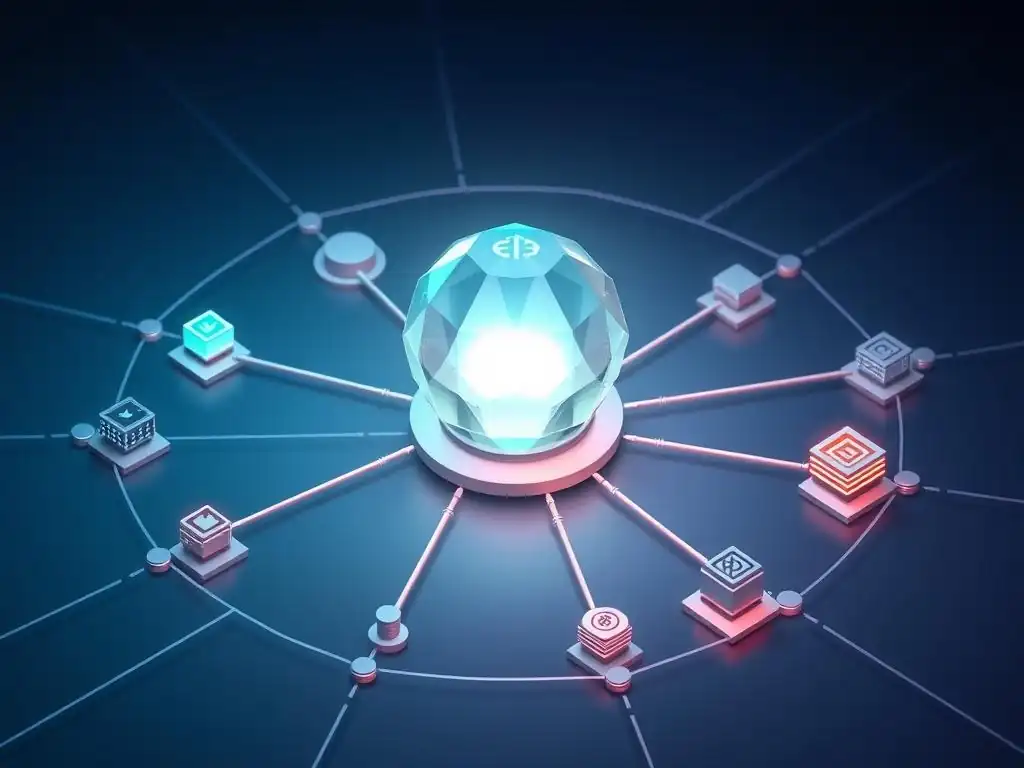
Smart Contracts and Automated Lending Processes
Smart contracts are the foundation upon which DeFi lending protocols and their DAO governance mechanisms operate. These self-executing contracts, with terms directly written into code, automate the core lending and borrowing processes: accepting deposits, issuing loans (against collateral), calculating interest, managing liquidations, and distributing yield. For example, if a borrower's collateral falls below a certain threshold due to price fluctuations, a smart contract automatically triggers liquidation, selling off collateral to repay the loan and maintain the protocol's solvency. This automation removes the need for manual intervention and ensures that rules are enforced predictably and transparently.
The operational link between smart contracts and DAOs lies in how governance decisions are implemented. When a governance proposal to, say, adjust the collateral factor for a specific asset or upgrade the protocol's logic is approved by the DAO's vote, the outcome is typically executed via a privileged smart contract function controlled by the DAO. This function allows the approved change to be written into the protocol's operational smart contracts, effectively updating the system's behavior based on the decentralized consensus. This seamless, automated execution of governance decisions is a hallmark of well-designed DeFi governance decentralized autonomous organizations enable.
Tokenomics and Incentive Structures within DeFi Lending DAOs
Tokenomics, the economic design of a protocol's native token, plays a crucial role in the operation and governance of DeFi lending DAOs. Governance tokens (like COMP or AAVE) are not just voting rights; they often carry economic value and are used as incentives. Protocols might distribute these tokens to users who lend or borrow on the platform as a form of yield farming or liquidity mining.
This distribution encourages participation and helps decentralize token ownership, theoretically broadening the base of governance participants. The value of the token is often tied to the success and usage of the protocol, aligning the incentives of token holders with the protocol's growth.
Beyond governance voting, tokens can also confer rights to protocol revenue (though less common in pure lending protocols than in exchanges) or be used for staking to secure the protocol or earn additional yield. The design of these incentive structures is critical; they must balance encouraging participation and decentralization with avoiding excessive inflation or creating perverse incentives. A well-designed tokenomic model is essential for the long-term sustainability and effective DeFi governance decentralized autonomous organizations require to function robustly.
Voting and Proposal Mechanisms in DeFi Lending Governance
The core operational mechanism of a DeFi lending DAO is its proposal and voting system. This system defines how changes are suggested, debated, and ratified. Typically, any token holder who meets a minimum token threshold can submit a formal proposal detailing a specific change to the protocol. This proposal is then posted for community discussion, often on forums like Commonwealth or Discourse, allowing for feedback and refinement before entering a formal voting period. The voting period, usually lasting several days, allows token holders to cast their votes (yes, no, or abstain) using their delegated or owned tokens.
For a proposal to pass, it usually needs to meet two conditions: a minimum quorum (a certain percentage of total voting power must participate) and a minimum threshold of 'yes' votes (e.g., 51% or 66% of participating votes). If successful, the proposal is queued for execution, often after a timelock period (e.g., 48 hours) to allow for emergency intervention if a critical flaw is discovered. This structured process ensures that changes are considered thoroughly and approved by a sufficient portion of the community, forming the backbone of effective DeFi governance decentralized autonomous organizations implement.
Case Studies: Examining Successful DeFi Lending DAOs
Compound: Analyzing the Governance Model and Market Performance
Compound is a pioneering DeFi lending protocol that launched its governance token, COMP, in June 2020, effectively handing control over to its community. The distribution of COMP tokens, initially through liquidity mining, rapidly decentralized ownership and established a broad base for governance participation. Compound's governance model, initially Governor Alpha and later upgraded to Governor Bravo, uses token-weighted voting with delegation.
Any address with at least 100,000 COMP (or delegated voting power) can create a proposal, which then enters a 3-day voting period requiring a quorum (currently 400,000 votes) and a simple majority (currently 2.5% of total supply must vote 'yes') to pass. Approved proposals have a 2-day timelock before execution.
Compound's market performance has been significantly influenced by its governance. The ability for the community to propose and vote on parameter changes, such as adding new assets, adjusting interest rate curves, or changing collateral factors, has allowed the protocol to adapt to market conditions and expand its offerings.
For example, community proposals have led to the addition of assets like UNI or AAVE, increasing the protocol's TVL and utility. While facing competition, Compound has maintained its position as a leading lending protocol, demonstrating how effective DeFi governance decentralized autonomous organizations manage can drive growth and resilience, though it has also experienced challenges like low voter turnout on some proposals.
Aave: Examining the Strengths and Adaptability of its Lending Protocol
Aave is another major DeFi lending protocol renowned for its innovation and robust governance system. Initially operating under a foundation model, Aave transitioned to full DAO governance with the launch of its AAVE token. Aave's governance model is also token-weighted with delegation, allowing AAVE holders to propose and vote on Aave Improvement Proposals (AIPs).
Proposals require a significant stake (currently 80,000 AAVE) to create and undergo a voting process with specific quorum and threshold requirements, followed by a timelock and execution via the Executor contracts. A key feature of Aave's governance is its Safety Module, where staked AAVE is used as collateral of last resort, managed through governance decisions.
Aave's governance has proven highly effective in driving adaptability and innovation. The community has successfully voted on and implemented major upgrades, such as the migration from Aave V1 to V2 and then to V3, introducing features like isolated pools, efficiency mode, and cross-chain functionality. These significant protocol overhauls were only possible through the decentralized decision-making process enabled by the DAO. Aave's ability to evolve rapidly while maintaining security and user trust is a testament to the potential of well-structured DeFi governance decentralized autonomous organizations can provide for complex financial applications.
Lessons Learned from Leading DeFi Lending DAOs
Analyzing protocols like Compound and Aave provides valuable insights into the practicalities of DeFi governance decentralized autonomous organizations facilitate. A key lesson is the importance of active community participation; low voter turnout can compromise decentralization. Protocols must find ways to encourage engagement, whether through incentives, education, or simplifying the voting process. Another lesson is the need for robust technical infrastructure for governance – reliable oracles, secure smart contracts for proposal execution, and mechanisms to handle emergency situations are crucial.
The balance between speed and security is also critical. While decentralization is the goal, the need for timely decisions in a fast-moving market must be balanced with sufficient time for proposal review and debate. Timelocks are a common solution, but finding the optimal length is an ongoing challenge. Finally, delegate participation is vital; engaged and informed delegates can significantly improve the quality of governance decisions, especially for technically complex proposals. Fostering a strong delegate community is a key task for any DeFi lending DAO aiming for effective decentralized governance.
The Future of DeFi Governance: DAOs and Beyond
Evolving Trends in DAO Governance for Lending Platforms
The landscape of DeFi governance is constantly evolving, with several trends shaping the future of lending platforms controlled by decentralized autonomous organizations. One major trend is the exploration of alternative voting mechanisms beyond simple token weighting to address concerns about whale dominance and voter apathy. This includes quadratic voting (where voting power increases less than proportionally to token holdings) and conviction voting (where voting power increases the longer tokens are staked behind a proposal). While still experimental in large-scale lending DAOs, these methods aim to give smaller token holders more influence and encourage long-term thinking.
Another trend is the increasing focus on delegate platforms and liquid democracy models, making it easier for token holders to delegate their voting power to experienced community members. This helps to ensure that important decisions are made by informed participants even if individual token holders don't have the time or expertise to vote on every proposal. Furthermore, sub-DAOs or working groups focused on specific areas like risk management, grants, or protocol development are emerging, allowing for more specialized and efficient decision-making within the broader DeFi governance decentralized autonomous organizations oversee.
Potential Innovations in Decentralized Lending through DAOs
Decentralized Autonomous Organizations are poised to drive significant innovation in DeFi lending. Their ability to collectively manage protocol parameters and treasury funds opens the door for features that would be challenging under centralized control. For instance, DAOs could vote to allocate protocol revenue or a portion of the treasury to fund grants for developers building new features, integrating with other protocols, or improving security. This self-funding mechanism allows the protocol to sustainably innovate based on community priorities.
DAOs can also facilitate more complex risk management strategies. Governance can vote on implementing dynamic risk parameters that automatically adjust based on market volatility or specific asset performance, rather than relying on manual updates. Furthermore, DAOs could govern the creation and management of diverse lending pools with varying risk profiles or specific asset focuses, catering to a wider range of users and strategies. The collective intelligence and resource allocation capabilities inherent in well-functioning DeFi governance decentralized autonomous organizations could lead to more sophisticated, resilient, and user-centric lending products.
Regulatory Considerations for DeFi Lending and DAO Operations
Regulatory scrutiny is increasing across the DeFi landscape, and its implications for DeFi lending and DAO operations are significant. Regulators globally are grappling with how to classify and oversee decentralized protocols that lack traditional corporate structures. Key concerns include anti-money laundering (AML) and know-your-customer (KYC) requirements, consumer protection, and financial stability risks. The pseudonymous nature of blockchain transactions and the distributed control of DAOs pose unique challenges for applying existing regulations designed for centralized entities.
For DAOs governing lending protocols, questions arise regarding accountability and liability. If a protocol governed by a DAO experiences a failure or is used for illicit activities, who is responsible? Are token holders considered partners or members of an unregistered entity? Different jurisdictions are exploring various approaches, from treating DAOs as partnerships to proposing specific legal wrappers. The future of DeFi governance decentralized autonomous organizations facilitate will likely be shaped by how these regulatory questions are resolved, potentially requiring DAOs to adopt certain compliance measures while striving to maintain their decentralized principles.
Best Practices for Participating in DeFi Lending DAOs
Due Diligence and Risk Assessment for DeFi Lending
Participating in DeFi lending, whether as a lender, borrower, or governance token holder, requires thorough due diligence and risk assessment. Users should understand the specific protocol's smart contract risk – the possibility of bugs or exploits, which can lead to loss of funds. Audits by reputable firms are a minimum requirement, but not a guarantee of security. Users should also assess the economic risks, such as liquidation risk for borrowers (if collateral value drops) and interest rate risk for lenders (variable rates can fluctuate). Understanding the protocol's unique features, such as Safety Modules or specific liquidation mechanisms, is crucial.
Furthermore, for those holding governance tokens, understanding the governance framework itself is part of due diligence. Evaluate the distribution of tokens, the proposal thresholds, voting periods, and execution delays. A highly centralized token distribution might indicate potential control risks. Assessing the activity and reputation of delegates is also important if you plan to delegate your voting power. Effective participation in DeFi governance decentralized autonomous organizations offer begins with a solid understanding of both the financial and structural risks involved.
Understanding DAO Governance Proposals and Voting
Engaging effectively in DeFi governance decentralized autonomous organizations require means actively understanding and evaluating governance proposals. Don't just blindly vote or rely on others. Read the full proposal text, which is typically available on governance forums or snapshot pages. Understand what change is being proposed, why it's necessary, and what its potential impacts are on the protocol's security, risk parameters, and overall health. Look for discussions around the proposal on community forums, Discord, or Twitter to gauge community sentiment and identify potential counterarguments or risks.
When it comes time to vote, consider the long-term implications of the proposal, not just short-term gains. Your vote contributes to shaping the future of the protocol. If you lack the technical expertise to evaluate a proposal, consider delegating your vote to a trusted delegate who has a track record of informed voting and contributions to the community. Active, informed voting is the cornerstone of successful DeFi governance decentralized autonomous organizations are built upon.
Contributing to the Growth and Development of DeFi Lending Ecosystems Through DAO Participation
Beyond voting, there are numerous ways to contribute to the growth and development of DeFi lending ecosystems through DAO participation. Engage in community discussions on forums and chat channels; your insights as a user or token holder can provide valuable feedback on proposed changes or identify areas for improvement. Participate in delegate programs if you have the expertise and time to research proposals and represent the interests of other token holders.
For those with technical skills, contributing to the protocol's codebase, proposing code changes via governance, or participating in bug bounty programs are direct ways to enhance the protocol's security and functionality. Even non-technical contributions, such as creating educational content about governance proposals, analyzing data related to protocol performance or governance participation, or helping to onboard new users into the governance process, are invaluable. Active and diverse participation strengthens the DeFi governance decentralized autonomous organizations embody, leading to more robust, secure, and innovative lending protocols.
Frequently Asked Questions
What role do Decentralized Autonomous Organizations (DAOs) play in DeFi lending platforms?
DAOs provide the governance structure for DeFi lending platforms. They allow token holders to propose and vote on key decisions, such as interest rates and collateral types, ensuring a decentralized and community-driven operation.
How does DeFi governance empower users within lending protocols?
DeFi governance gives users voting rights based on their token holdings. This allows them to actively participate in shaping the future of the protocol and influencing decisions that directly affect their lending and borrowing activities.
What are some key challenges facing DAOs in managing DeFi lending platforms?
Scalability, security vulnerabilities, and low voter turnout are significant challenges. Effectively managing complex financial parameters and ensuring fair representation for all stakeholders also presents ongoing difficulties.
How are regulations impacting the development and operation of DeFi lending DAOs?
Regulatory uncertainty creates challenges, as DAOs must navigate evolving legal frameworks. Increased scrutiny and potential regulations may require greater transparency and compliance measures within these decentralized organizations.
What is the future outlook for DeFi lending and DAOs?
The future likely involves greater adoption of DAOs for managing DeFi lending, coupled with increased regulatory clarity and advancements in governance mechanisms. Expect to see more sophisticated and user-friendly platforms emerging.
Final Reflection: Embracing the Future of Decentralized Finance
The exploration of DeFi lending and its intricate relationship with Decentralized Autonomous Organizations (DAOs) reveals a landscape ripe with potential, yet also fraught with challenges. The promise of transparent, community-driven financial systems is no longer a distant dream, but a rapidly evolving reality. Understanding the nuances of DeFi governance and the operational mechanics of DAOs is crucial for anyone seeking to navigate this transformative space and contribute to its sustainable growth.
The rise of DeFi and DAOs has profoundly impacted the financial and technological landscape, shifting power dynamics and fostering a culture of collaborative innovation. This movement towards decentralization resonates deeply, offering a glimpse into a future where financial systems are more equitable and accessible. The future of finance is decentralized, and DAOs are the key to unlocking its potential.
This sentiment underscores the importance of continued research, development, and responsible participation in this burgeoning ecosystem.
As we stand at the cusp of this decentralized revolution, let us not be passive observers. Instead, let us embrace the opportunity to shape the future of finance. Reflect on the principles of DeFi governance and the operational frameworks of DAOs. Consider how you can contribute to building more robust, secure, and inclusive financial systems. The power to create a better financial future lies within each of us.
Unlock the Power of DeFi Governance
Thank you for exploring the world of DeFi lending and DAOs! We hope you've gained valuable insights into how these innovative structures are transforming finance. Now, it's time to put that knowledge into action.
You can further engage with the DeFi movement by:
- Proposing a new governance model for a DeFi lending protocol, aiming to enhance fairness and efficiency.
- Visiting the governance forums of leading DeFi lending DAOs to see ongoing discussions and decision-making processes.
- Sharing this article with your network to inspire conversations about the future of decentralized finance and DAO governance.
Are you ready to help shape the future of DeFi and contribute to the evolution of decentralized lending platforms?
Leave a Reply