
DeFi's Exposure to Traditional Financial System Risks: Interconnectedness and Contagion


Welcome to Blockchain Trends, your compass in the rapidly evolving world of decentralized technology. Are you ready to see how the lines between the old and new are blurring? This week, we delve into a critical intersection: how DeFi risks traditional finance. Explore the potential for interconnectedness and contagion as decentralized finance increasingly interacts with the established financial system. What happens when the innovative meets the established? Read on to uncover the potential vulnerabilities and opportunities that lie ahead.
DeFi's Exposure to Traditional Financial System Risks: Interconnectedness and Contagion
- Introduction: The Growing Intertwining of DeFi and TradFi
- Understanding the Channels of Exposure: How DeFi Risks Impact Traditional Finance
- Key DeFi Risks and Their Potential Contagion Effects on TradFi
- Case Studies: Examples of DeFi Events Impacting Traditional Markets
- Analyzing Systemic Risk: Assessing the Potential for a DeFi-Induced Financial Crisis
- Regulatory Implications: Addressing DeFi Risks and Protecting Traditional Financial Stability
- Mitigating DeFi Risks: Strategies for a More Resilient Financial System
- The Future of DeFi and TradFi: Towards a More Integrated and Resilient Financial Ecosystem
- Conclusion: Navigating the Complex Relationship Between DeFi and Traditional Finance
-
Frequently Asked Questions
- How does the interconnectedness between DeFi and traditional finance (TradFi) create potential risks?
- What specific vulnerabilities in TradFi can impact the DeFi ecosystem?
- In what ways can DeFi activities expose the traditional financial system to new risks?
- What regulatory challenges arise from the growing interaction between DeFi and TradFi?
- What are some potential solutions to mitigate the risks of DeFi's exposure to TradFi, and vice versa?
- Final Reflection: Navigating the Intertwined Worlds of DeFi and TradFi
- Uncover Your DeFi Strategy Now!
Introduction: The Growing Intertwining of DeFi and TradFi
Defining Decentralized Finance (DeFi) and its Rise
Decentralized Finance, or DeFi, represents a paradigm shift in financial services, operating on public blockchains like Ethereum. Its core principle is to disintermediate traditional financial intermediaries such as banks, brokers, and exchanges, by using smart contracts – self-executing code on the blockchain. DeFi offers a range of services, including lending, borrowing, trading, and asset management, often with greater transparency and accessibility compared to traditional systems.
The rise of DeFi has been rapid and significant. From a niche concept just a few years ago, its total value locked (TVL) – a measure of the total value of crypto assets deposited in DeFi protocols – surged dramatically, peaking near $180 billion in late 2021. This growth underscored the market's appetite for decentralized financial products and highlighted the potential scale of the ecosystem, simultaneously bringing into focus the unique DeFi risks traditional finance might encounter as interactions increase.
Traditional Finance (TradFi): A Brief Overview
Traditional Finance, or TradFi, encompasses the established financial infrastructure and institutions that have formed the backbone of the global economy for centuries. This includes commercial banks, investment banks, stock exchanges, insurance companies, and regulatory bodies like central banks and securities commissions. TradFi operates through centralized systems, relying on trusted intermediaries to facilitate transactions, manage risk, and ensure stability.
TradFi is characterized by its extensive regulatory frameworks, established compliance procedures, and deep integration into the global economic structure. While robust and time-tested, it can sometimes be slow, costly, and exclusive compared to the emerging decentralized alternatives. The stability and interconnectedness of TradFi mean that disruptions within it can have widespread systemic effects, a concern now being mirrored in discussions about potential DeFi risks traditional finance could face.
The Emerging Interconnections: DeFi's Reliance on Traditional Financial Infrastructure
Despite their philosophical differences, DeFi and TradFi are becoming increasingly interconnected, creating new channels for risk transmission. This intertwining occurs through various points, including fiat on-ramps and off-ramps facilitated by traditional payment processors and banks, institutional investment in crypto assets and DeFi protocols, and the reliance of DeFi on centralized stablecoins whose reserves are held within the traditional financial system.
Furthermore, the underlying infrastructure supporting DeFi, such as internet access, cloud computing services, and even the energy grids powering blockchain networks, remains firmly rooted in traditional infrastructure. This dependence means that vulnerabilities or disruptions in TradFi or its supporting infrastructure can directly impact the functioning and stability of the DeFi ecosystem, creating complex DeFi risks traditional finance participants need to understand.
Understanding the Channels of Exposure: How DeFi Risks Impact Traditional Finance
Collateralization Risks: DeFi's Dependence on Traditional Assets
Many DeFi lending and borrowing protocols require users to overcollateralize their positions with crypto assets. While often using native cryptocurrencies like Ether (ETH) or Bitcoin (BTC), a significant portion of collateral and value within DeFi is denominated in or pegged to traditional fiat currencies, primarily the US dollar, through stablecoins. This reliance means the perceived value and stability of DeFi positions are intrinsically linked to assets and markets within TradFi.
Should the value of underlying traditional assets backing stablecoins fluctuate significantly, or if confidence in the peg breaks, it could trigger mass liquidations within DeFi protocols. Such events could cascade, affecting institutional investors or funds that have allocated capital to these protocols, potentially leading to losses that ripple back into the traditional financial system. The market volatility originating from these collateralization dynamics is a key area where DeFi risks traditional finance encounters.
Stablecoin Exposure: The Tether and USDC Factor
Centralized stablecoins like Tether (USDT) and USD Coin (USDC) are foundational pillars of the DeFi ecosystem, acting as primary mediums of exchange and stores of value. As of early 2024, their combined market capitalization frequently exceeds $100 billion, representing a substantial portion of the total value within crypto markets and DeFi. These stablecoins are typically backed by reserves held by centralized entities, often including traditional financial assets like cash, commercial paper, corporate bonds, and U.S. Treasury bills.
The concentration of value and reliance on these centralized stablecoins introduces significant counterparty and regulatory risk. If a stablecoin issuer faces solvency issues, regulatory action freezing assets, or a loss of confidence leading to a 'run' on the stablecoin, its peg to the dollar could break.
Given their widespread use as collateral and trading pairs, a major stablecoin depeg event could trigger a liquidity crisis across DeFi, potentially forcing traditional financial institutions with direct or indirect exposure (e.g., through investment funds or corporate treasury holdings) to write down assets or manage significant market disruption, highlighting considerable DeFi risks traditional finance entities must monitor.
Regulatory Arbitrage: Exploiting Differences Between DeFi and TradFi Regulations
The nascent and often ambiguous regulatory landscape surrounding DeFi contrasts sharply with the well-established and stringent regulations governing Traditional Finance. This disparity creates opportunities for regulatory arbitrage, where entities or activities migrate to the less regulated DeFi space to avoid compliance costs or restrictions present in TradFi. While this can foster innovation, it also opens doors for activities like money laundering, sanctions evasion, or offering unregistered securities, which pose systemic risks.
When illicit or risky activities conducted in the DeFi space implicate entities or individuals operating within TradFi, or when regulatory actions taken against DeFi platforms reveal widespread non-compliance, it can lead to investigations, fines, and reputational damage that extend into the traditional financial sector. Authorities are increasingly focused on how DeFi risks traditional finance stability through these unregulated or under-regulated interfaces, prompting calls for clearer guidelines and enforcement.
Key DeFi Risks and Their Potential Contagion Effects on TradFi
Smart Contract Vulnerabilities: Exploits and Economic Impact
DeFi protocols are built on smart contracts, code that automatically executes transactions when predefined conditions are met. While powerful, these contracts can contain bugs or vulnerabilities that malicious actors can exploit. The economic impact of smart contract exploits has been substantial; for instance, the Poly Network hack in August 2021 resulted in the theft of over $600 million, though much was later returned. The Ronin bridge exploit in March 2022 saw a loss of approximately $625 million.
These exploits can lead to massive losses of user funds locked within protocols. If institutional capital or funds with exposure to traditional markets are significantly invested in or interact with exploited protocols, the direct financial losses can create ripples. Furthermore, major hacks erode trust in the DeFi ecosystem as a whole, potentially dampening institutional interest and investment flows from TradFi into crypto assets, indirectly impacting market liquidity and stability. Understanding such inherent DeFi risks traditional finance players must consider is crucial.
Oracle Manipulation: Data Integrity Concerns and Market Manipulation
DeFi protocols often rely on external data feeds, known as oracles, to provide real-world information like asset prices, interest rates, or weather data to smart contracts. If an oracle is compromised or manipulated, it can feed false data to a protocol, leading to incorrect or malicious actions. For example, lending protocols might liquidate positions based on manipulated price feeds, or derivatives platforms might settle contracts incorrectly.
Oracle manipulation has been the vector for exploits costing millions. The bZx protocol, for instance, suffered multiple attacks in 2020 where attackers exploited oracle vulnerabilities alongside flash loans to profit from manipulated prices, resulting in significant losses for the protocol and its users. Such manipulations can cause sudden, unwarranted market volatility within DeFi. If these manipulated assets are also traded on traditional platforms or are held by institutions, the price dislocation and resulting market instability represent direct DeFi risks traditional finance infrastructure may have to absorb.
Liquidity Risks: Flash Loans and Market Instability
Liquidity is paramount in financial markets, both decentralized and traditional. DeFi protocols, particularly automated market makers (AMMs) and lending platforms, rely on sufficient liquidity to function effectively. Flash loans, a unique DeFi innovation allowing users to borrow uncollateralized funds within a single transaction block provided they are repaid before the transaction ends, can exacerbate liquidity risks if misused.
While having legitimate uses like arbitrage and collateral swapping, flash loans have frequently been combined with other vulnerabilities (like oracle manipulation or smart contract bugs) to execute complex attacks that drain liquidity from protocols or manipulate asset prices. The sheer speed and size of flash loans mean that exploits can occur rapidly and on a large scale, causing sudden market dislocations and significant losses. These rapid, unpredicted events introduce a level of volatility and counterparty risk that is challenging for traditional risk management frameworks to immediately comprehend or mitigate, amplifying DeFi risks traditional finance institutions must grapple with.
Centralized Exchanges (CEX) and Decentralized Exchanges (DEX): A Risky Relationship
While DeFi proponents advocate for decentralization, a significant amount of capital enters and exits the DeFi ecosystem through centralized exchanges (CEXs). CEXs act as crucial bridges, facilitating the conversion of fiat to crypto and providing liquidity for major trading pairs, including those involving stablecoins heavily used in DeFi. This reliance creates a dependency where issues affecting CEXs can have ripple effects on DeFi.
For instance, the insolvency or regulatory issues faced by a major CEX can lead to frozen assets, loss of confidence, and a significant reduction in liquidity flows into and out of DeFi protocols. Furthermore, many institutions or large players with exposure to TradFi hold significant assets on CEXs or use them to interact with DeFi. The failure of a large CEX, as seen with FTX, demonstrated how a centralized entity's collapse could trigger contagion, impacting lending platforms, venture capital funds, and other entities with ties to traditional finance, illustrating how CEX-related DeFi risks traditional finance stakeholders cannot ignore.
Case Studies: Examples of DeFi Events Impacting Traditional Markets
Terra/Luna Collapse and its Impact on Crypto Lending Platforms
The dramatic collapse of the Terra ecosystem in May 2022 serves as a stark example of how a failure in a major DeFi-like protocol can trigger contagion across the crypto market and impact entities with ties to traditional finance. The algorithmic stablecoin TerraUSD (UST) lost its dollar peg, and its sister token Luna hyperinflated and crashed to near zero. This event vaporized tens of billions of dollars in market value within days.
The direct impact was felt across centralized and decentralized lending platforms that had significant exposure to UST and Luna, or used them as collateral. Companies like Celsius Network, a centralized crypto lender, and Three Arrows Capital (3AC), a crypto hedge fund, suffered massive losses due to their exposure, leading to their bankruptcy. These failures, in turn, affected traditional financial institutions, venture capital firms, and high-net-worth individuals who had invested in or lent to Celsius, 3AC, or held related assets, demonstrating significant DeFi risks traditional finance encountered through this specific event.
FTX Contagion: The Spread of Risk from CEX to DeFi
While FTX was primarily a centralized exchange (CEX), its close ties with its sister trading firm Alameda Research, which was deeply involved in DeFi and held significant positions in various tokens and protocols, created a direct channel for contagion. When FTX collapsed in November 2022 due to allegations of misused customer funds and insolvency, it sent shockwaves through the entire crypto market.
The fallout wasn't confined to CEXs. Crypto lending platforms like BlockFi and Genesis, which had significant lending relationships with FTX and Alameda, faced liquidity crises and subsequently filed for bankruptcy. These platforms had financial relationships with traditional banks, investment funds, and institutional investors, causing losses and concerns within TradFi. The FTX debacle underscored how the failure of a large, interconnected entity operating at the intersection of CEX, DeFi, and institutional finance could rapidly transmit DeFi risks traditional finance entities were unprepared for.
Regulatory Scrutiny of Binance and its Effect on DeFi Liquidity
Major centralized exchanges like Binance act as primary gateways for capital entering and exiting the crypto ecosystem, including flows directed towards DeFi. Regulatory actions or heightened scrutiny against such large platforms, even if not directly targeting DeFi protocols, can significantly impact the liquidity and stability of the broader market, affecting DeFi indirectly and posing DeFi risks traditional finance stakeholders observe.
For instance, ongoing investigations, enforcement actions, or even rumors of regulatory trouble involving Binance have, at times, led to uncertainty, withdrawal surges, and shifts in stablecoin dynamics. Since stablecoins are the lifeblood of DeFi, any event that restricts their flow or casts doubt on their accessibility via major CEXs can reduce liquidity within DeFi protocols, increase volatility, and make the ecosystem less appealing or accessible to institutional participants from TradFi. This highlights the fragile nature of the bridge between the two systems and the potential for CEX-related issues to manifest as DeFi risks traditional finance is concerned about.
Analyzing Systemic Risk: Assessing the Potential for a DeFi-Induced Financial Crisis
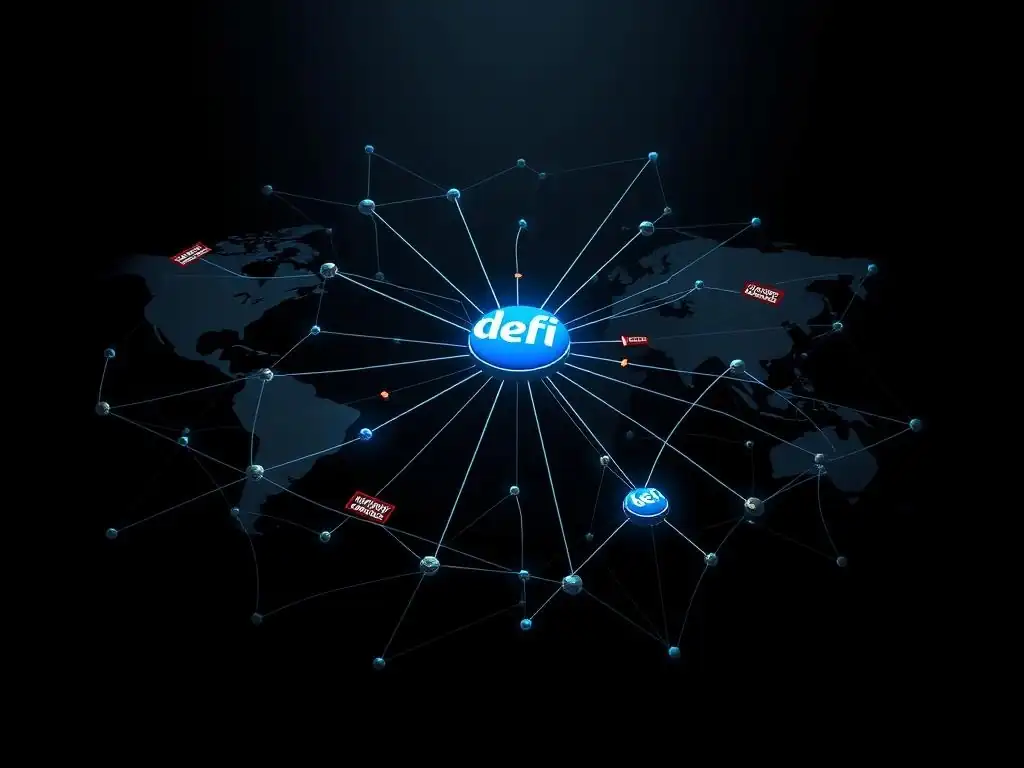
Measuring Interconnectedness: Network Analysis of DeFi and TradFi
Assessing the potential for systemic risk – where the failure of one entity or market segment triggers a cascade of failures throughout the system – requires understanding the intricate web of connections between DeFi and TradFi. Network analysis is a powerful tool for mapping these dependencies. By analyzing transaction flows, cross-holdings of assets, lending relationships, and institutional investments between DeFi protocols, centralized entities, and traditional financial institutions, researchers can visualize and quantify the degree of interconnectedness.
Studies using network analysis have shown that while direct links between core DeFi protocols and major global TradFi institutions are still relatively limited compared to interbank connections, the pathways through stablecoin issuers, crypto funds, venture capital, and crypto-native companies with TradFi banking relationships are growing. Identifying these nodes and the volume of value flowing through them helps paint a picture of potential contagion vectors and quantify the scale of potential DeFi risks traditional finance faces from these connections.
Identifying Critical Nodes: Key Institutions and Protocols
Within any interconnected system, certain nodes are more critical than others – their failure would have a disproportionately large impact. In the context of DeFi and its potential impact on TradFi, identifying these critical nodes is essential for risk assessment. These might include:
- Major stablecoin issuers (e.g., Circle, Tether) due to their size and role as a bridge.
- Large, widely used DeFi protocols (e.g., Aave, Compound, Uniswap) with significant TVL and institutional interaction.
- Centralized entities with deep ties to both worlds (e.g., large crypto exchanges, major crypto lenders that interact with TradFi institutions).
- Traditional financial institutions or funds with substantial direct or indirect exposure to crypto assets or DeFi protocols.
The health and stability of these critical nodes are paramount. Monitoring their financial health, regulatory compliance, and operational security is key to anticipating potential points of failure that could introduce significant DeFi risks traditional finance needs to prepare for. A failure at one of these nodes could rapidly propagate through the network.
Stress Testing: Simulating DeFi Shocks and Their Impact on Traditional Finance
Stress testing is a standard risk management technique in Traditional Finance, used to evaluate the resilience of institutions and the system as a whole to extreme but plausible events (e.g., a sudden market crash, a major bank failure). Applying similar methodologies to the interconnected DeFi and TradFi ecosystem is crucial for understanding potential systemic DeFi risks traditional finance might face.
This involves simulating various adverse scenarios originating in DeFi, such as:
- A major stablecoin depegging and subsequent run.
- A large-scale exploit of a major lending or exchange protocol.
- A sudden regulatory crackdown on key DeFi activities or assets.
- A rapid and sustained drop in major crypto asset prices.
By modeling how these shocks propagate through identified channels of interconnectedness – affecting asset values, triggering liquidations, causing counterparty failures among crypto funds and institutions, and impacting traditional balance sheets – regulators and institutions can better estimate the potential magnitude of losses and disruption in TradFi. These simulations help quantify the potential scale of DeFi risks traditional finance must incorporate into its own risk management frameworks.
Regulatory Implications: Addressing DeFi Risks and Protecting Traditional Financial Stability
The Need for Comprehensive DeFi Regulation
The rapid growth and increasing interconnectedness of DeFi with TradFi have made the case for comprehensive regulation more pressing. Regulators globally are grappling with how to oversee an ecosystem that is inherently decentralized, borderless, and rapidly evolving. The goal is to address the potential DeFi risks traditional finance and consumers face without stifling innovation entirely.
Regulation needs to clarify the legal status of various DeFi components (e.g., protocols, DAOs, tokens), establish rules around consumer protection, anti-money laundering (AML) and know-your-customer (KYC) requirements at points of interaction with the traditional system (like stablecoin issuers and gateways), and potentially introduce oversight for critical DeFi infrastructure or activities deemed systemically important. A lack of clear rules creates uncertainty and can allow risks to build up unchecked, posing greater DeFi risks traditional finance must ultimately contend with.
Balancing Innovation and Risk Management
A significant challenge for regulators is finding the right balance between managing the potential DeFi risks traditional finance is exposed to and allowing the technology to innovate and mature. Overly stringent or poorly designed regulations could push activity underground, offshore, or stifle the development of potentially beneficial decentralized applications. Conversely, insufficient regulation could allow risks to grow to a level that threatens financial stability.
This requires a nuanced approach that understands the unique technical characteristics of DeFi while applying regulatory principles developed in TradFi where appropriate, such as requirements around risk disclosure, capital adequacy for entities interacting with DeFi, and market integrity. Regulatory sandboxes or pilot programs could allow for controlled experimentation and better-informed policymaking, ensuring that risk management evolves alongside the technology.
International Cooperation: Harmonizing DeFi Regulatory Frameworks
Given the borderless nature of blockchain technology and DeFi protocols, effective regulation requires significant international cooperation. Different jurisdictions adopting widely divergent approaches could create regulatory arbitrage opportunities on a global scale, allowing risks to migrate to the weakest links and ultimately still posing DeFi risks traditional finance faces globally.
International bodies like the Financial Stability Board (FSB) and the Bank for International Settlements (BIS) are playing a role in coordinating discussions among national regulators. Harmonizing standards for stablecoins, crypto asset service providers, and data sharing could enhance oversight and reduce the potential for regulatory gaps. Collaborative efforts are essential to build a robust global framework that addresses the systemic DeFi risks traditional finance is increasingly exposed to.
Mitigating DeFi Risks: Strategies for a More Resilient Financial System
Enhancing Smart Contract Security: Audits and Formal Verification
Improving the security of the foundational smart contracts is paramount to mitigating one of the most significant DeFi risks traditional finance institutions observe: exploits. Rigorous security audits by reputable third-party firms before deployment are standard practice, but not always sufficient. These audits involve manual code review, automated analysis, and penetration testing to identify vulnerabilities.
Beyond audits, formal verification techniques, which use mathematical methods to prove that code behaves exactly as intended under all possible conditions, offer a higher level of assurance. While complex and resource-intensive, formal verification can significantly reduce the likelihood of critical bugs in highly sensitive or high-value smart contracts. Encouraging or requiring enhanced security practices for protocols interacting heavily with traditional finance entities could build greater resilience.
Improving Oracle Reliability: Decentralized Oracle Networks (DONs)
To counter the risks of oracle manipulation, which can lead to incorrect protocol behavior and introduce DeFi risks traditional finance players are wary of, improving the reliability and security of data feeds is crucial. Decentralized Oracle Networks (DONs), such as Chainlink, aggregate data from multiple independent sources and use cryptographic proofs and economic incentives to ensure the integrity of the data delivered to smart contracts.
By reducing reliance on single points of failure and making data manipulation significantly more expensive and difficult, DONs enhance the robustness of DeFi protocols that depend on external data. The adoption of such reliable oracle solutions is a key step in mitigating price manipulation risks that could otherwise propagate into markets where traditional finance institutions operate.
Strengthening Liquidity Management: Risk-Based Capital Requirements
While applying traditional bank-like capital requirements directly to decentralized protocols is challenging, the principle of ensuring sufficient buffers against potential losses is relevant. For centralized entities that interact with DeFi, such as crypto asset service providers, custodians, or funds, regulators could introduce risk-based capital requirements commensurate with their exposure to DeFi risks traditional finance regulations typically address.
This would involve assessing the risks associated with their DeFi activities, including counterparty risk from protocols, market risk from volatile assets, and operational risk from smart contract vulnerabilities. Requiring these entities to hold capital reserves against these risks would help absorb potential losses stemming from DeFi events before they can threaten the entity's solvency and potentially impact its traditional financial counterparties.
Promoting Transparency and Disclosure: Increased Accountability in DeFi
Greater transparency regarding the operations, risks, and financial health of DeFi protocols and the entities interacting with them is essential for investors, users, and regulators to make informed decisions and assess potential DeFi risks traditional finance might face. While blockchain inherently offers transaction transparency, understanding the complex interactions and underlying reserve holdings (especially for stablecoins) often requires additional disclosure.
Initiatives could include:
- Standardized reporting frameworks for DeFi protocols' TVL, asset composition, and risk parameters.
- Regular, independent audits of stablecoin reserves, providing clear breakdowns of traditional asset holdings.
- Clear risk warnings and educational materials for users engaging with DeFi.
- Mechanisms for identifying and disclosing potential conflicts of interest within protocol governance or development teams.
Increased accountability through transparency and disclosure can help build confidence and allow for better risk assessment, reducing the likelihood of unexpected failures that could pose systemic DeFi risks traditional finance is trying to understand and manage.
The Future of DeFi and TradFi: Towards a More Integrated and Resilient Financial Ecosystem
The Role of Institutional Adoption: Bringing TradFi Expertise to DeFi
The increasing interest and adoption of DeFi by traditional financial institutions signal a potential path towards a more integrated ecosystem. As banks, asset managers, and corporations explore using blockchain technology and DeFi protocols for activities like tokenized assets, clearing, and settlement, they bring with them decades of expertise in risk management, compliance, and robust operational procedures.
While institutional involvement can introduce new concentrations of risk if not managed properly, it also offers the opportunity to inject traditional finance's rigor into the DeFi space. Institutions demand higher standards of security, reliability, and regulatory clarity, which can drive improvements in DeFi infrastructure and practices. This convergence could lead to a more mature and stable DeFi ecosystem, potentially mitigating some inherent DeFi risks traditional finance is concerned about.
The Potential of Hybrid Finance: Combining the Best of Both Worlds
The future may not be a simple replacement of TradFi by DeFi, but rather the emergence of Hybrid Finance (HyFi). HyFi models seek to combine the advantages of both systems: the efficiency, transparency, and accessibility of DeFi with the regulatory compliance, stability, and scale of TradFi. This could involve traditional institutions leveraging blockchain for specific functions while remaining within regulatory perimeters, or DeFi protocols incorporating centralized, regulated components for certain services like identity verification or fiat gateways.
Examples include regulated stablecoins issued by financial institutions, tokenized traditional assets traded on decentralized infrastructure, or lending platforms that integrate on-chain collateral with off-chain credit scoring. HyFi could facilitate a smoother, safer transition and integration, potentially reducing the abrupt shocks and systemic DeFi risks traditional finance fears from a completely separate, unregulated system.
Fostering Innovation While Managing Risk: A Sustainable Path Forward
Navigating the complex relationship between DeFi and TradFi requires a continuous effort to foster innovation while simultaneously building robust frameworks for risk management. The decentralized nature of DeFi offers significant potential for creating more efficient, inclusive, and resilient financial markets in the long term. However, realizing this potential sustainably means proactively addressing the vulnerabilities and potential contagion pathways identified as key DeFi risks traditional finance stakeholders are monitoring.
This involves ongoing dialogue between developers, users, regulators, and traditional financial institutions. It requires adaptive regulatory approaches that can keep pace with technological change, industry self-regulation where appropriate, and continued investment in security, reliability, and transparency within the DeFi ecosystem itself. A collaborative and proactive approach is the most likely path towards a future where decentralized finance can thrive without posing undue systemic risk to the traditional financial system.
Key Takeaways: Understanding the Interconnectedness and Contagion Risks
The relationship between Decentralized Finance (DeFi) and Traditional Finance (TradFi) is evolving from one of distinct separation to increasing interconnectedness. This growing intertwining, while offering potential benefits, also introduces new avenues through which DeFi risks traditional finance might face significant impacts. Key channels of exposure include the reliance on traditional assets for collateral, the critical role of centralized stablecoins, and the opportunities presented by regulatory arbitrage.
Significant DeFi-native risks, such as smart contract vulnerabilities, oracle manipulation, and liquidity issues amplified by flash loans, have the potential for contagion. As demonstrated by events like the Terra/Luna collapse and the FTX contagion, failures originating in the crypto/DeFi space can trigger losses and instability that reach entities and markets within TradFi through various direct and indirect links. Analyzing this systemic risk requires understanding the network effects and identifying critical nodes where failures could cascade.
Call to Action: Promoting Responsible Innovation and Robust Regulation in DeFi
Addressing the potential DeFi risks traditional finance is increasingly exposed to requires a multi-pronged approach. It necessitates continued innovation within DeFi to enhance security, reliability, and transparency through methods like rigorous smart contract audits, improved oracle designs, and better liquidity management practices. Simultaneously, it demands thoughtful, comprehensive, and internationally coordinated regulation that balances the need to protect financial stability and consumers with the desire to foster beneficial technological advancements.
For traditional financial institutions and investors, it means conducting thorough due diligence, understanding the unique risk profiles of DeFi assets and protocols, and advocating for clearer regulatory frameworks. Ultimately, navigating the complex interplay between DeFi and TradFi successfully hinges on fostering responsible innovation, building resilient infrastructure on both sides, and establishing clear, effective regulatory guardrails that acknowledge the potential for DeFi risks traditional finance must actively manage.
Frequently Asked Questions
How does the interconnectedness between DeFi and traditional finance (TradFi) create potential risks?
DeFi platforms increasingly rely on TradFi for liquidity, collateral, and on/off ramps. This dependence means that shocks in the TradFi system can easily transmit to DeFi, and vice versa. This interconnectedness amplifies systemic risk.
What specific vulnerabilities in TradFi can impact the DeFi ecosystem?
Traditional financial institutions' credit risks, interest rate sensitivity, and regulatory changes can directly affect DeFi. For example, a major bank failure could trigger a DeFi liquidity crisis due to reliance on stablecoins backed by traditional assets.
In what ways can DeFi activities expose the traditional financial system to new risks?
DeFi's high leverage, complex instruments, and lack of robust regulatory oversight can create new risks for TradFi. Traditional institutions investing in DeFi assets or providing services to DeFi platforms face exposure to these novel threats.
What regulatory challenges arise from the growing interaction between DeFi and TradFi?
Regulators struggle to adapt traditional frameworks to the decentralized nature of DeFi. Establishing clear rules around DeFi lending, stablecoin issuance, and cross-border transactions is crucial to mitigating systemic risk.
What are some potential solutions to mitigate the risks of DeFi's exposure to TradFi, and vice versa?
Enhancing transparency, implementing stress testing across both systems, and developing robust regulatory frameworks are essential. Strengthening risk management practices within DeFi and TradFi can also help limit contagion.
The exploration of DeFi's vulnerabilities to traditional financial system risks reveals a critical truth: the supposed separation between decentralized and centralized finance is increasingly illusory. As DeFi matures and its interconnectedness with TradFi deepens, the potential for contagion becomes a palpable threat, demanding a more nuanced understanding of the risks involved.
This growing interdependence has profoundly influenced the financial landscape, blurring the lines between innovation and systemic risk. The realization that DeFi is not immune to the pitfalls of TradFi compels us to re-evaluate our assumptions about its inherent stability and resilience. The greatest risk is not that DeFi will fail, but that it will succeed in replicating the flaws of the traditional financial system.
This quote encapsulates the challenge: to harness the transformative potential of DeFi while mitigating the dangers of unchecked interconnectedness.
As we stand at this critical juncture, I invite you to reflect on the implications of this interconnectedness. Consider how your own financial decisions, whether in DeFi or TradFi, contribute to the broader ecosystem. Let us strive to build a future where innovation and stability coexist, ensuring that the promise of decentralized finance is not undermined by the very risks it sought to avoid.
Uncover Your DeFi Strategy Now!
Thank you for exploring the intricate relationship between decentralized finance and traditional banking systems. We hope you've gained valuable insights into the risks and opportunities involved. Now, it's time to take proactive steps to protect your investments.
Consider reviewing your DeFi holdings to assess exposure to protocols or assets closely linked to conventional financial institutions. Understanding your current risk profile is essential for effective risk management.
Additionally, explore decentralized hedging options. Using stablecoins or other DeFi tools can help mitigate potential losses caused by market volatility.
Engage with the community on platforms like Discord or Reddit to share your insights and learn from other DeFi enthusiasts. Collaborating and exchanging knowledge can strengthen your strategies.
What actions will you prioritize this week to safeguard your DeFi investments against potential risks from traditional financial systems?
Leave a Reply