
DEX vs CEX: Key Differences and Why Decentralization Matters


Welcome to Blockchain Trends, your guide to understanding the revolutionary power of blockchain technology. Beyond the hype of cryptocurrencies, we delve into the real-world applications transforming industries. Ever wondered about the true potential of decentralized finance? This week, we're exploring the Decentralized exchanges benefits explained, and how they're reshaping the financial landscape. Discover the key differences between DEXs and CEXs and why decentralization matters – the future of finance might just be here, and you're about to understand why. Keep reading to unlock the secrets!
- Decentralized Exchanges Benefits Explained: Exploring the Advantages of DEXs
-
Frequently Asked Questions
- How do Decentralized Exchanges (DEXs) differ from Centralized Exchanges (CEXs)?
- What are the main Decentralized Exchanges benefits explained?
- What role does blockchain technology play in the functionality of DEXs?
- What are some potential drawbacks of using Decentralized Exchanges?
- How are Decentralized Exchanges impacting the future of finance?
- Final Reflection: Embracing the Decentralized Future
- Embrace the Decentralized Future!
Decentralized Exchanges Benefits Explained: Exploring the Advantages of DEXs
Decentralized exchanges (DEXs) offer a paradigm shift in cryptocurrency trading, moving away from reliance on centralized intermediaries. Understanding the decentralized exchanges benefits explained reveals why they are a crucial component of the burgeoning decentralized finance (DeFi) ecosystem. These advantages stem primarily from their non-custodial nature and reliance on blockchain technology, providing users with greater control and transparency compared to traditional centralized platforms.
Exploring the core advantages helps illuminate why traders and liquidity providers are increasingly turning to DEXs. From enhanced security models to broader access to digital assets, the benefits underscore the value proposition of decentralization in the financial sector. The evolution of DEX technology, particularly Automated Market Makers (AMMs), has significantly improved their usability and liquidity, further solidifying their position as viable alternatives to centralized exchanges (CEXs).
Enhanced Security and Reduced Counterparty Risk
One of the most significant decentralized exchanges benefits explained is the enhanced security model. Unlike centralized exchanges, which hold users' private keys and thus their digital assets in large, potentially vulnerable hot or cold wallets, DEXs operate on a non-custodial basis. This means users retain control of their private keys and funds throughout the trading process, interacting directly with smart contracts from their own secure wallets.
This architecture eliminates the single point of failure inherent in CEXs, where a successful hack on the exchange's central servers can result in the loss of millions or even billions of dollars worth of user funds, as tragically demonstrated by historical events like the Mt. Gox collapse or the FTX bankruptcy.
By removing the need to deposit funds into an exchange-controlled wallet, DEXs significantly reduce counterparty risk – the risk that the exchange itself might fail, be hacked, or act maliciously, leading to the loss of user assets. Trades are executed directly between users' wallets via smart contracts on the blockchain, minimizing the time funds are held outside of the user's direct control.
While smart contracts themselves can have vulnerabilities if not properly audited, this model shifts the primary security responsibility back to the user (securing their own wallet) rather than relying on a third party's security infrastructure. Auditing of smart contracts by reputable security firms has become standard practice, adding another layer of protection for users interacting with established DEX protocols.
Greater Privacy and Anonymity for Users
Another key aspect of the decentralized exchanges benefits explained is the potential for greater privacy and anonymity. Most centralized exchanges are required by regulations such as Know Your Customer (KYC) and Anti-Money Laundering (AML) laws to collect extensive personal information from their users, including government identification, proof of address, and even source of funds. While these measures are intended to combat illicit activities, they require users to surrender significant personal data, which can be a concern for privacy-conscious individuals and creates a centralized database of user identities linked to trading activity, vulnerable to data breaches.
In contrast, most DEXs do not require users to undergo KYC or AML procedures. Trading on a DEX typically only requires a compatible cryptocurrency wallet. Transactions are conducted using blockchain addresses, which are pseudonymous rather than directly tied to real-world identities.
While blockchain transactions are transparent and publicly auditable, tracing an address back to a specific individual is significantly more difficult than accessing a centralized database containing verified personal information. This aspect of DEXs allows users to trade digital assets with a higher degree of privacy, aligning with the foundational principles of decentralization and financial sovereignty that many cryptocurrency proponents value.
Increased Control Over Your Digital Assets
Central to the decentralized exchanges benefits explained is the fundamental principle of user control over assets. On a centralized exchange, when you deposit funds, you are essentially entrusting your assets to a third party. The exchange holds the private keys to the wallets where your funds are stored, and you hold an IOU or a claim against the exchange. This is often summarized by the popular crypto adage, "not your keys, not your crypto." If the exchange faces solvency issues, regulatory action, or technical problems, access to your funds can be restricted or potentially lost.
Decentralized exchanges operate on a non-custodial model. Users connect their own wallets (such as MetaMask, Trust Wallet, or hardware wallets like Ledger) directly to the DEX's smart contracts. When executing a trade or providing liquidity, the transaction is signed using the user's private key within their own secure environment.
Funds remain in the user's wallet until the moment the trade is executed on the blockchain. This provides users with complete control over their digital assets at all times, eliminating reliance on the exchange's solvency or operational stability. This direct control is a powerful benefit for those who prioritize financial independence and security against third-party risk.
Access to Emerging and Niche Crypto Assets
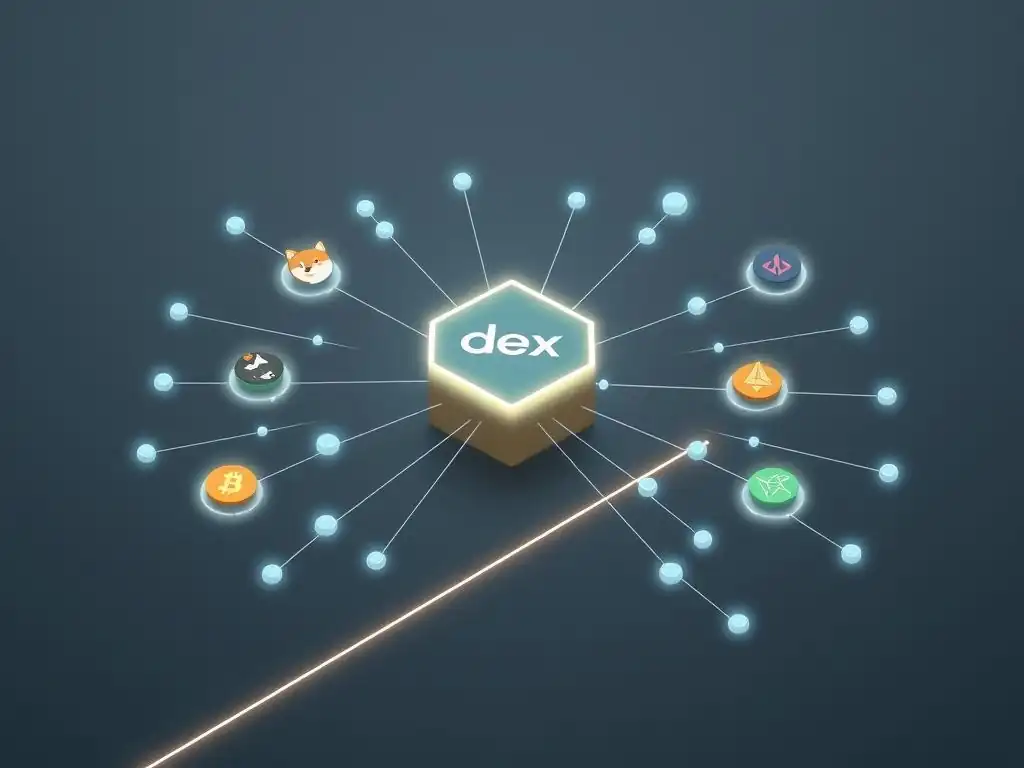
DEXs provide unparalleled access to a wide array of emerging and niche crypto assets, which is another significant point when considering the decentralized exchanges benefits explained. Listing new tokens on centralized exchanges often involves a rigorous vetting process, significant listing fees, and can take considerable time. This means that many new projects and smaller market cap tokens are initially available only on decentralized platforms. For traders looking to get in on the ground floor of promising new projects or access tokens from specific DeFi protocols, DEXs are often the primary or only venue.
The ease of listing on DEXs, particularly those utilizing AMM models, allows virtually anyone to create a liquidity pool for any token pair, provided there is a market for it. While this also introduces risks (such as scams or low liquidity), it fosters an open marketplace where innovation can quickly find a trading venue.
This contrasts sharply with the curated lists found on major CEXs. Data consistently shows that new tokens frequently debut on DEXs like Uniswap or PancakeSwap days, weeks, or even months before gaining traction and potentially listing on larger centralized platforms, offering early access opportunities to those willing to navigate the DEX landscape.
Innovation and Experimentation in DeFi
Finally, among the key decentralized exchanges benefits explained is their role as crucibles for innovation and experimentation within the decentralized finance ecosystem. DEXs are not just trading venues; they are integral components of complex DeFi protocols. The development of Automated Market Makers (AMMs) like Uniswap's constant product formula (x*y=k) revolutionized how trading occurs without traditional order books, enabling passive liquidity provision and yield farming opportunities. These mechanisms allow users to earn passive income by contributing their assets to liquidity pools, facilitating trades for others, and earning a portion of the transaction fees.
The open-source nature of many DEX protocols fosters rapid development and iteration. New features, trading models (e.g., concentrated liquidity, limit orders on AMMs), and integrations with other DeFi primitives (like lending protocols or derivatives platforms) are constantly being developed and deployed. This dynamic environment makes DEXs laboratories for financial innovation, pushing the boundaries of what's possible with blockchain technology in finance. The success of DEXs has also paved the way for related DeFi innovations, such as decentralized stablecoins and decentralized insurance, all interconnected within the broader decentralized financial landscape.
Frequently Asked Questions
How do Decentralized Exchanges (DEXs) differ from Centralized Exchanges (CEXs)?
DEXs operate without intermediaries, using smart contracts for trading, offering greater user control. CEXs function like traditional financial institutions, holding user funds and requiring KYC/AML verification.
What are the main Decentralized Exchanges benefits explained?
Decentralized exchanges benefits explained include enhanced security due to self-custody of funds, increased privacy as KYC is often not required, and greater accessibility for users globally.
What role does blockchain technology play in the functionality of DEXs?
Blockchain provides the underlying infrastructure for DEXs, enabling transparent and immutable transaction records. Smart contracts on the blockchain automate the trading process, eliminating the need for a central authority.
What are some potential drawbacks of using Decentralized Exchanges?
DEXs can face challenges like lower liquidity compared to CEXs, potential complexity for new users, and risks related to smart contract vulnerabilities.
How are Decentralized Exchanges impacting the future of finance?
DEXs are contributing to the democratization of finance by offering alternative trading platforms and reducing reliance on traditional financial institutions. They are a key component of the growing Decentralized Finance (DeFi) ecosystem.
Final Reflection: Embracing the Decentralized Future
The exploration of DEXs versus CEXs reveals more than just technical differences; it highlights a fundamental shift in power dynamics within the financial landscape. The promise of decentralized exchanges lies in returning control to the individual, offering a transparent and permissionless alternative to traditional centralized systems. This shift is not merely a trend, but a crucial step towards a more equitable and accessible financial future, especially as centralized institutions face increasing scrutiny.
The impact of decentralization extends far beyond the realm of cryptocurrency trading. It represents a broader movement towards empowering individuals and fostering trust through transparency. Witnessing the growth of DEXs has solidified my belief in the power of community-driven innovation and the importance of questioning established norms. The future is already here – it's just not evenly distributed.
- William Gibson. This quote perfectly encapsulates the current state of decentralized finance; while not yet mainstream, its potential to reshape our financial systems is undeniable.
As you navigate the evolving world of digital finance, consider the principles of decentralization and their potential to empower you. Explore the benefits of DEXs, understand the risks, and actively participate in shaping a future where financial control rests firmly in the hands of the individual. The power to build a more equitable and transparent financial system lies within each of us.
Embrace the Decentralized Future!
Thank you for exploring the world of decentralized and centralized exchanges with us. We hope you now have a clearer understanding of their advantages and the importance of decentralization. It’s time to put that knowledge into action!
Are you ready to get started? Consider taking these steps:
- Make your first trade on a decentralized exchange and experience the benefits of decentralized finance firsthand.
- Stay informed: Research emerging technologies in decentralized exchanges, such as Layer-2 scaling solutions, to keep up with industry developments.
- Share your insights: Discuss the advantages and challenges of decentralized versus centralized exchanges with friends and on social media to raise awareness about decentralized options.
What concerns do you have about using decentralized exchanges, and how might they be addressed? Share your thoughts below!
Leave a Reply