
Intermediate DeFi: Expanding Your Knowledge of Decentralized Finance


Welcome to Blockchain Trends, your compass in the rapidly evolving world of decentralized technology. Intrigued by the possibilities beyond Bitcoin? We delve deep into the transformative potential of blockchain across industries, from revolutionary enterprise solutions to the intricate landscape of regulation. Dive into our latest article where we unpack DeFi investing strategies explained, uncovering intermediate techniques to navigate the exciting, yet complex, realm of decentralized finance. Are you ready to expand your knowledge? Let's begin.
- Intermediate DeFi: Expanding Your Knowledge of Decentralized Finance
- Understanding DeFi Investing: Beyond the Basics
- Advanced DeFi Investing Strategies Explained
- Risk Management in DeFi: Protecting Your Investments
- DeFi Governance and DAOs: Participating in the Future of Finance
- Emerging Trends in DeFi: Staying Ahead of the Curve
- Tools and Resources for Intermediate DeFi Investors
- Conclusion: Mastering Intermediate DeFi Investing
-
Frequently Asked Questions
- What are some intermediate DeFi investing strategies explained in the article?
- How does the article approach the risks associated with DeFi investing?
- Does the article delve into specific DeFi protocols or platforms?
- What are some enterprise applications of blockchain technology discussed in the broader context of "Blockchain Trends"?
- How does the article address the evolving regulatory landscape surrounding DeFi?
- Final Reflection: Navigating the Evolving Landscape of DeFi
- Unlock Your DeFi Potential!
Intermediate DeFi: Expanding Your Knowledge of Decentralized Finance
Blockchain Trends: Exploring Advanced DeFi Investing Strategies
Decentralized Finance (DeFi) has rapidly evolved beyond its initial phase, offering a complex ecosystem of financial applications built on blockchain technology. For those who have grasped the basics of swapping tokens or simple staking, the next level involves understanding and implementing more sophisticated DeFi investing strategies. This includes navigating yield farming intricacies, advanced lending/borrowing techniques, and complex trading on decentralized exchanges. Mastering these strategies is crucial for optimizing returns and managing the inherent risks within this dynamic space.
Exploring advanced DeFi investing strategies requires a deeper dive into protocol mechanics, risk assessment, and on-chain analysis. It's no longer just about finding the highest yield, but understanding why a yield exists, the risks attached, and how various protocols interact. Successful intermediate investors learn to evaluate projects based on tokenomics, smart contract security, and community governance, moving beyond speculative plays to more sustainable and informed participation in the decentralized economy. These sophisticated DeFi investing strategies demand diligent research and continuous learning.
Understanding DeFi Investing: Beyond the Basics
From Beginner to Intermediate: Leveling Up Your DeFi Knowledge
Transitioning from a beginner to an intermediate DeFi participant involves moving from simple interactions like token swaps or basic liquidity provision to understanding the underlying mechanisms and risks of more complex protocols. A beginner might use a DEX to trade tokens, while an intermediate user understands concepts like Automated Market Makers (AMMs), slippage, and gas costs in detail. This level-up requires dedicating time to learning about different protocol types – lending platforms, yield aggregators, derivatives protocols, and insurance markets – and how they function individually and as interconnected components of the DeFi ecosystem.
Leveling up in DeFi also means developing a more critical eye towards projects and opportunities. Instead of chasing the latest high-APY farm, an intermediate investor analyzes the sustainability of the yield, the reputation of the team, and the security audits completed. They begin to understand concepts like token emission schedules, inflation effects, and the impact of protocol governance on future development and value. This shift in mindset is fundamental to successfully applying more advanced DeFi investing strategies and navigating the market's volatility.
Prerequisites: Essential DeFi Concepts to Master
Before diving into intermediate DeFi investing strategies, a solid understanding of several core concepts is non-negotiable. These include a strong grasp of how public-key cryptography works, the function of smart contracts, and the specifics of the blockchain network you are operating on (e.g., Ethereum, Polygon, Binance Smart Chain), including transaction costs (gas fees) and block confirmation times. Understanding different token standards (ERC-20, ERC-721, ERC-1155) and how they interact within protocols is also essential.
Furthermore, intermediate users must be proficient with non-custodial wallets (like MetaMask or Ledger), understand how to manage private keys securely, and be familiar with block explorers (like Etherscan or PolygonScan) to verify transactions and explore protocol activity. Concepts like Total Value Locked (TVL), Annual Percentage Yield (APY) vs. Annual Percentage Rate (APR), and the basics of impermanent loss are foundational prerequisites for exploring more complex DeFi investing strategies explained later.
Advanced DeFi Investing Strategies Explained
Yield Farming Strategies for Intermediate Investors
Yield farming, the practice of depositing or staking crypto assets to earn rewards, becomes significantly more nuanced at the intermediate level. It involves actively searching for protocols and pools offering attractive yields, but with a critical analysis of the associated risks, including smart contract vulnerabilities, rug pulls, and impermanent loss. Intermediate strategies often involve moving assets between different protocols to optimize returns based on changing market conditions, liquidity incentives, and farming opportunities.
Successful intermediate yield farmers don't just chase the highest numbers; they evaluate the tokenomics of the reward token, understanding its inflation rate and potential selling pressure. They also consider the platform's stability and reputation. Implementing effective DeFi investing strategies in yield farming requires constant monitoring and adaptation, as yields can fluctuate wildly based on network activity and participant behavior.
Liquidity Pool Selection: Assessing Tokenomics and Trading Volume
Selecting the right liquidity pool is paramount in yield farming. This involves assessing the tokenomics of the pair you are providing liquidity for and the reward token you receive. Consider the trading volume of the pair: high volume typically means more trading fees for liquidity providers, but also potentially higher impermanent loss if the price ratio of the pair diverges significantly. Analyze the reward token's utility, distribution schedule, and market capitalization. Is it inflationary? Does it have a real use case within the ecosystem?
For example, providing liquidity for a stablecoin pair like USDC-DAI on Curve historically offered lower APYs from trading fees but minimal impermanent loss. Providing liquidity for a highly volatile token pair like ETH-SHIB on Uniswap might offer high farming rewards (often paid in the volatile project token) but comes with a substantial risk of impermanent loss if SHIB crashes relative to ETH.
Assessing tokenomics involves understanding vesting schedules, team allocations, and inflationary mechanisms, which can significantly impact the price of the reward token and thus the real yield. Data from platforms like CoinGecko or DeFiLlama can provide insights into token distribution and TVL.
Understanding Impermanent Loss Mitigation Techniques: Hedging and Active Management
Impermanent loss (IL) is a significant risk in liquidity provision, occurring when the price ratio of tokens in a pool changes after deposit. While it's called "impermanent" because it only becomes permanent upon withdrawal, it represents a real opportunity cost or actual loss compared to simply holding the assets. Intermediate investors employ techniques to mitigate IL.
Hedging involves using derivatives, such as perpetual swaps or options on platforms like Synthetix or dYdX, to offset potential losses from price divergence in the liquidity pool. For instance, if providing ETH-DAI liquidity, one might short ETH to hedge against a significant drop in ETH price relative to DAI.
Active management is another mitigation technique. This involves monitoring the price ratio of assets in the pool and withdrawing liquidity if significant divergence occurs and the farming rewards do not sufficiently compensate for the impermanent loss. Some protocols like Curve are designed with specific pool types (e.g., stablecoin pools, pools with custom bonding curves) that inherently reduce IL risk for certain asset types.
Understanding the specific AMM algorithm (like Uniswap's x\*y=k, Curve's StableSwap) used by the protocol is crucial for estimating potential IL. Historically, during periods of high volatility, like the May 2021 or November 2022 market downturns, LPs in volatile pairs experienced significant impermanent loss, sometimes exceeding 50% of their initial deposit value relative to holding.
Advanced Staking Strategies for Enhanced Rewards: Locking and Governance Participation
Beyond simple liquid staking (like Lido's stETH), advanced staking strategies involve locking tokens for extended periods or actively participating in protocol governance to earn enhanced rewards. Many protocols offer higher APY for staking tokens for longer durations, sometimes months or even years. This provides protocol stability but locks up your capital, reducing flexibility. Evaluating if the increased yield justifies the illiquidity requires careful calculation and conviction in the long-term prospects of the protocol.
Governance participation is another way to enhance staking rewards. By staking tokens, users often gain voting rights in the protocol's Decentralized Autonomous Organization (DAO). Some protocols offer incentives (like extra token rewards or exclusive features) for users who actively participate in voting on proposals.
This allows investors to influence the protocol's future direction, including fee structures, token emissions, and feature development. For example, staking on MakerDAO allows participation in votes affecting the stability fee and debt ceiling for DAI. Platforms like Yearn.Finance offer complex yield-generating vaults that automatically employ strategies like staking and restaking across multiple protocols, abstracting away some complexity but introducing aggregation risk.
Lending and Borrowing in DeFi: A Deeper Dive
DeFi lending and borrowing platforms like Aave, Compound, and MakerDAO form a core layer of the ecosystem. While beginners might simply deposit assets to earn interest, intermediate users leverage these platforms for more complex strategies, including using borrowed funds for yield farming, leverage trading, or even shorting assets (though shorting is often indirect in DeFi lending). A deeper dive involves understanding how interest rates are determined, the risks of liquidation, and the role of collateralization ratios.
These platforms operate based on supply and demand for specific assets. Interest rates for lenders and borrowers are typically algorithmic, adjusting automatically based on the utilization rate of the asset pool. High utilization means high demand for borrowing, leading to higher borrowing rates and higher lending APYs. Intermediate users monitor these rates across different platforms to find the best opportunities for both lending and borrowing, often using tools that aggregate data from various protocols.
Evaluating Lending Platforms: Assessing Utilization Rates and Governance
Choosing the right lending platform involves more than just comparing advertised APYs. Intermediate investors evaluate platforms by assessing their utilization rates, which indicate how much of the supplied capital is currently being borrowed. High utilization can mean higher lending APYs but also increases the risk for borrowers as available funds for withdrawal decrease. Low utilization might mean lower lending APYs but greater liquidity for lenders. Analyzing historical utilization data can provide insights into the platform's stability and demand dynamics.
Platform governance is equally critical. A strong, active DAO with a clear process for upgrades and risk parameter adjustments (like collateral factors, liquidation thresholds) indicates a more resilient protocol. Conversely, a platform with centralized control or inactive governance poses higher risks. Examining the protocol's security audits, insurance fund size (if any), and the quality of its oracle feeds (which provide price data for liquidations) are also essential steps. For instance, Aave V3 introduced features like Efficiency Mode (eMode) and Portal, showcasing governance-approved upgrades that impact capital efficiency and cross-chain transfers.
Collateralization Ratios and Risk Management: Monitoring Health Factors and Liquidation Thresholds
Borrowing in DeFi requires depositing collateral, typically crypto assets, exceeding the value of the borrowed amount. The collateralization ratio is the value of your collateral divided by the value of your debt. Platforms enforce a minimum collateralization ratio (e.g., 120% or 150%). If the value of your collateral drops relative to your debt, causing your ratio to fall below the liquidation threshold (e.g., 110%), your collateral can be liquidated to repay the loan, often incurring a penalty fee (e.g., 5-15%).
Intermediate borrowers actively monitor their "health factor" or "safety margin" on lending platforms. This metric indicates how close their loan is to liquidation. A health factor of 1 signifies the point of liquidation.
Maintaining a high health factor (e.g., 2.0 or higher) provides a buffer against market volatility. Strategies include over-collateralizing significantly, actively monitoring market prices, and being prepared to add more collateral or repay part of the loan if the health factor drops. During rapid market crashes, like the one in March 2020 or May 2021, many positions with low health factors were liquidated, resulting in significant losses for borrowers.
Flash Loans: Understanding the Mechanics and Use Cases for Arbitrage
Flash loans are uncollateralized loans that must be repaid within the same blockchain transaction. If the loan isn't repaid by the end of the transaction, the entire transaction is reversed, effectively cancelling the loan. This unique DeFi primitive allows users to borrow massive amounts of capital without upfront collateral, provided they have a profitable use case that can be executed and repaid within a single block. While often associated with exploits, flash loans have legitimate uses, primarily in arbitrage, collateral swaps, and liquidations.
A common use case is arbitrage: identifying price discrepancies for the same asset across different DEXs. A user could take a flash loan to buy the asset on the cheaper DEX and simultaneously sell it on the more expensive DEX, repaying the loan plus a small fee (often ~0.09%) from the profit, all in one transaction.
Another use case is self-liquidation or collateral swapping – using a flash loan to pay off a loan on one platform, unlock the collateral, swap the collateral for a different asset, and then use the new asset to open a new loan position on the same or different platform. Mastering flash loans requires technical understanding (often involving smart contract coding or specialized tools) and the ability to identify profitable, risk-free (within the transaction) opportunities.
Moving beyond simple token swaps, intermediate users leverage DEXs for more complex trading strategies that mirror some capabilities of centralized exchanges (CEXs) but within a decentralized context. This includes utilizing advanced order types where available and exploiting arbitrage opportunities arising from price inefficiencies across the fragmented DeFi landscape. Navigating DEXs effectively also involves understanding the underlying AMM models and their implications for trade execution.
While not all DEXs offer sophisticated trading features, newer generations and aggregators are closing the gap with CEXs. Understanding how different DEXs calculate prices and handle liquidity is crucial for executing larger trades efficiently and minimizing costs like slippage and gas fees. These complex DeFi investing strategies explained here require a blend of market analysis and technical execution.
Advanced Order Types on DEXs: Limit Orders and TWAP
Many early DEXs only supported simple market orders executed directly against the AMM pool. However, platforms like Uniswap V3, SushiSwap's Limit Order feature, or protocols built on order book models (like dYdX) now offer advanced order types. Limit orders allow traders to specify a price at which they want to buy or sell an asset, providing better control over execution price compared to market orders, especially for larger trades or in volatile markets.
Time-Weighted Average Price (TWAP) orders are another advanced strategy, allowing large orders to be broken down into smaller trades executed over time. This minimizes the market impact of a large order, reducing slippage and preventing front-running. Implementing these order types often requires interacting with specific protocol features or using specialized trading interfaces built on top of DEXs. While not as universally available as on CEXs, the increasing presence of these tools enhances the strategic trading possibilities on decentralized platforms.
Arbitrage Opportunities in DeFi: Triangular Arbitrage and Cross-Chain Arbitrage
Price discrepancies for the same asset across different trading pairs or different chains create arbitrage opportunities in DeFi. Triangular arbitrage involves exploiting price differences between three different assets within the same DEX or across multiple DEXs on the same chain (e.g., trading ETH for DAI, then DAI for USDC, then USDC for ETH if the loop results in a profit). This requires fast execution and monitoring of multiple trading pairs simultaneously.
Cross-chain arbitrage involves exploiting price differences for an asset listed on DEXs on different blockchain networks (e.g., ETH on Uniswap on Ethereum vs. WETH on QuickSwap on Polygon). This strategy is more complex due to the need to transfer assets between chains using bridges, which introduces additional costs (bridge fees, gas fees on both chains) and time delays. Successful arbitrage requires automated bots or rapid manual execution to capitalize on fleeting opportunities before they are closed by other traders or bots. Profit margins are often small (fractions of a percent) but can be significant with large trading volumes.
Utilizing DEX Aggregators for Optimal Execution: Comparing Slippage and Gas Fees
With numerous DEXs operating on a single chain (e.g., Uniswap, SushiSwap, Curve, Balancer on Ethereum), finding the best price and lowest fees for a token swap can be challenging. DEX aggregators like 1inch or ParaSwap automatically scan multiple DEXs and liquidity pools to find the most efficient path for a trade, splitting orders across different platforms if necessary. This helps users get the optimal execution price by minimizing slippage and often factoring in gas costs.
Using aggregators is a key intermediate strategy for efficient trading. They provide transparency on estimated slippage and gas fees for different trade routes. While they add a small fee or use their own tokenomics, the savings from better execution price and reduced slippage, especially for larger trades, often outweigh this cost. Understanding how aggregators route orders and their specific algorithms helps in making informed trading decisions on decentralized exchanges.
Risk Management in DeFi: Protecting Your Investments
Investing in DeFi, especially using intermediate and advanced strategies, comes with significant risks that must be actively managed. Unlike traditional finance with regulated institutions and deposit insurance, DeFi relies heavily on code, user behavior, and market dynamics. A robust risk management framework is essential to protect your capital from potential losses.
Effective risk management in DeFi involves understanding the specific vulnerabilities of different protocols and implementing strategies to mitigate them. This goes beyond simply diversifying assets; it includes evaluating smart contract security, considering insurance options, and actively monitoring the health of your positions across various platforms.
Identifying and Mitigating Smart Contract Risks: Code Audits and Bug Bounty Programs
The foundation of DeFi protocols is smart contracts – self-executing code on the blockchain. A significant risk is vulnerabilities or bugs within this code that could be exploited, leading to loss of funds. Historically, numerous DeFi protocols have suffered exploits, resulting in millions of dollars in losses (e.g., the DAO hack in 2016, various flash loan exploits in 2020-2022). Identifying and mitigating this risk is paramount.
Intermediate investors prioritize protocols that have undergone rigorous code audits by reputable third-party security firms (like CertiK, Trail of Bits, ConsenSys Diligence). While audits are not a guarantee of security, they significantly reduce the likelihood of undiscovered vulnerabilities. Protocols with active bug bounty programs also demonstrate a commitment to security, incentivizing white-hat hackers to find and report bugs before they are exploited maliciously. Researching a protocol's security history and incident response plan is a critical step in due diligence before committing capital.
Understanding DeFi Insurance Options: Coverage and Limitations
DeFi insurance protocols (like Nexus Mutual, InsurAce, and Cover Protocol before its shutdown) offer a way to hedge against specific risks, primarily smart contract exploits. Users can purchase coverage for their deposits in specific protocols. If a covered smart contract is exploited and funds are lost, the insurance protocol's treasury may compensate the policyholders, provided the claim is approved by the protocol's governance or claims assessors.
However, DeFi insurance has limitations. Coverage is often specific to certain protocols and types of exploits. It typically does not cover risks like impermanent loss, oracle failures (unless specifically stated), or token price drops. The capacity of insurance pools can also be limited, meaning coverage might not always be available or affordable, especially for less established protocols. Understanding the exact terms, conditions, and claim assessment process of a DeFi insurance policy is crucial before relying on it as a risk mitigation tool. For example, Nexus Mutual requires members to stake NXM tokens and participate in governance/risk assessment.
Portfolio Diversification in DeFi: Reducing Exposure to Single Protocols
Diversification is a fundamental principle of investing, and it's particularly important in the volatile and interconnected DeFi space. Beyond diversifying across different asset classes (e.g., holding ETH, stablecoins, protocol tokens), intermediate DeFi investors diversify their exposure across different protocols and different blockchain networks. Putting all your capital into a single yield farm or lending platform, no matter how attractive the yield, concentrates risk.
Diversifying involves allocating capital to multiple protocols offering different services (e.g., lending on Aave, yield farming on Curve, staking on Lido). It also means considering protocols on different Layer 1 and Layer 2 networks (e.g., using Aave on Ethereum, Polygon, and Avalanche) to avoid single-network risks (like high gas fees or network congestion affecting all protocols simultaneously). While diversification doesn't eliminate risk, it reduces the potential impact of a single protocol failure, exploit, or market shock on your overall portfolio.
DeFi Governance and DAOs: Participating in the Future of Finance
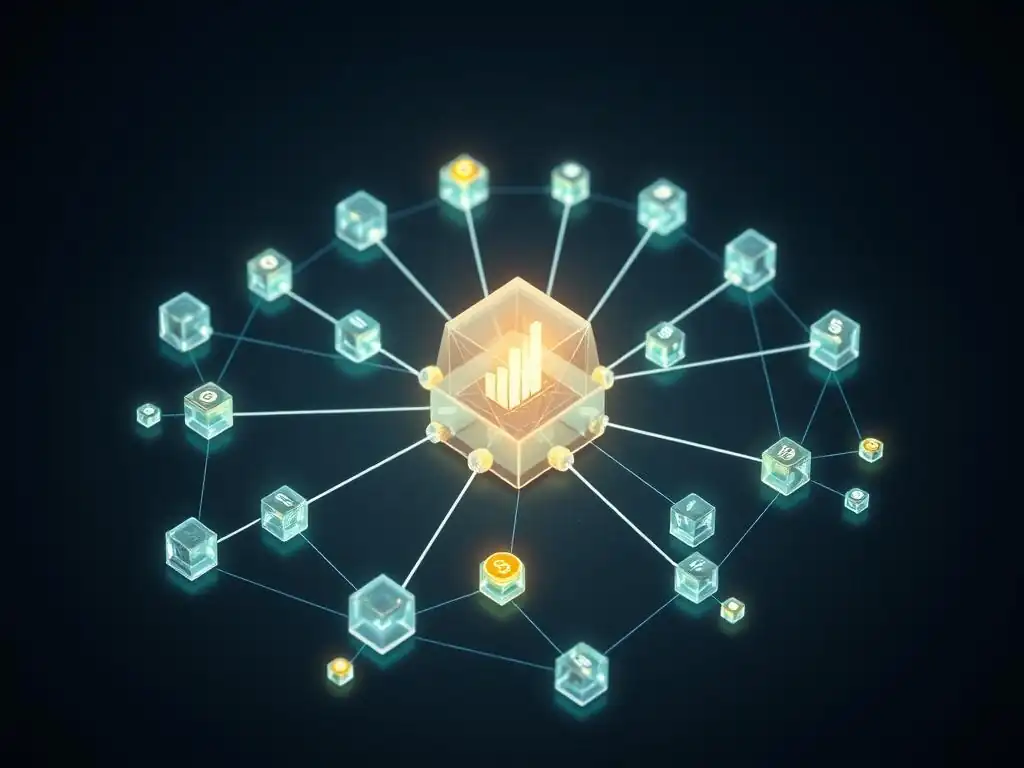
Decentralized Autonomous Organizations (DAOs) are a core component of many DeFi protocols, enabling token holders to participate in decision-making. For intermediate investors, understanding and engaging with DAO governance is not just a way to influence the protocols they use but can also be a part of their DeFi investing strategies explained through active participation and potential rewards.
Participation can range from simply voting on proposals to actively submitting proposals or delegating voting power. Engaging with governance forums and community discussions provides insights into the protocol's direction, potential risks, and upcoming features, informing investment decisions.
Understanding DAO Governance Models: Token Voting and Quadratic Voting
DAOs employ various governance models to manage decision-making. The most common is token-based voting, where the weight of a user's vote is proportional to the amount of governance tokens they hold and stake. Protocols like Compound and Uniswap primarily use this model. While straightforward, this can lead to plutocracy, where large token holders have disproportionate influence.
Quadratic voting is an alternative model (used by protocols like Gitcoin for funding public goods, though less common for core protocol changes) where the cost of additional votes increases quadratically. This gives smaller token holders relatively more influence compared to a linear token voting system, aiming to prioritize collective preferences over concentrated wealth. Understanding the specific governance model helps investors evaluate the distribution of power and potential for sybil attacks or governance capture within a protocol.
Participating in DeFi Protocol Governance: Proposal Creation and Delegation
Active participation in DeFi governance involves engaging with the community and the decision-making process. This can include discussing proposals on forums like Commonwealth or Snapshot, voting on active proposals using governance dashboards, or even creating new proposals (though proposal creation often requires a minimum token threshold or a deposit). Proposals can range from adjusting risk parameters and allocating treasury funds to upgrading smart contracts or changing tokenomics.
For those who lack the time or expertise to evaluate every proposal, delegation is a key feature. Token holders can delegate their voting power to a representative (a "delegate") who will vote on their behalf. Choosing a delegate who aligns with your views and is active in the community allows you to participate indirectly and ensure your tokens contribute to the governance process. Platforms like Boardroom or Tally provide tools to explore delegates and proposal histories.
The Role of DAOs in Shaping the DeFi Landscape: Funding Public Goods and Protocol Development
DAOs play a crucial role in the evolution and sustainability of the DeFi ecosystem. Beyond managing protocol parameters, many DAOs control significant treasuries funded by protocol revenue (e.g., fees) or initial token allocations. These treasuries are often used to fund grants for developers building on the protocol, marketing initiatives, security audits, and even public goods that benefit the wider crypto community (like infrastructure or education).
The decentralized nature of DAOs allows for community-driven innovation and resource allocation, theoretically making protocols more resilient and adaptable than centralized entities. However, DAOs face challenges, including voter apathy, governance attacks, and the complexity of decision-making with large, distributed groups. Understanding the health and activity level of a protocol's DAO provides insight into its potential for future growth and resilience, which is a factor in sophisticated DeFi investing strategies.
Emerging Trends in DeFi: Staying Ahead of the Curve
The DeFi landscape is constantly evolving, with new technologies and concepts emerging regularly. Staying ahead requires monitoring these trends to identify potential opportunities and understand how they might impact existing DeFi investing strategies. Key areas of development include scaling solutions, integration with traditional finance, and new asset classes entering the space.
Keeping pace with these trends involves reading research papers, following developers and thought leaders, and exploring new protocols as they launch. Early adoption of promising technologies, while riskier, can offer significant advantages.
Layer-2 Scaling Solutions for DeFi: Optimistic Rollups and ZK-Rollups
The high transaction costs (gas fees) and network congestion on Ethereum's mainnet (Layer 1) have been a major bottleneck for DeFi adoption and usability, particularly for smaller transactions. Layer-2 scaling solutions aim to address this by processing transactions off the main chain while inheriting its security. Optimistic Rollups (like Arbitrum and Optimism) assume transactions are valid by default but allow a period for fraud proofs. ZK-Rollups (like zkSync and StarkNet) use complex cryptographic proofs (Zero-Knowledge proofs) to verify the validity of transactions off-chain before submitting a summary to Layer 1.
The migration of DeFi protocols and users to Layer 2s significantly changes the cost and speed of DeFi interactions, making strategies like frequent yield farming adjustments, arbitrage, and even micro-lending more economically viable. Understanding the different Layer 2 technologies, their trade-offs (e.g., withdrawal times for Optimistic Rollups vs. complexity for ZK-Rollups), and the liquidity fragmented across various layers is crucial for navigating the future of DeFi investing strategies.
Real-World Asset (RWA) Integration in DeFi: Tokenized Securities and Commodities
A growing trend is the integration of Real-World Assets (RWAs) into DeFi. This involves tokenizing tangible or intangible assets from the traditional financial world, such as real estate, commodities (gold, oil), invoices, or even equity in companies, and bringing them onto the blockchain. Protocols like MakerDAO (through its RWA vaults), Centrifuge, and Maple Finance are pioneering this space.
Tokenizing RWAs can bridge the gap between traditional finance and DeFi, potentially unlocking vast amounts of capital and offering new yield-generating opportunities backed by stable, uncorrelated assets. For intermediate investors, this means exploring new asset classes within DeFi, assessing the legal and operational risks associated with tokenization (e.g., enforceability of liens, custodianship), and understanding how these assets interact with existing DeFi primitives like lending or trading. This expansion broadens the scope of potential DeFi investing strategies explained.
Institutional Adoption of DeFi: Regulatory Compliance and Custody Solutions
While DeFi originated as a grassroots movement, institutional interest is growing. Large financial institutions, hedge funds, and corporations are exploring DeFi for various use cases, including borrowing, lending, and accessing liquidity. This institutional adoption brings significant capital but also demands solutions for regulatory compliance (KYC/AML), institutional-grade custody, and robust risk management frameworks.
Protocols like Aave Arc (a permissioned version of Aave) and platforms like Fireblocks or Anchorage providing crypto custody are examples catering to this trend. Institutional participation could increase liquidity and stability in DeFi but may also lead to increased regulatory scrutiny and potentially alter market dynamics. Intermediate investors should monitor this trend as it could impact market structure, liquidity pools, and the types of DeFi investing strategies that become dominant.
Tools and Resources for Intermediate DeFi Investors
Successfully implementing intermediate DeFi investing strategies requires utilizing specialized tools and resources for tracking portfolios, conducting research, and performing due diligence. Relying solely on protocol interfaces is insufficient for managing a diversified DeFi portfolio across multiple platforms and chains.
These tools provide aggregated views of assets, historical data, on-chain analytics, and security assessments, empowering investors to make data-driven decisions and manage risks more effectively.
DeFi Portfolio Tracking Tools: Zapper and DeBank
Managing assets spread across multiple protocols, wallets, and blockchain networks can be challenging. DeFi portfolio trackers like Zapper and DeBank provide a unified dashboard to view your total net worth in DeFi, including assets held in liquidity pools, lending platforms, yield farms, and staked positions.
These tools automatically scan your connected wallet addresses across supported chains and protocols, aggregating your positions and providing real-time values. They allow you to see your exposure to different assets and protocols at a glance, track historical performance, and monitor key metrics like APY earned or impermanent loss incurred. Using such a tool is essential for maintaining oversight of a complex DeFi portfolio and executing sophisticated DeFi investing strategies.
On-Chain Analytics for DeFi Research: Nansen and Dune Analytics
On-chain analytics platforms provide deep insights into blockchain activity, which is invaluable for researching protocols and identifying trends. Platforms like Nansen offer dashboards and data streams that track large transactions ("smart money"), institutional activity, fund flows, and user behavior across various DeFi protocols. This data can help identify popular or emerging protocols, understand whale movements, and assess the health of a protocol's user base.
Dune Analytics allows users to query blockchain data using SQL and create custom dashboards to visualize metrics like TVL, trading volume, user growth, revenue generated by protocols, and more. While requiring some technical skill (or the ability to use public dashboards created by others), Dune is a powerful tool for conducting in-depth research and verifying data presented by protocols. Utilizing on-chain data is a hallmark of advanced DeFi investing strategies explained through observable blockchain activity.
Security Audits and Due Diligence Resources: CertiK and Trail of Bits
Given the smart contract risk inherent in DeFi, accessing and understanding security audits is crucial. Websites of reputable audit firms like CertiK, Trail of Bits, ConsenSys Diligence, and others often publish reports detailing their findings for audited protocols. While technical, the executive summary and list of identified vulnerabilities (and whether they were fixed) provide valuable insight into the protocol's security posture.
CertiK also provides a "Skynet Security Score" which uses a combination of on-chain data, code analysis, and team information to provide a real-time security assessment. Checking a protocol's audit history and security score on these platforms should be a standard part of the due diligence process before deploying capital, complementing the understanding of DeFi investing strategies explained by the protocol's mechanics.
Conclusion: Mastering Intermediate DeFi Investing
The Future of DeFi and Your Role
Mastering intermediate DeFi investing strategies is an ongoing journey that requires continuous learning, adaptation, and diligent risk management. As the ecosystem matures, it will likely become more integrated with traditional finance, see the rise of new scaling solutions, and potentially face increased regulatory clarity (or complexity). Your role as an intermediate investor is to navigate this evolving landscape, leverage the powerful tools DeFi offers, and participate responsibly.
By understanding the nuances of yield farming, lending, borrowing, and trading on DEXs, while prioritizing security and risk management, you position yourself to potentially benefit from the growth of decentralized finance. The future of finance is being built on blockchain, and informed participation at the intermediate level allows you to be a more active and successful part of this transformation.
Join our DeFi community
Engaging with the wider DeFi community is invaluable. Online forums, social media groups, and community calls for specific protocols are excellent places to ask questions, share insights, and learn from others. Collaboration and knowledge sharing are key aspects of the decentralized ethos. Join discussions, contribute where you can, and continue expanding your knowledge to stay ahead in the dynamic world of DeFi investing strategies explained through collective experience.
Frequently Asked Questions
What are some intermediate DeFi investing strategies explained in the article?
The article likely covers strategies beyond basic staking. Expect to see discussions around yield farming, liquidity providing with impermanent loss risk management, and perhaps even DeFi derivative investments.
How does the article approach the risks associated with DeFi investing?
The article should address the inherent risks of DeFi, such as smart contract vulnerabilities, impermanent loss, and regulatory uncertainties. It probably emphasizes the importance of due diligence and risk mitigation techniques.
Does the article delve into specific DeFi protocols or platforms?
While potentially mentioning popular platforms, the focus is likely on general principles applicable across various DeFi ecosystems. It might offer examples, but the goal is understanding broader concepts, not specific protocol recommendations.
What are some enterprise applications of blockchain technology discussed in the broader context of "Blockchain Trends"?
Beyond DeFi, "Blockchain Trends" likely covers areas like supply chain management, digital identity solutions, and secure data sharing within enterprise environments, all leveraging blockchain's immutable ledger capabilities.
How does the article address the evolving regulatory landscape surrounding DeFi?
The article probably acknowledges the uncertain regulatory environment and its potential impact on DeFi investments. It may suggest staying informed about upcoming regulations and their potential consequences for the long-term viability of DeFi projects.
The exploration of intermediate DeFi strategies, as outlined in this article, underscores the critical need for informed participation in the decentralized finance ecosystem. While the promise of high yields and financial autonomy is alluring, a deep understanding of the underlying mechanisms and associated risks is paramount for sustainable and responsible DeFi investing. The complexity of these strategies demands continuous learning and adaptation in a rapidly evolving landscape.
The impact of DeFi extends far beyond individual portfolios, shaping the future of finance itself. The potential for increased financial inclusion and transparency is undeniable, but realizing this potential requires careful consideration of security, scalability, and regulatory frameworks. The future of finance is decentralized, but it's not going to happen overnight. It's going to be a gradual process, and it's going to require a lot of education and collaboration.
- Brian Armstrong, CEO of Coinbase. This quote encapsulates the ongoing journey towards a more equitable and accessible financial system, one that demands our active engagement and critical thinking.
As you navigate the world of DeFi, remember that knowledge is your most powerful asset. Embrace the challenge of continuous learning, critically evaluate new opportunities, and prioritize risk management. Let the insights shared in this article serve as a foundation for your journey, empowering you to make informed decisions and contribute to the responsible growth of decentralized finance. The future of finance is being built now, and your informed participation can help shape it for the better.
Unlock Your DeFi Potential!
Thank you for exploring the world of decentralized finance with Blockchain Trends. We hope this guide has helped expand your understanding of DeFi. Now, it's time to apply that knowledge and unlock the full potential of DeFi.
Are you ready to take the next step?
- Start small: Participate in a carefully chosen DeFi pool with a modest amount to practice what you've learned. Gaining hands-on experience is essential.
- Explore advanced DeFi strategies such as yield farming and methods to reduce impermanent loss, utilizing blockchain analytics tools.
- Share this article with fellow blockchain enthusiasts to raise awareness and build a more informed DeFi community.
Which DeFi pool will you explore first, and what are your reasons? Share your plans in the comments below!
Leave a Reply