
Yield Farming and the Metaverse: Exploring DeFi Opportunities in Virtual Worlds

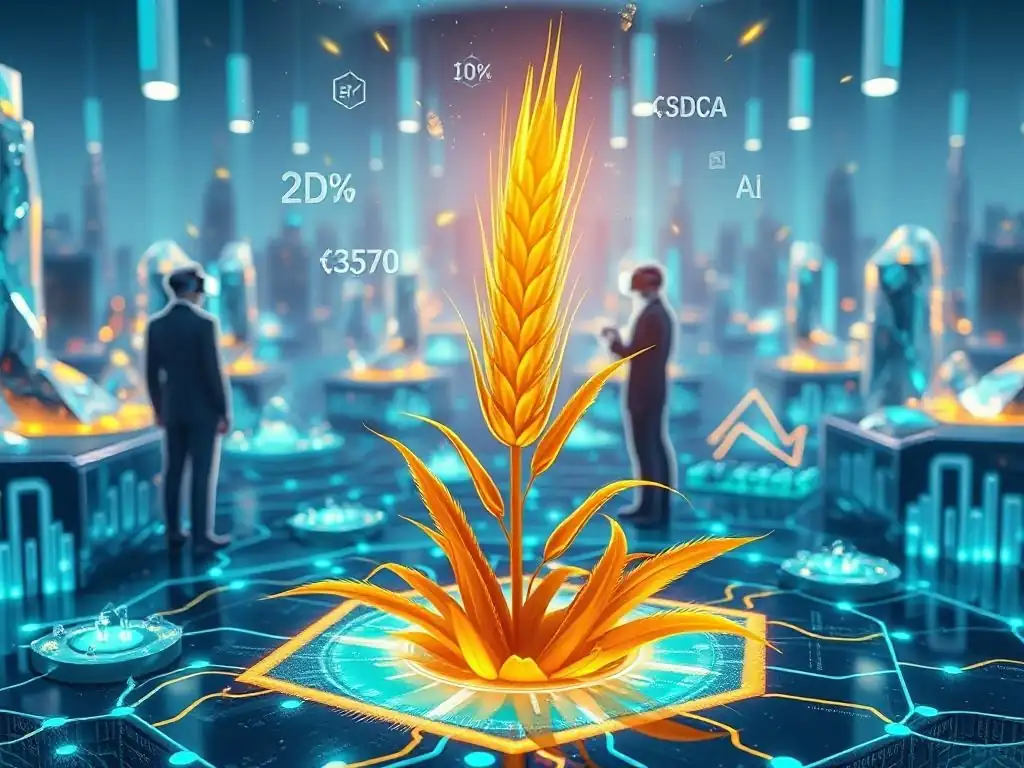
Welcome to Blockchain Trends, your compass in the rapidly evolving world of decentralized technologies!
Dive into a world where blockchain's influence extends far beyond cryptocurrencies. Are you ready to explore the cutting-edge intersection of DeFi, yield farming, and the metaverse? This article unveils the exciting opportunities and potential pitfalls of navigating DeFi landscapes within virtual worlds. Discover how you can leverage decentralized finance in the metaverse and what the future holds for this dynamic synergy. Intrigued? Let's delve into the details and unlock the secrets of the DeFi yield farming metaverse.
DeFi Yield Farming in Gaming Metaverses: Exploring Earning Opportunities
- Introduction to DeFi, Yield Farming, and Gaming Metaverses
- The Intersection of DeFi Yield Farming and Gaming Metaverse Ecosystems
- Opportunities for Yield Farming in Gaming Metaverse Platforms
- Risks and Challenges of DeFi Yield Farming in Gaming Metaverses
- Case Studies: DeFi Yield Farming in Gaming Metaverses
- The Future of DeFi Yield Farming in Gaming Metaverses
- Best Practices for Participating in Gaming Metaverse Yield Farming
- Conclusion: The Potential of DeFi in Gaming Metaverses
-
Frequently Asked Questions
- What is yield farming in the context of the metaverse?
- How does blockchain technology underpin DeFi yield farming in the metaverse?
- What are some potential risks associated with DeFi yield farming in the metaverse?
- What are some real-world applications of DeFi yield farming within the metaverse beyond just earning rewards?
- How might regulation impact the future of DeFi yield farming metaverse opportunities?
- Final Reflection: Cultivating Value in the Digital Frontier
- Dive Deeper into the Metaverse's Yielding Potential!
Introduction to DeFi, Yield Farming, and Gaming Metaverses
Understanding Decentralized Finance (DeFi) and its Core Principles
Decentralized Finance, or DeFi, represents a paradigm shift in financial services, leveraging blockchain technology to remove intermediaries like banks and brokerages. Its core principles revolve around openness, transparency, and permissionless access. Anyone with an internet connection can interact with DeFi protocols to lend, borrow, trade, and earn interest on their digital assets, without needing approval from a central authority. This ecosystem is built on smart contracts, self-executing agreements where the terms are directly written into code, running primarily on blockchains like Ethereum, but expanding to others.
The transparency inherent in DeFi means that all transactions are recorded on a public ledger, auditable by anyone. This contrasts sharply with traditional finance, where internal operations are often opaque. Furthermore, DeFi applications are designed to be composable, meaning different protocols can interact with each other like financial LEGO blocks, enabling complex strategies and innovative financial products. The growth of DeFi has been exponential, attracting billions of dollars in total value locked (TVL) across various protocols, demonstrating a strong appetite for decentralized financial alternatives.
What is Yield Farming? Earning Crypto Through Liquidity Provision
Yield farming is a key strategy within the DeFi ecosystem where participants earn rewards by providing liquidity to decentralized protocols. Users deposit or "stake" their crypto assets into liquidity pools, which are essential for the operation of decentralized exchanges (DEXs) and other DeFi applications that require pools of tokens for trading or lending. In return for providing this liquidity, farmers earn fees generated from trades within the pool and often receive additional rewards in the form of new tokens, frequently the protocol's native governance token.
The primary goal of yield farming is to maximize returns on crypto holdings by moving them between different DeFi protocols to find the highest yields. These yields are typically expressed as an Annual Percentage Yield (APY) or Annual Percentage Rate (APR), though these figures can be highly variable and are not guaranteed. Successful yield farming often involves understanding complex strategies, monitoring market conditions, and navigating the risks associated with smart contracts and token price volatility. It has become a popular, albeit risky, method for users to actively grow their digital asset portfolios.
Gaming Metaverses Defined: Immersive Blockchain-Based Games
Gaming metaverses are persistent, immersive virtual worlds built on blockchain technology, where users can interact with each other, own digital assets, and participate in virtual economies. Unlike traditional online games where assets are typically owned by the game developer, blockchain-based metaverses allow players true ownership of their in-game items, land, and characters, often represented as Non-Fungible Tokens (NFTs). These virtual worlds are not just games; they are evolving into social spaces, marketplaces, and platforms for various activities.
Key characteristics of gaming metaverses include decentralization, often involving community governance; interoperability, allowing assets to potentially be used across different platforms; and player-driven economies. Users can buy, sell, trade, and even build within these worlds. Examples include platforms like Decentraland, The Sandbox, and Axie Infinity, each offering unique experiences but sharing the common foundation of leveraging blockchain for digital ownership and economic activity. The convergence of gaming and blockchain opens up new possibilities for players to earn real-world value from their time and participation in virtual environments.
The Intersection of DeFi Yield Farming and Gaming Metaverse Ecosystems
How Yield Farming Enhances Gaming Metaverse Economies
The integration of DeFi yield farming mechanisms significantly enhances the economic complexity and potential of gaming metaverses. By enabling players to earn passive income or generate value from their digital assets beyond simple trading or in-game activities, yield farming creates deeper economic loops. Players can stake their in-game tokens or NFTs to earn rewards, provide liquidity for the metaverse's native currency on DEXs, or even participate in lending protocols using their metaverse assets as collateral. This transforms static digital collectibles or currencies into productive assets.
This enhanced economic activity attracts more users and developers to the metaverse. The potential for DeFi yield farming metaverse opportunities encourages participation not just from gamers, but also from individuals interested in financial strategies within a virtual context. It fosters a more robust internal economy where assets have multiple potential uses and value streams, moving beyond speculative trading to utility-driven earnings. This integration is a key driver in the evolution of gaming metaverses from simple games to complex, living digital economies.
DeFi Integration in Virtual Game Worlds: Use Cases and Examples
DeFi integration in gaming metaverses takes various forms, offering diverse use cases. One common example is the establishment of liquidity pools for the metaverse's native token on decentralized exchanges, often within the metaverse itself or on external DEXs like Uniswap or SushiSwap. Users who provide liquidity for token pairs (e.g., MANA/ETH for Decentraland or AXS/ETH for Axie Infinity) earn trading fees and sometimes additional tokens as yield farming rewards.
Another significant use case is the integration of staking mechanisms directly related to gameplay or asset ownership. Players might stake their governance tokens (like AXS) to earn a share of game revenue or emissions, or stake specific high-value NFTs (like virtual land or rare characters) to earn passive income or in-game rewards. Lending protocols could also emerge, allowing players to borrow or lend in-game currency or assets.
For instance, a player needing funds for a virtual land purchase might take a loan using other digital assets as collateral. These integrations blur the lines between gaming and finance, creating unique DeFi yield farming metaverse opportunities.
Exploring In-Game Tokens and Liquidity Pools for Yield
In-game tokens are the lifeblood of gaming metaverse economies, and they are central to many DeFi yield farming metaverse strategies. These tokens serve various purposes, from currency for transactions within the game (like SLP in Axie Infinity) to governance tokens granting voting rights (like AXS in Axie Infinity or MANA in Decentraland). The value and utility of these tokens are intrinsically linked to the success and activity within the metaverse.
Liquidity pools involving these in-game tokens on decentralized exchanges are prime locations for yield farming. By depositing pairs of tokens, such as the metaverse token paired with a stablecoin (e.g., SAND/USDT) or another major cryptocurrency (e.g., MANA/ETH), users facilitate trading and earn a portion of the transaction fees. Many metaverse projects also offer additional token incentives to liquidity providers to encourage deep liquidity for their native tokens, further boosting the potential yield for farmers. Understanding the tokenomics and liquidity pool dynamics of a specific metaverse is crucial before engaging in this type of yield farming.
Opportunities for Yield Farming in Gaming Metaverse Platforms
Staking In-Game Assets and NFTs for Rewards
Staking in-game assets and NFTs is a burgeoning area within DeFi yield farming metaverse ecosystems. Unlike traditional token staking, which often involves locking fungible tokens in a contract, NFT staking allows owners of unique digital items to lock them up to earn rewards. These rewards can take various forms, including emissions of the metaverse's utility or governance token, distribution of a share of platform revenue, or even the chance to earn more NFTs or in-game items.
For example, owners of virtual land parcels in metaverses like The Sandbox or Decentraland may have opportunities to stake their land NFTs. Staking land might yield governance tokens (like SAND or MANA), or grant access to exclusive events and earning opportunities within the platform.
Similarly, staking rare character NFTs in games like Axie Infinity (though their primary earning mechanism is battling) or other emerging NFT-centric games could provide passive income streams based on the rarity or utility of the staked asset. This offers a way for players and investors to generate yield from their valuable digital collectibles without having to sell them.
Providing Liquidity for Gaming Metaverse Tokens
Providing liquidity for gaming metaverse tokens on decentralized exchanges is a fundamental DeFi yield farming metaverse activity. By contributing to liquidity pools, participants enable seamless trading of the metaverse's native currency against other cryptocurrencies. This is critical for the health and accessibility of the metaverse's economy, allowing players to easily buy and sell tokens earned in-game or needed for purchases.
Liquidity providers typically earn two types of rewards: a percentage of the trading fees generated by the pool and, often, additional tokens from the metaverse project as liquidity mining incentives. The Annual Percentage Yield (APY) from these activities can vary significantly based on trading volume, the number of liquidity providers, and the amount of incentive tokens being distributed.
For instance, providing liquidity for the MANA/ETH pair on Uniswap allows earning trading fees, while some projects might offer additional MANA or a different token as a bonus for a set period. This mechanism is vital for bootstrapping liquidity for new metaverse tokens and offers a direct way for users to participate in and profit from the token's ecosystem growth.
Participating in Game Governance Through DeFi
DeFi principles extend beyond financial transactions into the governance of decentralized platforms, including gaming metaverses. Many blockchain-based metaverses issue governance tokens (like AXS for Axie Infinity, MANA for Decentraland, or SAND for The Sandbox) that grant holders the right to vote on proposals affecting the future development, policies, and economic parameters of the virtual world. This decentralized governance model empowers the community and token holders to have a say in the metaverse's evolution.
Participation in governance is often linked to staking these tokens. By staking governance tokens, users not only secure the network or protocol in some cases but also activate their voting rights and may earn additional token rewards. This creates a form of DeFi yield farming metaverse where the yield is tied to active participation in the platform's decision-making process. For example, staking AXS tokens allows holders to vote on proposals related to the Axie ecosystem and earn staking rewards from a community treasury. This aligns the incentives of token holders with the long-term success and decentralization of the metaverse.
Risks and Challenges of DeFi Yield Farming in Gaming Metaverses
Smart Contract Vulnerabilities in Gaming DeFi Protocols
A significant risk when engaging in DeFi yield farming metaverse activities is the potential for smart contract vulnerabilities. DeFi protocols, including those integrated into gaming metaverses, are built on smart contracts – code running on the blockchain. If this code contains bugs, exploits, or backdoors, malicious actors can potentially drain funds from liquidity pools or staking contracts. While audits by reputable security firms are common, they do not eliminate risk entirely.
History is replete with examples of DeFi exploits resulting in substantial losses. For instance, vulnerabilities in unaudited or newly launched protocols have led to millions of dollars being stolen. When interacting with a gaming metaverse's DeFi features, users are placing trust in the security and integrity of the underlying smart contracts. Thorough due diligence, including checking for audit reports and understanding the protocol's architecture, is crucial, but the risk of unforeseen smart contract failure or exploitation remains a significant challenge.
Regulatory Uncertainty Surrounding Gaming Metaverse Yield Farming
The regulatory landscape for cryptocurrency and blockchain technology is still evolving globally, and this uncertainty extends to DeFi yield farming metaverse activities. Governments and financial regulators are grappling with how to classify and oversee digital assets, decentralized protocols, and virtual economies. This lack of clear regulation creates potential risks for users and platforms operating within this space.
Depending on jurisdiction, yield farming activities could be viewed differently – perhaps as securities, investment contracts, or even gambling. Changes in regulations could impact the legality of certain yield farming strategies, require platforms to implement Know Your Customer (KYC) or Anti-Money Laundering (AML) procedures, or impose taxes on earnings in ways that are currently unclear.
For example, earning token rewards through liquidity provision or staking could be considered taxable income or capital gains, but the timing and calculation methods are often ambiguous under current laws. This regulatory uncertainty poses a challenge for both the growth and adoption of DeFi yield farming metaverse opportunities and for individuals participating in them.
Impermanent Loss and Volatility in Gaming Liquidity Pools
Impermanent loss is a common risk faced by liquidity providers in decentralized finance, particularly relevant to DeFi yield farming metaverse liquidity pools. It occurs when the price of the tokens deposited into a liquidity pool changes relative to each other after deposit. The greater the price divergence, the larger the impermanent loss. This loss is "impermanent" because it only materializes if the liquidity provider withdraws their assets from the pool at a different price ratio than when they deposited.
While liquidity providers earn trading fees and yield farming rewards, these earnings might not always be enough to offset the potential losses incurred due to impermanent loss, especially in highly volatile markets. Gaming metaverse tokens, particularly newer ones, can experience significant price swings.
For example, if a user provides liquidity for a MANA/ETH pool and the price of MANA skyrockets relative to ETH, the liquidity provider will end up with fewer MANA tokens and more ETH than they initially deposited, potentially resulting in a lower dollar value than if they had simply held the tokens outside the pool. Understanding this risk is vital before participating in liquidity provision as part of a DeFi yield farming metaverse strategy.
Case Studies: DeFi Yield Farming in Gaming Metaverses

Case Study 1: Axie Infinity and its SLP/AXS Yield Farming
Axie Infinity, a popular play-to-earn game, provides a compelling case study for DeFi yield farming metaverse mechanics. The game utilizes two primary tokens: Smooth Love Potion ( SLP), an uncapped utility token earned through gameplay (battling and breeding), and Axie Infinity Shards ( AXS), the capped governance token. While earning SLP directly through playing is the main "play-to-earn" mechanic, DeFi opportunities exist around both tokens.
Players and investors can participate in liquidity pools for AXS and SLP on decentralized exchanges. For instance, providing liquidity for AXS/ ETH or SLP/ ETH pairs on platforms like Katana (Axie's Ronin-based DEX) allows users to earn trading fees. Furthermore, staking AXS directly on the Axie Infinity platform enables token holders to earn a share of the community treasury and newly emitted AXS tokens, representing a direct form of DeFi yield farming metaverse within the game's ecosystem. At its peak, AXS staking offered substantial APY, attracting significant capital, though yields fluctuate based on various factors including the amount staked and token emissions schedule. This model demonstrates how utility and governance tokens within a gaming metaverse can be integrated into DeFi protocols to create earning opportunities.
Case Study 2: Decentraland and MANA Staking Opportunities
Decentraland, a virtual world platform, also offers DeFi yield farming metaverse possibilities centered around its native token, MANA. MANA is an ERC-20 token used for transactions within the Decentraland ecosystem, such as buying LAND parcels, avatars, and wearables. While Decentraland doesn't have a direct in-game staking mechanism for MANA tied explicitly to gameplay yield in the same way Axie does with SLP or AXS staking for treasury rewards, MANA holders can participate in DeFi yield farming on external protocols.
Users can provide liquidity for MANA on various DEXs like Uniswap or SushiSwap, typically pairing MANA with ETH or stablecoins like USDT. By doing so, they earn a percentage of the trading fees generated by those pools. Additionally, MANA is often listed on centralized and decentralized lending platforms, allowing holders to lend their MANA to borrowers and earn interest. The Decentraland DAO (Decentralized Autonomous Organization), which governs the platform, is also exploring ways to integrate more direct DeFi mechanisms, potentially including staking or yield generation opportunities tied to participation in the ecosystem or ownership of LAND NFTs in the future. While perhaps less integrated within the game world than Axie's staking, MANA provides ample opportunity for DeFi yield farming metaverse strategies on broader DeFi platforms.
Analyzing the ROI and User Engagement in Gaming Metaverse DeFi Initiatives
Analyzing the Return on Investment (ROI) and user engagement in DeFi yield farming metaverse initiatives reveals a dynamic and often volatile landscape. ROI is typically measured by the Annual Percentage Yield (APY) or Annual Percentage Rate (APR) offered by liquidity pools or staking programs. These rates can be extremely high, particularly for new or popular protocols aiming to attract initial liquidity, sometimes reaching triple or even quadruple digits historically for certain pools or staking programs. However, these high yields often come with commensurately high risks, including impermanent loss, token price crashes, and smart contract exploits.
User engagement in these DeFi features varies. For some metaverses like Axie Infinity, the earning potential through mechanisms like SLP farming (playing the game) and AXS staking was a primary driver of user adoption and engagement, attracting millions of players and investors at its peak. For others, like Decentraland, DeFi engagement around MANA is more tied to broader crypto investment strategies rather than being a core part of the daily in-game loop for most players. The success of DeFi yield farming metaverse initiatives in driving engagement depends heavily on their integration into the core gameplay loop, the sustainability of the yields offered, and the overall health and popularity of the metaverse itself. Projects that successfully weave DeFi into the fabric of the virtual economy tend to see higher and more sustained user engagement in these financial activities.
The Future of DeFi Yield Farming in Gaming Metaverses
Emerging Trends in Gaming Metaverse DeFi and Yield Optimization
The future of DeFi yield farming metaverse is poised for innovation, with several emerging trends focused on optimizing yield and integrating DeFi more seamlessly into gameplay. One trend is the development of more sophisticated yield-bearing NFTs, where the NFT itself represents a position in a yield farming protocol or generates passive income directly based on its characteristics or use within the game.
Another is the rise of "GameFi" (Game Finance) platforms that specifically design gameplay mechanics to align with DeFi incentives, making yield farming feel less like a separate financial activity and more like an integral part of the game.
Furthermore, we are seeing advancements in cross-chain compatibility and Layer 2 solutions to reduce transaction costs (gas fees) associated with interacting with DeFi protocols, which has been a significant barrier to entry for many. Automated yield optimization strategies, similar to those seen in broader DeFi ("yield aggregators"), are also likely to become more prevalent within metaverses, allowing users to automatically allocate assets to the highest-yielding opportunities across different in-game or related protocols. These trends aim to make DeFi yield farming metaverse opportunities more accessible, efficient, and integrated into the virtual experience.
The Role of NFTs in Gaming Metaverse Yield Farming Strategies
NFTs are set to play an increasingly central role in DeFi yield farming metaverse strategies. Initially primarily seen as collectibles or unique in-game items, NFTs are evolving into functional assets that can generate yield. Beyond simple NFT staking (locking an NFT to earn tokens), future applications could include using NFTs as collateral within decentralized lending protocols specifically designed for gaming assets, or integrating yield-bearing mechanisms directly into the NFT's smart contract.
Imagine owning a virtual property NFT that automatically generates rental income distributed via a smart contract, or a rare weapon NFT that, when staked in a specific game mode, yields a high APY in the game's utility token. The uniqueness and verifiable ownership of NFTs make them ideal candidates for these types of specialized DeFi applications within virtual worlds. As the design space for NFTs expands, their potential as productive assets within DeFi yield farming metaverse ecosystems will likely unlock new and creative ways for users to earn.
Predictions for the Growth of DeFi in Gaming Metaverses
Predictions for the growth of DeFi in gaming metaverses are overwhelmingly positive, suggesting a significant expansion in both volume and complexity. As metaverses mature and attract larger user bases, the economic activity within them will naturally increase, creating more opportunities for financial services like lending, borrowing, and yield generation. The total value locked (TVL) in DeFi protocols directly associated with or operating within gaming metaverses is expected to grow substantially from current levels, potentially reaching billions of dollars as more assets and users enter the space.
The integration of DeFi is likely to become a standard feature rather than a novel one for new metaverse projects, seen as essential for building robust, player-owned economies. We can anticipate more sophisticated financial instruments tailored specifically for virtual assets, such as derivatives based on in-game item values or insurance protocols against smart contract risks within the metaverse. The convergence of gaming, social experiences, and advanced financial mechanics through DeFi yield farming metaverse initiatives is expected to drive significant innovation and attract a diverse audience of gamers, investors, and digital entrepreneurs.
Best Practices for Participating in Gaming Metaverse Yield Farming
Due Diligence and Security Considerations
Engaging in DeFi yield farming metaverse opportunities requires rigorous due diligence and a strong focus on security. Before committing funds or assets to any protocol or liquidity pool, thoroughly research the project: understand the team behind it, examine the tokenomics, read the whitepaper, and look for security audit reports from reputable firms. Be wary of projects offering unsustainably high APYs, as these often come with extreme risks, including potential rug pulls or exploits.
Security best practices are paramount. Use strong, unique passwords and enable two-factor authentication (2FA) on all exchange and wallet accounts. Store private keys securely and never share them. When interacting with smart contracts, ensure you are using the correct, verified contract address and understand the permissions you are granting. Use hardware wallets for storing significant amounts of assets. Phishing scams targeting metaverse users are common, so be vigilant about clicking on suspicious links or connecting your wallet to unverified websites.
Managing Risk and Diversifying Investments
Managing risk is crucial for anyone participating in DeFi yield farming metaverse. The volatile nature of cryptocurrency markets, combined with the specific risks of DeFi (smart contract risk, impermanent loss) and the nascent stage of many metaverse projects, means that capital is always at risk. Never invest more than you can afford to lose. Understand the potential downsides, such as impermanent loss in liquidity pools or the risk of a staked token's value plummeting.
Diversification is a key strategy for mitigating risk. Instead of putting all your capital into one high-yield opportunity within a single metaverse, consider spreading investments across different metaverses, different types of yield farming strategies (staking, liquidity provision), and even different blockchain networks. Diversifying across various assets and protocols can help cushion the impact if one particular investment performs poorly. A well-rounded portfolio might include a mix of stablecoin yield farming (lower risk, lower yield), blue-chip crypto staking, and higher-risk, potentially higher-reward DeFi yield farming metaverse opportunities.
Staying Informed about the Evolving Gaming Metaverse DeFi Landscape
The landscape of DeFi yield farming metaverse is constantly evolving, with new projects, protocols, and strategies emerging regularly. Staying informed is essential for identifying opportunities and avoiding pitfalls. Follow reputable news sources, join official community channels (like Discord or Telegram) for the metaverses and protocols you are interested in, and engage with experienced participants.
Monitor changes in tokenomics, updates to smart contracts, and announcements regarding new yield farming programs or changes in existing ones. Be aware of market trends and price movements of the tokens you hold or plan to use for yield farming. Information asymmetry can be a disadvantage in this fast-paced environment, so dedicating time to continuous learning and monitoring is a best practice for anyone looking to navigate the opportunities and challenges of earning yield in virtual worlds.
Conclusion: The Potential of DeFi in Gaming Metaverses
The Synergistic Relationship Between DeFi and Virtual Game Worlds
The relationship between Decentralized Finance and virtual game worlds, or metaverses, is proving to be deeply synergistic. DeFi provides the financial rails necessary to build true player-owned economies within these virtual spaces, moving beyond traditional in-game currencies to assets with real-world value and utility. Mechanisms like yield farming transform passive digital collectibles and tokens into productive assets, offering players and investors new ways to earn from their participation and ownership.
Conversely, gaming metaverses provide a fertile ground for DeFi innovation, offering unique assets (like NFTs) and dynamic economic environments that push the boundaries of what's possible with decentralized finance. The blend of gameplay, social interaction, and financial opportunity inherent in the DeFi yield farming metaverse concept creates engaging ecosystems that can attract a broader audience than either DeFi or gaming could on their own. This synergy is a driving force behind the rapid development and increasing complexity of virtual economies.
Navigating the future of finance in gaming means understanding the convergence of entertainment and financial opportunity. The rise of DeFi yield farming metaverse is a clear indicator that players are no longer just consumers of digital content but are becoming participants and stakeholders in virtual economies. Earning potential is becoming a significant motivator for engagement, alongside traditional gameplay enjoyment.
This future involves players making financial decisions within game contexts – deciding whether to stake a rare item, provide liquidity for a game token, or leverage in-game assets. It requires a shift in mindset, treating virtual assets with the same considerations as real-world investments, albeit with unique risks specific to the digital realm. As metaverses become more sophisticated, so too will the financial strategies employed within them, demanding a blend of gaming prowess and financial literacy.
Final Thoughts on Opportunities and Challenges in Gaming Metaverse Yield Farming
DeFi yield farming metaverse presents exciting opportunities for earning potential, asset ownership, and participation in cutting-edge digital economies. The ability to generate yield from in-game tokens and NFTs, contribute to liquidity, and even participate in governance offers innovative avenues for value creation within virtual worlds. Early participants have seen significant returns, highlighting the potential rewards for those willing to explore this frontier.
However, these opportunities are accompanied by significant challenges. The risks of smart contract vulnerabilities, impermanent loss, token price volatility, and regulatory uncertainty are substantial and should not be underestimated. The space is nascent and rapidly changing, requiring continuous learning and adaptation. While the potential for DeFi yield farming metaverse is immense, success requires careful research, robust risk management, and a clear understanding that high potential rewards are often correlated with high risks. Approaching this space with caution, diligence, and a long-term perspective is key to navigating its complexities successfully.
Frequently Asked Questions
What is yield farming in the context of the metaverse?
Yield farming in the metaverse involves staking or lending crypto assets within virtual world platforms to earn rewards, creating a decentralized finance (DeFi) ecosystem inside these immersive environments. It utilizes DeFi protocols for generating returns.
How does blockchain technology underpin DeFi yield farming in the metaverse?
Blockchain provides the underlying infrastructure for secure and transparent transactions, enabling smart contracts that automate the yield farming process and ensure the immutability of financial records within metaverse platforms.
What are some potential risks associated with DeFi yield farming in the metaverse?
Risks include impermanent loss due to price volatility of assets, smart contract vulnerabilities that could be exploited, and the regulatory uncertainty surrounding DeFi and metaverse activities, which can have an impact.
What are some real-world applications of DeFi yield farming within the metaverse beyond just earning rewards?
It can enable new economic models for virtual land ownership, funding for metaverse projects, and the creation of decentralized autonomous organizations (DAOs) that govern virtual economies, fostering innovation.
How might regulation impact the future of DeFi yield farming metaverse opportunities?
Clearer regulatory frameworks are needed to address investor protection, combat money laundering, and provide legal certainty for DeFi activities in the metaverse, influencing its long-term growth and adoption.
Final Reflection: Cultivating Value in the Digital Frontier
The convergence of DeFi yield farming and the metaverse isn't just a technological novelty; it represents a fundamental shift in how we perceive and interact with value creation. What was once confined to the traditional financial system is now blossoming in immersive digital environments, offering unprecedented opportunities for participation and ownership. This burgeoning ecosystem demands our attention, not just as investors, but as architects of a new digital economy.
This intersection of finance and virtual reality has profoundly influenced the cultural landscape, blurring the lines between the physical and digital realms. The potential for individuals to build wealth and communities within these virtual worlds is immense, fostering a sense of belonging and empowerment that transcends geographical boundaries. The metaverse is the next evolution of social connection. It's a 3D space where you can share immersive experiences with people, even when you can't be together in person – and do things together you couldn't do in the physical world.
- Mark Zuckerberg (While not directly about DeFi, this quote highlights the potential for immersive experiences and connection, which is key to the metaverse's appeal for DeFi applications).
As we stand on the cusp of this digital revolution, let us not merely observe, but actively participate in shaping its future. Consider how you can leverage the principles of DeFi yield farming within the metaverse to not only cultivate financial returns, but also to contribute to the creation of vibrant, equitable, and sustainable virtual economies. The seeds of tomorrow's digital landscape are being sown today; let us nurture them with wisdom, foresight, and a commitment to building a better future for all.
Dive Deeper into the Metaverse's Yielding Potential!
Thank you for exploring the fascinating intersection of yield farming and the Metaverse. Now that you've uncovered the possibilities, it’s time to put that knowledge into action and shape your own virtual financial future.
Here are a few steps you can take to get started:
- Research a Metaverse platform that offers yield farming opportunities. Focus on projects with sustainable tokenomics and strong community support.
- Join the community forum to share your insights! Discuss your favorite Metaverse platforms and yield farming strategies with fellow enthusiasts.
- Experiment with a small amount of cryptocurrency on a Metaverse DeFi platform. Consider purchasing virtual land as an NFT and exploring ways to monetize it.
Ready to unlock the full potential of DeFi in virtual worlds? Which Metaverse platform are you most excited to explore for yield farming, and what strategies are you considering? Share your thoughts below!
Leave a Reply