
Beyond Supply Chain: Unexpected Use Cases for Enterprise Blockchain Platforms


Welcome to Blockchain Trends, your gateway to understanding the revolutionary impact of blockchain beyond the headlines. This isn't just about crypto; we delve into the real-world applications transforming industries worldwide. Ready to explore the innovative potential of enterprise blockchain supply chain applications and beyond? Discover how blockchain is revolutionizing more than just logistics in "Beyond Supply Chain: Unexpected Use Cases for Enterprise Blockchain Platforms." Prepare to be surprised – the future of decentralized systems is here.
- Use Case 1: Enhanced Digital Identity Management with Blockchain
- Use Case 2: Revolutionizing Intellectual Property Management
- Use Case 3: Transforming Voting and Governance Systems
- Use Case 4: Decentralized Finance (DeFi) for Enterprises
- Use Case 5: Secure Data Sharing and Collaboration
- Use Case 6: Healthcare Data Management and Interoperability
- Use Case 7: Energy Sector Applications
- Overcoming Implementation Challenges for Enterprise Blockchain Solutions
- The Future of Enterprise Blockchain Adoption
- Conclusion: Realizing the Full Potential of Enterprise Blockchain Platforms
-
Frequently Asked Questions
- What are some unexpected applications of enterprise blockchain platforms beyond supply chain management?
- How does blockchain enhance data security in enterprise applications?
- What are some regulatory considerations for implementing enterprise blockchain solutions?
- How does enterprise blockchain differ from public blockchains like Bitcoin or Ethereum?
- What is the future outlook for decentralized systems and enterprise blockchain adoption?
- Final Reflection: Embracing Blockchain's Transformative Potential
- Unlock the Blockchain Potential!
Use Case 1: Enhanced Digital Identity Management with Blockchain
Streamlining Identity Verification Processes with Decentralized Ledgers
Traditional identity verification processes are often cumbersome, costly, and prone to errors and fraud. Enterprises across various sectors, from financial services performing Know Your Customer (KYC) checks to online platforms onboarding users, face significant operational burdens. Implementing decentralized identity solutions powered by blockchain can drastically streamline these procedures. Instead of relying on centralized databases or repeated submissions of documents, individuals can create a self-sovereign digital identity, verifiable credentials stored on a distributed ledger.
This approach allows users to control their data and selectively share verified attributes (like "over 18" or "accredited investor") without revealing underlying sensitive information. For instance, a financial institution using a blockchain-based identity system might reduce the average time for customer onboarding from days to minutes. While enterprise blockchain supply chain applications focus on tracking goods, identity management shifts the focus to verifying participants, potentially saving significant costs associated with manual checks and compliance overhead, which can easily run into tens of dollars per verification in some industries.
Improving Data Security and User Control over Personal Information
Centralized identity databases represent attractive targets for cyber attackers, leading to massive data breaches that compromise millions of records annually. The average cost of a data breach globally reached approximately $4.35 million in 2022, highlighting the urgent need for more secure identity management. Blockchain's inherent cryptographic security and decentralized nature make it significantly harder for attackers to compromise large volumes of identity data simultaneously, unlike traditional systems or even some early enterprise blockchain supply chain applications that might still rely on centralized data storage layers.
Furthermore, blockchain empowers users with greater control over their personal information. Instead of companies holding vast amounts of sensitive data, users maintain custody of their digital identity and grant permissions for data access on a need-to-know basis. This paradigm shift not only enhances security by reducing the attack surface but also aligns with evolving global data privacy regulations like GDPR, potentially reducing compliance risks and building greater trust between enterprises and their users, a level of control often not present in traditional data-sharing models, including many enterprise blockchain supply chain applications.
Use Case 2: Revolutionizing Intellectual Property Management
Securely Registering and Tracking Ownership of Digital Assets
Managing intellectual property (IP), especially digital assets, presents unique challenges regarding proof of ownership, creation timestamps, and tracking usage rights. Creators and enterprises often struggle with establishing definitive evidence of their work's originality and history. Blockchain technology offers a robust solution by providing an immutable and transparent ledger for registering digital assets and recording ownership details. When a digital asset (like a piece of art, music, or software code) is registered on a blockchain, a unique digital fingerprint (hash) is created and timestamped, providing undeniable proof of its existence at that specific time.
This secure registration process simplifies the process of establishing provenance compared to fragmented traditional systems. Subsequent transfers of ownership or licensing agreements can also be recorded on the ledger, creating a clear, auditable history. While enterprise blockchain supply chain applications track physical goods from origin to destination, IP management uses similar principles to track the lifecycle of intangible digital assets, offering a verifiable trail that is resistant to tampering and fraud, unlike paper-based records or centralized databases susceptible to alteration.
Preventing Copyright Infringement and Counterfeiting
Copyright infringement and the counterfeiting of digital goods represent significant financial losses for creators and businesses, estimated to be in the billions of dollars annually across various sectors. Proving infringement and enforcing rights can be complex and costly in traditional legal frameworks. Blockchain's ability to securely register and track ownership provides a powerful tool for combating these issues. By having a verifiable, timestamped record of creation and ownership on a blockchain, rightsholders can more easily demonstrate their claim in cases of infringement.
Furthermore, for digital goods that might be licensed or sold, blockchain can be used to create unique tokens (NFTs) representing ownership or usage rights, making it difficult to create unauthorized copies or claim false ownership. While enterprise blockchain supply chain applications focus on verifying the authenticity of physical products moving through a distribution network, IP management leverages blockchain to verify the authenticity and ownership of digital creations, providing a new layer of defense against piracy and unauthorized use that is crucial in the increasingly digital economy.
Use Case 3: Transforming Voting and Governance Systems
Increasing Transparency and Security in Elections
Traditional voting systems, whether paper-based or electronic, often face scrutiny regarding transparency, security, and susceptibility to fraud or errors. Concerns about ballot tampering, voter impersonation, and the accuracy of vote counting can undermine public trust in democratic processes. Blockchain technology offers a potential pathway to significantly enhance the security and transparency of elections. By recording each vote as an encrypted transaction on a distributed, immutable ledger, blockchain ensures that once a vote is cast and recorded, it cannot be altered or deleted without detection.
Furthermore, the public nature of the blockchain ledger (while preserving voter anonymity through encryption and zero-knowledge proofs) allows for real-time auditing and verification of the vote count by multiple parties, drastically increasing transparency compared to opaque centralized systems. While enterprise blockchain supply chain applications track goods, blockchain voting tracks ballots, ensuring that every valid vote is counted exactly once and that the final tally accurately reflects the recorded votes. Pilot projects have shown promising results in terms of security and auditability, though challenges remain regarding scalability and accessibility for large-scale public elections.
Facilitating Decentralized Autonomous Organizations (DAOs)
Beyond public elections, blockchain is fundamentally changing how organizations can be governed through the advent of Decentralized Autonomous Organizations (DAOs). Unlike traditional hierarchical enterprises, DAOs are governed by rules encoded in smart contracts on a blockchain, and decisions are made through proposals and voting by token holders. This model promotes transparency and direct participation in governance, removing reliance on centralized authorities or intermediaries. Every proposal, discussion, and vote is recorded on the public ledger, creating a fully auditable governance history.
This decentralized governance model is being explored by various entities, from open-source projects to investment funds and even some large corporations for specific functions. Token holders vote on key decisions, such as how funds are allocated, new features are implemented, or rules are changed. While enterprise blockchain supply chain applications optimize operational flows for physical goods, DAOs leverage blockchain to create entirely new, transparent, and community-driven models for organizational decision-making and management, representing a significant shift in how entities can operate in the digital age.
Use Case 4: Decentralized Finance (DeFi) for Enterprises
Exploring Enterprise DeFi: Tokenized Securities for Corporate Fundraising
While much of the early focus on Decentralized Finance (DeFi) has been on retail users and speculative activities, the underlying principles of tokenization and automated financial processes are highly relevant for enterprises. One significant area is the use of tokenized securities for corporate fundraising. Instead of traditional methods like issuing bonds or shares through complex, multi-party processes, companies can issue digital tokens representing ownership or debt directly on a blockchain platform. This can potentially streamline the issuance process, reduce intermediaries, and lower associated costs, which can be substantial in traditional capital markets.
Tokenizing assets like real estate, company equity, or debt allows for fractional ownership and increased liquidity. For instance, a private company might issue tokenized shares to a broader pool of accredited investors globally, simplifying compliance and transfer compared to traditional private equity transactions.
While enterprise blockchain supply chain applications focus on tracking physical assets and their movement, enterprise DeFi focuses on tokenizing financial assets and automating financial processes, potentially unlocking new avenues for capital formation and investment that were previously inaccessible or overly complex. The market for tokenized securities is projected by some analyses to grow into the trillions of dollars in the coming years.
Streamlining Payments and Cross-Border Transactions
Cross-border payments for enterprises often involve multiple banks, correspondent networks, and significant delays and fees. Traditional systems can take several days for funds to settle and incur costs ranging from 1% to 5% or more per transaction, depending on the currency and destination. Blockchain technology, particularly stablecoins or enterprise-focused payment networks built on distributed ledgers, offers a faster, cheaper, and more transparent alternative. Transactions can settle in minutes or hours, with significantly reduced fees compared to traditional methods.
Enterprises can use blockchain to facilitate instantaneous peer-to-peer payments with suppliers or customers globally, bypassing traditional banking infrastructure. This not only reduces transaction costs but also improves cash flow management. While enterprise blockchain supply chain applications might integrate payment triggers based on goods movement, blockchain-based payment solutions are a distinct use case focused purely on the financial transaction layer, offering efficiency gains that can significantly impact a company's bottom line, especially for businesses with high volumes of international transactions.
Use Case 5: Secure Data Sharing and Collaboration
Enabling Controlled Access to Sensitive Data
Enterprises often possess vast amounts of valuable, sensitive data that needs to be shared with partners, regulators, or collaborators. However, sharing this data securely while maintaining control over who accesses what, and ensuring data integrity, is a major challenge. Traditional methods often involve sending copies of data, leading to version control issues and increased risk of breaches. Blockchain provides a framework for secure, controlled data sharing without necessarily requiring the data itself to be stored on the public ledger. Instead, the blockchain can store immutable records of data access permissions, data hashes (fingerprints), and audit trails.
This allows organizations to grant authorized parties access to specific datasets stored off-chain, while the blockchain ensures that access is logged and verifiable, and that the data has not been tampered with. For instance, pharmaceutical companies collaborating on research could use a blockchain to manage access to clinical trial data, ensuring that only approved researchers can view specific information, and every access is recorded. This contrasts with many enterprise blockchain supply chain applications where the focus is on tracking asset status, not granular control over access to associated sensitive data like manufacturing processes or proprietary designs.
Facilitating Collaboration Among Multiple Parties While Maintaining Data Integrity
Collaborative projects involving multiple independent organizations often struggle with establishing a single source of truth and ensuring the integrity of shared information. Data silos, conflicting records, and lack of trust between parties can impede progress and lead to inefficiencies. Blockchain's distributed and immutable ledger provides a shared, tamper-evident platform where multiple parties can record and verify information, establishing a common, trusted record.
In a complex collaboration, such as building a new infrastructure project or managing a multi-partner research initiative, key milestones, data points, and contractual agreements can be recorded on a blockchain. Each participant can verify the data entered by others, knowing that it cannot be retroactively altered.
This fosters trust and transparency among collaborators. While enterprise blockchain supply chain applications facilitate collaboration by tracking goods across organizations, this use case applies the principle of a shared, trusted ledger to any form of collaborative data management, from joint ventures sharing financial data to consortia managing shared resources or documentation, improving efficiency and reducing disputes.
Use Case 6: Healthcare Data Management and Interoperability
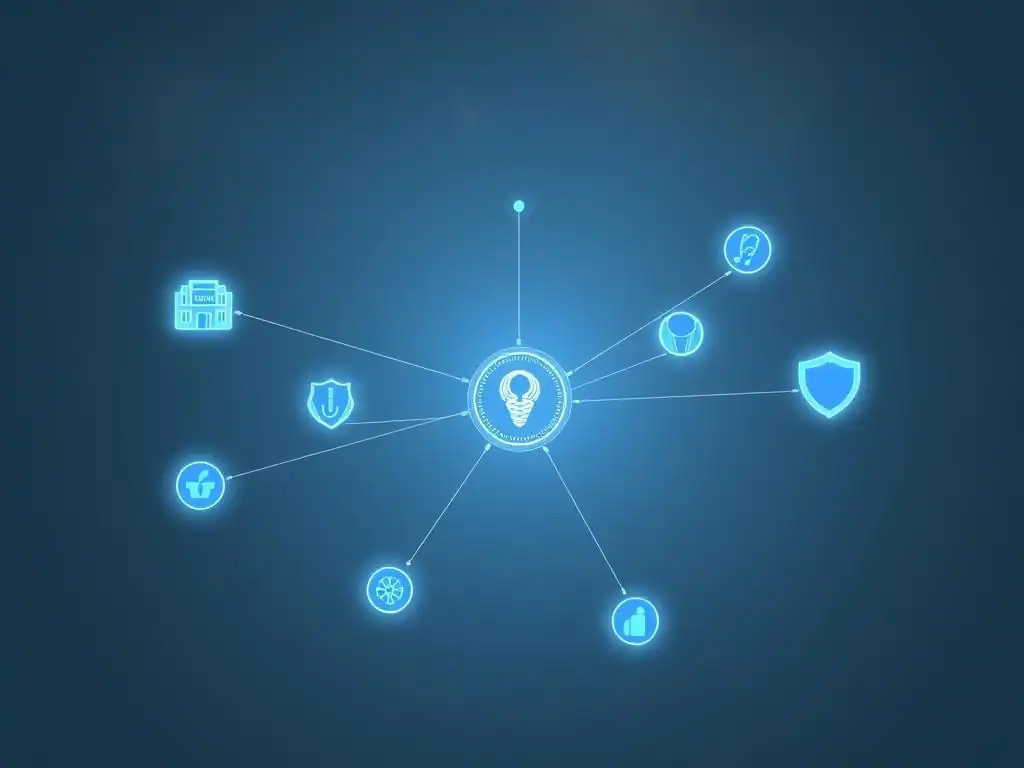
Securely Storing and Sharing Patient Records
Healthcare systems worldwide are plagued by issues related to fragmented patient data, lack of interoperability between different providers, and concerns over data security and patient privacy. Patient records are often stored in disparate systems, making it difficult for healthcare professionals to access a complete medical history, especially in emergencies or when patients switch providers. This lack of interoperability is estimated to cost the U.S. healthcare system alone billions of dollars annually in inefficiencies and redundant tests. Blockchain offers a promising solution for creating a secure, patient-centric system for managing health records.
By using a blockchain, a patient could have a secure, encrypted digital record where access is controlled by the patient themselves. Healthcare providers, with the patient's permission, could be granted temporary or specific access to relevant parts of their history.
The blockchain would record all access requests and data modifications, creating an immutable audit trail. This model significantly enhances security compared to centralized databases, which are frequent targets for ransomware attacks and data breaches, and empowers patients with control over their sensitive health information, a level of security and control often exceeding that found in typical enterprise blockchain supply chain applications.
Improving Data Interoperability Among Healthcare Providers
One of the most significant challenges in healthcare is the lack of seamless data exchange between different hospitals, clinics, laboratories, and pharmacies. This fragmentation leads to medical errors, duplicated tests, and inefficient care delivery. Blockchain technology can act as an underlying infrastructure layer to improve interoperability by providing a standardized, secure, and trusted way for different healthcare systems to share and verify data. While the sensitive patient data itself might reside off-chain in compliance with privacy regulations like HIPAA, the blockchain can store pointers to the data, access permissions, and metadata.
This allows different systems to communicate and share relevant information efficiently, based on patient consent and established protocols. For example, a hospital could quickly and securely access a patient's recent lab results from an external laboratory system, or a primary care physician could view a specialist's consultation notes. This increased interoperability, facilitated by a blockchain backbone, can lead to better coordinated care, reduced costs, and improved patient outcomes, addressing a critical bottleneck in modern healthcare that is distinct from the operational focus of enterprise blockchain supply chain applications.
Use Case 7: Energy Sector Applications
Tracking Renewable Energy Credits and Carbon Offsets
The transition to renewable energy requires efficient and transparent systems for tracking and trading renewable energy credits (RECs) and carbon offsets. Traditional systems for managing these environmental attributes can be complex, opaque, and susceptible to double-counting, where the same environmental benefit is claimed by multiple parties. Blockchain technology offers a robust solution for creating a transparent and immutable registry for tracking the generation, ownership, and transfer of RECs and carbon offsets.
When renewable energy is generated, a corresponding REC can be created as a unique token on a blockchain. This token represents the environmental attributes of that energy (e.g., 1 MWh of solar power). As the REC is bought, sold, or retired, these transactions are recorded on the ledger, providing a clear, auditable history that prevents double-counting and enhances market integrity.
This provides far greater transparency and trust compared to manual tracking systems. While enterprise blockchain supply chain applications track physical commodities like oil or gas, this energy sector use case tracks the environmental attributes associated with energy generation, ensuring the credibility of green energy claims and facilitating environmental markets.
Improving Grid Management and Efficiency
Blockchain technology can also play a role in modernizing energy grid management, particularly with the rise of distributed energy resources like rooftop solar panels and electric vehicles. Managing the flow of energy from numerous small-scale producers and consumers requires sophisticated, real-time systems. Blockchain can facilitate peer-to-peer energy trading within local microgrids, allowing individuals or businesses with excess renewable energy to sell it directly to neighbors, bypassing traditional utility intermediaries for these specific transactions.
Smart contracts on a blockchain can automate these energy transactions based on pre-defined conditions, such as price or availability. Furthermore, blockchain can be used to track energy consumption data securely and transparently, enabling more granular billing and load balancing. While enterprise blockchain supply chain applications focus on logistics and inventory of physical goods, blockchain in energy management focuses on tracking energy flows and transactions within the grid itself, potentially leading to increased efficiency, reduced costs, and greater grid resilience by enabling more localized and automated energy markets.
Overcoming Implementation Challenges for Enterprise Blockchain Solutions
Addressing Scalability and Interoperability Concerns
Despite the transformative potential of blockchain across these diverse use cases, enterprises implementing these solutions face significant technical challenges, particularly regarding scalability and interoperability. Many public blockchains, while decentralized, have limited transaction processing speeds (e.g., Bitcoin handles only a few transactions per second, Ethereum currently handles around 15-30) compared to the thousands of transactions per second required by large enterprises or payment networks like Visa. While private or permissioned blockchains designed for enterprise use can offer higher throughput (potentially hundreds or thousands of transactions per second), they may sacrifice some degree of decentralization.
Furthermore, achieving interoperability between different blockchain platforms, as well as between blockchain systems and legacy enterprise resource planning (ERP) or customer relationship management (CRM) systems, remains complex. Enterprises need solutions that can seamlessly integrate with their existing IT infrastructure and potentially interact with other blockchain networks used by partners or industry consortia. Addressing these challenges requires ongoing development in blockchain protocols, layer-2 scaling solutions, and standardized integration frameworks, distinct concerns from optimizing the physical logistics often addressed by enterprise blockchain supply chain applications.
Enterprises operating in regulated industries must navigate a complex landscape of legal and compliance requirements, which can be particularly challenging when implementing novel technologies like blockchain. Regulations vary significantly across jurisdictions and sectors, covering areas such as data privacy (e.g., GDPR, CCPA), financial regulations (e.g., securities law, anti-money laundering), and industry-specific rules (e.g., healthcare data standards like HIPAA). Applying these regulations to decentralized, immutable systems presents unique challenges.
For instance, the "right to erasure" under GDPR conflicts with the immutable nature of public blockchains. Enterprises must carefully design their blockchain solutions, potentially using hybrid architectures (combining on-chain and off-chain data storage), permissioned ledgers, or advanced cryptographic techniques to comply with data privacy laws. Navigating these regulatory hurdles requires close collaboration with legal and compliance experts and can add complexity and cost to blockchain deployments, challenges that are present across all enterprise blockchain applications, not just enterprise blockchain supply chain applications.
The Future of Enterprise Blockchain Adoption
Emerging Trends and Innovations in the Enterprise Blockchain Space
The enterprise blockchain landscape is continuously evolving, driven by ongoing research and development. Several emerging trends and innovations are poised to further enhance the capabilities and broaden the applicability of enterprise blockchain solutions beyond traditional areas like enterprise blockchain supply chain applications. Zero-Knowledge Proofs (ZKPs), for example, allow parties to prove the truth of a statement (e.g., "I have a valid credential") without revealing the underlying information, significantly enhancing privacy in transactions and data sharing.
Interoperability solutions, such as cross-chain bridges and standardized protocols, are improving the ability of different blockchain networks to communicate and exchange assets or data, which is crucial for creating a more connected decentralized ecosystem. Furthermore, advancements in consensus mechanisms are addressing scalability concerns, enabling higher transaction throughput while maintaining security. These technological advancements are paving the way for more sophisticated and performant enterprise applications across various sectors, moving beyond the initial focus on simple asset tracking.
The Expanding Role of Enterprise Blockchain Beyond Supply Chain
While enterprise blockchain supply chain applications were among the earliest and most visible use cases, the technology's potential is far more extensive. As explored in the previous sections, blockchain is finding traction in diverse areas such as digital identity, IP management, decentralized governance, enterprise finance, secure data sharing, healthcare, and energy. The focus is shifting from simply tracking physical goods to managing digital assets, verifying identities, automating complex processes via smart contracts, and enabling new models of collaboration and governance.
The global enterprise blockchain market is projected to grow significantly, with some forecasts predicting it will reach tens of billions of dollars in value within the next few years. This growth is driven by increasing awareness of blockchain's benefits in terms of efficiency, security, transparency, and cost reduction across a wider range of business functions. The future of enterprise blockchain adoption lies in its ability to address complex, multi-party business problems in sectors previously untouched by distributed ledger technology, demonstrating its value far beyond its initial applications in logistics and supply chain management.
Conclusion: Realizing the Full Potential of Enterprise Blockchain Platforms
Frequently Asked Questions
What are some unexpected applications of enterprise blockchain platforms beyond supply chain management?
Beyond supply chain, enterprise blockchain platforms can be used for digital identity management, secure data sharing across organizations, and voting systems. These applications leverage the inherent trust and transparency of blockchain.
How does blockchain enhance data security in enterprise applications?
Blockchain uses cryptographic hashing to ensure data integrity and immutability. This makes it difficult to tamper with data, providing a higher level of security compared to traditional centralized systems.
What are some regulatory considerations for implementing enterprise blockchain solutions?
Businesses must consider data privacy regulations like GDPR, as well as compliance with industry-specific laws. Understanding the legal framework is crucial for successful blockchain implementation.
How does enterprise blockchain differ from public blockchains like Bitcoin or Ethereum?
Enterprise blockchains are often permissioned, meaning access is restricted to authorized participants. They also tend to have higher transaction throughput and lower latency compared to public blockchains.
What is the future outlook for decentralized systems and enterprise blockchain adoption?
The future looks promising, with increasing adoption driven by the need for greater transparency and improved efficiency. We expect to see more sophisticated use cases emerge across various industries.
Final Reflection: Embracing Blockchain's Transformative Potential
The exploration of enterprise blockchain beyond the supply chain reveals a landscape ripe with untapped potential. While its initial promise focused on streamlining logistics and enhancing transparency in product journeys, the true power of distributed ledger technology lies in its adaptability and capacity to revolutionize diverse sectors, from healthcare to finance and beyond. This is not merely about optimizing existing processes; it's about forging entirely new paradigms of trust and efficiency.
The shift from viewing blockchain solely as a supply chain solution to recognizing its broader applicability is profoundly impacting the business world. This evolution underscores the importance of embracing innovation and challenging conventional thinking. The future belongs to those who believe in the beauty of their dreams.
- Eleanor Roosevelt. This quote resonates deeply, reminding us that the most significant advancements often arise from daring to envision possibilities beyond the readily apparent.
As we stand at the cusp of this technological revolution, I invite you to consider how blockchain's principles of decentralization, security, and transparency can be applied within your own sphere of influence. Explore the possibilities, challenge the status quo, and dare to imagine a future where trust is not a commodity, but a foundational element of every interaction. The power to shape that future lies within each of us.
Unlock the Blockchain Potential!
Thank you for exploring the exciting world of enterprise blockchain and its surprising applications beyond the supply chain. We hope you gained valuable insights into how this technology is transforming various industries. Ready to take the next step?
Here’s how you can harness blockchain's potential today:
- Dive Deeper: Explore a specific use case that aligns with your industry or interests. Research real-world examples and consider potential challenges.
- Share Your Vision: Share this article with your network! You might inspire innovation or spark a new use case that could revolutionize your organization.
- Brainstorm & Innovate: Gather your team for a brainstorming session to identify opportunities where blockchain can address unique challenges within your organization. Think beyond the obvious—what unexpected problem could a decentralized, transparent system solve?
What is the first unexpected challenge you believe blockchain could help solve in your industry? Share your ideas in the comments below!
Leave a Reply