
Blockchain and Supply Chain Innovation: Exploring Emerging Technologies and Trends


Welcome to Blockchain Trends, your gateway to understanding the real power of blockchain beyond the hype. Dive into the transformative potential of this technology as we explore its application in diverse sectors, from DeFi to enterprise solutions.
Intrigued by how blockchain is revolutionizing industries? Then, let's begin. This week, we're unpacking Blockchain Supply Chain Innovation Trends, revealing how decentralized solutions are reshaping logistics, enhancing transparency, and boosting efficiency. Discover the emerging technologies and trends that are setting a new standard for supply chain management – and how your business can benefit. Are you ready to unlock the future of your supply chain?
Blockchain and Supply Chain Innovation: Exploring Emerging Technologies and Trends
- Introduction: The Intersection of Blockchain and Supply Chain Management
- Emerging Blockchain Supply Chain Innovation Trends
- Use Cases of Blockchain in Supply Chain: Real-World Examples
- Key Technologies Driving Blockchain Supply Chain Innovation
- Overcoming Challenges in Blockchain Supply Chain Implementation
- The Future of Blockchain in Supply Chain: Predictions and Outlook
- Conclusion: Embracing Blockchain Supply Chain Innovation for Competitive Advantage
-
Frequently Asked Questions
- What are some key blockchain supply chain innovation trends currently being observed?
- How can blockchain technology improve supply chain transparency?
- Beyond transparency, what other benefits does blockchain offer for supply chain management?
- What are some potential challenges in implementing blockchain solutions in the supply chain?
- How are regulations shaping the future of blockchain in supply chain?
- Final Reflection: Embracing the Decentralized Future of Supply Chains
- Unleash the Power of Blockchain in Your Supply Chain!
Introduction: The Intersection of Blockchain and Supply Chain Management
Understanding the Challenges in Traditional Supply Chains
Traditional supply chains are often plagued by a lack of transparency, inefficiency, and vulnerability to fraud. Complex networks involving numerous intermediaries mean that tracking goods from origin to destination can be incredibly difficult and time-consuming. This opacity makes it challenging for stakeholders to verify the authenticity of products, understand their provenance, or quickly identify the source of issues like contamination or unethical sourcing. Data is often siloed within individual companies, leading to delays, errors, and disputes when information needs to be shared across the network.
Moreover, traditional supply chains struggle with slow and costly manual processes, including extensive paperwork, invoicing, and reconciliation. These manual touchpoints increase the risk of human error and create bottlenecks that slow down the flow of goods and information. Payment processes can be lengthy and complex, especially across international borders, tying up capital and adding administrative overhead. The lack of a single, trusted source of truth makes it hard to build robust trust among disparate partners, hindering effective collaboration and increasing operational costs.
How Blockchain Technology Addresses Supply Chain Pain Points
Blockchain technology offers a decentralized, immutable, and transparent ledger system that can fundamentally transform supply chain management. By providing a shared, tamper-proof record of every transaction and movement of goods, blockchain enhances visibility and traceability across the entire chain. This allows all authorized participants to access the same, up-to-date information, reducing information asymmetry and building trust. For instance, tracking a product's journey becomes a matter of querying the distributed ledger rather than relying on fragmented, proprietary databases.
Furthermore, blockchain enables the use of smart contracts, self-executing contracts with the terms of the agreement directly written into code. These smart contracts can automate various supply chain processes, such as payments upon delivery verification or triggering the next step in logistics once a condition is met. This automation significantly reduces manual effort, speeds up transactions, minimizes errors, and lowers administrative costs. The inherent security and immutability of blockchain also protect sensitive supply chain data from tampering and fraud, addressing critical vulnerabilities present in traditional systems. These capabilities are driving significant blockchain supply chain innovation trends.
Emerging Blockchain Supply Chain Innovation Trends
Trend 1: Enhanced Traceability and Transparency with Blockchain
Real-time Tracking and Monitoring of Goods using Blockchain
One of the most significant blockchain supply chain innovation trends is the dramatic improvement in real-time tracking and monitoring. By recording every handoff, location update, and status change of a product on an immutable ledger, blockchain creates a comprehensive and verifiable history.
When integrated with IoT devices like sensors and GPS trackers, the blockchain can automatically log data points such as temperature, humidity, and location directly onto the ledger as goods move through the supply chain. This provides stakeholders with near real-time visibility into the condition and whereabouts of products, enabling proactive management of potential issues like spoilage or delays.
This enhanced visibility extends beyond simple location tracking. Companies can trace raw materials back to their origin, follow components through manufacturing processes, and monitor finished goods as they are transported to consumers. This level of granular traceability allows for rapid identification of the source of problems, such as a contaminated food item or a faulty component, drastically reducing the time and cost associated with recalls. For example, a pilot project demonstrated reducing the time to trace a package of mangoes from farm to store from days to mere seconds using a blockchain solution.
Preventing Counterfeiting and Ensuring Product Authenticity
Counterfeiting costs the global economy hundreds of billions of dollars annually and poses significant risks, particularly in industries like pharmaceuticals, luxury goods, and electronics. Blockchain technology offers a powerful tool to combat this by creating a secure, verifiable digital identity for each product. From the point of manufacture, unique identifiers (like QR codes or NFC tags) linked to blockchain entries can be assigned to individual items or batches. As the product moves through the supply chain, each legitimate transfer of ownership and location update is recorded on the ledger.
Consumers and businesses can then scan the product's identifier to access its complete history on the blockchain, verifying its authenticity and provenance. Any attempt to introduce a counterfeit product into the chain would result in a record that does not match the legitimate history, making it easily identifiable. This not only protects brand reputation and revenue but also safeguards consumer safety, especially for critical goods like medicines. Several companies are exploring blockchain solutions for product serialization and track-and-trace to build trust and combat the estimated $1.2 trillion in counterfeit goods circulating globally.
Trend 2: Improved Efficiency and Reduced Costs Through Blockchain
Streamlining Supply Chain Processes with Smart Contracts
Smart contracts are a cornerstone of improved efficiency in blockchain-based supply chains. These self-executing codes automate the execution of agreements when predefined conditions are met, eliminating the need for manual intervention and reducing reliance on intermediaries. For example, a smart contract could automatically release payment to a supplier once the blockchain confirms that goods have been received at a specified location and meet quality criteria recorded by an IoT sensor. This automation removes delays associated with manual invoicing, verification, and payment processing.
Beyond payments, smart contracts can automate various logistical steps. They can trigger insurance claims upon verifiable damage during transit, automatically update inventory records upon delivery, or initiate the next leg of a shipment based on confirmed receipt at a waypoint. By digitizing and automating these complex, multi-party workflows, smart contracts significantly reduce administrative burden, minimize errors, and accelerate the overall flow of goods and information. This efficiency gain directly translates into reduced operational costs and faster transaction times.
Automation of Payments and Settlements in the Supply Chain
The traditional process of settling payments in complex, multi-party supply chains often involves multiple banks, international wire transfers, and significant delays. Blockchain, particularly when combined with cryptocurrencies or stablecoins, offers a way to automate and expedite these settlements. Smart contracts can be programmed to release funds instantaneously or near-instantaneously once delivery is confirmed on the blockchain, or once other contractual obligations are met. This removes the need for manual payment approvals and reconciliation processes, which can take days or even weeks.
Automated payments reduce the financial risk for both buyers and sellers by ensuring timely and verifiable transactions. Suppliers can receive payment much faster, improving their cash flow, while buyers can ensure payment is only made upon verified delivery and condition of goods. While the volatility of cryptocurrencies can be a concern, the use of stablecoins or tokenized fiat currencies on a blockchain ledger provides the speed and automation benefits without the price risk. This automation is a key driver of the efficiency gains seen in blockchain supply chain innovation trends.
Trend 3: Increased Security and Data Integrity with Blockchain
Protecting Sensitive Supply Chain Data with Immutable Ledgers
Supply chains handle vast amounts of sensitive data, including inventory levels, shipping manifests, pricing agreements, and customer information. Protecting this data from unauthorized access, modification, or deletion is paramount. Blockchain's core characteristic is its immutability: once data is added to a block and that block is added to the chain, it is virtually impossible to alter or delete it without the consensus of the network. This creates a highly secure and tamper-proof record of all supply chain activities.
Unlike centralized databases, which are single points of failure and attractive targets for cyberattacks, a distributed ledger spreads data across multiple nodes. This architecture makes it far more resilient to attacks. Any attempt to alter a record on one node would not be reflected on others, making the tampering immediately obvious. This inherent security ensures the integrity and reliability of the shared supply chain data, providing a trustworthy foundation for decision-making and collaboration among partners.
Mitigating Risks of Data Breaches and Cyberattacks
Cyberattacks targeting supply chains are increasingly common and can cause massive disruption and financial loss. Traditional systems often rely on disparate, less secure databases and communication methods. Blockchain's distributed nature and cryptographic security features significantly enhance resilience against such attacks. Data stored on a blockchain is encrypted, and access can be tightly controlled through permissioned networks, ensuring that only authorized participants can view specific information.
By providing a secure, shared source of truth, blockchain reduces the need for potentially insecure point-to-point data exchanges between partners. If one node in the network is compromised, the integrity of the overall ledger remains intact due to the consensus mechanism. This distributed security model makes it exponentially harder for attackers to disrupt operations, steal data, or inject false information into the supply chain, thereby mitigating the risks associated with data breaches and cyberattacks.
Trend 4: Fostering Collaboration and Trust Among Supply Chain Partners
Decentralized Data Sharing and Access Control
One of the major impediments to effective supply chain collaboration is the reluctance of companies to share sensitive data with partners, often stored in siloed systems. Blockchain facilitates decentralized data sharing by providing a common, neutral platform where information can be recorded and accessed by authorized parties. Instead of relying on bilateral data exchanges or a central authority, participants can access relevant data directly from the shared ledger, knowing it is accurate and has not been tampered with.
Permissioned blockchains, often used in enterprise supply chain applications, allow granular control over data access. Participants can be granted permissions to view only the specific data relevant to their role in the chain (e.g., a carrier sees shipping details, a customs agent sees manifest data, but neither might see cost information). This selective data sharing builds confidence among partners, as they can collaborate using shared, verifiable data without compromising proprietary information, fostering a more open and collaborative ecosystem.
Building Trust and Accountability in the Supply Chain Ecosystem
Trust is fundamental to efficient supply chain operations, yet it is often fragile in complex, multi-party networks. Blockchain inherently builds trust not through reliance on any single entity, but through the transparency and immutability of the shared ledger. Every transaction and event recorded on the blockchain is timestamped, cryptographically secured, and verifiable by all authorized participants. This creates an indisputable audit trail that clearly shows who did what and when.
This high level of accountability makes it easier to resolve disputes and identify responsibility when issues arise. For example, if a shipment is delayed, the blockchain record shows exactly when it left the previous point and arrived at the next, pinpointing where the delay occurred. This shared, verifiable history fosters accountability among partners and reduces the potential for disagreements over facts, strengthening relationships and promoting a more collaborative and trustworthy supply chain ecosystem.
Use Cases of Blockchain in Supply Chain: Real-World Examples
Case Study 1: Walmart and Blockchain-Enabled Traceability for Produce
Walmart has been a pioneer in leveraging blockchain for supply chain traceability, particularly for its fresh produce. Facing the challenge of quickly tracing food origins during outbreaks of foodborne illness, Walmart partnered with IBM to implement a blockchain solution based on Hyperledger Fabric. The goal was to reduce the time it takes to trace produce from farm to store, which previously could take up to seven days using traditional methods involving paper records and multiple databases.
In live tests, the blockchain system demonstrated the ability to trace a package of sliced mangoes back to its farm of origin in just 2.2 seconds. This dramatic reduction in trace time significantly enhances food safety by allowing for faster identification and isolation of contaminated products, potentially saving lives and reducing economic losses from widespread recalls. Walmart initially mandated its leafy green suppliers to join the blockchain network and has since expanded its use to other produce categories, showcasing the practical benefits of blockchain supply chain innovation.
Case Study 2: De Beers and Blockchain for Diamond Provenance
The diamond industry has long struggled with issues of provenance, ensuring diamonds are ethically sourced and not "conflict diamonds." De Beers, a leading diamond company, launched the Tracr platform, a blockchain-based system designed to track diamonds throughout their value chain, from mine to retail. Each diamond is registered on the platform with a unique ID, and its movement and characteristics are recorded at each stage.
Tracr aims to provide an immutable digital trail for every diamond, giving retailers and consumers confidence in its authenticity and ethical sourcing. By recording data points such as weight, color, clarity, and cut, along with ownership transfers, the platform ensures that the story behind each diamond is transparent and verifiable. As of early 2020, De Beers reported that approximately one-third of its rough diamond production by value was being tracked on the Tracr platform, illustrating the potential of blockchain to build trust and transparency in high-value supply chains.
Case Study 3: Maersk and Blockchain-Based Trade Finance
Global shipping and logistics giant Maersk partnered with IBM to create TradeLens, a blockchain platform aimed at digitizing and automating global trade processes, including shipping and supply chain management. The platform connects shippers, ports and terminals, customs authorities, and logistics providers on a shared, permissioned blockchain network built on Hyperledger Fabric. The objective is to replace paper-based processes, improve visibility, and reduce the cost and complexity of international trade.
TradeLens provides a single, shared view of a shipment's progress, from booking to final delivery, accessible by all permissioned parties. This eliminates the need for fragmented communication and manual data entry across different systems. The platform has processed millions of shipments and incorporated data from numerous ports and terminals globally. While initial adoption was slower than anticipated due to the network effect challenge, the platform demonstrates how blockchain can streamline complex cross-border logistics and trade finance by creating a transparent and efficient digital ecosystem.
Key Technologies Driving Blockchain Supply Chain Innovation
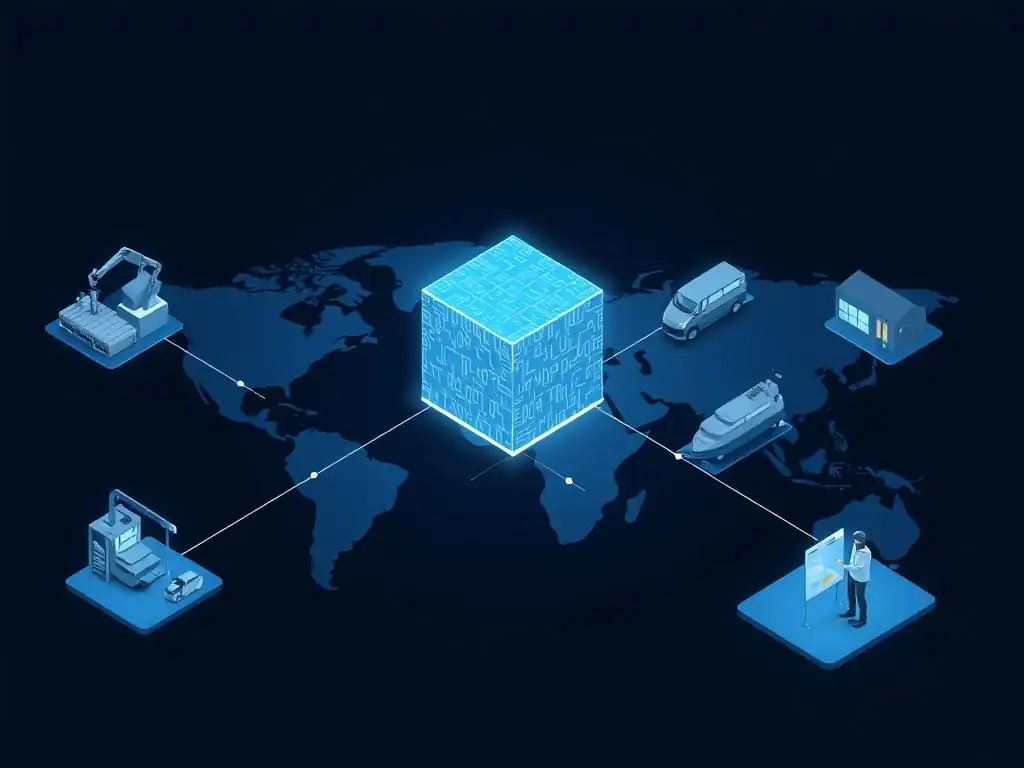
Blockchain Platforms for Supply Chain (e.g., Hyperledger Fabric, Corda)
Several enterprise-grade blockchain platforms are specifically designed to meet the needs of businesses and are driving blockchain supply chain innovation trends. Unlike public blockchains like Bitcoin or Ethereum (which are often too slow, expensive, and lack privacy for enterprise use), platforms like Hyperledger Fabric (an open-source project hosted by the Linux Foundation) and R3's Corda are permissioned networks. This means participants must be known and authorized, which is crucial for supply chain confidentiality and governance.
Hyperledger Fabric is highly modular and configurable, allowing businesses to tailor it to specific supply chain use cases. It supports smart contracts (often written in Go, Node.js, or Java) and provides private channels for confidential transactions between subsets of participants. Corda, while technically a distributed ledger technology (DLT) rather than a traditional blockchain, is also designed for enterprise use, focusing on peer-to-peer transactions and legal enforceability of smart contracts. These platforms provide the robust, scalable, and secure infrastructure necessary for deploying complex supply chain solutions.
IoT (Internet of Things) Integration with Blockchain for Supply Chain Visibility
The integration of IoT devices with blockchain technology is a powerful combination for enhancing supply chain visibility and automation. IoT sensors (e.g., temperature, location, humidity, shock sensors) deployed on goods, containers, or vehicles can generate vast amounts of real-time data about the physical state and location of products. However, this data is most valuable when it is trustworthy and accessible to relevant parties.
By using blockchain as a secure and immutable ledger for IoT data, businesses can ensure the integrity and reliability of the sensor readings. Smart contracts can be triggered automatically based on verifiable IoT data recorded on the blockchain – for instance, triggering a notification or an insurance claim if a temperature sensor records a reading outside a permitted range.
This integration creates a verifiable link between the physical world and the digital record, providing unprecedented transparency and enabling automated responses to real-world events within the supply chain. Estimates suggest that the global IoT in supply chain market is growing rapidly, reaching billions of dollars, with blockchain integration being a key area of focus.
AI and Machine Learning for Supply Chain Optimization on Blockchain
Artificial Intelligence (AI) and Machine Learning (ML) can significantly enhance blockchain-based supply chain solutions by providing analytical capabilities that the blockchain itself lacks. While blockchain provides a secure and transparent record of historical and real-time data, AI/ML can analyze this data to identify patterns, predict potential issues, and optimize operations. For example, ML algorithms can analyze historical supply chain data on the blockchain to predict demand fluctuations, optimize routing, or identify potential points of failure before they occur.
AI can also be used to analyze the vast amount of data generated by IoT devices and recorded on the blockchain, extracting actionable insights. For instance, AI could analyze temperature data trends for specific routes to predict potential spoilage risks. Furthermore, AI can help in verifying the authenticity of data being fed into the blockchain, flagging anomalies or potentially fraudulent entries. By combining the secure, trustworthy data foundation of blockchain with the analytical power of AI/ML, companies can move towards more intelligent, predictive, and optimized supply chain management.
Overcoming Challenges in Blockchain Supply Chain Implementation
Scalability Issues and Potential Solutions
One of the major challenges in implementing blockchain solutions for large-scale supply chains is scalability. Public blockchains can handle a limited number of transactions per second, which is insufficient for the high volume of transactions in a complex global supply chain. Even enterprise permissioned blockchains face scalability limits as the number of participants and transactions grows. For example, processing millions of shipments with potentially dozens of data points each requires significant network capacity.
Solutions to enhance blockchain scalability include using off-chain transactions for high-volume data (only recording summaries or key events on the main chain), employing sharding techniques (dividing the network into smaller partitions), or utilizing layer-2 scaling solutions built on top of the blockchain. Designing the blockchain solution to focus only on critical, shared data while keeping less sensitive or high-volume data off-chain but linked can also improve performance. Ongoing research and development in blockchain technology continue to push the boundaries of transaction throughput.
Interoperability Challenges and Standardization Efforts
Supply chains involve numerous disparate systems used by different companies, often built on legacy technology. Integrating these existing systems with a new blockchain platform and ensuring interoperability between different blockchain networks (if multiple are used across different parts of the supply chain) is a significant hurdle. Data formats, communication protocols, and governance models need to be standardized to allow seamless information flow.
Efforts are underway by industry consortia and standards bodies to address these interoperability challenges. Initiatives like the Trusted IoT Alliance or specific working groups within Hyperledger are developing standards and frameworks for blockchain integration and data exchange. Solutions might involve using middleware, APIs, or standardized data models to bridge the gap between legacy systems and blockchain networks. Developing common data definitions and communication protocols across the supply chain ecosystem is crucial for widespread adoption of blockchain supply chain innovation trends.
Regulatory Considerations and Compliance
Implementing blockchain solutions in supply chains often involves navigating complex regulatory landscapes. Data privacy regulations (like GDPR), cross-border data flow restrictions, industry-specific compliance requirements (e.g., for pharmaceuticals or food), and varying legal interpretations of smart contracts pose significant challenges. The decentralized nature of blockchain can sometimes conflict with regulations that require data to be stored within specific geographical boundaries or subject to specific jurisdictions.
Companies must carefully design their blockchain solutions to ensure compliance with all relevant laws and regulations. This might involve using permissioned networks with strict access controls, employing data anonymization techniques where necessary, and ensuring that smart contracts align with legal frameworks. Collaboration with legal experts and regulatory bodies is essential to develop compliant blockchain solutions. As regulators gain a better understanding of blockchain, clearer guidelines are expected, but navigating the current environment requires careful planning and diligence.
The Future of Blockchain in Supply Chain: Predictions and Outlook
The Rise of Decentralized Supply Chains
Looking ahead, one major prediction is the gradual rise of truly decentralized supply chains powered by blockchain. Moving beyond simply using blockchain for traceability or payments, the future could see supply chain networks operating more autonomously, with less reliance on central orchestrators. Participants on a decentralized network could interact directly based on shared rules encoded in smart contracts, managing logistics, inventory, and transactions without a single point of control.
In such a model, smaller suppliers and logistics providers could more easily connect and participate, fostering a more resilient and equitable ecosystem. This shift towards decentralization could unlock new levels of efficiency, transparency, and resilience, making supply chains more adaptable to disruptions. While a fully decentralized global supply chain is still a long-term vision, the building blocks are being laid by current blockchain supply chain innovation trends.
Blockchain and Sustainability in Supply Chains
Blockchain is poised to play a crucial role in enhancing sustainability within supply chains. By providing an immutable and transparent record of product origins, manufacturing processes, and transportation methods, blockchain can help companies and consumers verify ethical sourcing, environmental impact, and labor practices. For example, blockchain can track materials from sustainable farms or ensure compliance with fair labor standards throughout the production process.
Furthermore, blockchain can facilitate carbon footprint tracking by recording energy consumption and emissions data at various stages. This verifiable data can support carbon credit trading or incentivize greener practices. As consumer and regulatory pressure for sustainable practices grows, blockchain offers a powerful tool to provide auditable proof of sustainability claims, moving beyond simple certifications to data-driven verification.
The Impact of Blockchain on Supply Chain Resilience
The COVID-19 pandemic highlighted the fragility of global supply chains. Blockchain can significantly enhance supply chain resilience by providing unparalleled visibility and agility. In a crisis, having a real-time, shared view of inventory levels, shipment locations, and potential bottlenecks across the entire network allows companies to respond much faster and more effectively.
Smart contracts can be designed to automatically trigger alternative routing or sourcing strategies when disruptions occur, based on verifiable data on the blockchain. The decentralized nature of some blockchain models can also reduce reliance on single points of failure. By increasing transparency, fostering trust, and enabling automated responses, blockchain makes supply chains more robust and better equipped to withstand unforeseen shocks and disruptions, a critical factor in today's volatile global environment.
Conclusion: Embracing Blockchain Supply Chain Innovation for Competitive Advantage
Key Takeaways for Businesses
Businesses operating within complex supply chains must recognize the transformative potential of blockchain technology. Key takeaways include understanding that blockchain offers solutions to fundamental problems like lack of transparency, inefficiency, and security vulnerabilities. Embracing blockchain supply chain innovation trends is not just about adopting a new technology; it's about rethinking how value flows through the network and how trust is established among partners.
Organizations should start by identifying specific pain points in their supply chains where blockchain's unique attributes (immutability, transparency, automation via smart contracts) can provide tangible benefits, such as improving traceability for high-value or sensitive goods, streamlining cross-border payments, or enhancing collaboration with key suppliers. Pilot projects, perhaps focusing on a specific product line or region, are an effective way to explore the technology's capabilities and build internal expertise before attempting a full-scale deployment.
Looking Ahead: The Continued Evolution of Blockchain in Supply Chain Management
The journey of blockchain in supply chain management is still in its relatively early stages, but the pace of blockchain supply chain innovation trends is accelerating. As the technology matures, scalability improves, and interoperability standards emerge, we can expect to see broader adoption across various industries. The convergence of blockchain with other technologies like IoT, AI, and 5G will unlock even more sophisticated applications, enabling truly intelligent and autonomous supply chain networks.
The future will likely see blockchain becoming an integral part of the digital infrastructure for global trade, facilitating seamless, secure, and transparent movement of goods and information. Companies that proactively explore and implement blockchain solutions now will be better positioned to gain a significant competitive advantage, building more resilient, efficient, and trustworthy supply chains for the future. The evolution will continue, bringing greater decentralization, enhanced sustainability features, and increased resilience to global disruptions.
Frequently Asked Questions
What are some key blockchain supply chain innovation trends currently being observed?
Several trends are emerging, including enhanced traceability and transparency, improved efficiency through automation, and greater security against counterfeiting. These trends aim to streamline processes and build trust.
How can blockchain technology improve supply chain transparency?
Blockchain creates an immutable and shared ledger, allowing all stakeholders to track products from origin to consumer. This enhanced visibility reduces fraud and builds consumer confidence by verifying product authenticity.
Beyond transparency, what other benefits does blockchain offer for supply chain management?
Blockchain provides increased efficiency through smart contracts automating tasks like payments and inventory management. It also offers improved security by reducing the risk of data breaches and tampering.
What are some potential challenges in implementing blockchain solutions in the supply chain?
Challenges include scalability limitations, the need for industry-wide collaboration and standardization, and navigating the complex landscape of data privacy regulations. These hurdles need to be overcome for successful adoption.
How are regulations shaping the future of blockchain in supply chain?
Regulations are evolving to address issues like data governance and consumer protection. Clear regulatory frameworks are crucial for fostering innovation and ensuring responsible use of blockchain technology in supply chain management.
Final Reflection: Embracing the Decentralized Future of Supply Chains
The exploration of blockchain's transformative potential within supply chains, as detailed throughout this article, isn't just an academic exercise; it's a crucial examination of how we can build more resilient, transparent, and ethical global networks. The trends discussed, from enhanced traceability to smart contracts automating processes, are rapidly moving from theoretical possibilities to tangible realities shaping the future of commerce.
This shift towards decentralized, trustless systems is profoundly impacting the cultural and social landscape. The ability to verify the origin and journey of products, ensuring fair labor practices and sustainable sourcing, empowers consumers and holds businesses accountable. The future of supply chains is not just about efficiency; it's about building trust and creating value for all stakeholders.
This quote encapsulates the essence of blockchain's promise: a future where supply chains are not opaque black boxes, but transparent ecosystems fostering collaboration and ethical conduct.
Now, consider how these insights can inform your own choices. As consumers, demand transparency and support businesses embracing blockchain-enabled supply chains. As professionals, explore the opportunities to implement these technologies within your organizations. The future of supply chains is being written now, and each of us has a role to play in shaping a more equitable and sustainable world.
Unleash the Power of Blockchain in Your Supply Chain!
Thank you for exploring the world of blockchain and supply chain innovation. We hope you've gained valuable insights into the emerging technologies and trends shaping this vital sector. Now, it's time to turn that knowledge into action!
Here are some ways to take the next step:
- Start by developing a small-scale proof-of-concept to integrate blockchain into a specific part of your supply chain. Focus on a single product or process to reduce risk and learn effectively.
- Share this article with colleagues and industry peers to encourage discussion and collaboration on blockchain trends and related topics.
- Investigate innovative blockchain applications, such as using NFTs for tracking the provenance of luxury goods, and consider how these could be adapted to your industry.
What will be your first move to explore blockchain's potential within your supply chain today? Let us know in the comments!
Leave a Reply