
Building Trust in Global Supply Chains: The Role of Blockchain Technology

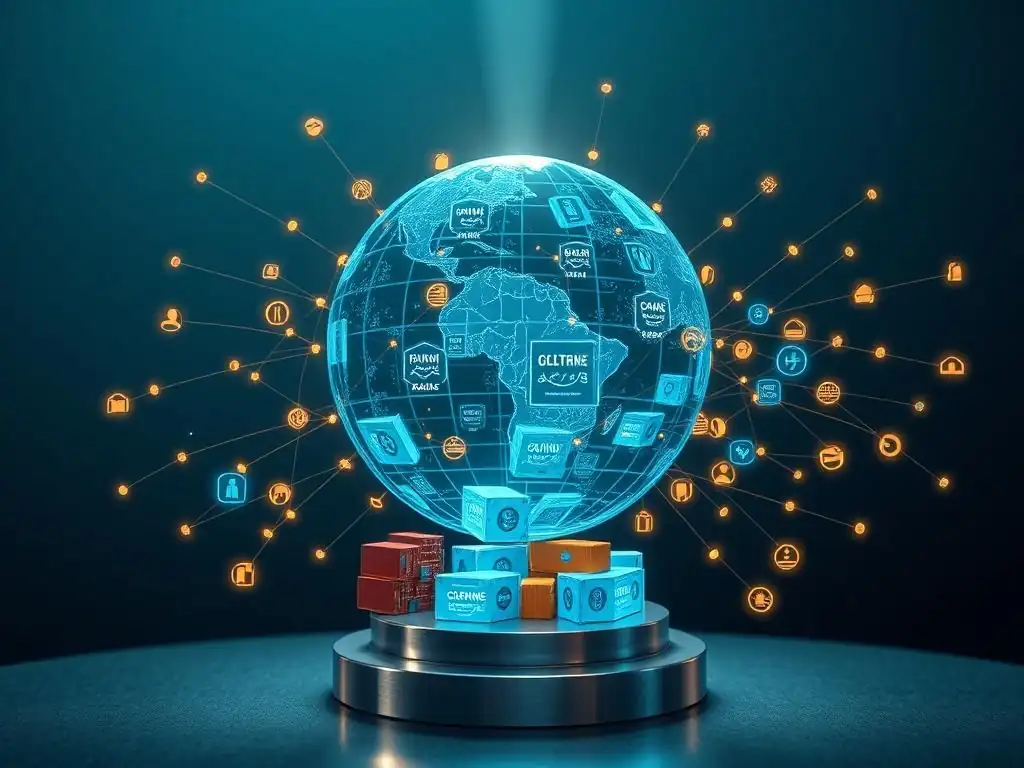
Welcome to Blockchain Trends, your compass in the rapidly evolving world of decentralized technology. Discover how blockchain's potential stretches far beyond digital currencies, shaping industries and redefining trust. Intrigued by how this technology can revolutionize operations? Delve into our latest exploration of blockchain supply chain trust benefits and unlock the secrets to building more resilient and transparent global networks. Read on to uncover how this innovative solution is reshaping the future of enterprise operations and what it means for your business.
- Blockchain Supply Chain Trust Benefits: How Distributed Ledger Technology Enhances Reliability
-
Frequently Asked Questions
- What are the primary blockchain supply chain trust benefits?
- How does blockchain help combat counterfeiting in supply chains?
- What are some examples of enterprise applications using blockchain for supply chain management?
- How does regulation impact the adoption of blockchain in supply chains?
- What is the future of decentralized systems in global supply chains?
- Final Reflection: Forging Trust in a Decentralized Future
- Unlock Transparency: Embrace Blockchain's Potential!
Blockchain Supply Chain Trust Benefits: How Distributed Ledger Technology Enhances Reliability

Enhanced Traceability: Tracking Products from Origin to Consumer
One of the most significant blockchain supply chain trust benefits is the dramatic enhancement of traceability. Traditional supply chains often suffer from opaque data silos, making it difficult or impossible to track a product's journey from its raw materials to the final consumer. This lack of visibility hinders the ability to quickly identify the source of issues like contamination, ethical sourcing violations, or quality control failures.
A blockchain ledger, by contrast, creates an immutable, shared record of every transaction and movement, accessible to authorized participants across the network. Each step, from sourcing ingredients to manufacturing, packaging, shipping, and retail, can be recorded, providing a complete, transparent history.
This granular, end-to-end visibility not only improves consumer confidence but also allows businesses to pinpoint bottlenecks or problems with unprecedented speed and accuracy. For instance, in the event of a food recall, tracing affected batches back to their origin might take days or even weeks using traditional paper-based systems or disparate databases.
With a blockchain-based system, this process can potentially be reduced to minutes, significantly limiting the scope of the recall and mitigating potential harm to consumers and damage to brand reputation. This level of verifiable history is a core component of building blockchain supply chain trust benefits, demonstrating a commitment to transparency that resonates with stakeholders.
Improved Data Security: Minimizing Fraud and Counterfeiting in Supply Chains
The inherent security features of blockchain technology provide substantial blockchain supply chain trust benefits, particularly in combating fraud and counterfeiting. Data recorded on a blockchain is cryptographically secured and linked in a chain, making it extremely difficult and computationally expensive for any single party to alter past records without detection. This distributed and immutable nature means that once information about a product's authenticity, origin, or handling is logged, it serves as a tamper-proof record. This is a critical advantage over centralized databases, which are more vulnerable to single points of failure or malicious attacks aimed at altering data.
For industries plagued by counterfeit goods, such as pharmaceuticals or luxury items, blockchain offers a powerful tool for verification. By assigning unique digital identities to products and recording their movement and authenticity checks on the ledger, consumers and businesses can verify the legitimacy of an item simply by scanning a code linked to its blockchain record.
This drastically reduces the likelihood of counterfeit products entering the legitimate supply chain and provides consumers with a verifiable assurance of authenticity, directly contributing to the blockchain supply chain trust benefits realized by all parties involved. The estimated global cost of counterfeiting and piracy is in the hundreds of billions of dollars annually; blockchain offers a promising defense.
Increased Efficiency: Streamlining Processes and Reducing Delays
Beyond security and traceability, implementing blockchain in supply chains yields significant blockchain supply chain trust benefits through increased operational efficiency. Many traditional supply chain processes are manual, paper-intensive, and rely on multiple intermediaries, leading to delays, errors, and disputes. The use of smart contracts, self-executing contracts with the terms of the agreement directly written into code, can automate many of these processes. For example, payments can be automatically released upon verified delivery of goods, customs documents can be instantly shared with relevant parties, and compliance checks can be triggered automatically.
This automation reduces the need for manual data entry, minimizes paperwork, and accelerates transactions, leading to faster lead times and reduced administrative costs. Consider international shipping, where dozens of documents might be exchanged between various parties. A blockchain can serve as a single, shared source of truth for all relevant documentation, streamlining customs procedures and reducing transit times.
While specific savings vary, pilot projects have shown potential reductions in documentation processing times by days and significant decreases in associated costs. This streamlining not only boosts the bottom line but also builds trust by making interactions more predictable, faster, and less prone to human error or deliberate delay, embodying the core blockchain supply chain trust benefits sought by businesses.
Frequently Asked Questions
What are the primary blockchain supply chain trust benefits?
The primary benefits include enhanced transparency and traceability, enabling businesses to verify product origin and movement. This increased visibility fosters greater trust among stakeholders.
How does blockchain help combat counterfeiting in supply chains?
Blockchain's immutable ledger creates a permanent record of each product's journey. This makes it much harder for counterfeit goods to enter the supply chain undetected, enhancing product authenticity and consumer trust.
What are some examples of enterprise applications using blockchain for supply chain management?
Examples include tracking pharmaceuticals to ensure safety, verifying the origin of ethically sourced goods, and managing complex logistics involving multiple parties. These applications improve operational efficiency and reduce risk.
How does regulation impact the adoption of blockchain in supply chains?
Clear and consistent regulations are crucial for fostering widespread adoption. Uncertainty can hinder investment and innovation, while well-defined rules can provide a legal framework for blockchain implementations.
What is the future of decentralized systems in global supply chains?
The future involves greater automation, interoperability, and scalability of blockchain solutions. This will lead to more efficient, resilient, and trustworthy supply chains across various industries.
Okay, here's a final reflection designed to close your article "Building Trust in Global Supply Chains: The Role of Blockchain Technology," optimized for the keyword "Blockchain supply chain trust benefits," and following the structure you provided:
Final Reflection: Forging Trust in a Decentralized Future
The exploration of blockchain technology's role in global supply chains reveals a compelling truth: enhanced transparency and immutability are no longer luxuries, but necessities for building trust in a complex world. The benefits, from reduced fraud to improved efficiency, are not just theoretical advantages; they represent a fundamental shift in how we approach global commerce, demanding a re-evaluation of traditional, often opaque, systems.
The impact of blockchain on supply chain trust extends far beyond mere logistics. It touches upon ethical sourcing, consumer confidence, and the very fabric of global partnerships. Witnessing this transformation firsthand underscores the profound potential of technology to foster accountability and fairness. Trust is the glue of life. It's the most essential ingredient in effective communication. It's the foundational principle that holds all relationships together.
- Stephen Covey. This quote resonates deeply as we consider the power of blockchain to rebuild trust where it has been eroded by complexity and distance.
As we stand at the cusp of this decentralized future, let us not simply observe, but actively participate in shaping it. Consider how you, as a consumer, a business leader, or a technology enthusiast, can champion the adoption of blockchain solutions to promote ethical and transparent supply chains. The future of global commerce hinges on our collective commitment to building a world where trust is not a privilege, but a fundamental right.
Unlock Transparency: Embrace Blockchain's Potential!
Thank you for exploring the transformative role of blockchain in enhancing trust within supply chains. We hope this article has inspired you to envision a more secure and transparent future for global trade. Now, it's time to turn that knowledge into action.
Here are some practical steps you can take today:
- Initiate a pilot project: Identify a specific segment of your supply chain where implementing a small-scale blockchain solution can help track and verify product provenance effectively.
- Research industry case studies: Learn how other organizations are utilizing blockchain technology to improve their supply chain operations and uncover new opportunities.
- Share this article: Help raise awareness about the advantages of blockchain for supply chain trust and encourage your network to explore its potential.
What is the first step you plan to take to incorporate blockchain into your supply chain to enhance trust and efficiency? Share your ideas and plans in the comments below!
Leave a Reply