
Building Trust Online: How BlockchainBased Identity Systems Can Help

Welcome to Blockchain Trends, your guide to understanding the revolutionary impact of blockchain beyond the hype.
Are you ready to unlock the potential of blockchain for real-world applications? In this article, we delve into a crucial area: blockchain identity verification systems. Discover how these innovative solutions are poised to transform online trust and security, offering a glimpse into the future of secure digital interactions. Intrigued? Read on to explore the possibilities!
Building Trust Online: How Blockchain-Based Identity Systems Can Help
- Introduction: The Growing Need for Secure Online Identity
- Understanding Blockchain Identity Verification Systems
- Benefits of Blockchain Identity Verification Systems for Businesses
- Real-World Applications of Blockchain Identity Verification
- The Role of Blockchain in Healthcare & Digital Identity
- Challenges and Considerations for Implementing Blockchain Identity
- The Future of Blockchain Identity Verification Systems
- Conclusion: Embracing Blockchain for a More Secure Digital Future
-
Frequently Asked Questions
- What are blockchain identity verification systems, and how do they differ from traditional methods?
- How does blockchain enhance privacy and security in identity verification processes?
- What are some real-world applications of blockchain-based identity verification systems beyond personal use?
- What are the regulatory challenges facing the adoption of blockchain identity verification systems?
- What is the future outlook for blockchain identity verification, and what advancements can we expect?
- Final Reflection: Embracing Trust in the Digital Frontier
- Embrace Secure Identities: Step into the Future with Blockchain!
Introduction: The Growing Need for Secure Online Identity
In an increasingly digital world, the foundation of trust relies heavily on the secure verification of online identities. From accessing financial services and managing personal health records to participating in democratic processes like voting, proving who you are online is paramount. However, the current landscape of digital identity management is fragmented, often insecure, and places significant burdens on both individuals and organizations. This necessitates a fundamental shift towards more robust and trustworthy identity solutions.
The proliferation of online services has outpaced the development of secure, user-centric identity systems. Traditional methods often involve centralized databases, which are attractive targets for cybercriminals. The consequences of compromised identity range from financial fraud and data theft to erosion of public trust in digital interactions. Addressing this growing need for secure online identity requires innovative approaches that prioritize user control, privacy, and verifiable authenticity.
The Challenges of Traditional Identity Verification
Traditional identity verification processes often suffer from significant vulnerabilities and inefficiencies. Centralized databases, while convenient for storage, represent single points of failure that are susceptible to large-scale data breaches. For example, reports indicate that millions of identity records are compromised annually through hacks targeting corporate or government databases, leading to widespread identity theft and financial losses estimated in the billions globally each year. This model puts user data at constant risk.
Furthermore, traditional systems are typically siloed, meaning individuals must repeatedly verify their identity with different service providers (banks, healthcare providers, government agencies), leading to redundant processes and poor user experience. Manual verification steps are often slow, costly, and prone to human error. The lack of user control over their own identity data in these systems also raises significant privacy concerns, as individuals often have little visibility into how their personal information is stored, shared, or used.
Blockchain's Potential in Revolutionizing Digital Identity
Blockchain technology offers a compelling alternative to traditional, centralized identity systems by enabling decentralized, secure, and user-controlled digital identities. Its inherent properties of immutability, transparency (where appropriate), and cryptographic security make it uniquely suited for building trust online. By distributing identity data or pointers to data across a network rather than storing it in a single location, blockchain significantly reduces the risk associated with centralized honeypots of personal information.
The potential for blockchain identity verification systems lies in empowering individuals with self-sovereign identity (SSI), allowing them to control their digital credentials and share specific pieces of verifiable information on a need-to-know basis. This shifts the power dynamic from institutions holding identity data to the individual. Early estimations suggest that blockchain-based solutions could reduce the costs associated with identity management and verification by a significant margin for large enterprises, potentially cutting expenses by 10-20% or more through automation and reduced fraud.
Understanding Blockchain Identity Verification Systems
Blockchain identity verification systems leverage the core principles of distributed ledger technology to create digital identities that are secure, tamper-evident, and often, user-controlled. Unlike systems where a single entity manages and validates identity information, blockchain-based approaches distribute the trust mechanism across a network. This means that identity claims, or credentials, can be issued by trusted parties, stored securely by the individual, and verified by others without relying on a central authority for every transaction or interaction.
These systems fundamentally change how identity is managed online. Instead of relying on usernames and passwords linked to vulnerable databases, or physical documents prone to loss or forgery, individuals can use cryptographic keys linked to a decentralized identifier (DID) on a blockchain. This allows for a portable, persistent digital identity that isn't tied to any specific platform or service provider, paving the way for a more secure and interoperable digital world.
What are Blockchain-Based Identity Solutions?
Blockchain-based identity solutions are frameworks and platforms that utilize distributed ledger technology to manage and verify digital identities. At their core, they often involve decentralized identifiers (DIDs), which are unique, persistent identifiers registered on a blockchain or other distributed ledger. These DIDs are controlled by the individual or entity they identify, not by a centralized registry. This concept is central to the movement towards self-sovereign identity (SSI), where users have full control over their digital identity and data.
Beyond DIDs, these solutions employ verifiable credentials (VCs). VCs are tamper-evident digital proofs of claims (e.g., "I am over 18", "I have a university degree", "I am an employee of Company X") that can be issued by trusted authorities (issuers), held by the individual (holder), and presented to verifiers. The integrity and authenticity of these credentials can be cryptographically verified against the information anchored or referenced on the blockchain, ensuring that the claim is true and hasn't been altered since it was issued. These systems provide a robust layer for blockchain identity verification systems.
How Blockchain Identity Verification Works: A Technical Overview
The technical workflow of blockchain identity verification typically involves several key components interacting via cryptographic operations and the distributed ledger. First, an individual (the holder) creates a decentralized identifier (DID), often generated using a pair of cryptographic keys. The public key or a hash derived from it is registered on a blockchain or DID-specific ledger, establishing a secure, persistent identifier linked to the individual's control.
Next, a trusted authority (the issuer), such as a government agency, university, or employer, issues a verifiable credential (VC) to the holder. This VC is essentially a digitally signed document containing claims about the holder (e.g., name, date of birth, qualifications). The issuer signs the VC using their private key, and the VC itself or a cryptographic proof (like a hash) is anchored on the blockchain.
When another party (the verifier) needs to confirm a claim, the holder presents the VC. The verifier uses the issuer's public key (retrievable via their DID on the ledger) and the blockchain anchor to cryptographically verify that the credential was genuinely issued by the claimed issuer and has not been tampered with. This process underpins effective blockchain identity verification systems.
Key Features of Decentralized Identity (DID)
Decentralized Identity (DID) systems, often built using blockchain identity verification systems, possess several key features that differentiate them from traditional models. Firstly, they are self-sovereign, meaning the individual has primary control over their identity and data, not governments or corporations. This control is backed by cryptographic keys. Secondly, DIDs are persistent and portable; they are not tied to any specific application, service, or organization, allowing users to carry their identity across different platforms and interactions without needing to recreate it or rely on platform-specific logins.
Another crucial feature is privacy. DID systems allow for selective disclosure, where users can share only the specific pieces of information required for a transaction or verification, rather than revealing their entire identity profile. For example, proving you are over 18 without disclosing your exact birth date. Finally, DIDs leverage the verifiability and security of blockchain. The cryptographic anchoring of credentials ensures that claims can be independently verified by anyone, reducing reliance on centralized trust brokers and making the system inherently more secure and resistant to fraud and censorship.
Benefits of Blockchain Identity Verification Systems for Businesses
Businesses across various sectors stand to gain significant advantages from adopting blockchain identity verification systems. These benefits span enhanced security, reduced operational costs, improved compliance, and better customer experiences. By moving away from vulnerable centralized identity stores and cumbersome manual processes, companies can build more resilient and trustworthy interactions with their customers and partners. The implementation of robust blockchain identity solutions can fundamentally transform how businesses manage digital trust and data.
The strategic adoption of these systems can also unlock new business models and opportunities that were previously hindered by identity-related challenges. For instance, enabling secure, frictionless data sharing between trusted parties or facilitating micro-transactions that require lightweight, verifiable identities. As the digital economy evolves, the ability to reliably and efficiently verify identity using blockchain becomes a critical competitive advantage.
Enhanced Security and Data Protection with Blockchain
One of the most compelling benefits of blockchain identity verification systems for businesses is the significant enhancement in security and data protection. Traditional centralized databases are prime targets for cyberattacks, with breaches potentially exposing millions of customer records. By contrast, blockchain architecture distributes data or cryptographic proofs across multiple nodes, making it exponentially harder for attackers to compromise the entire system. Identity data, if stored off-chain, is accessed only with the user's cryptographic keys, adding another layer of security.
Furthermore, the use of verifiable credentials means that businesses don't necessarily need to store sensitive personal data themselves after the initial verification. They can rely on cryptographically signed credentials held by the user and verified on the blockchain. This minimizes the amount of sensitive data a business needs to hold, drastically reducing its attack surface and liability in case of a data breach. Implementing blockchain identity solutions shifts the burden and risk of data storage away from the business and towards a more secure, decentralized model.
Reduced Fraud and Identity Theft Using Immutable Ledgers
Blockchain identity verification systems offer a powerful defense against fraud and identity theft due to the immutable nature of the distributed ledger. Once a verifiable credential or an identity proof is anchored or recorded on the blockchain, it is extremely difficult, if not impossible, to alter or forge without being detected by the network consensus mechanisms. This immutability ensures the integrity of identity claims and transaction histories.
Businesses can leverage this immutability to significantly reduce losses associated with fraudulent activities such as account takeovers, synthetic identity fraud, and false claims. By verifying identities and credentials against a tamper-evident ledger, companies can have higher confidence in the authenticity of their users and their interactions. For example, a financial institution using blockchain identity verification systems might see a reduction in fraudulent loan applications or unauthorized access attempts, potentially saving millions annually. Pilot programs have shown potential fraud reduction rates of 30-50% in specific use cases leveraging blockchain for identity verification.
Improved Compliance and Regulatory Adherence
Navigating complex regulatory landscapes, such as Know Your Customer (KYC) and Anti-Money Laundering (AML) regulations, is a significant challenge for many businesses, particularly in finance and other regulated industries. Traditional compliance processes are often manual, costly, and prone to inconsistencies. Blockchain identity verification systems can streamline these processes and improve regulatory adherence by providing a secure, auditable, and standardized way to verify customer identities and manage required documentation.
Verifiable credentials can be used to represent verified identity attributes required for KYC/AML checks, such as proof of address or government ID verification. These credentials, once issued by a trusted entity (like a government or specialized verification service) and anchored on the blockchain, can be easily and repeatedly shared by the user with different regulated entities. This provides regulators with an immutable audit trail of how and when identity was verified, potentially simplifying audits and demonstrating compliance more effectively. Some estimates suggest this could reduce KYC/AML compliance costs by up to 25% for large financial institutions.
Streamlined Customer Onboarding and KYC Processes
The customer onboarding process, especially in sectors requiring rigorous identity checks like banking or telecommunications, can be a significant point of friction. Traditional KYC often involves lengthy manual steps, submission of physical documents, and waiting periods that can last days or even weeks. This leads to high customer drop-off rates and increased operational costs for businesses. Blockchain identity verification systems offer a solution to streamline and accelerate these processes dramatically.
Using self-sovereign identity and verifiable credentials, customers can reuse previously verified identity attributes. Instead of uploading documents for every new service, they can simply share a cryptographically signed credential proving, for example, their identity has already been verified to a specific standard by a trusted third party. This can reduce onboarding time from days to minutes, drastically improving the customer experience and reducing operational overhead. For example, a neobank implementing blockchain identity verification systems might see a 50% increase in successful onboarding completions and a significant reduction in associated labor costs.
Real-World Applications of Blockchain Identity Verification
The potential of blockchain identity verification systems is not confined to theoretical discussions; it is being explored and implemented across a diverse range of real-world applications. These examples demonstrate how decentralized identity solutions can solve tangible problems related to trust, security, and efficiency in various sectors, moving beyond the initial focus on cryptocurrencies to address fundamental needs in digital interactions.
From ensuring the authenticity of goods in supply chains to securing academic qualifications and enabling more transparent democratic processes, blockchain-based identity is proving its value. These applications highlight the versatility and transformative power of putting identity control back into the hands of the individual while providing reliable verification mechanisms for organizations.
Blockchain Identity in Supply Chain Management
In complex global supply chains, verifying the identity and provenance of goods at each step is crucial for combating counterfeiting, ensuring quality, and meeting regulatory requirements. Blockchain identity verification systems can be applied to create unique digital identities for products, components, and even locations or participants within the supply chain. These digital identities, anchored on a blockchain, provide a tamper-evident record of a product's journey.
Manufacturers can issue verifiable credentials about a product's origin or composition, while logistics providers can issue credentials about shipping milestones. Retailers and consumers can then verify these credentials against the blockchain to ensure the product is authentic and has followed the correct path. For example, a luxury goods company could use blockchain identity verification to provide customers with verifiable proof of authenticity and origin, combating a counterfeit market estimated to cost the global economy hundreds of billions annually. This application of blockchain identity enhances trust and transparency throughout the supply chain.
Securing Digital Credentials and Certificates with Blockchain
Issuing and verifying digital credentials such as academic degrees, professional certifications, and licenses is another area ripe for disruption by blockchain identity verification systems. Traditional paper certificates are easy to forge, and verifying digital versions often relies on centralized databases maintained by issuing institutions, which can be inefficient and prone to errors or inaccessibility.
By issuing credentials as verifiable credentials anchored on a blockchain, institutions can provide individuals with digital certificates that are cryptographically secured and instantly verifiable by anyone with the necessary permissions. The recipient holds the credential and can share it selectively.
Employers or other verifying parties can independently confirm the credential's legitimacy by checking the proof on the blockchain, without needing to contact the issuing institution directly. Universities are piloting such systems, issuing blockchain-secured diplomas that students can share effortlessly and verifiably, reducing the administrative burden of verification and eliminating the possibility of credential fraud, which is a significant issue in many industries.
Blockchain-Based Voting Systems for Transparent Elections
The integrity of voting processes is fundamental to democracy, yet concerns about security, transparency, and accessibility persist with traditional methods. Blockchain identity verification systems offer a promising avenue for developing more secure, transparent, and verifiable digital voting systems. By issuing voters a unique, verifiable digital identity on a blockchain, systems can ensure that only eligible citizens cast a ballot and that each citizen votes only once.
The act of casting a vote can be recorded as an encrypted transaction on a public or permissioned blockchain. While the voter's identity would be linked to their ballot via their blockchain identity, cryptographic techniques like zero-knowledge proofs can be employed to ensure the vote remains anonymous while still being verifiable as legitimate.
The immutable and transparent nature of the blockchain ledger allows for public auditing of the vote count, significantly increasing trust in the election results and reducing the potential for fraud or tampering. Several countries and organizations are exploring or piloting blockchain identity verification systems for secure and transparent electoral processes.
Digital Identity for Healthcare and Patient Data Management
Managing patient identity and health records securely and efficiently is a critical challenge in healthcare. Fragmented systems, privacy concerns (like HIPAA in the US), and the need for timely access to accurate patient data across different providers highlight the need for better solutions. Blockchain identity verification systems can empower patients with control over their health data and streamline access for authorized parties.
Patients can hold their own decentralized identity on a blockchain and use it to manage verifiable credentials representing aspects of their health profile, such as vaccination records, allergies, or past procedures, issued by healthcare providers. When visiting a new doctor or specialist, the patient can grant temporary, granular access to specific parts of their health record via their blockchain identity, rather than relying on cumbersome record transfers or risking privacy with traditional systems.
This enhances data privacy, improves interoperability between healthcare systems, and ensures that medical professionals have access to accurate, up-to-date information, potentially reducing medical errors and improving care coordination.
The Role of Blockchain in Healthcare & Digital Identity
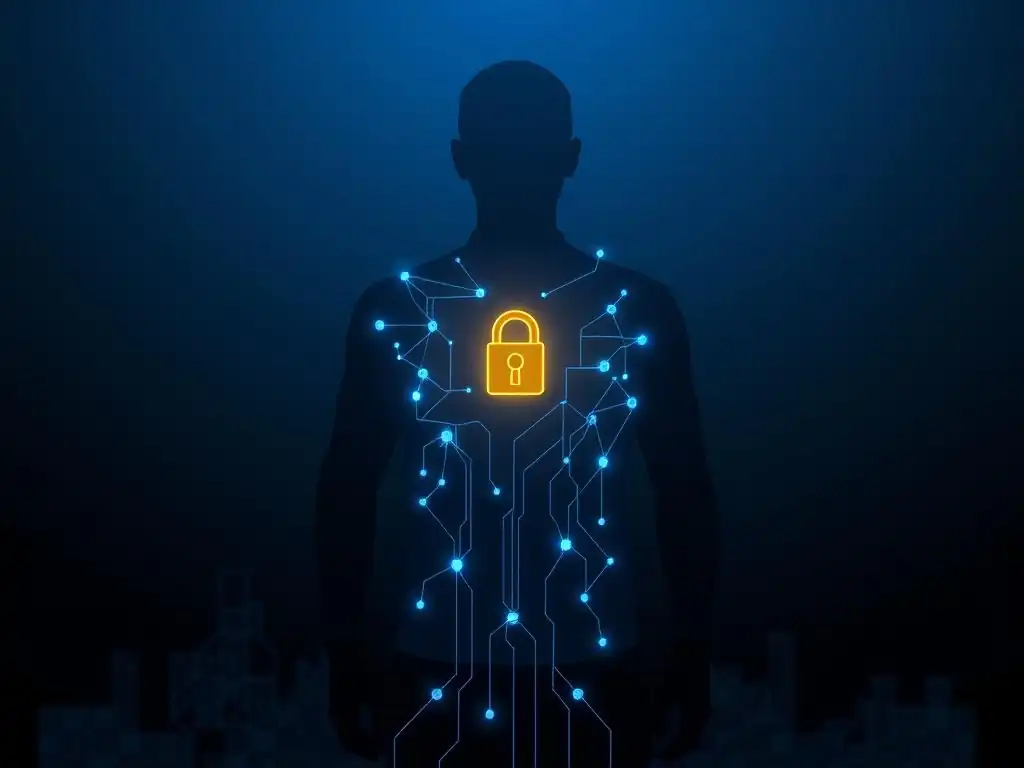
Blockchain technology is poised to play a transformative role in the healthcare sector, particularly concerning digital identity and patient data management. The inherent security, immutability, and decentralized nature of blockchain address some of the most pressing challenges in healthcare identity management, including data silos, privacy concerns, and the need for secure data exchange. Implementing robust blockchain identity verification systems in healthcare can lead to significant improvements in patient care, administrative efficiency, and data security.
This integration moves beyond simply securing records; it's about creating a patient-centric data ecosystem where individuals have control and visibility over their health information. The potential impact is vast, from enabling more efficient clinical trials to improving public health initiatives through secure, aggregated, and anonymized data.
Improving Patient Data Security and Interoperability
Patient data security is paramount in healthcare, with breaches carrying severe consequences for both patients and institutions. Traditional systems often store sensitive electronic health records (EHRs) in centralized databases, making them high-value targets for cyberattacks. Blockchain identity verification systems can significantly enhance data security by enabling a decentralized approach. Instead of storing EHRs directly on the blockchain (which is generally impractical due to data size and privacy concerns), the blockchain can store encrypted pointers or hashes of the data, with the actual data stored securely off-chain, accessible only via the patient's decentralized identity and cryptographic keys.
Furthermore, interoperability between different healthcare systems remains a major hurdle. Hospitals, clinics, and labs often use incompatible software, making it difficult to share patient information seamlessly. Blockchain identity, linked to verifiable credentials about a patient's health status or history, provides a standardized, secure layer for data exchange. A patient can use their blockchain identity to grant specific providers access to relevant health credentials, facilitating secure and efficient data sharing across disparate systems and improving coordination of care. This could reduce the administrative burden and costs associated with transferring records, estimated to be substantial annually.
Enhancing Data Privacy and Control for Patients
A key promise of blockchain identity verification systems in healthcare is empowering patients with greater control over their personal health information. In current systems, patients often lack visibility into who is accessing their data and for what purpose. With a blockchain-based self-sovereign identity, the patient becomes the controller of their health data. They decide which healthcare providers, researchers, or even family members have access to specific parts of their health record and for how long.
This enhanced control is facilitated through verifiable credentials and granular access permissions managed via the patient's blockchain identity. A patient can issue temporary access credentials to an emergency room doctor, for instance, without giving them permanent access to their entire history. This shift from institutional control to patient control aligns with evolving privacy regulations and builds greater trust between patients and the healthcare system. It enables true patient-centric healthcare by putting the individual at the heart of data management.
The Future of Blockchain-Based Healthcare Identity Solutions
The future of blockchain-based healthcare identity solutions looks promising, driven by the increasing need for secure, interoperable, and patient-controlled data management. Emerging trends include the development of specialized healthcare blockchain networks designed to meet stringent regulatory requirements and data privacy standards. There is also growing interest in using blockchain identity verification systems to manage consent for data sharing, particularly for research purposes or public health initiatives, ensuring transparency and auditability.
Integration with Internet of Medical Things (IoMT) devices is another area of development, where blockchain identity could secure data streams from wearables and remote monitoring devices, linking them securely to the patient's identity. Pilot programs and consortia are actively exploring these applications, demonstrating the potential to create a truly connected and secure healthcare ecosystem. While challenges remain, the trajectory points towards blockchain identity becoming a foundational layer for future healthcare data infrastructure, significantly improving privacy, security, and patient outcomes.
Challenges and Considerations for Implementing Blockchain Identity
While the benefits of blockchain identity verification systems are compelling, their widespread implementation is not without challenges. Adopting a fundamentally new approach to identity management requires careful consideration of technical, regulatory, and social factors. Overcoming these hurdles is crucial for realizing the full potential of decentralized identity solutions and ensuring they are practical, scalable, and accessible for broad adoption.
Addressing these challenges involves collaboration between technology developers, policymakers, businesses, and users. It requires developing robust standards, building user-friendly interfaces, and establishing clear legal and regulatory frameworks that support decentralized identity models while protecting individuals.
Scalability and Performance Issues
One of the significant technical challenges for some blockchain identity verification systems is scalability. Public blockchains, while offering high decentralization, can sometimes face limitations in transaction throughput and speed, which might be a bottleneck for applications requiring rapid identity verification or managing a large volume of credentials. While advancements in layer 2 solutions and alternative consensus mechanisms are improving scalability, it remains a key consideration for enterprise-level deployments.
Permissioned or private blockchains can offer higher performance and scalability for specific use cases, but they might sacrifice some degree of decentralization. Finding the right balance between performance, security, and decentralization is crucial. Implementing blockchain identity solutions for applications like national digital identity programs or large-scale retail requires systems capable of handling millions of transactions efficiently and cost-effectively. Ongoing research and development in blockchain technology are continuously addressing these performance challenges.
Interoperability with Existing Systems
Integrating blockchain identity verification systems with legacy IT infrastructure and existing identity management systems is another significant hurdle. Most organizations rely on established databases, directories (like Active Directory), and application-specific identity solutions. Blockchain identity solutions need to be able to interact seamlessly with these existing systems to avoid creating new data silos or requiring a complete overhaul of IT infrastructure.
Developing standards and middleware that facilitate interoperability is essential. Initiatives like the W3C Decentralized Identifiers (DIDs) specification and Verifiable Credentials data model are crucial steps towards creating a standardized framework that allows different blockchain identity systems and traditional systems to communicate. However, implementing these standards and building the necessary integration layers requires significant effort and technical expertise. Ensuring that blockchain identity solutions can augment rather than replace existing identity systems will be key to their adoption.
Data Privacy and Regulatory Compliance
While blockchain identity verification systems aim to enhance privacy through user control and selective disclosure, navigating the complex landscape of data privacy regulations (like GDPR, CCPA, etc.) presents challenges. The immutable nature of blockchain can conflict with "right to be forgotten" principles if personal data is directly stored on the ledger. While best practices recommend storing only cryptographic proofs on-chain and sensitive data off-chain, ensuring compliance across different jurisdictions requires careful architectural design and legal interpretation.
Determining legal responsibility and governance in a decentralized system can also be complex. Who is responsible if a credential is incorrectly issued or if a system vulnerability leads to a leak? Establishing clear frameworks for data governance, consent management, and compliance within decentralized identity ecosystems is critical. Regulatory clarity is still evolving in many regions, creating uncertainty for businesses looking to implement blockchain identity solutions.
User Adoption and Education
For blockchain identity verification systems to succeed, they must be widely adopted by end-users. This requires overcoming potential barriers related to usability, accessibility, and trust. Users are accustomed to familiar login methods, and transitioning to managing cryptographic keys and verifiable credentials might seem daunting or overly complex initially. Designing intuitive user interfaces and providing clear education on the benefits and usage of decentralized identity are essential.
Building trust in a new identity paradigm also takes time. Users need to feel confident that their digital identity is secure, private, and truly under their control. This involves demonstrating the tangible benefits, such as reduced fraud, improved privacy, and streamlined online interactions. A significant effort is needed in user experience design and public education campaigns to drive widespread adoption of blockchain identity verification systems.
The Future of Blockchain Identity Verification Systems
The trajectory for blockchain identity verification systems points towards increasing maturity and widespread adoption. As the technology evolves and standards solidify, we can expect to see more sophisticated and user-friendly solutions emerge. The future holds the promise of a digital world where individuals have greater control over their online identity, interactions are more secure and trustworthy, and businesses can operate more efficiently and compliantly.
This future will likely involve a convergence of technologies, with blockchain identity integrated into various platforms and services, becoming an invisible layer that underpins secure digital interactions. The focus will shift from the underlying technology to the user experience and the tangible benefits delivered.
Emerging Trends in Decentralized Identity
Several key trends are shaping the future of blockchain identity verification systems. One major trend is the increasing focus on interoperability. Efforts are accelerating to ensure that DIDs and VCs issued on one network or platform can be recognized and verified on others, promoting a truly portable digital identity. This involves collaboration on standards and the development of cross-chain solutions.
Another trend is the exploration of privacy-enhancing technologies like zero-knowledge proofs (ZKPs) within identity systems. ZKPs allow users to prove a claim (e.g., "I am over 18") without revealing any unnecessary underlying information (e.g., date of birth), further strengthening privacy in blockchain identity verification systems. We are also seeing the development of more user-friendly wallet applications designed specifically for managing DIDs and VCs, aiming to make decentralized identity accessible to non-technical users.
The Impact of Blockchain on the Future of Trust Online
Blockchain technology is fundamentally altering the landscape of trust online. By providing a mechanism for verifiable, tamper-evident records and transactions without relying on a single trusted authority, it enables new models of interaction based on cryptographic proof rather than institutional guarantees alone. Blockchain identity verification systems are a prime example of this shift, moving from a model where institutions hold and verify identity to one where individuals control their identity and share verifiable credentials.
This shift has profound implications for the future of online trust. It can reduce reliance on large intermediaries, empower individuals, and create more transparent and accountable digital ecosystems. As blockchain identity becomes more prevalent, it will raise the baseline for security and privacy in online interactions, potentially mitigating issues like misinformation, fraud, and surveillance by providing stronger assurance of who is doing what online.
Industry Insights on Blockchain Identity Adoption
Industry adoption of blockchain identity verification systems is gaining momentum, moving beyond pilot projects to production deployments in various sectors. Financial services continue to explore these solutions for KYC/AML and streamlined onboarding. Healthcare is investing in blockchain identity for patient data management and interoperability. Governments and public sector entities are looking at decentralized identity for e-governance services, digital IDs, and voting.
Insights from early adopters highlight the potential for significant cost savings and efficiency gains, alongside improved security and user empowerment. However, they also underscore the challenges related to integration, regulation, and the need for ecosystem development. Reports from industry analysts suggest that the market for decentralized identity solutions, including blockchain identity verification systems, is projected to grow significantly in the coming years, driven by increasing digital interactions, rising cybersecurity threats, and evolving privacy regulations.
Conclusion: Embracing Blockchain for a More Secure Digital Future
The need for secure, private, and user-controlled digital identities is more urgent than ever in our increasingly connected world. Traditional identity verification systems are no longer sufficient to address the challenges of data breaches, fraud, and lack of user control. Blockchain identity verification systems offer a powerful, transformative solution by leveraging the inherent strengths of distributed ledger technology to build trust online.
By enabling decentralized identifiers and verifiable credentials, blockchain empowers individuals with self-sovereign identity while providing businesses and organizations with a secure, efficient, and compliant way to verify identity claims. From streamlining onboarding and reducing fraud to enhancing data privacy and enabling new applications in healthcare, supply chain, and governance, the benefits are clear.
While challenges related to scalability, interoperability, and regulation remain, the ongoing advancements and growing industry adoption signal a clear path towards a future where blockchain identity is a cornerstone of a more secure, trustworthy, and user-centric digital world. Embracing these solutions is not just a technological upgrade; it's a necessary step towards building a more resilient digital future for everyone.
Frequently Asked Questions
What are blockchain identity verification systems, and how do they differ from traditional methods?
Blockchain identity verification systems use a decentralized, immutable ledger to store and verify identity data. This contrasts with traditional methods that rely on centralized authorities vulnerable to data breaches and single points of failure, offering greater security and transparency.
How does blockchain enhance privacy and security in identity verification processes?
Blockchain allows users to control their data through private keys and selective sharing, reducing reliance on third parties. The immutable nature of the blockchain makes it resistant to tampering, enhancing data integrity and security.
What are some real-world applications of blockchain-based identity verification systems beyond personal use?
Beyond individual identity, these systems can be used for supply chain management, ensuring product authenticity and origin. They also enable secure digital voting and verifiable credentials for professional certifications.
What are the regulatory challenges facing the adoption of blockchain identity verification systems?
Regulatory uncertainty surrounding data privacy regulations like GDPR and jurisdictional issues pose significant hurdles. Establishing clear legal frameworks for data governance and cross-border data transfer is crucial for widespread adoption.
What is the future outlook for blockchain identity verification, and what advancements can we expect?
The future involves greater interoperability between different blockchain identity systems and increased focus on user-friendly interfaces. Advancements in zero-knowledge proofs will further enhance privacy while enabling verification.
Final Reflection: Embracing Trust in the Digital Frontier
The journey through the potential of blockchain identity verification systems reveals more than just technological innovation; it highlights a fundamental shift in how we perceive and establish trust in the digital age. The promise of secure, decentralized identity management is not merely a futuristic concept, but a pressing need in a world increasingly vulnerable to fraud and data breaches. The ability to verify identity with greater certainty and control is paramount to fostering a safer and more reliable online environment for everyone.
The impact of blockchain identity verification extends far beyond simple transactions. It touches upon the very fabric of our online interactions, influencing everything from e-commerce and social media to healthcare and governance. The potential to reclaim control over our digital identities and participate in a more transparent and trustworthy online ecosystem is profoundly empowering. Trust is the glue of life. It's the most essential ingredient in effective communication. It's the foundational principle that holds all relationships.
- Stephen Covey. This quote perfectly encapsulates the importance of trust, which blockchain identity verification systems aim to restore in the digital realm.
As we stand on the cusp of this technological revolution, I invite you to consider the role you can play in shaping a future where digital trust is not a privilege, but a right. Reflect on how you can advocate for and embrace these innovative solutions, contributing to a more secure, equitable, and trustworthy online world for yourself and for generations to come. The power to build a better digital future lies within each of us.
Embrace Secure Identities: Step into the Future with Blockchain!
Thanks for exploring how blockchain-based identity systems are transforming trust online. You now have valuable insights into how this technology can reshape digital interactions. To put that knowledge into action:
- Start exploring blockchain-based identity solutions: Research platforms like Civic or uPort to understand their functionality and assess whether they meet your digital identity needs.
- Join the conversation: Share this article with your network on social media using #BlockchainIdentity to spark discussions about its potential benefits.
- Uncover emerging projects: Look into innovative decentralized identity initiatives beyond the mainstream for unexpected breakthroughs.
What real-world scenarios do you believe could be most improved by blockchain-based identity, and what steps can you take to promote its adoption?
Leave a Reply