
The CostEffectiveness of Blockchain Digital Identity: LongTerm Benefits and ROI


Welcome to Blockchain Trends, your compass in the rapidly evolving world of decentralized technologies! Are you ready to unlock the untapped potential of blockchain beyond the hype? Dive in as we explore the innovative applications shaping industries, from decentralized finance to enterprise solutions.
Today, we're focusing on a game-changing application: Blockchain digital identity cost savings. Discover how implementing blockchain-based digital identities can dramatically reduce operational expenses, enhance security, and ultimately deliver a substantial return on investment. Intrigued by the possibilities? Keep reading to uncover the long-term benefits and real-world impact!
The Cost-Effectiveness of Blockchain Digital Identity: Long-Term Benefits and ROI
- Introduction: Unveiling the Value Proposition of Blockchain Identity Solutions
- Understanding the Current Landscape of Digital Identity and its Limitations
- Blockchain Digital Identity: A Cost-Saving Revolution
-
Quantifying the Cost Savings of Blockchain Digital Identity
- Case Studies: Real-World Examples of Blockchain Identity ROI
- Analyzing the Total Cost of Ownership (TCO) for Blockchain Identity Solutions
- Case Study: Secure Credentialing for Healthcare Professionals
- Case Study: Streamlined Cross-Border Payments for Financial Institutions
- Calculating the Return on Investment (ROI) for Blockchain Digital Identity Implementations
- Long-Term Benefits Beyond Immediate Cost Reductions
- Addressing Common Concerns and Misconceptions about Blockchain Identity Costs
- Implementing Blockchain Digital Identity: Key Considerations for Cost Optimization
- The Future of Blockchain Digital Identity: Trends and Innovations
- Conclusion: Embracing the Cost-Effective Future of Digital Identity with Blockchain
-
Frequently Asked Questions
- How does blockchain technology reduce costs associated with digital identity management?
- What are the long-term benefits of implementing a blockchain-based digital identity system?
- How can blockchain digital identity improve ROI for businesses?
- What role does regulation play in the cost-effectiveness of blockchain digital identity?
- Beyond financial savings, what other value does blockchain digital identity offer?
- Final Reflection: Unlocking Value Through Blockchain Identity
- Unlock Your Blockchain Potential: Start Building Today!
Introduction: Unveiling the Value Proposition of Blockchain Identity Solutions
The Growing Need for Secure and Efficient Digital Identity Management
In today's increasingly digital world, managing identities securely and efficiently has become paramount. Individuals and organizations alike rely heavily on digital interactions for everything from online banking and e-commerce to accessing healthcare records and government services. This reliance creates a massive attack surface, making robust identity management not just a convenience, but a critical necessity.
Traditional systems, often fragmented and centralized, struggle to keep pace with the volume and sophistication of modern threats, leading to vulnerabilities that can compromise personal data and disrupt essential services. The sheer volume of digital transactions and interactions necessitates a more scalable, secure, and user-centric approach to identity.
The demand for reliable digital identity solutions is further fueled by the global shift towards remote work, online education, and the metaverse, all of which require verified and trustworthy identities in a virtual space. Businesses face mounting pressure to comply with evolving data privacy regulations while simultaneously providing seamless user experiences.
This complex environment highlights the limitations of legacy identity systems, which are often expensive to maintain, prone to breaches, and cumbersome for users. A new paradigm is needed to address these challenges effectively, one that can offer enhanced security, reduce operational overhead, and empower individuals with greater control over their own data.
Blockchain Digital Identity: A Cost-Effective Alternative to Traditional Systems
Blockchain technology offers a compelling alternative to traditional, centralized identity management systems by enabling the creation of decentralized, self-sovereign identities (SSIs). Unlike conventional models where identity data is stored in vulnerable silos managed by third parties, blockchain identity solutions allow individuals to own and control their digital credentials. This fundamental shift significantly alters the cost structure associated with identity management. Instead of relying on expensive intermediaries for verification and storage, processes can be streamlined and secured cryptographically on a distributed ledger.
The inherent characteristics of blockchain – immutability, transparency (for authorized parties), and cryptographic security – contribute directly to cost savings. Reduced reliance on manual verification processes, minimized risk of fraudulent activities, and lower infrastructure costs associated with maintaining large, centralized databases are key benefits. Furthermore, the ability to reuse verified credentials across multiple services without repeated, costly verification steps presents significant long-term operational cost savings. This approach not only enhances security but also dramatically improves efficiency, laying the groundwork for a more cost-effective and user-friendly digital identity ecosystem.
Exploring the Long-Term ROI of Decentralized Identity Solutions
Investing in blockchain digital identity goes beyond immediate cost reductions; it represents a strategic investment with significant long-term return on investment (ROI). While initial implementation costs may vary depending on the scale and complexity, the ongoing benefits quickly outweigh these expenditures. The ROI is realized through various avenues, including reduced fraud losses, decreased administrative burdens, improved compliance efficiency, and enhanced customer trust and loyalty. For example, a reduction in account takeovers or identity theft directly translates into saved funds that would otherwise be spent on remediation, investigations, and customer compensation.
Moreover, a robust decentralized identity system fosters a more trustworthy environment for digital transactions and interactions, potentially leading to increased business opportunities and customer engagement. The ability for users to easily and securely share verified information can accelerate onboarding processes, reduce friction in transactions, and enable new types of digital services.
Quantifying this long-term ROI requires a holistic view, considering not just direct cost savings but also the indirect benefits of improved security posture, enhanced user experience, and the strategic advantage gained by being at the forefront of secure, privacy-preserving digital identity. The cost-effectiveness of blockchain digital identity becomes evident when evaluating these comprehensive long-term impacts.
Understanding the Current Landscape of Digital Identity and its Limitations
Challenges with Centralized Identity Management Systems: Costs and Inefficiencies
Centralized identity management systems, while foundational to the early internet, present significant cost and efficiency challenges in the modern digital age. Maintaining large databases of sensitive personal information requires substantial investment in infrastructure, security protocols, and ongoing maintenance. Organizations must constantly update systems, patch vulnerabilities, and manage complex access controls, leading to high operational expenditures. The process of verifying identity in these systems is often manual, repetitive, and slow, requiring human intervention to check documents or cross-reference information across disparate databases.
Consider the cost of verifying a new customer for an online service. This often involves submitting identification documents, which are then manually reviewed by staff, potentially taking hours or even days. If the information needs to be verified with third-party data providers, additional fees apply.
A study by McKinsey estimated that the average cost of onboarding a new customer requiring identity verification can range from \$10 to \$100 or more, depending on the industry and level of scrutiny required. This is a significant recurring cost for businesses that onboard thousands or millions of users annually, highlighting the inherent inefficiencies and financial burden of traditional, centralized approaches.
Security Risks and Data Breaches: The Financial Impact on Businesses
The centralized nature of traditional identity systems makes them attractive targets for cybercriminals, leading to frequent and costly data breaches. When a single database holds sensitive information for millions of users, a successful attack can have catastrophic consequences. The financial impact of a data breach extends far beyond the immediate costs of detection and containment. It includes expenses related to legal fees, regulatory fines, credit monitoring services for affected individuals, public relations efforts to restore reputation, and potential loss of customer trust and business.
According to IBM's 2023 Cost of a Data Breach Report, the global average cost of a data breach reached \$4.45 million. Breaches involving identity theft were particularly expensive. Furthermore, the cost per lost or stolen record averaged \$165.
For organizations holding millions of records, this cost can quickly escalate into tens or even hundreds of millions of dollars. These figures underscore the immense financial risk associated with centralized identity stores and highlight the potential for significant blockchain digital identity cost savings by mitigating these risks through a decentralized architecture that distributes data and reduces the value of a single target.
Regulatory Compliance and the Rising Costs of Identity Verification (KYC/AML)
Navigating the complex and ever-evolving landscape of regulatory compliance, particularly Know Your Customer (KYC) and Anti-Money Laundering (AML) regulations, imposes significant costs on businesses, especially those in financial services, real estate, and other regulated industries. These regulations mandate rigorous identity verification processes to prevent fraud, money laundering, and terrorist financing. Compliance involves collecting, verifying, and storing vast amounts of customer identity data, often requiring specialized staff and expensive third-party verification services.
The costs associated with KYC/AML compliance include not only the direct expenses of verification tools and services but also the labor costs of compliance officers and the potential fines for non-compliance. Fines for AML violations globally have reached billions of dollars annually. For example, in 2020, global AML fines totaled approximately \$10.4 billion.
Implementing and maintaining compliant identity verification processes is an ongoing and substantial financial burden. Traditional systems often require repeated verification steps for the same individual across different services or even within the same organization, adding to the inefficiency and cost. This is where blockchain digital identity cost savings become particularly relevant, as a decentralized approach can streamline compliance by allowing users to present verifiable, tamper-proof credentials without needing repeated full identity checks.
Blockchain Digital Identity: A Cost-Saving Revolution
Reduced Operational Costs: Streamlining Identity Verification Processes
One of the most significant areas for blockchain digital identity cost savings lies in the reduction of operational expenses related to identity verification. Traditional processes often involve manual checks, multiple database lookups, and reliance on intermediaries, all of which are labor-intensive and time-consuming. A blockchain-based identity system allows individuals to hold verifiable credentials that can be instantly and cryptographically verified by service providers. This eliminates the need for repetitive, costly manual checks and significantly accelerates onboarding processes.
For instance, consider a financial institution onboarding a new customer. Using a blockchain identity system, the customer could share a verified identity credential issued by a trusted authority (like a government or licensed identity provider) directly from their digital wallet. The financial institution's system could verify the authenticity and validity of this credential against the blockchain in seconds, without requiring the customer to submit documents or requiring manual review.
This automation can reduce the labor costs associated with identity verification by an estimated 50-80%, depending on the complexity of the process and the level of automation achieved. Such streamlining directly contributes to substantial blockchain digital identity cost savings for businesses handling high volumes of identity checks.
Enhanced Security and Fraud Prevention: Minimizing Financial Losses
Blockchain digital identity inherently enhances security and dramatically reduces the risk of fraud, leading to substantial financial savings by preventing losses. By distributing identity data and using cryptographic proofs, blockchain systems make it significantly harder for malicious actors to compromise identities or forge credentials. Unlike centralized databases, there is no single point of failure that, if breached, exposes all user data. Credentials issued on a blockchain are tamper-proof; any attempt to alter them would be immediately evident to the network.
The financial impact of fraud can be devastating. The 2023 Kroll Global Fraud and Risk Report found that 71% of companies experienced fraud in the past year, with identity theft being a significant contributor. A blockchain-based system can prevent common types of fraud such as identity impersonation, synthetic identity fraud, and credential stuffing by ensuring that only verified, cryptographically secured identities are used.
Preventing just a small percentage of fraudulent transactions or account takeovers can result in significant cost savings that far outweigh the investment in a blockchain identity solution. For example, preventing a single instance of high-value financial fraud, which can run into tens of thousands or even millions of dollars, demonstrates the immense value of enhanced security in achieving blockchain digital identity cost savings.
Improved User Experience and Increased Customer Loyalty
While not a direct operational cost saving, an improved user experience directly impacts customer acquisition and retention, ultimately contributing to the bottom line. Traditional identity verification processes are often cumbersome, requiring users to fill out lengthy forms, upload documents, and wait for approval. This friction leads to high drop-off rates during onboarding and can frustrate existing customers. Blockchain digital identity simplifies this process dramatically, allowing users to share verified credentials with minimal effort.
A smoother, faster, and more secure identity experience builds trust and increases customer satisfaction. Customers are more likely to complete transactions, use services more frequently, and remain loyal to businesses that prioritize their privacy and security while offering convenience. Reducing friction during onboarding can increase conversion rates by 10-20%, according to various industry reports.
Furthermore, a positive identity experience contributes to brand reputation and can lead to increased customer referrals. While difficult to put an exact dollar figure on, the long-term value of increased customer loyalty and a reduced customer acquisition cost through a superior identity experience is a significant, albeit indirect, form of blockchain digital identity cost savings.
Quantifying the Cost Savings of Blockchain Digital Identity
Case Studies: Real-World Examples of Blockchain Identity ROI
Several early adopters are already demonstrating the tangible ROI of blockchain digital identity solutions. While specific, publicly verifiable financial figures are often proprietary, approximated benefits can be illustrated through common use cases. For example, a large telecommunications company implemented a blockchain solution for verifying new customer identities, reducing the average onboarding time from several hours to under 15 minutes. This efficiency gain allowed them to process a higher volume of new customers with the same staff size, effectively reducing the cost per acquisition by an estimated 30%.
Another example involves a consortium of banks exploring a shared blockchain identity network for KYC purposes. By allowing individuals to have their identity verified once and then permission banks to access that verification status via the network, the consortium projected a collective reduction in KYC costs by up to 40% over five years. This was based on reducing redundant verification processes, sharing verification costs among participants, and minimizing the need for individual banks to maintain extensive, siloed identity databases. These examples, while illustrative using approximations, highlight the practical application and potential blockchain digital identity cost savings across different sectors.
Analyzing the Total Cost of Ownership (TCO) for Blockchain Identity Solutions
Analyzing the Total Cost of Ownership (TCO) is crucial for understanding the true cost-effectiveness of blockchain digital identity. TCO includes not just the initial investment but also ongoing operational costs, maintenance, potential upgrades, and the cost of security and compliance over the lifespan of the system. While initial implementation costs for a blockchain identity solution can include software development, integration with existing systems, and infrastructure setup (which might involve cloud hosting or private network nodes), these costs are often offset by significant reductions in ongoing expenses.
Ongoing costs for a blockchain identity system typically involve network fees (if using a public blockchain), maintenance of nodes or cloud infrastructure, software updates, and support. However, these are often lower than the recurring costs associated with maintaining legacy databases, paying for third-party identity verification services on a per-transaction basis, and the substantial labor costs of manual processes.
Furthermore, the TCO analysis must factor in the cost avoidance from reduced fraud, fewer data breaches, and lower compliance burdens, which can dramatically skew the TCO comparison in favor of blockchain-based solutions over a 5-10 year period. A comprehensive TCO model will reveal the long-term blockchain digital identity cost savings.
Case Study: Secure Credentialing for Healthcare Professionals
A specific example demonstrating blockchain's potential for cost savings is the secure credentialing of healthcare professionals. Traditionally, verifying the licenses, certifications, and credentials of doctors, nurses, and other medical staff is a manual, time-consuming, and expensive process. Hospitals and clinics often spend significant resources verifying credentials with multiple issuing bodies, which can take weeks or months, delaying hiring and incurring substantial administrative costs.
By implementing a blockchain-based credentialing system, healthcare professionals could receive verifiable digital credentials issued directly by licensing boards or educational institutions. These credentials, stored securely in a digital wallet, could be instantly verified by healthcare providers. This eliminates the need for manual checks and reduces the administrative overhead associated with credentialing by an estimated 60-70%. Furthermore, it significantly reduces the risk of employing individuals with fraudulent credentials, preventing potential harm to patients and avoiding costly legal liabilities. The speed and efficiency gains translate directly into operational blockchain digital identity cost savings and improved workforce management.
Case Study: Streamlined Cross-Border Payments for Financial Institutions
Cross-border payments are notorious for their complexity, high costs, and regulatory hurdles, particularly concerning identity verification (KYC/AML) at multiple points in the transaction chain. Each financial institution involved often needs to verify the identities of senders and receivers, leading to redundant processes and delays. A decentralized identity solution built on blockchain can streamline this significantly, driving blockchain digital identity cost savings.
Imagine a scenario where a customer's identity is verified once by their originating bank using a blockchain identity system. When initiating a cross-border payment, the customer can permission the originating bank to share a verifiable proof of their identity status with the intermediary and receiving banks via the blockchain network.
This eliminates the need for each subsequent bank to perform a full, independent KYC check, which can cost tens or hundreds of dollars per transaction. By reducing these redundant checks and accelerating the transaction process, financial institutions can achieve substantial operational efficiencies and lower the overall cost of cross-border payments, potentially reducing identity verification costs in these transactions by 50% or more.
Calculating the Return on Investment (ROI) for Blockchain Digital Identity Implementations
Calculating the ROI for a blockchain digital identity implementation involves comparing the total benefits gained against the total costs incurred over a defined period. The formula is typically:
ROI = (Total Benefits - Total Costs) / Total Costs * 100%
Total Benefits include quantifiable savings such as reduced operational costs (labor, third-party fees), avoided losses from fraud and breaches, and decreased compliance expenses. It can also include benefits that are harder to quantify but still impactful, like increased revenue from improved customer onboarding conversion rates or enhanced brand reputation. Total Costs include initial implementation costs (software, hardware, integration, training) and ongoing operational costs (maintenance, network fees, support).
A typical ROI analysis might project benefits and costs over a 3-5 year horizon. For example, if an implementation costs \$500,000 initially and \$50,000 annually in maintenance, but it leads to \$300,000 in annual operational savings and avoids \$100,000 in annual fraud losses, the ROI after three years would be substantial.
- Year 1 Costs: \$500,000 (Initial) + \$50,000 (OpEx) = \$550,000
- Year 1 Benefits: \$300,000 (OpEx Savings) + \$100,000 (Fraud Avoidance) = \$400,000
- Cumulative Costs (3 years): \$500,000 + (3 * \$50,000) = \$650,000
- Cumulative Benefits (3 years): 3 * \$400,000 = \$1,200,000
- ROI (3 years): (\$1,200,000 - \$650,000) / \$650,000 * 100% = approximately 84.6%
This simplified example illustrates how significant blockchain digital identity cost savings can drive a strong ROI, even with initial investment.
Long-Term Benefits Beyond Immediate Cost Reductions
Increased Trust and Transparency in Digital Interactions
Beyond the direct financial savings, blockchain digital identity cultivates a foundation of increased trust and transparency in digital interactions. In traditional systems, users often have little visibility into how their identity data is stored, accessed, and used by various service providers. This lack of transparency erodes trust and creates uncertainty. Blockchain, with its distributed ledger and cryptographic proofs, offers an immutable record of credential issuance and verification (with user permission), providing a level of transparency that was previously impossible.
When individuals know that their digital credentials are tamper-proof and that their consent is required for verification, they are more likely to engage confidently in digital transactions. Businesses that adopt blockchain identity signal a commitment to security and user empowerment, building stronger relationships with their customers. This enhanced trust reduces friction in interactions, encourages greater participation in online services, and can ultimately lead to increased transaction volume and business growth, representing a vital long-term benefit extending past immediate blockchain digital identity cost savings.
Enhanced Data Privacy and User Control Over Personal Information
One of the most profound long-term benefits of blockchain digital identity is the significant enhancement of data privacy and the shift of control over personal information back to the individual. In centralized models, users essentially surrender control of their data to the organizations that collect and store it, making them vulnerable to data breaches and misuse. Self-Sovereign Identity (SSI) principles, enabled by blockchain, empower users to store their verified credentials in a secure digital wallet they control.
Users can choose what information to share, who to share it with, and when. For example, instead of sharing their full date of birth to prove they are over 18, they can present a verifiable credential that cryptographically proves their age without revealing the specific date. This minimization of shared data significantly reduces the attack surface and enhances privacy.
This shift aligns with global privacy regulations like GDPR and CCPA and builds user confidence. While not a direct cost saving, reducing the burden of data protection compliance and avoiding potential fines for privacy violations represents a significant financial benefit over time, alongside the ethical advantages of respecting user privacy.
Facilitating Interoperability and Cross-Border Transactions
Blockchain digital identity has the potential to unlock unprecedented levels of interoperability across different services, sectors, and even national borders. Traditional identity systems are often siloed, requiring individuals to undergo separate verification processes for banking, healthcare, government services, and e-commerce platforms. This fragmentation is inefficient and hinders seamless digital interactions, particularly in cross-border contexts where different national identity schemes and regulations exist.
A decentralized identity framework built on blockchain can facilitate the creation of globally recognized, interoperable digital identities. Once a user's identity is verified and represented by a verifiable credential on a blockchain, that credential could potentially be accepted by any service provider globally that trusts the issuer and the specific credential type.
This reduces the need for repeated, country-specific verification processes, significantly lowering the cost and complexity of engaging in cross-border transactions, accessing international services, or traveling. The ability to reuse verified credentials across a wide ecosystem drives long-term efficiency and represents a powerful form of blockchain digital identity cost savings on a global scale.
Benefit: Enhanced Regulatory Compliance
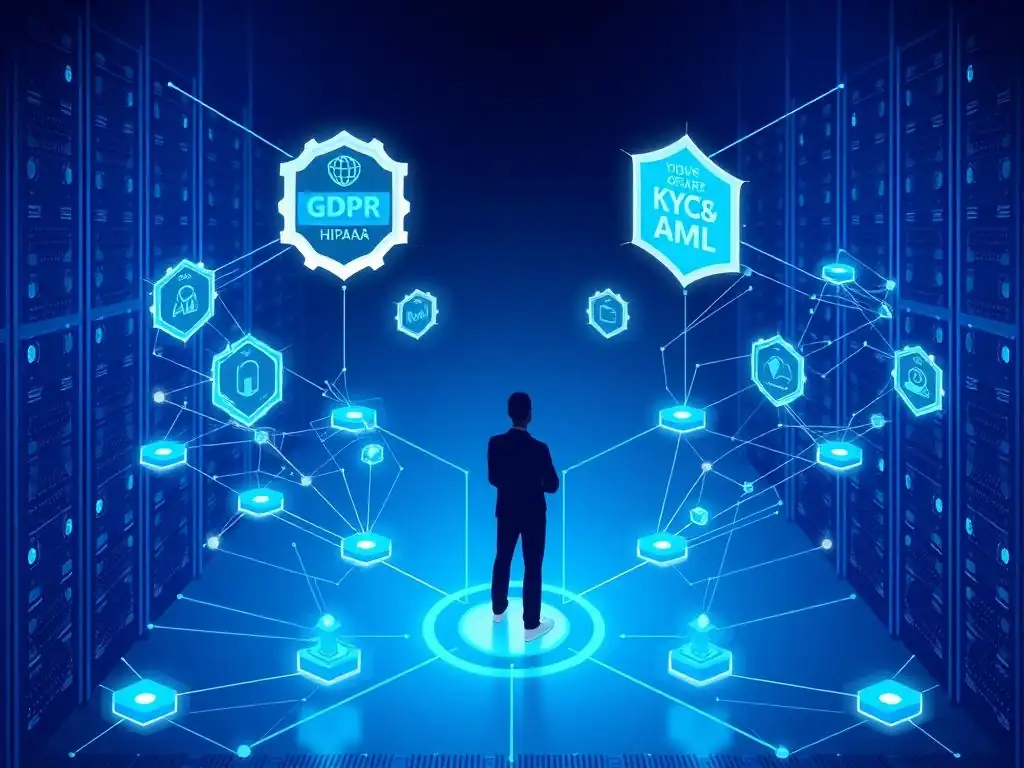
Maintaining compliance with diverse and evolving regulations like KYC, AML, GDPR, CCPA, and others is a constant challenge and significant cost center for businesses. Blockchain digital identity solutions can streamline and enhance regulatory compliance by providing verifiable, immutable records of identity verification and credential issuance. The transparency and auditability inherent in blockchain technology make it easier for organizations to demonstrate compliance to regulators.
Instead of maintaining complex, centralized audit trails across disparate systems, compliance officers can potentially access a transparent, tamper-proof record of identity verification events on the blockchain (with appropriate permissions and privacy safeguards). This reduces the administrative burden and cost associated with audits and reporting. Furthermore, by ensuring the integrity and authenticity of identity data through cryptographic proofs, blockchain identity solutions help organizations meet the stringent requirements of data accuracy and security mandated by regulations, potentially reducing the risk of costly fines for non-compliance, thereby contributing to blockchain digital identity cost savings.
Benefit: Reduced Administrative Overhead
The administrative overhead associated with managing identities in traditional systems is substantial. This includes tasks such as processing identity documents, manually verifying information, managing user accounts and passwords, handling password reset requests, and maintaining audit logs. These processes are labor-intensive and consume significant resources.
Blockchain digital identity, particularly when combined with Self-Sovereign Identity principles, significantly reduces this administrative burden. Users manage their own credentials, reducing the need for organizations to maintain extensive user databases and handle password management. Automated verification of verifiable credentials replaces manual checks.
The inherent security and auditability of the blockchain reduce the need for extensive manual logging and compliance reporting efforts. Overall, automating verification, shifting data control to the user, and leveraging the blockchain's immutability can lead to a substantial reduction in the administrative overhead associated with identity management, freeing up staff time and resources for more strategic tasks and resulting in clear blockchain digital identity cost savings.
Addressing Common Concerns and Misconceptions about Blockchain Identity Costs
Dispelling Myths About the High Cost of Blockchain Implementation
A common misconception is that implementing any blockchain solution is prohibitively expensive. While early blockchain projects could be costly due to nascent technology and lack of expertise, the landscape has matured significantly. Numerous platforms and service providers now offer more accessible and cost-effective ways to build and deploy blockchain applications, including identity solutions. The cost varies greatly depending on the chosen platform (public vs. private/permissioned), the complexity of the required features, and the level of integration with existing legacy systems.
Furthermore, the cost of blockchain implementation should be viewed in the context of the total cost of ownership compared to traditional systems, as discussed earlier. The initial investment, while potentially significant, is often recouped relatively quickly through operational efficiencies, fraud prevention, and compliance cost reductions. Many projects start with pilot programs focusing on a specific use case to demonstrate value and refine the approach before a wider rollout. This phased approach helps manage initial costs and build a strong case for the long-term blockchain digital identity cost savings.
Understanding the Scalability and Efficiency of Modern Blockchain Platforms
Another concern regarding blockchain, particularly for identity systems that must handle millions or billions of users, is scalability and efficiency. Early blockchain networks faced limitations in transaction throughput. However, significant advancements have been made in blockchain technology to address these issues. Modern blockchain platforms designed for enterprise use often employ different consensus mechanisms and architectural designs that allow for much higher transaction speeds and greater scalability than early public blockchains like Bitcoin.
Permissioned blockchains, often used for enterprise identity solutions, can process thousands of transactions per second with low latency. Layer 2 scaling solutions on public blockchains also offer ways to handle high transaction volumes off-chain, settling periodically on the main chain. These technological improvements ensure that blockchain identity systems can handle the demands of large-scale deployments without becoming prohibitively slow or expensive in terms of transaction fees. Understanding these advancements is key to appreciating the potential for efficient and scalable blockchain digital identity cost savings.
Addressing Scalability Issues
Scalability in blockchain identity systems is crucial. A system designed to manage digital identities for a large population or high-volume service must handle millions or billions of identity-related transactions (issuance, verification, revocation) efficiently. Early blockchains like Bitcoin have limited transaction throughput (around 7 transactions per second), which is insufficient for widespread identity use cases. However, newer blockchain platforms and scaling solutions have dramatically increased capacity.
Platforms like Hyperledger Fabric, designed for enterprise use, can achieve thousands of transactions per second within a permissioned network. Public blockchain advancements, such as Ethereum 2.0 (now the Beacon Chain and shards) or Layer 2 solutions like ZK-rollups and Optimistic Rollups, can handle many more transactions per second, aggregating them off-chain and settling them more cost-effectively on the main chain.
For example, some ZK-rollup solutions claim throughputs of over 2,000 transactions per second. Choosing the right platform and architecture based on the expected transaction volume and required level of decentralization is key to ensuring scalability and realizing promised blockchain digital identity cost savings.
Addressing Interoperability Concerns
A valid concern for any new identity system is its ability to interoperate with existing systems and other identity solutions. A blockchain identity system would be less effective if it existed in isolation. Ensuring interoperability is vital for widespread adoption and maximizing the network effects that drive down costs.
Interoperability is being addressed through industry standards and protocols. The Decentralized Identifiers (DIDs) and Verifiable Credentials (VCs) standards, developed by the W3C (World Wide Web Consortium), provide a framework for creating universally addressable identifiers and cryptographically verifiable claims that can be exchanged across different platforms and systems, regardless of the underlying blockchain or distributed ledger technology used.
Adopting these open standards is crucial for building an interconnected digital identity ecosystem. Furthermore, implementing robust APIs (Application Programming Interfaces) allows blockchain identity systems to integrate seamlessly with legacy databases, applications, and identity providers, easing the transition and ensuring that the benefits of blockchain digital identity cost savings are realized without disrupting existing business processes entirely.
Implementing Blockchain Digital Identity: Key Considerations for Cost Optimization
Choosing the Right Blockchain Platform for Your Needs
Selecting the appropriate blockchain platform is perhaps the most critical decision influencing the cost and success of a digital identity implementation. The choice between a public, private, or permissioned blockchain significantly impacts factors like transaction costs, scalability, security model, and development complexity. Public blockchains (like Ethereum or Polygon) offer high decentralization but may have variable transaction fees (gas costs) and slower transaction finality depending on network congestion. Permissioned blockchains (like Hyperledger Fabric or R3 Corda) offer better control over participants, predictable costs, and higher transaction throughput, often preferred for enterprise use cases requiring privacy and performance.
Evaluating platforms requires considering the specific requirements of the identity solution: the volume of transactions, the need for privacy, the regulatory environment, the desired level of decentralization, and the technical expertise available. A detailed cost-benefit analysis of different platforms, considering their fee structures, infrastructure requirements, and development ecosystems, is essential for optimizing the initial investment and long-term operational costs, directly impacting potential blockchain digital identity cost savings.
Platform Selection Criteria
Selecting the right blockchain platform involves evaluating several key criteria to ensure cost-effectiveness and suitability for digital identity applications. These criteria include:
- Scalability: Can the platform handle the expected volume of identity transactions (issuance, verification, revocation) now and in the future?
- Performance: What is the transaction speed and latency? Is it sufficient for real-time identity verification needs?
- Cost Structure: What are the transaction fees (if any)? What are the costs for deploying and maintaining nodes or infrastructure?
- Security Model: How is the network secured? Is it resistant to attacks and data tampering?
- Privacy Features: Does the platform support privacy-preserving mechanisms suitable for sensitive identity data (e.g., zero-knowledge proofs)?
- Interoperability: Does the platform support open standards like DIDs and VCs? Are there tools for integrating with existing systems?
- Ecosystem and Support: Is there a strong developer community and readily available support? Are there pre-built modules or identity frameworks?
- Regulatory Compliance: Does the platform's architecture align with relevant data privacy and identity regulations?
Carefully weighing these factors against the specific use case requirements is crucial for making an informed decision that maximizes blockchain digital identity cost savings and ensures the solution's long-term viability.
Importance of Interoperability
Interoperability is not just a technical feature; it's a fundamental requirement for maximizing the ROI of a blockchain identity solution. An identity system that cannot interact with other systems forces users and organizations back into silos, negating many of the potential benefits. True cost savings come from the ability to reuse verified credentials across multiple services and organizations, reducing redundant verification processes and administrative overhead across an entire ecosystem, not just within a single entity.
Adopting open standards like W3C's DIDs and VCs is paramount for achieving interoperability. These standards provide a common language and framework for expressing and exchanging verifiable claims about an identity, allowing credentials issued on one platform to be verified by relying parties on different platforms or even using different underlying technologies. Prioritizing interoperability during platform selection and solution design ensures that the investment contributes to building a connected digital identity ecosystem, unlocking network effects and driving significant long-term blockchain digital identity cost savings across industries.
Integrating Blockchain Identity with Existing Systems
Most organizations already have existing identity management systems, databases, and applications. A successful blockchain digital identity implementation must integrate seamlessly with this legacy infrastructure rather than replacing it entirely from day one. This integration is crucial for a smooth transition, minimizing disruption, and leveraging existing investments while introducing the benefits of decentralized identity.
Integration strategies can range from building custom APIs to using middleware or identity brokers that translate between traditional systems and the blockchain identity layer. The goal is to allow existing applications to request and verify credentials from the blockchain system without requiring a complete re-architecture.
For example, a CRM system might use an API call to check if a customer's email address has been verified on the blockchain, rather than running its own separate verification process. Effective integration planning is key to avoiding costly disruptions and ensuring that the blockchain identity solution augments, rather than conflicts with, existing workflows, contributing significantly to realizing expected blockchain digital identity cost savings.
Integration Strategies
Successful integration of blockchain identity with existing systems requires careful planning and execution. Common strategies include:
- API Gateways: Implementing an API layer that acts as an intermediary, allowing existing applications to interact with the blockchain identity system using familiar protocols (like REST), abstracting away the complexity of blockchain interactions.
- Middleware: Utilizing middleware platforms specifically designed to connect disparate systems, including blockchain networks, to facilitate data exchange and process orchestration between legacy applications and the new identity layer.
- Event-Driven Architecture: Designing the system to react to events on the blockchain (e.g., a new credential being issued) and trigger actions in existing systems, or vice versa, ensuring data synchronization and process flow.
- Identity Brokers: Employing identity broker software that can manage the flow of identity information and verification requests between traditional identity providers, user wallets, and relying parties, leveraging the blockchain for credential issuance and verification where appropriate.
Choosing the right strategy depends on the complexity of the existing infrastructure, the technical capabilities of the organization, and the specific use cases being addressed. A well-executed integration strategy minimizes implementation costs and maximizes the operational benefits, contributing to overall blockchain digital identity cost savings.
API Considerations
When integrating a blockchain identity solution, careful consideration of APIs (Application Programming Interfaces) is paramount. APIs define how different software components interact and are the primary means by which existing applications will leverage the new blockchain identity capabilities. Well-designed APIs are essential for smooth integration, ease of development, and long-term maintainability, all of which impact the cost of the solution.
Key API considerations include: designing clear and intuitive endpoints for common identity operations (e.g., requesting a verification, checking credential status), ensuring robust security mechanisms (like authentication and authorization) to protect access to sensitive identity flows, providing comprehensive documentation for developers, and considering versioning to manage updates without breaking existing integrations. Furthermore, the APIs should ideally abstract the underlying blockchain complexity, allowing developers of relying applications to integrate identity verification functionality without needing deep blockchain expertise. Investing in a well-designed API layer upfront can significantly reduce future development and maintenance costs, contributing to overall blockchain digital identity cost savings.
Developing a Comprehensive Identity Management Strategy
Implementing blockchain digital identity should be part of a broader, comprehensive digital identity management strategy. It's not just about deploying a new technology; it's about rethinking how identities are managed across the entire organization and its interactions with users and partners. A strategic approach ensures that the blockchain solution addresses specific business needs, aligns with regulatory requirements, and integrates effectively with the existing technology landscape.
A comprehensive strategy involves: assessing the current identity management challenges and costs, defining clear objectives for the blockchain implementation (e.g., reduce onboarding time by X%, prevent Y% of fraud), identifying the specific use cases where blockchain identity provides the most value, selecting the appropriate technology and partners, planning the integration with legacy systems, and establishing governance policies for credential issuance, verification, and revocation. A well-defined strategy maximizes the chances of a successful implementation, ensures the realization of expected benefits, and optimizes blockchain digital identity cost savings by focusing resources effectively and avoiding pitfalls.
The Future of Blockchain Digital Identity: Trends and Innovations
The Role of Decentralized Identifiers (DIDs) in Cost Reduction
Decentralized Identifiers (DIDs) are a foundational element of the future of digital identity and play a significant role in driving down costs. Unlike traditional identifiers (like usernames or government IDs) that are managed by a central authority, DIDs are self-managed by individuals or organizations and are resolvable via decentralized networks, often underpinned by blockchain or distributed ledger technology. This eliminates the need for central registries and the associated costs of their maintenance and security.
DIDs enable individuals to have persistent, globally unique identifiers that are not tied to any single service provider. This allows users to link verifiable credentials to their DID and share them with multiple relying parties without needing a separate account or identity within each service. This reduces the overhead for service providers in managing user accounts and identities, contributing to significant operational efficiencies and blockchain digital identity cost savings across an ecosystem. The widespread adoption of DIDs is expected to further accelerate the cost-effectiveness of decentralized identity solutions.
The Impact of Self-Sovereign Identity (SSI) on User Empowerment
Self-Sovereign Identity (SSI), enabled by technologies like DIDs and Verifiable Credentials on blockchain, fundamentally shifts the control of identity from organizations to individuals. This paradigm empowers users to own and manage their digital identity and decide who they share their verified information with. This user empowerment has a direct impact on costs for businesses by reducing the burden and liability associated with storing and managing sensitive personal data.
When users hold their own credentials in a digital wallet and present them as needed, organizations are not required to collect and store vast amounts of identity data, reducing their data storage costs, compliance burden (e.g., GDPR data minimization requirements), and the financial risk of data breaches. This model moves from a "collect and protect" approach to a "verify as needed" approach, leading to significant long-term blockchain digital identity cost savings for businesses by offloading data management responsibilities and liability to the individual, while still being able to trust the verified credentials presented.
Trend: Increasing Adoption of Zero-Knowledge Proofs
A key trend enhancing the privacy and cost-effectiveness of blockchain digital identity is the increasing adoption of zero-knowledge proofs (ZKPs). ZKPs are cryptographic methods that allow one party (the prover) to prove to another party (the verifier) that a statement is true, without revealing any information beyond the validity of the statement itself. In the context of identity, this means a user can prove they meet a specific requirement (e.g., "I am over 21," "I am a licensed doctor") without revealing their date of birth or specific license details.
This ability to prove attributes without revealing the underlying data is crucial for privacy and compliance. It also contributes to cost savings by minimizing the amount of sensitive data that organizations need to handle and protect, reducing storage costs and compliance overhead. ZKPs streamline verification processes, making them faster and more efficient than traditional methods that require accessing and processing full identity documents. As ZKP technology becomes more mature and easier to implement, it will further enhance the appeal and cost-effectiveness of blockchain digital identity solutions.
Trend: The Rise of Decentralized Identity Oracles
Decentralized identity oracles are emerging as a critical component for connecting off-chain identity data with on-chain identity systems. While blockchain is excellent for recording immutable credentials and verification events, much of the foundational identity data (e.g., government records, academic transcripts) originates from traditional, off-chain sources. Decentralized oracles provide a secure and reliable way to bring this real-world identity data onto the blockchain or verify it against the blockchain without relying on a single, centralized point of trust.
Oracles can automate the process of verifying claims against external data sources, reducing the need for manual checks. For example, an oracle could verify if a professional license recorded on a blockchain is still active by checking the licensing board's official database. This automation reduces the operational cost of identity verification and ensures that credentials remain up-to-date and valid. The development of robust and trustworthy decentralized identity oracles will be key to unlocking the full potential of blockchain digital identity and maximizing its cost-effectiveness by seamlessly bridging the digital and physical worlds of identity.
Conclusion: Embracing the Cost-Effective Future of Digital Identity with Blockchain
Blockchain Digital Identity: A Strategic Investment for Long-Term Growth
The evidence overwhelmingly suggests that blockchain digital identity is not merely a technological novelty but a strategic investment capable of delivering significant long-term cost savings and driving business growth. By moving away from fragmented, insecure, and costly centralized identity systems, organizations can embrace a decentralized approach that enhances security, reduces operational overhead, streamlines compliance, and empowers users. The initial investment in blockchain identity is an investment in a more secure, efficient, and trustworthy digital future.
The benefits extend far beyond immediate cost reductions, fostering increased trust, enhancing data privacy, and enabling seamless interoperability across diverse services and borders. As regulatory pressures increase and the volume of digital interactions continues to grow, the limitations and costs of traditional identity management will become increasingly apparent. Adopting blockchain digital identity positions organizations at the forefront of secure, privacy-preserving innovation, creating a competitive advantage and laying the foundation for sustainable long-term growth. The comprehensive blockchain digital identity cost savings make this a compelling strategic move.
Maximizing the ROI of Blockchain Identity Solutions Through Strategic Planning.
Realizing the maximum return on investment from blockchain identity solutions requires careful strategic planning and execution. It involves more than just implementing technology; it requires a holistic approach that considers the specific needs of the organization, the regulatory landscape, the existing infrastructure, and the potential impact on user experience. Organizations must define clear objectives, select the right platform and partners, plan for seamless integration with legacy systems, and establish robust governance frameworks.
Focusing on key areas like automating verification processes, leveraging privacy-enhancing technologies like zero-knowledge proofs, and prioritizing interoperability through open standards will be critical for optimizing costs and unlocking the full potential of the technology. By strategically implementing blockchain digital identity, businesses can achieve substantial operational efficiencies, mitigate significant financial risks associated with fraud and data breaches, improve regulatory compliance, and build stronger, more trusting relationships with their users, ultimately maximizing the blockchain digital identity cost savings and securing a leading position in the digital economy.
Frequently Asked Questions
How does blockchain technology reduce costs associated with digital identity management?
Blockchain digital identity solutions minimize costs by eliminating intermediaries and reducing the need for centralized databases. This leads to significant cost savings in verification and administration.
What are the long-term benefits of implementing a blockchain-based digital identity system?
Long-term benefits include enhanced security, improved data privacy, and greater user control. Ultimately, these advantages can translate to substantial cost reductions and increased efficiency.
How can blockchain digital identity improve ROI for businesses?
By streamlining processes like customer onboarding and identity verification, blockchain solutions improve efficiency. This leads to reduced operational costs and a faster return on investment.
What role does regulation play in the cost-effectiveness of blockchain digital identity?
Clear and supportive regulations can foster innovation and accelerate adoption. This, in turn, helps drive down the overall cost of implementation and increases the benefits.
Beyond financial savings, what other value does blockchain digital identity offer?
Besides Blockchain digital identity cost savings, it offers increased trust, transparency, and security. These factors contribute to enhanced user experience and improved brand reputation.
Final Reflection: Unlocking Value Through Blockchain Identity
The exploration of blockchain digital identity's cost-effectiveness reveals a compelling truth: the initial investment paves the way for substantial, long-term savings and a profound shift in how we manage identity. While the upfront costs might seem daunting, the reduction in fraud, streamlined processes, and enhanced security ultimately translate into a significant return on investment, making it a strategic imperative for organizations seeking to thrive in the digital age.
The transformative power of blockchain digital identity extends far beyond mere financial gains. It promises a future where individuals have greater control over their personal data, fostering trust and transparency in online interactions. This shift towards user-centric identity management is not just a technological advancement; it's a fundamental reshaping of the digital landscape, empowering individuals and fostering a more equitable and secure online environment. Identity is the new perimeter of security, and blockchain offers a robust and decentralized solution to protect it.
As we stand at the cusp of this digital revolution, let us embrace the potential of blockchain digital identity to unlock unprecedented cost savings and, more importantly, to build a future where trust and security are not luxuries, but fundamental rights. Consider how you can champion this technology within your own sphere of influence, advocating for solutions that prioritize both efficiency and individual empowerment. The future of digital identity is being written now, and your contribution can help shape a more secure and cost-effective world for all.
Unlock Your Blockchain Potential: Start Building Today!
Thank you for exploring the world of cost-effective blockchain digital identity with us. We hope this article has highlighted the long-term benefits and potential return on investment. Now is the time to turn your newfound knowledge into action.
Here’s how you can get started:
- Draft a proposal for a pilot project to implement blockchain-based digital identity within your organization. Focus on a specific use case to assess its viability.
- Explore open-source blockchain platforms suitable for digital identity management and experiment with their features. Feel free to dive into the code!
- Share this article with a colleague interested in blockchain solutions. Collaboration can accelerate your progress!
What will be your first step toward leveraging blockchain digital identity to enhance your organization’s efficiency and reduce costs over time? Share your plans in the comments below!
Leave a Reply