
Crowdfunding Real Estate Development: Blockchain for Transparent and Efficient Fundraising


Welcome to Blockchain Trends, your go-to source for navigating the ever-evolving world of decentralized technologies!
Imagine a world where real estate investment is accessible to everyone, transparent, and incredibly efficient. Our latest deep dive explores exactly that, focusing on blockchain real estate crowdfunding and its potential to revolutionize property development. Intrigued? Discover how blockchain is unlocking new possibilities in fundraising and reshaping the future of enterprise blockchain solutions. Keep reading to uncover the details!
Crowdfunding Real Estate Development: Blockchain for Transparent and Efficient Fundraising
- Introduction: Revolutionizing Real Estate Funding with Blockchain
- Understanding Blockchain Real Estate Crowdfunding
- How Blockchain Enhances Transparency in Real Estate Crowdfunding
- Improving Efficiency in Real Estate Fundraising with Blockchain
- Use Cases: Successful Blockchain Real Estate Crowdfunding Projects
- Regulatory Considerations for Blockchain Real Estate Crowdfunding
- Challenges and Opportunities in Blockchain Real Estate Crowdfunding
- The Future of Real Estate Investment: Decentralized and Transparent
- Conclusion: Blockchain as a Catalyst for Real Estate Innovation
-
Frequently Asked Questions
- What are the primary benefits of using blockchain for real estate crowdfunding?
- How does blockchain enhance transparency in real estate crowdfunding?
- What role does DeFi (Decentralized Finance) play in blockchain real estate crowdfunding?
- What regulatory hurdles exist for blockchain-based real estate crowdfunding?
- What is the future outlook for blockchain real estate crowdfunding?
- Final Reflection: Empowering Real Estate Through Transparency
- Unleash Your Real Estate Future: Invest with Confidence!
Introduction: Revolutionizing Real Estate Funding with Blockchain
Real estate has long been considered a cornerstone of wealth building, yet access to large-scale real estate development investments has traditionally been limited to institutional investors and high-net-worth individuals. Crowdfunding emerged as a way to democratize access, allowing smaller investors to pool funds for projects. However, traditional real estate crowdfunding platforms still face challenges related to transparency, liquidity, and administrative costs. This is where blockchain technology offers a transformative solution, promising to enhance trust, efficiency, and accessibility in blockchain real estate crowdfunding.
The Promise of Blockchain in Real Estate Crowdfunding
Blockchain technology, with its inherent characteristics of decentralization, transparency, and immutability, holds significant promise for revolutionizing the real estate crowdfunding landscape. By creating a tamper-proof ledger for transactions and ownership records, blockchain can fundamentally change how real estate assets are financed, managed, and traded. This shift is poised to open up development projects to a wider pool of global investors, potentially unlocking capital that was previously inaccessible.
The core value proposition of blockchain in this context lies in its ability to fractionalize ownership and automate processes through smart contracts. Instead of investing in a traditional fund or partnership, investors can purchase tokens representing a direct stake in a specific property or development project. This tokenization streamlines the investment process, reduces reliance on intermediaries, and can potentially lower the minimum investment threshold, making blockchain real estate crowdfunding a more inclusive investment avenue.
Addressing Traditional Challenges in Real Estate Investment
Traditional real estate investment, particularly in development projects, is often plagued by opacity, illiquidity, and high transaction costs. Investors frequently lack detailed, real-time information about the project's progress, financials, and ownership structure. The process of buying and selling stakes can be slow, complex, and involve numerous intermediaries, each adding fees. This friction limits market efficiency and deters potential investors seeking greater control and transparency.
Furthermore, verifying ownership and managing legal documentation in traditional real estate is notoriously cumbersome and prone to errors or fraud. The reliance on centralized databases and manual processes creates bottlenecks and increases risk. Blockchain real estate crowdfunding directly addresses these issues by providing a single, verifiable source of truth for all transaction data and ownership records. This distributed ledger technology minimizes the potential for disputes and significantly enhances the auditability of investment activities from inception through to project completion and beyond.
Understanding Blockchain Real Estate Crowdfunding
What is Blockchain-Based Real Estate Crowdfunding?
Blockchain-based real estate crowdfunding involves pooling funds from multiple investors for real estate development or acquisition projects using blockchain technology. At its core, this model utilizes tokenization, where ownership or economic rights in a property or project are represented by digital tokens on a blockchain. These tokens can then be bought and sold, often on specialized platforms, allowing for fractional ownership and potentially creating a secondary market.
This approach leverages the blockchain's distributed ledger to record every transaction related to the tokens, from initial issuance to subsequent transfers. Smart contracts, self-executing contracts with the terms of the agreement directly written into code, automate processes such as dividend distribution, voting rights, or the execution of buy/sell orders based on predefined conditions. This integration of tokens and smart contracts forms the technical backbone of blockchain real estate crowdfunding, enabling a more automated and verifiable system compared to traditional methods.
Key Benefits of Using Blockchain for Real Estate Funding
The adoption of blockchain technology in real estate funding offers several compelling benefits. Firstly, it significantly enhances transparency by providing a public, immutable record of all transactions and ownership stakes. Investors can independently verify information, reducing information asymmetry. Secondly, it improves efficiency by automating manual processes through smart contracts, such as managing investor cap tables, distributing rental income, or processing payouts from asset sales. This automation can drastically reduce administrative overhead.
Thirdly, tokenization has the potential to increase liquidity. While the secondary market for real estate tokens is still developing, the ability to trade fractional ownership stakes on digital asset exchanges could allow investors to exit their positions more easily than selling a share in a traditional real estate partnership or fund. This increased liquidity makes real estate investment more attractive, particularly for smaller investors. Finally, blockchain real estate crowdfunding can lower transaction costs by cutting out intermediaries and streamlining the legal and administrative processes involved in traditional real estate deals, making investments more cost-effective for both developers and investors.
How Blockchain Enhances Transparency in Real Estate Crowdfunding
Immutable Records and Smart Contracts: Ensuring Trust
One of the most significant contributions of blockchain to real estate crowdfunding is the creation of immutable and transparent records. Every transaction, from an investor purchasing tokens to the distribution of profits, is recorded on a distributed ledger that is accessible to all participants (depending on the blockchain's design, e.g., public or permissioned). This means that once a transaction is confirmed and added to a block, it cannot be altered or deleted, providing a high level of data integrity and trust.
Smart contracts further enhance this trust by automating the execution of predefined terms. For instance, a smart contract can be programmed to automatically distribute a portion of rental income to token holders based on their proportional ownership stake, without the need for manual calculation or intervention. This eliminates counterparty risk associated with relying on a third party to manage and disburse funds. The code of the smart contract is often auditable, allowing investors to verify exactly how these automated processes will function before they invest in blockchain real estate crowdfunding.
Enhanced Due Diligence Through Blockchain Verification
Blockchain technology can significantly improve the due diligence process for both investors and regulators in real estate crowdfunding. By tokenizing real estate assets and recording ownership on a blockchain, it becomes easier to track the full provenance of the asset and its associated rights. Information about property titles, historical transactions, liens, and even development permits could potentially be linked to the tokens or stored on the blockchain, creating a comprehensive and verifiable digital history.
While not all sensitive property data may reside directly on a public blockchain, the blockchain can serve as a secure index or pointer to verified external data sources. This allows investors to perform more thorough checks on the underlying asset and the development company. Furthermore, identity verification (KYC - Know Your Customer) and anti-money laundering (AML) checks can be integrated into the platform's workflow, with the verification status potentially recorded on the blockchain (in a privacy-preserving manner) to ensure compliance and enhance the legitimacy of blockchain real estate crowdfunding platforms.
Tokenization of Real Estate Assets: Increased Liquidity
Tokenization is the process of converting rights to an asset into a digital token on a blockchain. In the context of real estate, this means representing ownership, equity, or debt related to a property as digital tokens. For example, a development project worth $10 million could be divided into 10,000 tokens, each representing a $1,000 stake. Investors can then buy and sell these fractional tokens, making it possible to invest smaller amounts than typically required for direct real estate purchases.
This fractionalization, combined with the potential for secondary trading platforms, is expected to significantly increase the liquidity of real estate investments. Unlike traditional real estate, which can take months to sell, tokens can potentially be traded on digital exchanges relatively quickly, subject to market demand and regulatory frameworks. While the secondary market for blockchain real estate crowdfunding tokens is still nascent, its growth holds the promise of transforming a historically illiquid asset class into a more readily tradable one, attracting a broader range of investors.
Improving Efficiency in Real Estate Fundraising with Blockchain
Streamlining Investment Processes with Decentralized Platforms
Blockchain technology enables the creation of decentralized crowdfunding platforms that can streamline the entire investment process from initial offering to ongoing asset management. These platforms can automate several steps that are traditionally manual and time-consuming. For instance, investor onboarding, subscription agreement execution, and fund transfers can all be managed more efficiently through smart contracts and integrated digital workflows.
By leveraging a decentralized infrastructure, these platforms can reduce reliance on traditional financial intermediaries and cumbersome paperwork. Investors can participate directly through digital wallets, and funds can be transferred via cryptocurrencies or tokenized fiat, potentially speeding up the funding cycle. This streamlined process makes blockchain real estate crowdfunding more accessible and less intimidating for investors, while also reducing the administrative burden on developers seeking capital.
Reducing Administrative Overheads and Transaction Costs
Traditional real estate transactions involve numerous parties, including brokers, lawyers, banks, escrow agents, and title companies, each adding costs and complexity. By using blockchain and smart contracts, many of these intermediary functions can be automated or eliminated. For example, property ownership transfer could eventually be recorded and verified directly on a blockchain, potentially reducing the need for lengthy and expensive title searches and insurance in some jurisdictions.
Furthermore, the automation of tasks like cap table management, dividend payments, and reporting through smart contracts significantly reduces ongoing administrative overheads for the project sponsors. Estimates vary, but some projections suggest that blockchain could reduce real estate transaction costs by up to 30%, although this figure is highly dependent on the specific use case and regulatory environment. These cost savings make blockchain real estate crowdfunding a more financially attractive option for both developers and investors.
Faster and More Secure Funding Cycles
Blockchain technology can accelerate the fundraising process for real estate developments. Once a project is tokenized and listed on a platform, investors can contribute funds digitally, and the smart contract can automatically track contributions towards the funding goal. This contrasts with traditional methods that might involve manual verification of bank transfers and subscription documents, which can take days or weeks. The speed of blockchain transactions means that funds can be collected and verified much faster.
Security is also enhanced through cryptographic security and the distributed nature of the blockchain. Transactions are cryptographically secured, making them extremely difficult to hack or alter. The distribution of the ledger across multiple nodes reduces the risk of a single point of failure or malicious interference. This combination of speed and security makes blockchain real estate crowdfunding a potentially more robust and efficient method for capital formation compared to traditional crowdfunding or private equity models.
Use Cases: Successful Blockchain Real Estate Crowdfunding Projects
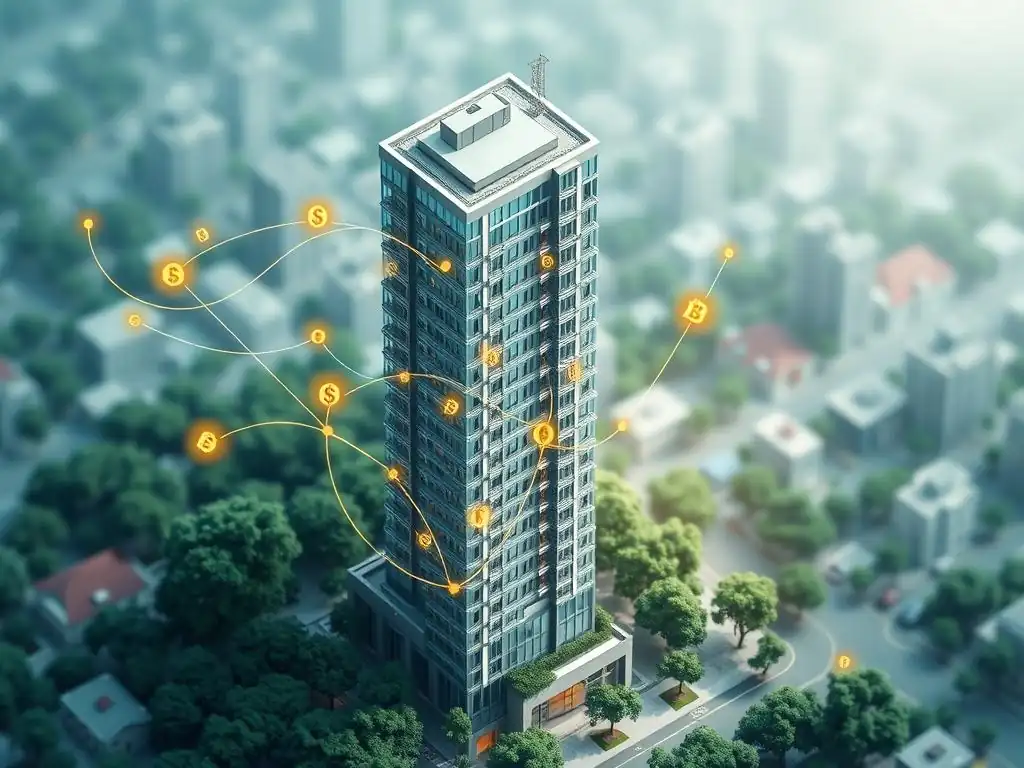
Aspen Coin: Fractional Ownership of a Luxury Hotel
One notable early example in the blockchain real estate crowdfunding space is the St. Regis Aspen Resort, which tokenized equity in the luxury hotel through a security token offering (STO). The project, completed in 2018, offered investors digital tokens (Aspen Coin) representing shares in the hotel's limited partnership. This allowed investors to own a fractional stake in a high-value, income-generating real estate asset.
The offering aimed to democratize access to institutional-grade real estate and potentially create a secondary market for these security tokens. While the secondary trading volume has been modest compared to traditional markets, the project demonstrated the technical feasibility of using blockchain to tokenize and crowdfund ownership in significant real estate assets. It highlighted the potential for blockchain real estate crowdfunding to unlock value in previously illiquid assets.
tZERO: Secondary Trading of Real Estate Tokens
tZERO, a regulated alternative trading system (ATS), has been instrumental in developing a platform for the secondary trading of security tokens, including those representing real estate. While tZERO doesn't originate real estate crowdfunding deals, it provides the crucial infrastructure for investors to buy and sell the tokens they acquire through such offerings, like the Aspen Coin.
The existence of platforms like tZERO is vital for realizing the liquidity potential of tokenized real estate. By providing a regulated venue for trading, they increase the attractiveness of blockchain real estate crowdfunding investments by offering investors a potential exit strategy. Although the trading volume on these platforms is still relatively low compared to traditional stock exchanges, their development is a key step towards building a mature ecosystem for tokenized assets.
Lessons Learned from Early Adopters
Early blockchain real estate crowdfunding projects, while groundbreaking, have also provided valuable lessons. One key takeaway is the critical importance of regulatory compliance. Many early projects faced significant hurdles navigating securities regulations, as tokenized assets often fall under existing securities laws. Ensuring offerings are structured correctly as security token offerings (STOs) and comply with KYC/AML rules is paramount.
Another lesson is the need for robust technology and clear communication. The underlying smart contracts and platforms must be secure and reliable. Investors need to understand the technology, the risks involved, and how the tokenization model works. Building investor confidence through transparency and education is crucial for the broader adoption of blockchain real estate crowdfunding. Finally, developing functional secondary markets remains a challenge that requires ongoing effort from platforms and regulators.
Regulatory Considerations for Blockchain Real Estate Crowdfunding
A major challenge for blockchain real estate crowdfunding is fitting tokenized real estate assets into existing legal and regulatory frameworks. In many jurisdictions, tokens representing ownership or a right to future profits in a real estate project are classified as securities. This classification subjects issuers and platforms to stringent regulations similar to those for traditional securities offerings, including registration requirements, disclosure obligations, and restrictions on who can invest (e.g., accredited investors).
Platforms facilitating blockchain real estate crowdfunding must work closely with legal counsel to ensure compliance with securities laws like the Securities Act of 1933 and the Exchange Act of 1934 in the U.S., or equivalent regulations internationally. This includes conducting proper due diligence on investors, structuring offerings correctly (e.g., Reg D, Reg A+, Reg CF), and potentially operating as a registered broker-dealer or utilizing an exempt status. Navigating this complex legal landscape is essential for the legitimacy and sustainability of blockchain-based real estate funding.
Compliance with KYC/AML Regulations in Decentralized Finance
Know Your Customer (KYC) and Anti-Money Laundering (AML) regulations are critical components of the financial system aimed at preventing illicit activities. While blockchain technology can offer transparency in transactions, platforms facilitating blockchain real estate crowdfunding must still implement robust KYC/AML procedures to verify the identity of investors and ensure the legality of the funds being invested.
Even in decentralized models, there is typically a point of interaction where investors onboard onto a platform or exchange. This is where identity verification processes, similar to those used by traditional financial institutions, must be applied. Ensuring compliance with these regulations is not only a legal requirement but also helps build trust with regulators and the broader financial community, paving the way for wider acceptance of blockchain real estate crowdfunding.
The Role of Regulatory Sandboxes in Fostering Innovation
Recognizing the potential of blockchain and other financial technologies (FinTech), many jurisdictions have established regulatory sandboxes. These sandboxes provide a controlled environment where companies can test innovative products, services, and business models, including blockchain real estate crowdfunding, under regulatory supervision without immediately facing the full spectrum of regulations.
Regulatory sandboxes allow regulators to better understand new technologies and their implications, while also providing entrepreneurs with direct feedback and guidance on how to achieve compliance. Examples include sandboxes in the UK, Singapore, and various U.S. states. These initiatives are crucial for fostering innovation in blockchain real estate crowdfunding by providing a pathway for novel approaches to gain regulatory approval and build confidence among investors and established financial players.
Challenges and Opportunities in Blockchain Real Estate Crowdfunding
Overcoming Barriers to Adoption: Education and Awareness
One significant challenge for blockchain real estate crowdfunding is the lack of public understanding and awareness regarding both blockchain technology and the concept of tokenized securities. Many potential investors are unfamiliar with digital wallets, cryptocurrencies, or the mechanics of security tokens. This knowledge gap creates a barrier to adoption, as investors may be hesitant to invest in something they don't fully understand, especially concerning a tangible asset like real estate.
Addressing this requires substantial effort in investor education. Platforms and industry participants need to clearly explain the benefits, risks, and processes involved in blockchain real estate crowdfunding in simple, accessible terms. Building trust through transparent communication and providing user-friendly interfaces will be crucial for attracting a mainstream investor base beyond early adopters in the crypto space.
Addressing Security Concerns and Smart Contract Vulnerabilities
While blockchain is inherently secure due to its cryptographic nature, the applications built on top of it, particularly smart contracts, can be vulnerable to bugs or exploits if not coded correctly. A flaw in a smart contract governing a real estate token offering could potentially lead to loss of funds or incorrect distribution of returns. High-profile hacks and vulnerabilities in the broader decentralized finance (DeFi) space have highlighted these risks.
Platforms engaging in blockchain real estate crowdfunding must prioritize security. This includes rigorous auditing of smart contract code by independent third parties, implementing robust cybersecurity measures, and potentially utilizing insurance or escrow services to mitigate risks. Ensuring the integrity and security of the underlying technology is paramount for protecting investor funds and building confidence in the blockchain real estate crowdfunding model.
Scaling Blockchain Solutions for Large-Scale Real Estate Projects
Current blockchain technology faces challenges related to scalability, transaction speed, and cost, particularly on public blockchains like Ethereum (though layer 2 solutions are improving this). While suitable for smaller crowdfunding rounds, scaling these solutions to handle transactions for multi-billion dollar real estate funds or processing thousands of investor payouts simultaneously can be demanding.
Ongoing advancements in blockchain technology, such as faster consensus mechanisms, sharding, and layer 2 scaling solutions, are working to address these limitations. Permissioned or enterprise blockchains may also offer more scalable solutions for specific real estate applications. The ability to efficiently handle a large volume of transactions and data will be critical for blockchain real estate crowdfunding to move beyond niche applications and become a viable option for large-scale real estate development financing.
The Future of Real Estate Investment: Decentralized and Transparent
The Potential for Global Real Estate Investment Platforms
Blockchain technology has the potential to break down geographical barriers in real estate investment. Blockchain real estate crowdfunding platforms, operating on a global ledger, could allow investors from different countries to easily participate in development projects located anywhere in the world (subject to local regulations). This contrasts with traditional cross-border real estate investment, which is often complex, expensive, and fraught with legal and logistical challenges.
A global marketplace for tokenized real estate could connect developers seeking capital with a vast pool of international investors, potentially leading to more efficient capital allocation and development in underserved markets. While regulatory harmonization across borders remains a significant hurdle, the underlying technology of blockchain provides the foundation for creating truly global real estate investment platforms, expanding the reach and opportunity of blockchain real estate crowdfunding.
The Impact of Blockchain on Traditional Real Estate Markets
The rise of blockchain real estate crowdfunding and tokenization is likely to have a significant impact on traditional real estate markets. By increasing transparency, efficiency, and liquidity, it could put pressure on traditional intermediaries to adapt their business models or risk becoming obsolete. Lower transaction costs and increased accessibility could also influence property valuations and investment strategies.
Furthermore, the ability to easily fractionalize ownership could lead to new investment products and strategies, such as diversified portfolios of tokenized real estate assets across different property types and geographies. While blockchain is unlikely to entirely replace traditional real estate investment methods in the near future, it is poised to become a powerful complementary tool that drives innovation and potentially reshapes market dynamics.
Predictions for the Growth of Blockchain Real Estate Crowdfunding
Experts predict significant growth in the tokenized real estate market, driven by increasing institutional interest and technological maturity. While precise figures are hard to pin down due to the nascent nature of the market, some reports estimate the total value of tokenized real estate could reach hundreds of billions or even trillions of dollars in the coming decade. This growth will be fueled by both new crowdfunding opportunities and the tokenization of existing real estate assets.
The market for blockchain real estate crowdfunding is expected to expand as regulatory clarity improves, technology becomes more robust, and investor confidence grows. As more successful projects demonstrate the viability and benefits of this model, it is likely to attract a wider range of developers and investors, potentially becoming a mainstream method for funding real estate development projects globally.
Conclusion: Blockchain as a Catalyst for Real Estate Innovation
Embracing Blockchain for a More Accessible and Efficient Real Estate Market
Blockchain technology is proving to be a powerful catalyst for innovation in the real estate sector, particularly in the realm of crowdfunding and fundraising for development projects. By enabling fractional ownership through tokenization, providing unprecedented transparency via immutable ledgers, and automating processes with smart contracts, blockchain addresses many of the inefficiencies and barriers that have historically limited participation in real estate investment. Embracing blockchain real estate crowdfunding offers the potential for a more accessible, liquid, and efficient market for both developers seeking capital and investors looking for opportunities.
While challenges related to regulation, technology scaling, and investor education remain, the foundational benefits of blockchain in enhancing trust and streamlining operations are undeniable. The progress seen in early projects and the development of secondary trading platforms indicate a clear trajectory towards wider adoption. As the ecosystem matures and regulatory frameworks adapt, blockchain real estate crowdfunding is set to unlock new pools of capital and democratize access to real estate development investments on a global scale.
The Long-Term Vision for Decentralized Real Estate Funding
The long-term vision for real estate funding involves a significant move towards decentralization and greater transparency, with blockchain technology playing a central role. Imagine a future where real estate development projects are routinely funded by a global pool of investors through tokenized offerings on decentralized platforms. Ownership records are immutably stored on a blockchain, property management is automated through smart contracts, and fractional shares can be traded seamlessly on regulated digital exchanges.
This decentralized future promises lower costs, increased liquidity, and enhanced trust throughout the real estate lifecycle. Blockchain real estate crowdfunding is a crucial first step towards realizing this vision, demonstrating the practical application of distributed ledger technology in transforming a traditional, often opaque, industry. As the technology evolves and the regulatory environment becomes clearer, blockchain's impact on how real estate is financed, owned, and managed will only continue to grow, creating a more dynamic and inclusive market for everyone involved.
Frequently Asked Questions
What are the primary benefits of using blockchain for real estate crowdfunding?
Blockchain offers increased transparency by immutably recording all transactions. It also streamlines the process, making fundraising more efficient and potentially reducing costs. Finally, it can help broaden investor access.
How does blockchain enhance transparency in real estate crowdfunding?
Blockchain's distributed ledger technology provides a verifiable and auditable record of all investments and transactions. This creates trust and reduces the risk of fraud compared to traditional methods.
What role does DeFi (Decentralized Finance) play in blockchain real estate crowdfunding?
DeFi protocols can be integrated to provide automated and transparent management of funds. They may also offer opportunities for yield farming or other financial incentives for investors.
What regulatory hurdles exist for blockchain-based real estate crowdfunding?
Current regulations are often unclear or ill-suited for blockchain-based platforms. Compliance with securities laws and anti-money laundering regulations remains a significant challenge for many.
What is the future outlook for blockchain real estate crowdfunding?
The future holds promise for greater adoption as regulations become clearer and technology matures. This could lead to more accessible and efficient real estate investment opportunities for a wider range of investors.
Final Reflection: Empowering Real Estate Through Transparency
The exploration of blockchain's potential in real estate crowdfunding reveals a landscape ripe for disruption. The promise of increased transparency and efficiency in fundraising is no longer a futuristic fantasy, but a tangible possibility shaping the future of real estate development. As we've seen, blockchain offers solutions to challenges that have long plagued the industry, from opaque investment processes to cumbersome administrative burdens.
This shift towards decentralized, transparent investment models has the potential to democratize access to real estate development, empowering both investors and developers alike. Witnessing the evolution of this technology and its potential to reshape the financial landscape is truly inspiring. The future of finance is decentralized, and real estate is no exception. Blockchain technology offers a path towards a more equitable and efficient investment ecosystem.
This quote encapsulates the transformative power at our fingertips, urging us to embrace innovation and challenge traditional norms.
Now, consider how these insights can inform your own approach to investment and development. Are you ready to explore the possibilities that blockchain real estate crowdfunding offers? Are you prepared to embrace the transparency and efficiency that this technology promises? The future of real estate is being built today, and your participation can help shape a more equitable and accessible landscape for all.
Unleash Your Real Estate Future: Invest with Confidence!
Thank you for exploring how blockchain is transforming real estate crowdfunding. We hope you’ve gained valuable insights into the increased transparency and efficiency this technology offers. Now, it’s time to turn those insights into action!
Here are a few steps you can take to get started:
- Explore current blockchain-based real estate crowdfunding platforms by researching available opportunities.
- Follow BlockchainTrends.org for the latest updates on developments in real estate and blockchain technology.
- Discuss: Share your experiences or ask questions in the comments below to help educate the Blockchain Trends community.
Which projects do you believe will benefit most from blockchain-powered crowdfunding? Share your thoughts below!
Leave a Reply