
Decentralized Healthcare: How Blockchain is Empowering Patients with Data Control


Welcome to Blockchain Trends, your compass in the rapidly evolving world of decentralized technology! Beyond the headlines of cryptocurrencies, we delve into the real-world applications reshaping industries. Ever wondered how blockchain can revolutionize healthcare? In this article, we explore the fascinating frontier of Blockchain healthcare data control, uncovering how it's empowering patients and transforming data ownership. Dive in to discover how this innovative approach is poised to redefine trust and security in the future of medicine…
Decentralized Healthcare: How Blockchain is Empowering Patients with Data Control
- Introduction: The Promise of Blockchain in Healthcare Data Management
- Understanding Blockchain Healthcare Data Control
- Empowering Patients with Blockchain: Data Ownership and Control
- Use Cases of Blockchain in Healthcare Data Management
- Addressing the Challenges of Blockchain Implementation in Healthcare
- The Future of Blockchain Healthcare Data Control
- Blockchain Healthcare Data Control: A Summary of Benefits
- Conclusion: Embracing Blockchain for a Healthier Future
-
Frequently Asked Questions
- How does blockchain technology empower patients with data control in healthcare?
- What are some key enterprise applications of blockchain in healthcare beyond patient data control?
- How does decentralized finance (DeFi) potentially intersect with blockchain healthcare data control?
- What are the current regulatory hurdles surrounding the use of blockchain for healthcare data?
- What is the future outlook for decentralized systems and blockchain's role in transforming healthcare?
- Final Reflection: Reclaiming Healthcare Sovereignty
- Seize Control of Your Health Journey Today!
Introduction: The Promise of Blockchain in Healthcare Data Management
The Current State of Healthcare Data Security and Privacy Issues
The current healthcare data landscape is fragmented and vulnerable. Patient information is often siloed across different providers, hospitals, labs, and pharmacies, making comprehensive data access difficult and inefficient. Furthermore, these disparate systems are frequently targeted by cyberattacks, leading to significant data breaches. Reports indicate that the healthcare sector consistently ranks among the most targeted industries, with millions of patient records compromised annually, resulting in substantial financial penalties and a severe erosion of patient trust.
Beyond security, privacy concerns are paramount. Patients often have limited visibility into who accesses their sensitive health information and for what purpose. While regulations like HIPAA in the United States and GDPR in Europe aim to protect patient data, the underlying technical infrastructure often lacks the inherent features to truly empower patients with control. This lack of transparency and control creates a system where patients are passive recipients of care rather than active participants in managing their own health data, hindering effective interoperability and patient-centric care delivery.
Blockchain Technology: A New Paradigm for Patient-Centric Healthcare
Blockchain technology offers a revolutionary approach to managing healthcare data by shifting from centralized, vulnerable databases to a decentralized, immutable ledger. Its core principles of transparency (for authorized parties), immutability, and cryptographic security provide a robust foundation for addressing the systemic issues plaguing traditional healthcare data systems. By recording transactions and data access in a tamper-proof chain, blockchain enhances both security and trust among stakeholders.
This distributed ledger technology enables the creation of a single, longitudinal view of a patient's health history, compiled from various sources but controlled by the patient. It facilitates secure, permissioned sharing of this data, allowing patients to grant temporary access to specific providers, researchers, or even family members, thereby placing the patient at the center of the data ecosystem. This paradigm shift is fundamental to achieving effective blockchain healthcare data control, moving towards a system where patients are empowered owners, not just subjects, of their health information.
Understanding Blockchain Healthcare Data Control
What is Decentralized Healthcare? Key Principles and Benefits
Decentralized healthcare envisions a system where patient data is not stored in isolated, centralized databases controlled by institutions, but rather exists in a distributed network where the patient holds the key to access and control. The key principles include patient data ownership, enhanced security through cryptography and distribution, transparency (with access controls), and interoperability between different healthcare providers and systems. This model seeks to break down data silos and create a more connected and efficient healthcare ecosystem.
The benefits of this approach are manifold. For patients, it means having a complete, accessible record of their health history and the ability to manage who can view it, fostering true blockchain healthcare data control. For providers, it enables faster, more accurate access to patient information, improving diagnosis and treatment planning. For researchers, it facilitates secure access to aggregated, anonymized data (with patient consent) for studies, accelerating medical advancements. Overall, it promises reduced administrative overhead, decreased risk of data breaches, and a more collaborative and patient-focused care delivery model.
How Blockchain Enables Secure and Transparent Data Sharing in Healthcare
Blockchain enables secure data sharing through several mechanisms. Patient data itself isn't typically stored directly on the blockchain, primarily due to privacy concerns and storage limitations. Instead, the blockchain stores cryptographic hashes of data files (which could be stored off-chain in secure, distributed storage) and records the transactions related to data access permissions. When a patient grants permission to a provider, this permission is recorded as a transaction on the immutable ledger, creating a transparent audit trail.
Access is managed via private keys held by the patient. When a provider requests access, the patient uses their key to authorize the request, which is then validated on the blockchain. This process ensures that data is only shared with explicit, verifiable consent. The transparency of the ledger means that any attempt to access data without permission, or any change to access rights, is recorded and visible to the patient, significantly enhancing security and trust in blockchain healthcare data control mechanisms.
The Role of Smart Contracts in Automating Healthcare Processes
Smart contracts are self-executing contracts with the terms of the agreement directly written into code. In healthcare, they can automate complex processes based on predefined conditions, reducing the need for intermediaries and minimizing administrative errors. For example, a smart contract could automatically release specific patient data to a researcher once the patient provides consent via a blockchain transaction and the research ethics approval is verified on the ledger.
Another application is automating insurance claims processing. A smart contract could be triggered upon a verified diagnosis or treatment recorded on the blockchain, automatically initiating the claim submission and potentially even the payment process, provided all conditions are met. This automation streamlines workflows, reduces costs, and ensures that actions related to patient data and services are executed precisely as agreed upon, further solidifying the potential of blockchain healthcare data control to improve efficiency and reliability.
Empowering Patients with Blockchain: Data Ownership and Control
Giving Patients Agency Over Their Health Information
At the heart of blockchain healthcare data control is the principle of patient agency. By providing patients with the private keys to their health data stored on a blockchain-based system, they gain unprecedented control over their information. This means patients can decide exactly which healthcare providers, specialists, hospitals, or even family members have access to their medical history, laboratory results, or medication lists. This contrasts sharply with the current model where institutions primarily control data access.
This control extends beyond simple access; patients can also define the duration of access and revoke permissions at any time. Imagine a scenario where a patient visits a new specialist. Instead of waiting days for records to be faxed or mailed, the patient can instantly grant the specialist secure, temporary access via a mobile application connected to the blockchain. This level of granular control transforms patients from passive data subjects into active managers of their health narratives, fundamentally changing the patient-provider relationship.
Secure Data Sharing with Healthcare Providers and Researchers
Blockchain facilitates secure data sharing by creating a verifiable and immutable record of every data access request and approval. When a patient consents to share data with a healthcare provider or a research institution, this consent is recorded on the blockchain, timestamped and cryptographically secured. The provider or researcher can then access the specific data points authorized by the patient, with every access event logged on the ledger.
This system drastically reduces the risk of unauthorized data access compared to traditional centralized databases. Furthermore, it enables patients to contribute their anonymized or pseudonymized data to research projects securely, knowing precisely how their data is being used and maintaining the ability to withdraw consent if desired. This secure, transparent mechanism for data exchange is a cornerstone of effective blockchain healthcare data control, fostering trust and collaboration within the healthcare ecosystem.
Reducing Data Breaches and Enhancing Patient Privacy through Blockchain
Blockchain's distributed nature inherently reduces the risk of catastrophic data breaches that plague centralized systems. There is no single point of failure holding all patient data that a hacker can target. While the data itself might be stored off-chain, the critical access permissions and audit trails reside on the distributed ledger, making them extremely difficult to tamper with. Any attempt to alter a record would require modifying multiple copies of the ledger across the network, which is computationally infeasible.
Moreover, blockchain enhances patient privacy by allowing for pseudonymity and granular access controls. Patients can share only the specific information needed for a particular purpose, rather than their entire medical history. The use of cryptographic hashes and off-chain storage for sensitive data ensures that the raw information is not exposed on the public ledger. This combination of security through distribution and enhanced privacy controls strengthens blockchain healthcare data control, offering a robust defense against data theft and misuse.
Use Cases of Blockchain in Healthcare Data Management
Streamlining Medical Records Management with Blockchain
Managing patient medical records is a complex and often inefficient process due to fragmented systems and lack of interoperability. Blockchain can create a unified, longitudinal patient record that aggregates data from various sources – hospitals, clinics, labs, pharmacies – into a single view accessible only with the patient's permission. Projects like Medicalchain or Healthereum (examples of companies exploring this space) aim to provide individuals with a platform to own and manage their health data.
With blockchain, a patient could grant a new doctor access to their entire medical history instantly, eliminating delays and improving care coordination. This streamlines administrative tasks, reduces redundant tests, and provides healthcare professionals with a more complete picture of a patient's health, leading to better informed decisions. The immutable ledger also provides a reliable audit trail of who accessed the record and when, enhancing accountability and security in blockchain healthcare data control.
Improving Drug Supply Chain Transparency and Traceability
Counterfeit drugs are a significant global health threat, costing billions annually and endangering lives. Blockchain offers a powerful tool to track pharmaceuticals from manufacturing through distribution to the pharmacy or patient. By recording each transaction and transfer of ownership on an immutable ledger, a transparent and verifiable history for every drug batch can be created.
Companies like MediLedger have piloted blockchain solutions to meet regulatory requirements like the US Drug Supply Chain Security Act (DSCSA). This allows stakeholders – manufacturers, distributors, pharmacies, and even regulators – to verify the authenticity and origin of drugs, combatting counterfeiting and ensuring patient safety. This application of blockchain healthcare data control focuses on the data about healthcare products, ensuring integrity and trust in the supply chain.
Enhancing Clinical Trial Data Integrity and Patient Recruitment
Clinical trials rely heavily on accurate and verifiable data collected from various sites and participants. Ensuring data integrity is crucial for the validity of trial results and regulatory approval. Blockchain can provide an immutable ledger to record trial protocols, patient consent, data entry timestamps, and updates, creating a tamper-proof audit trail that enhances trust in the data's reliability.
Furthermore, blockchain can facilitate secure and transparent patient recruitment and consent management. Patients can manage their participation data and consent permissions on the blockchain, giving them more control and visibility. This approach can potentially streamline the recruitment process and reduce administrative burdens associated with paper-based consent forms, contributing to more efficient and trustworthy clinical trials through enhanced blockchain healthcare data control.
Securing Telemedicine Consultations and Remote Patient Monitoring
Telemedicine and remote patient monitoring are becoming increasingly prevalent, but securing the data transmitted during these interactions is vital. While the audio/video stream of a consultation isn't typically stored on a blockchain, the metadata surrounding the consultation – such as the patient's identity, the provider's identity, the time and duration of the call, and the patient's consent for the session – can be securely recorded on the ledger.
For remote patient monitoring devices (like glucose monitors or wearable health trackers), blockchain can secure the transmission and storage of the collected health data points. The device could encrypt the data, hash it, and store the hash on the blockchain, with the actual data stored securely off-chain. This ensures the data's integrity and creates an immutable record of when data was collected, accessible only to authorized parties with the patient's permission. This extends blockchain healthcare data control to include data generated outside traditional clinical settings.
Addressing the Challenges of Blockchain Implementation in Healthcare
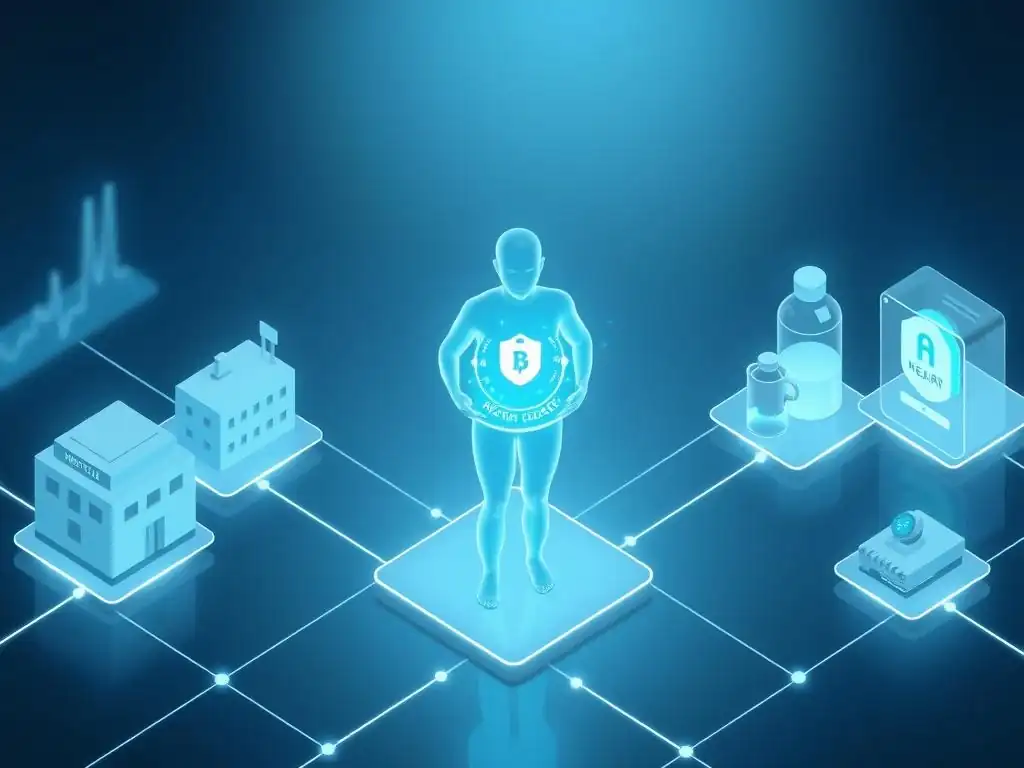
Scalability and Interoperability Issues in Blockchain Healthcare Solutions
A major challenge for blockchain adoption in healthcare is scalability. Public blockchains like Bitcoin or Ethereum, while robust, can process a relatively low number of transactions per second compared to the massive data volume generated in healthcare. While private or consortium blockchains offer higher throughput (potentially thousands of transactions per second), they still need to demonstrate they can handle the sheer volume of interactions required by a national or global healthcare system.
Interoperability is another critical hurdle. The healthcare industry already struggles with integrating legacy systems. Introducing multiple blockchain solutions, each potentially using different protocols or standards, could exacerbate this problem. Ensuring that different blockchain networks and traditional healthcare IT systems can seamlessly communicate and exchange data is essential for widespread adoption and effective blockchain healthcare data control across diverse platforms.
Regulatory Considerations and Compliance Requirements for Healthcare Blockchain
Implementing blockchain in healthcare must navigate a complex web of regulatory frameworks, including HIPAA in the US, GDPR in Europe, and numerous other national and regional data privacy laws. While blockchain's security features can aid compliance (e.g., immutable audit trails for access), its characteristics also pose challenges. The "right to be forgotten" principle under GDPR, for instance, conflicts with the immutable nature of blockchain where data, once recorded, cannot be erased.
Solutions involve storing sensitive patient data off-chain while using the blockchain for hashes and access permissions, or leveraging privacy-preserving technologies built on blockchain. Navigating these legal and compliance requirements requires careful design and collaboration with legal experts and regulatory bodies to ensure that blockchain healthcare data control solutions meet stringent privacy and security mandates.
Overcoming Technical Barriers and Promoting Blockchain Adoption Among Healthcare Professionals
Implementing blockchain requires significant technical expertise, which may not be readily available within existing healthcare IT departments. Integrating blockchain solutions with legacy Electronic Health Record (EHR) systems, which are often proprietary and difficult to modify, presents a substantial technical barrier. The complexity of blockchain technology itself can also be a hurdle for development and deployment.
Beyond technical aspects, there is a need to educate and train healthcare professionals – doctors, nurses, administrators – on how blockchain works and how to interact with blockchain-based systems. Promoting adoption requires demonstrating tangible benefits, ensuring user-friendly interfaces, and building trust in the new technology. Overcoming resistance to change and fostering a culture open to innovation are crucial steps towards realizing the potential of blockchain healthcare data control.
The Future of Blockchain Healthcare Data Control
Emerging Trends in Blockchain-Based Healthcare Solutions
The field of blockchain in healthcare is rapidly evolving. Beyond basic data management, emerging trends include the integration of blockchain with other cutting-edge technologies like Artificial Intelligence (AI) and the Internet of Medical Things (IoMT). Blockchain can provide the secure, decentralized infrastructure needed to manage the vast amounts of data generated by IoMT devices and ensure the integrity and provenance of data used for training AI algorithms in diagnostics and personalized medicine.
Another trend is the development of specialized healthcare-focused blockchain platforms designed to address the specific needs of the industry, including high transaction throughput and built-in compliance features. We are also seeing increased exploration of tokenization within healthcare, potentially creating incentives for patients to share data or participate in wellness programs. These trends point towards increasingly sophisticated applications of blockchain healthcare data control.
The Potential Impact of Blockchain on Personalized Medicine and Healthcare Innovation
Personalized medicine relies on analyzing large datasets, including genetic information, lifestyle data, and comprehensive medical histories, to tailor treatments to individual patients. Blockchain can unlock access to this data by enabling patients to securely share their diverse health information with researchers and clinicians while maintaining control over their privacy. This secure access to rich, multi-dimensional datasets is critical for advancing research in genomics, pharmacogenomics, and predictive analytics.
By providing a trustworthy and efficient way to share health data, blockchain can accelerate the pace of innovation in drug discovery, disease prevention, and the development of novel therapies. It fosters collaboration between different research institutions and healthcare providers, breaking down traditional barriers to data exchange. This empowerment of data sharing, underpinned by blockchain healthcare data control, is poised to be a catalyst for significant breakthroughs in personalized healthcare.
Blockchain's Role in Creating a More Efficient and Patient-Centric Healthcare System
Ultimately, blockchain has the potential to fundamentally reshape the healthcare system into one that is more efficient, transparent, and centered around the patient. By streamlining data management, reducing administrative overhead, enhancing security, and empowering patients with control over their information, blockchain addresses many of the core inefficiencies and trust issues in current systems.
Imagine a future where a patient's entire health journey, from birth records and vaccinations to chronic disease management and end-of-life care, is securely and accessibly recorded on a patient-controlled blockchain ledger. This holistic view, combined with seamless interoperability between providers and automated processes via smart contracts, could lead to significantly reduced costs, improved care coordination, fewer medical errors, and a healthcare experience where the patient is truly in control of their health data and journey. This vision is the ultimate promise of effective blockchain healthcare data control.
Blockchain Healthcare Data Control: A Summary of Benefits
Improved Data Security and Privacy for Patients
One of the most significant benefits of blockchain in healthcare is the enhanced security and privacy it offers patients. Traditional centralized databases are attractive targets for cyberattacks, leading to millions of records being compromised annually. Blockchain mitigates this risk by distributing data (or data pointers/hashes) across a network, making it far more resistant to single points of failure and unauthorized mass breaches. The use of cryptography ensures that data remains secure.
Furthermore, blockchain empowers patients with fine-grained control over their privacy. Patients can grant specific permissions for who can access their data and for how long, with every access logged immutably. This transparency and control reduce the potential for misuse of sensitive health information, building trust and ensuring that patients' data privacy preferences are respected through robust blockchain healthcare data control mechanisms.
Enhanced Interoperability and Data Sharing Among Healthcare Stakeholders
Lack of interoperability is a major impediment to efficient healthcare delivery, often leading to delays, redundant tests, and incomplete patient information. Blockchain provides a neutral, secure platform that can connect disparate systems and allow for seamless, permissioned data exchange between different healthcare providers, laboratories, pharmacies, and even public health agencies.
By creating a single, accessible source of truth for a patient's health history (controlled by the patient), blockchain breaks down data silos. This enhanced interoperability ensures that all authorized healthcare stakeholders have access to the most current and comprehensive patient data when and where they need it, improving diagnostic accuracy, care coordination, and overall system efficiency, facilitated by effective blockchain healthcare data control.
Reduced Administrative Costs and Increased Efficiency in Healthcare Operations
The current healthcare system is burdened by significant administrative costs associated with managing patient records, verifying insurance, processing claims, and ensuring compliance. Blockchain's ability to automate processes through smart contracts and provide a transparent, immutable audit trail can lead to substantial reductions in these overheads.
Streamlined data access reduces time spent searching for records. Automated claim processing minimizes manual effort and potential errors. Improved supply chain transparency reduces losses from counterfeiting and inefficiencies. Overall, by creating a more efficient and trustworthy data infrastructure, blockchain healthcare data control can free up resources, allowing healthcare providers to focus more on patient care and less on administrative burdens, leading to a more cost-effective system.
Conclusion: Embracing Blockchain for a Healthier Future
The Transformative Potential of Blockchain in Revolutionizing Healthcare
Blockchain technology holds immense potential to revolutionize the healthcare industry, moving it towards a more secure, transparent, and patient-centric model. By fundamentally changing how health data is managed, shared, and controlled, blockchain addresses long-standing issues of data silos, security vulnerabilities, and lack of patient empowerment. Its core features—immutability, transparency, and decentralization—provide a robust foundation for building trust and efficiency in healthcare data management.
The shift towards empowering patients with true blockchain healthcare data control is not just a technical upgrade; it represents a paradigm shift in the patient-provider relationship. It enables a future where patients are active participants in their health journey, with full visibility and control over their most sensitive information, paving the way for improved care outcomes, accelerated research, and a more equitable healthcare system.
Call to Action: Encouraging Collaboration and Innovation in Blockchain Healthcare Data Control
Realizing the full potential of blockchain in healthcare requires collaborative effort across the ecosystem. Healthcare providers, technology developers, regulatory bodies, and patients must work together to build interoperable, scalable, and compliant blockchain solutions. Investment in pilot programs, research, and education is crucial to overcome current challenges and demonstrate the tangible benefits of blockchain healthcare data control.
We must foster an environment that encourages innovation while prioritizing patient privacy and security. By embracing blockchain and focusing on patient empowerment, the healthcare industry can build a future where health data is not a vulnerability but a powerful tool used responsibly to improve individual and public health. The time to explore and implement blockchain healthcare data control solutions is now, to build a healthier, more efficient, and more trustworthy healthcare future for everyone.
Frequently Asked Questions
How does blockchain technology empower patients with data control in healthcare?
Blockchain allows patients to have verifiable and immutable control over their health records. This means they can grant or revoke access to their data to specific providers, ensuring greater privacy and security.
What are some key enterprise applications of blockchain in healthcare beyond patient data control?
Beyond data control, blockchain can streamline supply chain management for pharmaceuticals, improve clinical trial data integrity, and facilitate secure and efficient claims processing. These applications enhance transparency and trust within the healthcare ecosystem.
How does decentralized finance (DeFi) potentially intersect with blockchain healthcare data control?
DeFi could enable innovative financing models for healthcare research or allow patients to monetize their anonymized data for research purposes. This creates new avenues for patient empowerment and data-driven healthcare.
What are the current regulatory hurdles surrounding the use of blockchain for healthcare data?
Regulatory uncertainty regarding data privacy laws (like HIPAA) and interoperability standards presents challenges. Clear guidelines are needed to ensure responsible and compliant implementation of blockchain in healthcare.
What is the future outlook for decentralized systems and blockchain's role in transforming healthcare?
The future envisions a more patient-centric and interoperable healthcare system where blockchain facilitates secure data sharing and collaboration. This leads to improved patient outcomes and greater efficiency across the healthcare landscape.
Final Reflection: Reclaiming Healthcare Sovereignty
The promise of blockchain healthcare data control is no longer a futuristic fantasy, but a tangible shift occurring in the present. The potential to revolutionize patient empowerment, data security, and interoperability within the healthcare system is immense, and the foundations laid today will determine the landscape of tomorrow's medical care. This isn't just about technology; it's about fundamentally altering the power dynamic between patients and the institutions that hold their sensitive information.
The journey towards decentralized healthcare is fraught with challenges, but the potential benefits are too significant to ignore. Witnessing the growing momentum behind blockchain solutions in healthcare fills me with hope, not just for improved efficiency and security, but for a more human-centered approach to medicine. The future of healthcare is participatory, predictive, and personalized, and blockchain technology has the potential to be a key enabler.
- Dr. John Halamka, President of the Mayo Clinic Platform. This quote encapsulates the transformative potential that lies within our grasp, urging us to embrace innovation while prioritizing patient well-being.
Now, take a moment to consider your own relationship with your healthcare data. Are you truly in control? Are you confident in its security? The future of healthcare is being written now, and your voice matters. Let us all strive to advocate for solutions that prioritize patient autonomy, transparency, and security. Embrace the potential of blockchain to reshape healthcare, and become an active participant in building a future where your health data empowers you, not the other way around.
Seize Control of Your Health Journey Today!
Thank you for exploring how blockchain technology is transforming healthcare and empowering you to take charge of your personal data. Now, it’s time to turn that knowledge into action and become an active participant in your own well-being.
Ready to learn more? Here are a few steps you can take right now:
- Research blockchain-based healthcare platforms that match your needs and priorities. Knowing your options is the first step toward regaining control.
- Join the conversation! Share this article with friends and family who might also benefit from understanding decentralized healthcare.
- Read other articles on Blockchain Trends about blockchain applications in fields like supply chain management and digital identity to see the wide-ranging potential of this technology.
What actions will you take today to reclaim ownership of your health data? Share your thoughts in the comments below!
Leave a Reply