
Decentralized Identity Management: The Future of Online Authentication with Blockchain


Welcome to Blockchain Trends, your compass in the rapidly evolving world of decentralized technology. Dive in to discover how blockchain is reshaping industries beyond cryptocurrency, from DeFi innovations to enterprise applications. Today, we're exploring a crucial application poised to revolutionize online security: the future of blockchain identity management solutions. But how exactly can blockchain solve the identity crisis plaguing the digital age? Keep reading to unlock the potential of decentralized identity and its implications for a more secure and trustworthy online future.
- The Future of Blockchain Identity Management Solutions
-
Frequently Asked Questions
- How does blockchain enhance identity management compared to traditional methods?
- What are the key benefits of using decentralized identity (DID) solutions based on blockchain?
- What role does blockchain play in the future of online authentication?
- What are some potential challenges in implementing blockchain-based identity management solutions?
- How will blockchain identity management solutions evolve in the future?
- Final Reflection: Embracing the Decentralized Future
- Reimagine Your Digital Footprint!
The Future of Blockchain Identity Management Solutions
The trajectory of blockchain identity management solutions is pointing towards a future where digital identity is more secure, user-centric, and interoperable. While significant progress has been made, widespread adoption hinges on addressing current technical hurdles and navigating evolving regulatory landscapes. The potential impact spans across various sectors, from personal data management to immersive digital environments like the metaverse.
Scalability Challenges and Potential Solutions
Current blockchain networks, particularly public ones used for identity anchoring, face scalability challenges that could hinder mass adoption of decentralized identity. Public blockchains like Ethereum, while robust, can experience congestion, leading to high transaction fees (gas costs) and slower confirmation times during peak demand. This can make frequent identity updates or verifications economically unfeasible for certain applications or users, especially when compared to traditional centralized systems that handle millions of transactions per second. For instance, updating a DID document or revoking a credential might require a blockchain transaction, and the cost and speed of this process are critical factors.
Addressing these scalability issues is paramount for the blockchain identity management solutions future. Layer 2 scaling solutions, such as rollups (optimistic and zero-knowledge) on networks like Ethereum, offer a promising path by processing transactions off-chain and posting aggregated proofs on-chain, drastically increasing throughput and reducing costs.
Other approaches include utilizing blockchains designed for higher transaction volumes, like some permissioned or consortium chains, or exploring sharding techniques that partition the network to process transactions in parallel. Research into new consensus mechanisms, like Proof-of-Stake variations or directed acyclic graphs (DAGs), also aims to build more scalable foundations for identity systems that can support billions of users and devices.
Interoperability and Standards for Widespread Adoption
A key challenge for the future of blockchain identity management solutions is ensuring interoperability between different decentralized identity systems and blockchain networks. Currently, various platforms and protocols exist (e.g., Sovrin, uPort, Polygon ID), each potentially using different DID methods or credential formats. This fragmentation can create silos, preventing users from seamlessly using their decentralized identities and verifiable credentials across different services, applications, or even different blockchain ecosystems. For example, a credential issued on one platform might not be easily recognized or verified by a service built on another, limiting the utility and reach of decentralized identity.
Achieving true interoperability requires the widespread adoption of common standards. Significant progress has been made with the World Wide Web Consortium (W3C) Decentralized Identifiers (DID) specification and Verifiable Credentials (VC) data model. These standards provide a framework for creating globally unique identifiers and cryptographically verifiable claims independent of any centralized authority.
Future efforts will focus on developing and implementing DID methods for various blockchains and ensuring compliance with VC standards across different issuing and verifying platforms. Collaboration among industry players, standards bodies, and governments is essential to build a cohesive ecosystem where identities and credentials can flow freely and securely, unlocking the full potential of blockchain identity management.
The Role of Decentralized Identity in the Metaverse
The emerging concept of the metaverse, a persistent, interconnected set of virtual worlds, presents a compelling use case for decentralized identity. As users move between virtual environments, platforms, and experiences, they will need a consistent, secure, and portable identity that isn't tied to a single platform provider. Traditional centralized logins would replicate the current web's data silos and privacy risks within the metaverse. Decentralized identity allows users to own and control their digital presence, reputation, and assets across these virtual spaces.
With decentralized identity, a user's avatar, digital possessions (NFTs), virtual achievements, and reputation could be linked to their DID, verifiable across different metaverse platforms. For instance, a user could prove they own a specific virtual item or have achieved a certain status in one game and use that credential in another, without revealing unnecessary personal information.
This enables true digital ownership and persistent identity independent of any single company, fostering trust and enabling a more dynamic and user-controlled metaverse experience. The blockchain identity management solutions future is intrinsically linked to the development of the metaverse as a key application area.
Regulatory Landscape and Compliance Considerations
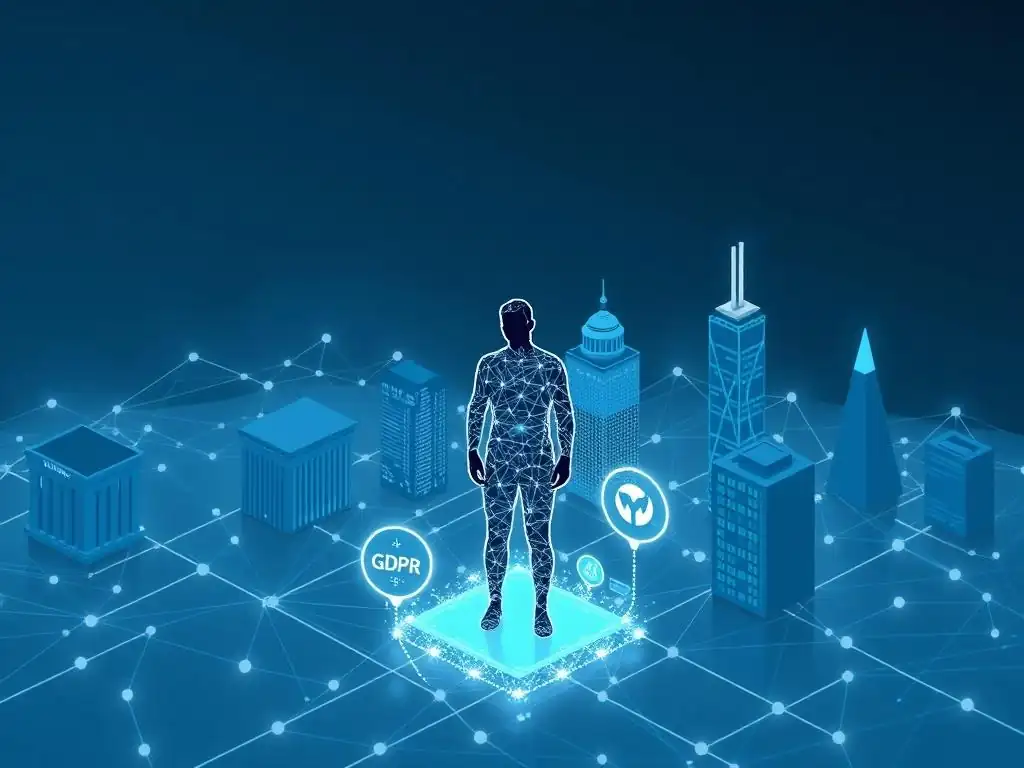
The regulatory landscape surrounding digital identity and blockchain technology is still evolving, presenting both challenges and opportunities for blockchain identity management solutions. Existing regulations like GDPR in Europe or CCPA in California emphasize data privacy and user control, principles that align well with the core tenets of decentralized identity. However, the decentralized nature of blockchain and DID systems can sometimes pose challenges for compliance, particularly regarding the "right to be forgotten" or requirements for data deletion, as data on a blockchain is often immutable.
Future developments will involve greater clarity from regulators on how decentralized identity systems fit within existing legal frameworks and potentially the creation of new regulations specific to blockchain-based identity. Organizations implementing blockchain identity management solutions must navigate these complexities, ensuring their systems allow for necessary data management operations while maintaining the security and privacy benefits of decentralization.
Compliance with Know Your Customer (KYC) and Anti-Money Laundering (AML) regulations in financial services, for example, is a critical area where decentralized identity is being explored to streamline processes while meeting legal obligations. Successful adoption depends on finding a balance between regulatory requirements and the technical capabilities of blockchain identity.
Blockchain identity management solutions future: Predictions and Trends
Looking ahead, the blockchain identity management solutions future is poised for significant growth and integration into mainstream applications. Industry reports project substantial market expansion; for example, some analyses predict the decentralized identity market could reach billions of dollars within the next five to seven years, driven by increasing data breaches and the demand for greater privacy. A major trend is the move from solely focusing on self-sovereign identity concepts to practical, enterprise-grade deployments that solve real-world problems in areas like supply chain verification, secure access control, and regulatory compliance.
We can expect to see increased collaboration between traditional identity providers and blockchain technology firms, leading to hybrid solutions that leverage the strengths of both. The development of user-friendly wallets and interfaces for managing DIDs and verifiable credentials will be crucial for mass adoption, moving beyond early adopters to everyday users.
Furthermore, the convergence of decentralized identity with other emerging technologies like zero-knowledge proofs will enhance privacy by allowing users to prove facts about themselves (e.g., being over 18) without revealing the underlying data (e.g., their birth date). The overall trend points towards decentralized identity becoming a foundational layer for trust and interaction in the digital world.
Frequently Asked Questions
How does blockchain enhance identity management compared to traditional methods?
Blockchain offers a decentralized and immutable ledger, improving security and transparency. Traditional methods often rely on centralized databases that are vulnerable to breaches, a problem blockchain aims to solve.
What are the key benefits of using decentralized identity (DID) solutions based on blockchain?
DID solutions provide users with greater control over their personal data and reduce reliance on single points of failure. This fosters enhanced privacy and security.
What role does blockchain play in the future of online authentication?
Blockchain can facilitate seamless and secure authentication across various platforms, eliminating the need for multiple usernames and passwords. This simplifies the user experience and improves overall security.
What are some potential challenges in implementing blockchain-based identity management solutions?
Scalability, interoperability with existing systems, and regulatory uncertainties are key hurdles. Addressing these challenges is crucial for the widespread adoption of blockchain-based identity management.
How will blockchain identity management solutions evolve in the future?
Future solutions will likely focus on user-friendly interfaces, improved scalability, and greater integration with other blockchain applications. This will drive increased adoption and unlock new possibilities for online identity verification.
Final Reflection: Embracing the Decentralized Future
The exploration of decentralized identity management, particularly through blockchain technology, reveals a paradigm shift in how we approach online authentication. This shift is not merely technological; it's a fundamental reimagining of trust and control in the digital age. As data breaches become increasingly commonplace and centralized systems prove vulnerable, the promise of secure, user-centric identity solutions offered by blockchain becomes not just appealing, but essential for a safer and more equitable online experience.
This journey into decentralized identity has profoundly influenced my understanding of digital sovereignty and the potential for individuals to reclaim ownership of their personal information. The power to control one's identity, free from the constraints of centralized authorities, is a cornerstone of a truly democratic digital society. Identity is the new perimeter of security,
as Jeremy Grant aptly stated, highlighting the critical need for robust and user-controlled identity solutions in our increasingly interconnected world. This quote underscores the urgency and importance of the decentralized identity movement.
Now, as you reflect on the potential of blockchain identity management solutions, consider the role you can play in shaping this future. Embrace the opportunity to explore and support decentralized technologies that empower individuals and foster a more secure and trustworthy online environment. The future of online authentication is in our hands; let us build it together, brick by blockchain, towards a world where identity is truly yours.
Reimagine Your Digital Footprint!
Thank you for exploring the concept of decentralized identity. We hope you now understand how blockchain technology can transform online authentication and empower you to manage your personal data securely. It's time to put that knowledge into practice.
Here's how to get started:
- Claim Your Identity: Begin exploring platforms that support decentralized identity solutions. Set up your own decentralized identifier to experience firsthand how you can control and manage your digital identity.
- Join the Conversation: Engage with the decentralized identity community on platforms like Reddit or dedicated forums. Share your insights, ask questions, and learn from others who are embracing this technology.
- Explore Edge Cases: Investigate potential challenges and solutions related to implementing decentralized identity in sectors such as healthcare or finance. Consider sharing your findings as a guest post to contribute to the community.
Are you ready to start building your own decentralized identity?
Leave a Reply