
Demystifying Smart Contracts in Real Estate: How They Work and Why They Matter

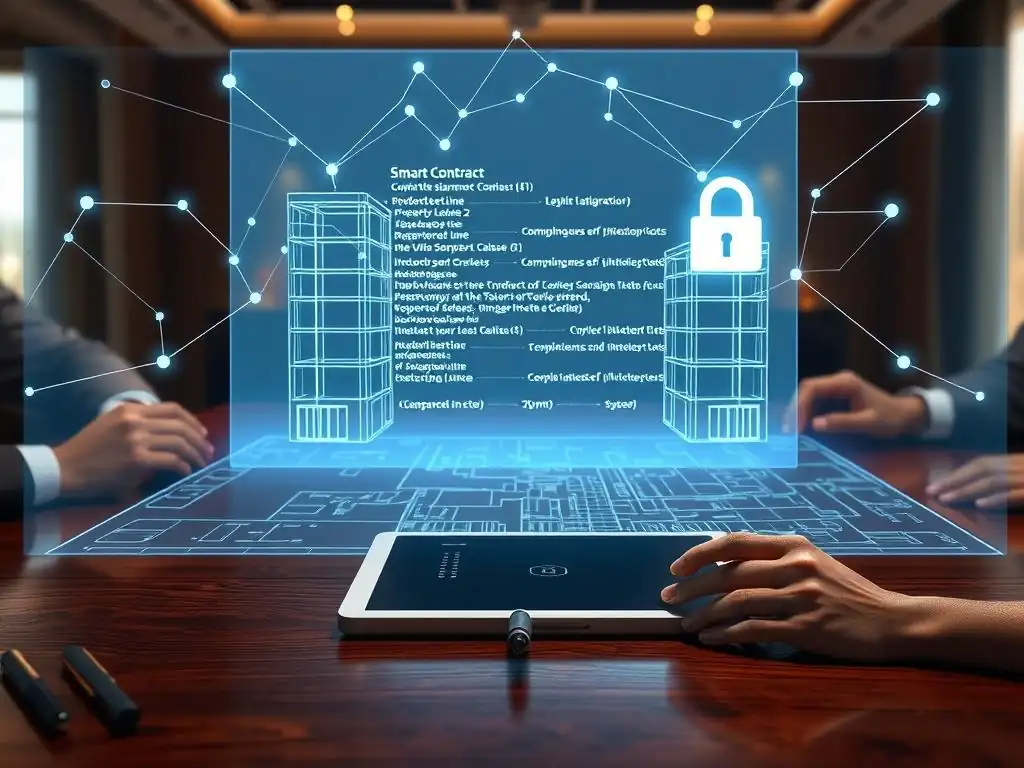
Welcome to Blockchain Trends, your compass in the evolving world of decentralized innovation!
Ever wondered how blockchain can revolutionize industries beyond cryptocurrency? Dive into our exploration of DeFi, enterprise solutions, and the future of decentralized systems. Today, we're unlocking the potential of smart contracts real estate deals, examining how these digital agreements are transforming property transactions. Curious to learn how blockchain is streamlining the often complex world of real estate? Read on and discover how smart contracts are poised to reshape the future of property ownership.
Smart Contracts Revolutionizing Real Estate: Efficiency, Transparency, and Security
- Introduction to Smart Contracts in Real Estate
- Smart Contract Functionality in Real Estate
- Benefits of Smart Contracts in Real Estate
- Use Cases of Smart Contracts in Real Estate
- Challenges and Limitations
- The Future of Smart Contracts in Real Estate
- Case Studies: Real-World Applications
- Conclusion
-
Frequently Asked Questions
- How do smart contracts facilitate real estate transactions?
- What are the key benefits of using smart contracts in real estate deals?
- What are some potential challenges to adopting smart contracts in real estate?
- Can smart contracts completely replace traditional real estate agents and lawyers?
- How does blockchain technology ensure the security and immutability of real estate records stored in smart contracts?
- Final Reflection: Reimagining Real Estate Through Code
- Unveil the Future: Take Control of Real Estate with Smart Contracts!
Introduction to Smart Contracts in Real Estate
Understanding Smart Contracts: Digital Agreements on the Blockchain
Smart contracts represent a pivotal innovation within blockchain technology, fundamentally altering how agreements can be executed. At their core, they are self-executing contracts with the terms of the agreement directly written into lines of code. This code resides on a blockchain network, meaning it is distributed, immutable, and transparent. Once the predetermined conditions are met, the smart contract automatically executes the specified actions, such as transferring funds or updating ownership records, without the need for intermediaries.
Unlike traditional contracts which rely on legal frameworks and potentially lengthy court processes for enforcement, smart contracts enforce themselves through cryptographic code. This inherent automation and reliance on verifiable code logic significantly reduce the potential for disputes and non-compliance. The blockchain ensures that once deployed, the contract code cannot be altered, providing a high degree of certainty regarding the terms and execution, which is particularly valuable for complex processes like smart contracts real estate deals.
Blockchain's Potential to Transform Real Estate
The real estate industry, often characterized by manual processes, extensive paperwork, and numerous intermediaries, is ripe for disruption by blockchain technology. Blockchain offers a decentralized, transparent, and immutable ledger that can record property ownership, transaction history, and other relevant data in a secure and accessible way. This eliminates the need for centralized databases that can be vulnerable to fraud or error and reduces reliance on intermediaries like title companies or escrow agents.
Beyond simply recording data, blockchain enables new models like fractional ownership and tokenization, making real estate investment more accessible and liquid. The inherent security and transparency of the blockchain ledger build trust among participants, streamlining verification processes. This foundation of trust and efficiency provided by blockchain is essential for the successful implementation and widespread adoption of smart contracts real estate deals.
Smart Contracts: Streamlining and Securing Real Estate Transactions
Smart contracts act as the operational layer on top of the blockchain ledger, automating the execution of specific steps within a real estate transaction. Instead of relying on manual checks and balances between multiple parties, the conditions for each phase of a deal – from earnest money deposit to final title transfer – can be coded into a smart contract. When the blockchain verifies that a condition is met (e.g., funds are received in an escrow account represented on the blockchain), the contract automatically triggers the next action.
This automation drastically reduces the time and effort required for traditional closings, which can often take weeks or even months. Furthermore, by removing human intervention from critical execution steps, the risk of errors, delays, or fraudulent activities is significantly minimized. Smart contracts real estate deals promise a future where property transactions are not only faster and cheaper but also inherently more secure and transparent for all parties involved.
Smart Contract Functionality in Real Estate
Defining Smart Contracts: Self-Executing Agreements
As previously discussed, a smart contract is a self-executing agreement where the terms between buyer and seller are directly written into lines of code. The code and the agreements contained therein exist across a distributed, decentralized blockchain network. This means the contract is not held by a single entity but is replicated across many nodes, making it highly resistant to tampering or censorship. The core principle is "if X happens, then automatically do Y."
In the context of smart contracts real estate deals, this could translate to logic like: "IF the buyer's funds are verified on the blockchain escrow account AND the title is verified as clear (via oracle), THEN automatically transfer property token to buyer's wallet AND transfer funds to seller's wallet." This simple logic, when built out with all necessary conditions and checks, forms the basis of an automated real estate transaction.
Core Components: Code, Agreement Terms, and Automated Execution
A functional smart contract for real estate requires several key components. Firstly, there is the code itself, typically written in languages like Solidity (for Ethereum) or similar languages for other blockchain platforms. This code defines the logic and rules of the agreement. Secondly, the agreement terms must be translated accurately and comprehensively into this code. This involves defining conditions, actions, participants, and asset representations (like property tokens or stablecoins for funds).
Finally, the crucial element is automated execution. Once deployed to the blockchain, the contract code monitors for the fulfillment of its predefined conditions. When these conditions are met, the contract automatically executes the corresponding actions without requiring manual approval or intervention from any party. This automated execution is what delivers the efficiency gains in smart contracts real estate deals.
Automating Real Estate Processes with Smart Contracts
Smart contracts can automate numerous manual processes within the real estate lifecycle. This includes handling earnest money deposits, managing payment schedules for financed properties, automating the release of funds upon title transfer verification, and even managing ongoing obligations like rental payments or property maintenance fund distributions. For example, a rental agreement could be coded into a smart contract that automatically debits the tenant's account and credits the landlord's on a specific date, provided funds are available.
Consider the complexity of a traditional closing involving multiple parties: buyer, seller, agents, lawyers, escrow company, title company, lender. Each party has documents to review, conditions to verify, and funds to manage. A smart contract can coordinate many of these steps programmatically. When the title company (or an oracle service connected to them) confirms the title is clear on the blockchain, the smart contract can automatically signal the release of funds held in a blockchain escrow, significantly compressing the timeline for smart contracts real estate deals.
Oracles: Bridging the Gap Between Real-World Data and Smart Contracts
While smart contracts operate on the blockchain, real estate transactions inherently involve off-chain, real-world data and events. This includes verifying physical property inspections, confirming legal title status from government records, assessing market value, or checking if physical keys have been exchanged. Smart contracts, by themselves, cannot directly access this external information. This is where blockchain oracles become essential.
Oracles are third-party services that connect smart contracts to external data feeds and systems. A reliable oracle network can verify that a property inspection passed, confirm a lien has been removed from a property title based on official records, or even verify the identity of participants through external KYC/AML checks. By providing verified, tamper-proof real-world data to the blockchain, oracles enable smart contracts to react to off-chain events, making complex smart contracts real estate deals feasible and reliable.
Benefits of Smart Contracts in Real Estate
Transparency Through Immutable Records
One of the most significant benefits of using smart contracts in real estate is the unparalleled transparency they offer. Every step of the transaction, from the initial agreement terms encoded in the contract to the final execution of fund transfers and ownership updates, is recorded on the blockchain. This record is immutable, meaning it cannot be altered or deleted once added to the ledger.
This creates a single, shared, and verifiable source of truth for all parties involved in smart contracts real estate deals. Buyers and sellers can independently verify the status of the transaction and the fulfillment of conditions directly on the blockchain. This level of transparency drastically reduces information asymmetry and builds trust among participants, mitigating potential disputes over agreed terms or transaction history.
Enhanced Security and Fraud Reduction
Smart contracts and the underlying blockchain architecture offer robust security features that significantly reduce the risk of fraud. Traditional real estate transactions are susceptible to various types of fraud, including title fraud, mortgage fraud, and identity theft. By recording ownership and transaction details on an immutable, distributed ledger, blockchain makes it extremely difficult for malicious actors to forge documents or alter records without being detected.
Smart contracts add another layer of security by automating the execution based on verified conditions, removing the potential for human error or malicious intervention during critical steps like fund disbursement or title transfer. The cryptographic security of the blockchain ensures that assets and data are protected, making smart contracts real estate deals inherently more secure than traditional methods.
Faster and More Efficient Closings
The automation provided by smart contracts dramatically speeds up the real estate closing process. Manual verification steps, paperwork processing, and coordination between multiple parties traditionally cause significant delays. With smart contracts, many of these steps can be executed near-instantly once the predefined conditions are met and verified by the blockchain or connected oracles.
Estimates vary, but pilot projects and industry analysis suggest that smart contracts could potentially reduce closing times from the typical 30-60 days down to a matter of days or even hours for relatively straightforward smart contracts real estate deals. This increased efficiency benefits all parties, allowing buyers to take possession faster and sellers to access funds more quickly.
Reduced Transaction Costs
The multitude of intermediaries involved in traditional real estate transactions—including agents, lawyers, escrow companies, and title insurers—each add layers of fees and costs. Smart contracts have the potential to significantly reduce these transaction costs by automating functions traditionally performed by these parties or by making their services more efficient.
For instance, smart contracts can handle escrow functions programmatically, potentially eliminating the need for a separate escrow company fee, which can range from 1% to 2% of the property value. While legal review of the smart contract code itself may still be necessary, the overall legal hours spent on manual document review and closing coordination could be reduced. Overall, smart contracts real estate deals could lead to notable cost savings for both buyers and sellers.
Improved Accuracy and Error Reduction
Manual data entry and paperwork are prone to human errors that can cause delays or legal complications in real estate transactions. Smart contracts execute based on predefined code logic, eliminating the possibility of these types of errors during the automated steps. Once the agreement terms are accurately translated into the smart contract code, the execution will consistently follow that logic.
Furthermore, the use of a single, shared, immutable ledger for recording transaction data ensures that all parties are working with the same, verified information. This reduces discrepancies and the potential for errors associated with reconciling different versions of documents or databases. This focus on accuracy is a key advantage for complex smart contracts real estate deals.
Use Cases of Smart Contracts in Real Estate
Streamlining Property Sales
Smart contracts can automate the entire property sale process, from the initial offer acceptance to the final transfer of ownership and funds.
// Pseudocode for a simple property sale smart contract
contract PropertySale {
    address payable seller;
    address payable buyer;
    uint256 price;
    bool inspectionPassed;
    bool titleClear;
    bool fundsReceived;
    enum State { Initial, Inspection, TitleCheck, Funding, Closed, Cancelled }
    State currentState;

    event SaleClosed(address indexed buyer, address indexed seller, uint256 price);

    constructor(address payable _seller, address payable _buyer, uint256 _price) {
        seller = _seller;
        buyer = _buyer;
        price = _price;
        currentState = State.Initial;
    }

    function recordInspectionResult(bool passed) public {
        require(msg.sender == seller || msg.sender == buyer, "Only participants can update inspection");
        require(currentState == State.Initial || currentState == State.Inspection, "Not in correct state for inspection update");
        inspectionPassed = passed;
        if (inspectionPassed) {
            currentState = State.TitleCheck;
        } else {
            currentState = State.Cancelled; // Example: Cancel if inspection fails
        }
    }

    function recordTitleStatus(bool clear) public {
        // This would ideally be triggered by a trusted oracle
        require(currentState == State.TitleCheck, "Not in correct state for title check");
        titleClear = clear;
        if (titleClear) {
            currentState = State.Funding;
        } else {
            currentState = State.Cancelled; // Example: Cancel if title not clear
        }
    }

    function fundContract() public payable {
        require(currentState == State.Funding, "Not in correct state for funding");
        require(msg.value == price, "Must send exact price");
        fundsReceived = true;
        currentState = State.Closed;
        seller.transfer(price); // Automatically transfer funds to seller
        emit SaleClosed(buyer, seller, price);
        // In a real scenario, property token transfer would happen here
    }

    // Add functions for cancellation, retrieving state, etc.
}
This pseudocode illustrates how a smart contract can manage states and trigger actions based on conditions (like inspectionPassed, titleClear, fundsReceived). While simplified, it shows the potential to automate escrow functionality and payment release. Real-world smart contracts real estate deals would involve more complex logic, integrating with oracles for external data and potentially managing tokenized property assets.
Automating Rent Collection and Property Management
Smart contracts can also be used for ongoing property management tasks, particularly rent collection. A lease agreement can be coded into a smart contract that automatically debits the tenant's digital wallet (containing stablecoins) on the rent due date and credits the landlord's wallet. The contract can include clauses for late fees, automatically applying them if payment is not received by a certain time.
Beyond rent, smart contracts could manage shared expenses in multi-unit properties, automatically distributing maintenance costs among owners based on predefined percentages. They could even be linked to IoT devices to trigger payments for services (like lawn care) upon verification of completion via an oracle. This automation reduces administrative overhead for landlords and property managers involved in smart contracts real estate deals.
Tokenization of Real Estate Assets
Tokenization involves representing ownership rights of a physical asset, like a property, as digital tokens on a blockchain. Each token represents a fractional share of the asset. Smart contracts are fundamental to this process, defining the total supply of tokens, managing their distribution, handling dividend payouts (from rental income), and facilitating the buying and selling of these tokens on secondary markets.
Tokenization makes real estate investment more accessible by allowing individuals to invest smaller amounts than required for direct property purchase. It also increases liquidity, as tokens can be traded more easily than traditional property shares. Smart contracts underpin the entire token lifecycle for tokenized smart contracts real estate deals, ensuring transparent and automated management of fractional ownership.
Fractional Ownership
Building on tokenization, smart contracts enable true fractional ownership of properties. Instead of a single owner, a property can be owned by hundreds or thousands of token holders, each holding a percentage represented by their tokens. The smart contract defines the rules of governance for the property, how income (rent) is distributed among token holders, and how potential sale proceeds would be handled.
This unlocks new investment opportunities and allows for portfolio diversification with smaller capital outlays. Smart contracts manage the complex logistics of distributing income and coordinating decisions among many owners, something that would be administratively burdensome with traditional legal structures. Fractional ownership via smart contracts real estate deals is poised to democratize access to real estate investment.
Smart Contracts for Escrow Services
Traditional escrow services hold funds and documents in trust until all conditions of a real estate transaction are met. Smart contracts can replicate this function programmatically on the blockchain. The buyer's funds are placed into a smart contract designed as a digital escrow. The contract holds the funds securely until external conditions (verified by oracles, such as clear title confirmed by a title agency's data feed) are met.
Once all conditions are verified on the blockchain, the smart contract automatically releases the funds to the seller and potentially transfers a tokenized representation of the property to the buyer. This eliminates the need for a third-party escrow company, reducing fees and potential delays. The code is transparent and verifiable, offering participants confidence that funds will only be released when all requirements for their smart contracts real estate deals are fulfilled.
Challenges and Limitations

Regulatory Landscape and Legal Uncertainty
One of the primary challenges for smart contracts in real estate is the lack of a clear and consistent regulatory framework across different jurisdictions. While some regions are exploring or implementing laws recognizing digital signatures and electronic records, the legal status of a smart contract as a binding agreement in property transactions is still evolving.
Questions remain regarding enforceability, dispute resolution, and how smart contracts interact with existing property laws, which often require physical documents and notarization. Until regulators provide more clarity and potentially adapt existing laws or create new ones specifically for blockchain-based smart contracts real estate deals, legal uncertainty will remain a significant barrier to widespread adoption.
Technical Complexity and Security Considerations
Developing secure and error-free smart contracts is technically complex. A single bug or vulnerability in the code can lead to significant financial losses, as seen in various historical smart contract hacks (though not specific to real estate yet on a large scale). The immutable nature of blockchain means that once a vulnerable contract is deployed, it can be difficult or impossible to fix.
Ensuring the security and reliability of oracles that feed real-world data into the smart contract is also critical. A compromised oracle could feed false information, leading the smart contract to execute incorrectly. Thorough auditing of smart contract code and robust oracle networks are essential but add to the complexity and cost of implementing smart contracts real estate deals.
Scalability and Transaction Costs
While newer blockchains are addressing this, some popular networks (like Ethereum's mainnet before recent updates) have faced scalability issues, leading to slow transaction speeds and high gas fees (costs associated with performing operations on the blockchain) during periods of high network congestion. Real estate transactions involve multiple steps and require processing significant data, which could be impacted by these limitations.
High transaction costs could negate some of the cost savings promised by smart contracts, especially for lower-value properties. As blockchain technology evolves and scales, these issues are being mitigated, but they remain a consideration for current implementations of smart contracts real estate deals on certain networks.
Standardization Needs
For smart contracts to be widely adopted in real estate, there is a need for standardization across the industry. This includes standardizing data formats for property information, legal terms that can be reliably translated into code, and technical standards for smart contract interfaces and interoperability between different blockchain platforms or real estate systems.
Without standardization, each smart contracts real estate deal might require custom development, increasing costs and complexity. Industry-wide collaboration and the development of common protocols and templates are necessary to facilitate seamless integration and mass adoption of smart contracts in real estate.
Data Privacy and Compliance
Recording transaction details and potentially sensitive property or participant data on a public blockchain raises privacy concerns. While the data is often pseudonymous (linked to wallet addresses, not names), linking a wallet to a real-world identity is often required for legal compliance (like KYC/AML regulations). Ensuring compliance with data privacy regulations (like GDPR) while maintaining the transparency benefits of blockchain is a delicate balance.
Designing smart contracts and blockchain solutions for real estate requires careful consideration of which data is stored on-chain versus off-chain and how access to sensitive information is managed. Private or permissioned blockchains might be explored for certain aspects of smart contracts real estate deals to address privacy requirements, but this can sometimes sacrifice decentralization.
The Future of Smart Contracts in Real Estate
Emerging Trends
Several trends point towards increased adoption of smart contracts in real estate. One is the growing interest in Real World Asset (RWA) tokenization, where physical assets like properties are represented on-chain. This trend is driving innovation in legal frameworks and technical standards needed for smart contracts. Another trend is the development of more sophisticated oracle networks capable of providing verified, tamper-proof real-world data feeds essential for complex smart contracts real estate deals.
Furthermore, advancements in blockchain scalability solutions, such as Layer 2 protocols and more efficient consensus mechanisms, are reducing transaction costs and increasing speed, making blockchain a more viable platform for high-volume real estate activities. We are also seeing the emergence of specialized real estate blockchain platforms designed specifically for the needs of the property market.
Industry Impact
The widespread adoption of smart contracts is expected to have a transformative impact on the real estate industry. It will likely lead to a significant reduction in the role of traditional intermediaries, potentially reshaping business models for real estate agents, lawyers, and title companies. These professionals may transition to roles focused on facilitating the creation and execution of smart contracts or providing related advisory services.
The increased efficiency and reduced costs could make property transactions more accessible and affordable. Furthermore, tokenization enabled by smart contracts is set to revolutionize real estate investment, turning a traditionally illiquid asset class into a more liquid and divisible one, opening up new investment avenues for a broader range of investors through smart contracts real estate deals.
Adoption Predictions
Predicting the exact timeline for mass adoption of smart contracts in real estate is challenging, but industry reports suggest a gradual increase over the next decade. Some reports indicate that a significant percentage of property transactions could involve blockchain technology, including smart contracts, within the next 5-10 years, though adoption rates will vary significantly by region depending on regulatory clarity and technological infrastructure.
Early adoption is likely to continue in niche areas like fractional ownership, international transactions seeking efficiency across borders, and potentially in specific market segments like commercial real estate or land registry pilots. Full integration into standard residential smart contracts real estate deals will require overcoming the legal and standardization hurdles discussed earlier.
Overcoming Implementation Barriers
Addressing the implementation barriers requires concerted effort from multiple stakeholders. Governments and regulatory bodies need to provide clear legal guidelines and potentially adapt property laws to accommodate blockchain and smart contracts. The industry needs to collaborate on developing technical standards and best practices for smart contract development, security auditing, and oracle integration.
Education is also key; real estate professionals, buyers, and sellers need to understand how smart contracts work and the benefits they offer. Pilot programs and successful case studies will play a crucial role in building confidence and demonstrating the viability of smart contracts real estate deals on a larger scale.
The Role of Ethereum in Real Estate Smart Contracts
Ethereum has historically been the leading platform for smart contract development due to its robust ecosystem, developer tools, and the Solidity programming language. Many initial real estate tokenization projects and smart contract pilots were built on Ethereum. Its transition to Ethereum 2.0 (now the Beacon Chain and subsequent upgrades) aims to address scalability and cost issues, potentially making it even more suitable for real estate applications.
However, other blockchain platforms, including enterprise-focused ledgers and newer public chains with higher throughput and lower transaction costs (like Solana, Cardano, or specialized real estate blockchains), are also being explored for smart contracts real estate deals. The choice of platform depends on specific project requirements regarding privacy, scalability, cost, and desired level of decentralization.
Case Studies: Real-World Applications
Propy: Facilitating International Real Estate Transactions with Blockchain
Propy is a real estate transaction platform that utilizes blockchain technology and smart contracts to streamline the buying and selling process, particularly for international clients. They gained prominence for facilitating some of the earliest reported blockchain-based real estate transactions, including a widely cited apartment sale in Ukraine in 2017 and subsequent transactions in the US.
Propy's platform uses smart contracts to manage aspects of the transaction workflow, such as handling offer submissions, escrow of funds (often in cryptocurrency or stablecoins), and recording ownership on a blockchain ledger. While not replacing all traditional steps entirely, their approach aims to reduce paperwork, eliminate redundant tasks, and provide a transparent audit trail on the blockchain, demonstrating the practical application of smart contracts real estate deals across borders.
Ubitquity: Securing and Streamlining Title Records with Smart Contracts
Ubitquity focuses on leveraging blockchain technology primarily for securing and managing property title records. They have partnered with various county recorders' offices in the United States to pilot programs for recording land and property records on a blockchain ledger. While not solely focused on transaction smart contracts, their work is foundational for enabling smart contracts real estate deals that rely on verified title information.
By creating an immutable, digital ledger of property titles, Ubitquity's solution reduces the risk of title fraud and streamlines the process of verifying ownership history. This secure, blockchain-based title data can then serve as a reliable input (potentially via oracles) for smart contracts automating property transfers, ensuring that the smart contract only executes if the title is confirmed as clear and legitimately transferable. Their work highlights how blockchain infrastructure underpins the potential for smart contracts in real estate.
Lessons Learned
These early case studies, while facing challenges and operating within existing legal constraints, offer valuable lessons. They demonstrate that blockchain and smart contracts can indeed bring increased efficiency and transparency to real estate processes. They also highlight the significant hurdles related to integrating with legacy systems, navigating diverse regulatory environments, and the necessity of robust oracle solutions for bringing off-chain data on-chain reliably for smart contracts real estate deals.
The pilots also show that full automation of a complex real estate transaction via a single smart contract is still aspirational. Current implementations often involve a hybrid approach, using smart contracts for specific, automatable steps while relying on traditional methods for others, such as physical inspections or legal reviews required by current law. Building trust and educating stakeholders remain critical challenges for broader adoption.
Conclusion
The Transformative Power of Smart Contracts
Smart contracts hold immense potential to transform the real estate industry from its often slow, opaque, and paper-heavy state into a more efficient, transparent, and secure ecosystem. By automating key stages of property transactions, managing fractional ownership, and securing vital records, smart contracts can reduce costs, save time, and significantly mitigate the risk of fraud and errors.
The shift towards smart contracts real estate deals is not just a technological upgrade; it represents a fundamental change in how property rights are managed and transferred. It promises a future where transactions are executed based on verifiable code logic on an immutable ledger, building trust and enabling new models of investment and ownership.
Key Takeaways for Real Estate Professionals
For real estate professionals – agents, brokers, lawyers, escrow officers, and title companies – understanding smart contracts is becoming increasingly important. While smart contracts may automate some traditional roles, they also create new opportunities in areas like advising clients on blockchain transactions, developing and auditing smart contracts, or providing oracle services.
Professionals should explore how smart contracts can enhance their existing services, improve efficiency, and offer clients greater transparency and security. Staying informed about regulatory developments and technological advancements in smart contracts real estate deals is crucial for remaining competitive in an evolving market.
The Future of Property Transactions with Blockchain
The future of property transactions is undeniably linked to blockchain technology and the widespread adoption of smart contracts. As regulatory clarity improves, technological capabilities advance, and industry standards emerge, we can expect to see smart contracts playing an increasingly central role in buying, selling, financing, and managing real estate assets.
From simplifying residential purchases to enabling complex commercial property deals and facilitating global real estate investment through tokenization, blockchain-powered smart contracts are set to redefine the landscape of property transactions, making them more accessible, efficient, and trustworthy than ever before.
Smart Contracts: Efficiency and Security in Real Estate Deals
Smart contracts offer a powerful combination of efficiency and security for real estate transactions. Their ability to automate processes based on verifiable conditions reduces reliance on manual intervention and speeds up the often-lengthy closing process. Simultaneously, their execution on an immutable, decentralized ledger significantly enhances security and transparency, reducing the potential for fraud and disputes. While challenges remain, the benefits provided by smart contracts real estate deals are compelling and point towards a future where blockchain technology is an integral part of the property market.
Frequently Asked Questions
How do smart contracts facilitate real estate transactions?
Smart contracts automate and enforce the terms of a real estate agreement. They execute automatically when predefined conditions are met, such as payment verification, reducing the need for intermediaries. This leads to faster and more transparent transactions.
What are the key benefits of using smart contracts in real estate deals?
Smart contracts offer increased transparency and security by recording all transaction details on a blockchain. They also reduce transaction costs by eliminating intermediaries and speeding up the process. This contributes to greater efficiency and trust.
What are some potential challenges to adopting smart contracts in real estate?
Challenges include regulatory uncertainty surrounding their legal status and enforceability. Also, the need for standardized coding practices and potential for code vulnerabilities are significant concerns that must be addressed.
Can smart contracts completely replace traditional real estate agents and lawyers?
While smart contracts streamline processes, they are unlikely to completely replace human expertise. Real estate agents offer personalized advice and negotiation skills, while lawyers ensure legal compliance and handle complex disputes. Smart contracts augment, not replace, these roles.
How does blockchain technology ensure the security and immutability of real estate records stored in smart contracts?
Blockchain utilizes cryptographic hashing and a distributed ledger system to ensure data integrity. Once a transaction is recorded, it is virtually impossible to alter or delete, providing a tamper-proof record of ownership and transaction history.
Okay, here's a final reflection designed for your article "Demystifying Smart Contracts in Real Estate: How They Work and Why They Matter," optimized for the keyword "Smart contracts real estate deals," and following the structure you provided:
Final Reflection: Reimagining Real Estate Through Code
The exploration of smart contracts in real estate reveals more than just technological innovation; it unveils a fundamental shift in how we perceive trust and efficiency in property transactions. The potential of smart contracts to streamline and secure real estate deals is no longer a futuristic fantasy, but a rapidly approaching reality. We are on the cusp of a new era where code replaces cumbersome paperwork and automated processes minimize the risk of fraud and human error.
The impact of this technology extends far beyond mere convenience. It promises to democratize access to real estate investment, reduce transaction costs, and foster greater transparency for all parties involved. Witnessing this evolution firsthand underscores the profound importance of understanding and embracing these advancements. The future is already here – it's just not evenly distributed.
- William Gibson. This quote perfectly encapsulates the current state of smart contracts in real estate; while not yet ubiquitous, their potential to reshape the industry is undeniable.
As we stand at the intersection of technology and tradition, let us not shy away from the transformative power of smart contracts. Instead, let us embrace the opportunity to learn, adapt, and contribute to a future where real estate transactions are more secure, efficient, and accessible for everyone. Consider how you can become an advocate for this change, whether through education, investment, or simply by engaging in informed conversations about the future of smart contracts real estate deals. The future of real estate is being written in code; let's ensure it's a future we all can benefit from.
Unveil the Future: Take Control of Real Estate with Smart Contracts!
Thank you for exploring the potential of smart contracts to transform the real estate industry. We hope you now have a clearer understanding of how these innovative technologies can streamline transactions and improve transparency. Now, it’s time to put that knowledge into action!
Here are a few steps to get started:
- Review your local property records to identify areas where implementing smart contracts could lead to immediate efficiency gains. This is the most impactful first step.
- Join online forums and communities focused on blockchain applications in real estate and share your insights about smart contracts.
- Attend a local blockchain meetup to connect with professionals who are already leveraging smart contracts across various sectors. You might discover new and exciting applications!
What specific challenges in your local real estate market do you believe smart contracts could help resolve most effectively? Share your thoughts below!
Leave a Reply