
Exploring Blockchain's Use in Vaccine Supply Chain Management and Distribution


Welcome to Blockchain Trends, your compass in the rapidly evolving world of decentralized technology. Beyond the hype, we delve into the real-world applications shaping our future. Ever wondered how blockchain can ensure the integrity and efficiency of critical supply chains? Our latest article explores the groundbreaking potential of a blockchain vaccine supply chain, revealing how this innovative approach is revolutionizing distribution and fighting counterfeiting. Discover the transformative power of blockchain in enterprise solutions and unlock the future of secure and transparent vaccine delivery.
Revolutionizing Vaccine Supply Chain Management and Distribution with Blockchain
- Introduction: Enhancing Vaccine Efficacy and Access with Blockchain Technology
- Defining the Blockchain-Enabled Vaccine Supply Chain
- Advantages of Blockchain Integration in Vaccine Supply Networks
- Practical Applications: Blockchain's Role in Vaccine Distribution
- Obstacles and Factors in Blockchain Adoption for Vaccine Supply Chains
- Strategies for Successful Blockchain Implementation in Vaccine Management
- Emerging Trends and Possibilities for Blockchain in Vaccine Supply Chains
- Real-World Examples: Blockchain Successes in Supply Chain Distribution
- Conclusion: Blockchain's Central Role in the Future of Vaccine Distribution
-
Frequently Asked Questions
- How can blockchain technology improve vaccine supply chain management?
- What are the key benefits of using blockchain for a vaccine supply chain?
- What challenges are associated with implementing blockchain in a vaccine supply chain?
- How does blockchain help prevent counterfeit vaccines from entering the supply chain?
- What is the role of DeFi (Decentralized Finance) in a blockchain based vaccine supply chain?
- Final Reflection: Securing the Future with Trust
- Unlock the Future: Secure Vaccine Distribution with Blockchain!
Introduction: Enhancing Vaccine Efficacy and Access with Blockchain Technology
The Complexities of Current Vaccine Supply Chains
The journey of a vaccine from manufacturer to patient is fraught with challenges, making the current vaccine supply chain one of the most intricate and critical logistical networks globally. Factors such as stringent temperature requirements—some mRNA vaccines require storage at ultra-cold temperatures around -70°C (-94°F), while many others need refrigeration between 2°C and 8°C (36°F and 46°F)—add layers of complexity and risk.
A single deviation from these temperature ranges can render a batch ineffective or unsafe, potentially leading to significant financial losses and, more importantly, compromising public health. The global scale of distribution, especially during mass vaccination campaigns like the response to COVID-19, which saw billions of doses distributed worldwide, further strains existing systems, highlighting vulnerabilities in tracking, tracing, and ensuring equitable access.
Beyond temperature control, current systems often struggle with fragmented data, lack of end-to-end visibility, and the persistent threat of counterfeit products entering the supply chain. The World Health Organization (WHO) estimates that up to 10% of medical products in low- and middle-income countries are substandard or falsified.
While specific figures for vaccines are harder to pinpoint, the high value and critical nature of vaccines make them a prime target. Manual record-keeping and disparate databases across different stakeholders—manufacturers, distributors, logistics providers, healthcare providers—create information silos, making it difficult to quickly identify the origin of a compromised batch or verify the authenticity of a dose, issues a robust blockchain vaccine supply chain aims to resolve.
Blockchain's Potential for Improved Vaccine Integrity and Distribution
Blockchain technology offers a transformative approach to mitigating many of the inherent risks and inefficiencies in the traditional vaccine supply chain. By providing a decentralized, immutable ledger, blockchain can create a single, verifiable record of every transaction and movement of a vaccine dose from its point of manufacture to the point of administration. This inherent transparency and traceability build a foundation of trust among all participants, from pharmaceutical companies and regulatory bodies to logistics partners and healthcare providers.
The application of blockchain in vaccine distribution promises enhanced integrity by ensuring that critical data, such as manufacturing lot numbers, expiry dates, temperature logs, and ownership transfers, cannot be altered or tampered with without consensus from the network. This immutability significantly reduces the risk of fraud and the introduction of counterfeit vaccines into the legitimate supply chain.
Furthermore, the ability to track each individual dose through serialization recorded on the blockchain allows for rapid identification and isolation of affected batches during recalls, potentially saving lives and minimizing waste. Implementing a blockchain vaccine supply chain could streamline processes, improve data accuracy, and ultimately contribute to more efficient and reliable vaccine delivery systems globally.
Defining the Blockchain-Enabled Vaccine Supply Chain
Blockchain Technology Explained: Key Concepts for the Pharmaceutical Industry
At its core, blockchain is a type of distributed ledger technology (DLT) that records transactions across many computers. Unlike traditional databases, this ledger is decentralized, meaning no single entity has complete control, and once data is added (in blocks linked chronologically, forming a 'chain'), it is extremely difficult to alter or delete.
This immutability is achieved through cryptographic hashing and consensus mechanisms, which require agreement from participants on the network before any new block can be added. For the pharmaceutical industry, particularly in managing a sensitive blockchain vaccine supply chain, these features are paramount for ensuring data integrity and building trust.
Key concepts relevant to a blockchain vaccine supply chain include the distributed ledger itself, which provides a shared, tamper-proof record visible to authorized parties. Smart contracts, self-executing contracts with the terms of the agreement directly written into code, can automate processes like payments upon delivery verification or trigger alerts based on predefined conditions (e.g., temperature excursions).
Cryptography ensures the security of transactions and the identity of participants, while consensus mechanisms (like Proof-of-Authority or Proof-of-Stake, suitable for permissioned enterprise blockchains) validate transactions efficiently among known parties. Understanding these concepts is crucial for appreciating how blockchain can underpin a secure and transparent vaccine distribution network.
Essential Elements of a Blockchain-Based Vaccine Supply Chain
A functional blockchain vaccine supply chain relies on the integration of several key technological and procedural elements to achieve its goals of transparency, security, and efficiency. These elements work in concert to create a robust system capable of managing the complexities of vaccine distribution.
Serialization and Tracking
Serialization involves assigning a unique identifier (often a 2D barcode or a unique serial number) to each individual vaccine dose or smallest saleable unit. This practice is increasingly mandated by regulations worldwide, such as the U.S. Drug Supply Chain Security Act (DSCSA) and the EU's Falsified Medicines Directive. Integrating these unique identifiers with a blockchain allows for granular tracking.
As each serialized unit moves through the supply chain—from packaging at the manufacturing plant, through various distribution centers, to the final healthcare provider—its status and location can be recorded as transactions on the immutable ledger. This creates a precise, step-by-step history for every single dose, enabling pinpoint traceability in case of issues and verification of authenticity at any point, strengthening the overall blockchain vaccine supply chain.
Cold Chain Monitoring
Maintaining the cold chain is non-negotiable for most vaccines. A blockchain-enabled supply chain integrates data from temperature monitoring devices, such as IoT sensors placed within shipping containers or storage units. These sensors continuously record temperature data.
If the temperature deviates outside the acceptable range (e.g., 2-8°C or ultra-cold limits), this event can be automatically recorded on the blockchain alongside the serialized product identifiers. Smart contracts can be programmed to react to these data points, perhaps flagging the affected batch, alerting stakeholders, or even automatically initiating insurance claims or preventing the release of the compromised doses. Linking real-time environmental data directly to the immutable ledger provides undeniable evidence of cold chain compliance or failure.
Automated Agreements via Smart Contracts
Smart contracts are pivotal in automating and enforcing the terms of agreements within a blockchain vaccine supply chain without the need for intermediaries. For instance, a smart contract could automatically release payment to a logistics provider once the blockchain confirms that a shipment of serialized vaccines has arrived at its destination within the specified temperature range and timeframe.
They can also manage complex contractual clauses, such as penalties for delays or temperature excursions, or trigger restocking orders when inventory levels recorded on the blockchain fall below a certain threshold. This automation reduces administrative overhead, minimizes disputes by relying on verifiable, on-chain data, and accelerates transactions, contributing significantly to the efficiency of the entire distribution process.
Advantages of Blockchain Integration in Vaccine Supply Networks
Complete Traceability and Transparency Throughout the Supply Chain
One of the most significant benefits of implementing a blockchain vaccine supply chain is achieving unprecedented end-to-end traceability and transparency. Every movement, handling event, and status change of a serialized vaccine dose is recorded on the distributed ledger, creating a comprehensive, immutable history accessible to authorized participants. This means stakeholders can track a specific vaccine dose from its manufacturing origin, through every carrier and storage location, right up to the point of administration to a patient.
This level of transparency is a vast improvement over traditional systems, which often rely on fragmented databases and paper trails. In the event of a quality issue or recall, pinpointing the affected doses and their locations, which might take days or weeks with traditional methods, could potentially be reduced to minutes or hours using a blockchain-based system.
For example, during a large-scale recall affecting 100,000 doses distributed across a region, a blockchain could instantly identify where each affected dose was sent and which healthcare providers received them, enabling swift action and minimizing public health risks. This granular visibility builds trust and accountability across the network.
Enhanced Security and Mitigation of Counterfeit Vaccines
The inherent security features of blockchain technology make it a powerful tool in combating the pervasive threat of counterfeit vaccines. The immutable nature of the ledger makes it virtually impossible for malicious actors to alter transaction histories or inject fake data without being detected by the network's consensus mechanisms. Each transaction and data point (like serialization numbers or temperature logs) is cryptographically secured and linked to the previous one.
By verifying the unique serial number of a vaccine dose against the record on the blockchain, healthcare providers and patients can confirm its authenticity and legitimate journey through the supply chain. This creates a digital fingerprint for each dose that is extremely difficult to replicate or falsify.
The global market for counterfeit drugs is estimated to be worth hundreds of billions of dollars annually, posing a severe threat to public health. While specific vaccine data is limited, the potential for blockchain to authenticate products at every step drastically raises the barrier for counterfeiters, providing a robust defense within the blockchain vaccine supply chain.
Optimized Processes and Greater Efficiency in Vaccine Delivery
Integrating blockchain technology can significantly optimize various processes within vaccine delivery networks, leading to greater efficiency. Automation through smart contracts can streamline tasks such as quality checks, inventory management, and order fulfillment. For instance, inventory levels recorded on the blockchain can automatically trigger re-orders when they fall below a certain threshold, ensuring adequate stock without manual intervention.
Furthermore, the shared, real-time visibility provided by the distributed ledger reduces administrative burdens associated with reconciling disparate records across multiple parties. Logistics providers can update shipping status directly on the blockchain, instantly notifying manufacturers and distributors. This reduction in manual data entry, verification, and communication delays accelerates the flow of goods and information. Studies in other supply chain sectors using blockchain have shown potential reductions in processing times by up to 50% or more, suggesting similar efficiency gains are achievable in a complex blockchain vaccine supply chain.
Reduced Costs Through Automation and Waste Prevention
The operational efficiencies gained through blockchain automation and improved traceability can lead to significant cost reductions within the vaccine supply chain. Smart contracts automating payments and contractual obligations reduce the need for manual processing, reconciliation, and potential disputes, lowering administrative costs.
Moreover, better traceability and real-time monitoring help prevent waste. By accurately tracking inventory levels and expiry dates on the blockchain, organizations can optimize distribution and minimize losses from expired or spoiled doses. The ability to quickly identify and isolate batches affected by cold chain excursions or quality issues prevents the need to discard larger quantities, as might happen when traceability is poor.
While precise figures for vaccine waste are difficult to obtain globally, general estimates for pharmaceutical supply chain inefficiencies and waste are substantial. A more transparent and efficient blockchain vaccine supply chain can contribute to reducing these losses, ensuring more doses reach those who need them.
Strengthened Trust and Responsibility Among Participants
A core outcome of implementing a blockchain vaccine supply chain is the fostering of enhanced trust and accountability among all stakeholders. The shared, immutable ledger provides a single source of truth that all authorized participants can rely on. This eliminates the need for intermediaries to verify information and reduces potential disputes arising from conflicting records.
Every action taken by a participant that affects the status or location of a vaccine dose is recorded transparently on the blockchain. This transparency makes it clear who was responsible for the vaccine at each step of its journey. For example, if a temperature excursion occurs, the blockchain record will show which entity was in possession of the shipment at that precise time. This accountability encourages best practices and adherence to protocols across the entire network, strengthening collaboration and ensuring that each participant takes responsibility for their part in maintaining the integrity of the vaccine supply chain.
Practical Applications: Blockchain's Role in Vaccine Distribution
Validating Vaccine Source and Production Procedures
Blockchain technology can play a crucial role in validating the origin and manufacturing processes of vaccines. By recording key data points related to production, such as lot numbers, manufacturing dates, facility details, and even raw material sourcing information, directly onto the blockchain at the point of manufacture, an immutable digital record is created. This record serves as proof of origin and provides transparency into the initial stages of the vaccine's lifecycle.
Regulatory bodies and downstream participants in the blockchain vaccine supply chain can verify this information against the on-chain data, ensuring that the vaccine originates from an approved manufacturer and was produced under the required conditions. This application is particularly valuable in combating the influx of unverified or illegally produced vaccines by providing a verifiable digital trail from the very beginning, adding a critical layer of security and trust to the global supply.
Maintaining Vaccine Temperature Control and Storage Standards
As previously discussed, maintaining the cold chain is vital. Blockchain's practical application here involves integrating data feeds from IoT temperature sensors into the ledger. These sensors, placed in storage units or shipping containers, transmit temperature readings at regular intervals (e.g., every 15 minutes).
Each reading, timestamped and linked to the specific serialized vaccine units, is recorded on the blockchain. If a reading falls outside the acceptable temperature range (e.g., above 8°C for a refrigerated vaccine), the smart contract associated with that batch can be triggered. This might automatically generate alerts to relevant parties (e.g., logistics manager, quality control), flag the specific batch on the ledger as potentially compromised, and record the excursion event immutably. This provides an undeniable audit trail of temperature compliance throughout the vaccine's journey, enabling proactive intervention and ensuring that only viable doses are administered.
Confirming Vaccine Authenticity and Combating Fraud
One of the most immediate and impactful applications of blockchain in vaccine distribution is the confirmation of authenticity. Each legitimate vaccine dose, serialized at the manufacturing stage, has its unique identifier registered on the blockchain. As the dose moves through the supply chain, each transfer of custody is recorded, building a verified history.
At any point, a stakeholder—a distributor, a pharmacist, or even a healthcare provider scanning the code before administration—can query the blockchain using the vaccine's serial number. The system can then instantly verify if the serial number is legitimate, if it corresponds to a batch recorded on the blockchain, and if its recorded journey aligns with expectations.
If a counterfeit product with a fake or duplicate serial number attempts to enter the supply chain, or if a legitimate serial number appears in an unexpected location or with a suspicious history, the system can flag it. This real-time verification process provides a powerful defense against the estimated multi-billion dollar global market for falsified medical products, making a blockchain vaccine supply chain significantly more secure.
Supervising Vaccine Stock and Distribution in Real-Time
Blockchain enables near real-time visibility into vaccine inventory levels and distribution status across the entire network. As doses are shipped, received, and administered, these events are recorded as transactions on the blockchain. This provides authorized participants with an up-to-date overview of where stock is located, how much is available at different points in the supply chain, and which doses have been distributed or administered.
This centralized, yet distributed, view allows for more efficient allocation of resources and better planning. Health authorities can monitor distribution progress across regions, identify potential bottlenecks, and manage stock levels more effectively. For instance, during a mass vaccination campaign, tracking administration data recorded on the blockchain (while respecting patient privacy) can inform decisions about where to send the next shipments. This real-time supervision contrasts sharply with traditional systems that often rely on delayed reporting and manual inventory checks, leading to potential shortages or overstocking.
Streamlining Payments and Automating Contracts with Smart Contracts
The use of smart contracts significantly streamlines the financial and contractual aspects of vaccine distribution. Traditional supply chains involve numerous invoices, purchase orders, and payment cycles between different entities, often leading to delays and administrative complexity.
In a blockchain vaccine supply chain, smart contracts can automate these processes based on verifiable events recorded on the ledger. For example, a smart contract between a manufacturer and a distributor could be set to automatically release payment when the blockchain confirms that a specific quantity of vaccines has been successfully delivered to a designated warehouse, verified by scans and potentially temperature data.
Similarly, contracts between distributors and healthcare providers could automate payments upon receipt or administration confirmation. This automation reduces manual processing time, minimizes errors and disputes, improves cash flow for participants, and adds another layer of efficiency to the overall blockchain vaccine supply chain operation.
Obstacles and Factors in Blockchain Adoption for Vaccine Supply Chains
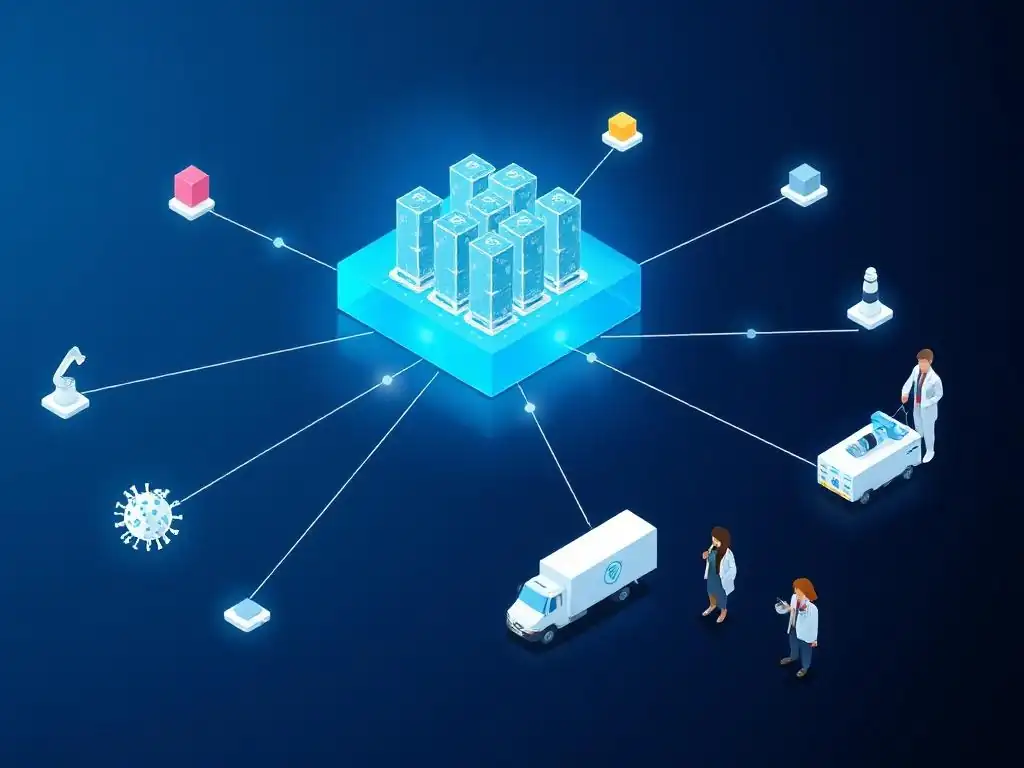
Compatibility with Existing Infrastructure
One of the primary obstacles to implementing a blockchain vaccine supply chain is ensuring compatibility with the vast and varied existing infrastructure used by pharmaceutical companies, logistics providers, distributors, and healthcare systems globally. Many of these organizations rely on legacy IT systems (like Enterprise Resource Planning - ERP systems or Warehouse Management Systems - WMS) that were not designed to interact with decentralized ledgers.
Integrating a new blockchain platform requires significant investment in new software, hardware, and middleware to bridge the gap between legacy systems and the blockchain network. Data formats, communication protocols, and system architectures often differ widely, necessitating complex integration layers. A global rollout would require coordination and technical work across potentially thousands of different entities, each with its own technological setup, making seamless interoperability a major challenge that needs careful planning and investment.
Data Protection and Cybersecurity Risks
While blockchain offers inherent security features like immutability and cryptography, its adoption in a sensitive area like vaccine distribution introduces new data protection and cybersecurity considerations. The ledger contains critical information about the movement and status of valuable goods, and potentially links to patient administration data (though patient-specific identifiable health data would typically be stored off-chain, with only anonymized or aggregate data hashes on-chain for privacy). Protecting this data from unauthorized access or cyberattacks on the network or connected systems is paramount.
Implementing robust access controls, secure APIs for interacting with the blockchain, and continuous monitoring are essential. While the blockchain ledger itself is difficult to tamper with, the systems feeding data into it (e.g., IoT sensors, scanning stations) or accessing data from it can be vulnerable points. Ensuring compliance with stringent data protection regulations like GDPR (General Data Protection Regulation) in Europe or HIPAA (Health Insurance Portability and Accountability Act) in the US requires careful design to handle sensitive information appropriately within or alongside the blockchain vaccine supply chain architecture.
Scalability and Throughput Limitations
Public blockchains like Bitcoin or Ethereum face scalability challenges, processing a limited number of transactions per second (e.g., Bitcoin handles about 7 transactions/sec, Ethereum about 15-30, though this is improving with Eth2). While enterprise or permissioned blockchains (like Hyperledger Fabric or R3 Corda) designed for specific industry use cases offer significantly higher throughput, they still need to demonstrate they can handle the immense volume of transactions required for tracking billions of individual vaccine doses globally, especially during peak distribution periods.
Each event in the vaccine's journey—manufacturing, packaging, shipping, receiving, administering—potentially generates a transaction on the blockchain. A global campaign involving billions of doses could generate hundreds of billions or even trillions of data points and transactions annually. Ensuring the blockchain platform can process and store this volume of data efficiently and cost-effectively without becoming a bottleneck is a critical technical challenge that needs to be addressed through appropriate network design and infrastructure scaling for a viable blockchain vaccine supply chain.
Adherence to Regulations and Legal Guidelines
The pharmaceutical supply chain is one of the most heavily regulated industries globally, with strict rules governing manufacturing, distribution, and tracking (e.g., serialization mandates like DSCSA, FMD). Integrating a novel technology like blockchain requires navigating complex regulatory landscapes and ensuring the platform complies with existing and evolving legal guidelines.
Regulatory bodies like the FDA, EMA, and others need to understand, potentially endorse, or even mandate the use of blockchain in certain aspects of the supply chain. Questions around data ownership, legal standing of smart contracts, jurisdiction across international borders, and liability in case of system failures or data breaches need clear legal frameworks. Gaining regulatory acceptance and aligning the blockchain system with existing compliance requirements is a significant hurdle that requires close collaboration between technology providers, pharmaceutical companies, and governmental agencies to establish a widely accepted blockchain vaccine supply chain.
Collaboration and Standardization Requirements
Successfully implementing a blockchain vaccine supply chain requires unprecedented collaboration among a diverse group of stakeholders who have historically operated with varying levels of data sharing and interoperability. Manufacturers, logistics companies, national distributors, local healthcare providers, pharmacies, and regulatory bodies must all agree to participate in and adopt the new system.
This requires establishing common standards for data formats, transaction protocols, and system interfaces to ensure seamless communication and data exchange across the network. Without universal standards for how data is captured (e.g., using GS1 standards for serialization), how transactions are structured, and how different participants interact with the blockchain, the system risks becoming fragmented and ineffective. Achieving this level of industry-wide consensus and collaboration is a major organizational and political challenge that is fundamental to building a functional blockchain vaccine supply chain.
Strategies for Successful Blockchain Implementation in Vaccine Management
Establishing Universal Standards for Blockchain Integration
A critical strategy for successful blockchain adoption in vaccine management is the establishment of universal, industry-wide standards for how the technology is implemented and how data is structured and shared. This involves defining common data models for vaccine information (serialization data, temperature logs, location data), standardizing APIs for system interaction, and agreeing on governance models for the blockchain network.
Organizations like GS1, which provides global standards for barcodes and identifiers used in supply chains worldwide, can play a crucial role in developing blockchain-specific standards for the pharmaceutical industry. Collaborative efforts involving pharmaceutical companies, logistics providers, technology vendors, and regulatory bodies are essential to define these standards. Adopting common standards ensures interoperability between different systems and participants, reduces integration complexity, and facilitates the scaling of the blockchain vaccine supply chain solution across national and international borders.
Implementing Strong Data Protection and Privacy Protocols
Given the sensitive nature of vaccine distribution data, implementing robust data protection and privacy protocols is paramount. While the core blockchain ledger provides immutability, the system must be designed to comply with global data privacy regulations. This often involves using a permissioned blockchain where participation and data access are restricted to authorized parties.
Furthermore, sensitive information, particularly patient-specific health data related to administration, should not be stored directly on the public ledger. Instead, techniques like storing only anonymized data, using cryptographic hashes of data, or storing sensitive data off-chain in secure, compliant databases while using the blockchain to verify data integrity or track consent are necessary. Implementing strong encryption, multi-factor authentication for access, and regular security audits are also vital strategies to protect the blockchain vaccine supply chain infrastructure and the data it handles.
Investing in Blockchain Training and Skill Development
The successful adoption of a blockchain vaccine supply chain requires a workforce equipped with the necessary knowledge and skills to operate and manage the new technology. This necessitates significant investment in training and skill development programs across all levels of participating organizations, from IT departments and logistics personnel to healthcare administrators and pharmacists.
Training should cover the fundamentals of blockchain technology, how to interact with the specific platform being used, data entry protocols, security procedures, and troubleshooting common issues. Building internal expertise reduces reliance on external vendors, empowers staff to utilize the system effectively, and ensures the long-term sustainability of the blockchain solution. A workforce educated on the benefits and operation of the blockchain vaccine supply chain is crucial for its smooth functioning and expansion.
Promoting Partnership Among Participants
Collaboration is key to overcoming the inherent fragmentation of the traditional vaccine supply chain. Promoting strong partnerships among all stakeholders—manufacturers, distributors, third-party logistics providers, healthcare systems, pharmacies, and government agencies—is essential for the successful implementation and operation of a blockchain vaccine supply chain.
This involves establishing governance frameworks for the blockchain network that are fair, transparent, and agreed upon by all participants. Open communication channels, shared decision-making processes, and a willingness to collectively address challenges are vital. Forming industry consortia or working groups focused on blockchain adoption in pharma supply chains can facilitate knowledge sharing, joint problem-solving, and the development of mutually beneficial solutions. A collaborative ecosystem is the bedrock upon which a robust and widely adopted blockchain vaccine supply chain can be built.
Obtaining Governmental Support and Clear Regulations
Governmental support and the establishment of clear regulatory guidelines are crucial enablers for widespread blockchain adoption in vaccine management. Regulatory bodies play a critical role in setting standards, providing legal clarity, and potentially even mandating the use of blockchain for certain aspects of drug traceability and verification, as seen with existing serialization laws.
Engaging with health authorities and regulatory agencies early in the process helps to address concerns, build confidence in the technology, and shape regulations that facilitate rather than hinder innovation. Government support can also come in the form of funding for pilot projects, creating sandboxes for testing, or promoting industry-wide collaboration. Clear and supportive regulations provide the necessary legal framework and predictability that encourages investment and widespread adoption of a blockchain vaccine supply chain solution.
Emerging Trends and Possibilities for Blockchain in Vaccine Supply Chains
Integration with IoT Sensors for Continuous Monitoring
The integration of blockchain with Internet of Things (IoT) sensors is a rapidly emerging trend that holds significant promise for enhancing the blockchain vaccine supply chain. As mentioned earlier, IoT sensors can provide real-time data on critical parameters like temperature, humidity, and even location and handling shocks.
Future implementations will likely see even tighter integration, with sensors directly interacting with the blockchain via secure gateways. This allows for more granular and frequent data recording, creating an even richer, immutable audit trail of environmental conditions throughout the vaccine's journey. Advanced IoT devices with edge computing capabilities could even perform initial data processing or trigger smart contracts locally before sending data to the blockchain, improving efficiency and responsiveness in monitoring the cold chain and other vital conditions.
Application of AI and Machine Learning for Data Analysis
The vast amount of immutable data collected on a blockchain vaccine supply chain creates a powerful dataset for analysis using Artificial Intelligence (AI) and Machine Learning (ML). AI algorithms can process this data to identify patterns, predict potential issues, and optimize operations.
For example, ML models could analyze historical temperature data from shipments recorded on the blockchain to identify routes or carriers that are more prone to cold chain excursions, allowing for proactive risk mitigation. AI could also be used to forecast demand based on distribution patterns and administration rates recorded on the ledger, optimizing inventory management and preventing shortages. Analyzing transaction data could help detect suspicious patterns indicative of attempted fraud or diversion. The combination of blockchain's secure data foundation and AI/ML's analytical power offers exciting possibilities for optimizing and securing the future of vaccine distribution.
Extending Blockchain Solutions to Other Pharmaceutical Supply Chains
The successful implementation of a blockchain vaccine supply chain can serve as a blueprint for applying the technology to the distribution of other high-value, sensitive, or frequently counterfeited pharmaceutical products. Many of the challenges faced by vaccine supply chains, such as the need for strict temperature control, serialization, authenticity verification, and end-to-end traceability, are common to other drugs, biologics, and medical devices.
Applying blockchain to the supply chains for oncology drugs, controlled substances, or other critical medications could yield similar benefits in terms of security, transparency, and efficiency. The knowledge, infrastructure, and standards developed for a blockchain vaccine supply chain can be leveraged and adapted, accelerating the adoption of blockchain across the broader pharmaceutical industry and further protecting patients from dangerous, falsified products.
Blockchain's Contribution to Pandemic Response Preparedness
The experience of the COVID-19 pandemic highlighted critical vulnerabilities in global supply chains, particularly for essential medical supplies like vaccines. Implementing robust, transparent, and efficient systems like a blockchain vaccine supply chain is a key component of improving preparedness for future health crises.
During a pandemic, rapid and equitable distribution of vaccines is paramount. A blockchain-enabled system can provide real-time visibility into global stock levels, track distribution progress to ensure fair allocation, quickly identify and manage potential supply disruptions, and verify the authenticity and integrity of massive quantities of doses. The ability to rapidly scale a trusted, transparent tracking system built on blockchain can significantly enhance the speed, efficiency, and fairness of vaccine distribution during a public health emergency, ultimately saving lives and strengthening global health security.
Real-World Examples: Blockchain Successes in Supply Chain Distribution
Provenance: Tracking Tuna from Sea to Plate Demonstrates Supply Chain Transparency
Provenance, a company leveraging blockchain, has demonstrated the power of the technology in creating transparent supply chains, notably by tracking tuna from catch to consumer. Their system records key data points like the boat name, catch location, time of catch, and processing information on a blockchain. This allows consumers to scan a product and see its entire journey, verifying its origin and ethical sourcing claims.
While tracking tuna differs significantly from managing a blockchain vaccine supply chain, the core principles are directly applicable. Provenance's success shows that blockchain can effectively create an immutable, transparent record of a product's journey through a complex supply chain involving multiple parties.
This capability is precisely what is needed to build trust and verify the integrity of vaccines, assuring that each dose is legitimate and has been handled correctly from manufacturer to patient. The ability to provide consumers (or in the vaccine context, healthcare providers and patients) with verifiable proof of origin and handling history is a powerful application transferable to pharmaceuticals.
IBM Food Trust: Enhancing Food Safety and Traceability
IBM Food Trust is a prominent example of a blockchain network successfully implemented to enhance traceability and safety in the food supply chain. Participants, including growers, processors, distributors, and retailers, record data about food products on the shared, permissioned blockchain. This allows for rapid traceability of items in case of contamination or recall.
A widely cited example involves tracing the origin of a package of mangoes. With traditional methods, tracing could take days or even weeks, involving phone calls, faxes, and sifting through paper records across multiple companies. Using IBM Food Trust, the same trace can be completed in seconds.
This dramatic reduction in tracing time is highly relevant to a blockchain vaccine supply chain. In a public health crisis requiring a rapid vaccine recall due to a safety concern or quality issue, the ability to instantly identify affected batches and their precise locations could be the difference between a limited incident and a widespread health event. IBM Food Trust demonstrates the real-world capability of blockchain to deliver the speed and accuracy needed for critical supply chain traceability.
Conclusion: Blockchain's Central Role in the Future of Vaccine Distribution
Blockchain: A Catalyst for a More Reliable and Effective Vaccine Supply Chain
Blockchain technology is poised to act as a powerful catalyst for transforming the global vaccine supply chain into a system that is significantly more reliable, transparent, and effective. By providing an immutable, distributed ledger for tracking every dose, blockchain addresses fundamental weaknesses in current systems, including limited visibility, vulnerability to counterfeiting, and inefficiencies in data management. The ability to record and verify critical information like temperature logs, handling events, and ownership transfers in a tamper-proof manner builds unprecedented trust and accountability among all participants.
The integration of serialization data, IoT monitoring, and smart contracts creates a dynamic, automated system capable of real-time tracking, cold chain compliance enforcement, and streamlined operations. While challenges related to infrastructure compatibility, scalability, and regulatory alignment exist, ongoing advancements in blockchain technology and collaborative efforts across the industry are paving the way for overcoming these hurdles. The proven benefits of blockchain in other supply chain contexts, like food and high-value goods, underscore its potential to revolutionize vaccine distribution.
Recommendation: Prioritizing Blockchain for Enhanced Public Health
Given the critical importance of vaccines for global public health and the inherent complexities and risks in their current distribution, prioritizing the exploration and implementation of blockchain solutions is a strategic imperative. Governments, pharmaceutical manufacturers, logistics providers, and healthcare organizations should collaborate to invest in pilot projects, develop industry standards, and create supportive regulatory frameworks for a blockchain vaccine supply chain.
The potential gains in security against counterfeiting, efficiency in delivery, reduction in waste, and speed in responding to issues like recalls far outweigh the implementation challenges. A robust, transparent, and trustworthy blockchain-enabled vaccine supply chain is not just a logistical improvement; it is an essential step towards building more resilient health systems, ensuring equitable access to life-saving vaccines, and enhancing preparedness for future global health challenges. Embracing blockchain technology today means investing in a healthier and safer future for all.
Frequently Asked Questions
How can blockchain technology improve vaccine supply chain management?
Blockchain enhances vaccine supply chain management by providing immutable tracking of vaccines from manufacturer to patient, improving transparency and accountability, and reducing the risk of counterfeiting and diversion.
What are the key benefits of using blockchain for a vaccine supply chain?
The primary benefits include increased supply chain visibility, enhanced data security, and improved regulatory compliance, all of which contribute to greater public trust in vaccine distribution.
What challenges are associated with implementing blockchain in a vaccine supply chain?
Challenges include the initial investment cost, the need for interoperability between different systems, and the lack of widespread blockchain expertise within the vaccine supply chain ecosystem.
How does blockchain help prevent counterfeit vaccines from entering the supply chain?
Blockchain creates a tamper-proof record of each vaccine batch, making it much harder for counterfeit vaccines to be introduced and distributed without detection, thus ensuring product authenticity.
What is the role of DeFi (Decentralized Finance) in a blockchain based vaccine supply chain?
While less direct, DeFi can facilitate secure and transparent financing for vaccine distribution efforts, potentially streamlining payments and ensuring resources reach the intended recipients within the decentralized system.
Final Reflection: Securing the Future with Trust
The exploration of blockchain's potential within vaccine supply chain management and distribution, as detailed in this article, is not merely a theoretical exercise; it's a critical imperative for global health security. The vulnerabilities exposed during recent pandemics underscore the urgent need for transparent, secure, and efficient systems, and blockchain offers a powerful toolkit to address these challenges head-on.
The promise of a blockchain vaccine supply chain resonates deeply because it speaks to our collective desire for trust and accountability in a system that directly impacts our health and well-being. Witnessing the struggles with vaccine distribution and the spread of misinformation has only amplified the importance of solutions that can ensure authenticity and prevent fraud. Trust is the glue of life. It's the most essential ingredient in effective communication. It's the foundational principle that holds all relationships.
- Stephen Covey. This quote perfectly captures the essence of what blockchain can bring to the vaccine supply chain: a foundation of trust built on verifiable data.
As we look to the future, let us not underestimate the transformative power of technology, particularly blockchain, to revolutionize critical infrastructure. Consider how you can advocate for the adoption of these innovative solutions, whether through supporting research, engaging in informed discussions, or demanding greater transparency from those responsible for our health. The future of vaccine distribution, and indeed, global health, hinges on our collective commitment to building a more secure and trustworthy system.
Unlock the Future: Secure Vaccine Distribution with Blockchain!
Thank you for exploring how blockchain can revolutionize vaccine supply chains. You've gained insights into how this technology can help prevent counterfeiting, enhance transparency, and promote fair distribution. Now, it's time to take action!
Here's how you can get involved:
- Advocate for blockchain integration in your local healthcare organizations. Start conversations by sharing this article and emphasizing the potential improvements in efficiency and security.
- Discover other innovative blockchain applications by visiting our homepage. Explore projects that are transforming various industries.
- Share your ideas! Suggest creative ways blockchain could solve specific challenges in vaccine distribution in the comments below. What innovative solutions do you see?
How can you personally help create a more secure and transparent vaccine supply chain using blockchain technology? Let's discuss!
Leave a Reply